
Published
- 09:00 am

Sokin today announces a new partnership with Mastercard as it prepares for the roll-out of its UK and European fixed-price subscription service. The partnership is founded on Sokin delivering its instant payment services with Mastercard’s trusted and secure digital banking solutions and card services.
Sokin is launching its subscription-based payment platform, with no hidden charges. Through its multiple partners, Sokin offers currency exchange in 150 countries with Sokin wallets and cards in 200 countries, covering 35 different currencies.
Sokin will offer international money transfers and payments with no mark-up on transactions, saving customers on average 20% against existing payment solutions. Sokin’s proprietary technology makes the process easy, from the onboarding of customers to instant payments, all in its secure peer-to-peer mobile app.
Mastercard will initially help Sokin introduce its subscription service across the EEA, with more launches planned around the world. The service will launch in the UK and select European countries in Q1 2021, with all 27 EEA countries launched over the course of 2021.
Vroon Modgill, CEO at Sokin, commented: “The partnership with Mastercard is a key to our strategic aims, helping our customers have access to financial service products across different markets. We are looking forward to building on this solid foundation, as together we will help to provide digital payment solutions to millions of people.”
Edoardo Volta, Head of Fintech, UK & Ireland at Mastercard, is pleased by the innovation coming into the sector. He commented: “We always like to work with companies that are prepared to innovate and introduce greater choice in the way we consumers make payments. As Fintech partner of choice we actively support new ideas and thinking, and can see that Sokin will offer a lot of benefit to a wide range of users.”
The partnership will be supported through Transact Payments in the UK and Europe.
For more information please go to www.sokin.net.
- 06:00 am

Skyhook Capital Pte Ltd (Skyhook), the Singapore headquartered fintech company focusing on the distribution of investment-grade digital assets to institutional and retail investors, has entered into a strategic partnership with Digital Asset Shared Ledger (DASL), the leading global digital asset liquidity network for financial institutions built on Corda.
Skyhook’s “Digital Assets Wealth Network” or Skyhook DAWN™, is an industry-standard white-labelled SaaS platform enabling the issuance, distribution and custody of digital securities with direct integration to the e-wealth systems used by financial institutions. In doing so, Skyhook DAWN™ acts as a linchpin allowing financial institutions to manage wealth portfolios that incorporate both conventional and digital securities for their high net worth and mass affluent customer segments.
DASL’s production-ready, robust, finance grade application facilitates the tokenization of any type of underlying asset (i.e commodities, property, art, equities) and issued as a digital bond, fund or structured product. DASL is built on the public Corda network, the best place to engage in regulated digital capital markets activity.
Lawrence Grinceri, CEO and Founder of Skyhook Capital, said: “Our collaboration with DASL significantly enhances the Skyhook DAWN™ offering by facilitating the tokenization of any type of underlying asset to service the demand for digital securities by wealth service providers; Private and Consumer banks as well as Family Offices and Independent Financial Advisors.”
The demand for digital securities is expected to grow rapidly. The World Economic Forum forecasts that by 2027, 10% of the world's GDP will be tokenized — with an estimated market capitalization of US$24 trillion.
With the integration of “Distributed Ledger Technology” (DLT) transactions of securitized assets are settled instantly, removing friction and conferring greater liquidity. “Our solution partners include AG Delta a leading e-wealth platform and Propine a digital custody platform regulated by the Monetary Authority of Singapore, form part of an ecosystem that delivers seamless business integration of conventional and digital securities,” added Grinceri.
Richard Crook, CEO of DASL, said: “This significant collaboration with Skyhook Capital will provide the global financial services industry with the first “total solution” for business integration of digital securities into conventional investment product distribution channels. We believe this will further accelerate the adoption of digital securities and deliver a smooth transition as the financial services industry moves over to DLT.
We believe our partnership will further strengthen DASL and the Corda ecosystem in its support of the entire product lifecycle for digital securities.”
- 04:00 am

Paymentology, a United Kingdom-based innovative payment technology solutions provider, has strengthened its Middle East operations to support the region’s vibrant financial sector with game-changing technology that will change the way people make payments in the region.
The London headquartered financial technology (FinTech) solutions provider has already kicked off multiple banking projects in the region to remove legacy issuer/card processor with more innovative cloud native banking. Live platform.
As Paymentology doubled its growth in a short time frame, it has appointed Nauman Hassan, Director for Client Services, Himanshu Mishra, Head of Project Management, Faizan Qureshi, Information Technology Manager and Bilal Hashmi, Implementation Manager. They will be supported by a larger team of professionals.
The appointments come at a time when the UK-based SME News awarded Paymentology the Best Issuer Payment Processing Specialist 2020 award. SME News has a reach to more than 78,000 readers.
Paymentology’s entry in to the Middle East comes at a time when consumers are seeking more contactless and seamless payment options following COVID-19 pandemic that is set to spearhead a FinTech revolution in the region and enable consumers to carry out transactions while on the move.
A recent survey by Deloitte Middle East showed that 22 percent of bank customers have adopted a FinTech solution for their banking needs while 82 percent are willing to start using FinTech solutions in their payments and banking transactions. Among the FinTech users, money transfer solutions are the most popular ones amongst the users.
The MENA region accounts for four million unique online shoppers. In the last three years, e-commerce transactions jumped ten-fold or 1000 percent from US$20 billion (Dh73 billion) in 2017 to a whopping US$200 billion (Dh730 billion) in 2020, according to the GSMA report. However, mobile commerce is currently the dominating over e-commerce due to increased download and usage of mobile apps – that is disrupting the traditional brick-and-mortar businesses.
“These factors reflect that the Middle East region has a very high potential for growth for FinTech solutions in the financial technology and digital payments market and our entry in the region takes place at the right time,” Shane O’Hara, CEO of Paymentology, said.
“We have strengthened our regional operations by hiring some key professionals who have already started to negotiate with large banks and financial services companies. Our initial engagement with the banks shows their strong desire to completely digitise the banking and payments industry.”
The FinTech ecosystem in the Middle East is evolving rapidly when it comes to deploying innovative solutions, however it is struggling to attract additional financing that will boost its footprint and impact, according to a latest report by Deloitte. The GCC market is showing signs of focus on two key areas: in the wider payment space and digital banking domain across a selected number of topics.
“Banks are keen to engage with FinTech’s in a broad range of exploratory projects, however, they are reluctant to integrate FinTech’s into their strategy, as they prefer to follow a “wait and see” approach,” said the Deloitte report.
“Customer behaviour across the Middle East, especially in KSA, is characterized by a willingness to adopt innovative solutions offered by banks; in particular, when it comes to peer-to-peer money transfers, account aggregation and automated investment advice. However, banks are not leveraging the full suite of FinTech solutions/features to address customers’ needs and requirements to enhance the daily banking journey and experience.”
The FinTech adoption of banking customers in the UAE is the highest in the region as most of the FinTech’s in the Middle East are in the UAE, Deloitte said. Banking customers in KSA demonstrate a strong appetite to adopt FinTech solutions due to a high exposure to innovative solutions outside the banking sector.
About 40 percent of the UAE population are ‘banked’ or have access to bank account. However, 84 percent of the UAE’s banked population have access to mobile banking solutions, the survey shows. The country ranks 34 in the global FinTech ranking.
However, 72 percent of the 34.8 million people in Saudi Arabia have access to formal banking services. Around 90 percent of Saudi Arabia’s banked population have access to mobile banking solution. It stands 232 in the global FinTech ranking.
More than 56 percent of people in Oman have access to banking services while only 49 percent have access to mobile banking facilities.
In Egypt, only 16 percent of the country’s 102 million people are banked, the survey shows. Of them, 58 percent have access to mobile banking services.
Paymentology’s entry in the Middle East market comes at a time when demand for contactless and non-cash transactions soared after the COVID-19, prompting businesses and financial institutions to shift towards the digital and smart payment solutions.
With online purchases rising, consumers are now demanding customer-centric and flexible solutions. This coupled with a lack of trust and an ever-evolving regulatory landscape, banks and financial institutions need to act fast to ensure compliance and deliver with operational agility. Paymentology’s platform enables its clients to be as agile and flexible as consumers demand.
Launched in 2015 and with accreditations to operate globally, Paymentology is firmly positioned as a leader in the payment processing world. It has been chosen by banks such as Revolut and Standard Chartered's Mox Bank to support their ground-breaking and highly customer centric payment programmes.
The technical expertise of its people and understanding of the banking space, mean that Paymentology can continuously innovate its services to enable our customers to deliver competitive payment products to the market.
- 09:00 am
OneStream Software, a leader in corporate performance management (CPM) solutions for mid-sized to very large enterprises, today announced it achieved record results for Q3 as new sales, customer and partner acquisitions saw exceptional growth during the quarter. Additionally, OneStream continued to receive notable recognition for its products, services and leadership, including its recognition as a Leader in Gartner’s 2020 Magic Quadrant for Cloud Financial Planning and Analysis (FP&A) Solutions.
With 160 percent year-over-year growth in sales for the quarter, OneStream experienced record results in Q3 as enterprises worldwide continued to invest in solutions to help them navigate the impacts of the COVID-19 pandemic and beyond. The quarter included the addition of 60 new customers, including 5 customers with over $1M in Annual Recurring Revenue (ARR). New customers were added across nearly every industry and geography and included Subway, Vima Foods, Downer Group, Camping World, and Ingram Micro.
Those additions bring OneStream’s global base to more than 570 customers, with over 100 new customers added in 2020 alone. The rapid growth illustrates a global market that recognizes the need for cloud-based planning, reporting and analysis solutions that can replace spreadsheets and legacy applications and provide the agility needed to help Finance teams navigate the challenges presented by the pandemic. To continue expanding its solution delivery capabilities to those customers, OneStream added more than 15 partners during the quarter, bringing its global ecosystem to over 200 partners.
“While the pandemic initially slowed some investment decisions earlier in the year, it has really evolved into a wake-up call for many organizations who have been reliant on spreadsheets or legacy applications for planning, reporting and analysis of their business,” said Tom Shea, CEO of OneStream Software. “As a result, we have seen increased demand for our unified, cloud-based platform to help organizations digitally transform critical finance processes, increase agility in planning and reporting, and help leaders gain better, faster insights into their business to support right-time decision making.”
In addition to OneStream’s strong growth across key metrics in Q3, the company was recognized as a Leader in the 2020 Gartner Magic Quadrant for Cloud FP&A Solutions. The firm evaluated cloud FP&A solutions providers based on their ability to execute and completeness of vision and OneStream believes being named a Leader this year is a result of the power of its platform, its commitment to 100 percent customer success and its unique ability to deliver new solutions to address the increasing demands on the Office of Finance. In addition, OneStream CEO Tom Shea was named a winner in Ernst & Young’s Entrepreneur of the Year regional award for Michigan and Northwest Ohio.
A schedule of upcoming Events is at https://onestreamsoftware.com/events/list/.
Sources: Gartner Magic Quadrant for Cloud Financial Planning and Analysis Solutions, Robert Anderson, John Van Decker and Greg Leiter, 06 October 2020. Magic Quadrant for Cloud Financial Close, Robert Anderson, John Van Decker, Greg Leiter, 21 October 2019.
- 06:00 am
Transcend, a leader in business optimization for financial firms, has closed its Series A financing, limiting the raise to $10 million after over-subscription by potential investors. The financing round was led by Nyca Partners, a leading fintech venture capital firm, with support from a major global custodian bank. Proceeds will be used to rapidly scale product and sales infrastructure to meet growing demand from Transcend’s client base, which has more than doubled in the past two years to include 10 of the world’s largest banks and brokerage firms.
Transcend’s rapid growth corresponds to a sharp increase in collateralized businesses looking to more efficiently deploy cash and securities across their firms. This is particularly important given a series of recent capital, liquidity and regulatory drivers, such as the uncleared margin rules for bilateral derivatives trading. These changes require significant upgrades in the capabilities and infrastructure of many firms, such as connecting siloed internal platforms and developing critical common capabilities, to remain competitive and compliant.
“Our investors and clients share our vision for industry transformation,” said Bimal Kadikar, CEO of Transcend. “As a team, we are not alone in believing that analytics, optimization and automation can provide a significant competitive advantage for firms’ funding and liquidity challenges. This investment will enable us to accelerate our global ambition and target our solutions across a range of sell-side and buy-side stakeholders.”
“We’ve been impressed by the strategic thinking of Bimal and the Transcend team for many years, especially in developing solutions for complex business areas like collateral and funding optimization. We are convinced that Transcend’s innovative solutions will deliver large-scale benefits for financial firms and will help them improve their competitiveness,” said Hans Morris, managing partner at Nyca.
Transcend was formed in 2013 by seasoned financial executives to make collateral and liquidity management at banks and counterparties more profitable and efficient. Its scalable technology works with a firm’s existing infrastructure to address specific business-level or enterprise-wide challenges.
- 02:00 am
Spectra Logic, a leader in data storage and data management solutions, today rolled out significant enhancements to StorCycle, its software solution that revolutionises storage lifecycle management. With the latest release, StorCycle 3.2 becomes the de facto standard in delivering storage lifecycle management. The new enhancements ensure that an organisation’s data is identified, migrated, accessed and protected on the right tier, at the right time, throughout its lifespan, providing maximum value to organisations that rely on data to drive their business.
StorCycle is a storage lifecycle management software solution that ensures data is stored on the right tier throughout its lifecycle for greater IT and budgetary efficiencies. Interoperable with Linux and Windows, StorCycle scans primary storage for inactive files and migrates them to a lower cost tier of storage, which includes any combination of cloud storage, object storage disk, network-attached storage (NAS) and object storage tape. StorCycle migrates data, without changing original formats, and allows easy access to all data including data migrated to higher latency storage mediums like cloud “cold” tiers and tape. Other data management solutions typically time out and error when retrieving files from these longer-latency, lower-cost storage targets.
StorCycle was created to track data forever if needed, and its database can scale to hundreds of billions of objects or files. Combined with a bandwidth that keeps up with near-real-time applications, such as migrating or restoring up to hundreds of terabytes per day, StorCycle enables true storage lifecycle management for organisations that need lasting protection and access to data which is no longer active, but still critical to retain.
The latest release of StorCycle delivers the following new benefits:
- Scheduled Delete – users can configure automatic deletions of data migrated/stored by a project after StorCycle retains it for a specified number of days. Users will get email notifications about pending deletions five days before data is deleted.
- Delete Migrate/Store Projects – users can reclaim storage space by manually (and immediately) deleting files that they uploaded to StorCycle when the files are no longer needed, are simply test files or are archived by mistake.
- Improved Support of Customer Symlinks – users can now archive and restore their own symbolic links that they created on their file systems.
- Rerun Existing Jobs – users can now run a recurring, scheduled job immediately and can rerun one-time project archives (for example, when they need to add more files to the directory after an archive operation) by simply clicking an icon to rerun the project.
- CIFS/SMB Support with Linux – users with mixed Windows/Linux environments can run one instance of StorCycle on Linux. StorCycle running on a Linux server supports NFS and CIFS/SMB sources. StorCycle running on Windows supports CIFS/SMB.
- Restore Jobs Processed First – restore jobs are prioritised at the top of the job queue when more than 10 jobs are actively running on the StorCycle solution.
- Background Database Indexing – automatically adds background database indexing to deliver a two order of magnitude increase in search times for files and objects.
“While StorCycle software reduces the overall cost of storing data by up to 70 percent, true storage lifecycle management is about more than cost savings,” said Spectra Logic CEO Nathan Thompson. “Our customers rely on data to drive their business decisions and need insight, control, access and protection of their data through its entire lifetime. StorCycle’s latest feature set builds on our experience helping customers solve their complex storage challenges. With the new Scheduled Delete feature, in particular, customers have even greater control over their data with the ability to set timetables for worry-free data expiration to meet compliance and retention requirements.”
To learn more about storage lifecycle management, download the new white paper here.

Josh Gunnell
Head of fraud & ID pre-sales at TransUnion in the UK
The latest statistics from the National Fraud Intelligence Bureau (NFIB) show a 4% increase in overall fraud for the year ending June 2020, when compared to the previous year. see more
- 05:00 am
NICE (NASDAQ: NICE), a leading provider of financial communication compliance solutions, today announced that its NICE Trading Recording System (NTR) is first to market for compliance recording solutions to be certified under the Microsoft Teams certification program. NTR is the first solution to receive its certification under the program. The certification assures financial services organizations (FSOs) that NTR has been tested and verified to provide the quality, compatibility and reliability they’ve come to expect from Teams. NTR provides complete recording coverage for all Microsoft Teams communications, including voice, video, chat and screen sharing, leveraging the Microsoft Azure secure cloud for application hosting, and compliant capture and archiving of regulated employee communications.
To be certified under the Microsoft Teams program for compliance recording, companies must go through a rigorous certification process focused on five core areas: functional use case testing, and validation of the operating framework, security and compliance, operations and support, and sales and marketing go-to-market strategy.
Chris Wooten, Executive Vice President, NICE, stated: “We’re thrilled to be one of the first-to-market with a certified recording solution for Microsoft Teams, and it couldn’t come at a better time. Unified communication and collaboration platforms like Microsoft Teams are transforming the way millions of people work every day. In the current environment, the adoption of unified communications is growing fast, even in heavily regulated environments like financial services where there are compliance implications. This certification means firms can put their trust in NICE and NTR for complete compliance recording coverage for all types of Teams communications, from audio and video, to screen sharing and chat.”
In addition to receiving Microsoft Teams certification, NTR also recently achieved Microsoft Azure IP ‘Co-Sell Ready status’ under the Microsoft Azure IP Co-Sell Program, an initiative designed to offer eligible partners the unique opportunity to reach more customers and accelerate revenue through Microsoft’s cloud storefronts. IP Azure Co-Sell Ready means that NTR can now be offered through Microsoft AppSource and the Azure Marketplace, and collaboratively sold through Microsoft sales and partner channels, further extending the value of Microsoft Teams and compliance recording to trading and other regulated environments.
Mike Ammerlaan, Director of Office 365 Ecosystem Marketing at Microsoft Corp., said: “Partners are the growth engine for Microsoft and Microsoft is the growth engine for partners, and in this spirit, we’re excited to engage with NICE on both fronts – through the Microsoft Team Certification Program and through our Azure IP Co-Sell Program – to deliver much-needed capabilities to customers in the financial services sector to help them stay compliant.”
Offered as an on-premise or cloud solution (leveraging Microsoft Azure), the NICE Trading Recording System (NTR) is an all-in-one compliance-focused trade conversation recording platform used by most of the world’s leading banks and investment firms for recording and retaining trade conversations from turrets, desk phones, mobile phones, and unified communications platforms.
Learn More:
- Microsoft’s certified compliance recording solutions can be found at Certified Partners.
- Information on NICE’s Teams-certified NTR solution can be accessed through Microsoft AppSource or Microsoft’s One Commercial Partner GTM tool (OCP GTM).
- Additional resources are also available on the NICE Microsoft Teams Omni-Channel Recording Resource Center here.
- 09:00 am

Mastercard today announced Cyber Secure, a first-of-its-kind, AI-powered suite of tools that allows banks to assess cyber risk across their ecosystem and prevent potential breaches. With these capabilities, banks can identify and prioritize threats and vulnerabilities throughout their cyber environment. Additionally, acquiring banks can help merchants understand their own cyber risk, preventing hundreds of millions of dollars in potential fraud.
As the digital economy expands, both in size and complexity, so too do its points of vulnerability that may be subject to attack. One example of this is the rapidly advancing Internet of Things - 2.5 quintillion bytes of data are generated by people and their devices every day, with 90% of this generated in the last two years alone.[1] It is estimated that one business will fall victim to a ransomware attack every 11 seconds by next year[2].
“The world today faces a $5.2 trillion cyber breach problem[3]. This is one of the biggest threats to consumer trust. At Mastercard, we aim to stay ahead of fraudsters and to continually evolve and enhance our protection of cyber environments for our bank and merchant customers. With Cyber Secure, we have a suite of AI-powered cyber capabilities that allows us to do just that, ensuring trust across every experience, for businesses and consumers,” said Ajay Bhalla, president, Cyber & Intelligence, Mastercard.
Cyber Secure is a big step forward in the continuous quantifying and prioritizing of cyber vulnerabilities. By empowering banks with the ability to continuously monitor and track their cyber posture, it moves our industry to a more proactive state in managing and preventing data compromise, protecting the integrity of the payment ecosystem and consumer data. In addition, it helps to reduce financial losses associated with attacks, saves time and resources, and provides a comprehensive view of cyber risk through one application.
Drawing on the industry-leading capabilities of RiskRecon, acquired by Mastercard in 2020, the risk assessment is performed using advanced AI that combines multiple public and proprietary data sources. The AI evaluates the data against 40 security and infrastructure criteria, with the impact and importance of each vulnerability analyzed to produce a cyber risk rating and issue priority navigator.
In 2019, Mastercard saved stakeholders $20bn of fraud through its AI-enabled cyber systems. Cyber Secure forms a key part of Mastercard’s multi-layered cyber security strategy to secure the ecosystem, protect cyber environments, define industry standards and collaborate across industries.
[1] IBM Marketing Cloud, 10 Key Marketing Trends For 2017
[2] Varonis Cyber Security Statistics, 2020
[3] Accenture Ninth Annual Cost Of Cyber Crime Study, 2019
- 04:00 am
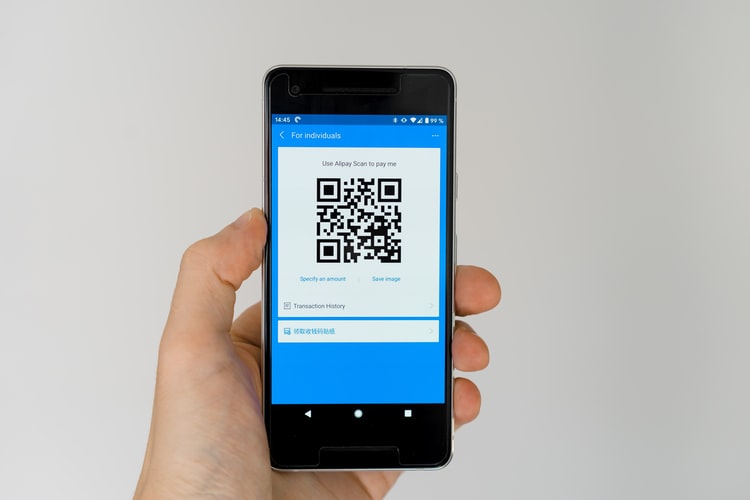
NTT DATA, a leading IT services provider and its business partner Accourt Limited a leading payment consulting firm, are proud to have released a first-of-its-kind study commissioned by GSMA Inclusive Tech Lab, a global trade group for the mobile industry. The report QR Code Merchant Payments: A growth opportunity for mobile money providers to empower Mobile Money Providers an opportunity to engage better and serve their future customers.
Akihiro Ishizuka, Head of Global Payments & Services Division, NTT DATA, commented: "QR code technology has recently seen a resurgence due to the demand of contactless payments during the pandemic lockdown, and that surge is continuing. The insights we are sharing are allowing mobile money providers globally to access their resilience and guides where to focus on future success in these trying times."
The report provides a detailed study on QR code-based in payments, QR code developments and specifications globally. The research process involved interviews with industry experts as well as Accourt and NTT DATA syndicated research. The findings concentrate on:
- Evolution of QR code payments - insights on the QR code merchant payments ecosystem and various initiatives around the world;
- QR code development - highlighting key learnings from multiple initiatives around the globe and market size;
- QR code merchant payments flow - assisting readers in identifying where they are in their respective journeys;
- QR code merchant payments interoperability - describing QR code merchant payments in the context of an evolutionary journey;
- QR code specifications in the world - insights and perspectives on some of the fundamental technical considerations of QR code-based merchant payments;
- Call to action for Mobile Money Providers - insights and perspectives on the impacts and implications of some of the major QR code merchant payments trends.
According to Vaughan Collie, Managing Partner, Accourt: "Notwithstanding the continued growth of various payments modalities worldwide, COVID-19 has been another powerful force driving the rapid adoption and evolution of truly touchless commerce around the world. Innovative QR code payments technologies are at the heart of enabling this touchless commerce evolution and continue to be extremely well-positioned to thrive into the future. We look forward to the ongoing realisation of QR code payments technology potential globally and the many opportunities it will create as a result."
The report is intended as a resource for mobile money providers to unlock a significant business opportunity to adopt QR code-based payments with a particular focus on their interoperability to achieve scale. Download the report here.








