Published
- 04:00 am
Mendix, a Siemens business and the global leader in enterprise low-code, released a survey showing that, despite being one of the first sectors to embrace digitalisation, the financial services industry is still mired down with complex processes and inadequate tools that are hindering its growth. This limits the sector’s ability to deliver business-critical services to its ever-growing, tech-savvy customer base, and to provide remote working options to staff at a time when all industries have to digitalise their workplace.
In a new report entitled ‘the Bottom Line: Simplifying Digital Evolution In Financial Services’, Mendix shows that digital transformation is a business imperative for the sector: Nine out of 10 IT leaders in financial services believe their firm will need to invest in digital projects over the next two years, just to survive in a rapidly changing market. For many, this requires juggling between customer-focused initiatives, improving productivity and operational efficiency (76 percent); harnessing data (90 percent); and solving compliance challenges (71 percent). In addition, this balancing act is gathering pace and spreading across the business: Today, IT teams must deliver innovation that’s fast, reliable and secure, and that supports many divisions — all at once.
Despite this clear need for innovation, IT teams often find themselves slowed down by their own tools and processes. IT leaders most frequently say that legacy or antiquated IT systems (35 percent) are the biggest hurdle to change; nearly two-thirds of respondents report challenges in supporting these legacy systems. This reduces IT’s ability to build new applications and create systems fit for the current and future needs of customers and employees.
In the highly regulated financial environment, preventing security challenges and downtime is another pressing concern. Close to 90 percent consider that security is a key consideration when rolling out any new technology, while a quarter admits that the risk of service disruption induced by a project is the greatest hurdle. Yet, two thirds of IT leaders believe the value of digital transformation initiatives outweighs their inherent risk. The pace of innovation is crucial: although IT teams face high demand for their support, most would not prioritise speed over caution, even if they could.
The Path to Innovation
To manage all these priorities, the IT team needs to look beyond its own team to create revenue-generating services. Most IT leaders agree that customer-facing staff understand client needs better than their department (73 percent). Given the right tools, these employees can collaborate with the IT department on digital transformation projects, enabling organisations to design services that suit the needs of their customer base, while reducing the pressure of an already-stretched IT team.
Low-code software development provides a simple solution to address these constraints and challenges: Based on a visual approach for building applications using drag-and-drop components, it enables non-technical staff to participate in creating business applications, even if they have little to no coding experience. Working separately or in close collaboration, professional developers and business-side “citizen developers” can create, iterate, and release applications in a fraction of the time it takes with traditional methods, all under the watchful governance of IT to ensure their applications comply with enterprise standards and architecture.
The Mendix low-code approach allows for flexible, iterative app development for many use cases in the financial services sector, including legacy application upgrades to comply with new regulations, apps supporting smart banking or portfolio management, and mortgage application management.
Nick Ford, chief technology evangelist, Mendix, said: “When it comes to digital transformation projects, the financial services sector is among the most forward-thinking, and it’s clear that the industry is ripe for more innovation. This puts huge pressure on limited IT staff who barely have time to keep the lights on. Luckily, there is a genuine appetite from financial services employees to participate in the creation and development of digital transformation projects. By enabling more collaboration between the IT team and other divisions, financial services companies can tap into the collective knowledge of their whole workforce. This allows these organisations to create the services that customers and staff want, and speed up adoption of high-value digital processes across the whole business to improve productivity and reduce operational costs.”
For more information about ‘the Bottom Line: Simplifying Digital Evolution In Financial Services’, please visit Mendix.com.
Learn more about the Mendix Platform, how it is used by financial services organisations and Pricing and Availability
- 01:00 am
The British Business Bank publishes Future Fund data that gives a detailed picture of the 252 companies that have been approved for £236.2m worth of Convertible Loan Agreements since the scheme was launched on 20 May. There have been 623 applications in total in the first month of operation. Government has said it will keep the size of the scheme under review and consider increasing it if needed. This data shows where companies are based across the UK and the composition of the management teams by gender and ethnicity. This data is self-reported by the companies applying to the Future Fund.
Data by region
The data reveals, almost half (45%) of funding approved to companies for convertible loan agreements worth £106m have their headquarters located outside of London. Of the total amount of £236.2m, 22% is to companies headquartered in the South (South East and South West), 11% in the North (North West, North East and Yorkshire and the Humber), 6% in the East of England, 3% in the Midlands (East Midlands and West Midlands) and 3% in the Devolved Nations –(Scotland, Wales and Northern Ireland). London accounts for 55% of companies, in-line with the wider market trends for equity investments. The British Business Bank’s 2019/20 Small Business Finance Markets report showed that London received 66% of equity investment by value in 2019.
Data by gender mix of management team
Of the 252 companies that have been approved and received their Convertible Loan Agreements for signature, 79% of funding is to companies with mixed gender management teams. Since the launch of the Future Fund more than 30 venture capital firms and angel groups have become signatories to the Government’s Investing in Women Code, alongside the Future Fund.
Data by ethnicity mix of management team
BAME only and mixed ethnicity management teams account for 56% of funding to companies that have been approved for Convertible Loan Agreements so far, worth £118.5m.
Keith Morgan, CEO, British Business Bank said: “The Future Fund plays an important role in providing funding for innovative businesses across the UK that are unable to access other forms of funding. While the scheme was not set up to address wider well-known structural issues in the UK’s equity finance market for smaller businesses, I’m delighted to see this early evidence of the diversity in the management teams of the Future Fund companies. I am also extremely pleased to see so many venture capital firms and angel groups have become signatories to the Investing in Women Code, alongside the Future Fund.”
Future Fund data by gender of company management team (self-reported by applicant)
Management Team | No. of convertible loans approved | Value of convertible loans approved |
Mixed gender | 176 | £177.4m |
All male | 66 | £45.1m |
All female | 3 | £3.2m |
Chose not to provide data | 7 | £10.4m |
Total | 252 | £236.2m |
Future Fund data by ethnicity of company management team (self-reported by applicant)
Team | No. of convertible loans approved | Value of convertible loans approved |
Mixed ethnicity | 113 | £105.3m |
All white | 109 | £94.1m |
All BAME | 12 | £13.1m |
Chose not to provide data | 18 | £23.6m |
Total | 252 | £236.2m |
Future Fund data by location where company applying to Future Fund is based
| No. of convertible loans approved | Value of convertible loans approved |
Scotland | 5 | £1.5m |
Northern Ireland | 3 | £2.5m |
Wales | 5 | £2.9m |
North East | 8 | £8.2m |
North West | 13 | £11.5m |
Yorkshire and the Humber | 6 | £6.9m |
West Midlands | 9 | £7.5m |
East Midlands | 2 | £0.8m |
East of England | 19 | £13.3m |
South West | 10 | £8.2m |
London | 136 | £130.2m |
South East | 36 | £42.8m |
Total | 252 | £236.2m |
Future Fund opened for applications on 20 May 2020. Provided that applicants provide the information required during the application process in a timely manner, it is expected that the process will take a minimum of 21 days from initial application to funding being made available. Convertible loans are reported as approved at the point the Convertible Loan Agreement document is issued by Future Fund for signature. The time to applicants subsequently receiving funds will depend on the speed with which they complete the documentation.
- 04:00 am

Zopa has today been awarded its full bank licence, launching at a time when consumers need financial services providers to work on their behalf more than ever.
Zopa Bank will focus on better meeting the financial needs of UK customers in sectors where they have traditionally been poorly served, while also delivering an experience that matches their expectations of a digital-first company. The new bank will be launching a new set of products, starting with a fixed term savings account. The Zopa Fixed Term Savings Account offers a competitive rate over 1-5 years at a time when rates are at a historic low. The account can be opened in as little as 7 minutes online and is protected by the Financial Services Compensation Scheme (FSCS) up to £85,000.
Building on its 15 year lending heritage in peer to peer, Zopa will also be introducing a credit card in the coming months which will include innovative new features designed to put customers in control of their borrowing. The card will address the needs of customers who have had to put up with poor service and unclear pricing from their existing card providers. These new products will sit alongside Zopa’s existing offering of personal and auto loans and investment products.
Zopa’s entry to the banking market comes at a pivotal time for UK consumers. While customer behaviour towards and expectations of banks has been shifting over the last decade, the current crisis has put increased focus on whether the traditional players are best equipped to help people manage their finances. Independent research commissioned by Zopa found that a fifth of UK adults (20%) said they had faced struggles contacting their bank during the coronavirus pandemic and a third (30%) said they wanted additional flexibility and better guidance from their main bank to help them during these uncertain times.
In stark contrast, Zopa offers an agile approach and has been able to innovate quickly through the crisis in order to better help its 300,000 existing customers – who have investments or loans with the company. At the onset of the coronavirus pandemic in the UK, Zopa adapted its technology at speed, introducing online assistance such as; dedicated help forms, an income and expenditure tool and a specific COVID-chatbot, all of which helped worried or affected borrowers to access information and help quickly, without the long waiting times experienced by many high street bank customers. The bank has also worked closely with leading debt charity, StepChange, integrating the charity’s 60 second debt checker and benefit calculator into its app, to offer further help to its customers. For investors, Zopa has been able to continue lending their money by rapidly iterating its lending criteria as the market changed.
Such interventions have meant that during the height of coronavirus (1March – 12 June 2020), 96% of Zopa’s Trustpilot reviews were either 4 or 5 star.
Jaidev Janardana, Zopa CEO, commented: “Now more than ever the banking industry needs innovative, agile providers who work on behalf of customers. At a time when people want great value, fair financial services products and simple, intuitive digital experience, Zopa offers consumers a compelling and credible alternative they can trust. Securing our banking licence enables Zopa to play a wider role in the financial lives of our customers, as well as offering much needed choice and competition to the wider market. Beyond the current pandemic, Zopa is uniquely placed to provide a compelling alternative to traditional banking by leveraging its significant technological and financial services expertise tooffera wider range of great products, including savings and credit cards, alongside its personal loans and investments.”
Zopa Bank will sit alongside its existing peer to peer business (Zopa Limited), as part of the overall Zopa Group.
Zopa has raised £140m, its largest funding round to date, enabling its banking entity to fulfil its regulatory capital requirements. The investmenthas been provided by IAGSilverstripe Partners,an investment arm of IAG Capital, the private investment group specialising indigital andtechnology - ledbusinesses. IAG Silverstripe first invested in Zopa in October 2018.
Since pioneering the peer-to-peer lending industry globally in 2005, Zopa has helped half a million people enjoy better value personal loans or to grow their money through investments, created a new asset class, and redefined the experience people have come to expect from their financial provider.
Last year Zopa launched ‘Borrowing Power’ within its app, a unique tool which personalises actions to help customers improve their credit score enabling them to borrow at a lower rate.It also launched a market first direct to consumer car finance product in a sector ripe for transformation.
*Opinium Research. Total sample size 2,003 UK adults. Fieldwork was undertaken between 22 – 24 May 2020
- 04:00 am
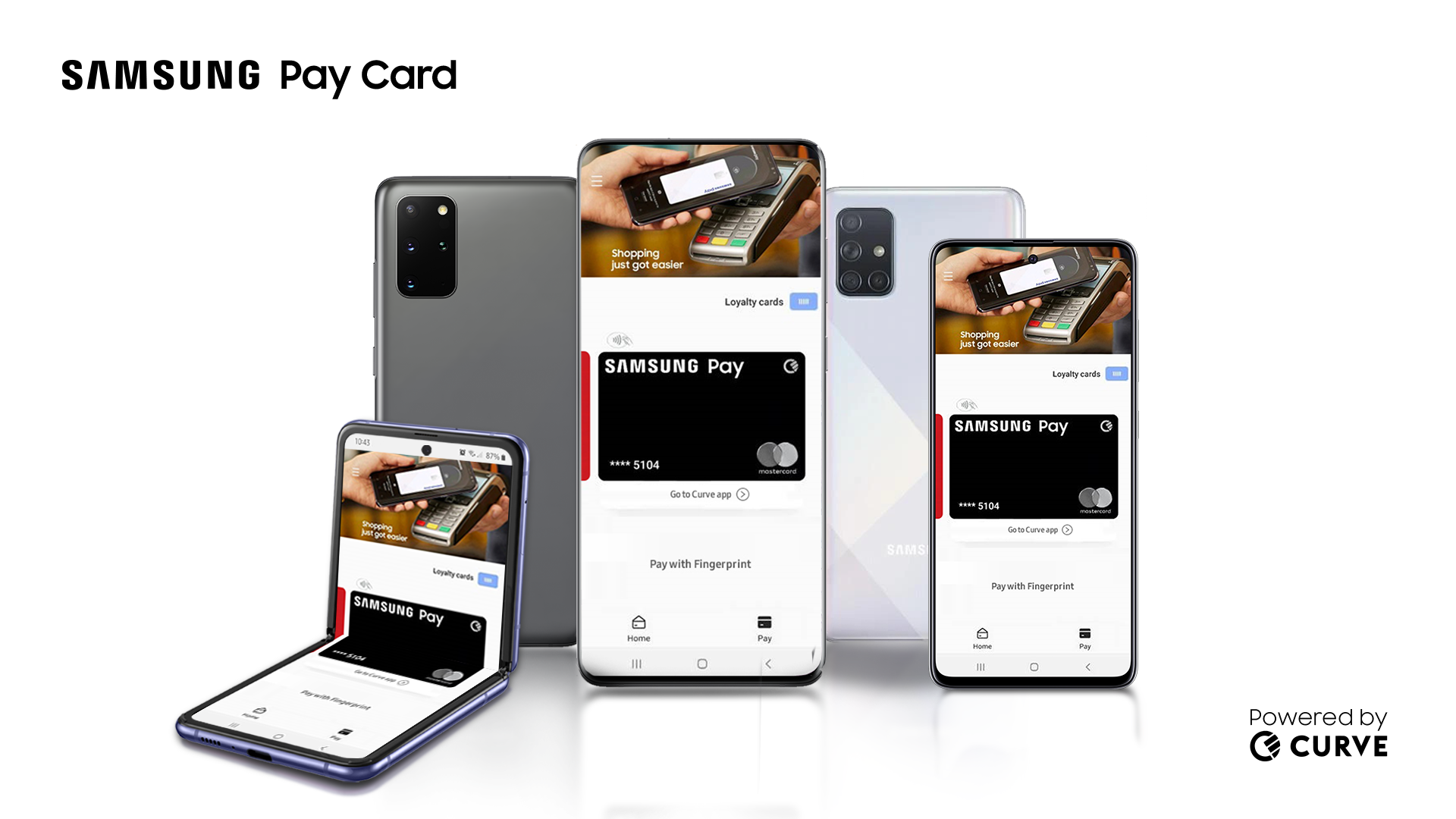
Samsung Electronics Co., Ltd has today announced a new partnership between Samsung Pay, the digital banking platform Curve, one of Europe’s leading fintechs, and Mastercard to launch the Samsung Pay Card.
The all-new digital payment solution will offer Samsung customers greater flexibility and control when managing their finances by offering a single view of spend, whilst also enabling a simple and secure way to pay.
With the ability to sync multiple loyalty and bank cards in one place, the Samsung Pay Card powered by Curve, will offer customers a true digital wallet experience, all through the convenience of their mobile device.
The partnership with Curve is the first of its kind in Europe for Samsung Pay, and the unique card and digital offering will provide all these benefits, and more, when Samsung Pay Card officially launches in the UK later this year.
“We are delighted to announce this new partnership with Curve, coming together to provide a new payment solution for Samsung customers which will be available via Samsung Pay later this year” said Conor Pierce, Corporate Vice-President of Samsung UK & Ireland.
“At Samsung, our customers are at the heart of everything we do, which is why we strive to create the best technology, services and solutions. The Samsung Pay Card powered by Curve will allow us to expand our Samsung Pay offering, giving our loyal customers even greater benefits and rewards than ever before.”
Shachar Bialick, Founder and CEO of Curve said; “Both Samsung and Curve are doing remarkable things in their industries, this new partnership sees two of the most innovative companies in the world collaborate on an exciting product that undoubtedly will raise the bar for Fintech globally."
"We are delighted to be able to offer Curve’s unique benefits to customers of one of the world’s biggest brands and enable customers to access a significantly greater range of banking services leading to a healthier financial life with Samsung Pay.” He added.
“Consumers are driving the demand for frictionless digital experiences,” said Scott Abrahams, Senior Vice President, Business Development & Fintech, Mastercard UK & Ireland. “Mastercard’s digital-first solutions and worldwide acceptance footprint combined with the Samsung Pay Card powered by Curve shows how our collective innovation can deliver a safe, convenient way to pay.”
For more information about Samsung Pay Card, visit:
https://www.samsung.com/uk/samsung-pay/samsungpaycard/

Philippe Duchene
Head of Marketing & Communication at Ingenico Enterprise Retail in Europe
People’s shopping habits have evolved. see more
- 01:00 am

Danny Scott, CEO at CoinCorner, commented:
“Rumours have been circulating that PayPal is rolling out a service that will allow its 325 million customers to buy and sell Bitcoin.
Until now, PayPal has seemingly shown no interest in Bitcoin - founding CEO, Bill Harris has even publicly denounced Bitcoin in the past.
However, PayPal did add Wences Casares (CEO of a Bitcoin exchange) to their board back in 2016 and now seem to have a CEO who has recently made very positive comments towards Bitcoin, as well as admitting to owning Bitcoin and Bitcoin only.
If this rumour is true, it looks like PayPal may have been motivated by Square’s CashApp that recently added Bitcoin. They announced their Q1 2020 revenue from Bitcoin sales, which came in at a massive $306 million, exceeding their fiat revenue streams. Of course, PayPal owns Venmo, a competitor to CashApp, which may be the real reason behind this decision - maybe this year we will see Venmo add Bitcoin in a similar fashion to how CashApp has.
So far, 2020 has been a great year for Bitcoin as it's proven itself as a safe haven asset and been resilient to all the challenges it's faced. Once again, we’re seeing a growing interest in Bitcoin, with the sentiment turning more positive as the year goes on. We've also seen month-on-month increases in sign ups at CoinCorner; March +21%, April +21%, +May 9% compounded from their previous months. In my opinion, regardless of whether the rumours are true or not, this only adds to the credibility of Bitcoin.”
- 02:00 am

OneStream Software, a leading provider of modern Corporate Performance Management (CPM) solutions for mid-sized to large enterprises, has been named to the Insider Pro and Computerworld 2020 list of the 100 Best Places to Work in IT. Last month, OneStream was recognized by Inc. magazine and its list of Best Workplaces for 2020.
“We’ve created an innovative and entrepreneurial work culture at OneStream Software that allows our employees to grow, develop new skills and gain valuable experience as part of our focus on delivering 100% customer success. For our IT workers, that means providing the tech training, career development and hands-on opportunities that help them to excel. To be recognized by Insider Pro and Computerworld as one of the 100 Best Places to Work in IT is strong validation to our commitment to our tech employees and a testament to their great success,” said Martha Angle, vice president of global human resources for OneStream Software.
The Best Places to Work in IT list is an annual ranking of the top 100 work environments for technology based on a comprehensive questionnaire regarding company offerings in categories such as benefits, career development, training and retention. In addition, IDG conducts extensive surveys of IT workers, and their responses factor heavily in determining the rankings.
“As technology continues to evolve more rapidly than ever, attracting and retaining top IT talent to research, deploy and maintain that technology has never been more important or more challenging,” said Dan Muse, editor of IDG’s Insider Pro. “Companies that have earned a spot on the Insider Pro and Computerworld 2020 Best Place to Work in IT list share a common denominator: They create an environment that not only rewards workers with competitive compensation and benefits, but they also foster a spirit of diversity, social responsibility, training and innovation.”
Angle continued, “The ability to learn and acquire new tech skills is especially important for IT employees. OneStream’s rapid growth and collaborative work culture provides great opportunities for our IT team to gain new experiences, take on new responsibilities and grow with us.”
The Digital Transformation of Finance
OneStream is helping a growing number of enterprises to digitally transform finance as they replace legacy on-premise finance applications and point cloud solutions with OneStream’s unified platform. This unified approach gives companies a ‘single source of truth’ for financial and operational data, significantly reducing time and costs. OneStream customers are able to accelerate their financial close, reporting and planning cycles and focus more time on strategic activities that enable better business decisions. This includes predictive planning, forecasting and modeling for various economic scenarios.
The OneStream XF MarketPlace further extends the value of the OneStream platform with more than 50 downloadable solutions that are fully tested and ready-to-deploy, including account reconciliations, lease accounting, tax provision and several specialized planning applications.
- 07:00 am

As the professional world moves increasingly online, Bitdefender, a leading global cybersecurity company protecting over 500 million systems worldwide, is pleased to announce the global launch of Bitdefender Digital Identity Protection, the service that lets freelancers, self-employed, consultants and even private individuals control their online reputation.
Digital Identity Protection taps the award-winning security technology of Bitdefender, perfected over two decades of service in the fight against cybercrime, to let you stay ahead of the growing legions of data thieves and fraudsters who use your personal information to damage your reputation, take over your accounts or steal money, leaving you on the hook.
Receive a full picture of your online footprint to see how clients might see you and, alternatively, how criminals might size you up: what elements of your personal data has ever been exposed, any indiscretions still haunting you years later, and how complete a picture of you can a stranger collate from your online activity.
Then, get instant alerts to any new data breaches on the internet that could affect you, even scouring the hidden corners of the Dark Web where threats lurk beyond the reach of the law. Constant monitoring lets you always stay a step ahead of identity thieves who could impersonate you, damage your professional reputation or use your identity to steal your money.
Bitdefender Digital Identity Protection shows you all the sources where your name, phone number, physical email address, jobs, education, photos and URLs are linked to your identity. You can visualize all your information publicly exposed over the years – data that can affect your online reputation.
“With the COVID-19 pandemic, people’s online identities are becoming more important than ever, and that has been a major source of vulnerability in the past for freelancers and others who rely on their reputation, as well as for private individuals trying to steer clear of fraud,” said Ciprian Istrate, Bitdefender's Vice President for Consumer Solutions. “Digital Identity Protection finally brings a professional-quality approach to safeguarding your most valuable asset – your reputation.”
- 01:00 am

Great diversity exists in payments processing arrangements across Europe, with further outsourcing by acquirers forecast
Ways of connecting with card scheme networks vary significantly by country
A new study by research and consulting firm RBR, Payment Cards Issuing and Acquiring Europe 2020, shows that merchant processing arrangements differ significantly across Europe. Card payment acquirers in many markets maintain a direct link to card scheme payment networks like Visa and Mastercard, as in Poland, Portugal and the UK. Nonetheless, approaches vary, and in Denmark and Finland, for example, it is usually the third-party processor Nets which provides the point of interface with card schemes on acquirers’ behalf. Interestingly, the number of third-party processors in Finland has increased in recent years and a range of processors operate in markets such as the Netherlands and Turkey.
Outsourcing reduces costs for smaller players
RBR found that smaller acquirers in particular often find outsourcing of processing services to be more cost-effective than developing in-house processing platforms. Without the economic resources to perform all processing functions independently, smaller acquiring banks in markets such as Hungary, Romania and Sweden commonly rely on the services of established third-party processors. There is also a business opportunity for larger acquiring banks, which frequently provide processing services to smaller banks in Russia and Ukraine, for example.
More limited third-party involvement in clearing
The research shows that after card payments are made, transactions are commonly routed to interbank organisations for clearing, with this responsibility assigned to SIBS in Portugal and BKM in Turkey, for example. In Russia, it is the national switch, NSPC, which ensures clearing is processed smoothly, while in France it is the automated clearing house, CORE. Such arrangements contrast with markets such as Italy and the Netherlands, where third-party providers perform clearing. Most European markets see clearing performed daily, with settlement of card payments most frequently occurring the day after the transaction takes place.
Settlement for domestic card transactions tends to be managed via accounts held at central banks, as in France and the UK – or via organisations supervised by the central bank, as in the case of CERTIS in Czechia. Arrangements across Europe are not uniform, however, with commercial banks performing the role of settlement banks in Russia and Ukraine, while the card schemes American Express and Diners Club perform settlement independently for their card payments in Norway.
Increased outsourcing of processing set to continue
Thomas Madden, who led RBR’s study, remarked:“A diverse range of approaches to merchant processing are evident across Europe, and an increasing number of third parties have become involved in recent years.It will be interesting to see to what extent cost-cutting by acquiring banks accelerates the outsourcing of merchant processing, and how third-party processor and card scheme activities evolve in the years ahead”.
- 08:00 am

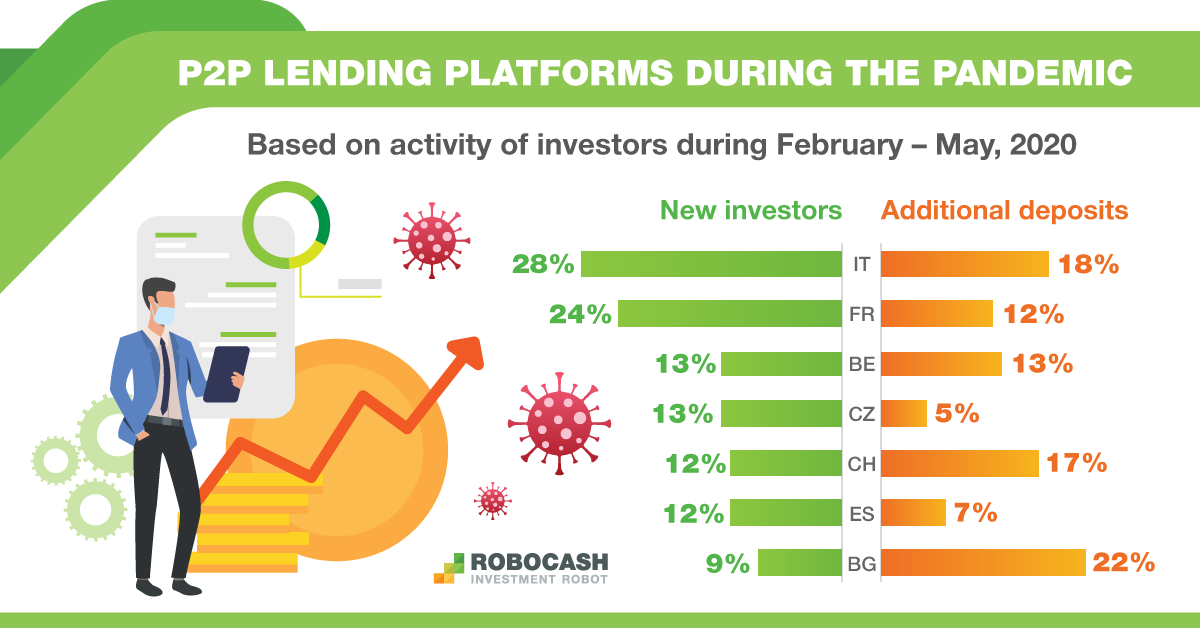
According to the statistics of the European P2P lending platform Robo.cash, the highest number of new investors who joined the platform from February to May came from Italy. At the same time, the highest increase in the volume of investments added to the platform in this period was by Bulgarian investors.
For the period February 1 - May 31, 2020, the number of investors from Italy on Robo.cash increased by 28%, whereas the number of new users from France grew by 24%. The share of investors from the Czech Republic, Belgium rose by 13%, Switzerland and Spain - 12%.
Meanwhile, the highest increase in the volume of funds added to the P2P lending platform during this period belongs to investors from Bulgaria. As of May 31st, it grew by 22% compared to the state on January 31, 2020. Italian and Swiss investors came next by the dynamics of their deposits on the platform. The volume of their funds increased by 18% and 17%, respectively.
Analysts of Robo.cash comment on the statistics: “At first glance, the growing activity of new investors may seem paradoxical. Italy is one of the European countries that has suffered from COVID-19 heavily. However, the positive trend shown by local investors may be explained by more time they had staying at home. It allowed them to find new investment opportunities, as well as manage assets. Besides, given the results of our previous survey, most P2P lending investors work in the IT field. It suggests that during the pandemic, they could continue working remotely from home and keep their income.”
As for Bulgarian investors, whose investments have grown most on the platform, they have shown an increasing interest in investments in P2P lending over the past year. Also, the impact of the pandemic on Bulgaria has not been so strong as on other European countries - to date, the country has reported 3,800 coronavirus cases.