
Published
- 04:00 am
Mastercard today announced a US$10 million (approximately 75 crore rupees) commitment to directly address critical Covid-related needs in India. Over the past few weeks, the country has seen a spike in both Covid diagnoses and deaths, with the healthcare system being stretched to its limits as more than 350,000 new cases are identified each day.
The philanthropic efforts, delivered through the Mastercard Impact Fund, will focus on three priority areas – access to hospital resources, access to additional oxygen supplies and continued support of the company’s employees across the country.
The largest contribution will be designated to support the expansion of 2,000 beds through the installation of portable hospitals that can address the immediate healthcare needs. Working with the government and local partners on the ground, these hospitals can be constructed quickly and could help an estimated 2.5 million Indians gain access to healthcare, adding to the nation’s healthcare infrastructure.
“The situation in India is gut-wrenching; it’s clear that no one has been left untouched and that no one can be a bystander,” said Ajay Banga, executive chairman of Mastercard. “We have long been advocates for the people of India, as employers and as enablers of the economy. Now it’s time for us to put our shoulders to the wheel and do whatever we can to help all of India get through this intensified crisis.”
In addition to the on-the-ground medical support, Mastercard is also allocating funding for additional shipments of 1,000 oxygen generators, as part of a broader corporate effort. And the company is donating to local charities and NGOs to allow for direct support of those affected by the virus, including the frontline medical workers across the country.
“The U.S. and India have a shared history of helping each other during times of crisis,” said Richard Verma, general counsel at Mastercard and former U.S. ambassador to India. “We’re hearing from our own teams the challenges that they and their families are facing. It’s critical that we stand by our friends and help those who have been impacted. Our commitment today and into the future is strong and enduring.”
Prof. K. Vijay Raghavan, Principal Scientific Adviser to Government of India added, "The steep rise of Covid-19 cases poses an enormous challenge to clinical care facilities/ Revamping existing hospital infrastructure by increasing the number of beds to accommodate more patients requiring critical care and procuring more equipment to enhance oxygenation for patients, is of utmost priority. We are grateful to the industry for their support to aid various State Governments’ critical care systems to boost their response to Covid-19. Mastercard and office of the Principal Scientific adviser to Government of India have joined hands to provide 2000 beds and purchase oxygen concentrators for hospitals in states that have been affected the most. There have been many such partnerships, many more such needed in the coming days. We hope to speedily facilitate them where there is most need.”
Extended Support for Employees, Partners
Mastercard has already committed to cover all vaccine-related costs for its India-based employees and immediate families, as doses are available. To help extend these efforts – and provide another outlet for its employees across the globe to help each other – Mastercard will also match employee donations to its Employee Assistance Fund, up to $15,000 per individual. This comes on top of a $500,000 corporate contribution to the fund.
The company will continue to explore other opportunities to activate partnerships in India and across the global community – from the U.S.-India Strategic Partnership Forum and U.S.-India Business Council to the Business Roundtable and the American India Foundation – to support these efforts.
- 03:00 am

The Philippines’ first neobank Tonik is ramping up the convenient banking features on its game-changing app through tying up with PESONet to enable safe and secure electronic fund transfers to Tonik account from other banks. The announcement comes on the heels of Tonik’s highly successful public launch in March 2021, which saw it secure over 1 billion pesos (US$20M) in retail deposits in under 1 month - a historical record for any new bank launching in the Philippines.
Tonik users are now able to transfer funds from a PESONet participating bank to their accounts. This service is initially available via RCBC, Landbank, PSBank and CIMB, with other PESONet member banks expected to add the service in the coming months.
“The response we got when we introduced the app last month was overwhelmingly positive. It’s a testament to the fact that Filipinos are thirsty for a financial enabler that cuts the red tape, makes banking less complicated, and lets their hard-earned money work better for their future,” said Tonik CEO and Founder Greg Krasnov. “Allowing easier and bigger interbank transfers to Tonik accounts through PESONet is just one of several features that we are introducing in our app that I’m sure will make our customers love us more.”
Long Pineda, President of Tonik Digital Bank, Inc, Tonik’s regulated bank subsidiary, shares her excitement on this development: “This is another chapter in our journey of growth and driving financial inclusion in the local banking industry. By making in-demand banking transactions such as interbank transfers safer and more seamless with PESONet, we hope to encourage more Filipinos to manage and maximize their finances with Tonik in the #neonormal.”
In line with this, interbank transfer services via PESONet will be available with more banks in the coming weeks. Further, the neobank plans to launch its loan offers and further expand its payment options in the coming months. Customers are encouraged to stay updated on the latest developments from Tonik via their mobile app, official website and Facebook page.
Tonik is on a mission to revolutionize the way money works with a new all-digital way of banking operating on a highly secure digital banking platform. The neobank offers accessible, flexible, and inclusive financial services, including industry-leading deposit interest rates of up to 6% per annum, and unique saving features such as its Solo Stash and Group Stash products, as well as Term Deposits.
Tonik is supervised by the Bangko Sentral ng Pilipinas (BSP) and deposits are insured by the Philippine Deposit Insurance Corporation (PDIC). Its unique cloud-based solution is powered by global financial technology leaders such as Mastercard, Amazon Web Services, and Finastra.
Learn more about this story and other updates from Tonik via http://tonikbank.com.
- 01:00 am

Broadway Technology, a leading provider of high-performance front-office solutions, today announced it has promoted Claudia Cantarella to the role of Chief Legal Officer. Cantarella will also join the Executive Leadership Team and direct the company’s global legal and regulatory activity, guide corporate strategy and development, and help position Broadway for continued growth.
Cantarella is a seasoned professional with extensive experience and an outstanding track record for the past 8 years, leading the legal operations for Broadway as General Counsel and Corporate Secretary. She established the company’s in-house legal function and many of its internal policies, including, information security, employment and human resources, data protection, compliance and ethics. Throughout her tenure she has advised the company on global corporate governance and regulatory matters, M&A, intellectual property, privacy and security, and SOC II compliance, and brings more than 25 years of extensive legal, regulatory and corporate strategy experience to her role as Chief Legal Officer. She began her 13-year relationship with Broadway as an outside advisor in 2008 while a Partner and Co-chair of the New York Intellectual Property Group of Salans LLP.
“Claudia has been a critical part of Broadway’s success for more than a decade and we are thrilled to elevate her to the role of Chief Legal Officer and Executive Team member,” said Michael Chin, CEO, Broadway Technology. “We are at a pivotal point in Broadway’s growth trajectory, and Claudia’s exceptional mix of legal prowess, strategic insight and proven leadership skills is unmatched. She will be invaluable as we navigate evolving legal, governmental and regulatory guidelines to continuously deliver exceptional service to our global customers.”
In 2014, Cantarella was elected a lifetime Fellow of the American Bar Foundation, an honorary organization of attorneys, judges, law faculty and legal scholars who have demonstrated outstanding leadership and dedication to the highest principles of the legal profession and service to society. Attorneys must be nominated by their peers and elected by the foundation’s board. Membership in The Fellows is limited to one-third of 1 percent of the lawyers licensed to practice in each jurisdiction of the United States.
“I’m extremely proud of the in-house legal framework and corporate infrastructure we created at Broadway during my time as General Counsel, which will now propel our next stage of corporate development and enable Broadway to execute on our new strategic priorities,” said Cantarella. “The last several years have seen unprecedented and exciting changes for Broadway, as the company has undergone a capital investment, acquisition of Barracuda FX, recapitalization by ION, and most recently our divestment. Broadway is now uniquely poised to capitalize on new market opportunities as we leverage our pioneering technology and accelerate our innovation.”
Earlier in her career Cantarella served as Special Counsel, Intellectual Property at Willkie Farr & Gallagher LLP. She was also a Legal Consultant to the United Nation’s Food and Agriculture Organization. Cantarella earned her Bachelor of Science degree in Speech from Northwestern University and her Juris Doctor from the University of Virginia School of Law.
Cantarella’s appointment follows several recent strategic initiatives for Broadway, including the appointment of Michael Chin as CEO in March 2021. Chin is a 30-year fintech industry veteran and former Managing Director, Global Head of Trading at Refinitiv.
- 03:00 am

One minute you’re the cock of the walk, the king of the swingers, and the talk of the town – and the next…well, you’re not.
One of the funny things about technology is that shiny new gadgets and devices are released to much fanfare, fuelling the innate need of many consumers to have the hottest new thing.
Then the next generation comes along, and the previous iteration is kicked to the kerb quicker than you can say iPhone 10.
Software upgrades act along the same principles, and for traders and investors, you can see why the natural instinct is to upgrade from MetaTrader 4 (MT4) – the ‘older’ generation of trading software – to the all-singing, all-dancing MetaTrader 5 (MT5).
Is that the right move to make though?
The cult of newness
For the most part, brokers offer their users MT4, with a select few now upgrading to MT5 to ensure that their clients have the choice of which platform to deploy. Some brokers, such as eToro trading, eschew MetaTrader altogether and develop their own proprietary systems.
Developed by MetaQuotes Software Corp, MT4 – released in 2005 – was designed specifically for use in forex trading. MT5, published five years later, takes a multi-asset approach, and so clearly this is a key advantage for traders with a diverse portfolio of investments.
One of the other notable things about MT5 is that it has been designed with those trading the global markets in mind. Users can choose between 21 different time zones, so you can schedule your trading around the opening and closing sessions in each market if you wish. MT4, by contrast, only has nine time zones.
Technical traders may just prefer the suite of options available to them in MT5. There are 38 indicators compared to MT4’s 30, including Elliott Wave drawing tools and 44 different graphs and charts – MT4 serves up 31.
We really also have to mention depth of market. With MT5, you can explore market sentimentality by examining buying/selling activity, and this can be a very useful tool for any trading strategy you may wish to deploy.
Perhaps the key difference of all is speed. MT5 updates its predecessor’s 32-bit, mono-threaded platform to a 64-bit, multi-threaded model, and the bottom line is that you can open and close positions in quicker fashion as a result – essential for scalpers and swing traders looking to get in and out of the market efficiently.
Stick, don’t twist
Of course, it’s worth remembering that MT4 laid the foundation for what was to follow.
If it ain’t broke, don’t fix it. This is an old expression that is worth remembering in the context of the evolution of the MetaTrader platform.
There are more bells and whistles to MT5, admittedly, but the absolute vast majority of traders will find MT4 more than adequate in satisfying their requirements.
You will also find that MT4 is more prevalent when analysing each online broker, with many firms opting to stick with the classic for the time being.
The bottom line is that you won’t go far wrong with either of the MetaTrader platforms, and we should simply rejoice in the fact that either exists!
- 07:00 am

The finance game is on a rise and those who seek a career in this field have a lot to be happy about because their prospects are enormous. Nowadays, top fintech companies are earning hundreds of millions of dollars plus these firms are among the favorite startup enterprises among investors. If you don’t like math or statistics or anything that has to do with numbers then finance might be the most boring thing in the world for you. For those students who have a thing for numbers, volunteering in a top-notch fintech corporation might be a great start to a prosperous career in finance. Students from Canada have a lot of companies to choose from since there is some real economic boom happening among financial technology companies in Canada as we speak.
Shopify
Although it was founded some fifteen years ago, this company managed to stay relevant and grow according to the latest trends in the e-commerce world. It has successfully adapted when social media expansion took off thus offering multiple new services to more than one million customers worldwide. Every Canadian expert on fintech will testify that they offer the best platform for online retailers with no competition that matches their level of service. If you are a young student looking for some great place to start your career, do not hesitate to send your CV plus your motivational letter to their headquarters. Companies such as these are always looking for sharp young talents.
Wave Financials
This is one of the finest and most prestigious fintech companies Toronto has to offer and its been taking over this market since 2009 onwards. They focused on small business owners, penetrating this market by offering even free bookkeeping software just to show off their skills and the level of premium service. After their initial success, they branched into processing credit cards plus invoicing so today they are a very finance student dream company. Being an intern while still studying ain’t easy especially in one prestigious company such as Wave. Writing essay papers, taking classes, and moving on a corporate ladder might feel overwhelming even for a top-notch student like yourself.
Companies like Wave provide excellent working conditions, a lot of benefits like private healthcare or gym membership, but they require their interns to work hard and with dedication. That is why sometimes each student needs a paper writing service in Canada to help him juggle his studies with professional goals. Hiring the best essay writing service money can buy can help you stay focused on building your career in the fintech world. If you are on your way to acquiring your bachelor's degree in finance, Wave is one perfect place to apply for summer practice or volunteering.
FreshBooks
Freshbooks is another among many fintech startups Toronto gave us in the last two decades. The company grew steadily by digitalizing everything related to bookkeeping and turning it into software accessible from any mobile device. They provide service on a pay-per-use basis thus they handle accounting, expense tracking, and invoicing for small businesses. They always look for any talented student with some pre-knowledge of double-entry accounting or finance basics. Some fundamental knowledge of coding or programming languages is a big plus that will help you start your career at Freshbooks.
Financeit
This little gem is a favorite among medium-sized businesses across Canada for one simple reason. It simplifies transactions and helps you avoid all that unnecessary paperwork. With their software, one can conclude business deals plus make all needed transactions with just a few clicks between any firm and their client. Getting into this company requires focusing on your academic studies with a determination that will earn you that degree in accounting or financial software development. Using Finencit solutions is as easy for the customer as for writers to put their signature at the end of an essay, which only shows you the level of their dedication to provide flawless service.
Dig deeper into the world of financial technology companies in Canada and you shall find a lot more prosperous companies that offer some great starting point for an ambitious young student. Do not get scared by today’s competitive job market. If you believe in yourself, work hard on developing your skills and you shall make it. The world of top fintech companies in Canada awaits you.
Best essay writing service: https://www.customessaymeister.com/
- 06:00 am
Tassat, a global provider of financial technologies and products for digital payments, today announced it has appointed Barbara Kissner as its Chief Information Security Officer (CISO) to oversee the company’s infrastructure, technology and data security. As Tassat undergoes rapid growth, Ms. Kissner will be responsible for devising the company’s overall information security strategy, maintaining oversight for all security processes and ensuring robust due diligence practices.
Ms. Kissner is a specialist in technology transformation, cybersecurity, risk management, organizational resiliency and governance, and brings over 25 years of experience building and managing security programs for financial services firms to her role at Tassat. Throughout her career she has held multiple executive roles including EVP and Chief Information Officer (CIO) for Amalgamated Bank, and SVP, CIO and Chief Compliance Officer at International Fidelity Insurance Company. Ms. Kissner has extensive expertise leading technology and digital transformation projects, managing cyber security programs for multinational organizations, and driving enterprise-level resiliency and disaster recovery strategy.
“Financial institutions today are acutely focused on cyber security and third-party risk. We are thrilled to welcome an executive of Barbara’s caliber to our executive team to recognize and respond to the evolving cyber security requirements of our banking clients,” said Ron Totaro, CEO, Tassat. “Tassat is committed to partnering with our clients and that includes our unwavering commitment to comprehensive security measures that help protect their businesses and reputations. Our clients trust us with their most critical digital payments applications, and Barbara’s deep expertise and unique experience in the financial sector make her the perfect fit to help us streamline our processes and ensure we and our clients are protected and have the most robust risk posture.”
“I’m excited to join this talented team,” said Ms. Kissner. “I look forward to helping Tassat deliver the comprehensive security practices our sophisticated banking clients require for their critical payments applications.”
- 03:00 am
Calypso Networks Association (CNA), which brings transport operators and authorities together to evolve contactless ticketing systems, and NFC Forum, the standards body for advancing Near Field Communication (NFC) technology, have signed a Memorandum of Understanding (MOU). The two organizations will collaborate to educate the market on the value of using NFC technology to deliver secure, sustainable and innovative smart ticketing solutions.
Specific focus will be placed on how expanding this infrastructure provides travelers with secure and seamless, end-to-end ticketing services for use in mobility-as-a-service (MaaS) solutions.
“At CNA, we believe that NFC is the best solution for providing users with simple, efficient, ergonomic access to all forms of mobility,” said Philippe Vappereau, chairman of CNA. “The collaboration with NFC Forum is an important opportunity to promote the benefits of open standards more effectively to all players in public transport and showcase the value of converging on-demand transport ticketing services that support a range of consumer mobility solutions.”
According to the International Telecommunication Union (ITU), “open standards" are standards made available to the general public and are developed (or approved) and maintained via a collaborative and consensus driven process. Open standards facilitate interoperability and data exchange among different products or services and are intended for widespread adoption.
“We plan to start coordinating NFC Forum efforts with CNA activities immediately,” said Mike McCamon, executive director, NFC Forum. “Activities under discussion include a white paper highlighting the benefits of NFC technology for public transit decision makers as well as identifying and developing new NFC use cases in transit applications particularly with MaaS solutions.”
NFC is one of the most widely implemented technologies in the world and available on three billion smartphones. The Calypso standard comprehensively supports NFC technology to provide multiservice applications for transport ticketing as well as leisure, access control, bike and car sharing.
- 08:00 am

Broadridge Financial Solutions, Inc. (NYSE: BR), a global Fintech leader, and FundApps, a global RegTech provider, announced the integration of FundApps’ regulatory compliance technology with Broadridge’s buy-side portfolio and order management solution. Broadridge’s clients will benefit from a unique regulatory compliance solution that addresses managers’ needs across shareholder disclosures, sensitive industry monitoring and position limit reporting, removing operational challenges in their search for alpha.
One Broadridge and FundApps client is BennBridge, a multi-boutique investment firm that strategically partners with fund managers. “We deal across multiple global equity markets and, as a result, are continually faced with changes to regulatory compliance requirements that can create complex challenges. By using the FundApps solution, integrated with Broadridge’s portfolio and order management system, we are able to automate many facets of our substantial shareholding disclosure process,” said Ben Battye, Head of Operations, BennBridge. “This allows us to focus our time on other critical parts of the business.”
“Through our work with FundApps, we’re incorporating integrated, automated solutions that will remove operational challenges for our clients,” said Eric Bernstein, Broadridge’s President of Asset Management Solutions. “The global regulatory landscape has become increasingly more complex over the past several years, and as firms expand into new geographies, managers need to prove their strict adherence to those regulatory requirements. This strategic partnership allows firms to spend less time on operational and compliance issues and more time on managing assets and outperforming the competition.”
"There is an increasing amount of regulatory fragmentation between local jurisdictions. This, coupled with the effects of a global pandemic, means there has been a lot of volatility with reporting thresholds as we move from crisis to recovery," says Andrew White, CEO at FundApps. "Regulation is not a unique problem for firms, so it only makes sense that they pool resources to invest in technology that automates it for them. Think of it as herd immunity - the more compliant each participant is, the less likely they are to spread risk through the community, achieving a level of protection that individual measures can’t reach on their own.”
Broadridge’s portfolio and order management solution offers an integrated approach to modeling and executing trades and tracking portfolios in real-time, and helps firms ensure their compliance and operations are up to date. Global hedge fund and asset management clients utilize Broadridge’s automated processes to improve data quality and manage compliance requirements, allowing them to focus on earning returns for clients. Now they will benefit from FundApps’ compliance-as-a-service solution that automates compliance monitoring and reporting.
The combined capabilities will provide clients the ability to leverage a fully automated interface that will support the daily updating of client holdings in the FundApps system, and maintain a complete and up-to-date global database of companies and regulatory rules. The enhanced platform offers solutions to clients seeking to avoid fines and reputational damage, reduce reporting time, retire legacy software and prove their adherence to regulatory requirements.
- 08:00 am
Finzly, a fintech provider of modern banking applications for payments, foreign exchange, trade finance and digital account opening, announced that the company’s CEO and founder, Booshan Rengachari, has been named a new member of the U.S. Faster Payments Council’s Board Advisory Group. In this role, Rengachari will advise the FPC’s board of directors and staff on perspectives outside those represented on the board, in addition to supporting the FPC in capitalizing on -- and responding to – emerging trends in the payments ecosystem.
“The need for faster payments is long overdue, and the U.S. Faster Payments Council is actively working to establish a world-class payment system that allows any person or organization to safely and securely pay anyone, anywhere, anytime” said Booshan Rengachari, founder and CEO, Finzly. “As an original faster payment proposer and former member of the U.S. Faster Payment Task Force, I have always been an advocate for transforming the industry’s payment infrastructure. I am pleased to be part of the FPC’s Board Advisory Group and look forward to playing a larger role in the industry’s education and advancement of faster payments.”
Rengachari is also slated as a speaker for NACHA’s Smarter Faster Payments 2021 conference as part of its Remote Connect sessions. The panel session, “Embedded B2B & B2C Payments in Corporate Systems & ERPs,” will cover how technology can help FIs enable an embedded B2B and B2C payments experience, and will be held virtually on August 23 from 12-1pm ET.
About Finzly
Finzly connects financial institutions with customers through a modern digital banking experience and an efficient, real-time payment services hub. Freeing financial institutions from core system limitations, Finzly’s open, cloud-based bank operating system, BankOS, enables transformation and innovation at the speed of fintech. With freedom to adopt solutions from Finzly and third parties of choice, financial institutions can implement apps in three simple steps – subscribe, try and launch. Serving customers across North America, Finzly has been modernizing international banking and treasury management solutions since 2012. For more information, visit www.finzly.com.
- 06:00 am
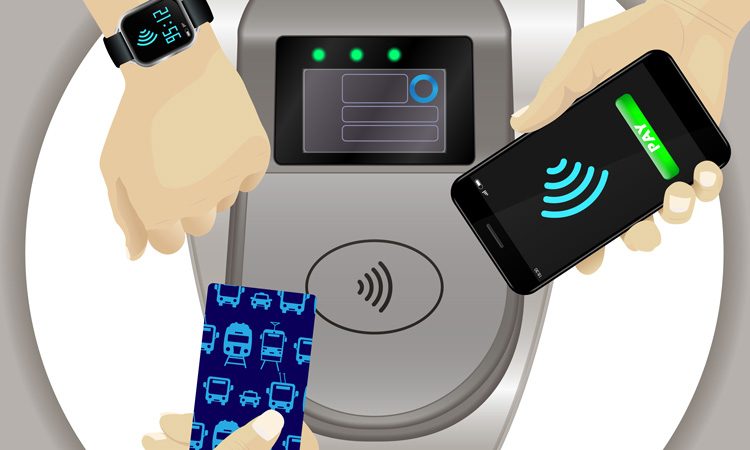
The COVID-19 has given contactless payments technology the boost it needed for widespread global adoption, as consumers worldwide started avoiding cash in fear of spreading the virus.
According to data presented by BuyShares.co.uk, contactless payments are expected to continue rising worldwide and hit a $665bn transaction value in 2021. The impressive growth is set to continue in the following years, with the total value of contactless transactions doubling up and reaching over $1.6trn by 2024.
China and the Far East to Generate $850B Worth of Contactless Transactions
Contactless payments are a quick, secure, and easy way to purchase products or services by simply holding a card or smartphone up to a payment reader for the transaction to proceed.
These tap-and-go payments became especially appealing to consumers amid the pandemic, allowing them to pay for goods and services without the need to swipe, enter a personal identification number, or sign for a transaction. Consumers can also make contactless payments by connecting their credit cards with a payment app like Apple Pay or Google Pay on their smartphone or smartwatch.
Over the years, this payment method became very popular in China, Australia, Canada, South Korea, and the United Kingdom. However, the COVID-19 fuelled the growth of contactless transactions among American consumers as well.
Last year, the global contactless payments market was worth $482.7bn, revealed the Statista and Juniper Research data. As the number of people choosing tap-and-go payments continues rising, this figure is expected to jump by another 40% in 2021. Statistics show the following years are set to witness a surge in contactless payments, with their value rising by another $1 trillion by 2024.
China and the Far East is the leading region for this type of transactions, generating more than half of all contactless payments globally. In 2021, countries from the region are expected to generate $313.3bn worth of transactions, 38% more than a year ago. By 2024, this figure is forecast to surge by 170% and hit an $849.1bn value.
Contactless Transactions in Latin America to Surge by 851% in Three Years
As the second-largest market globally, North America is expected to generate $194.2bn worth of contactless transactions in 2021, up from $156.5bn a year ago. Statistics indicate this payment method is expected to gain popularity among American consumers in years to come and hit almost $310bn value by 2024.
Last year, the European contactless payments market was worth $63.5bn. This figure is expected to triple and hit $224.1bn in the next three years.
However, Latin America is set to witness the most impressive growth of tap-and-go payments in this period.
Before the pandemic, contactless payments In Latin America were still emerging. Just a handful of issuers launched contactless cards, with several banks which developed contactless mobile wallets. However, the user uptake was minimal. The Americas Market Intelligence Survey revealed that in 2019, more than half of Latin American consumers were underbanked, and up to 90% of retail payments still took place in cash. However, the COVID-19 changed that.
In 2020, the Latin American contactless payments market was worth $4.6bn. Statistics show the total value of transactions is expected to jump by 165% YoY and hit $12.2bn in 2021. By 2024, this figure is forecast to soar by 851% and hit a $116.1bn value.
The full story can be read here: https://buyshares.co.uk/contactless-payments-to-double-and-hit-1-6t-value-by-2024/








