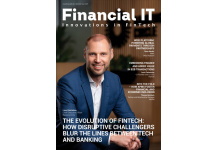
Financial IT Winter Edition 2025

- 16 Dec, 2025 03:00 am
THE NEW FINANCIAL ARCHITECTURE: BUILT FOR SPEED, GUIDED BY VALUES
Fintech is no longer evolving. It is accelerating.
As we close out 2025 and look ahead to 2026, speed defines the industry, speed of innovation, adoption, and expectation. We are moving faster than ever. At the same time, the questions facing fintech are becoming deeper, more human, and more complex. That tension shapes this Winter Edition.
Technology remains central.
AI has moved from support tool to core intelligence layer. We are now in the era of AI agents. These systems manage tasks once handled by humans, reconciliation, compliance, onboarding, and even parts of lending decisions. This is not just automation. It is orchestration. Hyper-personalisation is no longer optional. Products that adapt to behaviour and life context are becoming the baseline.
Blockchain is maturing.
The conversation has shifted from “Why blockchain?” to “What’s next?” Asset tokenisation, CBDCs, and stablecoins are moving from pilots into production. Cross-border transfers are becoming faster and cheaper. Fractional ownership is opening markets that were once exclusive. Finance is becoming programmable.
Infrastructure is catching up.
Cloud-native core banking is now essential. After cautious migration in 2023 and 2024, 2025 has delivered full adoption. Product launches that once took months now take weeks. Speed is the new standard. Meanwhile, early quantum computing experiments hint at future breakthroughs in risk modelling and portfolio optimisation. That future is still emerging, but no longer abstract.
Experience is the differentiator.
Embedded finance is dissolving old boundaries. Financial decisions now happen inside everyday moments, at checkout, in healthcare apps, and across travel platforms. Open banking and open finance are giving consumers clearer control. Super apps continue to rise, merging communication, commerce, and finance into single ecosystems.
DeFi remains a catalyst.
It is controversial at times, but undeniably influential. By replacing intermediaries with smart contracts, DeFi continues to test what financial systems can become.
Responsibility is rising alongside innovation.
Cybersecurity is now both a technical and cultural challenge. Biometrics are replacing passwords. Post-quantum security is moving from theory to necessity. At the same time, RegTech is accelerating. Regulation is no longer just a constraint; it is a system that demands innovation.
Inclusion remains critical.
Across emerging markets, fintech is expanding access to finance. Mobile-first banking, micro-lending, and AI-driven credit scoring are not just products. For millions, they are essential infrastructure.
So is sustainability.
Green fintech is gaining momentum. Carbon tracking, ESG-aligned tools, and impact investing are moving into the mainstream. Technology is becoming a mechanism for accountability, not only growth.
A cultural shift underpins it all.
We live in an age of digital abundance and growing fatigue. Consumers expect services to be instant and intelligent. They also demand transparency, trust, and alignment with their values. The industry must ask more than “Can we build it?” It must ask “Should we?” and “Who does it serve?”
As you explore the insights, forecasts, case studies, and conversations in this Winter Edition, I invite you to reflect on that balance. Fintech is shaping modern life. It is also being shaped by our collective priorities.
Here’s to a 2026 that is not just more innovative, but more intentional.
Warm regards,
Tawney Kruger
Editor, Financial IT