
Published
- 04:00 am

A new report from Soldo, the leading European expense management platform, unveils the scale of financial hardship UK employees face due to out-of-pocket expenses.
A staggering six in 10 (67%) were found to use their own money for business-related costs at least once a week - with a fifth (20%) saying they put their hand into their pocket daily.
This is resulting in employees taking drastic measures to cover the costs, especially when some are left waiting weeks, if not a month (20%), to be reimbursed. Over half (52%) have used personal credit cards, a fifth (21%) have gone into their bank overdraft, and 19% have resorted to asking for money from their friends or family.
The research shows out-of-pocket expenses are taking their toll on employees’ financial well-being and mental health. A quarter (24%) admit they have less money for groceries and other essentials, 17% are unable to save as much as they'd like, while six in 10 (61%) feel anxious having to cover business spend.
As a result, employees are calling out for businesses to change their expenses process. Six in 10 (62%) say they would like their company to provide cards to all employees to completely eliminate the need for reimbursements. Half (50%) want tools to automatically capture receipts (50%), while 45% stated that low-value expenses should come with less stringent approvals.
Carlo Gualandri, CEO and Founder of Soldo said: “Employees have made it clear they are struggling with the issues brought about by out-of-pocket expenses. They’re asking for less bureaucracy, more transparency, more fairness and convenience - all things that employers can help with by digitalising their expense process.”
“Company cards, where funds are pre-loaded in advance, remove the burden of out-of-pocket expenses. In addition to this, when they are linked with real-time spending dashboards, finance teams have better oversight and control of spending - a win, win in today’s economic climate.”
Rising inflation impacting expenses
And it’s not just those on lower incomes that are feeling the crunch. Employees of varying salaries are affected by rising inflation, which has had a knock-on effect on business-related costs like travel and entertainment.
The research shows even those earning a whopping £100k+ - 200% more than the average UK salary - admit their out-of-pocket expenses have "increased significantly" (60%).
Given the scale of anxiety for high earners, it’s unsurprising that over a third (39%) of respondents earning salaries of £20k to £50k - the medium income bracket - feel very uncomfortable paying for things like business travel.
Large companies are the worst ‘expense offenders’
Soldo’s research shows it’s large companies that are the least likely to make changes to their expense processes. Four in 10 (42%) employees of very large companies (5k+ employees) and a quarter (24%) of companies with 250-499 employees say their employers have made no changes to their expense policy at all.
In addition to this, employees on lower incomes (£12k-£30k) were also more likely to say their employer hasn’t done anything to address the issue (47%) compared to a third (33%) in total.
The full findings are available by downloading the report, Cost of business crisis: Why now's the time to rethink expense management.
- 06:00 am
FOMO Pay, the leading major payment institution headquartered in Singapore, announces its official membership in the Singapore Clearing House Association (SCHA), a prestigious organization comprising the Monetary Authority of Singapore (MAS) and elected financial institutions.
As an SCHA member, FOMO Pay will leverage the association's clearing services and facilities to enhance the reconciliation process for direct fund transfers between financial institutions, ensuring FOMO Pay clients' timely business transactions while safeguarding all parties involved by recording transaction details and validating fund availability.
This membership represents another significant milestone for FOMO Pay after becoming SWIFT network member recently in December 2022, reflecting the company's unwavering commitment to providing compliant and secure digital payment services.
The SCHA is an association formed in December 1980 to establish, manage and administer clearing services and facilities for cheques and debit and credit items of its members. The SCHA also establishes the rules on the rights and responsibilities of participating banks as well as the service providers for the various clearing systems. The SCHA is responsible for the Singapore Automated Clearing House (ACH), which runs the Singapore Dollar Cheque Clearing System, the United States Dollar Cheque Clearing System and the Interbank GIRO System.
- 01:00 am
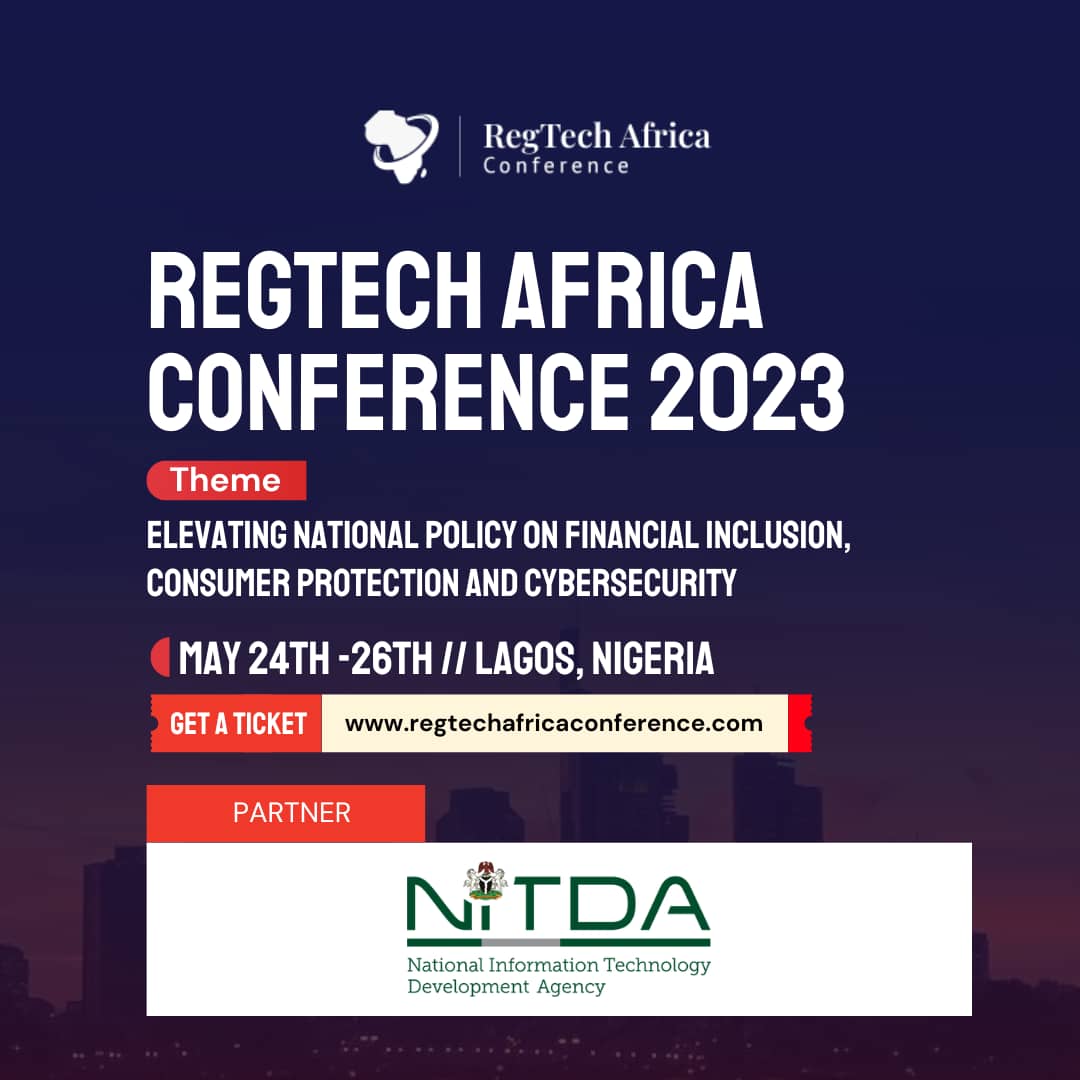
The National Information Technology Development Agency (NITDA) will be highlighting key standards, guidelines and frameworks for the development, standardization, and regulation of information technology practices in the face of the global digital revolution at the 2023 RegTech Africa Conference.
Kashifu Inuwa Abdullahi, Director General, NITDA who confirmed attendance at the RegTechAfrica Conference would discuss Information Technology policy objectives and provide frameworks within which the policies are implemented.
At the conference, Inuwa alongside other speakers would discuss issues that help cross the divide between regulatory reporting and technology spectrums and also look at different approaches in which technology and data could reduce the complexities in regulatory reporting thereby increasing operational efficiencies.
The conference which is scheduled between May 24 to 26, 2023, will also focus on the national imperatives for consumer protection in the wake of the emerging shift to digital economies and the associated challenges of cybercrime, which is one of the emerging threats facing the global economies as a whole.
The maiden edition of the conference held in partnership with the Bill & Melinda Gates Foundation, was hugely successful and boasts of high-level representation of businesses and regulators across key sectors such as financial services, technology, telecommunications and Venture capital companies.
Some speakers who already confirmed attendance at the event include Phillip Chitalu, Chief Executive Officer, Securities and Exchange Commission, Zambia; Ayisat Agbaje, Senior Special Assistant to the Governor on Development Partnership and Economic Planning, Lagos State and Yilebes Addis, CEO of EthSwitch S.C, Ethiopia; Winnie Wambugu, Mobile Money Regulatory Specialist at GSMA; Dr. Yele Okeremi, CEO Precise Financial Systems (PFS); Branka Mracajac, CEO, 9PSB; Dr. Raoul Herbourg, MD Giesecke+Devrient, Africa and Femi Jaiyeola, Group Chief Conduct and Compliance Officer, Access Bank Plc.
Cyril Okoroigwe, the convener of RegTech Africa Conference, said with the global Regtech market reaching over $10 billion this year, leading companies in the Regtech market and financial services sector are focusing on product innovations in order to expand their products and services portfolio and gain a competitive edge.
According to Okoroigwe, the reality of a harsh economic environment the world over has made it demanding to maximise cost efficiencies, increase requirements for sustainability as well as provide an increasingly heterogeneous financial market landscape.
The conference will feature an expansive line-up of stellar speakers, case studies, panel discussions, and presentations providing access to a wealth of industry-leading knowledge sharing best practices and experiences, spotlighting trends, information exchange, insights and outlooks with actionable takeaways.
The event is focused on attracting top professionals with an interest in regulations, compliance, technology, fraud, risk, monitoring, reporting, financial crime, cyber security, data management and identity management.
Technology service providers will share their knowledge, invited agencies of government at federal and state levels will share insights and showcase use cases in their domains, while international experts will provide perspectives on international best practices and use cases.
NITDA is mandated by the National Information Technology Development Act (2007) to establish standards, guidelines and frameworks for the development, standardization and regulation of Information Technology practices in Nigeria.
NITDA has published several instruments and monitors their compliance with the development of information technology in Nigeria. The instruments serve as a minimum benchmark in the development and implementation of information technology in Nigeria and are enforceable by law.
RegTech Africa Conference is the premier Conference on Regulatory Services Innovation and Excellence with a focus on Africa. It provides the platform for regulators, and regulated and key industry stakeholders to engage, collaborate and share knowledge around new technologies and practices that support better regulations.
For registration and partnership opportunities, please visit www.regtechafricaconference.com or email info@regtechafrica.com.
- 06:00 am
Member Access Processing (MAP) announced today that Founder and CEO Cyndie Martini will be stepping down as CEO on August 31, 2023. She will work with the Board to identify her replacement and ensure a smooth transition.
“Twenty-five years ago, Cyndie had a vision of how credit unions could compete with and match the credit and debit card service of large, national banks and she turned that vision into a successful company,” said Gordon Howe, MAP’s Board Chair. “She has been a magnificent leader. Under her careful watch, MAP has expanded its credit unions across the country and built an unrivalled reputation for customer service. We congratulate her on a historic career.”
Over her two and a half decades as CEO, Martini has made substantial impacts in the credit union industry. Prior to her arrival, few credit unions offered their members digital payment options, debit cards, or credit cards. Credit unions lagged behind large national banks.
Now, thanks to Credit Union Service Organizations (CUSOs) like MAP, credit unions can compete with and, in many ways, surpass larger banks on credit and debit card service. Martini's career also saw the evolution of credit and debit card security with encryption, phone-based payments, and the rise of online purchasing. Card services now represent the most frequent connection between members and credit unions.
“I take great pride in the way our team has helped the credit union industry," said Martini. "Every single day, Member Access Processing makes a difference for our credit union clients and their members. We have helped credit unions give greater financial access to their members. And we've done that with the best customer service in the industry. We have a spectacular team, and the company is well-positioned for future success. I can't wait to see what the future holds. I want to thank everyone that I've worked with over the years. We've made a difference in an industry we love and respect."
Cyndie Martini founded Member Access Processing in 1998. During that time, she has grown the MAP business throughout the United States and secured a strong, lasting relationship with Visa, Inc. Under her leadership, MAP remains the only CUSO to offer Visa Debit Processing Services to credit unions. Martini kept the company at the forefront of providing industry-leading products and services to credit unions.
- 09:00 am
Papaya Global, the SaaS fintech company providing global payroll and payments technology, has been named to Fast Company's prestigious annual list of the World's Most Innovative Companies for 2023.
This year's list highlights businesses at the forefront of their respective industries, paving the way for the innovations of tomorrow. These companies are setting the standard with some of the greatest accomplishments of the modern world. In addition to the World's 50 Most Innovative Companies, 540 organizations are recognized across 54 sectors and regions.
"Innovation is in our DNA at Papaya. We have entirely upended how global enterprise companies think about payroll. We are the first payroll payments company in the industry to help its clients navigate the needs of the local employee and the global employer. So to be named on Fast Company's impressive list is both humbling and motivating," said Eynat Guez, co-founder and CEO of Papaya Global. "We are inspired to continue creating and changing our industry to make it easier for global companies to support their workforces, despite increasingly complex local hurdles. Our team is dedicated to providing solutions that empower global companies and their employees to thrive, and we're honored to be recognized for that."
Payroll is the biggest expense, liability and commitment that a company has. As remote work and global teams are now here to stay in the new global workforce technology ecosystem, the last few years have seen significant investment in tech to make the complexity of managing global payroll and payments more simple and efficient. Ultimately, however, it seemed that many companies merely piled tech onto their existing systems in an attempt to contend with the new workforce reality.
Papaya Global launched an automated, end-to-end and flexible platform that takes on all that complexity without cobbling together multiple tools and vendors. Papaya is the only company in the industry that has the technology, compliance, infrastructure and partnerships to change how companies deliver global payroll and payments. With this innovative platform, Papaya gave global clients a tool that adapts to their needs rather than the other way around.
In the past year, Papaya acquired Azimo to provide the capability of licensed and regulated cross-border payments in over 160 countries and partnered with JPMorgan, Citibank and others to provide the "banking rails" for a cross-border payments solution within 72 hours. Papaya also partnered with Netsuite, Workday and other enterprise mainstays to bring seamless integration and automation to its clients and enhance their productivity and profitability with more automated services.
The World's Most Innovative Companies is Fast Company's signature franchise and one of its most highly anticipated editorial efforts of the year. It provides a firsthand look at the inspiring and innovative efforts of companies across all sectors.
- 04:00 am
Kount, an Equifax® company, announced the launch of Kount 360, a new identity and payments solution powered by the Equifax Cloud™. Kount 360 integrates the full suite of Kount products within a single platform and user interface to help businesses prevent digital fraud and achieve operational efficiency by removing the need to manage multiple-point solutions.
According to research by eMarketer and Statista, retail e-commerce sales in the U.S. are expected to grow 56 per cent between 2021 and 2026. At the same time, e-commerce losses to digital payment fraud in 2022 amounted to $41 billion globally, and industry analysts predict that figure will reach $48 billion by the end of 2023. Businesses are under constant pressure to provide consistent and secure online experiences.
Kount 360 addresses those challenges by offering end-to-end protection of the digital consumer journey by providing better access to first-party device information, email insights, payment history, and more. This helps companies rapidly identify, prevent and respond to fraudulent activities while removing unnecessary friction for their validated consumers. Additionally, these data attributes can reduce dependency on technology platforms and providers that only supply third-party data and improve marketing accuracy by verifying legitimate consumer profiles.
The Kount 360 platform's intuitive single-user interface helps fraud analysts efficiently navigate and leverage innovative fraud solutions without having to move from one program to another. The platform also uses advanced artificial intelligence (AI) for contextualizing data and scoring along with supervised and unsupervised machine learning models to promote stability, longevity and relevance. Each helps to reduce manual, time-intensive processes while providing accurate decisioning capabilities that can be automated or adjusted to fit the needs of a business.
"Over the past two years, Kount has remained focused on driving new product innovation to help our customers around the world better protect and enhance their digital presence," said Brad Wiskirchen, General Manager of Kount, an Equifax company. "Kount 360 provides our clients with an easy-to-use Equifax Cloud-based platform that streamlines access to multiple Kount solutions and integrates Kount and Equifax data, all within a single user interface. This enables our clients to quickly and effectively reduce fraud, improve the consumer experience, and focus on growing their business with confidence."
The Kount 360 platform harnesses the power of the Equifax Cloud and offers advanced capabilities to help businesses:
- Combat new attack vectors, such as address manipulation and cross-merchant card testing
- Greatly reduce traditional account takeover fraud while delivering passwordless authentication and reusable identities
- Detect and mitigate Personal Identifiable Information (PII)-cycling card testing attacks in real-time
- Utilize optional pre-built decisioning models for email insights, address verification and more
The platform also includes features that are designed to enable users and analysts to develop rapid rules deployment and intuitive fraud strategies. As a result, businesses can prevent more fraudulent activities and reduce false positives up to an additional 20 percent.
- 01:00 am
Starling Bank has chosen Barings’ Landmark in Manchester to house its new office in the North. The digital bank intends to create up to 1,000 new jobs for the region to fulfil roles across the company, including in operations, engineering, data science and cybersecurity.
The digital lender, which already employs 2,500 people in London, Cardiff, Southampton and Dublin, has chosen Manchester as the home for its Northern expansion due to its deep pool of fintech talent, with the city boasting the largest regional FinTech ecosystem in the UK. Manchester has also been chosen by the new Centre for Finance, Innovation and Technology (CFIT) to house a financial innovation hub that will drive the government’s ambitions to make the UK a technology and science superpower.
Anne Boden, Founder and CEO at Starling Bank said: “Manchester is one of the most important tech hubs in the UK. London’s success as a global fintech hub enables it to spread wealth and jobs throughout the UK and the wider economy. That’s exactly what we’re doing with this office in Manchester.”
Starling has signed a 10-year lease for Barings’ Landmark’s 14,061 sq ft 5th floor. Landmark has been selected for its central location in St Peter’s Square and for its sustainable design. The office runs on green energy, is built with sustainable materials, encourages employees to make greener transport decisions, and is home to two bee hives which each contain approximately 80,000 worker bees during the summer.
Susanna Yallop, Chief People Officer at Starling Bank said: “We’ve had some outstanding applications for our roles in Manchester already, affirming the city’s place as the tech capital of the North. We want to offer our talent the best of the best; the facilities at Landmark made it the obvious choice for us.”
Deborah Walker, Head of inward investment for Financial, Professional, and Business Services at MIDAS said: “Manchester is the largest regional tech hub outside of London, home to more than 10,000 tech businesses benefiting from our digital expertise and ambitious, collaborative nature.
“We’re excited to welcome Starling to this community not only for their best-in-class banking but their ethics. Manchester city-region is proud of our heritage in disrupting the norm and our history of empowering women dating back as far as Emmeline Pankhurst; here we align with Starling and look forward to working with them to take the financial services sector to new heights.”
Starling has strong ties with the North already through its association with the women’s football community in Lancashire. As the only bank in the UK founded by a woman, Starling donated a series of thousand-pound grants to women’s grassroots clubs in the region and partnered former Manchester City player Jill Scott MBE to launch a £200,000 kit giveaway for girls’ grassroots teams at Astley & Tydesley Girl’s FC. The bank also sponsored the UEFA Women’s EURO 2022, where it partnered Lauren Hemp, forward for Manchester City, to launch the first-ever fantasy football tournament for the Women’s EURO in the UK.
- 07:00 am

SmartSave Bank, a disruptive savings platform created by UK bank Chetwood Financial, has now received more than £1 billion in deposits.
SmartSave offers fixed-term, fixed-rate savings accounts, all of which are FSCS protected. Customers can deposit between £10,000 and £85,000, and they start earning interest as soon as they transfer money into their savings account.
As of 27 February 2023, the platform offers a one-year term with an annual equivalent rate (AER) of 4.26%; a two-year term with an AER of 4.36%; and a three-year term with an AER of 4.41%.
Having launched in 2019, SmartSave has experienced significant demand and accelerated growth over the past 12 months, with UK consumers and investors seeking more competitive returns as inflation reached double figures and the Bank of England (BoE) base rate rose from 0.1% to 4%.
Being part of Chetwood Financial, a digital bank, has allowed SmartSave to respond quickly in ensuring the BoE’s base rate hikes have been reflected in the rates it offers to customers, with a dedicated UK-based support team on hand to provide help and guidance to customers.
With headquarters in Wrexham, being based outside of London means that Chetwood has lower overheads, enabling SmartSave to offer the most competitive, market-leading rates.
Andy Mielczarek, CEO and Founder of SmartSave, a Chetwood Financial company, said: “In the midst of the cost-of-living crisis, people have been seeking ways to make their money work harder. In many instances, this has meant searching for savings products with the best rates – and we’re proud that SmartSave has established itself as a market leader in that regard.
“Combining smarter, online financial products free from gimmicks with exceptional customer service, SmartSave is an excellent example of how banking can be done; the customer at the heart of everything. To hit £1 billion in deposits is a great milestone, underlining how many people trust us with their hard-earned money. But we have every ambition to grow at an even greater pace in the months to come – because we know that doing so means more savers across the UK will be able to make their money go further, and ultimately that’s what we’re here to do.”
- 04:00 am

Mastercard, a leading technology company in the global payments industry, has collaborated with Google to launch Google Pay in Kuwait, strengthening digital payment capabilities in the country.
Cardholders can tap to pay with their Android phones or supported Wear OS devices in stores where contactless is in operation. They can also use Google Pay to make payments online and through apps.
A seamless way to transact, Google Pay saves customers from handing over their payment cards, touching physical buttons, or exchanging cash. Security and privacy are built into every aspect to ensure data is protected. Transactions are made with a virtual card number, so Google Pay does not share the real credit card number with the business, and therefore payment information remains safe. Customers save their cards for Google Pay in Google Wallet, a digital wallet that securely stores payment cards, loyalty cards, boarding passes, and more. The Central Bank of Kuwait recently granted several banks licenses to activate Google Wallet in the country.
Fueling efforts to accelerate the adoption of high-security digital payments, the launch aligns with the Kuwait Vision 2035 “New Kuwait” and the country’s ongoing digital transformation journey.
Erdem Çakar, Country Manager, Kuwait and Qatar, Mastercard, said: “We are delighted to join forces with Google to drive digital inclusion in Kuwait as we introduce Google Pay to the country and expand the variety of contactless payments available to its people. In a new world beyond payments, Google Pay blends convenience with security to provide peace of mind.”
To set up Google Pay, Mastercard cardholders can download the Google Wallet app from the Google Play store and follow the instructions, or visit pay.google.com online. Once their Mastercard is added, they can simply choose Google Pay at the checkout, confirm their purchase, and pay.
“When we launched Google Wallet last year, we wanted to give as many people as possible access to a secure digital wallet, and we are thrilled to expand our offering to Kuwait,” said Jenny Cheng, Vice President and General Manager, Google Wallet. “Tap and pay on public transit, save mobile tickets for shows, or keep your boarding pass at hand - these are just some ways you can use Google Wallet throughout your day.”
According to Mastercard’s New Payments Index 2022, 64% of MENA consumers (compared to 61% globally) increased their use of at least one digital payment method in the last year, including digital cards, SMS payments, digital money transfer apps, and instant payment services.
Mastercard has made a worldwide pledge to bring 1 billion people and 50 million micro and small businesses into the digital economy by 2025.
- 05:00 am
NEAR announced today that it is becoming the Blockchain Operating System (BOS). The Blockchain Operating System introduces an industry-first category: a common layer for browsing and discovering open web experiences, compatible with all blockchains – making NEAR the entry point to the open web for users and developers alike.
Today’s Web2 and Web3 are fragmented: Web2 because each account and experience is centralized and controlled by a company, Web3 because each blockchain network is a silo. The BOS solves this for both by offering a way to discover and use experiences with common services including a single identity, user-owned assets, and user-controlled data. Developers gain full composability of frontends and users have full portability of their data and assets.
The Blockchain Operating System works with any blockchain or Web2 backend and allows seamless access to a wide range of gateways. For end users, the BOS will be one seamless experience, similar to the ease of using a single app, even as users flow between experiences built by different developers or on different chains. For developers, decentralized and composable frontends offer a way to build and launch better apps, faster: forking existing pieces and components, leveraging built-ins like profiles, payments, notifications, and search without needing to host anything themselves.
“NEAR is more than just a layer-one blockchain, it’s an operating system that will make Web3 usable,” said NEAR Co-Founder and Pagoda CEO Illia Polosukhin, who shared the announcement and vision for the BOS at NEAR Denver, an event during the ETHDenver conference and hackathon. “The goal for NEAR has always been to make Web3 simple. Now we have all the components to deliver on this vision. We already have live examples from the ETH and NEAR ecosystems we are sharing at ETHDenver.”
The Blockchain Operating System launch also features the debut of alpha.near.org, the first preview of a gateway for developers to build on the Blockchain Operating System, and FastAuth, a groundbreaking solution for fast onboarding to the BOS via web login. Alpha.near.org is the first truly composable, easy-to-use multichain frontend for developers, with over 1800 components already live. These are the first key facets of the Blockchain Operating System and will empower developers to deliver better experiences to users. Alpha.near.org and FastAuth were built by Pagoda, the product and engineering company contributing core technology to the NEAR ecosystem.
FastAuth improves usability and accessibility for a range of end users and is easy for developers to manage. It is mobile-friendly, Pass Key enabled, and doesn’t require a crypto wallet to activate, while still enabling decentralized ownership – using human-readable account names that also keep power in the hands of users. FastAuth makes onboarding easier and faster than any Web3 solution today, and even most Web2 onboarding experiences. All of this is possible without ever needing a seed phrase or password, and it only needs to be done once: a single, secure, streamlined login for the entire web.
The BOS is a truly decentralized, community-driven effort with contributions from many teams across the NEAR ecosystem. Pagoda, the NEAR Foundation, and other teams from the NEAR ecosystem will build the BOS through 2023. Today’s announcement launches key developer products to power the future of building experiences on the open web. With the BOS, NEAR becomes a gateway to Web3 for the full range of software developers, whether they are from mobile web, Web2, Ethereum, Polygon, or any other blockchain ecosystem.
“We’re excited for the Blockchain Operating System to accelerate mainstream adoption and showcase the technical excellence of NEAR,” said Marieke Flament, NEAR Foundation CEO. “By offering solutions to make all of Web3 more accessible to everyone, we can achieve a truly multichain future that delivers real value to people.”








