Published
- 01:00 am

Nationwide Building Society has selected Accenture and Form3 to transform its digital payments infrastructure through the adoption of a cloud-native platform, aiming to enhance the customer experience with seamless, secure and fast transactions.
As digital payments continue to grow, the cost-efficient solution has been designed with resilience and compliance at the core, enabling Nationwide to adapt its operations to meet regulatory changes such as ISO 20022. Based on an account-to-account platform, the Form3 cloud solution connects financial institutions to payments schemes such as Faster Payments and BACS. Building on a decade-long collaboration, Accenture was selected by Nationwide as the strategic delivery partner for its payments modernisation program, bringing deep expertise in this space, along with strong cloud engineering and architecture capabilities.
Otto Benz, Payments Director at Nationwide Building Society said, “We’ve seen massive growth in cashless payments in the UK, with Nationwide processing around 450 million retail transactions each year. We needed a solution that will evolve alongside our business, facilitating an increasing volume of payments whilst meeting the expectations of our customers. This project, in collaboration with Form3 and Accenture, is a major step in simplifying and strengthening our payments processing.”
Through a series of phases which launched in 2022, Nationwide will migrate all types of retail payments from an on-premise platform to the Form3 cloud, with a robust process in place to ensure there is no service interruption for its customers.
“The accelerating digitisation of payments, coupled with ongoing economic turbulence, is shaping how consumers transact and move their money”, said Sulabh Agarwal, Global Payments Lead at Accenture. “Nationwide’s transformation is an excellent example of a traditional financial institution embracing next-generation payments and reinventing customer experiences at speed and scale – supporting future growth, continuous innovation and industry relevance.”
Michael Mueller, Form3 CEO, commented: “As digital payments increase, many financial institutions are starting to modernise their infrastructure to compete effectively. Working with Accenture, Form3 will help Nationwide transition their payment processing to one of the most modern, efficient, secure and resilient platforms in the market without impacting service delivery.”
- 03:00 am

Ahead of International Women’s Day, Binance, the world’s largest cryptocurrency exchange, is renewing its commitment to increase the number of women active and employed in Web3. Through women-focused education and mentorship initiatives, Binance to date has invested more than $2 million to support women in more than 10 countries around the world and will increase those efforts in the year ahead.
Binance is committed to creating and funding Web3 education for women
Binance Charity donated $2 million to fund over 36,000 dedicated Web3 scholarships for women in 2022, and will continue funding courses, programs and scholarships in 2023 with a focus on women and underrepresented communities. With women comprising only 37% of crypto owners, education is key to empowering more women to join the industry.
The 2022 scholarships to study blockchain and crypto-related courses at universities, schools and nonprofits were awarded to women in Germany, Nigeria, Kenya, Brazil, France, South Africa, Australia, and Ukraine. In honor of International Women’s Day, Binance Charity will also make an additional donation of $100,000 to Georgia’s Innovation & Technology Agency (GITA) to support web3 education and training for women. Binance Academy will provide educational content for GITA web3 courses.
Binance is committed to increasing female representation in the workforce.
Binance was co-founded in 2017 by He Yi, making the company one of the few female-founder crypto companies in the world. Less than 5% of crypto founders at top crypto companies are women. As of 2022, the number of female-founded cryptocurrency companies was approximately 292, out of more than 10,000 companies.
In order to further address the gender gap, Binance has created its first formal internship and graduate programs, which offer more access to careers in crypto for diverse talent, including women. The company also offers guidance and career advice to women through female mentorship programs, talent workshops, educational courses and lectures to share industry experience and insights on how to break into a career in Web3.
"As one of the few female leaders in the industry, I believe that we have a mission, through Binance Charity and Binance Academy, to help more women understand web3 and blockchain technology -- our education and internship programs aim to empower young women with knowledge and skills ready for industry disruption," said He Yi, Binance co-founder and chief marketing officer. "We believe that anyone with ideas can change the world, regardless of gender. We hope these commitments will result in more women on the front line of innovation and bring change to our industry.”
- 03:00 am

Davies comments: “I’m delighted to be joining a company with such great potential, and a team that obviously offers so much when it comes to tech and payment innovation. DIGISEQ have given me the perfect remit – to increase the numbers of banks and issuers that are signed up to DIGISEQ’s digital wallet, using my contacts and reputation within the industry to get in front of those players as quickly as possible.“With payments driving the use of wearables into other areas, such as ID and access, I truly believe DIGISEQ could be a real game changer within the industry. Once people experience wearables first hand, they cannot fail to see that convenience value, and when you have a product that’s as technically impressive as what DIGISEQ has on offer, that certainly makes life a lot easier.”
On the new hire, Terrie Smith, Co-Founder and Global Ambassador at DIGISEQ, comments: “The appointment of Angela as our new Head of Partnerships – Financial Services, demonstrates our ambition to reach new markets and serve even more banks and brands. With her established expertise, strategic excellence and proven business success, I am confident that Angela will help inspire and drive our vision to accelerate DIGISEQ’s rapid expansions plans and roll-out of its pioneering services both at home and abroad.”
- 04:00 am

Terry Brenner, Head of Legal, Risk & Compliance for OCR Labs Global, comments, "We can now fully support right to work and DBS identity services and offer fast-tracked digital services to every employer in the UK, as well as market leading employment agencies like Reed Screening.The UK has a diverse population and all citizens should be able to obtain and use digital IDs safely and securely. Our Zero Bias AI technology eliminates barriers that lead to exclusion, so that everyone has access to digital ID systems in society, such as recruitment and right to work, right to rent.”
Paul Clements, Product Manager, Reed Screening, comments: “Reed Screening uses OCR Labs to provide the highest level of assurance for the ID and Right to Work checks we perform for organisations across all sectors. The solution is invaluable for not only verifying the identity of the individuals, but also for strengthening the identity validation and identifying fraud or other risk indicators”.
- 05:00 am

YouBiz, the corporate card and finance management platform by YouTrip, announced their strategic partnership with cloud-based accounting software provider Xero today. The partnership aims to equip local businesses and startups with more capabilities to manage their corporate expenses efficiently through the integration of Xero's accounting software. Companies will also be able to lower their operating costs and build more digital-ready businesses for the future economy. This is aligned with SMEs' top business priority of reducing operational costs, as reported in the recent "2023 Business Spend Insights" white paper published by YouBiz.
"We are excited to work with Xero to offer SMEs more resources for automation of financial processes, an area of business that many companies are laser-focused on this year. With growing inflation and rising prices, finance automation platforms with enhanced accounting capabilities will allow SMEs to cut down on operational costs significantly and redirect valuable funds and resources towards their global expansion plans," said YouTrip Co-Founder and CEO Caecilia Chu.
YouBiz's report also revealed that 85% of SME executives do not have full, real-time visibility on company spend. Unlocking automated finance workflows through YouBiz and Xero gives business owners a better overview of their spending and effectively digitalises the management of company finances.
Reducing costs was also a top business priority for businesses surveyed in Xero's 2023 Accounting Industry Report, which listed the implementation of business tools and technology as another key priority for companies in the year ahead.
The partnership comes at an opportune time then, as SMEs revamp the way they operate, adopting more digital tools to monitor corporate spend and automate key accounting processes including invoicing, GST returns and bank reconciliations. Xero is also the first accounting partner to be listed on YouBiz Perks, YouBiz's resource and rewards platform that offers business owners access to exclusive deals on popular digital marketing and operational tools, as well as other business services.
Through this integration, YouBiz users can unlock automated sync on all multi-currency accounts with Xero, reducing manual reconciliation of expenses and erroneous accounting entries. YouBiz users who are new to Xero can also enjoy 50% off on any Xero accounting plan for 6 months.
"With Xero on board, YouBiz users will have better control and greater visibility over their business spending. And as we continue to be a valuable and reliable partner to SMEs, YouBiz will strive to forge more partnerships with digital brands and businesses that SMEs work with, to bring more returns and cost savings beneficial to companies, and aid them in their digitalisation efforts," added Caecilia.
- 08:00 am

Key figures from the fintech industry will gather to address parliament this month to discuss the future of the industry with MPs.
The event, entitled The Future of Fintech is organised by the Parliament Street think tank and chaired by former business minister Dean Russell MP and will take place on 20th March 2023.
The expert panel includes Fraser Stewart, founder of life-planning platform Lyfeguard, Khalid Talukder, co-founder of FX company DKK Partners, Neh Thaker, co-Founder of SME financial toolkit HedgeFlows and Jay Patel, Head of Product Management at regtech specialist Encompass Corporation.
Hot topics under discussion will include how fintech can transform the banking and financial services industry, strengthen consumer rights, and improve banking access for small and medium-sized companies.
Fraser Stewart, co-founder, Lyfeguard said: “The fintech industry is set to play a critical role in empowering businesses, banks and consumers to get access to the data they need for decision-making. It’s exciting to be part of a debate that brings together so many providers and specialists to discuss the future of our industry.”
- 01:00 am

Following the announcement of impressive growth in the past year, Weavr has confirmed the acquisition of B2B Open Banking platform, Comma Payments, in a first-of-its kind deal within the world of embedded finance.
The acquisition, which is largely equity-based, will see Weavr retain most of Comma’s current workforce, including the company’s CEO and founder, Tom Beckenham, and its Chief Technical Officer, Gianluca Pengo. As a result of the acquisition, Comma’s unique technology enhances Weavr’s Plug-and-Play Finance proposition for embedded finance.
With Comma, Weavr has become the first embedded-finance provider to bring together Banking as a Service (BaaS) and Open Banking into an optimised embeddable payment solution for B2B applications ranging from payroll, accounts payable, and other forms of mass payments.
Anne Boden famously told MPs that current implementations of Open Banking are “clunky, and you would not want to use them”. Comma has uniquely addressed this problem, making payments via Open Banking a smooth and time-saving experience. Together with Weavr’s current BaaS capabilities, the combination will enable customers to progress seamlessly from making payments via their own existing bank accounts to do so through Weavr-provided accounts that offer richer controls and payment options than those given by many banks to small businesses.
Comma has been a pioneer in the Open Banking sector by providing solutions that eliminate the need for manual payments that plague millions of small businesses. The company’s award-winning technology can be embedded into B2B financial software to enable data driven payments for the first time. Businesses can save time and cost by making bulk payments for processes such as accounts payable and payroll processes, while greatly reducing the risk of manual errors.
Speaking on the acquisition of Comma, Alex Mifsud, co-founder and CEO of Weavr commented: “This is the latest, and perhaps most exciting, step in Weavr’s recent growth journey and puts the company in the best position possible to deliver even more value for our ever-expanding customer base. Comma has created the best B2B open-banking payment solution we’ve ever seen, which is now available to our users.
“Clearly, Open Banking and BaaS represent the two most innovative trends in finance right now, and it’s exciting to finally bring them together into one powerful solution. As a company committed to breaking new ground in this field, we’re delighted to be the first to offer a solution of this kind and feel confident that our customers will immediately benefit from greater functionality and a more seamless onboarding process.”
Speaking on his decision to join Weavr, Tom Beckenham, Comma’s founder and CEO, commented: “We’ve watched Weavr’s growth closely and saw synergies with their plug-and-play model that could have greatly benefited our customers. We are delighted to be joining forces and to be part of the journey. With Comma teaming up with Weavr, the combined company can begin to offer a first-of-its-kind service that will greatly benefit customers across multiple sectors”.
The announcement of the Comma acquisition further bolsters Weavr’s continued momentum over the past year. The company recently announced that, since receiving a $40m Series A funding round in early 2022, it has more than tripled its user base and experienced a huge surge in transactions through its platform, with growth of over 340% in just 12 months. Now, the company is set to further grow these figures with a unique and enhanced offering.
- 04:00 am
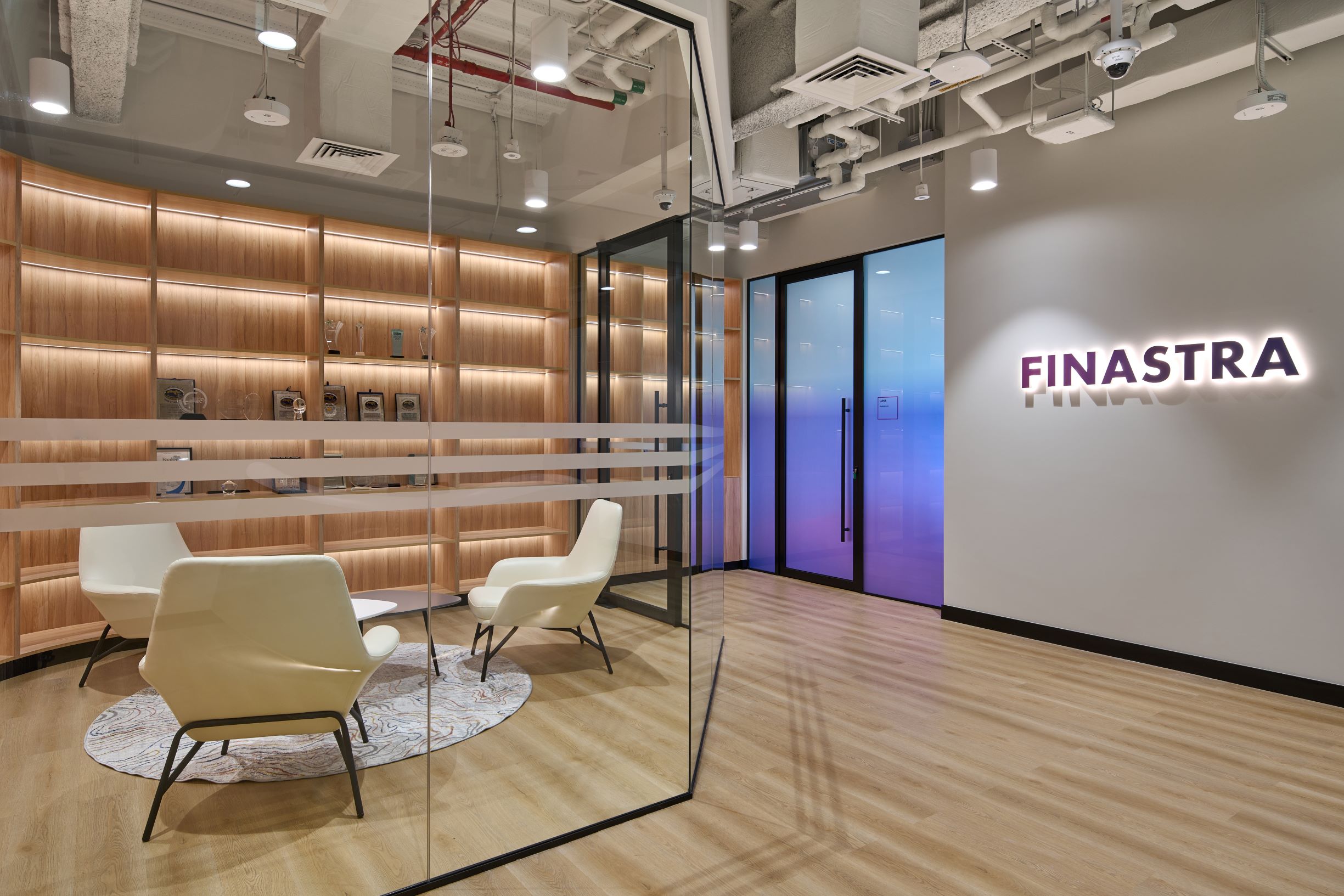
Finastra, a global provider of financial software applications and marketplaces, has opened a new office in the Dubai International Finance Centre (DIFC). Finastra has been operating in Dubai for over 35 years and more than 300 banks in the Middle East and Africa (MEA) region use one or more of its solutions. The new office in ICD Brookfield Place, one of Dubai’s most sustainable and prestigious buildings, provides an ultra-modern workspace to enable employees to better collaborate and innovate with customers and partners in the region and beyond.
To celebrate the move, Finastra is hosting an in-person Treasury & Capital Markets Forum on March 9th, 2023. The event will discuss how banks can future-proof their treasury and markets division for innovation and growth, set up efficient regulatory compliance frameworks in times of tightening regulations, and develop a flexible treasury technology operating model by leveraging microservices, an open developer platform, applications marketplace, and cloud technology.
Based in the office, Luc Hovhannessian, CRO, Treasury & Capital Markets at Finastra said, “Moving to the DIFC reflects our commitment to some of our key company values: obsessing about customer, partner, developer and employee success, and doing well by doing good. Working in a state-of-the art building in the heart of Dubai’s financial district enables us to enhance how we do business in the region and worldwide, while further reducing our environmental impact and supporting our global ESG vision of reaching net zero carbon by 2030. We are excited to celebrate the move with our first in-person industry event in the new office on March 9th.”
The DIFC is one of the central financial hubs for the Middle East, Africa and South Asia (MEASA), made up of 72 countries, that connects these fast-growing markets with Asia, Europe and the Americas to drive forward the future of finance. ICD Brookfield Place is the tallest and largest LEED Platinum certified office building in Europe, Middle East and Africa (EMEA). The building was constructed using only wood from certified sustainable forests and recycled materials. It is designed with optimized energy performance, achieving over 30% reduction in energy compared to the industry baseline, bathrooms that use 48% less water than the industry baseline and LED lighting throughout with an automatic switch-off system.
These environmental benefits will enable Finastra to progress against its carbon reduction commitments, while also providing a state-of-the-art facility for all its key stakeholders in the region.
To sign up for the Treasury & Capital Markets Forum, click here.
- 05:00 am

FewStones, a leading video production company trusted by over 500 brands globally, has partnered with TripleA to offer cryptocurrency payment options for their services.
With this partnership, fewStones expands its payment options to meet increasing demand from customers who prefer to pay in cryptocurrencies. This opens fewStones up to a client base of over 420 million crypto owners globally for its animation, live action, live streaming, video production and photography services.
Trusted by global brands including Singapore Airlines, Panasonic and Samsung, this move aligns with fewStones' goal to provide convenient payment solutions, making their video production experience hassle-free.
TripleA, a cryptocurrency payment gateway licensed by the Monetary Authority of Singapore (MAS), is committed to providing secure white-label payment solutions to businesses. With this collaboration, TripleA will enable fewStones to accept payments in major digital currencies like Bitcoin (BTC), Ethereum (ETH), Tether (USDT) and USD Coin (USDC).
"We are excited to partner with TripleA to offer our customers this new payment option," said Sophie Normand, CEO of fewStones. "As the cryptocurrency market continues to grow, it's important for us to stay ahead of the curve and offer our clients payment solutions that meet their needs."
"TripleA is pleased to collaborate with fewStones to provide a secure and reliable payment gateway for their customers," said Eric Barbier, CEO of TripleA. “We are excited to support fewStones in increasing their revenues by allowing them to tap into the huge client base of cryptocurrency owners."
- 09:00 am

Ahead of International Women’s Day on Wednesday 8th March, TotallyMoney analyses national credit report data to investigate the UK’s financial inclusion gender gap, and the key drivers behind it.
- On average, women have a 10 point lower credit score than men, a gap which exists throughout their entire lifetime
- Lenders are 16% less likely to provide women with pre-approved credit card offers, and women find themselves eligible for 22% fewer cards
- Women receive higher credit card APRs than men (0.8 percentage points)
- Women are given a 31% lower credit limit across all card accounts
Additional research by TotallyMoney and PwC found that 10.7 million UK women are locked out of accessing mainstream financial products.
Below, we cover the impact of a poor credit score, the diffrerences in credit scores between women and men, the drivers behind this, and quotes from Danielle Treharne of the Financial Inclusion Commission, and TotallyMoney CEO, Alastair Douglas.
The impact of a poor credit score
Last year, research found that for a credit card balance of £2,472, those with a poor credit score could be paying an extra £58 p/m (£693 p/a) in interest when compared to those with a good credit score.
In addition to cards, a better credit score can open up a bigger range of borrowing options, with more competitive offers and better rates for loans, mortgages, overdrafts, and other general finance products. A poor credit score can also force customers onto more expensive prepaid energy tariffs, pay as you go sim deals, result in higher car insurance costs, and impact one’s chances of renting a property.
Lower limits, higher APRs, and shorter interest-free offers, combined with paying more for everyday essentials add further pressure to people’s finances. This can make it more difficult to keep up with commitments, potentially compounding long-term credit score damage.
Mind the gap
Last year, TotallyMoney and PwC investigated the UK’s ‘under-served’ population, people with low financial resilience, and who may struggle to access credit. Taking a closer look, it shows women are more likely to be under-served than men, with 10.7 million women locked out of accessing mainstream credit products.
The research also discovered that women are 38% less confident in choosing the right financial product for themselves. So while they may not be under-served, they could perceive themselves to be.
Through analysis of ~2 million credit reports, TotallyMoney found that on average, women have a 10 point lower credit score than men, are less likely to be offered credit (16% less likely to be pre-approved for a credit card, and are eligible for 22% fewer cards), and are more likely to receive a worse deal (an APR which is 0.8 percentage points higher). It also found that women are provided with 31% less credit across all credit card accounts than men. Full analysis of what makes up a credit score, and the differences between those of women and men can be found towards the bottom of this page.
Driving the divide
In addition to assessing one's ability to keep up with repayments (above), lenders review how much a customer can afford to borrow. This includes income, type of income, and regular outgoings. Credit reports are largely built around the money people earn, and how they use it. So, if incomes are different, then the way people manage their money, and the options available to them will be different.
ONS data shows that among full-time employees, women earn 8.3% less than men. Meanwhile, the part-time pay gap shows women earn 2.8% more than men. However, with more women than men in part-time employment, and part-time workers generally earning less, the gender pay gap across full-time and part-time employees is much larger — sitting at 14.9%.
The pay gap increases for mothers, older women, and women caring for relatives, children and grandchildren. Separate research estimates that women provide £382bn of unpaid childcare per annum, with an additional £50bn worth of unpaid adult care‖.
TUC research has found the pay gap to start as early as apprenticeship level (18.4%), with women being less likely to find a permanent position on finishing their course. It goes on to have life-long implications, which result in a pension savings gap of £136,800, meaning women’s pension wealth is a third (33.5%) of men’s.
Research from the FCA found just 42% of all adults have confidence in the financial services industry, with only 35% agreeing that firms are honest and transparent. This lack of confidence increases for the vulnerable, and over-indebted.
Danielle Treharne of the Financial Inclusion Commission comments:
“According to the FCA’s 2022 Financial Lives Survey, women were more likely to have low financial resilience or be in financial difficulty. In fact, 28% of women surveyed had low financial resilience, compared to a whole population average of 24%. It is shocking that in 2023, such statistics exist, but this is a story told time and again across credit, pensions, and savings.
“This fantastic research by TotallyMoney further serves to emphasise the financial inclusion gap affecting 11 million women.
“But this goes beyond the gender pay gap, and additional structural problems continue to exist in 21st century Britain. Interrupted work patterns, unaffordable childcare costs, and low levels of engagement with financial products mean women are left behind.
“The Financial Inclusion Commission is calling for the introduction of a Government-led national financial inclusion strategy and a ‘must have regard’ to financial inclusion for the FCA. These will help to streamline numerous initiatives and ensure Government and regulator accountability on tackling financial exclusion affecting various groups, including women.
“Personally, I am delighted to see how forward-looking FinTechs, such as TotallyMoney, are leading the way with representation of women in senior positions. These women will be able to provide the crucial perspective needed to tackle structural issues affecting women and their finances nationally.”
Alastair Douglas, CEO of TotallyMoney adds:
“As it stands, the credit system is flawed. Half the population shouldn’t be struggling, and women shouldn’t be disproportionately disadvantaged. The financial services industry should be striving for equity, but in reality it’s struggling with transparency, and trust.
“Giving people the tools they need, and putting them in control of their own data is key. Open Banking can help, and customers can leverage its power to better understand, and manage their own finances. It also provides lenders a more accurate, live view of somebody’s affordability.
“However, it doesn’t address the gender pay gap and its impact on a woman's finances over her entire lifetime. At its current level of 14.9%, women are working the equivalent of two months free — each year.
“Change starts from the top, with firms ensuring that women are represented at all levels of business, and that processes are debiased. This begins during hiring, through to performance assessments, and reporting on progress.
“At TotallyMoney we’re committed to our mission of helping everyone move their finances forward. We understand that if we are to truly understand the needs of our diverse customers, we need to begin with an inclusive and fair environment throughout our business.”