Published

Ali Hamriti
CEO and Co-Founder at Rollee
With ongoing economic uncertainty and the cost-of-living crisis, financial pressures have been amplified for many people, see more
- 02:00 am

New research launched today by Blancco Technology Group (LON: BLTG), the industry standard in data erasure and mobile lifecycle solutions, reveals the extent to which healthcare and financial services organizations have embraced cloud, as well as the effects cloud adoption has had on data classification, minimization and end-of-life (EOL) data disposal.
Based on a global survey of 1,800 respondents, the study, Data at a Distance, found extensive cloud adoption, thanks to the ease of managing increasing volumes of data. However, 65% say the switch has increased the volume of redundant, obsolete or trivial (ROT) data they collect.
Increasing volumes of stored data brings with it many issues and is of growing concern for organizations operating in heavily regulated markets. In addition to regulatory noncompliance risks, there are the cost and sustainability impacts of storing this data, as well as security concerns—more data means a greater attack surface and more liability in case of a breach.
Data management best practices indicate that organizations need to know what data they have collected, including its value, where it’s stored and when it needs to be permanently erased. Yet just over half of organizations (55%) can boast a mature data classification model that determines when data has reached EOL—meaning that nearly half fall short when it comes to determining when to dispose of cloud-stored data.
When asked about their cloud approaches, 60% of respondents said that their cloud provider handles EOL data for them. However, more than a third (35%) do not trust their cloud provider to appropriately manage EOL data on their behalf.
“Healthcare and financial services providers handle some of the most confidential and sensitive information possible. While they have made the move to cloud for better connectivity, digital transformation and ease of managing data, many of them are still falling short when it comes to knowing how to reduce risk and maintain compliance when that data is no longer serving a business function,” said Jon Mellon, President Global Sales, Marketing and Field Operations at Blancco.
“Covid changed working norms for all industries, and adopting cloud helped adapt to those changes. But hackers also changed their approach. The industry reported that 45% of breaches that occurred in 2022 were cloud based. Yet our research found multiple instances of insufficient practices for managing EOL data in the cloud.”
According to Blancco’s global study of 1,800 healthcare and financial services respondents:
- 65% of organizations feel that they can better manage EOL data on premises than in the cloud
- 63% use software-based erasure with an audit trail for managing all data – both on-premises and cloud, but a worrying 38% carry out erasure without an audit trail
- 91% of those surveyed recognize data classification as an important first step for achieving data security
- 36% are just beginning to implement a policy for data classification and minimization, with nearly one in ten yet to implement any such process
Regular assessment of data and setting retention periods is a critical and growing concern as regulatory requirements increase for the healthcare and financial services industries. The study found that 57% of organizations have a data schedule where they review different data types to determine whether data has reached end of life. But just over a quarter (28%) use the blunt approach of automatically setting a data expiration date, which is simple but ineffective: it does not consider what the data is, what it’s worth, or the risk of it getting into the wrong hands.
Healthcare and financial services organizations are, however, aware of the new challenges for managing EOL data in the cloud. In fact, 65% have found it necessary to reassess how they determine what data is no longer needed since making the switch from analog to digital. But in addition to falling short when it comes to data classification and minimization, a worrying 59% of respondents reported using processes without verified data destruction at least some of the time to deal with at least some of their EOL data. This can leave data intact and retrievable without a proper audit trail to prove proper EOL data disposal.
Best practice that may have been in place in on-premises data centers can be left behind when organizations migrate their data to the cloud. While it is standard for cloud providers to refer to data deletion or destruction processes within user agreements, the practice of receiving clear assurances that specific sensitive data has been removed for good is still in its infancy, leaving highly regulated industries vulnerable to both regulatory noncompliance and unauthorized data access threats.
Rapid covid-generated cloud adoption is bringing to light the need for organizations to rethink ownership of their data in a heavily regulated and threat-saturated market. The report lists best practices that will guide these and other data-dependent industries towards ensuring regulations are met and that they can continue to protect both themselves and their customers. For full analysis, read the report here: https://www.blancco.com/data-at-a-distance.
- 02:00 am
Integral, a leading currency technology provider to the financial markets, announced today that Grupo Bursátil Mexicano (GBM), the leading Mexico-based brokerage firm with over USD$25.8 billion AUC, has selected Integral’s cloud-based SaaS FX technology to empower their growth strategy in Mexico.
Integral was awarded this deal in a competitive process with other technology vendors and represents another important SaaS partnership in Latin America as part of Integral’s global growth strategy. For GBM, Integral’s FX technology solution provides direct liquidity connectivity, a sophisticated pricing engine, and complete risk management capabilities. The solution enables the broker to support both voice dealing and fully electronic workflows in modern branded user interfaces. As a result, GBM will be able to scale to service its growing customer base and address new market segments.
“The implementation of Integral’s SaaS technology enables us to better support our expanding client base, minimizing operational and market risk, all the while reducing our internal costs,” said Carla Merino Olivera, Head of Fixed Income/Sales at GBM. “With added touches, such as dedicated local Spanish-speaking team, Integral is a natural fit to support our growth strategy, that requires efficient use of technology and workflow automation tools.”
“This agreement demonstrates Integral’s global presence as a leading currency technology partner, supporting advancements in FX trading in the Latin American region,” added Harpal Sandhu, CEO, Integral. “Our cloud-based SaaS offering is well suited to support GBM’s growth, benefitting from an FX workflow that is fully automated and highly configurable, spanning across the entire trading lifecycle to deliver better outcomes for their customers.
- 04:00 am
Member Access Processing (MAP), the nation’s leading provider of the Visa DPS Debit, Credit, ATM, Prepaid, and Mobile Processing platform to credit unions, has opened a virtual office and consolidated its operations, both digitally and in the cloud, to leap ahead of competitors with an environmentally sustainable and digitally agile organizational system. Years ahead of the industry, MAP is leading by example as it helps credit unions meet the persistent changes facing retail financial institutions.
“The pandemic was a time when companies decided they could either hunker down and weather the storm or leverage the situation to grow and learn,” states Joyce Carter, Chief Customer Officer. “MAP re-examined all our operations, studying and enhancing proficiencies, and, along the way, cutting wasteful or inefficient practices. This allowed us to reduce costs and increase our client service levels. Service, a hallmark of the MAP brand, is top of mind in everything we do. MAP was able to complete all these efficiencies while still receiving an 85 NPS in 2022.”
MAP’s transition to a virtual office will reduce carbon emissions, minimize waste and conserve energy and other limited resources. MAP’s new virtual work environment will prevent 250 to 300 tons of CO emissions annually thanks to eliminated commutes and purged offices. This is equivalent to recycling 85 to 102 tons of waste instead of landfilling it.
Moreover, MAP’s cloud and digital operations will nearly eliminate paper use. The average office worker uses about four dozen sheets of paper per day, it’s estimated that 45% of paper printed in offices ends up trashed by the end of the day. The typical employee spends 30-40% of their time looking for information locked in email and filing cabinets. Eliminating old business practices allows its team members to focus more on its credit union clients and the payment needs of their cardholder members.
MAP also decided that the closing of the company's headquarters could serve an even greater good. The company donated its furniture, equipment and supplies to Union Gospel Mission (UGM). UGM is a local nonprofit that cares for homeless neighbours throughout greater Seattle. Started in 1932 to feed and care for those suffering hardship during the Great Depression, UGA addresses root causes to break the cycle of homelessness by meeting urgent physical needs, building relationships, and offering long-term recovery programs.
- 03:00 am

A Cumbrian tech company could enable the rollout of national digital ID cards without giving the state access to citizens’ personal data.
Former Labour and Conservative leaders Sir Tony Blair and Lord Hague recently urged the adoption of compulsory digital ID cards that would allow people to prove their identity, age, driving licence validity, right to live and work in the UK and even their educational qualifications.
Sir Tony attempted to introduce ID cards when he was Prime Minister only to run into opposition from civil liberties campaigners concerned at what they saw as unnecessary data collection and intrusion by the state.
But SMS Speedway, based in Carlisle, has developed a system that allows users to prove their identity without sharing sensitive personal data.
Its KnowingMe ID app, developed in a joint venture with the Swedish company Svipe, is already available to download for Android devices with an iOS version for iPhones due to launch soon.
Users scan their biometric passports with their smartphones. They can then use the app to confirm their identity to any organisation – a bank, for example – that needs irrefutable proof that they are who they say they are.
Brad Kieser, chief executive of SMS Speedway, said: “Our app allows people to take control of their data. That data sits securely, encrypted, on your phone.
“When a business or other entity needs to verify your identity, they send a request which you can accept or deny. If you accept, they get confirmation of your identity but they never get access to your data.
“It is absolutely secure because it relies on the biometric chip in your passport. Photographs can be manipulated but the chip is tamper-proof.”
SMS Speedway has already identified dozens of commercial applications for the KnowingMe ID app from verifying applications for mortgages, bank accounts and tenancy agreements, to proving that individuals are not on a sanctions list, assisting with lost password recovery and enabling access to hotel rooms.
Brad believes that the technology could easily be adapted to offer a national digital ID card, should a future government decide to pursue that, without the need for citizens’ personal information to be held on a central database.
He added: “This is absolutely going to revolutionise life in the UK. From an ethical and moral standpoint, people should have control over their personal data and our app allows them to have that control.”
The system is attractive to businesses too because it relieves them of the risks of holding customers’ personal information.
British Airways, for example, was fined £183m in 2019, later reduced to £20m, after hackers stole the personal data of more than 400,000 customers.
There have also been ransomware attacks where hackers seize control of data then blackmail the business, threatening to release data unless they pay up.
Brad said: “Our system allows businesses to request information from you at the point of purchase. They don’t need to store your information and put themselves at risk by keeping sensitive stuff that hackers might want to get at.”
Other potential future uses include storing medical records and details of allergies, combating benefit fraud, and personal safety allowing householders to verify that cold callers – perhaps claiming to be from a local authority or utility company – are genuine.
- 01:00 am

Nexi, the European Paytech, has recorded a 134% increase in volumes in in-store smartphone transactions in Italy in 2022. In addition, the number of Nexi cards registered on mobile payment apps such as Google Pay, Samsung Pay and Apple Pay increased by 53%.
The data was released during the presentation of results from the Innovative Payments Observatory of the School of Management of the Politecnico di Milano. According to the Observatory’s own data, the total volume of all in-store smartphone transactions in Italy has grown by 122%.
"This data confirms that flexibility and comfort are becoming increasingly important when it comes to digital payments, both for consumers and merchants. To meet these needs, we will launch SoftPOS in Italy in the coming months,” commented Vanessa Maneo, Head of Marketing Pos Italy in Nexi. “Merchants will be able to download the app to their smartphones to accept digital payments directly."
- 02:00 am

Gulf Capital, one of the largest and most active Private Equity firms investing from the GCC to South and Southeast Asia, has today announced that it has been awarded a Financial Services Permit (FSP) from the Financial Services Regulatory Authority (“FSRA”) of the Abu Dhabi Global Market (“ADGM”).
The newly granted licence will enable Gulf Capital to manage assets and funds as well as to perform other regulated asset management activities in or from the Abu Dhabi Global Market. Launched in Abu Dhabi in 2006, Gulf Capital has now offices in Abu Dhabi, Dubai, Riyadh, Cairo, and Singapore, with its newly inaugurated global headquarters based in ADGM. The company, which was launched in Abu Dhabi in 2006, has a solid and long track record of investing private capital to build global leaders out of the GCC and is now well positioned to capture the phenomenal growth across the West-East Asia corridor.
His Excellency Hareb Al Darmaki, Chairman of the Board of Gulf Capital, said: “We are committed to expanding our presence in Abu Dhabi and to basing our global headquarters in the prestigious ADGM. Receiving a full asset management licence from FSRA will help us meet investors’ increasing demand for more regulated and transparent asset management activities within an established world-class financial centre. Gulf Capital remains steadfast about upholding the highest standards in our asset management operations, which are reflected in the international best practices that ADGM has embedded in its standards and regulations.”
ADGM offers a sophisticated and deep financial ecosystem and strategically connects the East and West regions. It continues to bolster its leadership position amongst financial centres globally.
His Excellency Ahmed Al Zaabi, Chairman of ADGM, said: “We congratulate Gulf Capital on securing the FSRA asset management licence and welcome the team to the ADGM family. Our world-class regulatory framework will help Gulf Capital reinforce its position as a private equity market leader which operates in a trusted and regulated environment.”
Dr Karim El Solh, Co-Founder and Chief Executive Officer of Gulf Capital, concluded: “Our new asset management licence from FSRA is the next step in building our franchise. It offers Gulf Capital the flexibility to domicile and administer its upcoming funds from ADGM, a leading international financial centre that offers a large catchment area between West and East Asia. From our new global headquarters here, we will continue to maintain highly regulated operations and to tap into markets along this buoyant growth corridor. ADGM is the ideal launchpad for Gulf Capital’s next phase of growth, as we continue to attract international and regional investors to our funds, and as we cement Gulf Capital’s position as the leading private equity firm investing across the high growth GCC to South and Southeast Asia regions, the world’s fastest growing investment corridor today.”
Gulf Capital has USD 2.4 billion in assets under management (AuMs) and has to date closed 38 investments. As a thematic investor, the Company focuses on investing in resilient, fast-growing sectors of the future such as Technology and Fintech, Healthcare and HealthTech, Business Services, Consumer and Sustainability. It has recently opened three new offices in Abu Dhabi, Cairo, and Singapore to capture the rising growth along the West-East Asia corridor.
- 06:00 am

Minima and Inferrix, both innovators in blockchain and IoT infrastructure, have joined forces to spearhead a groundbreaking innovation in IoT connectivity and asset management for smart buildings and smart cities.
Through their partnership, Minima's cutting-edge decentralised mobile native blockchain technology will potentially be integrated with Inferrix's impressive array of IoT edge + AI products. These include wireless sensors, controllers, and intelligent gateways designed specifically for Smart Building & Sustainability in Commercial Real Estate.
Together, they aim to revolutionise the way we approach IoT and pave the way for a more connected, efficient, and intelligent future.
The goal of the partnership is to explore development of unique IoT solutions by providing secure and efficient communication between all sensors, and protection of mission-critical data such as within hospitals.
Starting with an innovative approach to hospital campus operations, they are looking to explore tracking of medical equipment across the hospital to ensure they are in the right place at the right time, using continuous blockchain updates.
They plan to certify data generated by various assets, including both active healthcare equipment and passive building infrastructure, to improve data capture and engineering for operational optimisation, ensuring the highest level of quality care for patients.
The partnership also plans to introduce a range of novel solutions to enhance the visitor experience by optimising parking allocation with the help of cutting-edge NFTs generated and distributed by the parking booking system.
"We are excited to partner with Inferrix as a leader providing IoT hardware and platform for smart and sustainable buildings,” said Hugo Feiler, CEO of Minima. “By integrating Minima's blockchain technology with Inferrix’s full-stack product offering, we can bring efficiency, security and trust between millions of connected devices without centralised points of weakness.”
“We have created the most comprehensive IoT edge + AI product stack for smart buildings," said Rajesh Paul, Inferrix’s founder and CEO and an enterprise IoT veteran. "Minima’s technology brings unique capabilities to provide a holistic solution for our partners to build modern buildings that are safer and more sustainable."
Working together, the two companies have the potential to change the way IoT devices are connected and managed in endless ways, ushering in a new era of connectivity and security for smart buildings and cities.
- 09:00 am
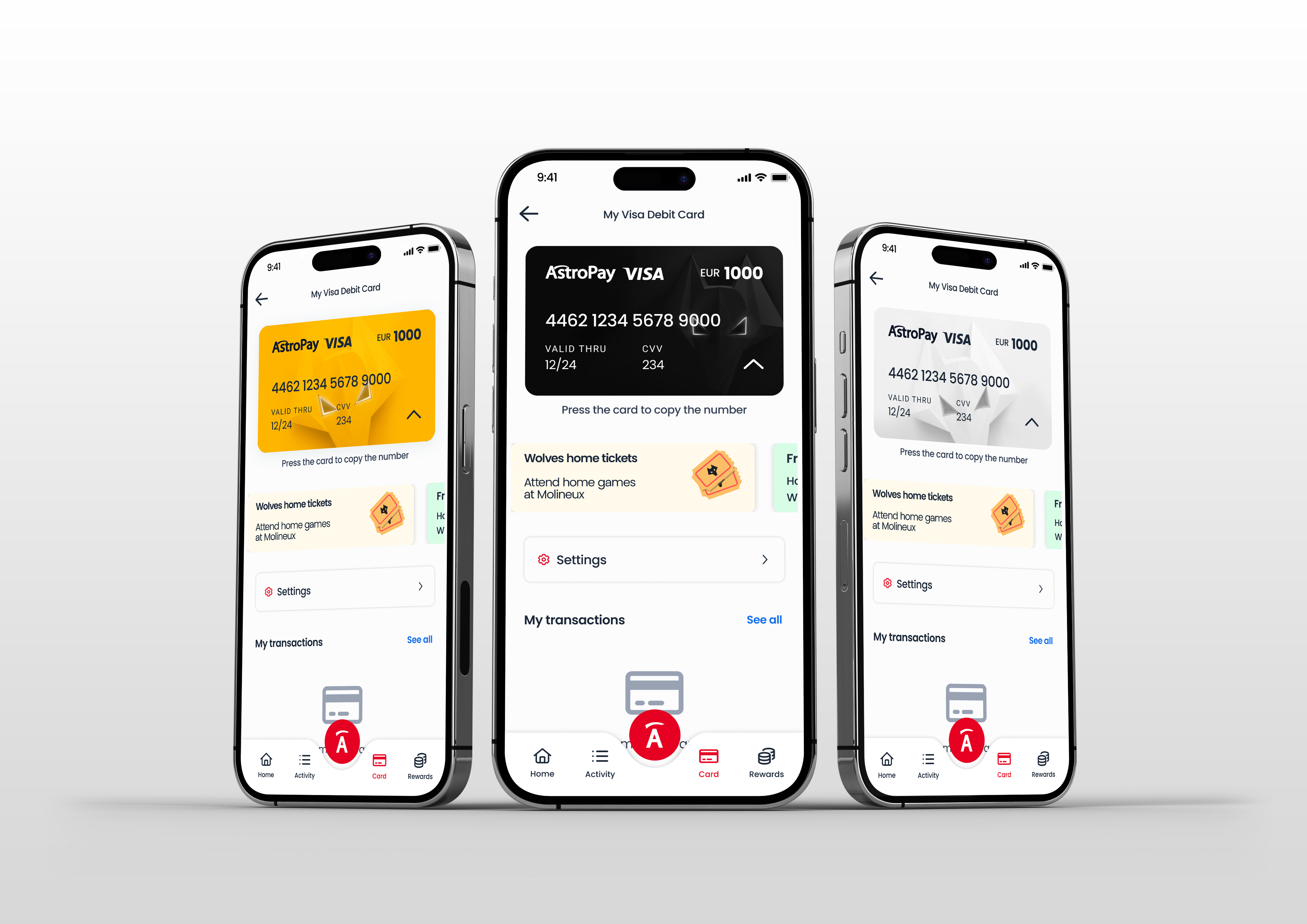
AstroPay, the online payment solution of choice for millions of users worldwide, is delighted to announce the launch of its new co-branded product – the AstroPay Wolves debit card. The launch builds on the business’ existing partnership with English Premier League club Wolverhampton Wanderers, also known as Wolves. AstroPay announced last year that it became the Principal Partner of Wolves and Principal Partner of Wolves Women for this season.
Introduced in various Wolves designs, the card is a virtual debit card enabled by Visa, a world leader in digital payments, that comes free of charge to AstroPay’s users and can be used internationally online or at any store through Google Pay. Wolves fans will get the chance to access a Wolves branded debit card, which they can use for daily shopping.
The AstroPay Wolves debit card comes with a series of benefits for users, such as 20% cashback on purchases in the Wolves Official Store, while collecting AstroCoins every time the card is used that can be redeemed for big prizes, including opportunities to participate in draws for Wolves general admission and hospitality tickets, signed merchandise, training ground tours, and the chance to play at Molineux.
Guillermo Dotta, CTO and Chief Product Officer of AstroPay, comments: “We have built a strong relationship with Wolves over the past two years and are proud to keep supporting their success. As we further solidify our visibility within the UK market, we want to ensure that we continue to adapt and innovate to keep our users engaged with our brand, meeting their expectations, and striving to exceed them.
“The new launch will not only help us increase our user base in the UK but reinforce our position in the market as a fast-growing fintech company with digital payment solutions for today’s modern, fast-moving, and digitally led consumers.”
Russell Jones, Wolves’ general manager for marketing & commercial growth added: “We’re excited to see this next stage of our partnership with AstroPay come to life with the launch of the AstroPay Wolves debit card. Since the start of our partnership in summer 2022 AstroPay have remained committed to rewarding and engaging with Wolves fans, and the launch of this product further demonstrates their commitment to our loyal fanbase.
We’re keen to ensure our fans benefit from all our commercial partnerships, so we’re delighted that this new AstroPay product will provide our fans with the opportunity to redeem a great selection of Wolves prizes.”
- 05:00 am
Aite-Novarica Group research reveals that payments is an important area of growth and innovation within the commercial banking space, and legacy systems cannot support end-user demand for better payment capabilities. Almost half of banks surveyed say fintechs, which typically provide a smooth customer experience, have already taken at least 10% of their payments volume. Recognizing this trend, the majority of banks globally are investing in modern payments technology, with 94% of respondents considering varied levels of investment in the next 24-36 months. Of those respondents, 65% plan a significant or moderate level of investment in payments technology during the same period.
The ‘Payments Modernization and Technology: Priorities, Challenges, and Partnerships’ survey finds that Real-time payments are one of the largest drivers of payments modernization. Many financial institutions are somewhere in the process of deploying new payment rails, with about 72% of respondents having completed a project, having one in-progress, or with plans to implement. This suggests that most banks are welcoming modernization as a key differentiator and opportunity to innovate. Despite this shift to real-time payments, many banks experience implementation challenges, with 57% of respondents reporting that adapting legacy infrastructure makes modernization efforts extremely or very challenging.
Many banks report that they lack the resources for integrating legacy systems and modern technology, making modernization efforts even more complex and demanding. About 70% of banks believe that the technical challenges of integrating with legacy systems are either somewhat of an obstacle or a major obstacle, highlighting the need for technology partners that offer agility and streamlined implementation.
The research was conducted amongst 108 banks in North America, Europe, and Asia-Pacific. It reports on the payments strategies, priorities, and challenges that these banks are experiencing in both the short and long-term.
Other insights include:
- Cross-border payments present significant challenges: For all banks, the biggest challenges around cross-border payments are compliance and security concerns. 56% of banks report compliance and security to be either extremely or very challenging.
- Positive views of the cloud are now mainstream: Banks are recognizing the importance and benefits of moving payments processing to the cloud, with only 9% of respondents having rejected the move altogether.
- Payments-as-a-Service (PaaS) reduces time to market: There is a clear perception that PaaS can help reduce time to market and offer businesses more robust payment capabilities. 73% of those surveyed reported that PaaS will enable them to launch new services faster.
“As we can learn from the survey findings, the payments industry is facing a perfect storm of challenges, but with it comes new opportunities for growth. Selecting the right partner to navigate these challenges has become more critical than ever before,” said Barry Rodrigues, EVP, Payments Business Unit at Finastra. “At Finastra, our mission is to be that partner and to help our customers successfully unlock new opportunities.”
"As businesses demand more efficient and advanced payment capabilities, banks across the world are recognizing that if they do not invest in more robust technology, they will quickly find themselves falling behind their competitors,” said Erika Baumann, Director, Commercial Banking and Payments at Aite-Novarica Group. “Our research shows the common global theme of creating a better, more innovative suite of payment services built on the right infrastructure with the right partner is crucial to success in a real-time environment.”