Published
- 07:00 am

MyCena Security Solutions, the pioneer and leader in Access Segmentation and Encryption Management (ASEM), today announced the addition of a new feature to its MyCena Desk Center (MDC) platform, designed to reduce payment card fraud at organizations processing financial transactions on behalf of customers.
Organizations like retailers, travel agencies or buying offices, store payment card information for their customers in order to make payments on their behalf. But when it comes to storing the financial data of their customers, lists of payment card information are often stored in Excel spreadsheets or on paper, where sensitive card details are kept in plain text accessible to all employees. This is a leading cause of fraud, as companies cannot know when and by whom the customer payment card information may have been stolen and used by to make unauthorized financial transactions. This is leading cause of disputes and penalties between card processing companies and their customers.
Requested and co-designed with its own customers to help address this massive fraud problem, MyCena has developed and released a new payment card feature on its MyCena Desk Center platform to store each payment card separately and make it only accessible by employees from a controlled multi-layered security fortress.
Without any infrastructure change, companies can upload all payments cards to the MyCena console. Card information is stored encrypted but accessible for the employees who need them for a transaction. Instead of accessing a file with all payment cards stored in clear text in one place, employees open their MyCena Desk Center application, a multi-layered (Bronze, Silver or Gold) secure digital fortress, look for the card they need by individual company code or name, and click on it to access its details. Employees then use the copy-and-paste commands to fill in the transaction, purchase or booking form.
To help investigate in the case of fraud, companies that have MyCena Desk Center Governance Module can audit all past events on the application and track when a specific credit card has been used. or
The solution makes targeting employees to steal their access credentials to payment cards file unfruitful for scammers, phishers and criminals, as these centralized lists of payment cards file no longer exists. This significantly strengthens cybersecurity and data protection for businesses processing payment cards. It helps to prevent expensive fraud incidents and subsequent penalties for card processing organizations.
“Everyone knows that financial information is the primary target for criminals, so securing this information is critical to any business that stores customer payment card details. When organizations store all the payment card information of their customers in plain text in a spreadsheet or in a list on paper, this becomes a security liability for them and their customers, as the list is fully accessible, viewable and stealable by any person in one go. The organization has no way to know if that list is copied in part or in full by any of the employees with access, exfiltrated or sold for malicious purposes. Using MyCena’s unique and easy-to-use system, the organization can now control who has access to which cards, and control which payment card has been accessed by whom, and when. When an employee needs to process a payment, they enter their MyCena fortress application, look for the specific customer card and use the details to make the transaction. It is so easy but represents a major improvement in card processing security, control and auditing,” said Julia O’Toole, CEO of MyCena Security Solutions.
- 09:00 am

Manchester-based fintechs, BankiFi and Financielle have announced the joint launch of a new playbook for small-to-medium-sized enterprises (SMEs), giving business owners back their most valuable asset - time.
The new playbook has been designed to help SMEs, especially those that are female-led, to tackle some of the most common problems associated with small business management. Leveraging their combined experience in the fintech space, the new playbook comprises a myriad of much-needed insights, which can help SME founders to reduce the time, costs, and stresses associated with managing an expanding business.
While relevant to all SMEs, the new playbook has been written with female founders in mind. Despite some progress, the world of SMEs remains relatively homogenous, with recent research highlighting that only 29% of all small businesses are female-led. Moving forward, the new playbook will provide these business owners with valuable tips on how to effectively navigate this difficult, but worthwhile endeavour.
The playbook examines some of the difficulties that currently exist around business finance management and offers salient advice on how these issues can be avoided. In particular, the document assesses the continued problem of late payments to SMEs, which has become an epidemic in recent times and often severely affects the cash flow of small businesses.
Speaking on the new playbook, Mark Hartley, CEO of BankiFi commented: “We have taken the decision to launch this exciting new playbook, which gives founders of all genders a helping hand when looking to get on top of their business finances. Right now, companies that fit this description need all the help they can get, especially if they are led by individuals underrepresented within the sectors they operate.
“Small business owners are the crux of our economy but are often treated like second-class citizens when looking to receive financial support. Through the work of companies like BankiFi and Financielle, these owners are beginning to get the help they need to turn the tide in this fight. On average, small businesses are faced with a 55-day wait to receive invoice payments, and this is one of the biggest issues that cause SMEs to go out of business. By utilising our technology, we are now able to reduce this down to 0-1 days, helping owners to gain back valuable time.”
Financielle’s co-founder Laura Pomfret commented: “Small businesses owners are often overwhelmed with the variety of jobs needed to be done and are routinely denied the level of service afforded to their bigger counterparts. Sadly, this problem often disproportionately affects female founders, who take on a greater proportion of unpaid labour in the home, impacting the time they can focus on growing their SME. We wanted to make a meaningful contribution for businesses in that position.
“The new playbook represents just that and could make a huge difference for companies looking to take the next step in their business journey. Together, ourselves and BankiFi have joined forces to provide guidance on 15 powerful strategies for small business owners to implement when looking to get on top of their finance management. We hope the document helps to make a difference for those who most need it.”
Additional to the playbook, BankiFi are continuing its commitment to helping small businesses, and recently launched its ‘Go Get Paid’ app in partnership with The Co-Operative Bank, to help reduce the often-debilitating problem of late payments; as well as helping them to manage their business more efficiently.
The Co-operative Bank’s Chief People and Sustainability Officer, Catherine Douglas, comments, “Many challenges are felt by all those who run a small business generally, but there are added complications when those entrepreneurs are women. It is even more difficult for women to start their own businesses; from the hardship of trying to raise money as a woman entrepreneur, or having to deal with the societal expectations that women should be the one to look after the family.
“We recognised that addressing these fundamental challenges for entrepreneurs was important, and this is why The Co-operative Bank worked with BankiFi on the ‘Go Get Paid’ app.”
The playbook is now available for free download via: https://www.financielle.co.uk/gettimeback.pdf
- 08:00 am

Worldline, a global leader in payment services, has launched a strategic initiative with Solana, a high-performance blockchain platform designed for decentralised applications and Web3 use cases such as gaming. This initiative, supported by the Solana Foundation, will allow all projects building on Solana direct access to Worldline’s Payment Orchestration platform. These projects will be integrated, allowing for providers to route payments automatically while offering the lowest fees and highest conversion.
Solana, a layer one blockchain with 11.5 million active accounts and over 21.9 million minted NFTs, is a fast, secure censorship-resistant blockchain built for scale. It hosts and supports a huge array of Web3 businesses and Apps, working with platforms such as Meta and Google. Hundreds of blockchain companies that need access to payment systems will be able to use Worldline Payment Orchestration for direct access to Worldline’s 300+ payment partners and payment methods, removing the need for multiple payment integrations.
Worldline Payment Orchestration is based on a single platform which manages all payments, regardless of how many providers are connected. From orchestrating payment providers, simple reporting tools, and adding new fiat on - and off-ramps without the need for integration, it represents the only payment orchestration tool that a customer needs to scale up its payment strategy. Worldline Payment Orchestration offers one platform interface to combine integrated fiat and crypto payment solutions, real-time analytics to monitor acceptance and conversion rates and enables smart payment routing based on real-time data.
Babouschka van Bilsen, Head of Metaverse, Web3 & Crypto at Worldline’s Digital Commerce business line, commented: “As Web3 develops, Worldline is dedicated to enabling merchants to ready themselves for a future based on blockchain technology. Working with Solana, allows Worldline to support its goal to empower developers and accelerate the development of amazing new Web3 games. Solana developers now have the capabilities and tools that allow their blockchain games to build their payments strategy from the ground up.”
Johnny Lee, Head of Games at Solana Foundation, added: “Solana is very pleased to be working with Worldline. Our decision was based primarily upon Worldline’s extremely impressive and long-standing track record in the payments arena, together with Worldline Payment Orchestration’s unrivalled capabilities which will allow Solana’s blockchain games to offer their customers their preferred alternative payment methods.
“One of the most pressing needs across web3 is seamless on- and off-ramps. Gaming studios building on Solana need access to robust payment rails capable of supporting fiat-to-crypto transactions worldwide. Worldline’s solution provides end users a single pathway to paying with their preferred method.”
- 06:00 am

ZEDRA, the fast-growing global specialist in Corporate, Global Expansion, Active Wealth, Pensions & Incentives services as well as Fund Solutions, is pleased to announce the appointment of Jon McKay as Global Head of Legal.
In his role, Jon will report to ZEDRA CEO, Ivo Hemelraad, and will be responsible for leading ZEDRA’s internal legal team and providing legal support to the business across all its service lines and offices. In addition, Jon also has overall responsibility for ensuring that ZEDRA adheres to changes in law affecting the Group’s service offering and identifying and remedying complex legal issues that may affect it.
Jon, who will also be part of the Senior Management Committee, brings a wealth of experience to ZEDRA, having worked internationally in a variety of legal, risk, and management roles within the sector in his nearly two decades of professional experience. Most recently, Jon served as Managing Director and Head of Business Solutions of TrustQore in Switzerland where he was responsible for the oversight and management of the Swiss office and the establishment of the TrustQore brand in both Switzerland and Western Europe.
Jon will be based in ZEDRA’s Manchester office, working in close collaboration with Stuart Esslemont, who will continue in his role as Global Head of Compliance and Risk.
Commenting on the appointment, ZEDRA CEO, Ivo Hemelraad, said: “We are delighted to welcome Jon to our team as we continue to expand rapidly and service our clients to the highest standards. As a firm operating across specialist global markets and with a very dynamic merger and acquisition activity, it is of paramount importance that we receive the best legal guidance, and we are confident Jon’s leadership skills and expertise will be an invaluable asset to our team.”
Jon McKay commented on his appointment: “I am thrilled to be tasked to lead ZEDRA’s legal team and look forward to using my knowledge and skillset to provide the legal support necessary to drive the next phase of strategic sustainable growth.”
Jon holds a first-class honours degree in Modern European Languages (Spanish, Italian and Catalan) from Durham University, a GDL and LPC from Nottingham Law School, an MBA from Durham Business School and the STEP Post-graduate Diploma in Private Wealth Advising. He was admitted as a solicitor in England and Wales in 2008 and is an Affiliate Member of the Society of Trust and Estate Practitioners.
- 07:00 am

Flutterwave, Africa’s leading payments technology company, has today announced that it has received its Electronic Money Issuer and Remittance Licenses from the National Bank of Rwanda. This will help the company expand its operations in East Africa.
With these new licenses, in addition to being a Payment Service Provider, Flutterwave can offer money deposit and withdrawal, electronic funds transfer, as well as inbound and outbound remittance services to the 13.46 million people living and working in Rwanda.
According to Rwanda’s National Institute of Statistics, Micro, Small & Medium Enterprises (MSMEs) in Rwanda account for about 97% of businesses and contribute almost 55% to the total GDP. That makes MSMEs critical to job creation and the economic growth of the country.
Flutterwave will be deploying a range of products in Rwanda, including Send by Flutterwave, its cross-border money transfer solution. Also available will be Flutterwave for Business and its suite of products, including Store, payment links, invoices and checkout to help individuals and businesses in Rwanda make the most of the booming eCommerce market.
Olugbenga “GB’ Agboola, Founder and CEO of Flutterwave, commented on the news, “From our first transaction to over 400 million now, we’ve remained committed to our vision of connecting all parts of Africa through payments and connecting Africa to the world. As a country well known for fostering innovation and promoting the use of digital technology, Rwanda has always been important to our expansion plans in East Africa. We are delighted for the vote of confidence in being granted these licenses. With them, we will leverage our extensive global reach and continuous growth in emerging markets to provide MSMEs in Rwanda with the tools they need to stimulate the economy, facilitate seamless cross-border transactions for Rwandans and support the expansion drive of global and Rwandan businesses.”
Commenting on the news, Leah Uwiroheye, Flutterwave’s East Africa Regional Lead, Regulatory and Government Affairs, said, “This is a great achievement for the company. As Rwanda continues executing important reforms to enhance the ease of doing business and implementing its Fintech Strategy 2022-2027, Flutterwave keeps contributing towards achieving a cashless economy by innovating and employing digital technology to support businesses and stimulate the economic growth of countries where we operate. The licenses will enable us to provide safe, secure and seamless payment services for individuals and businesses in Rwanda. This is definitely a starting point for Flutterwave as we continue to expand across East Africa.”
- 01:00 am

Sporting Chance Prize Draw, a UK-based not-for-profit organisation striving to bring together the sporting community and charities across the country, has partnered with leading global payments gateway Volt to bring faster, simpler and more secure payments to its community and donors.
Volt’s open banking solution will enable Sporting Chance Prize Draw to attract contributions from donors via real-time account-to-account payments, fast-forwarding the payment process for participants across the UK.
Established in 2021, Sporting Chance Prize Draw was created to raise funds for UK-based charities, working with individuals, clubs and businesses from the UK’s sporting community to secure amazing prizes. Founded with the overarching ambition to ensure that 100% of the money raised via its prize draw goes to the chosen charities, Sporting Chance Prize Draw now supports 30 UK charities, including Future for Heroes, London Sport, Switch the Play Foundation, The Wave Project, School of Hard Knocks and The Childhood Trust.
Sporting Chance Prize Draw’s annual prize draw is underway and will close on the 31st of March. This year, the organisation is working with its charity partners with an aim of raising a six-figure fundraising total. In 2023, the organisation has doubled the number of outstanding prizes that are in play: 80 sporting prizes await the lucky winners. Participants can enter the draw with a minimum donation of just £10, and be in for winning a sporting prize of their choice, including a chance to experience the Paris Olympic Games with Team GB, a skiing weekend in St. Moritz, Switzerland, a flight experience with Scotland rugby players, or tickets for a Queens Park Rangers home game.
Simplifying the payments process for donors was central to Sporting Chance Prize Draw’s goal to double its impact in 2023. Volt’s real-time, account-to-account payments gateway delivers on that crucial requirement, removing friction during the payments process and improving conversion: from good intentions to actual donations.
Contributions are collected online, with a minimum amount of £10, and every penny raised will be donated to the 30 chosen charities. The winners will be drawn soon after the Prize Draw closes on the 31st March, and winners will be notified via email.
"We are all sports fans committed to making a positive difference for small charities in the UK. In the early days of lockdown 2020, we started by wanting to help a couple of small UK charities and we launched the first Sporting Chance Prize Draw in March 2021. Every penny raised goes to charity, because all of our administration costs are underwritten by private individual contributions or, as we get bigger, through corporate sponsorship. The Prize Draw is only possible because of our small team and those who kindly give us their time and support - organisations and people like Volt and its stellar team”, says Simon Jacot, Founder at Sporting Chance Prize Draw
“We continue to see huge potential for transformation in the payments sector and for organisations everywhere, including not-for-profit, to securely receive real-time payments via one seamless experience. We’re proud to support Sporting Chance Prize Draw, a not-for-profit organisation whose values align very closely with ours. Volt will provide the payment solution to enable contributions from donors and participants, but additionally we have also pledged to cover any payment transaction costs not covered by the donors. We see this commitment as an extension of our mission as a business, which is to create ultimate payment freedom for everyone, everywhere,” says Matt Komorowski, Chief Revenue Officer at Volt.
- 08:00 am

Participants in the crypto derivatives market are holding less money at exchanges, onboarding with third-party custody providers and calling for greater regulation of crypto-native markets, the latest Acuiti Crypto Derivatives Management Insight Report has found.
This quarter’s report, which is based upon a quarterly survey of the Acuiti Crypto Derivatives Expert Network, a group of over 70 senior executives from asset managers, hedge funds, sell-side firms, and proprietary trading groups active in trading crypto derivatives and produced in collaboration with Digital Asset Research (DAR) and Cloudwall, marks the first institutional study of how the institutional market has responded to the collapse of FTX in November 2022.
Over three-quarters of the Expert Network thought that there would be a permanent separation of exchange and custody functions as investors look to reduce concentration risk. Almost as many respondents predicted a heightened regulatory response while around a third predicted consolidation among native crypto markets, a shift of liquidity to onshore regulated markets or to OTC markets.
However, just 14% thought that the collapse of FTX would result in significantly lower institutional participation in crypto markets, reflecting the ongoing resilience of the industry as it goes through its challenging formative years.
Since the collapse of FTX, several crypto derivatives exchanges have published proof-of-reserves to reassure investors of their client fund management processes. However, 64% of the Expert Network said that they remained concerned with the quality of proof-of-reserves from most exchanges.
In addition, counterparty risk remained a key concern for the Network with 47% saying that they were very concerned with this risk factor compared with 31% for operational risk, 13% liquidity risk and just 6% for market risk.
DAR CEO Doug Schwenk said: "The survey results are enlightening and encouraging for the growth of the crypto derivatives market. We're pleased to help fuel this growth with our Counterparty Diligence offering."
The report also found that the crypto derivatives community was increasing investment in risk management with almost half of firms planning an investment in the next 12 months. The findings also suggested a move away from inhouse builds as the quality and sophistication of third-party software available to the market continued to increase.
Kyle Downey, CEO, Cloudwall, said: "This survey offers significant, timely insights into the crypto derivatives market post-FTX. Cloudwall's Serenity digital asset risk platform offers a full suite of risk management and pricing tools for crypto derivatives traders to help support this growing market."
Other key findings in this quarter’s report include:
• There is strong demand for a volatility index in crypto derivatives markets but it should reference more than just BTC
• Optimism is high for a recovery in digital assets markets over the next three months with 75% of the Expert Network either quite or very optimistic about the quarter ahead
• Firms are lowering maximum exchange exposures and diversifying exposures across exchanges following the collapse of FTX
Will Mitting, founder of Acuiti, said: “This quarter’s report demonstrates the resilience of the crypto derivatives market as it recovers from an immensely challenging year. With every challenge the market has faced in its short existence, it has come back stronger and strengthened the foundations.”
Download the full report here: https://www.acuiti.io/q1-2023-crypto-derivatives-management-insight-report/
- 04:00 am
Alternative finance provider Accelerated Payments today announced the appointment of C Ray Hines as Vice President of Business Development. Ray’s wide-ranging expertise in the business funding market and abundant experience in the Midwest will prove crucial as Accelerated Payments increases its market share in North America.
Ray, a specialist in SME financing, boasts over 35 years of experience in the business financing industry. He has worked with the bank and non-banking financial institutions and has extensive experience in asset-based lending, factoring and cash flow lending across the Midwest. Over the past five years, Ray has led Business Development and Regional Vice President roles with large corporate companies, building upon key relationships with business owners across North America.
Ray joins Accelerated Payments as Vice President of Business Development, employing his extensive local know-how and unique technical skill set to enable businesses with innovative funding solutions.
“Accelerated Payments has built a business funding platform that enables firms to effectively manage cash flow in today’s especially harsh macroeconomic conditions,” said C Ray Hines, Vice President of Business Development at Accelerated Payments. “I am excited to begin working with the team to onboard local businesses and assist entrepreneurs with innovative receivables financing solutions.”
The fresh hire continues Accelerated Payment’s expansion into North America, bringing onboard local expertise in the area. This crucial region is rich in heavy industry with many businesses underserved by traditional financing providers. Ray’s appointment comes hot on the heels of Laurie Ford joining the team as Vice President of Business Development in Canada, demonstrating Accelerated Payment’s commitment to North America as the company expands its regional dominance in the alternative financing sector.
Commenting on the appointment, Ian Duffy, CEO of Accelerated Payments added “Ray is an excellent addition to our team in North America. His specialist knowledge of the business financing market and extensive local expertise will be key as we expand to new regions in the USA and tailor our offering to best support local businesses. Ray’s leadership will be crucial as we grow our market share in North America and continue our impressive growth in 2023.”
Founded in 2017 and headquartered in Ireland, Accelerated Payments addresses the problem of cash flow for businesses through flexible and innovative receivables finance solutions. The company’s innovative fintech platform, international footprint and proven track record have been instrumental to its continuous global growth. The process is simple to use - companies that need working capital can access fintech’s client portal and upload and select invoices they need for funding. Once approved, payment is advanced, usually within 24 hours.
- 07:00 am

Despite stakeholder pressure, only 36% of UK senior decision-makers list Environmental Social and Governance (ESG) as a business priority for this year, according to a recent survey by enterprise software provider Advanced. While still relatively low, ESG is rising up the priority list as only 21% of respondents considered it a priority in 2020.
• Nearly 1 in 4 respondents don’t believe their organisation is open and transparent about its ESG goals and achievements, and 28% note they couldn’t provide tangible evidence to support its ESG progress.
• 69% of respondents say they aren’t working with suppliers to lower emissions.
“Given the extent of the many problems confronting the globe and the growing severity of environmental risks for businesses, the E component of ESG has gained increasing relevance,” says Daniel Docherty, Director of Strategy at Advanced, who has over 18 years of experience in core business and finance solutions, working with customers from a wide background of industries and scale. “As enterprises with strong ESG credentials draw modern investors, it is paramount for CFOs leading the finance function to understand the potential of ESG and learn how to put it into practice.”
Here, Docherty breaks down the key environmental standards in finance:
Select benchmarks relevant to your industry
“Businesses should not strive to accommodate all dimensions when creating ESG policies. Instead, choose three to five quantifiable ESG criteria that matter to your company and audiences and match them with your corporate strategy. For instance, fracking oil and gas companies should assess water and waste management and its effects on precious natural resources.”
Calculate your carbon footprint
“Companies can now assess their carbon impact using computerised technologies built for this purpose. These tools provide spaces for inputting all possible company activities, and they may determine their carbon footprint for each given action, as well as the total environmental impact.”
Implement double materiality
The concept of double materiality describes how corporate information can be important due to both its implications about a firm's financial value, and about a firm's impact on the world at large - particularly with regard to environmental considerations.Daniel Docherty notes, “corporations should address the ESG concerns that affect their business as well as their impact on society and the environment.”
Create an exclusion list
“The financial department might create a list of initiatives it will not support due to environmental issues or other concerns of the business or its shareholders. Excluded activities may be governed by national ESG regulation or international agreements, restrictions, and best practices.”
Contextualise the information
“ESG data does not exist in an informational vacuum and requires suitable contextualisation for clarity. This context may partly derive from the firm's relative performance (having as benchmarks firms in the sector or historical performance).”
“Businesses that handle ESG challenges under the direction and participation of the CFO are better equipped to produce enterprise value, while fulfilling ESG legislation reporting requirements and wider stakeholder expectations for responsible risk management,” Daniel Docherty concludes. “Now more than ever, the CFO ESG dichotomy should be united, and for any CFO, sustainability should become a key criterion for corporate success.”
A more in-depth guide on ESG and sustainable finance can be found on the Advanced website.
- 03:00 am
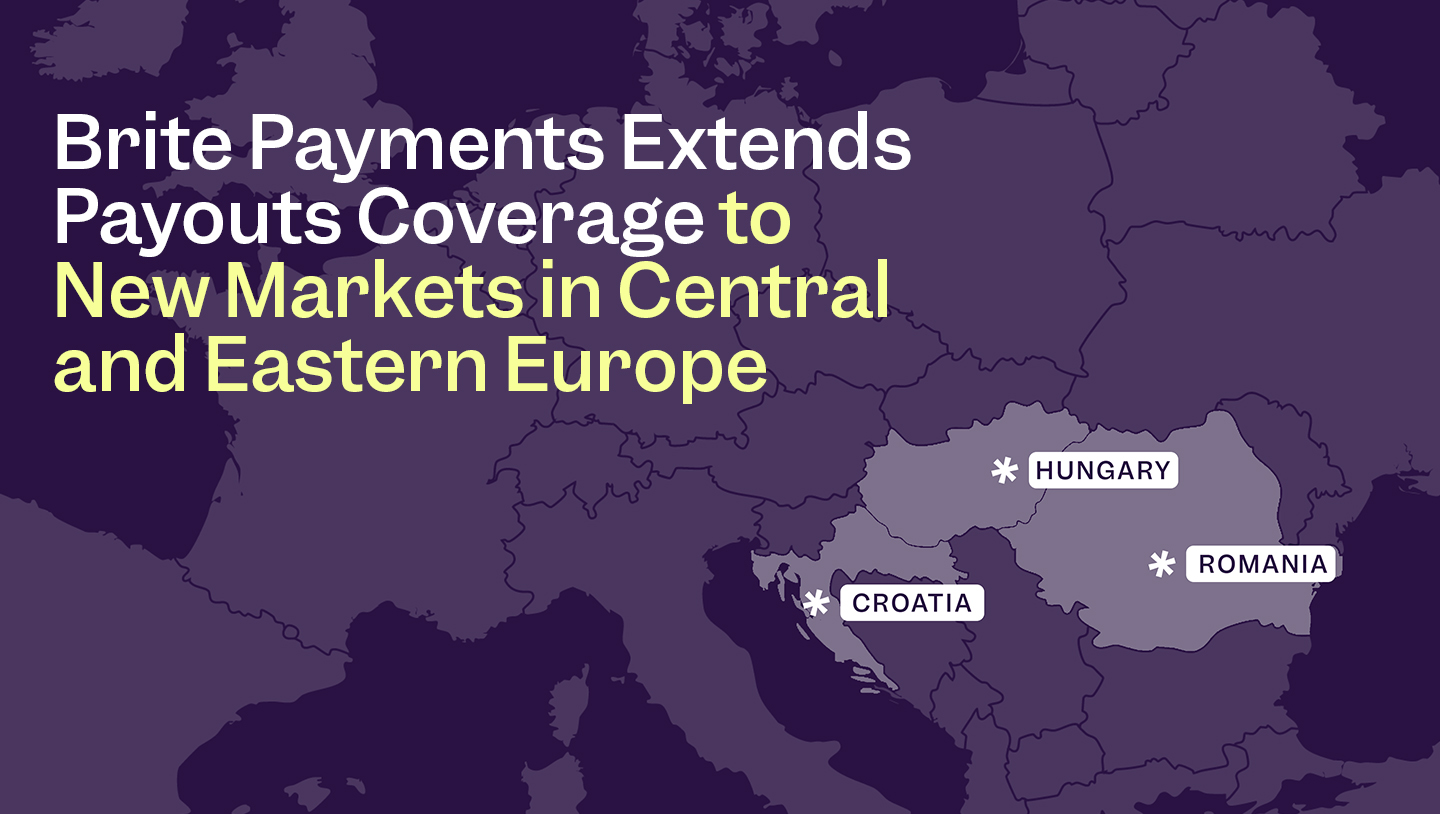
Brite Payments, one of Sweden’s fastest-growing fintechs and a leader in instant bank payments, has today announced expanded coverage across Central and Eastern Europe. Brite, which has built its instant account-to-account (A2A) payments offering on the European-wide open banking infrastructure, now offers its payouts solution in Croatia, Romania, and Hungary. The addition of these markets means that Brite now offers payouts in a total of 24 markets across Europe.
Instant processing has become an important proposition within payments, most notably across markets within Europe that are undergoing rapid digital transformation in many parts of their economy. Brite’s expansion is a response to increased demand from international merchants, as well as the opportunity to support businesses in these dynamic domestic markets.
Brite facilitates the rapid receipt of funds from merchants to consumers through its payout solution, across diverse sectors including eCommerce marketplaces, consumer finance, online trading, travel, ticketing, insurance, and gig work platforms.
Reliable and timely payouts in these sectors are key factors in building trust with consumers. Immediate access to funds has become increasingly important for consumers, who are currently dealing with rising living costs and a challenging economic environment. Pairing fast payouts with the convenience and security of open banking further enhances the end-user experience. Additionally, Brite’s unique Time2Money feature ensures that users have full transparency and visibility into exactly when they will receive their money, further helping to build trust.
“Croatia, Romania, and Hungary represent some of Europe’s most dynamic and fast-growing markets, as well as being popular markets for expansion for established international businesses. By adding these countries to our network of coverage, we take another step forward on our mission to bring fast, easy and secure payments to merchants and consumers across Europe,” said Lena Hackelöer, Founder & CEO, Brite Payments. “Brite has quickly become a payment provider of choice for many businesses that want to prioritise seamless and transparent payments and payouts.”
Expansion into new markets and currencies follows Brite’s tremendous growth over the past year, with the company more than doubling revenue and transaction volume on its platform, and increasing headcount by nearly 100 per cent. The company’s most recent expansion follows on from its full product rollout across the Baltic region.