Published
- 06:00 am

Aubrey Capital Management, the Edinburgh and London-based specialist global equity manager, has announced today that it is partnering with Aramea Asset Management, one of Germany's largest independent asset managers, to further its commitment to the German fund market.
The partnership will enable Aubrey to work closely with Aramea and its subsidiary company Punica Invest to offer the necessary support and expertise to distribute Aubrey's suite of products successfully. The products include Aubrey’s Global Emerging Markets Opportunities Fund, managed by Andrew Dalrymple, Rob Brewis and John Ewart, which was registered for sale in Germany in February 2022 and has since received a warm reception from German clients.
Myra Chan, Sales Director and Member of Sustainability Committee at Aubrey, commented, “We view Germany as being a key market in the global expansion of Aubrey, and our range of funds is proving to be popular in Germany, largely because German investors validate and support boutique asset managers like Aubrey who can offer a highly differentiated approach and generate diversified alpha source for their portfolios. I look forward to working closely with the Punica team whose distribution base complements greatly that of Aubrey’s.”
- 02:00 am
Finastra and Uni Systems have extended their partnership to help financial institutions in the Adriatic, Central and Southeast Europe regions comply with the Basel Committee’s Fundamental Review of the Trading Book (FRTB) reporting requirements, effective in 2025. Under the new agreement, Uni Systems can offer its customers Vector Risk’s Trading Book Market & Credit Risk Solution, via Finastra’s FusionFabric.cloud and hosted on Microsoft Azure, for cloud-based automation of credit and market risk calculations in the trading book.
The FRTB is a comprehensive suite of rules proposed by the Basel Committee on Banking Supervision (BCBS) that capital banks must hold against market risk exposures. It expands the current market risk framework to ensure that internal models used by banks to calculate capital requirements efficiently cover risks, and to simplify comparisons of risk-based capital ratios across banks.
“Complying with regulations such as the FRTB is a big undertaking for banks, particularly when timeframes are tight and IT systems cannot support the necessary changes,” said Benoit Riquet, CPO, Treasury & Capital Markets at Finastra. “By partnering with Uni Systems and offering Vector Risk’s solution via our platform, more banks will benefit from ongoing upgrades and regulatory compliance, quickly, with reduced project risk and without the need for new IT infrastructure.”
Trading Book Market & Credit Risk is a SaaS solution providing out-of-the-box connectivity with Finastra’s treasury and capital market solutions, standard market data packages and institutions’ internal data. It automates the standardized approach for counterparty credit risk (SA-CCR), Value at Risk (VaR), Potential Future Exposure (PFE), credit valuation adjustment (CVA) and others that will follow. Uni Systems provides strategic guidance, project management and technical execution.
“Vector Risk’s solution on Finastra’s platform enables institutions to easily comply with market and credit risk regulations while improving their regulatory and internal reporting metrics,” said Constantine Serros, Banking & Financial Services Business Unit Director and BoD member at Uni Systems. “Seeing this compliance need coming, we decided to further extend our partnership with Finastra to enable our customers to take complete control, with a cost-efficient cloud-based solution that automates the calculations of risk measurements which demand a unique data workflow.”
- 03:00 am
iDenfy, the Lithuania-based RegTech startup providing identity verification tools, announced joining forces with Neontri, the Poland-based tech company providing innovative banking and mobile payment solutions. With iDenfy’s help to verify new users, Neontri will aim to verify new users more efficiently without compromising security.
According to Neontri, identity verification is crucial in mobile banking because it helps detect identity fraud and other financial crimes in real-time. The financial business focuses on providing unique experiences in financial technologies and payments, assisting other companies in succeeding in the digital, mobile-first environment.
As Neontri started to scale faster, the need for more robust Know Your Customer (KYC) tools grew. That’s when the tech company began searching for new ID verification software to ensure that only authorized individuals could access sensitive financial information. To enhance overall security and improve customer experience, Neonri partnered with iDenfy.
Neontri selected iDenfy’s four-step biometric identity verification solution to support its goal to expand to new markets. The startup’s software automatically recognizes, verifies, and extracts data from more than 2,500+ identity documents across 190 countries. Another requirement Neontri had for a new IDV provider was an easy integration into its existing platform, which iDenfy delivered with the option to customize the verification flow to match Neontri’s needs.
According to the mobile payment platform, partnering with iDenfy will enable the business to lean towards a fully automated compliance workflow helping Neontri minimize operational costs while improving customer experience. After implementing iDenfy’s KYC solution, Neontri’s customers will complete the entire ID verification process in less than two minutes.
iDenfy has turned its scalable ID verification system bulletproof to fraud by integrating liveness technology. As claimed by Neontri officials, this feature has become a new industry standard. It ensures that attempts to pass the authentication process fraudulently, such as using deepfake videos or wearing face masks, are impossible. This was critical in Neontri’s decision to secure its onboarding flow with iDenfy.
The identity verification service provider ensures accurate KYC results by powering its in-house expert team, who manually double-checks each verification 24/7, stopping criminals from accessing Neontri’s network. By leveraging iDenfy’s KYC software, the fintech aims to improve its risk management effectiveness and overall customer satisfaction. According to Neontri, this is an important aspect that brings value to the business.
It’s worth mentioning that last year, iDenfy hit a benchmark of having +500 partners who selected its identity verification solutions for stronger KYC compliance. Recently, the startup announced upgrading its Partner Program, inviting more enterprises to collaborate and bring security into the digital landscape.
“Having cutting-edge KYC comes beyond compliance requirements, as it helps build trust and grow your customer base. We’re excited to partner with Neontri by offering the fintech an even more secure and efficient customer onboarding solution.” — noted Domantas Ciulde, the CEO of iDenfy.
- 06:00 am
More UK small and medium-sized businesses (SMEs) will be able to get instant decisions on lending applications, helping to ease the pressure of the cost of living crisis and boost economic recovery.
The innovation has been made possible through a new partnership between top fintech business lender, iwoca, and CRIF, Europe’s leading credit information provider.
The embedded finance partnership will see CRIF’s Credit Passport service – which provides SMEs with access to an open banking-powered credit profile – fully integrated into iwoca’s own services and lending platform, enabling instant decisions on business loans up to £25,000 and decisions within 24 hours for loans up to £500,000.
The move means SMEs using the free Credit Passport service will be able to apply in just 1 minute for an iwoca loan directly from their account, with the application pre-populated with all information from their credit profile.
Fully integrating services in this way streamlines the onboarding process and reduces the burden on businesses, from cutting time spent filling in lengthy loan applications and submitting documentation to avoiding long, drawn-out decision processes which create unnecessary uncertainty. Drawing on a business’s most up-to-date financial information, decisions can be made almost instantly and funds then transferred on the same day.
Sara Costantini, Regional Director for UK & Ireland at CRIF, said:
“At CRIF, we understand the challenges facing businesses. With economic uncertainty exacerbating the already significant challenges with securing finance, small business owners deserve a better service when they apply for funding.
“Our partnership with iwoca allows us to embed finance into our Credit Passport offering to provide instant lending. We’re also reducing uncertainty for businesses over funding decision, while making the process smoother and faster. This way, they can focus on what really matters – running and growing their business.”
Harry Cranfield, Partner Channel Manager at iwoca, said:
“When it comes to finance, businesses should feel empowered, not hindered. For too long, the UK’s smallest businesses have struggled to access the finance that larger businesses take for granted. The current lending market poses big challenges to SMEs trying to find capital during an economic downturn. As banks retrench – and narrow their financing options for small businesses – it’s become all the more important that alternative lenders can step in.
“Our partnership with CRIF will help us make instant finance a reality for thousands of SMEs, offering them a quicker, more transparent and reliable way to apply for and secure lending. Only by supporting SME growth can we truly hope to see economic recovery in the UK.”
Small business owners in the UK have traditionally faced barriers when accessing finance. According to iwoca’s latest SME Expert Index data, more than eight in ten SME finance brokers (82%) agree that major banks have reduced their appetite to fund SMEs.
Utilising open banking-powered credit scoring enables a more comprehensive and accurate picture of a business’s creditworthiness than traditional credit report data alone. With data refreshed daily, it can enable financially healthy businesses that may have initially been refused lending due to incomplete credit information to access funding, while enabling lenders to make more informed decisions without increasing risk.
The new partnership builds on iwoca and CRIF’s shared goals of supporting UK businesses during this challenging economic time. In January, a group of UK lenders, including iwoca, called on the government to improve SME credit access through better data sharing.** CRIF is currently working with lending partners to further this effort.
The new service is available now to all SMEs with a free Credit Passport account.
- 09:00 am
InsurTech pioneer Qover has announced it will provide its innovative embedded insurance orchestration platform to premium EV original equipment manufacturers (OEMs) NIO, car subscription platforms Stiilt and JustRent, electric trucks OEM Volta Trucks and electric smart moped manufacturer NIU.
Qover's orchestration technology is enabling deep transformation in the automotive industry, enabling OEMs and new mobility platforms to move away from fragmented multi-local insurance programs to offer a single digital customer experience, all over Europe.
By simplifying the insurance process – and by helping OEMs drive down TCO and improve safety by sharing and understanding vehicle data – Insurtech is helping to usher in a new era of automotive innovation. Qover is removing one of the major obstacles to the adoption of technologies like EVs and pioneering concepts such as mobility-as-a-service - helping accelerate the transition to a more sustainable and customer-centric future of driving.
Crucially, Qover's technology is helping OEMs adapt to the changing automotive landscape, where vehicles are becoming more than just transportation and transforming into technology platforms. This presents new opportunities for OEMs to expand their offerings and create better experiences for customers, without the need to start from scratch, due to Qover’s unique ability to integrate into any existing infrastructure.
Quentin Colmant, CEO & Co-founder of Qover, said: “If insurance is a lever for innovation, Qover’s platform is a game changer. For too long, the automotive industry has been hampered by a lengthy and complicated insurance process, which has made the transition to electric vehicles and new driving concepts such as mobility-as-a-service unnecessarily difficult. By breaking down the barriers to adoption, Qover is driving innovation and facilitating a better customer experience. With Qover's technology, customers can feel confident in their choices and get the coverage they need to protect their vehicles.”
Qover's pan-European embedded insurance orchestration platform provides seamless digital insurance experiences to more than 2.5 million users across 32 different countries. In the automotive industry, Qover operates in Austria, Belgium, France, Germany, the Netherlands, Portugal and Spain, and is planning to open 6 additional key European markets in 2023. Qover’s suite of services and products service two different types of needs: OEM affinity programs and new mobility fleets. Qover has a unique and innovative approach to pan-European motor programs thanks to its freedom-of-service approach.
- 05:00 am
Open banking platform Yapily has appointed Lisa Gutu as Vice President of Sales in Europe, where she will play a key role in accelerating Yapily’s strategic growth plans in the region.
Lisa brings unparalleled open banking experience and deep open finance, payments, and API expertise to Yapily. Over the last 8 years during her time at Trovata, and as COO of Salt Edge, she has led new and innovative open banking initiatives working with large banks, fintechs, and strategic partners across Europe.
Yapily, which has a strong portfolio of hundreds of UK and EU customers including Zilch, Intuit Quickbooks, and Tide has appointed Lisa to drive its expansion across Europe. Lisa will be focused on growing Yapily’s customer base in key European markets like Germany, France, Italy, Spain, the Nordics, and Netherlands, as well as driving adoption in newer markets like Portugal and the Baltics. And, with additional appointments being announced immenintly, Yapily’s market position and potential is stronger than ever.
Lisa Gutu, VP Sales - Europe at Yapily, commented: “I’m incredibly passionate about open finance and the opportunity it presents to both businesses and consumers. I’ve been part of the open banking movement from the very beginning, and I love seeing and contributing to the changes it brings to the financial industry.”
“Yapily is at the forefront of open finance innovation and a leader within the industry, with one of the widest bank coverage in mainland Europe and the UK, and the largest product offering that can help any company - from a small startup to a large enterprise - get the most out of open banking.”
Stefano Vaccino, Founder and CEO at Yapily, added: “We are delighted to welcome Lisa to our management team. As Europe’s open banking landscape continues to mature and evolve, the need for open banking infrastructure of the highest quality, deepest capability, and broadest coverage continues to grow. With Lisa spearheading our sales efforts across the region, we are well positioned to accelerate the delivery of better and more innovative financial services to millions of people.”
- 05:00 am
Volksbank Wien, the central entity of an association of Austrian banks, and Murex have completed the migration of MX.3 from bank premises into the fully private cloud hosting Murex SaaS in a lift-and-shift project, which included an upgrade to the latest MX.3 release.
In such a project, Murex transfers the full MX.3 environment, including the database, customizations and interfaces, into the cloud hosting Murex SaaS—a move increasingly adopted by diverse clients across regions, sell-side and buy-side, to reduce their total cost of ownership, achieve quicker time to market, rationalize IT infrastructure and focus on their core business.
The project took nine months to reach User Acceptance Test readiness, with a controlled budget. The project was accomplished entirely remotely. The remote way of working for all teams required continuous information sharing and alignment during design, deployment and validation.
In essence, the Volksbank MX.3 instance is now managed by Murex. Volksbank no longer manages hosting and infrastructure services. From an end-user perspective, the switch to SaaS was seamless, and new features such as the SWIFT ISO 20022 format were delivered with the adoption of the latest release.
Murex, the global leader in trading, risk, and processing solutions for capital markets, sees the move as a key evolution for Volksbank, enabling it to divert efforts previously applied to managing MX.3 to other core bank priorities. Volksbank, a retail- and small and medium enterprise-focused bank, and Murex have a 15-year history of working together to optimize capital markets software usage.
“Adopting a ‘SaaS-first’ approach will allow Volksbank to take advantage of the MX.3 frequent innovations,” said Volksbank Program Manager Patrick Zima. “Shifting management of MX.3 to the Murex SaaS team has freed up in-house expertise and resources. This is just the latest collaborative evolution in a continuing long-term partnership with Murex.”
The project scope ranged from the MX.3 upgrade, which included using new collateral and risk management modules; to the lift-and-shift stream, which included adaptation on the global operating model and end-of-day housekeeping processes, as well as ecosystem integration and reporting adaptation with 28 interfaces and 57 extractions; to technical compliance with SaaS architecture and security principles.
“We are excited to have helped Volksbank make this jump,” said Murex Co-founder and Managing Partner Philippe Helou. “Continuous and proactive project management and close collaboration were key to our success in accomplishing this SaaS migration. It’s important to note that other Murex clients can replicate Volksbank’s success in similar migrations and can rely on an experienced Murex team to do so.”
Going forward, Volksbank aims to allow smaller banks within the association it leads to also benefit for their own treasury activities from the MX.3 platform on SaaS. Murex will provide all support required to achieve this goal.
- 05:00 am
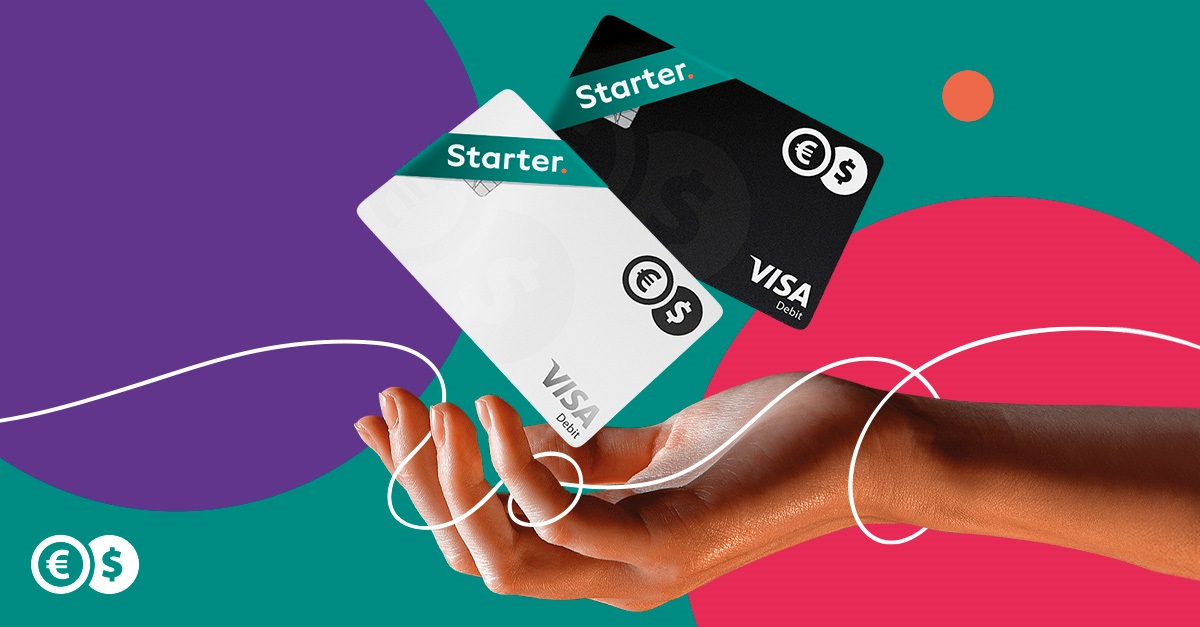
Global fintech makes ordering Conotoxia Starter with a card in its marketplace possible - without opening an account or logging in. After registration on the portal, the card included in the Conotoxia Starter in the White or Black version becomes a multi-currency payment card.
The Conotoxia Starter with the card is now available on the eStore, fintech's marketplace, at https://estore.conotoxia.com/. Both existing and unregistered customers can order it in White or Black versions. Once they receive it, they decide whether they want to use the card themselves or, for example, give it to a family member or friend or perhaps a colleague or customer. The person wishing to use the card simply needs to create a free account at Conotoxia.com or log in to the web portal and add it to their profile. Previously, only registered Conotoxia users could order cards, and they could not be shared with other people.
"Multi-currency cards, which we launched in cooperation with Visa, are becoming increasingly popular, especially among those who travel abroad and shop in international online shops. We want our cards to be able to reach an even wider audience, which is why we make it possible to order the Conotoxia Starter with the card from our eStore for themselves or another person, for example, as a gift," Piotr Kicinski, Vice-President of Conotoxia.
Multi-currency card 2.0
When ordering the Conotoxia Starter, users can choose to have it delivered by post, courier and to a parcel locker (depending on their country of residence). Once the card is registered in the profile, it will have all the functionalities of a multi-currency 2.0 card, including access to free accounts in euro and 19 other currencies, payments in more than 160 currencies and the ability to share the registered 'plastic' card with others: family members, friends, employees or customers. The multi-currency card 2.0 owner can easily and conveniently manage expenses and set limits using a mobile app, which is essential, for example, in the case of pocket money for a child.
Conotoxia marketplace
The eStore offers digital products such as game activation codes, audiobooks, e-books, access to VOD and music platforms, gift cards, vouchers and software. The Conotoxia marketplace is fully integrated with fintech's in-house payment system, Conotoxia Pay. As a result, users can pay for their order in any of 27 currencies, using, for example, fintech's currency wallet, fast online bank transfers, BLIK, cards (Visa, Mastercard, Diners Club and others), PayPal, Apple Pay, Google Pay, Trustly, Skrill, Vipps, Rapid Transfer or iDEAL.
- 09:00 am
Launched by former Chancellor and now Prime Minister Rishi Sunak, the Kalifa Review into the future of the UK fintech sector outlined five core recommendations: policy and regulation; skills and talent; investment; international attractiveness and competitiveness; and national connectivity.
But two years on what progress has been made? For businesses both large and small it remains a work in progress and the entire Review process has completely overlooked the issue of sustainability. This is according to virtual payment card provider Lanistar.
Jeremy Baber, CEO at Lanistar, commented: “When the Government announced the launch of the Kalifa Review we warmly welcomed the initiative as one that was clearly designed to place the fintech industry in a central role in the UK’s future economy. But we were also clear that this was always going to be a marathon and not a sprint and as we pass the two-year anniversary, there is still much work to be done.
“What has also complicated the picture is that the economy is facing new challenges, with the rise in inflation, higher interest rates and an ongoing war in Ukraine adding to the economic woe. On top of this the Review itself – and its implementation now slowly underway – has overlooked almost entirely the issue of sustainability in the industry. There is virtually no reference to net zero or sustainability in the Review itself stating as it does the biggest challenges being Covid, Brexit and competition.”
In the forward to the Review, Ron Kalifa OBE noted: “Fintech is not a niche within financial services. Nor is it a sub-sector. It is a permanent technology revolution that is changing the way we do finance. Its essence is in both fast-growing fintech companies, and the investment and use of technology by our incumbent financial institutions. It’s in the way we regulate previously unknown technology and set new standards. But most importantly, it’s about delivering better financial outcomes for customers, especially consumers and SMEs”.
1. Regulation
The Review had made reference to the launch of two interrelated initiatives: the formation and support of a ‘Scalebox’ designed to help scale technology by enhancing the existing regulations; and the creation of a Digital Economy Taskforce.
Baber commented: “This latter initiative was truly ground-breaking as it was designed to bring together all the pre-existing regulators into one body, to drive one roadmap for the sector. No-one has seen or heard anything about either. This is without doubt the biggest policy fail we see two years on.”
2. Skills shortages
To maintain the UK’s position in the global fintech space, the Review dedicated considerable space to upskilling and reskilling, and how to effectively open up the economy to international talent. Here, the Review appears to have made some gains.
Baber continued: “In August 2022 the Government changed the visa scheme to allow talent into the UK via its new Scale-up visa. This is transformative for many smaller businesses and those now scaling up. This new visa means that highly skilled people can get two years’ leave-to-remain without the burden of sponsorship or detailed permissions so often required.”
3. Money, money, money
The Kalifa Review was clear: that without investment the sector will struggle. As a result it recommended the establishment of a Fintech Growth Fund of £1bn, funded by UK institutional capital.
Baber stated: “There can be no doubt that this is for many fintechs the more critical issue – access to funds to help drive growth. Progress has been a bit stop-start, but late in 2022 a Fintech Growth Fund was launched. That said, it still remains to be seen what impact it is having, what its remit is and what investments it has made to date.
“From a purely selfish perspective, as a start-up forged at the height of the pandemic, we saw no Government assistance because we did not qualify and there is no Government backed fintech investment funds of any note. This lack of support and action is an issue hurting all of UK’s fintech start-ups.”
4. International co-operation and standing
Two outcomes highlighted by the Review and only just coming to fruition again illustrate that the Kalifa Review is very much a work in progress. The two bodies the report called for to help drive international collaboration – the Centre for Finance, Innovation and Technology (CFIT) and the Fintech Credential Portfolio (FCP) – have only just come online.
5. Connectivity
Baber commented: “The Review was always clear on the timetable for the roll-out of a programme to improve the national co-ordination of the UK’s top ten fintech clusters. This three-year timetable does appear to be on schedule, but we are yet to be convinced we are in fact delivering the recommended connectivity. Time will tell on this.”
There can be no doubt that many of the recommendations in the Review have helped provide much-needed focus on the UK fintech sector. Many of the recommendations to deliver and build a resilient environment are underway but there is still much to be done.
Baber concluded: “I would argue that the central planks of the Review are now in place, but progress is slow and there are huge parts of it that have seen no action at all. We are still missing an operational regulatory regime for crypto, although the Government has now launched a consultation. Further, the London Stock Exchange is still not the destination for tech listings, as we have seen this week with WANdisco and Softbank-backed semi-conductor business Arm.
“If the UK is to remain at the centre of the global fintech industry we cannot remain complacent. We recognise that the UK must invest in its fintech sector to maintain its global position. But the Review has totally overlooked the Government’s net zero objectives and that means it falls to enlightened fintech themselves to help drive the green agenda. This is central to Lanistar as we drive the use of plastic out of the market, and act as a responsible citizen.”
- 04:00 am

Noda, an open banking fintech, and ThetaRay, a leading provider of AI-powered transaction monitoring technology, today announced they will collaborate to enhance payment monitoring and compliance capabilities on Noda’s growing platform that is supporting the new digital economy in Europe.
Headquartered in the UK, Noda is helping online merchants in Europe receive direct bank payments from eCustomers via a secure and instant one-stop Open Banking payment solution, as an alternative to cards, providing direct integration with banks in most European countries.
Through the agreement, Noda will implement ThetaRay’s sophisticated AI-powered SaaS SONAR solution for AML that detects known and unknown financial crime threats and the earliest indications of schemes. The system will enable Noda to stay up to date with the complex and constantly evolving regulatory landscape, as well as manage the compliance challenges involved with monitoring transactions in the Single Euro Payments Area (SEPA) across multiple channels and jurisdictions.
"With ThetaRay's advanced transaction monitoring system and our expertise in payment services and compliance, we are poised to take our business to the next level and provide even more value to our customers,” said Lasma Gavarane, Chief Compliance Officer/MLRO at Noda. “Together, we will be able to detect and prevent financial crimes, comply with evolving regulatory requirements, and therefore enhance the overall security and reliability of our fast and convenient payment services to customers.”
While SEPA simplifies bank transfers of euro to member countries, financial institutions handling transactions don’t have full visibility into the profiles and activities of customers. By providing deep, AI-generated insights, the ThetaRay system can identify anomalous behaviour indicating financial crime.
“Noda is an innovation leader in the European payments market as it transforms into a more competitive and more efficient network that is enabling the digital economy. The adoption of sophisticated AI technology to fight financial crime brings the trust to a payments ecosystem that serves as a fintech growth engine,” said Mark Gazit, CEO of ThetaRay. “We are looking forward to a successful partnership with Noda to develop and grow European fintech.”
Fintechs in Europe represent a total valuation of almost €430 billion, more than the combined market capitalization of Europe’s seven largest listed banks according to a recent report.
ThetaRay’s award-winning SONAR solution is based on a proprietary form of AI, artificial intelligence intuition, that replaces human bias, giving the system the power to recognize anomalies and find unknowns outside of normal behaviour, including completely new typologies. It enables fintechs and banks to implement a risk-based approach to effectively identify truly suspicious activity and create a full picture of customer identities, including across complex, cross-border transaction paths. This allows the rapid discovery of both known and unknown money laundering threats, and up to 99 per cent reduction in false positives compared to rules-based solutions.