
Published
- 06:00 am
Lombard Risk, the global provider of integrated regulatory reporting and collateral management solutions, will re-brand as VERMEG, six months after it was acquired by the European banking and insurance software solutions leader, VERMEG. This completes a crucial step in VERMEG’s ambition to form a leading force in financial services software solutions.
Lombard Risk will transition to the VERMEG brand in all countries where it operates from October 1st 2018 and will introduce new product enhancements and increased research and development as part of the acquisition.
Pascal Leroy, CEO of VERMEG said, “Under one brand, VERMEG is now an integrated company providing a full suite of software products to the financial services industry. With Lombard Risk’s established expertise in collateral management and regulatory reporting solutions now fully incorporated, we have increased our business lines and expanded our geographical footprint across five continents.* ”
VERMEG is now establishing itself as a new leader in software solutions for collateral management and integrated regulatory reporting, serving central banks, investment banks and asset managers.
"Lombard Risk’s products are at the heart of VERMEG's long-term strategy in the banking market and we are committed to investing in R&D to further enhance our offering in this area. The specialist expertise and insight that Lombard Risk brings VERMEG is an extremely important addition to our product suite and will help us deliver a more comprehensive selection of software solutions,” said Badreddine Ouali, Chairman of VERMEG.
On the regulatory reporting side, VERMEG’s offer has been enriched by new reporting expertise (PRA110 for the UK, the new MAS610 for Singapore, EFS for Australia, EBA in Europe) and Lombard Risk’s flagship product, AgileREPORTER, has been enhanced by new features in the Analysis Centre for historical and trend analysis.
New features have also been developed for the business’s collateral management offering, including the ETD module, Swift and CCP Connectivity and SIMM Calculation.
- 06:00 am
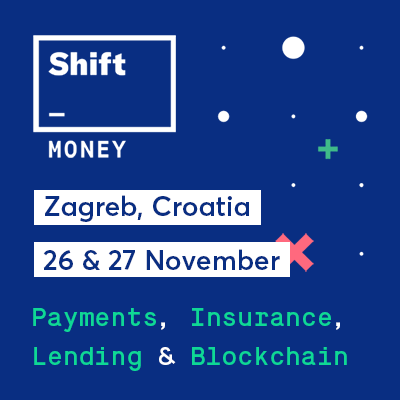
On 26th & 27th of November in Zagreb, Croatia, delegates from around the world of FinTech will talk about the newest trends in Payments, Insurance, Lending & Blockchain.
The Shift Team has been creating technology conferences for over 7 years. With their premier event being Shift Dev, the largest Developer Conference in Southeast Europe, which brings over 1300+ attendees from around the world in one place. Now, Shift Money will take that mantle as their biggest event, bringing delegates from around the world of FinTech to the beautiful city of Zagreb, Croatia.
The quick development of financial technologies and their increasing influence on financial services are reshaping the whole industry and completely changing the role of traditional financial institutions. Innovations are mainly coming from startups, who seem to be the primary source of disruption for conventional banks and give a lot of opportunities as well as risks, for the traditional financial environment. These rapid changes, such as cryptocurrencies and mobile banking, urged the industry to react quickly and reconsider the role of traditional banking.
This is why Shift Money gathers representatives from the whole financial and technology sector, no matter their size or stage, in one place to find new partners, create connections and find new opportunities. On the stage, more than 40 leading experts will share their ideas and experiences about Insurance, lending, blockchain, cryptocurrencies, problems of ICOs and payments. A few of them are coming straight from the companies such as Barclays, The Economist, IBM, CoinBase and others.
First batch of Speakers
Robert Wiecko is COO at Dash Core Group Inc., a company responsible for development of Dash - payments-focused digital currency. Robert manages the company infrastructure operations, projects portfolio, quality assurance and customer support.
Pavel Matveev is the CEO and co-founder of Wirex Ltd. - an industry-leading blockchain payments platform that integrates both fiat and cryptocurrencies. Pavel has over 15 years of experience in software development and IT management. He has worked with Barclays Capital, Morgan Stanley, BNP Paribas and Credit Suisse.
Helen Joyce stepped into the role of editor of The Economist's finance section in March 2018. Her previous jobs for the paper were International editor (January 2014-February 2018), Brazil correspondent (July 2010-December 2013) and education correspondent (from July 2005). She has an PhD in mathematics and a strong background in data journalism, and is interested in social, political and economic developments in emerging markets.
Alongside these speakers, at Shift Money Conference, 10 FinTech startups will get a chance to present their products and convince judges, investors and journalists they are the ones that can truly impact the FinTech industry. Four best teams will pitch their startups on the second day as well in the Pitch Finals. The best of them will bring home a noteworthy title: Winners of Shift Money Challenge 2018.
Conference will be hosted in the most extraordinary venue in Zagreb - Lauba House. There you’ll be able to find more than 100 companies from FinTech world. Banks and huge companies will be present with smaller, newer companies and startups. Their combination will allow for a more objective look at new technologies emerging in FinTech and their potential.
All of this makes the conference an ideal place for finding new partners, solutions and contacts. Shift Money will be held on 26th & 27th of November in Zagreb, Croatia. You can find more information, as well as tickets, on their official page money.shiftconf.co.
- 04:00 am
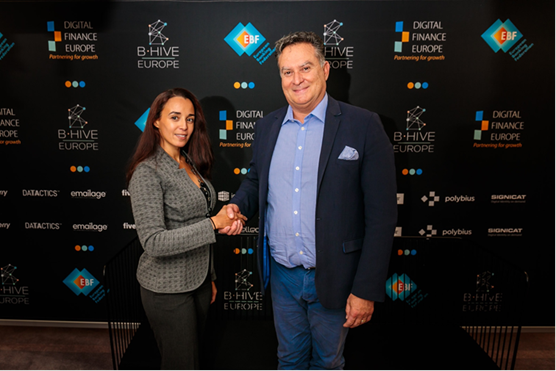
Temenos (SIX: TEMN), the banking software company, and the collaborative fintech platform B-Hive Europe, announced their associate partnership at Digital Finance Europe on September 26. The collaboration has been launched at the National Bank of Belgium in Brussels.
B-Hive’s growth continues, as it partners up with another tremendous tech company. B-Hive has reached a wide audience within the fintech community and joining forces with Temenos strengthens their ecosystem extensively.
Based in Geneva, Temenos has over 3,000 firms around the world, and more than 500 million banking customers count on their services on a daily basis. With more than 25 years of experience, Temenos is a true market-leading software provider and their expertise in the banking and finance industry will add great value to B-Hive’s ecosystem.
Shared values make the perfect partnership
Both B-Hive and Temenos value collaboration and believe in its importance in creating the best customer outcomes. Fabian Vandenreydt, Executive Chairman of B-Hive:“Sharing similar values as companies made this partnership even more valuable. We want to create a space that benefits everyone within the ecosystem. This was just another reason why partnering up with Temenos made a lot of sense to us.”
In addition, the two hope to foster and cherish innovation. In order to develop and adapt to the digital transformation, fostering innovation is key.
Amal El Alami, MarketPlace Community Director for Europe at Temenos, adds: “We are excited to be working with B-Hive in accelerating and empowering the highest levels of innovation for our customers. This partnership will help us strengthen the community around Temenos MarketPlace and to uncover the most exciting fintech companies in Europe. At Temenos, we open up our software to third-parties to encourage innovation. We value our innovative, open culture and hope to partner with other innovative companies through the ecosystem of B-Hive.”
The future looks bright
With this partnership, Temenos and B-Hive aim to work together on several of the B-Hive initiatives. As an associate partner, Temenos will take part in a dedicated B-Hive program and the two companies will collaborate on creating added value to the ecosystem of B-Hive. Temenos and B-Hive will also mutually participate in each other’s events, such as ‘Presenting best of fintech report’ from Temenos on November 22nd in Brussels.
- 09:00 am

The vast majority (84%) of organisations believe an inability to quickly roll-out new services and applications to their workforce is impacting their ability to stay ahead of the competition, according to new research from Capita and Citrix. The survey of 200 CIOs and senior IT decision makers reveals that cost (48%), security and compliance concerns (47%), and legacy technology (44%) are the biggest barrier towards creating the agile workspaces that today’s organisations strive for.
The overwhelming majority (93%) of organisations say that younger employees are driving demand for more flexible technology and ways of working. Furthermore, 91% believed the IT user experience was important in attracting and retaining new talent, with 55% of mid-size organisations stating it was ‘very important’ – underlining the value of retaining talented employees for smaller enterprises. However, despite demand from employees, 88% of organisations also admitted that dated capex budgeting models were making it more difficult for them to create agile workspaces.
“The digital revolution has had a substantial impact on how we work and what our expectations of our working environments are. As organisations look to move away from a traditional desktop IT environment to a more flexible one that caters for mobile, remote, and more digital-savvy employees, the appeal of an agile workspace has grown,” saidJames Bunce, Director, Capita IT Services. “The nirvana for many organisations is creating an agile workspace that puts users first – giving them everything they need, to work productively, in one single place – from applications, to shared data and documents, to self-service support. However, stitching these facets together is not an easy task, particularly as IT environments have grown in complexity. As the research shows, an agile workspace is not just a luxury for organisations but is fundamental to their success and ability to compete.”
Bring your own device or bring your own problem?
As organisations look to create a more user-centric workspace, increasing numbers are turning toward a ‘Bring Your Own Device’ (BYOD) approach:
- 46% of the organisations surveyed say they have introduced BYOD; a further 35% say they are considering it.
- Of those organisations that have adopted BYOD, 92% believe it has increased employees’ productivity.
- However, those organisations who have adopted BYOD admit it has increased security risks (87%), the burden on IT support (89%), and IT management challenges (88%).
On average, respondents to the survey think the number of IT support requests due to remote and mobile working has increased by a quarter (25%). Further, as ‘shadow IT’ has continued its rise, 83% of organisations admitted it is a challenge to keep their remote and mobile working policy up to date.
Is help at hand?
A key factor in user-centricity is assessing how employees feel about their working environment. The research reveals that more than three-quarters (79%) of organisations are currently measuring the IT user experience. On average, organisations measure the IT user experience six times a year, but more than a quarter (28%) say they are only monitoring it once or twice a year.
In recent years, the ability to ‘self-serve’ has played a central role in improving the user experience, and IT support is no exception.
- Neary two-thirds (64%) of organisations have implemented IT self-service tools; a further 30% said they will be doing so in the next 12 months.
- Of those organisations offering self-service, 86% feel support tickets have been reduced to some extent.
- Most organisations (82%) that have implemented IT self-service are currently measuring employees’ usage; this figure is even higher for mid-size organisations at 95%.
- Most respondents (87%) that have implemented IT self-service are also gathering user feedback to improve usability.
However, the survey reveals there is still work to be done in ensuring that self-service technology upgrades the user experience, as the majority of organisations (83%) say they still typically find out about users’ experience of IT through calls to the helpdesk.
“The findings show that while many organisations have adopted BYOD the full benefits are yet to be realised, as security and support concerns remain. A reluctance to give staff access to their preferred technologies holds back enterprises from becoming truly user-centric, therefore organisations must seek out solutions the enable BYOD in a secure manner while minimising the support burden,” added Bunce. “A truly agile workspace should allow IT teams to continually monitor user experience, yet for many it remains a reactive rather than a proactive function, with the onus on users to report issues. Without tools in place to monitor environments in real-time and enable IT teams to rectify issues more quickly, organisations risk creating a dispersed workforce of unhappy employees.”
The legacy problem
From a technology perspective, the majority of organisations (87%) say legacy applications are slowing their journey to creating an agile workspace, with the cost of re-architecting or transforming applications (68%), disruption to the user experience (43%), and a lack of in-house skills to modernise applications (36%) cited as the main causes.
Evolving alongside this application challenge has been the shift towards cloud computing, with organisations looking to Software-as-a-Service (SaaS) applications to increase workspace agility. Yet only a quarter (25%) of organisations think SaaS applications meet their requirements, with this figure dropping to 17% in mid-size organisations.
“An agile workspace is one in which employees can access all the applications and data they need, empowering them to collaborate with colleagues over any connection. This is easier said than done for most organisations because migrating from legacy remains a challenge,” said Justin Sutton-Parker, Director, Partners, Northern Europe at Citrix. “Ultimately, businesses are looking for cost-conscious, scalable and flexible solutions to enable productivity and deliver efficiency, often combined with a cloud-first approach – to help tackle legacy issues and embrace the digital workspace.”
Commenting on the findings Professor João Baptista, Director of MSc Business Consulting at Warwick Business School, said: "The digital revolution in organisations has mostly been visible in words and intentions, very few studies have captured the real effects on the ground and the challenges faced by those pushing these ideas into practice from within organisations. This report by Capita and Citrix is a useful examination of where organisations are today on this journey and a good diagnosis of the real challenges hindering progression. Some of these challenges such as costs and the weight of legacy systems and processes are more intuitive but what the report also highlights is the lack of focus on employees to create a user-centric platform of work, one that responds to new practices and patterns of work in modern organisations today. The report provides useful ideas for moving forward towards a more employee-centric organisation."
The Capita CIO Research: Delivering Digital Transformation Demands Agile Workspaces – Where are Organisations Today? is available for download atwww.workspaceagility.uk/cio-research .
*The research was undertaken in July 2018 by independent market research company, Vanson Bourne. The total sample size of 200 consists of 100 CIOs and senior IT decision makers from enterprises with over 1,000 employees, and 100 from enterprises with 500 – 1,000 employees.
Product Profile


Product/Service Description
Document generation platform for creation of PDF and Word documents from wide range of data-sources including Databases, Enterprise Applications, XML, Excel, JSON data. Supports all modes of document generation including on-demand, bulk, and interactive.
Customer Overview
Features
- Data to Documents: Merge existing templates with JSON-XML-Excel data
- Database to Documents: Automate documents generation from Oracle, SQL Server, MySQL, MongoDB etc.
- Automate document workflow: Integrate through REST API and Zapier integration
Benefits
- Reduce document creation efforts by 80-90%. Save time and money
- Reduce risk by minimising human interaction with the documentation
- Better brand and compliance governance over all documents created in Enterprise
Platform & Workflow
Connectivity, Hosting and Intergration
Support Services
Branches
Alternatives


Media Coverage (Quick Links)
Related News
Blogs
Publications
- 04:00 am

SEBA Crypto AG (SEBA) has secured CHF100 million to ignite its vision to build a regulated bank to bridge the gap between the crypto and traditional financial economies. Headquartered in Zug, Switzerland, SEBA wants to give institutions, corporates and individuals the confidence to operate in both economies, enabling new thinking, creating solutions and managing digital wealth efficiently.
Traditional financial market participants widely exclude themselves from crypto markets, because crypto investments are perceived as risky and lacking investment specific regulatory protection. Similarly, crypto companies and investors are finding it difficult to move assets from the crypto markets into the traditional regulated banking world. SEBA intends to solve these challenges, bringing together a Swiss-based team of global experts focused on obtaining a banking and securities dealer license from the Swiss Financial Market Supervisory Authority (FINMA) and developing a new platform, leveraging state-of-the-art FinTech and best-in-class service partners to deliver military-grade secure traditional and crypto banking experiences.
Andreas Amschwand, designated Chairman of SEBA and formerly UBS Global Head of Foreign Exchange and Money Market, commented: “In Switzerland we have commitment from various authorities to establish a comprehensive regulatory environment for the development of blockchain technology and the sustainable, stable growth of crypto assets. This makes Switzerland the ideal place to launch a new financial services paradigm. I’m excited to be part of a team of experts helping to usher in the crypto economy.”
The CHF100 million investment came from a mix of Swiss and international institutional and private investors, demonstrating support for SEBA’s vision to redefine finance for the new economy. Guy Schwarzenbach, CEO at BlackRiver Asset Management AG, investor and designated Board Member of SEBA said: “SEBA is an extremely promising start-up with an ambitious mission. The investment in SEBA is predicated on deep analysis of the velocity of the cryptographic asset market - if adoption, use and utility continue to gain traction at the same rate; crypto will become a legitimate, sound asset class and therefore hold a requisite allocation in investors’ portfolios.”
SEBA aims to bring crypto and blockchain products and services to the market by providing an easy-to-use and fully licensed and supervised one-stop banking solution, offering products and services for private individuals and institutional investors, as well as corporate investors. Following the grant of the FINMA license, SEBA will combine an online and a retail bricks and mortar experience, to cater to all possible user requirements for crypto and traditional banking services.
SEBA is in contact with FINMA for the application of a banking and securities dealer license. This license would allow SEBA to offer a comprehensive range of services, including secure storage and custodial services, trading and liquidity management, crypto corporate finance advisory and crypto asset and investment management services.
Jack Chung, Managing Director of Summer Capital, a SEBA investor, said “We see our investment in SEBA as leveraging the known ties between Switzerland and Asia, marrying the deep heritage in financial services and security standards of Switzerland, with the impressive growth and innovation that is powering Asia.”
Concluding today’s announcement, Guido Bühler, CEO of SEBA, said: “A fundamental aspect of our mission is education, we want to promote the potential blockchain holds for global economic reform and financial inclusion. With safety, transparency and performance as core values, our ambition is to become a market leader in the convergence of traditional finance with the crypto economy.”
- 01:00 am

Thomson Reuters has partnered with Moody’s Analytics, a leading provider of financial intelligence and analytics, to offer a classification solution for conducting the Solely for Payment of Principal and Interest (SPPI) tests required under the IFRS9 accounting standard. The solution allows fixed-income investors to automate SPPI tests for securities in their portfolios by providing data on over 1.2 million corporate, government, and structured securities globally.
“We are excited to partner with Thomson Reuters to bring fixed-income investors more comprehensive coverage of all asset classes in a single transparent and auditable solution,” said Luis Amador, Managing Director at Moody’s Analytics.
In addition to securities held in clients’ portfolios, the solution permits users to conduct additional due diligence on bonds that have not been purchased. Full explanations are provided for returned SPPI pass/fail tests, including the methodologies used, as well as IFRS9 identified criteria and interpretations.
“Partnering with Moody’s Analytics, we developed a much simpler and more comprehensive solution to help clients manage their SPPI instrument accounting obligations under IFRS9,” said Stuart Martin, Managing Director for Risk Information and Learning Services for the Financial & Risk business at Thomson Reuters. “We worked together to deliver a seamless experience for clients, built on industry-leading data from both Thomson Reuters and Moody’s Analytics.”
The SPPI data feed is delivered with an open API and can be integrated into an existing client system or accessed via a web portal. “We developed the solution with user experience in mind and are committed to providing expert customer service throughout the product lifecycle,” added Mr. Amador.
Click here to learn more about the Moody’s Analytics/Thomson Reuters SPPI classification solution for IFRS9.
The Thomson Reuters Financial & Risk business will be known as Refinitiv, following the closing of the strategic partnership transaction between Thomson Reuters and private equity funds managed by Blackstone.
- 08:00 am

The Depository Trust & Clearing Corporation (DTCC), the premier post-trade market infrastructure provider for the global financial services industry, today announced it has signed an agreement with Symphony that significantly expands communication and collaboration capabilities within the DTCC Exception Manager (DXM) service.
Symphony is a messaging and collaboration platform used by many of the world’s top financial services companies for both internal and external communications. DTCC has signed agreements to become both a Symphony partner and client, enabling users of DXM who are also users of Symphony to securely use exception information displayed in the DXM platform and post it into a Symphony chat room.
DXM was launched early this year to provide a central industry platform to publish, manage, and communicate exceptions throughout the trade settlement lifecycle process. DXM supports all securities transactions globally, capturing exception details from custodians, broker dealers, prime brokers and CSDs and standardizing exception processing to enable faster issue resolution. Effective collaboration and communication using the data within the DXM platform enables faster issue identification, resource allocation, and timely exception resolution of trade issues.
“With the Symphony and DXM integration, buy-side users will be able to securely exchange exception information and collaborate with their broker dealer and custodian counterparts to address trade issues and accelerate their resolution,” saidMatthew Stauffer, Managing Director and Head of Institutional Trade Processing at DTCC. “This secure, integrated and efficient communication link between parties greatly reduces the operational risk associated with today’s manual and cumbersome processes.”
“We have taken a platform-centric approach to the DXM platform where we seek out these types of partnerships to provide our clients with the benefit of a fully integrated service for viewing exceptions and a collaboration workflow capability to accelerate resolution,” said Marisol Collazo, Managing Director, Business Development and Global Head of Strategic Partnerships at DTCC.
The integration with Symphony chat is expected to be available in early 2019.
- 03:00 am

Quorum 15, the global financial markets think tank, and Greenwich Associates, the leading global provider of market intelligence and advisory services to the financial services industry, today announced the launch of Q15 Digital, a new partnership venture that significantly expands Quorum 15’s long-established programme of influential industry forums, allowing a wider community of buy- and sell-side firms to participate in driving change in global financial markets.
Quorum 15 was established in 2008 to encourage dialogue between buy- and sell-side institutions and build consensus around the key issues impacting the trading of equities, fixed income and FX. Its members gather quarterly in a series of meetings held under the Chatham House Rule to pool their expertise to resolve shared challenges. Their collective recommendations are then communicated back to regulators, industry associations and relevant government bodies via members’ firms. Comprising 15 senior executives drawn from leading global institutions, these regular meetings (‘quorums’) have traditionally been held across five key financial centres: London, New York, Boston, Hong Kong and Sydney. Since 2014, Quorum 15 has leveraged Greenwich Associates’ global roster of senior research analysts to facilitate discussion and ensure a data-driven foundation to the U.S. meetings.
Q15 Digital extends this model to a broader and more geographically diverse range of firms worldwide via a video conferencing service. Q15 Digital members, comprised of senior level business decision makers from across the buy and sell side, will have the opportunity to collaborate on identifying key business priorities and to strengthen relationships and cooperation within and across their own markets, in addition to being updated on the industry challenges identified by the members of the established physical quorums. Greenwich Associates will work with Q15 Digital’s members, as well as its advisory board, to help establish the agenda so that the most critical industry challenges are addressed.
Mike Burton, Founder and CEO of Quorum 15, said: “For 10 years, Quorum 15 has been bringing together leading market participants in the world’s major financial centres as equal stakeholders to engage in a frank and constructive exchange of views. In today’s interconnected world, the candid exchange of expert views has never been more important, and firms are looking for smarter, more cost-effective models to deliver that deeper level of engagement. The launch of Q15 Digital demonstrates Quorum 15’s steadfast commitment to building consensus and finding certainty in changing times.”
Dan Connell, Managing Director at Greenwich Associates, said: “We are extremely excited to expand our partnership with Quorum 15 as we jointly roll out this new digital initiative. The Q15 Digital offering presents a phenomenal opportunity to buy- and sell-side firms globally by expanding the geographic reach of Quorum 15. Q15 Digital members will benefit greatly from the combined expertise held in the virtual meeting room and can expect a secure and lively discussion on the most important regulatory and market structure developments across all asset classes.”
The first Q15 Digital meeting is expected to be held in Q4 2018. Potential buy- or sell-side participants interested in learning more should contact info@quorum15.com.
- 03:00 am

EMVCo has published EMV® Level 1 Specifications for Payment Systems – EMV Contactless Interface Specification v3.0.
The enhanced specification, available on a royalty-free basis to all industry participants, addresses the interoperability needs between EMV acceptance devices and diverse EMV contactless payment form factors, including emerging technologies such as mobile handsets and wearables.
An objective of the enhanced specification is to increase alignment with ISO standards, in addition to industry bodies such as NFC Forum, to streamline the deployment and acceptance of contactless payment technologies across the world.
The supporting testing infrastructure has also been advanced with the introduction of new test equipment to better identify and reduce the risks of interoperability issues before EMV contactless products are deployed in the field.
The EMV Specifications and related testing processes continue to evolve to support global interoperability and enhance security. To stay informed of the latest EMVCo developments and receive advanced access to EMV Specifications and related documents, join the EMVCo Associates Programme or become a Subscriber.
For further information, read the Q&A available to download from the EMVCo website.








