Published
- 03:00 am

Chooch.AI, an artificial intelligence training platform for visual recognition, has raised a $2.8 million seed round led by venture capital firm Vickers Venture Partners. The round also includes funding from angel investors. The funds will be used to expand market reach and grow the team, including hiring additional engineers.
“Chooch’s novel technology, with its focus on AI training and flexible integrations, means that it is uniquely positioned to be an end-to-end, deep learning visual AI solution, and an alternative visual solution to Google Vision or Amazon Rekognition. We look forward to working closely with the Chooch team as they expand across regions,” commented Vickers Venture Partners Chairman Dr. Finian Tan.
Chooch has been easily deployed by customers for a wide range of applications on many platforms. Chooch is rapidly trained to be a visual expert in any field, from aircraft engine parts, to types of human faces, to counting cancer cells. When Chooch is presented with images or videos that contain perceptions learned by its neural networks, Chooch returns metadata such as a person’s identity or model of a helicopter. Chooch can be trained to accurately identify features in any media, such as web-based video or images on mobile phones, live drone feeds and medical imagery.
“We’ve made machine learning for computer vision super easy to use and implement at scale,” explains Emrah Gultekin, CEO of Chooch AI. “This provides massive competitive advantages to companies who need to implement Visual AI into their processes.”
The ROI is immediate because of the increased speed of tagging images for media, e-commerce and security companies, e.g., Chooch can do facial recognition training in real time, increase revenue by 5x for video advertising and reduce costs by 80x for tagging of visual data like photojournalism.
“That’s a game changer for our business,” says Jonathan Wells, CEO of the photo agency SIPA USA. “We can be processing 1000’s of photos per day and dozens of shoots from LA to Milan.” The photo agency SIPA USA uses Chooch to tag photos in real time from the Oscars red carpet, sporting events and fashion runways worldwide, an illustrative case study of the value of Chooch.
- 09:00 am

SWIFT is pleased to announce today the appointment of Javier Pérez-Tasso as its new Chief Executive Officer. A member of the SWIFT Executive team for the past seven years, Pérez-Tasso currently serves as Chief Executive Americas & UK region. He will take up his appointment on 1 July 2019 in place of Gottfried Leibbrandt who announced his intention to step down from the post at the end of June in December 2018.
The appointment follows a comprehensive internal and external search conducted by the Board’s Human Resources Committee, advised by a professional search firm.
SWIFT Chairman Yawar Shah, said: “I am delighted to announce Javier’s appointment with the full endorsement of the Board. SWIFT has an exceptionally strong management team which has enabled the Board to appoint an internal candidate and which will also allow for a smooth transition.”
“Javier‘s track record of impressive leadership, coupled with his in-depth understanding of the company and its business, means that he is expertly positioned for this new role. I am confident that his appointment will ensure that SWIFT can continue to build on its tradition of excellence and innovation in support of the global financial community, while also enabling acceleration of its endorsed strategy.”
Pérez-Tasso joined SWIFT in 1995 and was appointed Chief Executive, Americas & UK region in September 2015. In this position, he significantly deepened SWIFT’s engagement model with global transaction banks and successfully delivered business development results in high-growth markets. He was also an Executive sponsor of SWIFT’s Customer Security Programme from 2016 to 2018, helping to formulate and lead SWIFT’s response to the growing cyber challenge facing the community.
Prior to that, Pérez-Tasso served as Chief Marketing Officer, a role in which he was responsible for developing SWIFT’s current five-year strategy. The SWIFT2020 strategy he defined has led to the co-operative’s renewed focus on cross-border payments, expansion into financial crime compliance and deeper presence in the market infrastructures area, including its entry into instant payments. Earlier in his career, Pérez-Tasso held a number of technology and leadership positions in business development in regional offices in Europe, the Middle East and Africa.
Commenting on his appointment Pérez-Tasso said: “I thank the SWIFT Board for its trust and feel privileged to lead SWIFT and serve its customers as CEO. I am fortunate to start this mandate building on Gottfried’s strong legacy, and I look forward to maintaining our focus on operational excellence as well as to accelerating SWIFT’s transformation during a period of unprecedented change and opportunity for the community.”
A Spanish national, Pérez-Tasso holds a degree in Electrical Engineering from Institut National Polytéchnique de Grenoble, a Master's degree in Management from Solvay Business School, a Master in Finance from IE Business School and the Executive TGM from Insead.
As Chief Executive Officer of SWIFT, Pérez-Tasso will be based at SWIFT’s headquarters in Belgium.
“The Board joins me in thanking Gottfried for his extraordinary dedication and service and we wish him all the best in his future endeavours. SWIFT has become a stronger, more agile company under his leadership – defining, establishing and delivering on a bold agenda,” said Shah. “I look forward to working with Javier to build on this, as SWIFT continues to serve the banking community as its Fintech.”
- 06:00 am
Marqeta, the creator of an advanced payments infrastructure and open-API platform defining a new standard for modern card issuing, announced today it has signed its first four European customers: digital banks Morning and YAPEAL, as well as point-of-sale lender Aplazame and mobile payments platform Auka -- following its launch in-market in October of last year.
These first four customers represent a strong endorsement of Marqeta’s appeal across Europe amid a growing digital banking landscape, representing fintech innovators from France (Morning), Scandinavia (Auka), Spain (Aplazame) and Switzerland (YAPEAL). They also show the broad use cases of Marqeta technology and the many applications for modern card issuing globally, with this first crop of customers working across digital banking, mobile payments and point-of-sale financing.
Marqeta’s global vision and European expansion
“We see the UK and Europe as a key market as we continue to expand our global footprint and the first step in a much larger international expansion,” said Ian Johnson, Head of European Growth at Marqeta. “It has a thriving ecosystem of digital banks and fintech startups that have already had a lot of success in market. To be able to bring on customers of this caliber is true validation of the global possibilities around modern card issuing and of our early work in the market.”
Founded in Oakland, California in 2010, the Marqeta platform is used by the world’s leading innovators to drive new modes of commerce through modern card issuing -- helping them easily issue highly configurable physical, virtual or tokenized payment cards. Marqeta sees modern card issuing as a $40 trillion addressable opportunity, with Europe ahead of the curve globally in adopting new payments technology and digital banking services. According to Marqeta research, Europeans are 2.5 times more likely than someone in the United States to already be using a digital bank.
What Marqeta’s European customers think about this new partnership
“Auka has worked with cards since we first started in mobile payments in 2010. We are now expanding our platform capabilities with cutting edge card issuing and processing in partnership with Marqeta,” said Daniel Döderlein, Auka founder and CEO. “Our platform is cloud native, API-based, globally consistent and scalable, PCI and FSA compliant as well as being interoperable with most legacy systems. Marqeta will be a strategic partner for powering these capabilities, but will also enable financial institutions who use Auka to create and run their own issuing products through us.”
“As we prepare YAPEAL for its launch in-market in mid-2019, we’ve taken an API-based, cloud native and technical focus to building a modern private account and card payment product. Marqeta fits perfectly in to this strategy and mindset and keeps us legacy free,” says Daniel Capraro, YAPEAL co-founder and CPO. “With the lean processing powers of Marqeta, our product development will profit and we can be as agile as possible. We strongly believe in the modern core of Marqeta technology and that it will empower many of our future plans.”
“Morning is currently issuing cards for our mobile banking application Morning Pay,” said Frédéric Senan, CEO of Morning. “Partnering with Marqeta would enable us to strengthen our real-time core banking platform in order to keep on providing cutting edge services for our B2C customers and for our B2B clients as well.”
- 02:00 am
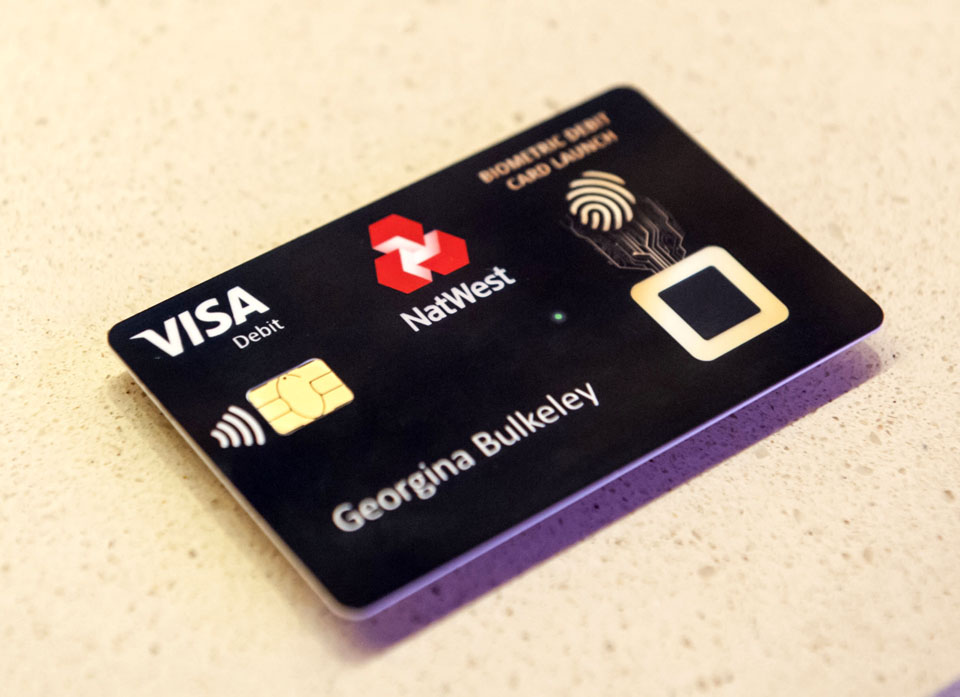
The first biometric fingerprint card issued by a UK bank enters circulation today. As part of a national trial NatWest is piloting cutting edge, biometric fingerprint technology with 200 customers.
Customers can now use their fingerprint to verify transactions above the £30 contactless limit, increasing security and making it easier for customers when paying for goods or services at the tills as no PIN is required. As well as retaining contactless functionality, the fully integrated card can be used as normal in ATMs, the post office and for digital banking.
A fingerprint is registered onto the bank card and this can be done in a customer’s own home using new technology. Once a fingerprint is locked onto a card it cannot be changed. The fingerprint is only held on the card and not centrally by the bank with each transaction verified using data which is encrypted and stored locally on the card.
The new cards work with existing contactless and Chip and Pin terminals meaning shops will be able to accept payments without updating their technology.
David Crawford, Head of Payments NatWest said: “We are using the very latest technology across our business to make banking easier for our customers and biometric fingerprint cards are one of the many technologies we are exploring further. This is the biggest development in card technology in recent years and it’s great to finally see the cards in the hands of our customers.”
NatWest is working closely with digital security company Gemalto and Visa to bring the service to customers in the UK.
Howard Berg, Senior Vice president, UK Ireland and Switzerland of Gemalto, a Thales Company, said: “We are thrilled to be the first in the UK to bring this exciting payment innovation to UK consumers. We’re confident that consumers will love the convenience, enhanced security and great user experience that this new card provides. Biometric authentication and identification is set to transform financial services and we’re proud to be leading the way in this field alongside our partners.”
Jeni Mundy, Managing Director, UK & Ireland, Visa, said: “In financial services, biometrics are gaining ground as a secure and convenient alternative to passwords and PINs. This technology has the potential to make the lives of consumers easier and provides greater choice to confirm their identity. At Visa we’re committed to working with partners to develop and invest in emerging capabilities that deliver a better, more secure payment experience for consumers”
The pilot runs for three months.
- 04:00 am
ONPEX, a leading provider for multi-currency IBAN accounts, has partnered with Ronghan International Limited – the UK-based and regulated division of the Chinese financial service provider OnerWay. This partnership is set to make cross-border marketplace settlements seamless for international eCommerce businesses.
OnerWay facilitates a payment collection platform which enables thousands of Chinese merchants to sell their products on local marketplaces around the world. The partnership with ONPEX now opens the European market for OnerWay’s clients to expand their business potential – a service which is becoming increasingly vital for international eCommerce.
The business collects pay-outs from local marketplaces, such as Amazon, eBay, Wish, and Cdiscount amongst others, on behalf of its clients. The Chinese financial service provider was searching for a regulated European partner that offers automated banking and reconciliation solutions. With ONPEX, OnerWay can now seamlessly receive, split, reconcile, and settle payments to its clients’ corresponding accounts in China. In addition, the new partnership with ONPEX supplies the Chinese payment service provider (PSP) with a solution that ensures efficient multi-currency management and reduces cross-border transfer costs.
Before the partnership, the Chinese payment service provider (PSP) had no efficient way of sending and tracking payments to and from the EU. Without individual IBANs attached to the corresponding receiving accounts, to identify each transaction, the business faced major challenges when managing currency exchange and cross-border transfers. Deploying ONPEX’ Banking-as-a-Service via flexible API technology, OnerWay is now able to assign unique IBANs to each customer and solve all these issues.
With ONPEX’ solution, OnerWay can now deliver efficient, automated marketplace settlements at a lower cost and reduced risk – guaranteeing seamless and secure payments in over 25 currencies. Further, ONPEX allows the PSP to operate in a PSD2 compliant environment, regulated by the Luxembourg CSSF in accordance with European law.
Speaking about the new alliance, Christoph Tutsch, CEO at ONPEX, explained: “With international eCommerce on the rise, particularly from Chinese merchants, it is key for OnerWay to partner with an organisation that can automate secure cross-border payments. And as a result, expand its customer-base while thriving in a more globalised market.”
“With our API-driven technology, we’re making global commerce easier and helping OnerWay to create a tailored solution which supports the complex and costly task of transferring funds to and from differing countries and currencies. Through automated processes, we expect to see significant growth from OnerWay and its merchant base.”
Jiangzi Ning (George), Director at Ronghan International Limited, continues: “We chose to partner with ONPEX as it was the only provider in the market to offer solutions which cater exactly to the needs of our merchants. With more and more of our customers looking to buy and sell on marketplaces across Europe, it was essential for our growth that we had a solution which put automation in marketplace settlements, cross-border payments, and foreign exchange capabilities at its core.”
“With ONPEX’ strong financial reputation and understanding of regulations within the EU, we have a partner who has a secure and compliant platform to support us as we grow. As a result, we are now able to provide regulated, automated client management solutions through ONPEX’ multi-level IBAN accounts which not only allows us to track payments but also make cross-border SWIFT and SEPA transfers at lower costs.”
To find out more about ONPEX’s multi-currency IBAN accounts, visit www.onpex.com.
- 08:00 am
Fiserv, Inc. (NASDAQ: FISV), a leading global provider of financial services technology solutions, today announced that Kazakhstan-based Eurasian Bank will streamline and automate its cash management processes with technology from Fiserv.
The bank is implementing a range of cash and logistics solutions to enable web-based cash supply chain management and provide real-time visibility into cash needs. This can allow the bank to centralize currency management, giving staff a unified view of cash needs rather than needing to piece together multiple sets of information. Staff can then more accurately forecast cash needs across the bank’s ATM and branch network based on customer demand.
“Kazakhstan has a cash-based economy, and our customers have to be able to reliably access cash in order to conduct their daily lives,” said Natalia Iliyashenko, head of operations, Eurasian Bank. “With Fiserv, we will be able to gain a better view of where cash is across our entire network, so we can make sure money is available when and where our customers need it. We believe the implementation of this technology is an important step in serving our growing customer base.”
In addition to enabling the bank to better serve customers, centralizing cash management processes can also allow the bank to operate more efficiently.
“Being able to optimize cash levels at our branches and self-service devices allows us to reduce our overall operating expenses,” continued Iliyashenko.
When cash sits idle in a bank or in a self-service device, like an ATM, it is costly for the financial institution because that money cannot be used for another purpose, such as funding a consumer loan. Yet if there is not enough cash in the device for a customer to make a withdrawal, there is increased risk that a customer will take banking business elsewhere. With advanced technology, banks can make certain the right supply of cash is available at branches, ATMs, or any other self-service devices.
“Access to cash is a defining component of banking convenience for Eurasian Bank customers,” said Lee Cameron, managing director, EMEA, Fiserv. “We look forward to leveraging our global experience and local expertise in cash management to enable the bank to streamline operations and deliver the best possible customer experience.”
In a world moving faster than ever before, Fiserv helps clients deliver solutions in step with the way people live and work today – financial services at the speed of life. Learn more at fiserv.com.
- 01:00 am

Murex, a global leader in trading, risk management and processing solutions, has launched a new offering addressing the challenges of LIBOR discontinuation and benchmark reforms. It is also collaborating with LCH on a project relating to the cleared rates derivatives market.
To deliver a solution that quickly evolves with market requirements, Murex established itself as an active member of the ISDA community, participating in industry working groups and contributing to key reports. For the close monitoring of LIBOR updates, Murex also created a dedicated task force to provide guidance for customers as they assess how the changes will impact their business.
Murex is working closely with clients to ensure that they are prepared for the looming 2021 reform deadline. For market infrastructure institutions with large volumes, such as LCH, early preparation is especially important. While the details of the various LIBOR fallback mechanisms are yet to be finalized, Murex is already developing dedicated transition events in response to LCH’s requirements. With this initiative, Murex is aiming to streamline the transition of OTC derivatives trades referencing LIBOR, starting with the seamless application of new fallback clauses to legacy positions upon a discontinuation event.
Speaking about the project, Philip Whitehurst, Head of Service Development, Rates, LCH, says, “LCH is committed to supporting the global rates reform effort, and we’re pleased to be continuing our work toward a smooth transition to alternative reference rates. Our work with Murex will enable us to continue along this path, and allow us to adapt to the changes in a timely manner.”
Alexandre Bon, Co-lead of the Murex LIBOR taskforce adds, “Murex has been working with LCH for many years, supporting their risk and valuation activities, from curve construction to process automation. We are delighted to team up with them once more, delivering the technology and support to develop mechanisms that ease the transition away from LIBOR, reducing the risk of market disruption and bifurcation.”
Reflecting both market and client requirements, the Murex cross-asset LIBOR reform solution supports new indices, instruments, curves and emerging valuation practices. Covering front office through to risk management and accounting, it also includes LIBOR exposure dashboards and impact analysis tools. On top of this, Murex is developing position and instrument migration mechanisms in collaboration with LCH to smooth the path to LIBOR reforms.
- 08:00 am

AxiomSL, the leading global provider of regulatory-reporting, risk and data-management solutions, today announced that it has received ISO/IEC 27001:2013 certification (known as ISO 27001). The certification covers AxiomSL’s core software and ControllerView® flagship product, its system development, professional and client support services and company operations. It also covers AxiomSL’s cloud-based solutions, operations and client support.
Created by a joint committee of the International Organization for Standardization (IOS), which promotes worldwide proprietary, industrial and commercial standards, and the International Electrotechnical Commission (IEC), which publishes international standards for all fields of electrotechnology, ISO 27001 validates the effectiveness of companies’ security processes related to financial information, intellectual property, employee details, third-party information and other assets.
“Upholding the highest standards of information security is of tremendous importance to us, and we’re pleased to have achieved ISO 27001 certification, the de facto standard in the global financial services industry,” said Vlad Etkin, Chief Information Officer at AxiomSL. “With the expansion of our clients and solutions around the world, strong processes are of utmost importance to our continued success in this dynamic industry. We dedicated resources to this important effort, and our entire team is proud to have met ISO 27001’s exacting requirements. Achieving this milestone in AxiomSL’s journey demonstrates our drive for excellence and our commitment to upholding the necessary controls to ensure our technology, people and processes meet high quality standards.”
ISO 27001 compliance testifies to AxiomSL’s commitment to a systematic and ongoing approach to managing information-security risks that affect the confidentiality, integrity and availability of company and customer information. Companies receive this certification after undergoing a rigorous audit; in AxiomSL’s case, the audit was performed by the Standards Institute of Israel, a certification body accredited through the ANSI-ASQ National Accreditation Board, which found AxiomSL’s controls met or exceeded the criteria for ISO 27001 certification. The audit covered AxiomSL’s information security risks management processes, threats and vulnerabilities treatment; design and implementation of information security management system; BCP and DR; HR and vendor management; system development, as well as other ISO-related areas.
“Given that ControllerView, AxiomSL’s data integrity and control platform, is instrumental in meeting regulatory requirements for the world’s leading financial institutions, it is imperative that we have people, processes and technologies focused on information security, especially as our clients increasingly choose to implement the platform on AxiomSL’s cloud,” Aaron Slutsky, AxiomSL’s Chief Security Officer, added. “The ISO 27001 standard ensures our stakeholders that we are processing valuable data using a managed, established methodology to help mitigate risk. And AxiomSL will conduct the annual audits required by the ISO 27001 framework, further demonstrating our drive to continuously improve our security practices, internal processes and data governance.”
- 07:00 am

A brand-new study into consumer confidence in cryptocurrencies has been released today, revealing two-thirds of Europeans have faith the digital assets will still exist in 10 years’ time, however the majority are still uncertain to how they will be used. The research, commissioned by bitFlyer, the world’s largest bitcoin exchange by trading volumes[1], polled 10,000 respondents across 10 countries in Europe.
The research reveals Norway to be leading the most optimistic countries confident in the future of cryptocurrency, with almost three-quarters (73%) believing they will still exist in some form. France, on the other hand, is less confident with just over half (55%) believing in the longevity of crypto’s existence. However, the results demonstrate that every European country polled showed a majority in support of cryptocurrencies. See Table 1 below for more detail.
In addition to asking respondents whether they believe bitcoin will still exist, the study also dug deeper to uncover what consumers think the real use cases for bitcoin will be in future and how cryptocurrencies will solidify their place within their respective market. The results show the majority are still very much uncertain.
Almost 1 in 10 (8%) Europeans believe bitcoin will be fully ingrained into society as a form of currency in 10 years’ time, and only 7% believe it will be used as a security or investment. See Table 2 below for more detail.
According to the research, generally, men are more optimistic in this with 9% believing bitcoin could become an additional form of currency; this number falls to just 6% for women.
The country divide shows a slightly different picture; Poland and Italy top the countries who believe bitcoin could become a form of currency with 10% of both countries believing this. The UK on the other hand differs at the bottom of the ranking, with just 6% believing in bitcoin becoming a form of currency in the future.
However, the research reveals Europeans as a whole are slightly more confident in bitcoin becoming a form of currency (8%) than simply used for investment or security (7%). In fact, it’s only Poland that breaks this trend as the one country more confident that bitcoin will be used for investment and security. Interestingly, Norway – who in other areas of the study have proved to be extremely optimistic on crypto’s uses and longevity – overwhelmingly do not believe bitcoin will exist as an investment and security tool – just 6% voted in favour of this.
Andy Bryant, COO at bitFlyer Europe, said: “These results indicate that the reputation of cryptocurrency has moved beyond hype and become more established. It’s very easy to forget just how new cryptocurrencies still are; we’ve only just celebrated bitcoin’s 10th birthday, so for the majority of consumers to believe in crypto’s future is without a doubt an achievement.
“The next step is for the industry to better promote the benefits and use cases of cryptocurrencies to consumers, so that people understand how they will come to be used in society.”
Bitcoin vs other Cryptocurrencies
The results also reveal an interesting disparity between confidence in cryptocurrencies as a whole and bitcoin specifically. According to the study, fewer Europeans have confidence in bitcoin existing in 10 years’ (49%) time than they do other cryptocurrencies (63%), revealing that whilst bitcoin may have been the first to revolutionise the market, consumers have more faith in new and emerging cryptocurrencies solidifying their place within society. See Table 3 below for more detail.
Andy Bryant, COO at bitFlyer Europe, said: “The fact that bitcoin is not generating as much support as other cryptocurrencies is in part a symptom of the market’s volatility, but is also a direct impact of the constant media attention that is associated to its volatility. We of course believe that bitcoin is here to stay, and while we’re encouraged to see the large majority of Europeans think the same, this research shows there is much more to be done to demonstrate to consumers the benefits of and use cases across all cryptocurrencies more widely”.
Tables of results
Table 1: the percentage of consumers who believe cryptocurrencies will still exist in 10 years’ time:
1 | Norway | 73% |
2 | Italy | 68% |
3= | Netherlands | 67% |
3= | Poland | 67% |
4 | Spain | 66% |
5= | Denmark | 63% |
5= | Germany | 63% |
6 | Belgium | 59% |
7 | UK | 57% |
8 | France | 55% |
| Europe | 63% |
Table 2: the percentage of consumers who believe bitcoin will exist as an investment and security tool in 10 years’ time:
1 | Poland | 11% |
2= | Italy | 9% |
2= | Belgium | 9% |
3 | Germany | 8% |
4 | Netherlands | 7% |
5= | Norway | 6% |
5= | Denmark | 6% |
5= | Spain | 6% |
5= | France | 6% |
6 | UK | 4% |
| Europe | 7% |
Table 3: the percentage of consumers who believe bitcoin will indeed exist in 10 years’ time:
1 | Italy | 55% |
2 | Poland | 53% |
3= | Spain | 51% |
3= | Netherlands | 51% |
4= | Norway | 50% |
4= | Germany | 50% |
5 | Denmark | 49% |
6 | Belgium | 45% |
7 | UK | 43% |
8 | France | 40% |
| Europe | 49% |
- 09:00 am

According to a recent survey of more than 1,000 U.S. and U.K.-based CISOs by the Ponemon Institute, 59 per cent of companies said they have experienced a data breach caused by one of their vendors or third parties. With large organisations today having upwards of 100,000 third-party vendors to manage, and small organisations having a significant sub-set of that, managing third-party vendor risk is an important part of an organisation’s overall cyber-health. KnowBe4, the provider of the world’s largest security awareness training and simulated phishing platform, today announced new functionality for its GRC management platform, KCM GRC, which helps organisations of all sizes address the growing problem of third-party vendor risk management.
Organisations that do not know the cyber-health of vendors they do business with put themselves at risk of breaches and other cyber-attacks. According to the Ponemon survey, 75 per cent of organisations believe that third-party cybersecurity incidents are increasing and 22 per cent of respondents admitted they didn’t know if they’d had a third-party data breach in the past 12 months. Additionally, PwC’s recent report “The Global State of Information Security Survey 2018” states that there are very few companies that are correctly building cyber and privacy risk management into their digital transformation initiatives.
KnowBe4’s KCM GRC is an intuitive platform which Organisations can customize to measure third-party vendor risk. Once an initial assessment is completed, organisations can continually monitor against risk levels they’ve set. KCM GRC enables an organisation to keep track of everything within the platform, moving away from using cumbersome point products and office management tools, to adhere to policy and compliance management standards. As with all KnowBe4 offerings, KCM GRC comes with free and unlimited support.
“Third party vendors introduce risk to any organisation. The vendor lifecycle and those risks must be managed. With the introduction of vendor risk in the KCM GRC platform, we designed it as a simple, intuitive and scalable platform to easily manage these risks.” said Blake Huebner, KnowBe4’s SVP of KCM Strategy.
For more information on KCM GRC, visit: https://www.knowbe4.com/products/kcm-grc-platform