
Published
- 03:00 am
Mastercard announced it is enabling the increase of contactless payment limits across Canada, as people look for safer ways to pay in the wake of the COVID-19 (coronavirus) pandemic. The move follows similar announcements made by Mastercard recently to champion contactless limit raises around the world, as health officials recommend social distancing and a growing number of merchants encourage consumers to pay with contactless to minimize interaction.
Mastercard has been championing the transition to contactless in Canada and globally for over 15 years and Canadians have embraced this fast, simple and secure way to pay. Canada has been recognized as one of the most cashless societies in the world1 and the majority of in-person Mastercard transactions in Canada are already tapped.2 With this change, this contactless adoption is expected to grow even further.
Mastercard is currently working with industry partners in Canada to make it easier to accept contactless payment up to $250 CAD. Once implemented by partners, this means that cardholders will be able to purchase more of what they need with the security, speed and touch-free experience of contactless payments at more merchants across Canada.
“Mastercard is proud to have played a leadership role in driving the adoption of contactless payments in Canada and we know that Canadians have embraced it as a preferred way to pay,” said Sasha Krstic, president of Mastercard in Canada. “With safety and social distancing top of mind for all Canadians, today’s announcement is one way we’re helping cardholders to shop easily, securely and with more peace of mind during this difficult time.”
Mastercard is also reminding merchants that signatures are not required on a receipt or electronic point of sale device for contactless payments, giving consumers comfort, safety and speed at checkout.
Mastercard’s effort to raise contactless limits is one of many initiatives the company is leading to support its employees, customers and cardholders. Most recently, the company announced a partnership with The Bill and Melinda Gates Foundation and Wellcome Trust to accelerate the development and access to treatment for COVID-19. Together, the companies committed up to $125 million in funding to speed-up the identification, assessment, development, and scaling of treatments. In addition, Mastercard employees around the world have engaged in its employee donations match program to help communities globally.

Otabek Nuritdinov
Head of Business Development at Safenetpay
- 01:00 am
Research conducted by new entrant to the UK fintech market, Modularbank, in partnership with market research specialists, OnePoll, has found that over 90% of UK consumers claim that a strong technology offering is important to them when choosing who to bank with. In fact, based on a survey of 2,000 UK consumers, this factor was cited more than any other as being an important factor in making this decision – more so even than interest rates, which 88% of consumers cited as being important in their decision.
Technology also beat out ‘brand of the bank’ and ‘personal in-branch relationships with banking staff’ when it comes to what is important to consumers in choosing where to bank, with only 68% and 47% of people respectively claiming that these attributes were important to them.
On a scale of 1-10 (with 1 being unimportant, and 10 being extremely important), 80% of consumers voted six or above when asked how important technology and a digital offering are in banking today. A further 53% claimed that they would be happy if they never had to visit their banking branch in-person again to complete a transaction.
Vilve Vene, co-founder and CEO of Modularbank comments: “Technology really is the key to attracting and retaining a customer’s business in the banking world. Interestingly, despite current perceptions that disruptive challenger banks have decreased loyalty to incumbent, traditional financial institutions, nearly 70% of UK consumers claimed to be loyal to their banking institution.
“With consumers prizing technology in banking above all else, however, what’s clear is that the key methods by which disrupter brands are able to test this loyalty is by providing a technology offering which makes for a more ‘seamless banking’ experience for the consumer. At Modularbank, we are committed to empowering every financial institution to be able to provide these services.”
Indeed, Estonian fintech company, Modularbank, which now offers its services in the UK, is in the business of providing platforms which allow any banking institution to integrate technology into its business. This allows financial institutions to improve ease and flexibility in the way that they serve their customers, providing them with a seamless banking experience which is more tailored to their individual needs.
A customer perceives banking as seamless when they are able to complete financial services without challenges or hurdles. 54% of UK consumers believe seamless banking is when they can complete transactions online without having to go to a branch, whilst 56% state that fast and efficient transactions constitute a seamless experience.
Legacy technology systems used by financial institutions often lack agility and are not particularly nimble. As such, they do not allow for a strong digital or online offering, or the ability to provide more tailored services, such as variable interest rates based on personal circumstances. Modularbank’s technology platforms which can be seamlessly integrated into existing business infrastructures allow for such services to be offered easily.
Modularbank was founded in Estonia in 2018 and has operated in this market, the most advanced digital society in the world, ever since. It is part of the Fintech Power 50 2020, an annual guide to the most influential, innovative and powerful figures and businesses in the fintech industry. For more than 25 years, its co-founder and CEO Vilve Vene has been working to bring technology to the finance sector, devising innovative financial technology offerings even before ‘fintech’ became an established concept.
- 09:00 am

Lendonomy, a Norwegian fintech startup that is developing a blockchain-based “Airbnb for lending” targeting GenZ, and Neonomics, a leading provider of open banking APIs have announced a new partnership agreement.
The solution enables Norwegian customers of Lendonomy to instantly and securely lend and borrow small amounts of money to and from each other with payments powered by the Neonomics open banking API. The partnership is the first practical application of PSD2 payment APIs within the crowdfunding and crowdlending industry in Norway.
“Technically, we are creating a complex product, therefore it is essential for us to have the best user experience the modern tech of today can possibly allow,” says Anzhelika Osmanova, CEO and Founder or Lendonomy. “That is why we chose to work with Neonomics. We are the first in Norway to be using PSD2 payments to support crowdlending, and it is both a great responsibility and a great opportunity.”
Neonomics’ CEO and founder Christoffer Andvig also commented, “This is a remarkable use case for the PSD2 payment initiation service. Lendonomy was quick to realize the opportunities of PSD2, and we are glad that they have chosen to rely on Neonomics for the service.”
The cooperation with Neonomics automatically connects Lendonomy to all the banks in the Norwegian market, providing lenders on Lendonomy with the opportunity to invest directly and instantly from whichever account they choose without having to leave Lendonomy mobile app. The money will then go directly from one user to another, making both the lending and payback processes streamlined, and the user experience — unprecedentedly smooth.
“Today, crowdfunding players use old technology that is forming the basis for nearly all crowdfunding platforms. Most do not utilize Open Banking APIs and require punching customer identification numbers from their users,” says Fredrik Slaatten, Lendonomy’s investor and Senior Vice President at AcornCapital II. “Neonomics’ distinctive technology which unifies the landscape through one API and Lendonomy’s innovative matching engine together are likely to make a difference in fintech.”
- 05:00 am
Integral (www.integral.com), the technology partner trusted by leading banks, brokers, and asset managers to help them outperform their competition in the foreign exchange market, reported today average daily volumes (ADV) across Integral platforms totaled $55.6 billion in March 2020. This represents an increase of 40% compared to February 2020, and 43% increase when compared to the same period in 2019.
Harpal Sandhu, CEO at Integral said, “March proved to be a significant month for Integral, having marked both record ADV and a one-month record high of over $1.2 trillion traded on the network. The spike in volatility is behind this surge, with Euros and, interestingly, gold the first and second most heavily traded assets on the platform last month. Most importantly, we are proud to have served our customers during this period of high volatility by offering an extremely stable and reliable service on Integral’s markets. Our cloud infrastructure insured clients had access to robust trading platforms irrespective of their location or working environment."
No other platform reaches as many, as varied, and as comprehensive a set of FX products and participants as Integral OCXTM. Banks, brokers, and asset managers now share direct access to OCX and use this unique liquidity to win market share from their competitors.
OCX is directly cross connected with more than 250 liquidity sources supplying more than 3,000 market making streams in NY4, LD4, and TY3. OCX’s award-winning advanced market design delivers the ultimate in execution performance by combining resting limit orders, market-making streams, and midpoint interest in a single integrated high-performance venue.
- 03:00 am
Pannovate, UK’s leading payment and digital banking technology company, has partnered up with Salt Edge, leader in offering open banking and secure customer authentication solutions to help organisations launch competitive PSD2 compliant banking and payments programmes in the UK and throughout Europe.
Pannovate is an award winning payment technology company, focused on payments, fintech, crypto and RegTech. The company provides Bankments-as-a-Service solutions and app support for banking and payment challengers globally. Collaborating with Salt Edge, Pannovate gears up its service offering with the technology that helps its clients in the UK, Europe become compliant with strict PSD2 requirements.
This new offering provides a full end-to-end solution from SCA enabled on-boarding to a secure TPP verification system and open banking channels. As security is paramount in Open Banking, Salt Edge SCA Authenticator protects end-customers during the payment process, thus eliminating fraud risk. The TPP verification system will ensure Pannovate clients that only regulated third parties are able to access the open banking channels built by Salt Edge for them.
Pavle Ljujic, CEO and Founder at Pannovate, said: "I am delighted to be partnering with Salt Edge. This strategic collaboration provides a game changing offering for a highly competitive and regulated space. Salt Edge’s best in class open banking solution mixed with the flexible and customisable front end of Launchpad makes a compelling product that I think will resonate well with clients and lead to a very successful partnership."
Lisa Gutu, Head of Business Development at Salt Edge, adds: "Salt Edge resonates with Pannovate’s vision to create exceptional digital experiences that make life easy for businesses and their customers. With this partnership, more companies will receive end-to-end payments solutions that are both PSD2, SCA compliant and with innovative digital capabilities."
For more information visit: pannovate.com.
- 03:00 am

Responding to the sharp increase in consumer requests for payment holidays related to the COVID-19 pandemic, global analytics software firm FICO has created a set of digital scenarios that can help lenders, telecommunications providers and other firms meet this urgent need in an automated way. The scenarios, set up in its FICO® Customer Communications Services, enable firms to quickly and easily set up new payment schedules that help customers seeking immediate relief.
Around the world, governments and financial services providers are announcing payment holidays that help customers who have a cash crunch due to the pandemic. For example, the British government announced a three-month payment holiday for mortgages last month; the German Bundestag announced a payment holiday scheme which became effective 1st April; and several of South Africa’s tier 1 banks have announced payment holiday schemes.
“Many of our customers are reporting as much as a month’s worth of inbound customer requests for payment relief in a single day,” said Russell Robinson, who manages FICO’s customer communications solutions consulting in Europe, the Middle East and Africa. “At the same time, some call centers have less than 50 percent capacity due to illness or the need to deal with sick family members. This means customers that need to opt in for a payment holiday can’t get through to someone to set it up. We configured our omni-channel communications system to automatically review and approve requests.”
The configuration of FICO® Customer Communication Services includes:
- Standalone inbound automated voice virtual agent to handle customer payment holiday information queries and actual customer payment holiday eligibility and opt-in.
- Interactive SMS ‘chat’ virtual agent establishing eligibility for a payment holiday, reason holiday required and customer opt in.
The delivery and set up of these scenarios can take place in just a few days.
“It’s vital that people be able to approve payment holiday requests quickly in this anxious time,” said Robinson. “In addition, banks will need to record this information not just to better support customers, but to manage and defend their impairment strategy under IFRS 9. Under relaxed IFRS 9 rules announced by many regulators, customers who don’t make payment within 31 days because of a payment holiday aren’t automatically recategorized as Stage 2 risks, requiring much higher impairments be set aside. This takes pressure off the collections team and also protects the bank’s liquidity.”
FICO® Customer Communication Services enables firms to deliver email, voice, text and mobile app notifications that are smart, scalable and include a human touch, thanks to FICO’s ability to combine automation with analytics. By integrating CCS with FICO solutions, firms can effectively communicate with customers throughout the customer credit lifecycle.
- 04:00 am

CloudMargin, creator of the world’s first and only collateral and margin management solution native to the cloud, today announced that David G. White has just joined the firm in the newly created role of Chief Commercial Officer. White has 14 years of capital markets experience in over-the-counter (OTC) derivatives markets and supporting technology.
Based in London and reporting to CloudMargin CEO Stuart Connolly, White is responsible for establishing and meeting targeted revenue objectives; overseeing the sales and marketing teams and ensuring cohesive strategies for those areas; enhancing the sales management processes, and working with partner firms to create a seamless platform for increased sales cohesion.
Connolly said: “I had a great working relationship with David at TriOptima and am delighted he has joined CloudMargin as our Chief Commercial Officer. This is an important new role for us as we continue to grow, and David will hit the ground running, thanks to his deep domain and technical expertise, understanding of our product, and strong working ties with our outstanding partners – such as AcadiaSoft – as well as many in our client universe. In these times of stress across our industry and the world, I know that David’s leadership, empathy, calm demeanour and compassionate professionalism will be a welcome addition to our team.”
White said: “I am hugely excited to join a fast-growing company in an important and evolving market. With continued regulatory change, and a desire across the industry to drive new levels of efficiency, CloudMargin is well positioned to capitalise on the significant opportunity that exists and continue to carve out its place as a key market provider. Having worked with Stuart previously, I know I am joining a company with a positive, energetic culture and thoroughly look forward to working with the talented team across the organisation.”
From 2016 to 2019, White served as Head of Sales for the triResolve business line of TriOptima, now a unit of CME Group. In that role, he was responsible for the global sales team, client acquisition and revenue growth of the firm’s counterparty exposure management service. For four years prior, he was Product Marketing Executive at TriOptima. Previously, White spent five years as a Consultant and Manager at DCG, The Derivatives Consulting Group, later known as Sapient Global Markets, specialising in OTC derivatives projects on behalf of Tier 1 investment bank clients.
Often tapped as a speaker on OTC derivatives for industry conferences, White earned a degree in Economics from Bristol University of the West of England.

Martijn Bos
Head of Content & Partnerships at Holland FinTech
How Digital Transformation is reshaping competition in financial services see more
- 01:00 am
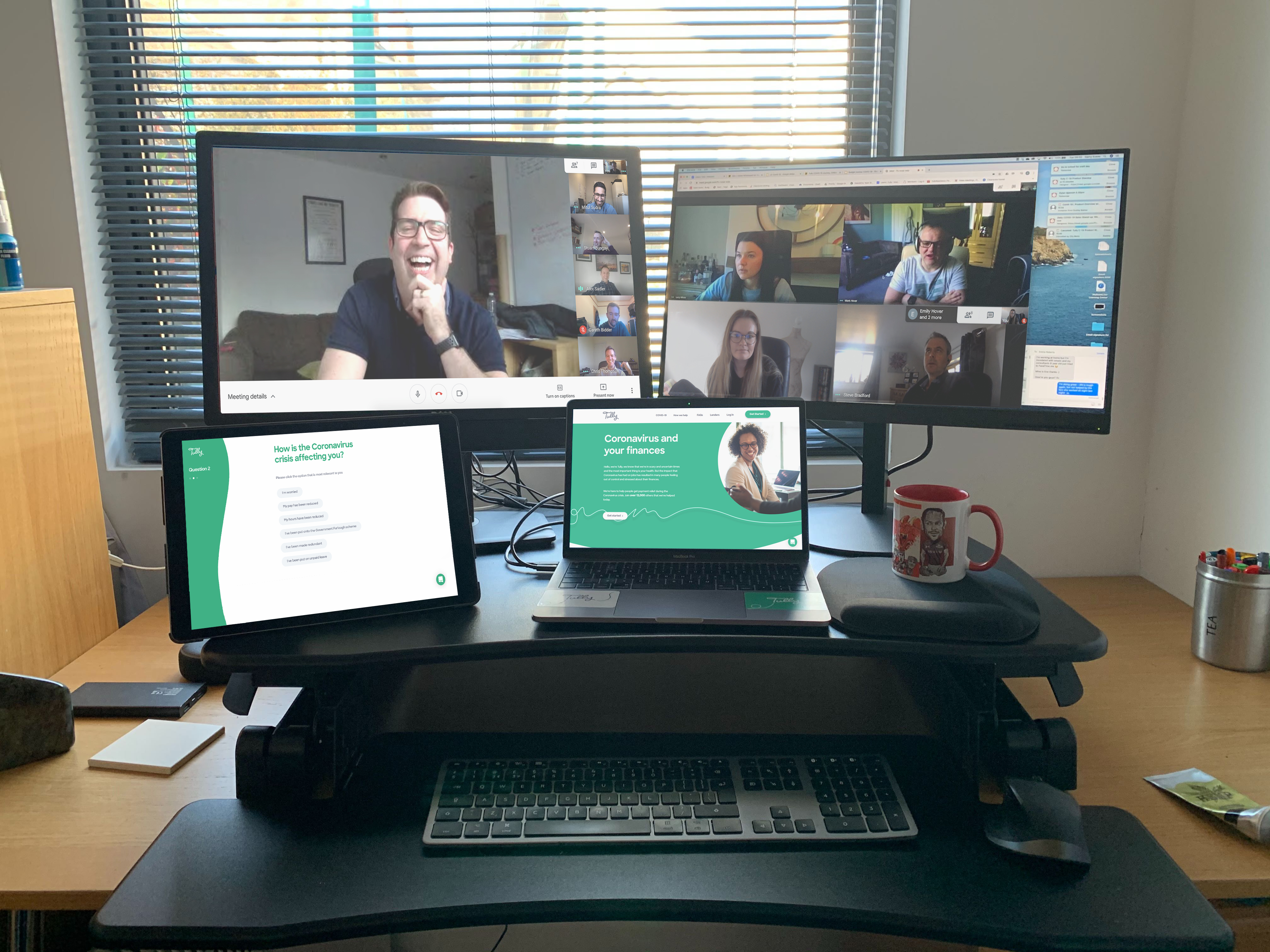
Tully, Nottingham-based Fintech, has today announced the launch of their COVID-19 Relief and Wellbeing Network to help people financially impacted by the COVID crisis get access to payment relief.
Tully is providing a ‘free to consumer’ digital outsourcing service that registers consumer applications, validates eligibility for payment relief and shares that information with relevant partners in the network. This service means that consumers don’t have to spend hours in call centre queues and instead can register for COVID-19 relief quickly and easily through a single online process.
As well as being hugely beneficial for consumers, this service also reduces the strain on contact centres meaning creditors can focus their telephony efforts on supporting their most vulnerable customers at the time of greatest need.
Tully continues to offer support throughout the crisis, using it’s digital financial wellness tools to drive engagement, ensuring they can provide consumers with the most appropriate support and help them return to normal post-crisis. Using Open Banking, Tully has access to over fifty of the UK’s leading banks and credit card providers including HSBC and Nationwide meaning over 95% of the UK can access the service online. The Tully platform builds on Open Banking data by engaging the consumer through conversation AI to understand their very latest financial situation.
Tully’s early partners include energy companies, banks, credit card companies and building societies. They have started directing customers and employees to the Tully COVID-19 website with expectations that over two million people will be reached within the first eight weeks of the service launching. One of those early partners, ClearScore, has already worked with Tully to help thousands of people on the path to regaining control over their finances. In the current climate, this has become all the more important, and ClearScore will be working closely with Tully to support people who are struggling with their finances as a result of COVID-19, helping them work out their personal budget, and get access to available payment relief.
To ensure the network can accommodate the growing numbers, Tully has support from its key technology partners Microsoft, Mailchimp and Intercom to scale and reach millions of people.
Chief Commercial Officer at OpenWrks Group (the team behind Tully), Steve Bradford comments:
“The launch of our COVID-19 Relief and Wellbeing Network, has been designed to ease the strain on our partners’ call centres and operations teams, whilst giving customers the support they need to help them make it through these uncertain times.”
“Our digital solution empowers customers to register for payment relief at the touch of a button using our Open Banking technology that’s trusted by leading banks, energy suppliers and The Money Advice and Pension Service. We anticipate that the Government and regulators will continue to support consumers with new policies around payment relief as the crisis continues. The central support service will feed information every day into partner creditors, enabling them to adapt their policies to align to new guidelines.”
Chief Product Officer at OpenWrks Group (the team behind Tully), Olly Betts added:
“Already, we are being supported by an incredible set of industry partners including FICO, Accenture and ClearScore to collaborate with as many creditors as possible to expand the network and help as many people as possible during this time of need. If you are a bank, credit card company, mortgage lender, energy supplier, water company, local council or Government department - our rallying call is to join our network and help your customers get the relief they need now and throughout the crisis. It is more important than ever to collaborate and give people the support to mitigate the financial impact of Coronavirus.”
About Tully and OpenWrks
Since the launch in March 2019, Tully has helped over 20,000 people that are worried about their money through referral partners and as a listed provider of digital support on the Government’s Money Advice and Pensions Service website.
Today, in the midst of the Coronavirus crisis, Tully is working with its partner network to help give people the support and payment relief they need. By working with people to understand how the Coronavirus crisis has changed their financial circumstances, Tully provides network partners with the information they need to offer the best payment relief and support to their customers so that no one has to choose between paying for heating or groceries during these scary and uncertain times.
Tully is part of the OpenWrks Group, a leading provider of Open Banking applications, currently processing over 130million API calls each month and connects 500,000 bank accounts daily.








