
Published

Sanat Rao
Chief Business Officer & Global Head at Infosys Finacle
In the midst of the global virus pandemic, the mandated shutdown of commercial activity creates significant future risk. see more
- 06:00 am

Scorable has launched its second product release to further enhance the scope and accuracy of its credit risk analysis, helping fixed-income managers make better investment decisions. The company's innovative artificial intelligence (AI) solution enables asset managers to monitor corporate bonds and credit spreads and to anticipate rating changes before they occur or markets price them in.
With Covid-19 and the oil price collapse causing massive turmoil in financial markets, careful risk management is more important than ever. More than $92 billion of corporate debt fell to high yield from investment grade in March, and an end to the downward spiral is not in sight. Over the next few weeks, the number of issuers that lose their investment grade rating - so-called “fallen angels” - will continue to increase.
“Since the outbreak of the crisis, we see a significantly elevated credit risk in almost half of the companies we analyze. Particularly worrying for investors is that our analysis shows a high probability of a rating downgrade for more than a third of BBB-rated issuers. This requires close monitoring by institutional investors. Thanks to the latest updates to our Scorable model, portfolio managers can now predict future changes and fluctuations in corporate credit risk even more precisely,” says Oliver Kroll, CPO at Scorable and former leading portfolio manager for multi-billion Fixed Income portfolios.
With Scorable’s latest release, asset managers benefit from even more accurate and comprehensive risk monitoring, which helps them to outperform the market and manage their bond portfolio through crises. The company’s AI system now combines and contextualizes more than 350 quantitative and qualitative data variables, including FX data, new capital markets variables and indicators such as oil, gold, and country-level macroeconomic data.
“Our analysis indicates that there will be another wave of corporate rating downgrades in the next couple of weeks. In the first ten days of April alone, several dozens of companies in our analysis portfolio were downgraded - our artificial intelligence accurately predicted 87% of these rating actions. This shows how using Scorable can help asset managers detect market dynamics due to Covid-19 early on, and thus make changes to their investment portfolio if necessary”, says Philippe Padrock, Managing Director at Scorable.
Scorable recently conducted a trading simulation on a EUR-denominated investment-grade corporate bond portfolio with medium credit risk and maturity profile. This demonstrated that using its AI-driven insights can help asset managers to outperform the market. Between 2017 and 2019, the strategy delivered an overall gain of 8.74% with a minimum portfolio turnover.
“Imagine, compared to some leading fixed income indices with similar risk profiles, our portfolio achieved a significant annualized outperformance of more than 30 bps. As a former portfolio manager, I would have been very happy to achieve this in the past zero-yield environment”, Kroll says.
And Robin Jose, CTO at Scorable adds: “Our recent trading simulation proves that using Scorable really gives portfolio managers an edge by enabling them to identify changes in credit risk and investment opportunities ahead of the market. With the ever-growing amount of data, our explainable AI can offer real added value in the decision-making process.”
Unlike black-box models which only show the input-output relationship, Scorable’s explainable AI approach allows users to intuitively understand the rationale behind the analysis and to see what factors drive changes in the risk score.
- 09:00 am

Anti-money-laundering pioneers SmartSearch this Sunday achieved 15th position in the Sunday Times Profit Track list. The list recognises the British companies with the fastest-growing profits over the last three years.
SmartSearch’s success comes on the back of an increase of more than 80% in profits over the past year, and a sixfold rise over the three-year period looked at by the Sunday Times.
The Yorkshire firm had previously featured at number 86 in the paper’s 2019 Tech Track list, which focuses on the technology sector, whereas the Profit Track list includes all sectors. This is the 21st annual Profit Track run by the Sunday Times and they are launching this one as their Covid-19 edition.
SmartSearch is the UK’s leading provider of anti-money-laundering software. With the introduction of the 5th EU Money Laundering Directive and its transposition into UK law in January, its cutting-edge software has never been more in demand.
It has responded to the spread of the coronavirus by introducing a Rapid Response Service, enabling firms that previously relied on physical documents to verify customer ID to get set up on its comprehensive digital platform in less than 48 hours.
The latest accolade for SmartSearch follows hot on the heels of last month’s Financial Times list of the fastest-growing European companies, which placed SmartSearch at 596 out of 1000, a rise of more than 300 places on the previous year. The FT list also placed SmartSearch in the top 20 European FinTech firms.
John Dobson, CEO at SmartSearch said, “We have managed exponential growth over the past few years and it is wonderful to see this recognised in yet another highly prestigious league table, clearly showing that we are one of the top growing companies in the UK.
“Never before has electronic verification and anti-money-laundering software been more important. The lockdown due to coronavirus has escalated the need for lawyers, accountants, estate agents, banks, building societies and financial advisers to carry out electronic checks on their customers.
“The fraudsters do not stop just because we are in a lockdown situation and SmartSearch has created a solution that is quick, affordable and almost instantaneous – as well as being significantly more reliable than paper checks. A fully digital AML solution is the only way for firms to stay fully compliant while working remotely.”
- 06:00 am

CLS, a market infrastructure group delivering settlement, processing and data solutions, announced today that Keith Tippell has been appointed as the new Head of Product.
He will be responsible for overseeing CLS’s existing product suite and all new product development in the Settlement and Processing business lines.
Keith has over 20 years of experience in the financial technology sector, much of which has focused on FX and OTC derivatives trade processing and G20 regulatory change. He joins CLS from Droit Financial Technologies, where he worked as Head of Business Development for Europe and Asia Pacific. Previously, Keith held numerous product management and business development roles, including with SWIFT and Markit. At Markit, he was a Managing Director within its trade processing division and was responsible for establishing MarkitSERV FX.
Commenting on the appointment, Alan Marquard, Chief Business Development Officer, CLS, said: “We are delighted to welcome Keith to CLS. He has extensive product management and business development experience and a proven track record of delivering complex industry solutions. In his role at CLS, he will empower our clients’ success by delivering products that address their changing requirements in the evolving FX market. His appointment supports our growth strategy as we continue to expand the CLS offering globally.”
Keith Tippell, Head of Product, CLS, added: “Recent market developments further highlight the importance of the safe and efficient daily operation of the FX market. I look forward to partnering with the industry to evolve existing CLS services to further mitigate risk and to establish new services where core CLS competencies can be leveraged for the broader benefit of the market.”
- 02:00 am

PXP Financial, the global expert in acquiring and payment processing, today announces four major new hires. Following a successful expansion into the US earlier in 2020, PXP Financial welcomes Arne Matthias as Chief Operating Officer, and Anschana Caravaca as Head of Gaming to the team. Additionally, Dave Janse joins as Head of Business Development, and Armin Pichler as Head of HR.
Arne Matthias joins PXP Financial with vast experience in the payments industry, having previously worked with Wirecard where, amongst other roles, he built and led their Payment Processor, expanded Wirecard’s issuing footprint in the Asia and Middle East region, and, in Munich, took over the global responsibility for all issuing products.
At PXP Financial, Arne will direct, administer and coordinate the internal operational activities, as well as working to develop organisation policies and goals that cover operations, personnel, financial performance, and growth.
Also joining the company at this key point in its growth is Anschana Caravaca as Head of Gaming. Bringing with her 15 years’ experience working in the payments industry, and 7 specialising in gaming, Anschana will provide critical business development advisory services while helping to further drive the expansion of PXP Financial’s gaming branch.
Strengthening the Business Development division at PXP Financial, Dave Janse joins as Head of the department. A payments veteran with nearly 20 years’ experience in the industry having worked with the likes of Ingenico ePayments, Global Connect, and Travelex, Dave will be accountable for driving a complex and consultative sales process. This role also involves hands-on direct business development, sales duties, and lead generational targets.
Completing the set of new hires is Armin Pichler who joins as Head of HR. Armin will act as an advisor to Senior Management teams on all employee-related matters across the group, and drive HR strategy and procedures.
Koen Vanpraet, CEO at PXP Financial, commented: “Being able to welcome these four new senior hires is the cherry on top of a fantastic start to the year. Their combined experience and skillsets create a winning combination and we are delighted to welcome Arne, Anschana, Dave and Armin to the PXP Financial family. And this is just the beginning – we have exciting plans in place for the rest of the year, and we are thrilled we get to work on these with these four key staff members newly established within the business.”
Arne Matthias, COO at PXP Financial, added: “I am delighted to bring my skillset to this new role and to be joining the team at PXP Financial. It’s a privilege to join such a renowned company in the payments space, and be a part of PXP Financial’s extensive plans for 2020 and beyond.”
- 01:00 am


Northern Trust (Nasdaq: NTRS) has named Alison Pain as chief technology officer (CTO) for the Europe, Middle East, Africa (EMEA) region.
From her London base, Pain will focus on providing leadership and guidance to the planning, organization, direction and control of the Enterprise Technology business unit across the EMEA region. She reports to Tom South, chief information officer at Northern Trust, locally reporting to Teresa Parker, president for EMEA at Northern Trust.
Prior to joining Northern Trust, Pain served as managing director at Deutsche Bank. Previously, she spent 12 years at Goldman Sachs, leading infrastructure service and application development functions in EMEA and globally. She has additional technology and program management experience at Barclays Private Bank, Land Securities Properties and NatWest group. She holds a bachelor’s degree in Humanities from Greenwich University, and an MBA from London South Bank University.
Tom South, chief information officer at Northern Trust, said: “In the world of ever-changing technology, it’s crucial to be able to effectively navigate this complex landscape and respond to and anticipate our clients’ requirements. We are pleased to welcome Alison to our business. Through her broad array of technology infrastructure experience gained working across global, complex organizations, we are well placed to continue to develop and refine the future of our organization and deliver technology capabilities and solutions aligned with our clients’ needs and expectations and business strategies.”
- 07:00 am

Nigerian fintech platform Okra has secured a $1mn pre-seed fundraise from TLcom Capital, strengthening its push to build the infrastructure for Africa’s next wave of fintech innovation. With the first API in Africa to retrieve real-time financial data from a bank account to any web or mobile app, Okra’s new investment will be used to scale their team and operations as they cater to their growing client base.
Launched in January 2020, Okra’s “super-connector” creates a secure portal and process to exchange real-time financial information between customers, applications and banks. Currently, developers and organisations in Africa do not have access to real-time banking data, creating large hurdles during the onboarding and verification of customers. Okra is the first in Africa to bridge this gap, delivering a new layer of transparency between organisations and users in the lending, personal & corporate finance and real estate sectors.
Supported by the strong engineering background of their founding team, Fara Ashiru Jituboh (formerly of Fidelity Investments and Canva) and David Peterside (from UCML Capital and Fashion Map), the company’s technical expertise has already seen them connect with all of Nigeria’s commercial banks as well as the likes of Branch, AIICO Insurance PLC, Travelstart, Bamboo, Renmoney and Swipe (YC) amongst others. With the capacity to onboard new clients in under 24 hours, the startup has seen a 175% rise in demand since March 2020 as more companies digitise their services due to COVID-19 and is seeking to expand across Africa.
Speaking on the new investment, Fara Ashiru Jituboh, Okra’s CEO/CTO stated: “Our thesis is simple — financial innovation cannot exist without the proper infrastructure, which is data. Essentially, how far the African fintech sector can grow is intrinsically tied to the success of an infrastructure like Okra and with our core market in Nigeria, we’re opening the door to another level of innovation in Africa’s largest market.”
“There are approximately 125mn banks accounts in Nigeria alone — but over the course of the next two years, we will see that figure rise exponentially, which presents huge opportunities for growth. Our role within this is to deliver ease, speed and transparency to key players within the fintech space so they can get back to driving our continent forward.”
The $1mn investment in Okra marks TLcom’s first investment in the fintech sector and as part of the deal, Andreata Muforo, Partner at TLcom, will join Okra’s board. Ido Sum, also a Partner at the VC firm, will join as a board observer.
Andreata Muforo, Partner at TLcom, added “We are always looking for startups with the potential for high value-generation and Okra’s technology provides the foundation for new fintech solutions in Africa for years to come. Equally, it was important for us to know that their leadership had the entrepreneur-led focus which is crucial for execution. Fara’s background was vital here — she’s an expert in over 20 programming languages, worked with multiple Fortune 500 companies and is a great example of why we’re committed to investing in more female founders. She leads by example and we have seen her and David build a really exciting business, in a little under a year, we’re excited to help them grow further”.
Okra marks the latest company to take advantage of Open Banking initiatives across the globe, which has attracted increasing attention from investors. In the USA, Plaid, which allows users to connect their bank accounts to an app, has been acquired by Visa for $5.3bn since launching in 2013. Yodlee, an American company offering a similar service, secured more than $140mn of funding before being acquired by Envestnet in 2015.
Okra’s Co-Founder and COO, David Peterside, concludes, “When we started Okra last year, our priority was to help African fintechs and banks build the best in class technology and solve problems for their customers. This investment marks the next chapter of this mission. For too long, simple financial tasks like budgeting, internal reconciliations and credit assessments have been additional stressors for businesses and we’re filling a long-standing gap in the market. Our aim is to make these processes as seamless and pain-free for our clients so they can focus on their core services.”
- 04:00 am

Konsentus today announced that two senior members of the commercial team at the Open Banking Implementation Entity (OBIE), have joined Konsentus as VP, Business Development, to scale up operations as Open Banking takes off across the UK and Europe.
Paul Hughes, most recently, Head of Business Development at the OBIE, also held senior positions at Vocalink, U.S. Bankcorp (Elavon), RBS and Barclays. He is joined by Peter Mortlock, a senior Sales Executive from OBIE whose extensive payments experience includes roles with Vocalink, Snatch and Verifone.
Konsentus is the only SaaS based API solution in the market that protects Financial Institutions from the risk of fraud through deployment of its real-time Third-Party Provider (TPP) identity & regulatory checking services. When a Financial Institution gives access to a TPP through their dedicated interface, they need to be confident that they are not putting their customer’s data at risk. Konsentus Verify is a solution that Financial Institutions can quickly and easily deploy performing PSD2 TPP Identity & Regulatory checking on their behalf to help reduce fraud and mitigate risk.
Paul Hughes stated: “This is a really exciting time to be joining Konsentus. They have a world-class product, Konsentus Verify, which is cost-effective and easy for Financial Institutions to implement, and ensures they protect themselves from Open Banking related fraud and risk. The quality of the data Konsentus provides is unsurpassed in the market – no matter where in the EEA a TPP request is made, Financial Institutions can be confident that their customers are being protected.”
Mike Woods, CEO at Konsentus, commented: “I am delighted that Paul and Peter have joined the team at Konsentus. They both bring a wealth of industry and C-level engagement experience with them, winning multi-million-pound contracts for previous organisations they’ve worked for and will be a real asset to Konsentus.”
- 07:00 am

Today the British Business Bank has announced that it has approved four new lenders for accreditation under the Coronavirus Business Interruption Loan Scheme (CBILS), which provides financial support to smaller businesses (SMEs) across the UK that are losing revenue and seeing their cashflow disrupted, as a result of the Covid-19 outbreak. The new CBILS lenders are Allied Irish Bank (GB)/AIB (NI), ThinCats, Paragon Bank and IGF (Independent Growth Finance).
Following their approval, each lender will be putting in place the operations required to start lending under the scheme and will confirm shortly the dates from which they will be ready to start receiving CBILS applications from smaller businesses across the UK.
More than 80% of the UK’s smaller businesses have a finance relationship with CBILS’ 50+ accredited lenders. The British Business Bank is accelerating at pace the onboarding of new lenders to further extend the scheme’s reach.
It was originally announced at Budget that an initial £1bn of government-backed lending would be available through CBILS. The government subsequently announced that it would be a demand-led programme, providing whatever the market needs.
Coronavirus Large Business Interruption Loan Scheme (CLBILS)
Keith Morgan, CEO, British Business Bank, said: “Accredited lenders have continued to see an incredible demand for CBILS, so the Bank is helping to meet that demand and provide even more choice for smaller businesses by approving additional lenders for accreditation to the scheme. The announcement of 14 new lenders for both CBILS and CLBILS means these newly accredited lenders will be able to deploy vital funding and get additional finance flowing to smaller businesses across the UK as quickly as possible.”
Business Secretary Alok Sharma said: “These loans are an essential part of the wide-ranging package of support the government has put in place to help UK businesses. I am delighted to see more lenders offering loans which will, in turn, help even more businesses access the funds they need.”
The Bank continues to review applications from a wide range of lender types – from PRA-regulated banks, to platform lenders, debt funds, invoice finance lenders, asset finance lenders and responsible finance lenders.
About the Coronavirus Business Interruption Loan Scheme (CBILS)
The Coronavirus Business Interruption Loan Scheme, delivered through more than 50 British Business Bank accredited lenders, is designed to support the continued provision of finance to UK smaller businesses (SMEs) during the Covid-19 outbreak. The scheme enables lenders to provide facilities of up to £5m to smaller businesses across the UK who are experiencing lost or deferred revenues, leading to disruptions to their cashflow.
The scheme supports a wide range of business finance products, including term loans, overdrafts, invoice finance and asset finance facilities.
- 04:00 am
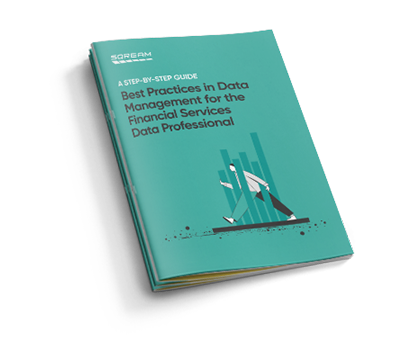
Banks and other financial services organizations have been investing in big data for years. From purchasing data, to collecting it at various points along the customer journey, they have an overabundance of valuable customer and even employee information at their fingertips. Ideally, this would be used to optimize operations, analyze customer behavior and grow employee engagement, among other things.
But the gap between what is ideal versus reality, is a large and growing chasm. Much of the today’s data is stuck in lakes, silos, and other locations. Underutilized and decaying over time, it offers few if any insights, and taking control of this data requires an inordinate investment of time, highly skilled manpower and resources, on the part of data professionals.
With this in mind, SQream, the company behind the SQream DB data analytics acceleration platform, has published a free step-by-step guide, “Best Practices in Data Management for the Financial Services Data Professional.” Created especially for financial services data professionals, the guide provides a clear list of action items they can follow to rapidly ingest, organize, analyze and manage their big data. Financial services data professionals interested in optimizing their use of data within the organization can simply download the free guide and apply the easy to understand, actionable set of best practices in their day-to-day business activities.
“Data professionals in many industries are facing very similar challenges, but we see it is especially relevant in the banking and financial services world,” said SQream co-founder and CEO Ami Gal. “They possess massive amounts of information that they cannot rapidly and efficiently access and analyze.”
That unanalyzed data hidden in the continually growing data stores of financial services organizations has the potential to hold a goldmine of BI. According to one well known statistic, even though 90% of global data was created in the last 5-years, only one percent of this data has ever been analyzed.
Said Gal, “This one-percent statistic is mind blowing. Optimizing the ingestion, management and analysis of data is crucial to enabling organizations to reach their fullest business potential,” he explained. With SQream DB, data professionals can rapidly analyze more of their massive data, for faster insights and consequently, better decision making. “When it comes down to it, more data, faster insights and better decision making are the real game-changers, propelling business and increasing competitive advantage,” Gal said.
You can learn more about the step-by-step guide, “Best Practices in Data Management for the Financial Services Data Professional” here.








