
Published
- 04:00 am

Global modern card issuing platform provider, Marqeta, predicts that the current COVID-19 crisis could create a ripple effect that will change the face of banking forever. With many branches closing or moving to restricted hours, an increasing number of the older generation – many of whom have not used them before – are now turning to digital banking and payment solutions to avoid leaving the house. Marqeta believes this shift could represent a tipping point that alters our relationship with cash forever, ushering in a new age of digital banking that crosses generations.
“The contactless limit has been raised to £45,and more and more retailers have moved to card only while cash usage has halved, according to ATM operator, Link,” comments Ian Johnson, Managing Director Europe for Marqeta. “This indicates that we are seeing a significant change in behaviour in the wake of the current crisis. Banks will need to be ready to manage the move away from cash, and ensure their infrastructure can cope with the rise in mobile, contactless and card payments.”
Beyond increased uptake in well-established payment and banking technologies, such as banking apps and contactless cards, the crisis is also driving adoption of newer types of digital banking services. FinTech app usage is exploding, as consumers look for greater control and flexibility from their banking providers. Marqeta warns that this trend could create significant challenges to traditional banks, who are unable to move at the speed of their digital counterparts.
“Over time, this global event could trigger a swing in the balance of power between digital and traditional banks. Historically, digital banks have struggled to encourage users to fully migrate to their platforms; many still use a traditional operator as their ‘main’ bank, while using their digital bank for very specific activities,” Johnson continues. “Yet assuming digital banks prove themselves stable and reliable through the current crisis, this could all change. Digital banks are far more nimble and agile when it comes to responding to upheaval. Given the unprecedented disruption taking place right now, this ability to adapt will be invaluable.”
In response to these challenges, many traditional banks will need to partner with FinTechs to fill the void, as Johnson concludes, “The COVID-19 pandemic will expose some of the gaps in traditional banks’ digital infrastructure – gaps which they may have previously been able to paper over, but no longer can. This will force many to accelerate their modernisation plans, while strengthening ties with FinTech providers, to allow them to meet this new demand for digital services.”
- 07:00 am

Lendsmart and Griffin Technologies, two fintech companies building software for banks and credit unions, have partnered to provide their customers a complete end-to-end solution for the Small Business Association’s (SBA) Paycheck Protection Program (PPP). Together, Lendsmart and Griffin are helping community financial institutions better serve their clients, as well as alleviate the stress among small businesses applying for the loan.
By seamlessly combining Lendsmart’s AI technology to automate the SBA PPP application with Griffin’s marketing platform to reach hyper-targeted small business owners, banks and credit unions can process more loan applications while identifying and acquiring qualified SMB leads. This strategic partnership enables the two fintechs to supercharge their offerings to give community financial institutions a leg up in a competitive marketplace.
According to the U.S. Small Business Administration, more than 1.6 million small businesses have been approved for the $350 billion loan program since its launch at the beginning of April. However, many of these small businesses have struggled to understand the application and its requirements. Additionally, CNBC reported that many businesses have had trouble finding bank lenders to accept their applications.
Lendsmart’s AI-powered technology gives community banks and credit unions an end-to-end solution to automate and digitize the SBA PPP loan process, making the application easy for small businesses and allowing financial institutions to exponentially increase the number of loans they are able to process. In fact, one of Lendsmart’s customers saw a 600% increase in the number of loans processed. Furthermore, financial institutions can be easily onboarded with a custom white-labeled solution within hours.
“With financial institutions struggling to manage the high number of applications and small businesses in need of immediate funds, we saw an opportunity to speed up and simplify the mostly manual process by using our existing technology,” said AK Patel, founder and CEO of Lendsmart.
Through contextual, search, financial and behavioral insights, Griffin’s location-based marketing and analytics platform helps community banks and credit unions find and reach new, qualified customers looking for a financial institution to help them apply for the SBA PPP loan. Their software gets institutions in front of their target audience with real-time, customized messaging — increasing the likelihood of conversion by 3 times.
“When we heard of small businesses struggling to find financial institutions that could process the SBA PPP loan, we knew we needed to increase visibility around Griffin’s technology to connect them to interested financial institutions,” said Donald Hawkins, founder and CEO of Griffin Technologies. “We hope that this partnership will bring the remainder of the PPP loan funding back to its original intent of alleviating stress on small businesses nationwide.”
- 03:00 am

Man and machine are the perfect pair when it comes to fighting payment fraud, according to a new whitepaper from European payments industry leader, Nets and multinational professional services provider, KPMG. Fighting Fraud with a Model of Models explains how utilising human expertise in combination with artificial intelligence (AI) and machine learning (ML) technologies can significantly increase the accuracy of fraud prevention services.
Fighting Fraud with a Model of Models explores the theoretical approach behind Nets Fraud Ensemble, an AI-powered anti-fraud engine developed in collaboration with KPMG, which can reduce fraudulent transactions by up to 40% on top of existing AI fraud prevention measures, for the benefits of banks, merchants and cardholders, as well as society in general.
Sune Gabelgård, Head of Digital Fraud, Intelligence & Research, Nets, comments: “It’s time for financial institutions to stop playing catch-up with fraudsters and, instead, get ahead of the curve. The business of fraud prevention has become increasingly convoluted, with the mass adoption of e-commerce, increases in cross-border payments, and the growing popularity of new digital payment methods all adding new layers of complexity. Humans cannot tackle these challenges alone. Until now, the use of true machine learning to fight payment card fraud has been limited. We need it now. There are patterns in the data which are hugely valuable in the fight against fraud, but that are too complex for the human brain to identify. Machine learning can not only find these, it can analyse and act on them too and prevent fraudulent transactions.”
Bent Dalager, Nordic Head of NewTech and Financial Services, KPMG, adds: “We have applied an innovative machine learning approach utilizing several machine models in unison. This approach has a clear advantage and generates the most accurate fraud screening. When applied, this next level of fraud monitoring and prevention means banks and merchants can take a big step forward. Not only does it combat crime, it also improves the customer experience and dramatically reduces financial losses.”
The ‘brain’ of Nets Fraud Ensemble consists of multiple models working together to analyse each individual transaction within ten milliseconds – the time frame in which a transaction can be safely blocked. The solution learns from the results of its analysis and adjusts accordingly, meaning the longer that it is operational the more fraudulent transactions are blocked, and the fewer false positives are granted.
Fighting Fraud with a Model of Models is available to download free of charge from the Nets website.
The European fraud landscape
- With the total annual value of fraudulent transactions across Europe hitting €1.8 billion, the need to step up fraud prevention has never been greater.
- Card not present fraud now represents almost 80% of the total volume of fraudulent card transactions across Europe.
- UK banks and card companies prevented £1.66 billion in unauthorised fraud in 2018 alone. This represents incidents that were detected and prevented by firms and is equivalent to £2 in every £3 of attempted fraud being stopped.
- 09:00 am

British Business Investments Ltd, a commercial subsidiary of the British Business Bank, has announced a new commitment under its £100m Regional Angels Programme, committing £10m to Startup Funding Club Limited (SFC).
The commitment will be managed by SFC and invested alongside the SFC SEIS & EIS Funds as well as the SFC Angel Network. SFC intends to deploy the commitment in over 100 early stage businesses across the UK to deliver almost £40m of new funding for start-up and scale-up businesses across all sectors.
The announcement comes as SFC uses the commitment to complete investment of £5m into 28 companies across the UK, in sectors ranging from healthcare and life sciences to new materials.
SFC was incorporated in 2012 by Stephen Page, a former software entrepreneur who founded and exited a number of companies, with a mission to help high-potential start-ups succeed and to make angel investing more accessible.
The SFC SEIS/EIS funds have since become some of the most active in the UK, while the SFC Angel Network has grown from 20 founding members to an award-winning network of over 500 private investors, successful former entrepreneurs and professional angel investors. In total, SFC has funded a portfolio of more than 200 companies with a combined value of over £1bn, including some of the UK’s fastest-growing companies such as Onfido, Screencloud and Cognism.
SFC has a track record of backing fast-growth regional businesses in parts of the UK where access to early stage equity capital is scarce, including Vortex IOT (Swansea), Transcend Packaging (Caerphilly, Wales), Petalite (Birmingham) and Intupod (Belfast). In total, businesses backed by SFC Funds and the SFC Angel Network have created over 500 jobs outside of London. As part of its regional expansion, SFC are also opening a second office in Macclesfield to catalyse their regional investor base and to increase deal flow across the country.
Catherine Lewis La Torre, CEO, British Business Investments, said: “Our Regional Angels Programme is designed to address imbalances in access to angel finance in the UK and to increase the overall amount of capital available to smaller businesses, through angel networks. This £10m commitment from British Business Investments will allow Startup Funding Club to build on its impressive track record of supporting high growth-potential businesses across the UK, particularly at a time when the business experience and financial support delivered by angel investors is needed more than ever.”
Joseph Zipfel, Chief Investment Officer of SFC, said: “In these uncertain times, supporting angel investors and early-stage funds is essential to preserve the UK’s world-class entrepreneurial ecosystem and we thank BBI for their commitment. In March 2020 alone, SFC has invested over £5m in 28 companies and this £10m commitment will act as a catalyst to our ability to help high-potential companies across all sectors and regions of the UK. We believe that angel investing is currently an attractive asset class as long as you focus on the right sectors and take a long-term and cautious approach. Startups are lean and agile and can adapt quickly to tough conditions and sometimes even benefit from them. We want to make it clear that the SFC is open for business and we look forward to working with entrepreneurs and investors across the country.”
The Regional Angels Programme helps reduce regional imbalances in access to early stage equity finance for smaller businesses across the UK. The programme aims to address this issue by increasing the availability, supply and awareness of angel and other early-stage equity investments across the country, particularly in areas where this type of finance is less readily available.
The Regional Angels Programme works by committing funds for investment alongside business angels and other early stage equity investors, acting as a catalyst to bring longer-term capital to smaller businesses with growth ambitions. Launched in 2018, it forms part of the Government’s response to the Patient Capital Review.
Like all British Business Investments programmes, the new programme expects to generate a market rate of return on its investments and will be investing on a commercial basis.
- 04:00 am

Revolut, the Financial Super App with over 10 million customers in the UK and Europe, has today revealed figures highlighting a swell in charitable giving among UK consumers during the COVID-19 pandemic. The proprietary Revolut data has been gathered from 3 million UK Revolut customers, comparing stats from January and February 2020 to data since COVID-19 began to impact UK consumers from 1st March 2020.
Donation amounts increase across all age groups
The average amount given through Revolut Donations increased across all age groups during lockdown, by an average of 59%. Those in older age brackets gave significantly more than they did prior to lockdown, with the biggest rise seen in the 50+ age group, where donation amounts soared by 147%. Those aged 41-45 increased their average donation amount by 91% and those between 46-50 by 75%.
But it wasn’t just older consumers who gave more to charity during lockdown, Gen Z increased donation amounts by an average of 13%, those aged 26-30 by 8% and those aged 31-35 by 23%.
Donations for COVID-19 frontline charities soared
During lockdown a number of new charity partners have been added to Revolut Donations, including Médecins Sans Frontières (MSF) and Trussell Trust – both of which are providing support to those on the COVID-19 frontlines. Revolut users have flocked to donate to these two charities, with donations reaching over £660,000 across Europe, and £125,000 in the UK in a matter of weeks.
Of the longstanding charities listed on Revolut Donations, support for Save the Children (22%), IGLA Europe (15%) and Movember (2%) also rose during the time period.
Regional donation hotspots appear across the UK
The data also showed strong regional variations in donation amount rises across UK cities Edinburgh residents led the charge, increasing average donation amounts by an impressive 313%. This was followed by Sheffield (177%), Belfast (168%) and Cambridge (159%).
City | Revolut Donations (in-app) increase / decrease (+/-) |
Edinburgh | 313% |
Sheffield | 177% |
Belfast | 168% |
Cambridge | 159% |
Oxford | 126% |
Glasgow | 118% |
Southampton | 116% |
Liverpool | 112% |
Bristol | 102% |
Reading | 99% |
London | 93% |
Leeds | 70% |
Nottingham | 47% |
Birmingham | 45% |
Manchester | 43% |
Aberdeen | 27% |
Change.org and Virgin Money Giving see donations spike
Outside of the Revolut Donations feature, spending analysis on Revolut cards highlights how volumes of giving have increased for a number of charities supporting COVID-19 issues. The average transaction volume for Change.org rose by 355%, driven by consumer support of families and individuals struck by the virus, while Virgin Money Giving saw an average transaction increase of 112% - largely down to the successful #5for5 and #runforheroes campaigns. Just Giving transaction values grew by 93%, with many looking to support veteran hero Captain Tom Moore.
Giving to family and friends
Revolut’s data shows that it wasn’t just charities that Brits were feeling particularly generous towards during lockdown. Reaching out to loved ones through online services also increased with purchases at online flower delivery services Bloom&Wild (127%), Serenata Flowers (108%) and Freddie’s Flowers (95%) all rising. Card and gift services Funky Pigeon (60%) and Thortful (19%) also saw a rise since the beginning of Marc
- 02:00 am

The Azerbaijani state-owned bank Azer Turk Bank has procured a TransLink.iQ solution for EFTPOS networks monitoring and managing, developed by Lithuanian company ASHBURN International. The company also provided the bank with the country's first payment terminals manufactured by Ingenico.
TransLink.iQ ensures secure transaction routing. It is a convenient tool for remote EFTPOS terminal management. The software solution allows accepting payment by credit cards of both local and international payment systems. Automation of downloading and exchanging security keys, which the TransLink.iQ system uses, can simplify the process of installing terminals at bank customers. The multi-vendor system TransLink.iQ provides the ability to connect EFTPOS terminals of different manufacturers, which is especially important for Azer Turk Bank.
“Over the past five years, the volume of non-cash transactions with payment cards in Azerbaijan has increased by 5 times, and the number of cards reached 7.5 million. Our bank develops cashless payments in the country. We are interested in automating daily transaction processing processes. TransLink.iQ system meets our expectations in terms of business development,” says Namid Abdulov, Head of the Plastic Card Department at Azer Turk Bank.
The bank-owned terminals and the new Ingenico devices (Move 2500 series), supplied by ASHBURN International, are already connected to a multifunctional module TransLink.iQ Manager that performs remote terminal management and parameterization.
“Azer Turk Bank successfully implements various projects to increase the availability of financial services in Azerbaijan. We are pleased to cooperate with the bank, which for the first time in the country provided its customers with the terminals of Ingenico, the world leader in the field of fast payments,” says Žoržas Šarafanovičius, Executive Director of ASHBURN International.
According to the Central Bank of Azerbaijan, the number of EFTPOS terminals reached 65,200 units (35 percent increase) in 2019. The volume of non-cash payments on all payment cards increased by 57 percent, electronic trading operations by 93 percent.
Azer Turk Bank is a modern bank that has own processing center, provides a wide range of financial services and introduces modern banking technologies.
ASHBURN International, a member of the group of companies “Penki kontinentai”, offers the POS terminals network monitoring and management solutions, transaction data transfer and loyalty system management. ASHBURN International also provides rental, installation and maintenance services of the bank equipment. The company is the official partner of the world's largest POS terminals manufacturer Ingenico Group in Lithuania, Latvia and Estonia. The ASHBURN International services portfolio includes outsourcing in financial, commercial and telecommunication spheres. The software and equipment meet the international organizations VISA International, Mastercard, American Express, Diners Club International, JCB and UPI requirements.
- 03:00 am

Yolt, the smart thinking money app, has today announced a new API connection with Nutmeg, the digital wealth and investment manager. The connection means that Yolt users with a Nutmeg investment account can now see their portfolios directly within the Yolt app, alongside their other current accounts, savings, credit cards, pensions, and other investments.
Yolt users can analyse all their transactions across their accounts, plan budgets, monitor bills, track their spending and even switch their household bills, all within the app.
This latest integration means that Yolt now has live API connections with over 30 leading banks and other financial providers, via the UK’s Open Banking initiative: including challenger banks, Monzo and Starling and the nine largest high-street banks.
Open Banking, which launched in 2018, allows consumers to take control of their own financial data and give their bank permission to share their transactional information freely and securely with approved third parties, such as Yolt. This has opened the market to a host of new tools and services which give consumers more ways to analyse and manage all aspects of their finances. Since making their first API call back in 2018, Yolt now makes 15 million API calls on average, each week – highlighting the ever-increasing demand for innovative products and services derived from Open Banking.
Pauline van Brakel, Chief Product Officer at Yolt comments: “Yolt has long-been a champion of API technology and a working proof-point for how the UK’s Open Banking initiative is helping put consumers back in control of their finances. Today’s announcement reflects our community’s appetite for these connections and is testament to our work to ensure our users can access and manage their finances in the quickest and easiest way possible. Beyond this, we continue to look for opportunities to develop partnerships with other fintech’s that share our aim of creating a truly ‘open’ financial experience for customers.
“Now, perhaps more than ever, we want to continue to deliver on our promise to empower people to be smart with their money, so our latest integration with 4* rated investment management platform Nutmeg is a fantastic milestone for Yolt and for our community.”
Matt Gatrell, chief operations officer, Nutmeg, said: “Providing our customers with a single view of their wealth – be it their current account transactions, emergency savings pots, or their long-term investments – helps people to better understand their own financial position. Through the integration with Yolt, launched during UK FinTech Week, we’re pleased to be connecting with other leading fintech providers to help make everyday finances quicker, simpler and more secure."
- Reports
- 22.04.2020 03:15 pm
Banks and other financial services organizations have been investing in big data for years. From purchasing data, to collecting it at various points along the customer journey, they have an overabundance of valuable customer and even employee information at their fingertips. Ideally, this would be used to optimize operations, analyze customer behavior and grow employee engagement, among other things.
But the gap between what is ideal versus reality, is a large and growing chasm. Much of the today’s data is stuck in lakes, silos, and other locations. Underutilized and decaying over time, it offers few if any insights, and taking control of this data requires an inordinate investment of time, highly skilled manpower and resources, on the part of data professionals.
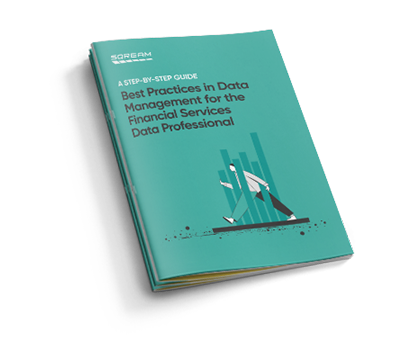
With this in mind, SQream, the company behind the SQream DB data analytics acceleration platform, has published a free step-by-step guide, “Best Practices in Data Management for the Financial Services Data Professional.” Created especially for financial services data professionals, the guide provides a clear list of action items they can follow to rapidly ingest, organize, analyze and manage their big data. Financial services data professionals interested in optimizing their use of data within the organization can simply download the free guide and apply the easy to understand, actionable set of best practices in their day-to-day business activities.
“Data professionals in many industries are facing very similar challenges, but we see it is especially relevant in the banking and financial services world,” said SQream co-founder and CEO Ami Gal. “They possess massive amounts of information that they cannot rapidly and efficiently access and analyze.”
That unanalyzed data hidden in the continually growing data stores of financial services organizations has the potential to hold a goldmine of BI. According to one well known statistic, even though 90% of global data was created in the last 5-years, only one percent of this data has ever been analyzed.
Said Gal, “This one-percent statistic is mind blowing. Optimizing the ingestion, management and analysis of data is crucial to enabling organizations to reach their fullest business potential,” he explained. With SQream DB, data professionals can rapidly analyze more of their massive data, for faster insights and consequently, better decision making. “When it comes down to it, more data, faster insights and better decision making are the real game-changers, propelling business and increasing competitive advantage,” Gal said.
You can learn more about the step-by-step guide, “Best Practices in Data Management for the Financial Services Data Professional” here.
Other Reports

Srinivas Nidugondi
Senior VP & COO, Mobile Financial Solutions at Comviva
From train seats to city roads, deep cleaning and sanitization has certainly taken on a whole new meaning in these uncertain times marred by Coronavirus! see more

Otabek Nuritdinov
Head of Business Development at Safenetpay








