
Published
- 08:00 am

The Milan Fintech Summit is returning for its fourth edition, continuing its commitment to driving innovation in banking and financial services. This international event, organised and promoted by Fintech District and Business International, the knowledge division of Fiera Milano, is scheduled for October 10th and 11th, 2023, at the Allianz MiCo in Milan. The summit's mission is to position Milan as a hub for innovation in Europe, highlight the significance of the Italian fintech ecosystem, facilitate its growth, and attract international interest and investments.
The theme for this edition is "TOMORROWLAND IS HERE," chosen to reflect the current state of Fintech. It signifies that Fintech is no longer just a glimpse into the future of financial services but a vital component of their evolving present. This is underscored by the continuous growth of fintech and techfin enterprises globally, the notable achievements and maturity of many of these companies (Italy, for instance, has 2 unicorns), and the increasing frequency of partnerships with firms from various industries.
Thanks to its ability to attract innovation, Milan continues to play a central role in the evolution of the sector. Over the past two years, the Soft-Landing Program, aimed at simplifying the entry of foreign companies into the Italian market with the assistance of Milano&Partners, has attracted approximately 190 companies from various nations. This includes interest from the USA (from which 18% of these originate) and Canada (8%).
SECTOR TRENDS AT THE HEART OF THE EVENT AGENDA
Embedded finance has certainly emerged as a reference point for the birth of new business models: the European market reached €42 billion by the end of 2022, and it is estimated that it will reach $183 billion globally by 2027.
To illustrate how it is also revolutionising sectors far from finance, companies such as Spotify and Booking.com will take the stage in separate sessions.
Another prominent theme will be Artificial Intelligence, whose centrality and relevance are undisputed - 44% of the 280 companies in the Fintech District community (which has become a true reference point for the sector in Italy) use AI in their business operations. The second day will feature a session dedicated to this topic, in which international techfin companies like Clearbox.AI, iGenius, and Wealthype will engage in a discussion with an incumbent like Oracle, with a particular focus on generative AI.
Given the increased interest in Cryptos, from CBDC to cryptoassets, including the presentation of the new DGI report, the Summit's agenda will include multiple segments focused on this topic. Web3, Metaverse, and digital assets will be discussed by Matthias Kroener, an expert in financial services disruption and keynote speaker on the second day, who will illustrate how gaming serves as an effective medium for disseminating these concepts.
The agenda will also include a segment dedicated to FinCrime, encompassing RegTech solutions like Know Your Customer (KYC) and Anti-Money Laundering (AML). Key figures in these areas include Jonathan Levin, co-Founder of Chainalysis, and Reem El Seed, co-Founder of Cleverchain. Additionally, there is a session scheduled to address the topic of digital identity.
In an agenda that draws inspiration from literary works, culture and education references are integral. The event will commence with Leda Glyptis as the opening keynote speaker, drawing inspiration from George Orwell's masterpiece "Animal Farm." During her presentation, she will delve into her perspective on what hasn't been effective in the past 15 years of digitisation. On the opening of the second day, a session will be dedicated to university students, highlighting the diverse opportunities that fintech presents. It will underscore fintech's role as a facilitator of everyday life and a promising avenue for new career prospects.
BEYOND THE BOUNDARIES OF THE EVENT, THE "OUT OF SUMMIT" BEGINS
This year, the Milan Fintech Summit extends its reach beyond the traditional confines of the event, taking over the entire city with a series of supplementary activities. The "Out of Summit" commences well before the official event and extends beyond the two scheduled days.
The Conference&Expo, which launches the two-day discussions, is scheduled to commence at 9 am on October 10th, with a welcome party for partners and speakers scheduled for the evening before. On the same day (October 9th), the Milan Fintech Summit will convene at Palazzo Mezzanotte for the Starting Finance Investment Meeting, featuring a session titled "The Shape of Investment - Fintech and Techfin to Support Wealth Choices." Simultaneously, at Brussels House, a multifunctional space bridging Brussels culture with Italy, there will be a session in collaboration with Hub Brussels, exploring the differences between the fintech ecosystems of the two nations and identifying common avenues for growth.
Thanks to the VIP Program organised by Milano&Partners and the Milan Fintech Summit, Milan will welcome representatives from several international fintech companies, global leaders who, in addition to participating in the event, will have the opportunity to experience the innovative nature of the city first-hand. These companies, including some unicorns, are expected to make appearances on stage and engage in live LinkedIn video interviews under the title "Unicorn Tales." The first pre-event on October 2nd will feature Ignacio Zunzunegui, Head of Growth Southern Europe at Revolut, sharing the evolutionary journey of a company capable of transforming its offering from a travel card to a global digital bank.
Starting from January 2024, a roadshow will begin across the rest of Italy to promote not only the excellence of Milan but also to highlight the innovative capabilities and potential of the entire peninsula.
As of today, the event's partners include FTS Group, Mastercard, Sella, Visa, Fabrick, Oracle, eToro, Banca CF+, Swag, Treezor, ATS, Geniodiligence, Inversis, Spendesk, Affirmdata, Boerse Stuttgart Digital, Complyradar, Confinvest, Knobs, Mia Fintech, Lexia, OCS Group, Sparkasse, Thales, Banqup, BKN301, Chainalysis, Checksig, Coverflex, Creative Bulls, DGI, Earnext, EasyTrend, Finanza.Tech, Fourthline, Keyless, Gambit, GrowishPay, Lokky, Maind Capital, MindoverMoney, modefinance, Modulos, Profit Farm, Qi4M, Trustfull, Veridas, Wallife, Wealthype.ai and Younited..
Agenda and registrations at milanfintechsummit.com
- 08:00 am

Payments infrastructure company Stitch today announced a $25 million Series A extension, led by Ribbit Capital, bringing the total raised to $52 million. Stitch will use the funding to continue building its end-to-end payments solutions – designed to meet complex and evolving payments needs for global enterprise clients – and expand its reach to serve more markets.
In addition to Ribbit Capital, existing investors including PayPal Ventures, The Raba Partnership and CRE Venture Capital have renewed their support, and several new investors joined including 9 Yards Capital.
“We’ve known the Ribbit team for a few years and have consistently been impressed with their knowledge of the space. In particular, they have a strong view of the global landscape, and their exceptional understanding of emerging markets has already proven to be immensely valuable,” said Stitch co-founder and CEO Kiaan Pillay. “We couldn’t be more excited to welcome Ribbit and to receive additional support from partners that have been a significant part of our journey thus far. We’ve seen substantial growth since we emerged from stealth just over two years ago, and we look forward to finding more ways to anticipate and address the needs of the large, global enterprises we serve as the payments landscape continues to evolve.”
Today, Stitch serves primarily enterprise businesses with end-to-end payments solutions. Clients rely on Stitch to:
accept payments via Pay by bank, Debit + Credit Card, Manual bank transfer, Recurring debits and Cash;
manage, orchestrate and reconcile payments across multiple methods, providers and geographies in one dashboard with PayOS;
and easily disburse funds via Payouts
The Stitch team offers hands-on client support, including localised insights into the payments landscape; custom-built, co-created solutions; and access to the latest open banking innovations - such as Pay by bank solutions and real time payments rails - for both local and international businesses. These solutions enable businesses to instantly access the financial system and remove the complexities of sending, receiving and managing funds. Stitch sits at the infrastructure level, leveraging direct connections with banks and networks, which eliminates middlemen and results in greater reliability, higher uptime and faster issue resolution.
Stitch infrastructure powers leading global and African businesses across sectors, including MTN, Multichoice, The Foschini Group (TFG), Standard Bank’s SnapScan and Yoco, as well as global PSP partners and leading global consumer internet companies.
Stitch announced a $21 million Series A in February 2022, following a $6 million Seed round in 2021.
- 06:00 am

The Merit Awards, an independent program recognizing global industries, assesses the nominees' impact on their respective markets when determining the winners. Regula excelled in Cybersecurity, one of the Technology Awards subcategories.
“As a developer of hardware and software for document and biometric verification, we are actively combating the increasing threats alongside cybersecurity providers. Alarmingly, more and more companies are encountering deepfake technology in identity verification. Based on our worldwide survey, 37% of organizations encountered incidents of deepfake voice fraud, while 29% were targeted by deepfake videos just last year. To address these challenges, we leverage cutting-edge technologies to continually advance our solutions. Our goal is to meet the evolving needs of businesses across various industries and bolster security measures,”—Ihar Kliashchou, Chief Technology Officer at Regula said.
Since identity verification (IDV) is one of the first touchpoints in the user’s journey, organizations and businesses must tick all security boxes when validating new customers. The company’s IDV products—the Regula Document Reader SDK and Regula Face SDK—serve the complete identity-proofing process. These solutions not only enhance security but also provide organizations with a smooth experience as they are accessible remotely, compatible across various platforms, and fully customizable.
Deepfakes are often involved in biometric fraud, specifically in the form of presentation attacks. Therefore, biometric verification, such as comparing a live selfie image with the visible portrait in the document and the one encoded in the RFID chip in electronic IDs, is a must. This guiding principle is at the core of the development of robust IDV solutions, which combine biometric checks with cross-checks of user information.
Regula's in-house R&D constantly upgrades its software capabilities to equip clients with the latest technologies. For instance, the recent update has made available portrait cross-checks in identity documents. The software automatically checks the presence (or absence) of all primary, secondary, and “ghost” portraits and then compares them. It enhances the document authenticity verification process and helps reveal any photo manipulation.
The 2023 Merit Technology Awards gold award rightfully joins Regula's list of honors and accomplishments this year. Recently, the company was repeatedly named a representative vendor in the Gartner Market Guide for Identity Verification. Earlier this year, Regula was honored as Most Comprehensive Forensics and Cutting Edge Identity Verification by Cyber Defense Magazine.
- 02:00 am
Online fraud prevention experts, SEON, have announced the launch of its full suite of fraud prevention solutions to customers on the Amazon Web Services (AWS) Marketplace. The launch will give businesses greater than ever-access to the company’s innovative fraud prevention platform.
For the first time, SEON’s end-to-end fraud prevention solution is available on the AWS Marketplace, the world’s largest digital catalogue of software products and services. Thanks to the launch, the company’s solution is now more accessible, meaning SEON and AWS are powering businesses with the tools to detect and prevent potential fraud threats before they happen.
SEON’s advanced AI-based solution help companies radically improve their eCommerce risk assessment accuracy, reduce false declines, and block fraudsters before they act. Built around an industry-leading intelligent scoring engine, SEON’s platform allows businesses to use automated, real-time data checks to instantly determine the likelihood of a user being fraudulent.
To do this, the company’s platform leverages advanced data enrichment technology and can analyse over fifty data sources ranging from social media platforms to public databases to validate a person’s identity via one API call. Fraudsters create synthetic identities from leaked data, assembling it into convincing facsimiles of real customers. SEON’s technology detects synthetic identities and determines how much ‘friction’ to apply to each customer - whether a customer can pass straight through the payments process or whether they should be subject to additional checks.
Speaking on the new launch, Andrew Morris, Global Director – Channels and Alliances at SEON commented: “SEON is committed to democratizing the tools to fight against online fraud, and today’s launch on the AWS Marketplace reaffirms the steps we’re taking towards this goal. AWS Marketplace is the modern enterprise procurement platform and by joining it we’re giving customers easier access to our innovative solution.
“For the past six weeks, our internal teams have been working hard to go through the AWS Marketplace onboarding process, which has included internal sales and technical training. I’m pleased to report we’ve passed all these requirements and have now received full AWS certification. We expect the launch will help us expedite sales cycles, increase deal sizes, and improve win rates, while making our system more accessible than ever.”
SEON also comes with anti-money-laundering (AML) functionality, enabling fraud teams and Money Laundering Reporting Officer officers to collaborate in one space. By breaking down traditional data and team silos, modern risk teams gain greater efficiency without having to integrate several platforms together.
Since launching in 2017, the company’s powerful solution has served more than 5,000 customers across 30 countries, stopping more than $170m worth of fraud in the process. Because of its unique and multi-layered approach to online fraud prevention, SEON has become the go-to fraud prevention solution for ambitious fintech leaders, like Revolut, NuBank, Afterpay, Patreon, Sorare, and mollie.
- 02:00 am
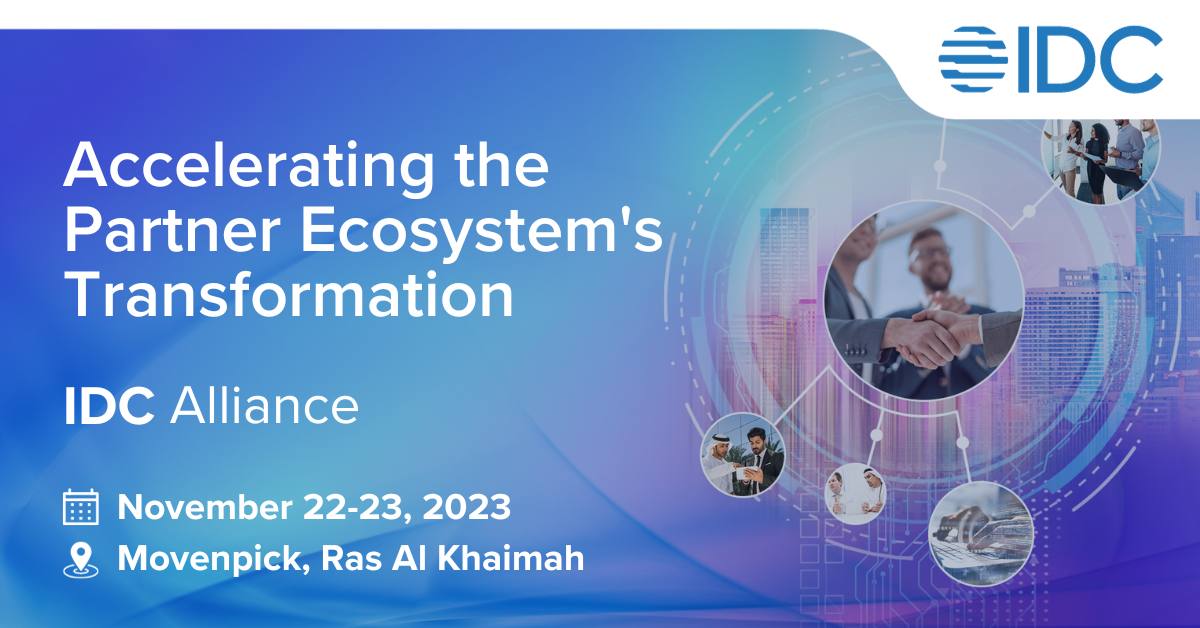
International Data Corporation (IDC), a global leader in providing market intelligence and advisory services for the ICT community, is thrilled to unveil an extraordinary convergence of tech visionaries, disruptors, and leaders for its prestigious ecosystem-focused event series, IDC Alliance. With events taking place in the UAE on November 22-23 and in South Africa on October 27-28, IDC Alliance has been designed to revolutionize the way technology businesses collaborate, innovate, and transform their strategies.
"With the expansion of this year's IDC Alliance, we're excited to introduce two exceptional platforms where the brightest minds in technology will converge to drive innovation, collaboration, and progress," says Jyoti Lalchandani, IDC's group vice president and regional managing director for the Middle East, Turkey, and Africa. "These events stand as a testament to IDC's commitment to nurturing technology ecosystems across the Middle East and Africa."
With a focus on cultivating partnerships and navigating the dynamic tech landscape, IDC Alliance will gather the industry's most influential figures under one roof. These destination conferences will bridge the gap between technology leaders, start-ups, cloud specialists, distributors, vendors, and select enterprise CIOs, creating a unique platform for innovative ideas, transformative insights, and unparalleled networking opportunities.
"Today's technology landscape demands rapid adaptation and innovation," says Steven Frantzen, IDC's senior vice president and managing director in the EMEA region. "In my keynote presentation at IDC Alliance, we'll delve into the dynamic evolution of ecosystem strategies, where vendors are meeting the call of customer demands for swift digital transformation. Together, we'll explore the intricate dance of customer-led ecosystem orchestration that's redefining alliances and forging innovative engagement models. Join me as we uncover the strategies that will shape the future of successful partnerships in this fast-paced digital era."
Ecosystem strategies are taking a new turn as customer needs and desires steer their evolution. IDC's projection that 70% of vendors will adopt a customer-led ecosystem orchestration strategy by 2025 underscores the industry's shift toward collaborative innovation. These dynamic ecosystems will foster symbiotic relationships between multiple entities, such as ISVs, hyperscalers, telcos, service providers, and partners. This interconnectedness is set to deliver specialized solutions tailored to individual customer needs.
Embark on a transformative expedition at the second annual edition of IDC Alliance, the preeminent conference series for the ICT partner ecosystem. Delve into the drivers and success factors propelling future tech ecosystems, explore the elements that define vibrant ecosystems, and unravel strategies for your organization to play a pivotal role. As the tech market becomes increasingly collaborative, IDC Alliance will gather start-ups, cloud specialists, partners, distributors, vendors, and more to catalyze innovation and customer transformation across diverse ICT channels.
The agenda will be packed with thought-provoking panel discussions covering a diverse range of industry trends, challenges, and opportunities, with topics such as:
The Evolving Role of the CIO and Understanding the Buyer Journey
Talent Management: Growing and Grooming Local Tech Talent
Building and Leveraging Cloud Partner Ecosystems
Driving Competitive Advantage Through Cyber-Risk Assessments
Becoming AI Ready: Transforming Businesses for the Future
Industrial Automation and OT Convergence: Delivering Value and Trust
Join us at IDC Alliance to engage with an impressive lineup of industry pioneers who are driving technological innovation across the Middle East and Africa, including:
Talal Alkaissi, Chief Executive Officer, G42 Cloud
Viswanath Pallasena, Chief Executive Officer, Redington
Hatem Elkady, Chief Partnerships and Synergies Officer, solutions by stc
Ram Ramachandran, Senior Vice President and Regional Head (MEA), Tech Mahindra
Francisco Salcedo, General Manager, Enterprise (MEA), Microsoft
Maya Zakhour, Director of Channel Sales (Eastern Europe, META, Iberia, and Latin America), NetApp
Sherifa Hady, Vice President, Channels (EMEA), HPE Aruba Networking
Sumanta Roy, Vice President & Regional Head (MEA & Mediterranean), Tata Consultancy Services
Gaby Matar, Executive Vice President, Solutions and Services, MDS System Integration Group
Tejas Patel, Managing Director, Accenture Strategy and Consulting
Ossama Eldeeb, Regional Director, Middle East and Africa Partner Organization, Cisco
Unlock the potential of collaboration, innovation, and transformation at IDC Alliance. Secure your spot today to be part of a transformational journey that will shape the future of tech ecosystems. To learn more about the events, please click here for the Middle East and here for South Africa. Alternatively, you can contact Sheila Manek at smanek@idc.com / +971 4 446 3154.
- 01:00 am
The Lending Standards Board (LSB), the primary self-regulatory body for the banking and lending industry, is pleased to announce its membership of the UK Regulators’ Network (UKRN). This partnership will further enhance collaboration among regulators from various sectors, promoting better outcomes for consumers, SMEs, and the economy.
The UKRN brings together regulators from the financial, utility, transport, and housing sectors to facilitate cooperation, share knowledge and innovation, and build better ways of working. Established in 2014, the network has fostered strong relationships and a culture of collaboration and learning among its members.
Members of the UKRN include many of the key regulators in the financial services industry and associated sectors including the Financial Conduct Authority (FCA), the Payments Systems Regulator (PSR), the Information Commissioner’s Office (ICO), the Pensions Regulator (TPR), Ofcom, and Ofgem.
The LSB will benefit from and contribute to the collective expertise and insights of other regulators, enabling them to address common issues and challenges in the financial services sector more effectively. This collaboration will further support the LSB's mission of driving fair outcomes for personal and business customers within financial services through independent oversight of standards and codes.
Emma Lovell, Chief Executive Officer of the LSB, comments: “We have long advocated the benefits of cross-sector collaboration, so joining the UKRN is a natural next step. By working together with other regulators, we can leverage collective intelligence to address cross-industry challenges and drive positive change.
“The UKRN's strategic objective of promoting better outcomes for consumers and the economy resonates with the LSB's mission. By fostering competition, investment, innovation, and high standards in the banking and lending industry, the LSB contributes to a fair and transparent financial landscape that benefits consumers and SMEs and supports economic growth.”
The LSB's participation in the UKRN aligns with its commitment to complement the work of industry regulators, such as the FCA, PSR, and HM Treasury, among others. Through effective collaboration and cooperation, the LSB aims to ensure that financial service providers meet the highest standards of protection and deliver fair outcomes to personal and business customers.

Michael Levens
Global Head of Payments at Delta Capita
ISO 20022 is an open global standard for financial information. see more
- 03:00 am
Pidgin, a secure real-time payments platform built for the future of payments, has partnered with Exchange Bank to offer instant payments to its account holders.
Established in 1909, Exchange Bank serves customers with a full suite of financial products and services online and through five branch locations across Etowah County, Ala. To expand its service offerings and provide real-time payments for customers, Exchange Bank has chosen to partner with Pidgin.
With Pidgin, Exchange Bank can facilitate faster payments for both its retail and commercial account holders for a variety of use cases. Whether transferring funds between personal accounts, paying employees, paying vendor invoices and more – Pidgin supports it all. Payments are routed directly from financial institution to financial institution, which means funds are settled and available almost immediately within the recipient’s account once a transaction is complete.
Pidgin serves as a central connection point to the Federal Reserve’s FedNow® Service and other faster payment networks, including The Clearing House’s Real-Time Payment network. As a result, Exchange Bank can choose to send and receive real-time payments on behalf of their account holders. Pidgin’s flexible network enables the bank to add even more value to faster payments for their account holders, ensuring funds arrive quickly, at the lowest cost possible.
“We’ve been committed to supporting our growing community since we were founded more than a century ago. Banking has changed drastically since 1909, but our long-standing history is a testament to our bank’s dedication to keeping up with our customers’ needs,” said Ricky Ray, chairman and CEO of Exchange Bank. “Our partnership with Pidgin is the latest example of how Exchange Bank has continued to evolve through the years as we aim to help our customers thrive financially. We look forward to making faster payments available for the individuals and businesses that play a vital role in our community and its economy.”
“Exchange Bank prides itself for taking an active role in its local community and making sure customers’ financial needs are met. Our team is proud to partner with this forward-thinking institution as they get ahead of the curve with faster payments,” said Abhishek Veeraghanta, founder and CEO of Pidgin. “Today’s consumers are looking for instant payment options to gain more flexibility and control over their transactions. We look forward to empowering Exchange Bank and their customers with more efficient payment options.”
- 04:00 am
Kroll, the leading independent provider of global risk and financial advisory solutions, has released The State of Cyber Defense Report 2023: Detection and Response Maturity Model, which discovered that 91% of cybersecurity professionals believe that their cyber detection and response processes are “very mature” or “somewhat mature,” yet, in fact, only 4% have mature processes in place. The model places organisations into three different stages of their cyber detection and response maturity journey; the three categories are Novice, Explorer and Trailblazer which reflect a low, medium and high level of maturity, respectively. The model illustrates that of those surveyed, 23% of businesses are Novices, 73% are Explorers and 4% are Trailblazers.
In the last year, businesses experienced an average of five major security incidents that resulted in data compromise or financial impact. Kroll’s model identified that Trailblazer organisations experience 30% fewer security incidents. Further, 23% of Trailblazer organiations did not experience a single significant data breach in the last year. This combined with the high cost of a data breach demonstrates that high cyber maturity could save businesses millions of dollars a year.
When looking at the behaviour of businesses within each group, a perception problem is made evident. Indeed, 43% of those placed in the Novice group feel that their detection and response measures are very mature with no improvement required. Further, organisations in the Trailblazer group are less likely to report that they are very mature (13%) compared to Explorer or Novice organisations. This would indicate that those in the Trailblazer group have a greater awareness of what it means to be cyber mature.
Mark Nicholls, Chief Research Officer, Cyber Risk, Kroll, commented: "It's both interesting and concerning that our findings highlight a significant gap between how businesses view their level of cyber maturity and how they approach their cybersecurity in practice.
“It’s also clear that achieving and maintaining long-term cyber resilience is more challenging than expected. Based on the fact that ‘Trailblazer organizations’ are more likely to self-assess as ‘not very’ cyber mature, it would appear that having a healthy dose of ‘cyber cynicism’ is a distinct advantage for organizations seeking to maintain their cyber resilience. Adopting a willingness to question established infosec processes and a drive to review and update tools and solutions with the support of proven security partners is key to improving maturity.
“Beyond a level of cynicism, businesses also need the right technology in place so that they can see the true scope and profile of the threats they face, including robust detection and response capabilities and an effective MDR solution. With the right tools and a healthy dose of self-awareness, organizations are on the right track towards true cyber maturity."
Key global findings from The State of Cyber Defense 2023: Detection and Response Maturity Model include:
- The perception problem: 91% of cybersecurity professionals self-reported that their cybersecurity practices were “very mature” or “somewhat mature”. However, the analysis shows that only 4% of businesses have mature detection and response practices in place.
- Trailblazers can expect fewer significant data breaches: 23% of organisations in the Trailblazer group did not experience a single significant data breach that resulted in data loss or financial impact in the last year. This is notably higher than those in the Explorer (4%) and Novice groups (2%). Considering the cost of a data breach, there are considerable financial incentives to becoming a Trailblazer.
- Insurance is a mature option: Over half (51%) of Trailblazer organisations have cyber insurance, compared to 7% for organisations in the Novice group.
- Outsourcing is key: Almost eight in 10 (79%) organisations in the Trailblazer group outsource part of their cybersecurity services. This is notably greater than those in the Explorer (52%) or Novice (34%) groups.
- Only the basics are being covered: Worryingly, a fifth of organisations (20%) only have the basics—cybersecurity monitoring—in place. Further, only 3% of organisations have all the recommended detection and response elements in their cybersecurity program. These include crisis management, threat intelligent enrichment, detection engineering and recovery capabilities.
- The differences in trust between Novice and Trailblazer: Security teams generally trust employees to avoid falling victim to a cyberattack (66%) above accuracy of cybersecurity alerts and the effectiveness of tools. However, when looking at the data through the lens of cyber maturity, Trailblazers trust their employees to avoid a cyberattack the least (54%) and the effectiveness of cybersecurity tools is trusted the most (69%). The State of Cyber Defense Report 2023: Detection and Response Maturity Model analysed data from a survey of 1,000 senior IT security decision-makers in Q1 2023 at firms with $50 million (mn) to $10 billion (bn) in revenue. The survey was carried out by an independent specialist in market research, Vanson Bourne, and all respondents had some responsibility or knowledge of cybersecurity within their organisation. Respondents were from the U.S., the UK, Ireland, Spain, Italy, Singapore, Hong Kong, Japan and Brazil.
Explore The State of Cyber Defense 2023: Detection and Response Maturity Model and see the interactive model on the Kroll website with data split by revenue, industry and region.
- 05:00 am
Resistant AI, the AI- and machine learning-powered financial crime prevention specialists, today announced that it has partnered with unstructured data automation platform Instabase. The partnership offers financial services organizations Resistant AI’s Document Forensics to authenticate digital KYC documents submitted through Instabase’s AI Hub platform which processes vast amounts of unstructured data to automate end-to-end workflows.
Combatting online criminals requires progressively more powerful technology as fraudsters apply more sophisticated techniques, and the rise of artificial intelligence has only increased the number of tools in a criminal’s arsenal. In an analysis of over 25 million digital documents in the last six months, Resistant AI found that 8% of pay stubs, 10% of bank statements, and 7% of utility bills show signs of manipulation. This new partnership between leading AI SaaS providers, Resistant AI and Instabase, addresses the increasing demand for improved safety measures in fraud-prone document processing workflows, including identifying and preventing new money mule accounts being opened in relation to peer-to-peer (P2P) fraud, resulting in enhanced risk-management and customer experience.
Martin Rehak, CEO and Founder of Resistant AI says, ‘We are proud to work with Instabase to offer a solution that enables customers to automate workflows while safeguarding against fraud. Customers can feel secure knowing that they are using best-in-class technologies, from two companies that are committed to working together and integrating their product to address document fraud from end-to-end.’
Joe Ramieri, VP of GTM of Instabase says, ‘Given the ethos of innovation that both Resistant AI and Instabase have built on, our customers can now leverage an additional layer of protection by validating document authenticity, and be armed with the right integrated toolkit to stay ahead of the rapidly evolving financial crime landscape.’








