
Published
- 02:00 am
Cohesity has announced it is expanding its Data Security Alliance ecosystem with six leading Data Security Posture Management (DSPM) vendors, including long-standing partner BigID, as well as Cyera, Dig Security, Normalyze, Sentra, and Securiti.
With these partnerships, Cohesity expects to integrate with the broadest and most comprehensive selection of DSPM solutions in the industry. Collectively, this newly formed group represents the majority of the DSPM market, providing Cohesity customers with the flexibility to choose the solution that best fits their needs.
Organisations face a significant challenge when it comes to the visibility of critical data across a growing multitude of repositories. Accelerating cloud adoption, compounded by an explosion of microservices, and a high rate of change (driven by modern DevOps practices) put customers at risk of significant data sprawl.Due to these visibility gaps, critical and sensitive data becomes hidden
from IT teams and oftentimes goes unprotected. Cohesity is working to solve this issue by partnering with the leading DSPM vendors and members of the Cohesity Data Security Alliance. With this unique collaboration, joint customers maintain visibility and help assure all their stakeholders, including employees, customers, and shareholders that their sensitive data is protected.
Cohesity’s leading data security and management technology, coupled with the benefits of DSPM, will deliver instant discovery of all data workloads, both sanctioned and unsanctioned, while also providing assessments of which data workloads have sensitive data that are often targeted by bad actors. These capabilities enable enterprises to be even more proactive in the fight against cyberattacks and provide the following cyber resilience benefits:
- Backup admins are able to easily see which objects have sensitive data
- IT and security can instantly identify protection gaps for critical workloads
- Actionable Cyber Recovery risk reports go directly to compliance teams
“As organisations rapidly expand their hybrid cloud footprint, their data risk and exposure increase in lockstep,” said Elad Horn, group vice president, Product, Cohesity. “We look forward to continuing our partnership with leading DSPM vendors to help our joint customers rapidly identify and protect their most sensitive and business-critical data across both public cloud and private cloud environments.”
“Cohesity is helping some of the largest enterprises in the world protect their data against ransomware and cyber threats in hybrid cloud environments,“ said Amer Deeba, CEO and Co-founder of Normalyze. “Now with the integration with Normalyze DSPM platform, customers get full visibility into their data across all clouds, SaaS, and on-prem. The joint solution gives security teams unprecedented visibility into their sensitive data locations and types, identifies and prioritises risks based on the highest monetary impact to the organisation in case of a data breach, and proactively protects the data from ransomware and cyber attacks.”
“Cohesity’s Data Security Alliance ecosystem offers customers the opportunity to implement security on their own terms, making it easy to integrate with vendors in adjacent technology spaces,” said Jennifer Glenn, research director for the IDC Security and Trust Group. “The expansion of the program to include DSPM solutions such as BigID and Normalyze, as well as other pending integrations, gives customers more insight and visibility into their data and more confidence that it will be protected appropriately.”
The Cohesity Data Security Alliance was founded in November 2022, and contains 15 members including BigID, Cisco, CyberArk, Mandiant, Netskope, Okta, Palo Alto Networks, PwC UK, Qualys, Securonix, ServiceNow, Splunk, TCS, and Zscaler. The addition of the six DSPM security vendors brings the total membership to 21. Cohesity’s Data Security Alliance offers a unique and comprehensive approach to security. Through this one-of-a-kind alliance, leading cyber security, data security and management, and services vendors partner to seamlessly bridge enterprise IT and security by sharing context and enabling new workflows. This collaboration can help customers detect threats and respond to attacks faster, improve remediation, and advance cyber resilience — all while utilising their existing security and data management investments.
“It’s more important than ever for organisations of all sizes to proactively identify and remediate risk across their entire data landscape – including dark data, shadow data, and critical data,” said Tyler Young, CISO at BigID. “BigID’s market-leading DSPM capabilities enable companies to accelerate their security strategies and improve their security posture with differentiated actionability, risk remediation, and unmatched data discovery and classification built for the enterprise. Our partnership with Cohesity is a natural fit to extend DSPM capabilities to help customers better manage, reduce, and remediate risk.”
- 03:00 am
Gemba Finance, a leading provider of innovative banking and financial management solutions, and ThetaRay, the leader in next-generation AI-powered trusted global payments, announced today the implementation of ThetaRay’s AI-powered transaction monitoring technology, SONAR, to power Gemba’s growth, while reducing regulatory exposure which frequently hampers growth at financial institutions.
“As Gemba expands globally, it is critical that we reduce regulatory exposure, meet global standards and expectations as well as provide flexibility and agility to the compliance team,” said Alexander Legoshin, CEO of Gemba Finance. “With ThetaRay we’re increasing our operational efficiency, improving customer satisfaction and increasing risk coverage - and that is powering our growth globally.”
Gemba Finance is a well-established and highly respected financial services company with a track record of providing business banking and financial management solutions to democratize access to finance, especially for underserved communities. Gemba’s platform enables companies or communities to create a new bank online in under one day without coding, compliance, and infrastructural headaches. Gemba's all-in-one online banking and payment gateway solution is fast, reliable, and secure, and designed to help users launch their own neobank quickly and easily.
ThetaRay’s AI-powered transaction monitoring and screening solution will enable Gemba to further scale its business while remaining compliant through a more efficient compliance program measured in significantly reduced false positives, increased detection-worthy cases, and reduced investigation time. ThetaRay’s platform, used by top banks and fintechs such as Santander, Travelex, TangoPay, ZeePay and MFS Africa, uses unsupervised AI as the backbone of its risk-based approach to financial transaction monitoring.
“As the financial crime battle continues to become more complex, fintechs and banks must adopt technology that can keep them ahead of evolving criminal tactics and strategies,” said Peter Reynolds, CEO of ThetaRay. “Particularly here in the UK, a leading financial center of the world, companies like Gemba are taking a leap forward in their AML capabilities and that is helping to build a trusted global payment system.”
ThetaRay and Gemba are hosting a fintech event “Navigating Compliance Challenges with AI Technology” in London on October 17th together with Microsoft.
ThetaRay recently announced a $57 million round led by Portage Ventures, JVP and others to spur on further growth following 10x client growth and 5x ARR growth in less than two years.
- 09:00 am
In a move set to redefine global payments, Chimoney, the Toronto-based, Techstars-backed fintech, unveils its strategic integration partnership with the Interledger Foundation (ILF) — a partnership that promises unparalleled financial inclusion and economic empowerment. This strategic alliance is poised to reshape the landscape of cross-border transactions and global payouts through the integration of the Interledger Protocol (ILP) to Chimoney and with Chimoney bringing its suite of Mobile Money, Airtime, Gift Cards, and Bank payout options to the Interledger ecosystem.
The integration of ILP into Chimoney's robust platform promises to deliver seamless interoperability across many payment networks, from traditional financial systems like Bank Accounts and Mobile Money to emerging payment systems like blockchain. By bridging these diverse financial touchpoints, Chimoney aims to democratize access to financial services, echoing the ethos of the internet's TCP/IP protocol. This shared purpose forms the foundation of the partnership.
Through several phases of the collaboration, the partnership will accomplish the following milestones:
- Deployment of Rafiki Infrastructure within Chimoney.
- P2P transfers enabled for Chimoney Wallets via Interledger Payment Pointers.
- Integration of Web Monetization capabilities within Chimoney Wallets.
- Holistic payment experiences through strategic pairings with Interledger providers.
Uchi Uchibeke, CEO of Chimoney, stated, "At Chimoney, our vision has always been clear - to unlock economic opportunities for everyone by breaking down financial barriers and granting universal access to financial services. Integrating the Interledger Protocol into Chimoney’s platform is a game-changer. Much like the internet democratized information, this move will enable swift, seamless movement of value across currencies, countries, or payment networks."
When asked about the partnership with Chimoney, Briana Marbury, the CEO and President of the Interledger Foundation said, "We are excited to have awarded the ILP Financial Services grant to Uchi Uchibeke, founder of Chimoney. Our partnership with Chimoney creates more opportunities to further the goals of global financial inclusion. We are also looking forward to Uchi speaking at our Interledger Summit this year in Costa Rica, where he and many other innovators in this space will share their insights."
Since its inception, Chimoney has been unwavering in its commitment to financial empowerment and inclusion. With payout support now spanning 100 countries and continuous innovation in its offerings, Chimoney stands out as a beacon of hope in the fintech space as it pursues its mission to connect all payment networks globally.
Integrating the Interledger Protocol with Chimoney’s Infrastructure and pairing it with other Licensed financial service providers signals Chimoney's ambitious drive and positioning at the forefront of fintech innovation. It reinforces Chimoney's commitment to delivering cutting-edge solutions and ensures its platform remains unparalleled in speed, efficiency, and reach.
With Chimoney's platform powered by ILP, businesses globally can anticipate streamlined, efficient payouts, solidifying Chimoney's status as the ultimate choice for choice-based flexible global payouts.
Uchi added that “we invite the Interledger community, visionary partners, and businesses worldwide to delve into Chimoney’s payout solutions and Wallet as a Service (WaaS) offering to increase time to market and payout speed by 20,000x.”
- 03.10.2023 -- 02:16 pm
Other Videos
- 07:00 am
According to research from compliance and payments expert, Eastnets, financial institutions across Europe are bracing themselves for heavy new compliance costs. This comes as the European Commission prepares to launch a new authority to counter money laundering and the financing of terrorism, known as the Anti-Money-Laundering Authority (AMLA).
In a survey of over 3,000 IT, risk and compliance leaders in the sector, three quarters (76 per cent) of UK respondents said failure to keep up with new AML legislation would cost their business between £350,000 and £1,000,000. A similar number (72 per cent) of EU-based respondents thought it could cost them anywhere from €360,000 to €1,000,000.
Nearly all (97 per cent) say this cost will come from either penalties and seizures, or the increased cost of training, monitoring and reporting procedures – or both.
In general, nearly nine tenths (88 per cent) of respondents say the fight against financial fraud and money laundering has become more costly and complex in the last five years. Reasons for this are varied, but nearly two fifths (38 per cent) blame it on higher expectations from regulators.
When pushed, nearly seven in 10 (69 per cent) of respondents say the increased cost of compliance is having a big effect on their organisation and a similar proportion (67 per cent) say the growing complexity of the regulatory environment is having a significant impact.
Approaching half (46 per cent) say a fast-changing regulatory environment is one of the greatest challenges their organisation faces in relation to anti-money laundering and financial fraud. Complicated regulation and legislation are cited by a further 45 per cent.
When asked what the top challenge will be to the industry from the establishment of a cross-border regulatory authority with wide oversight (like AMLA), the top answer was technology. This was closely followed by the associated challenge of customer privacy and data protection issues, such as GDPR.
On the topic of what technology and tools will help their readiness to comply and collaborate with bodies like AMLA, nearly two thirds (63 per cent) said regulatory reporting tools, 59 per cent said third party data providers and 55 per cent said AI.
Nearly three quarters (73 per cent) say they are only somewhat or not ready to handle new regulatory requirements on financial crime compliance and reporting.
But technology isn’t the only issue. When asked what respondents thought the most powerful processes that collaborative bodies like AMLA will use to fight money laundering, the top answer was to support cooperation among financial intelligence units and facilitate coordination and joint analysis between them.
Worryingly, 89 per cent say industry collaboration in financial crime and compliance is completely or somewhat fragmented.
Commenting on the findings, Deya Innab, Deputy CEO at Eastnets, said, “Keeping up with new regulations is an age-old challenge for financial institutions, but the formation AMLA could bring eye-watering costs. To minimise this, businesses need to consider all the technologies and tools available to them. By doing so, they can minimise costs in the long term while protecting themselves and their customers.”
- 07:00 am
Mphasis, an Information Technology (IT) solutions provider specializing in cloud and cognitive services, today announces a partnership with CoreStack, a global multi-cloud governance provider. The alliance aims to deliver unparalleled financial management and observability to customers, driving operational efficiency and actionable insights.
CoreStack will play a vital role in Mphasis' Cloud Business Solutions (CBS) and Agile IT Operations portfolio. One of the core missions of CBS and Agile IT Operations is to provide complete transparency, empowering enterprises to further optimize their CloudOps, FinOps, and SecOps operations. By leveraging CoreStack's platform, Mphasis will onboard its Operational Frameworks strategy of reliable foundation and associated best practices, ensuring consistent implementation of well-architected approaches for hybrid multi-cloud environments, including enterprise-level policy and controls monitoring, instrumentation and alerting, and comprehensive tagging using a single pane of glass for management.
"We are excited to join forces with CoreStack to bring to our clients an unparalleled solution that will redefine financial management and observability. With CoreStack's state-of-the-art platform and Mphasis' extensive experience in deploying, migrating key workloads, and reliably delivering hybrid multi-cloud operations and processes, we will offer a comprehensive phased approach to further augment and optimize our CloudOps, FinOps, and SecOps services. This will enable our clients to achieve unparalleled financial and operational efficiencies while ensuring complete transparency and tracking capabilities," said Srikumar Ramanathan, Chief Solutions Officer, Mphasis.
"We are proud to partner with Mphasis, a recognized leader in IT services, to bring this transformative solution to the market," said Suren Singh, Chief Sales and Partnerships Officer at CoreStack. “We are committed to delivering unparalleled value to their customers. Enterprises will benefit from the unique amalgamation of cutting-edge technology and years of hands-on field experience, providing them with actionable insights, financial optimization, and a clear path towards digital transformation.”
CoreStack offers a suite of multi-cloud, NextGen Cloud Governance modules that leverage AI to provide continuous and autonomous governance—for FinOps, SecOps, and CloudOps—through a unified dashboard. NextGen Cloud Governance helps enterprises mitigate risk, accelerate delivery, optimize performance, and innovate faster. In addition, CoreStack offers assessments based on Well-Architected Framework and custom frameworks. This solution streamlines the process of evaluating, improving, and maintaining cloud workloads across all environments, including enabling auto-remediation directly from the CoreStack Governance dashboard.
This innovative solution will empower medium to large enterprises across various stages of hybrid cloud and platform adoption to establish a structured and mature model for optimizing their IT and business processes, procurement and sourcing, and workload and operation scalability and modernization.
- 02:00 am
Eventus, a leading global provider of state-of-the-art, at-scale trade surveillance software across all lines of defense, and Phillip Capital Inc. (PhillipCapital), the Chicago-based futures commission merchant (FCM) and broker-dealer subsidiary of Singapore-based PhillipCapital Group, announced today the extension of their relationship and the brokerage and clearing firm’s use of the Validus platform to meet all of its trade surveillance needs.
PhillipCapital CEO Filippo Lecchini said: “I am thrilled to announce the extension of our partnership with Eventus for the foreseeable future. Our journey with Eventus commenced in 2017 when Phillip Capital first discovered this innovative company. What immediately struck us was not only their cutting-edge technology but also their unwavering enthusiasm in every interaction. This initial encounter laid the foundation for a highly successful and productive partnership with Eventus. Fast forward a few years, and I am happy to say that Eventus has not only fulfilled all our surveillance needs with exceptional service but also played a pivotal role in supporting the expansion of our business into new markets and products. Notably, Eventus facilitated our ventures into equity options and, more recently, into Eurex. I look forward to extending this partnership with the belief that our companies will continue on a path of success together.”
Eventus CEO Travis Schwab said: “We are so grateful that PhillipCapital is extending our long-standing relationship. We have been honored to be a trusted partner of the fast-growing firm for so many years and to continue to play a vital role in supporting its expansion into new markets and products. As an early adopter of our platform, PhillipCapital has seen first-hand how Validus can scale to meet any capacity requirements as clients grow, as well as our team’s expertise in not only our customizable technology but the market and regulatory challenges facing the industry.”
PhillipCapital uses Validus for trade surveillance on all futures, equities and equity options transacted through the FCM and broker-dealer.
- 03:00 am
Rubix Data Sciences, a technology and analytics-based B2B risk management and monitoring platform provider, today announced its Rubix Credit Decisioning Solution in now available on SAP Store. The solution work with SAP S/4HANA® Cloud giving access to Rubix Risk Scores and credit and financial risk information. This enables users to make better credit decisions and automate the risk monitoring of their counterparties.
Counterparties can include customers, distributors, dealers, franchisees, suppliers, and vendors, and can cross industries such as manufacturing, finance, Fast-Moving Consumer Goods, retail, technology, energy, supply chain, logistics, and transportation.
“With Rubix’s Risk Score and related risk information now available with SAP S/4HANA, users can easily access insights about counterparties’ risk profile, enabling them to make quick and effective credit, supplier and compliance risk decisions,” said Mohan Ramaswamy, Co-Founder and CEO of Rubix Data Sciences. “Users will also be able to monitor counterparties’ evolving financial risk with the integration of Rubix Early Warning Signal data. Rubix Risk Scores can help users reduce risks throughout their distribution and supply chains and efficiently manage counterparty relationships.”
- 06:00 am
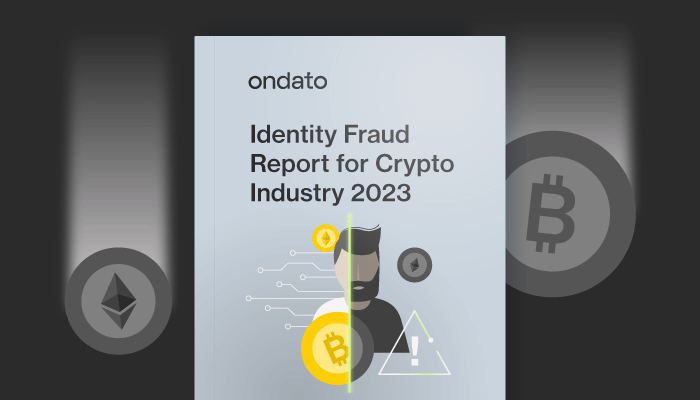
Ondato, a London-headquartered company that streamlines Know Your Customer (KYC) and Anti-Money Laundering (AML) processes, has published a report on identity fraud in the crypto industry that shows that 42% of fraudsters in the crypto industry attempt to trick systems by printing out fake documents.
This report explores the identity fraud trends in the crypto industry that emerged during the first half of 2023, such as the most common methods fraudsters employ to deceive identity verification systems. Ondato points out that 31% of fraudsters provide document pictures from other screens, and 14% attempt to pass off manipulated documents.
“With internet safety and easy AML and KYC compliance being our first priority, we must look at fraud attempts in depth. This report is part of our continuous effort to achieve this and educate others in the process,” says Ondato’s co-founder and CEO Liudas Kanapienis.
He also adds that, due to the inherent anonymity of crypto, the industry is susceptible to financial crime. The increased likelihood of fraud attempts in the crypto industry also comes into view. In turn, cryptocurrency providers may experience intense reputational damage and financial loss if AML measures are not taken seriously.
However, the regulations applied to the crypto industry are constantly changing and getting updated. Among the many regulations that cryptocurrencies have been subjected to, 2023 brought new changes to the industry with the introduction of the MiCA regulation. Set to come into full effect early next year, it is a clear indication that cryptocurrency providers need to examine their AML processes more closely.
With this in mind, Ondato’s report paints a picture of a stereotypical fraudster and points out tell-tale signs of fraudulent documents that companies need to be vigilant of in order to prevent fraud. Amidst these warning signs, Ondato looks into findings such as the repeated use of passports, how common fraud is amongst men compared to women, the nationality that appears most often in fraud attempts, and others.
- 06:00 am
finova, the UK’s largest cloud-based mortgage and savings software provider, today announces the appointment of Sasha Sprake as Head of Business Development for finova Connect. finova Connect comprises of a suite of services focused on fostering and strengthening the connection between brokers and lenders, including Payment and Mortgage Services, Broker Verification, and FCA data distribution.
Sasha will spearhead efforts to grow finova’s Broker ID and SDM propositions while remaining closely involved with finova Payment and Mortgage Services.
Broker ID – a data management platform to help lenders onboard brokers - is a key strategic product for finova and Sasha will focus her efforts on further enhancing the product to unlock its full potential. At the same time, Sasha will nurture ongoing relationships with both future and current partners, ensuring finova is positioned to meet the evolving needs of a dynamic market.
Under Sasha’s guidance, finova will also continue to power Spectrum Data Management (SDM), the sole distributor of the FCA extract, a raw data version of the FCA register that can be used by financial services for compliance. The service is critical for its subscribers who rely on the delivery of its data to adhere to internal processes, compliance checks, and due diligence.
Sasha first joined finova Payment and Mortgage Services as Mortgage Club Manager in January 2021 after several years within Financial Services, where she fostered productive working relationships with lenders, partners and members while managing the day-to-day function of the Club.
Sasha Sprake, Head of Business Development for finova Connect, said:
"I am honoured and excited to step into the role of Head of Business Development for finova Connect. Over the past three years, I have continued to cultivate invaluable relationships with lenders, partners, and mortgage brokers whilst deepening my industry knowledge. Our industry has experienced turbulent waters over the last 12 months, and I know from experience that innovative technology can help us navigate these challenging times with ease. I look forward to driving finova’s growth in my new role."
Chris Little, Chief Revenue Officer at finova, added:
“In a short period of time, Sasha has made a hugely positive impact on finova and its ways of conducting successful business with our lender and broker partners. There was never any doubt that Sasha was the ideal candidate to oversee the growth of our Broker ID and SDM propositions, which will enable lenders and brokers to deliver speedier outcomes for clients without rolling back key compliance obligations. It’s an exciting time to work in mortgage technology, and I am confident that Sasha will shepherd our award-winning suite of solutions to new heights.”








