
Published
- 03:00 am
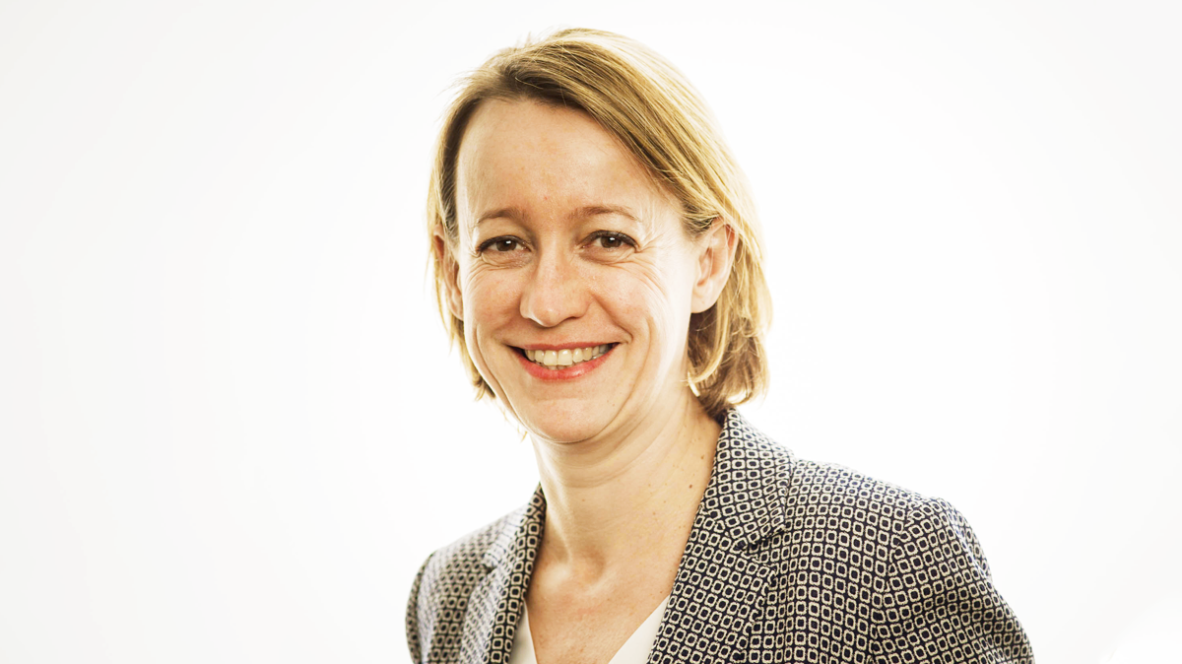
Anne-Sophie Castelnau has been appointed ING’s global head of Sustainability per 1 April 2021. She will succeed Amin Mansour, who fulfilled the role on an interim basis. Anne-Sophie is currently head of Wholesale Banking for ING in France.
Anne-Sophie Castelnau (French) joined ING in France in 2005. Before she became head of Wholesale Banking in France, she held various senior management positions, including head of Corporate Lending and head of Client Coverage. Before she joined ING, Anne-Sophie worked for French banks Natixis and Crédit Industriel et Commercial.
Since she became head of ING Wholesale Banking in France in 2017, Anne-Sophie has had a strong focus on sustainable finance. She has been involved in bringing over 25 sustainability deals to fruition, including the first sustainability linked loan in France in 2017.
Announcements on Anne-Sophie’s successor as head of Wholesale Banking in France will be made as and when appropriate.
Note for editors
For further information on ING, please visit www.ing.com. Frequent news updates can be found in the Newsroom or via the @ING_news Twitter feed. Photos of ING operations, buildings and its executives are available for download at Flickr. ING presentations are available at SlideShare.
| Press enquiries | Investor enquiries | |
| Daan Wentholt | ING Group Investor Relations | |
| +31 20 576 6386 | +31 20 576 6396 | |
| Daan.Wentholt@ing.com | Investor.Relations@ing.com | |
ING PROFILE
ING is a global financial institution with a strong European base, offering banking services through its operating company ING Bank. The purpose of ING Bank is empowering people to stay a step ahead in life and in business. ING Bank’s more than 57,000 employees offer retail and wholesale banking services to customers in over 40 countries.
ING Group shares are listed on the exchanges of Amsterdam (INGA NA, INGA.AS), Brussels and on the New York Stock Exchange (ADRs: ING US, ING.N).
Sustainability forms an integral part of ING’s strategy, evidenced by ING’s leading position in sector benchmarks by Sustainalytics and MSCI and our ‘A-list’ rating by CDP. ING Group shares are included in major sustainability and Environmental, Social and Governance (ESG) index products of leading providers STOXX, Morningstar and FTSE Russell. In January 2021, ING received an ESG evaluation score of 83 ('strong') from S&P Global Ratings.
IMPORTANT LEGAL INFORMATION
Elements of this press release contain or may contain information about ING Groep N.V. and/ or ING Bank N.V. within the meaning of Article 7(1) to (4) of EU Regulation No 596/2014.
Certain of the statements contained herein are not historical facts, including, without limitation, certain statements made of future expectations and other forward-looking statements that are based on management’s current views and assumptions and involve known and unknown risks and uncertainties that could cause actual results, performance or events to differ materially from those expressed or implied in such statements. Actual results, performance or events may differ materially from those in such statements due to a number of factors, including, without limitation: (1) changes in general economic conditions, in particular economic conditions in ING’s core markets, including changes affecting currency exchange rates, (2) the effects of the Covid-19 pandemic and related response measures, including lockdowns and travel restrictions, on economic conditions in countries in which ING operates, on ING’s business and operations and on ING’s employees, customers and counterparties, (3) changes affecting interest rate levels, (4) any default of a major market participant and related market disruption, (5) changes in performance of financial markets, including in Europe and developing markets, (6) changes in the fiscal position and the future economic performance of the United States, including potential consequences of a downgrade of the sovereign credit rating of the US government, (7) consequences of the United Kingdom’s withdrawal from the European Union, (8) changes in or discontinuation of ‘benchmark’ indices, (9) inflation and deflation in our principal markets, (10) changes in conditions in the credit and capital markets generally, including changes in borrower and counterparty creditworthiness, (11) failures of banks falling under the scope of state compensation schemes, (12) non-compliance with or changes in laws and regulations, including those financial services and tax laws, and the interpretation and application thereof, (13) geopolitical risks, political instabilities and policies and actions of governmental and regulatory authorities, (14) ING’s ability to meet minimum capital and other prudential regulatory requirements, (15) outcome of current and future litigation, enforcement proceedings, investigations or other regulatory actions, including claims by customers, (16) operational risks, such as system disruptions or failures, breaches of security, cyber-attacks, human error, changes in operational practices or inadequate controls including in respect of third parties with which we do business, (17) risks and challenges related to cybercrime including the effects of cyber- attacks and changes in legislation and regulation related to cybersecurity and data privacy, (18) changes in general competitive factors, (19) the inability to protect our intellectual property and infringement claims by third parties, (20) changes in credit ratings, (21) business, operational, regulatory, reputation and other risks and challenges in connection with climate change, (22) inability to attract and retain key personnel, (23) future liabilities under defined benefit retirement plans, (24) failure to manage business risks, including in connection with use of models, use of derivatives, or maintaining appropriate policies and guidelines, (25) changes in capital and credit markets, including interbank funding, as well as customer deposits, which provide the liquidity and capital required to fund our operations, (26) the other risks and uncertainties detailed in the most recent annual report of ING Groep N.V. (including the Risk Factors contained therein) and ING’s more recent disclosures, including press releases, which are available on www.ING.com.
This document may contain inactive textual addresses to internet websites operated by us and third parties. Reference to such websites is made for information purposes only, and information found at such websites is not incorporated by reference into this document. ING does not make any representation or warranty with respect to the accuracy or completeness of, or take any responsibility for, any information found at any websites operated by third parties. ING specifically disclaims any liability with respect to any information found at websites operated by third parties. ING cannot guarantee that websites operated by third parties remain available following the publication of this document, or that any information found at such websites will not change following the filing of this document. Many of those factors are beyond ING’s control.
Any forward looking statements made by or on behalf of ING speak only as of the date they are made, and ING assumes no obligation to publicly update or revise any forward-looking statements, whether as a result of new information or for any other reason.
This document does not constitute an offer to sell, or a solicitation of an offer to purchase, any securities in the United States or any other jurisdiction.
- 06:00 am
Nets customers in Denmark, Finland, Norway and Sweden will find PayPal available on the Nets e-commerce platform, Easy, along with cards and local payment options for SMBs. Nordic merchants – particularly those with an international customer base – will benefit from a broader range of payment alternatives presented in a seamless customer interface.
PayPal is one of the strongest online payment brands in the world, with more than 370 million active accounts globally. Nets already offers the popular payment option in Germany and its agreement with PayPal enables it to provide the payment method, integrated into Nets’ online payment checkout, in local currencies.
The payment methods used by consumers online differs from country to country, but they always expect to be able to pay using their preferred payment brand. According to e-commerce surveys from Nets, one of the most common reasons for consumers failing to complete online purchases is that their preferred payment method is not available.
Patrik Müller, e-commerce expert at Nets, says: “Our online checkout – with PayPal as an integrated part of our range of available payments – continues to become more complete and accommodating. This is especially important for merchants with an international customer base and will support their further growth with international consumers shopping on Nordic websites.”
- 06:00 am

TreeCard -- the world’s first wooden Mastercard™ payment card that plants trees with everyday spending -- has raised a $5.12 million seed round led by EQT Ventures, with participation from Seedcamp and Episode 1. Angel investors including Matt Robinson (the founder of GoCardless) and Charlie Delingpole (founder of ComplyAdvantage) also participated in the round. The funding will be used to hire fintech talent, support product roll-out across the UK, and expand into the US and key European markets.
TreeCard links with current bank accounts, making it easy and convenient for users to integrate TreeCard into their usual spending habits. The card is completely free to customers and regular purchases contribute to tree planting projects by Ecosia, the green search engine; at least 80% of profits go straight to reforestation projects in 26 countries around the world. Without spending money on marketing, the company has organically grown a waiting list of over 140,000 people for the launch of the card, which is due to be released in the next few months.
Founded in August 2020 by 23 year-old Jamie Cox (CEO and co-founder), alongside James Dugan (CMO and co-founder) and Gary Wu (co-founder and CTO), the idea for the company was initially discussed over the kitchen table with Jamie’s mum. Having founded Cashew, a Venmo for the UK that achieved 20% WoW growth, Jamie was hungry for another fintech opportunity with higher impact. TreeCard, as a complementary product to Ecosia, presents a responsible alternative to everyday banking services.
TreeCard makes money from the interchange charge and operates in a similar way to Amex, which gives a huge percentage of profits back to consumers in cashback rewards. Instead of funnelling money back to the customer, TreeCard invests 80% of profits into sustainable causes, including reforestation in partnership with Ecosia. Over the last 10 years, Ecosia has planted more than 119 million trees all over the world.
Consumers direct the economy through spending, with sustainability increasingly prioritised. Last year, it was announced that ethical consumer spending and finance in the UK alone reached a record £98bn. TreeCard enables consumers to take an active role in making a difference to the climate emergency through everyday spending, without any cumbersome processes. By challenging the finance industry in this way, positive and long-lasting impact can be created.
Jamie Cox, CEO and Co-Founder commented: “We wanted to create a financial product with a difference, one that was far removed from greenwashing and allowed customers to improve the impact of their spending without drastically changing their habits. We’re really excited to be backed by EQT Ventures; it was clear throughout the fundraising process that the team really understood and resonated with our mission. As a multi-stage fund, EQT Ventures’ presence across both Europe and the US provides the perfect springboard for us to launch into international markets”.
Tom Mendoza, Deal Partner at EQT Ventures who led the investment added: “TreeCard has the potential to become a leading green finance brand, going where no brand has gone before in creating a de facto platform for impactful financial management. At EQT Ventures, we’re increasingly aware of the environment and the impact that our investments have on the world around us, so we’re really excited to support the TreeCard team, who are actively working with the financial system to create a better future for the planet”.
- 01:00 am
Open Banking pioneer, Nuapay, powered by Sentenial, today announces it is extending its open banking payment capabilities to German and Italian banks. Nuapay’s expansion will enable German and Italian partners to offer open banking payment solutions, powering seamless account-2-account payments for their customers.
This rollout connects 308 banks in Italy and 435 banks in Germany to Nuapay’s Open Banking platform, connecting 134 million European accounts and reaching 98% and 70% of payers in each country. This adds to Nuapay’s existing open banking connections in the UK and France, covering more than 90% of payers in those markets. In coming months, Nuapay’s payment integrations will be extended to other European markets, including Spain, making it one of Europe’s leading open banking payment platforms.
Germany has long shown a preference for cash over digital alternatives. However, the pandemic saw a shift in consumer preferences indicating that the market is ripe for innovation.
Meanwhile in Italy, even before the pandemic hit, the government had been working to increase citizens’ use of digital payments to tackle fraud associated with cash. Pre-pandemic, 86% of Italian transactions were made using notes and coins, according to central bank estimates. However, research shows that the market has seen a staggering 80% increase in mobile payments in 2020 compared to 2019. The government also encouraged consumers to utilise digital payments with its Christmas cashback campaign. The cashback initiative launched over Christmas asked users to register their payment methods on the IO app – a new government app to provide access to public services and benefits – to receive an automatic refund of 10% on each transaction from the state.
Nick Raper, Director of Nuapay, comments: “Enabling access to secure and efficient Open Banking payments within Germany and Italy comes at an opportune time as the pandemic puts the final nail in the cash-coffin. Access to Nuapay’s Open Banking connections, via our platform, will allow businesses to avoid high card payment fees and deliver more secure payment options to customers. As Nuapay is one of the only Open Banking providers with a fully inclusive payment solution, including integrated money movement, refunds, recurring payments, instalment plans and full reconciliations, partners are empowered to deliver innovative payment experiences to customers, and expand their service offerings.”
Nuapay’s Open Banking platform was also the recipient of the ““Best Use of Open Banking in Merchant Payments Ecosystem” at the recent Merchant Payments Ecosystem (MPE) Conference, traditionally held in Berlin each year. The award, announced at the virtual conference on 23rd February 2021, recognises the features and functionality built into the Nuapay Open Banking platform that enables Payment Service Providers (PSPs) and Merchants to reap the benefits of open banking payments.
Demonstrating its ongoing commitment to growing its payment business across Europe, Nuapay has secured a second EU Payment Institution licence from the ACPR – the French banking regulator. The licence enables Nuapay to continue offering its payment services in a post-Brexit world to in excess of 1,000 EU clients.
- 01:00 am

Atom, the UK’s first app-based bank, is to raise £40m from existing shareholders as it moves to profitability from its mortgage and business lending within a year, and to IPO the year after.
Atom’s revenues are growing strongly and the bank is on course to achieve 100bps of Net Interest Margin (NIM) by the end March 2021. Atom will have grown lending to SMEs on its balance sheet to over £700m by the end of March 2021, a tripling of business loans in the last 12 months. This growth has been achieved both within the Coronavirus Business Interruption Loan Scheme and also independent of government schemes.
Simultaneously, Atom has seen strong and profitable growth in its mortgage portfolio, having already added £362m of mortgages in the second half of its financial year 2020/21. Since its launch, Atom has loaned £2.8bn to UK mortgage customers. The Durham-based lender also confirmed its place in the secondary markets for UK mortgages, issuing a £775m prime mortgage securitisation last year.
Atom’s award-winning savings products are now hosted by Atom on UK fintech Thought Machine’s transformational ‘Vault’ platform – part of a transformation to real-time cloud native technology across all of Atom’s technology stack that has also been completed in the last year. Atom launched a new Instant Saver last September to very strong reviews, and has so far added £0.6bn of Instant Saver balances to its existing £1.7bn of fixed rate savings.
This step change in income and technology has been achieved while continuing to hold the bank’s operating costs flat and delivering the best customer experience in banking. Atom’s automated mortgage journey is rated 9.2/10 via Reevoo and over the last year the bank’s app has scored 4.7 on the iOS store and 4.5 on the Google Play store. Atom has a Trustpilot rating of 4.6/5 and its latest Net Promoter Score was +79.
Mark Mullen, Chief Executive Officer at Atom said: “We think of Atom as an exceptionally engaging and efficient banking machine that helps and supports customers to own their homes or build their businesses. We’ve been there for new and existing customers during the pandemic, and in a year when we have held our operating costs constant I’m delighted that we have coupled substantial income growth with an enviable record of customer experience.”
Asked about the future and the possibility of an IPO for Atom, Mullen said: “We turn to our shareholders for capital as and when we need it to drive growth. Despite it being a difficult environment for all companies that need to raise funding, this capital raise will allow us to continue to progress towards profitability and ever-improving levels of efficiency and engagement. The team retains an IPO as our objective and we’ll take the business there when we and the markets are ready. After the year that’s just gone I’m not going to claim perfect foresight, but we’re looking at the financial year 2022/23 as our IPO target.”
- 03:00 am

SETL, the London-based Settlement and Payments Infrastructure provider, today announced the appointment of Marjan Delatinne to SETL’s executive management team. As Head of Payments, Marjan has overall responsibility for growing SETL’s payments business, alongside its market infrastructure and asset management offerings.
Marjan joins SETL having most recently served as Global Head of Banking at Ripple. She brings with her a wealth of experience, having previously held senior business development roles at SWIFT, where she was responsible for the commercialisation of large scale projects both in securities and payments, namely Target 2 Securities and SWIFT gpi (Global Payments Innovation).
Sir David Walker, SETL Chairman, said: “I am delighted to welcome Marjan as part of SETL’s executive team. Her appointment comes at an exciting time for our business, as we have successfully completed the world’s first Central Bank Digital Currency live fund transaction with Banque de France, using the SETL blockchain.”
The Payments industry has undergone significant changes over recent years as market participants increasingly demand real-time solutions that help address legacy infrastructure issues around liquidity management, real-time settlement and compliance, all of which significantly impact performance.
Payment providers are underserved in a number of areas, including compliance and liquidity management. While they can bring efficiencies to the settlement process, handling compliance issues - particularly for cross-border payments - is highly complex and there is a clear need for an end-to-end, fully digital workflow for identity, AML and KYC checks. At the same time, gaining an aggregated view of intraday liquidity across a fragmented landscape to fully understand where liquidity sits and how best to optimise it, presents significant and constraining challenges for banks.
Marjan Delatinne, Head of Payments at SETL, said: “I am delighted to join the SETL management team at this exciting time in its corporate development. Key to helping the payments industry tackle the common pain points is a need for strong and committed community engagement. Our aim is to work with key industry partners, to improve on existing legacy technology and to drive digital transformation across the market.”
Delatinne added: “SETL’s payments solution is designed to improve the management of cross-border settlement and solve the liquidity management challenge. We use DLT technology to aggregate payment sources and gain a fuller and clearer picture of liquidity, enabling payments providers to dynamically manage their liquidity in real-time across a highly fragmented landscape.”
Philippe Morel, SETL CEO, concluded: “Marjan’s appointment is a strategic step for us; we are committed to bringing deep sector level expertise to solve common industry challenges. Marjan will be instrumental in realising our ambitions to deliver innovative solutions to payments providers, to empower them with the right applications to manage instant payments, cross-border liquidity, settlement and compliance requirements.”
- 01:00 am

The Depository Trust & Clearing Corporation (DTCC), the premier market infrastructure for the global financial services industry, today released a two-year industry roadmap for shortening the settlement cycle for U.S. equities to one business day after the trade is executed (T+1). In its latest paper, “Advancing Together: Leading the Industry to Accelerated Settlement,” DTCC highlights the immediate benefits of moving to a T+1 settlement cycle, including cost savings, reduced market risk and lower margin requirements as well as the firm’s plans for galvanizing the necessary support for the project across a wide range of market participants.
The Move to T+1
In order to move to T+1, industry participants must align and agree to shorten the settlement cycle by implementing the necessary operational and business changes, and regulators must be engaged. DTCC does not have the regulatory or legal authority to unilaterally change the settlement cycle. Despite this, DTCC continues to take a leadership position to shorten the settlement cycle to T+1, similar to the role it played in 2017 to move to T+2.
Based on extensive industry engagement conducted throughout 2020, early indications suggest that market participants increasingly favor the move to T+1 to take advantage of capital and operational efficiencies, and benefit from significant risk reduction and a lowering of margin requirements, especially during times of high volatility and stressed markets. Based on simulations detailed in the paper, DTCC estimates that a move to T+1 could bring a 41% reduction in the volatility component of NSCC’s margin.
“The time to settlement equals counterparty risk, which can become elevated during market shocks. It can also lead to the need for higher margin requirements, which are critical to protecting the financial system and investors against a firm default,” said Murray Pozmanter, Head of Clearing Agency Services and Global Business Operations at DTCC. “We have been working collaboratively with a wide cross section of the industry to build support for further shortening the current settlement cycle over the past year, and we have outlined a plan to increase these efforts to forge consensus on setting a firm date and approach to achieve T+1.”
Steps to Achieve T+1
The paper comes as part of DTCC’s next phase in its strategy to advance discussions around the move to T+1. Key dates proposed include:
- Q1 2021: DTCC anticipates completion of prototype development for the Project Ionsettlement system, which provides a T+1 environment for the industry on a digital platform using distributed ledger technology (DLT) and other emerging technologies.Industry testing will begin shortly after the prototype is completed.
- H2 2022: DTCC to begin transitioning to an enhanced settlement model that more closely integrates processes from DTCC’s equities clearing and settlement subsidiaries, NSCC and DTC. Studies have shown an integrated settlement model could provide an 11% reduction in the volatility component of NSCC margin.
- By 2023: DTCC proposes the U.S. settlement cycle to officially move to T+1, with market participant and regulator alignment.
These steps will complement DTCC’s prior efforts to further optimize current processes and increase settlement efficiency, such as the re-engineering of night cycle processing, which was completed last year.
While NSCC and DTC can support T+1 and even same-day (T+0) settlement today using existing technology, the current T+2 settlement cycle is a convention of market practice, and shortening that period as regular-way for all market participants will require industry coordination.
“As the industry continues to align itself around shortening the settlement cycle, DTCC has proactively begun laying the foundation and is ready to move quickly for the eventual move to T+1,” said Michael McClain, Managing Director and General Manager of Equity Clearing and DTC Settlement Services at DTCC. “We remain committed to working with the industry, regulators and key stakeholders to shape the future of clearance systems and all the exciting possibilities they could bring – from reduced risk and costs, to improved business resilience and increased operational efficiencies.”
Barriers to Netted T+0 and Real-Time Gross Settlement
In the paper, DTCC also outlines the feedback it has received from clients regarding barriers to netted T+0 and real-time gross settlement, including:
- Netting & Liquidity: Real-time gross settlement could require that transactions in the U.S. market be funded on a transaction-by-transaction basis, eliminating the liquidity and risk-mitigating benefits of today’s netting features. Instantaneous settlement would require trades to be prefunded on an unsecured basis, which could limit market liquidity.
- Increased Fails: Without netting, the number of transactions to be settled would soar and the number of failed transactions could rise significantly.
- Predictive Financing: T+0 does not allow for predictive financing, so clients would likely not know their financing needs for a given day until trading has stopped. Securing end-of-day funds, or determining intraday investment amounts, could be difficult and costly.
- Reconciliation: A move to T+0 would likely require the development of a real-time reconciliation process and real-time stock records to help comply with regulations.
- Loss of CCP Trade Guaranty: Implementing real-time gross settlement would require that all transactions be paid in full by investors, with cash in hand and securities owned for each transaction at the moment of execution. This means investors would need to have complete confidence in their trading partner to make good on the transaction even though that person would be anonymous to them.
The paper states that many of these issues apply solely to T+0 settlement, and a move to T+1 would not require large operational or technical changes by market participants, nor would it cause fragmentation and risk to the core clearance and settlement ecosystem. With a move to T+1, the industry can retain the core benefits of DTCC’s centralized netting and risk management, while moving to a shorter settlement time.
- 05:00 am
NICE (Nasdaq: NICE) announced today that Skipton Building Society has selected its cloud-based Workforce Management (WFM) and Employee Engagement Manager (EEM) offerings as a bundled solution for its contact centers. As part of an ongoing effort to adopt the most advanced technologies, the UK based building society chose NICE to provide its workforce with flexible scheduling capabilities and thereby improve employee satisfaction while boosting efficiencies through AI-driven forecasting and ensuring rapid ROI.
The combined solution of NICE WFM and EEM in the cloud was seen by Skipton Building Society as complementing its long-term business strategy as well as its policy of employee centricity at the forefront. Skipton also saw the immense benefit of migrating to the cloud. This includes lifting the burden of local maintenance and upgrades, as well as increased flexibility for integration with other in-house and third-party systems, in addition to cost savings. As a result, Skipton is able to always have the most current version of the NICE solution and quickly deploy its latest features across the contact center.
In addition to achieving operational efficiencies and cost savings, NICE WFM and EEM were adopted in order to improve employee satisfaction at Skipton Building Society. Agents have remote access to their work schedules and are empowered to independently make intraday or short-term shift changes, which increases engagement and improves overall adherence. While providing agents greater control over their schedules, EEM only allows shift changes that NICE’s AI-driven WFM identifies as beneficial to staffing and occupancy levels. NICE EEM also utilizes Intelligent Intraday Automation® technology to identify projected staffing variances and resolve them in advance in a manner that eliminates or significantly reduces manual and semi-manual WFM schedule change processing and communication.
Benedicte Frew, Head of Distribution and Planning for Skipton Building Society, said: “When we decided to upgrade our WFM, it was natural for us to look to NICE to expand the existing positive relationship we had developed. In addition, we recognized that NICE is the leading vendor in the WFM market, with rich expertise in implementing its cloud-based solutions for a wide variety of enterprises which inspired our confidence. Coupled with NICE EEM’s innovative scheduling capabilities, it was an easy decision for us to choose NICE. Now, with the most advanced solution available for managing our workforce, we enjoy a competitive advantage that complements our overall business model.”
John O’Hara, President, NICE EMEA, said: “With the decision to migrate to the NICE WFM cloud and deploy EEM, Skipton Building Society and NICE have strengthened an existing fruitful relationship. The process was easy and transparent, bringing flexibility, savings and smarter decision-making to the building society’s workforce management with embedded AI and cloud-based technology. We are very pleased that Skipton Building Society has joined thousands of leading contact centers around the world in using the NICE suite of intelligent solutions to help optimize its operations and revolutionize employee engagement.”
Skipton Building Society is a large mutual lending and savings organization in the United Kingdom, with 100 branches and over one million members. It chose to upgrade an on-premises NICE WFM solution to a cloud edition, which it rolled out to 450 contact center agents. NICE EEM has been added as a key component of the new comprehensive solution, integrating intelligent automation for intraday management with WFM’s AI-driven planning, hiring, forecasting and scheduling.

Michel Roig
Senior Vice President, Head of Busines Line Payments & Access at Fingerprints
When it comes to banking, consumers are traditionally loyalists and often stay with their banks from early adulthood through to retirement. see more
- 07:00 am

2020 posed numerous challenges for brokers, banks and fintechs around the globe. Staff working remotely, trader volumes increasing, volatility at an all-time high and the emergence of new tradable products were just a few. Brokers scrambled to reassemble their remote team and handle associated security and tech concerns. In direct response to the needs of brokers, AIRSOFT Technology LTD announced a major rebrand. The new look and functionality of the site highlight AIRSOFT as the expert choice for brokerages and cements the company as the preferred technology provider for brokers in 2021.
About The Rebrand
AIRSOFT has announced a complete revamp and rebrand of their logo and website. The new AIRSOFT site at domain www.airsoftltd.com is modern, minimalist, and runs incredibly smoothly. AIRSOFT recognises how valuable their clients’ time is. The site was created with this in mind. It’s designed to minimise the number of clicks needed to navigate so that users only view the information pertinent to them and their business. The new dark-themed look is cleaner, and the design is on trend with leading social sites and apps.
Experience At The Helm
At the helm of the rebrand is a team committed to ensuring clients get the experience they want. Julia Rotenberg, Head of Sales & Business Development at AIRSOFT, sat down along with other team members to discuss the driving motivation of the rebrand. "The look and feel of the new site and branding now truly represent who we are as a company. Since AIRSOFT was founded in 2012, we have always valued our ability to adapt and evolve along with the trajectory of the financial services industry."
AIRSOFT was keen to implement the rebrand as part of their accelerated marketing efforts driven by new team player, Petya Dikova. Taking the time to discuss the extensive behind-the-scenes developments, recently-appointed Head of Marketing, Petya, says: "AIRSOFT’s rebrand is not only about aesthetics. Our site functionality directly impacts brokers, and we want to ensure their experience is great. Our expert technology team has factored in all the latest challenges and integrated some exciting new features that brokers will love.”
AIRSOFT Meets 2021 Challenges
The new site comes at an opportune time. With the global pandemic came a global shift in the business world. AIRSOFT responded agilely to their clients’ changed circumstances and new challenges. Communications became more important than ever and mobile took precedence.
The team explains further that while the pandemic was certainly a catalyst for the new site design, naturally changing practices and priorities in the industry were the driving force; even before the pandemic, more and more business decisions were taking place on mobile devices -- the AIRSOFT developing team has taken great care that the new site works seamlessly across all the latest devices and browsers.
Julia elaborates further on the rebrand: "It’s true that experience and knowledge behind a company are what drives success, but appearances shouldn’t be ignored either. Now, our clients are greeted with intelligent design that harmonises with our direction as a company.’ She explains how as Head of Sales, it’s important to her that clients are confident they have the best tools for their traders, saying, ‘We needed our branding and site to match what we offer our clients and now, they do."
The AIRSOFT Product Range
AIRSOFT offers a broad spectrum of products and services to meet every broker’s needs. One of their most popular offerings is the all-in-one brokerage package which includes their whole range of products and expertise.
Alternatively, clients can choose to reap the benefits of individual packages such as the AIRSOFT Web Trader platform. This platform offers the most advanced trading platform for CFD & forex available on the market. The platform has the functionality to satisfy the needs of professional users, yet it remains simple and intuitive for new traders. Traders can access over 5000 assets from 30 exchanges. It’s possible to maintain multiple trading orders while tracking assets with a biggest gainers & losers table and analysing trades with advanced charting functionality.
For cryptocurrency trading, AIRSOFT offers their crypto platform that delights users with access to exceptionally fast, one-click trading. Professionals revel in the advanced research and analysis tools that enable them to make better-informed trades than ever before. New users are instantly drawn in by the intuitive design and user experience. Over 1000 synthetic assets from multiple exchanges. Traders get an integrated crypto ewallet, customisable interface, view advanced technical indicators and multiple graph styles.
One of AIRSOFT’s most popular products is their unique trading platform exclusive to traders of AIRSOFT clients. Chrono Trade users make predefined, timed, short-term trades to take advantage of volatile assets. Users of Chrono Trade are traders looking for adrenaline-fuelled trading. Chrono Trading appeals to brokers looking to secure more trades and see increased user engagement.
As an end-to-end service provider, AIRSOFT also offers customer relationship management and back-office systems, website creation, hosting, and maintenance. If they choose, clients can implement the AIRSOFT mobile app into their operations, which will be branded with their business logo and theme for both iPhone and Android. Throughout the process as an AIRSOFT client, businesses are given a dedicated project manager, expert business consulting, and their teams receive comprehensive training on AIRSOFT systems.
With best-in-class technology solutions and years of expert advice, no matter the scope of the project, AIRSOFT is committed to delivering the highest level of service to each of their clients.
AIRSOFT has been helping brokerages launch since 2012. Founded by veteran industry professionals, it offers comprehensive software solutions and business consulting services for the financial sector. Company's complete solutions for forex, crypto and CFDs brokers, include software, business consulting, marketing, lead generation and multi-language support.








