
Published
- 03:00 am

William Je Founder & CEO, Hamilton Investment Management Ltd will be taking part in Digital Assets Week in London on the 21 October. Je will be providing valuable insights into Digital Assets in Regulated Markets - and why the time is right for institutional investors to consider cryptocurrency as a new asset class.
William Je stated: “Throughout the course of history, we have become accustomed to recognising ‘traditional’ asset classes. Many investors regard cash and equivalents, bonds, and stocks as conventional financial investing’s big three.
“We all know that there are an enormous number of crypto assets now available, and certainly the pandemic appears to have played a key role in driving demand - from both retail and institutional investors.”
However, ever since crypto currency’s rise to prominence, and the potential for a decentralised means of digital currency – many have started to question, should cryptocurrency be regarded as a new digital asset? With the growth in the number of cryptocurrencies, it is changing all of this, and the faith put in them by investors is driving confidence in them as an asset class.
Je will be discussing why cryptocurrency is a new asset class for institutional investors, and why regulation will promote its development.
For further information please visit here
- 01:00 am

Izola Bank, a Maltese bank wholly owned by Belgium based Van Marcke Group, has chosen HPD Lendscape, a leading international secured-lending platform vendor, as the Bank’s new technology partner to replace the legacy working capital technology.
The first stage of the migration, due to be delivered in early 2022, will see Izola Bank’s domestic and international factoring business migrated to the latest version of Lendscape, HPD Lendscape’s flagship solution. Successful completion will allow Izola Bank offer seamless, secure, and scalable solutions to expand its range of client services.
The migration will see Izola Bank’s factoring services hosted by HPD Lendscape’s Hosted Managed Services (HMS), helping to future proof its IT infrastructure. HMS will also boost Izola Bank’s efforts to lower costs, simplify their product management, and allow for easily upgradable and scalable services.
HPD Lendscape's Regional Commercial Director, Claudia Perri, noted, “We could not be more thrilled to have been chosen as the technology provider to support Izola Bank’s next phase of growth. This will enable the Bank to further automate their factoring operations and engage their clients digitally.”
“HPD Lendscape is one of the world’s leading providers of secured finance technology,” said Adrian Formosa, Head of Operations, Izola Bank. “We have selected HPD Lendscape following an international RFP with an extensive evaluation of various vendors and technological solutions.”
He continues: “We place a great deal of emphasis on ensuring our customers enjoy best in class service and systems. This new platform supports these ambitions, with advanced features that support their needs today and into the future. We are excited to have a partner with great industry experience and such a strong offering. We look forward to offering a more dynamic and personalised solutions set.”

Ted Sausen
Director – AML Subject Matter Expert at NICE Actimize
A bombshell investigative report was released recently that exposed how the world's wealthiest and powerful were able to use a hidden financial system to their benefit. It was n see more
- 04:00 am

Contour, the digital trade finance network, has partnered with the Global Legal Entity Identifier Foundation (GLEIF) to enable the use of Legal Entity Identifiers (LEIs) within its network and to financially support its members in obtaining their own LEI.
By adopting the established universal entity identifier, Contour’s members will benefit from increased confidence amongst their trading counterparties, lower data reconciliation costs, reduced transaction discrepancies and improved risk management.
The LEI, provided by GLEIF, is a 20-character ISO 17442 code used across markets and jurisdictions that provides businesses with a unique identity. The code connects to annually verified business reference data and ownership structure information about a legal entity in a freely accessible online registry – the LEI Index. This can be quickly checked by anyone at any time, enabling organisations to know precisely who they are doing business with. The verifiable company data that the LEI provides results in greater trust and visibility in the marketplace between trade participants.
As trade becomes more globalised, it has become increasingly difficult for businesses to accurately identify information related to the parties they trade with. The process of acquiring this information is often a complex task, requiring a significant investment in time, money and resources.
Contour’s partnership with GLEIF and the adoption of the LEI will enable users of its platform to overcome this issue by standardising information involved in business transactions. The integration of the LEI into Contour’s digital network will allow trading parties to benefit from improved data integrity and reliability, creating a more transparent trading environment.
Aaron Seabrook, Chief Operating Officer at Contour, said: “Standardisation of identity is an important step in enabling businesses to seamlessly participate in multiple, complementary trade networks without encountering administrative barriers. At Contour, we believe in making trade finance more accessible by streamlining connections between trade participants. Our partnership with GLEIF will help us achieve this by equipping users of our network with the information they need to transact with confidence.”
Stephan Wolf, Chief Executive Officer at GLEIF, said: “Increasing LEI volumes in trade finance and broadening their usage in the supply chain will solve the issue of trust in financial transactions globally. Verified legal entity identification, which can only be realised universally across international borders by LEI usage, is a core component of a well-functioning global supply chain ecosystem. LEI usage will also serve to make trade finance a great deal more accessible to SMEs by helping to close the so-called ‘trade finance gap’ and would also spur sustainable economic growth.”
Oswald Kuyler, Managing Director at ICC DSI, said: “The ICC is committed to promoting trade inclusion and allowing small companies to access leading banks and global trade players. We therefore welcome Contour’s partnership with GLEIF and look forward to seeing how the adoption of the LEI will help businesses on Contour’s network broaden their participation in both domestic and global markets.”
Contour will continue to deepen its use of LEI in the coming months, working with its partners on new APIs, building it into its KYC processes and collaborating on the GLEIF-led Verifiable LEI (vLEI) initiative.
- 04:00 am
The Investing and Saving Alliance (TISA), the cross-industry financial services membership body, is calling on the Chancellor ahead of the Autumn Budget, which is due on 27th October, to implement four concrete policies that will meaningfully improve consumer financial wellbeing.
These are:
- Support the adoption of Digital Identities. Digital ID allows UK consumers to easily access new digital financial services and transform existing services by creating a single, reusable, secure ID for individuals. We are calling on the Government to support the adoption of Digital Identities for UK consumers of financial services to enhance engagement between consumers and their savings, plus to grow the FinTech services and wider digital economy, which will build a world class digital economy.
- Increase mass-market access to better quality financial guidance. According to FCA research, there are 52 million adults in the UK, of whom only 4 million received financial advice in the last 12 months. The Chancellor must acknowledge that relying on consumers pro-actively accessing financial advice is not realistic. TISA believes that consumers need access to free, personalised support from their financial services providers to solve the UK’s “Advice Gap”.
- Improve the Auto Enrolment framework. In 2017 the Government confirmed its ambition to reduce the autoenrollment minimum age to 18 and remove the lower earnings limit, which is currently at £6,240. TISA is calling on the Government to put these agreed outcomes into legislation so that young people can start saving earlier and to ensure low earners are not disproportionately impacted by the lower earnings band.
- Simplify the ISA regime. ISAs are a huge success in the UK, and they have become the savings vehicle of choice for millions of consumers. At present, however, individuals cannot invest in more than one of the same ISA type in a tax year. We call on the Government to scrap the constraint on the number of ISAs that a consumer can subscribe to in a year, allow the permissible assets of ISAs to be extended, increase the maximum age for opening a Lifetime ISA and lower the penalty charge for early withdrawals on the Lifetime ISA to allow consumers to make their money work for them.
David Dalton-Brown, CEO, TISA said: “TISA’s mission is to improve the financial wellbeing of UK consumers. We are calling on the government to make these changes in order to positively influence consumer and business outcomes and bring long-term benefits to the UK economy.
“The Autumn Budget is an opportunity to make long-lasting, meaningful improvements to the wellbeing of consumers across the United Kingdom. This will require a thoughtful, forward-looking and innovative approach to financial services sector.”
- 04:00 am

Bags the title of ‘The Female Economy FinTech of the Year’
LXME – India’s first financial platform for women ,won the title ‘The Female Economy Fintech of the Year’ at the Financial Alliance for Women Hackathon. This serves as a global recognition for the start-up that focuses on empowering women with financial freedom.
The Financial Alliance for Women is a New York headquartered members’ network of financial organizations dedicated to championing the female economy. As a unique network with members from over 135 countries, the alliance believes in the ambition of unlocking the full value of the female economy.
As a part of the Alliance Hackathon initiative, LXME will be given the opportunity to connect with incumbent banks with a strong interest in supporting women customers. The second edition of the Hackathon was focused on financing the section comprising majority of women owned/led businesses. Falling between traditional SME lending by banks and traditional microfinance by MFIs, this target group will acquire solutions provided by the hackathon to leverage its deep expertise in serving the women’s market to support fintechs, develop solutions for women business-owners’ access to finance and non-financial services to accelerate their business growth.
On accomplishing the feat, Priti Rathi Gupta, Founder, LXME said, “We are thrilled and humbled to be recognised by a globally-recognised community like the Financial Alliance for Women. A platform like the Alliance Hackathon identifies the wealth of opportunities that can be explored by fintech by empowering the female economy. At LXME, it has been our constant endeavour to counter societal stigma towards women and investing and empower them. We are delighted to receive this award and have our beliefs and goals recognised on a global stage.”
Delighted that jury chose LXME as the Female Economy Fintech of the Year, the Financial Alliance For Women team added, “The platform is an answer to a huge challenge out there in terms of building and supporting mass market women’s investment capabilities. Women’s lower life time earnings, longer life expectancy and self-reported lower levels of investment know-how translates into a huge gender gap in asset levels. LXME is solving for that and we believe that the platform is a game changer.”
The Hack was judged by a panel of global leaders in the financial services/fintech space and was hosted in partnership with the Monetary Authority of Singapore (MAS) and on the APIX platform.
Fintechs were invited to customize their solutions to the following markets—Colombia, Brazil, Nigeria, Kenya, Singapore and all four South Asian countries—Bangladesh, India, Pakistan and Sri Lanka.
The evaluation parameters included idea validation, innovation & prototype, impact on women’s market, business model, competitiveness and scalability, team and female founders.
- 04:00 am

Heading into the festive season, it is more important than ever to ensure that computer and smartphone users are protected from increases in brute force attacks, instances of banking malware, and cryptocurrency threats.
ESET, the global cybersecurity leader, has launched a new version of its consumer security line-up, which does just that along with its brand new ESET HOME feature. This web or Android-based platform is placed at the centre of the suite of ESET consumer solutions – allowing users to manage the security of all their Windows and Android devices from one seamless and convenient interface.
Smartphones are central to people’s lives, with multiple internet-connected devices in their homes. Simple and efficient protection and management of these devices is critical amidst a steadily increasing tide of cyberattacks.
This updated consumer offering from ESET includes ESET NOD32 Antivirus, ESET Internet Security, and ESET Smart Security Premium, which can all now be centrally managed from a single point by ESET HOME.
The ESET HOME’s on-the-go security management and oversight functions allow users to add, manage, and share licenses with family and friends, as well as manage Anti-Theft, Parental Control and Password Manager via the web portal.
Booming cryptocurrencies have brought out the cybercriminals
Banking and cryptocurrency threats have continued to grow.
This malware category has experienced an increase of 18.6%, according to the ESET Threat Report T1 2021. Beyond stealing cryptocurrency or gaining access to crypto-wallets, cybercriminals use malware to gain access to users’ computer resources without them knowing, opening the door to many potentially unwanted applications.
Additional features in the ESET suite of products have improved its Banking & Payment Protection with extra security for customers accessing web-based cryptocurrency wallets and banking websites. Android banking malware is a growing threat for users to be aware of and protect themselves against.
Steve Flynn, Director of Sales and Marketing at ESET South Africa, says: “The rise of Android banking malware apps is worrisome because these are not just some annoying ad display apps; their victims can actually lose their savings, with little to no chance of ever recovering them. For users, mobile phone protection is as important as protecting their computers, and this is a critical driver.”
Other key updates in the new product suite include:
- Protection improvements — Banking & Payment Protection will now have the option to run by default, protecting any supported browser with a hardened mode. Ransomware Shield has been bolstered with enhanced behaviour-based detection techniques. Exploit Blocker has been improved to cover additional malicious techniques.
- ESET HOME — Parents can use ESET HOME to share licenses with family and friends or to monitor their children’s online activity and control their screen time in Parental Control (via the ESET HOME web portal).
- LiveGuard — Integrated with ESET Smart Security Premium, LiveGuard provides an additional proactive layer of protection against never-before-seen types of threats, shielding users from the malware before its code executes. This service, personalised for each user, analyses suspicious files, including documents, scripts, installers and executable files, in a safe sandbox environment.
- Password Manager — Available with ESET Smart Security Premium, Password Manager has been completely redesigned for improved security and ease of use. Password Manager is available in all major browsers as a browser extension and on Android and iOS devices as a native application. New features include support for KeePass and Microsoft Authenticator.
Carey van Vlaanderen, Chief Executive Officer at ESET Southern Africa, affirms that online security is a non-negotiable nowadays, not only for protecting users’ devices but all of those at home, too. “The updated product suite, including our new LiveGuard feature and the unique ESET HOME platform, puts users firmly in control of their home cybersecurity needs and instils them with the confidence needed to manage multiple devices on the go,” she explains.
She concludes, “After more than a year and a half of being heavily reliant on technology and more connected than ever, and with the threat landscape constantly evolving, it is vital that our consumer users are protected with cutting-edge solutions that are easily accessible and provide the best in class user experience.”
- 03:00 am
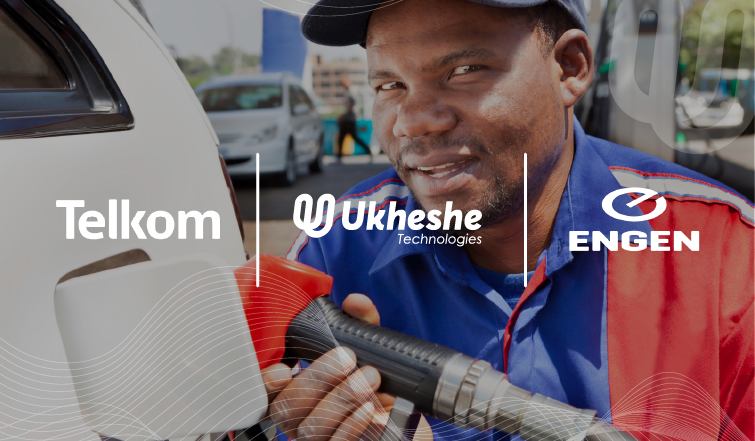
New technology often seems fantastic on paper yet has little impact in the life of the average person. A new tipping solution for fuel pump attendants, however, does both.
When asked to fill up a fuel tank as motorists do in the movies, few South Africans would know what to do beyond pulling their tank lever from inside the car. Fuel station attendants are as much a part of our culture as braais and ‘howzit’.
And yet, a BusinessTech poll of over 7000 respondents in 2018 showed that 37% of motorists don’t tip pump attendants.
Engen aims to change this with its new ‘Tip an Attendant’ function. Ukheshe technologies, Telkom and Engen have collaborated to create the QR solution which allows motorists to tip attendants and cashiers for efficient service by simply scanning a QR code using their Engen 1app or any payment app that supports Masterpass QR payments.
Real solutions for real people
When a petrol attendant’s QR code is scanned, and a tip is made it automatically is deposited into a Telkom Pay digital wallet. This digital wallet allows the attendant to either withdraw the money from Pick ‘n Pay, a CashExpress ATM or purchase airtime, data and other VAS services. They can also purchase goods at any merchant that supports QR code payments or any e-commerce store using a virtual card. The app utilises Eclipse, Ukheshe’s ready-to-use enablement platform.
Fuel pump attendants and Quickshop cashiers will be assigned a lanyard with a personal QR code. After registering for a Telkom Pay Wallet through WhatsApp, they can start receiving tips from customers paying on the Engen 1app.
“One reason for the poor tipping rates for pump attendants is that people often simply don’t have cash on hand to do so,” says Clayton Hayward, CEO of Ukheshe Technologies. “This solves that problem – for both the attendant who relies on a tip to supplement their income, and the mortified motorist who is digging around for cash in their car.”
According to wage data from Indeed and PayScale, petrol stations employ around 70,000 people across the country, with many pump attendants earning under R30 per hour. With many South Africans now favouring contactless payment methods due to the pandemic, attendants’ only means of increasing their income - through cash tips - is diminishing.
‘’We’re delighted to continue to build our relationship with Telkom and broaden the reach of the Eclipse API in a meaningful way.” Engen’s 1app offers a safer customer service experience, as there is no touching of devices, cards or cash required. You will also no longer need to carry cash or cards to make your fuel purchases, and loyalty points will automatically be registered with Engen’s respective loyalty partners, Clicks Clubcard and FNB eBucks,” says Seelan Naidoo, Engen’s General Manager: Retail.
Into the future
In June this year, Telkom also launched Africa’s first Mastercard virtual card for use on WhatsApp, again utilising Ukheshe’s Eclipse API. It enables Telkom Pay customers to make e-commerce payments without a physical card. Engen employees will also have access to this functionality, as well as the full range of Telkom Pay innovations.
The Engen and Telkom partnership, powered by Ukheshe, is just one step in our march towards the digital financial economy of the future – one that will empower millions of people, including those without bank accounts, to access the digital economy and transact online.
Engen’s vision is to extend the ‘Tip an Attendant’ solution outside the Engen environment, enabling its customers to use the Engen 1app to tip anyone that provides great service – whether a car guard or a waiter, says Naidoo.
Telkom Financial Services Managing Executive Sibusiso Ngwenya says the company is thrilled to be on board. “I believe it’s a sentiment we all share as South Africans - that great service deserves to be rewarded. We've seen many a story on social media about someone in the service industry going above and beyond. They deserve to have the favour returned, and now, there is an easier means to do so.”
Adds Hayward: “We are thrilled to assist Telkom and Engen in making such new, innovative products possible. As a leading fintech enablement partner, Ukheshe has always aims to create a more inclusive digital financial ecosystem and improve financial access – and this is just one of the ways we’re doing so.”
- 07:00 am

ING announced today to offer a compensation to our Dutch retail customers with certain revolving consumer loans where the variable interest rate did not sufficiently follow market rates. With this step, ING reacts to a number of rulings by the Dutch Institute for Financial Disputes (Kifid) regarding similar products at other banks.
We have investigated the relevance of these rulings for our floating-rate credit products in the Netherlands. This is expected to concern approximately 10% of the contracts for these products. The Dutch Consumers’ Association (Consumentenbond) has reacted positively on ING’s intention and is prepared to further discuss the execution and details of the scheme, which is expected to be completed before the end of 2022.
ING will book a provision of €180 million in its third quarter 2021 results for the compensation and costs of executing the scheme. More details on the compensation for our customers can be found on ING’s Dutch website www.ing.nl.
- 06:00 am

Recently, HambitPay, a crypo payment platform from Singapore, announced the launch of its global partnership program.
Unlike coinbase, binance, etc., which initially centered on exchange business and only later derived payment business, HambitPay has been focusing on the research and development of crypto payment technology since its establishment, capitalising Singapore's geographical advantages as an international financial center, and promoting a new payment ecosystem in Southeast Asia and the world beyond. The global partnership program launched this time is also a leap forward towards this goal.
Blockchain is an emerging industry that aggregates many tracks, and HambitPay choose to go all in on crypto payments for good reasons. A spokesperson of Hambitpay said that HambitPay values the huge market potential that is about to explode for crypto payments. According to the report "Digital Assets Primer: Only the first inning" released by Bank of America, the cryptocurrency and decentralised financial services industry has grown "too large to ignore." With a market capitalisation of $2 trillion and nearly 220 million users, the crypto sector alone is a spectacular size among digital assets. When we look at the digital asset market as a whole, the global digital asset management market is expected to reach $102.2 billion by 2026, according to a report by Indian market research firm Valuates Reports.
Hambitpay believes that digital payment has roughly gone through three stages of development:
1. Birth stage: With the development of the Internet, the first "online banking" payment initiated by traditional banks is the 1.0 stage of digital asset payment. People first need to have a bank account before they can open the corresponding online banking account. At the same time, in order to ensure the security of network assets, security hardware (such as network shields, etc.) is also required.
At this stage, online digital assets are linked to real assets in centralised financial institutions such as banks, and are characterised by slow transaction processing, small cross-platform transaction scope, the need to be linked to a bank account, and high fees.
2. Mobile payment stage: With the development of the mobile Internet, the payment 2.0 stage arrived with applications backed by a large user base, such as PayPal and Alipay. At this stage, people only need to have an application account, then they can make transactions and payments online, offline, and between different platforms.
The payment 2.0 stage is still under continuous development and improvement. People can not only conduct transactions in payment applications, but also through the API interface in various applications and mini programs.
Payment 2.0 has brought great convenience to people's lives, but with the development of the market and the changing needs of users, Payment 2.0 is also facing some problems.
- Due to the centralising trend of payment platforms, transaction and payment fees are increasing, which affects the free flow and further development of digital assets.
- Payment 2.0 is still based on real bank accounts for transactions, so in an environment where cross-border payment and fiat currency payment are of limited capacity, it still cannot meet the needs of global payment of today.
Payment 3.0: Payment 3.0 marks the future direction of the financial and payments sector. The problems that arose in 1.0 and 2.0 will be solved in Payment 3.0. The solution is to establish a decentralised, digital financial native, and global payment platform.
Platforms of Payments 3.0 must meet the need for security, equality, and globalisation of digital assets. While enabling fast payments, the platform must also have fees low enough to facilitate the inclusion of financially underdeveloped countries and meet the requirements of financial fairness.
From the perspective of digital assets globalisation and financial fairness, decentralised and fair crypto payments have become the prototype for the Payment 3.0. HambitPay has already completed its in-depth layout in terms of technology, products, resources, etc. in this arena.
The prospect which HambitPay brings to users in the era of Payment 3.0
A Higher Degree of Business Globalisation
The last wave of information globalisation, marked by the rise of the Internet, greatly contributed to the development of economic globalisation. The advent of a new era of digital economy, marked by the free flow of capital, is bound to bring about an even greater globalisation of commerce. Through crypto payment platforms such as HambitPay, merchants can receive orders and payments from customers anywhere anytime, expanding their business footprints to any corner of the globe.
Enterprise-Level Commercial Crypto Payment Solution
Unlike the previous peer-to-peer transfer method of cryptocurrencies, HambitPay provides users with an enterprise-level commercial crypto payment solution that supports the simultaneous processing of multiple transactions initiated by different users in different regions, ensuring a smooth transaction experience in just a few minutes. It systematically solves many of the problems previously faced by industries such as cross-border e-commerce, cross-border online gaming, and global social networking, such as long billing periods for cross-border transactions, cumbersome settlement processes, and volatile exchange rates.
Lower Payment Costs Compared to Traditional Methods
For businesses, traditional cross-border payment methods have an average rate of no less than 3%, which has a significant impact on their profits. Crypto payment platforms such as HambitPay, on the other hand, can significantly reduce rates, helping businesses to save on payment costs and secure a more flexible profit margin.
Financial Fairness
The decentralised blockchain technology is currently the best way to achieve financial fairness, and Hambitpay has always been committed to achieving this end. Through HambitPay, qualified individuals or merchants from anywhere in the world can conduct cross-border business activities and enjoy the financial equality and openness brought by crypto payments.
Emerging crypto payment platforms such as HambitPay may help the market make the leap from the early stages of payments to Payment 3.0, helping users to capture more business opportunities through advanced payment methods.








