
Published
- 01:00 am

The first US Bitcoin futures exchange-traded fund (ETF) launched yesterday.
Here’s how it works:
- ProShare filed its application for ProShares Bitcoin Strategy ETF (BITO) with the Securities Exchange Commission (SEC) in 2017.
- The ETF exposes investors to Bitcoin future contracts, which are agreements to buy or sell the asset later for an agreed upon price. BITO comprises Bitcoin futures that already trade on the Chicago Mercantile Exchange.
- By investing in BITO, users can gain indirect exposure to Bitcoin without actually owning the underlying assets.
The bigger picture: This is the first Bitcoin-linked ETF in the United States, but it most definitely won’t be the last.
- The SEC is reviewing more than a dozen crypto ETF applications, including one from Goldman Sachs.
- Robo-advisors and wealth managers are also increasingly interested in adding crypto investment options for their retail clients: Wealthfront added two crypto trusts to its investment options.
- Crypto ETFs would let them offer less risky investment options than buying specific cryptos—potentially giving ETF providers a large addressable market.
Bottom line: While doubtless a big milestone for the crypto industry, a futures ETF in the US might not be sufficient for many retail investors.
- Retail investors may be concerned about the accuracy of futures, which reportedly don’t always track the spot price of cryptos accurately, per CNBC. Many are therefore waiting for an ETF backed by Bitcoin itself.
- But that likely wouldn’t launch in the coming months—the future-based ETF was likely only approved because the laws governing futures provide stronger investor protections, per SEC Chair Gary Gensler.
- Companies seem to have taken note of this gap: Invesco, for example, pulled its application to issue a Bitcoin futures ETF and is now focusing on a directly backed digital ETF.

- 03:00 am

According to Central Bank of Brazil analysts, Brazilians have purchased more than $4B worth of cryptocurrencies so far in 2021 alone. It is expected that the number could reach as high as $8B in 2022. The purchases have not been the result of significant spiking activity, either. Each month since January, purchases have reached more than $350MM, though they reached more than $750MM in the month of May.
“Bruno Serra, Director of Monetary Policy of the Central Bank, noted that the interest in cryptocurrencies doesn’t seem as though it will fade anytime soon. That’s not an opinion unique to Brazil. Southeast Asia continues to see significant digitalization. Investors across the globe are using cryptocurrencies as a value store and a hedge against inflation. Others see cryptocurrencies as a close relation to the technologies behind central bank digital currencies,” explained Richard Gardner, CEO of Modulus, a US-based developer of ultra-high-performance trading and surveillance technology that powers global equities, derivatives, and digital asset exchanges.
The numbers are recorded as import/export statistics, meaning that cryptocurrencies are registered into the computation as an import or export, depending on the trade. That also means that the record is only of international sales, meaning that the real number is likely significantly higher.
“While the cost of energy makes Brazil a net importer in terms of cryptocurrencies, that has not discouraged involvement in the industry. People see what’s happening, and, even if they don’t technically understand all of the components, I believe that they understand that the technology behind Bitcoin and other cryptocurrencies is here to stay. They know when they see something transformative, and this is, most definitely, transformative,” said Gardner.
Modulus is known throughout the financial technology segment as a leader in the development of ultra-high frequency trading systems and blockchain technologies. Modulus has provided its exchange solution to some of the industry’s most profitable digital asset exchanges, including a well-known multi-billion-dollar cryptocurrency exchange. Over the past twenty years, the company has built technology for the world’s most notable institutions, with a client list which includes NASA, NASDAQ, Goldman Sachs, Merrill Lynch, JP Morgan Chase, Bank of America, Barclays, Siemens, Shell, Yahoo!, Microsoft, Cornell University, and the University of Chicago.
“People are watching what’s happening in the world. They see that the pandemic has spiked inflation. They’re watching supply chains falter. They’re watching China move quickly to develop and release the e-yuan. They know that being an early adopter is important. That’s why there is so much interest in cryptocurrencies right now, and I think that interest is going to sustain itself as we begin to see central banks publicly adopt similar technology when they launch their digital currencies," said Gardner.
- 01:00 am

Investment underpins CFC’s global insurance platform, cyber leadership and the significant growth potential of emerging risk insurance
Leading UK-based fintech CFC announced today a major investment joint-led by EQT and Vitruvian Partners, two of Europe’s leading private equity firms.
Founded in 1999, CFC was one of the pioneers in the cyber insurance market. Today, it is a technology-driven business that has established itself as a global leader in cyber and provider of cover for a diverse range of emerging risks that sit at the intersection of technology and business. CFC writes 50 products across 20 different classes of specialist insurance focused primarily on SME businesses.
Serving more than 100,000 businesses in over 90 countries, CFC’s proprietary global insurance platform delivers smarter, faster underwriting while using powerful data science and advanced threat intelligence to anticipate risk and protect clients.
The company has significantly grown its employee count over the past three years and has an established global footprint with more than 500 staff located across the UK, US, Europe and Australia. Earlier in the year CFC also launched its own Lloyd’s Syndicate.
CFC’s continued growth trajectory underlines the depth and quality of its business model: it has an annual premium run rate in excess of £750 million ($1 billion) and delivered an organic EBITDA CAGR of 35% over the last five years.
Upon completion, following regulatory approval, CFC will nearly double its employee shareholders from 175 to over 300. Employees will remain the largest shareholding block in CFC.
Dave Walsh, CFC founder and Group CEO, said: “We’re delighted to welcome EQT as an investor alongside Vitruvian. Both EQT and Vitruvian’s focus on high-growth technology companies and commitment to creating a positive impact through their portfolios is a natural fit with CFC and our ethos as an independent, employee-owned business. EQT’s investment, and Vitruvian’s reinvestment, is testament to CFC’s track record of delivering strong, profitable growth underpinned by the expertise of our people and our history of market-leading technology innovation.
“As we look ahead, we see a risk landscape that is rapidly shifting, with ever-expanding cyber threats, new insurance challenges presented by intangible assets and evolving risks in rapid growth sectors. CFC has a key role to play in helping our growing customer base address these challenges, while the pioneering technology we’ve built over the last two decades is enabling us to deliver at increasing scale. We look forward to partnering with EQT and thank Vitruvian for their continued partnership. It has never been a more exciting time to be at CFC.”
Robert Maclean, Partner at EQT, commented: “CFC is a truly innovative insurance business with technology at its core and a track record of growth and profitability which surpasses even the most mature fintech businesses we’ve seen. The accelerating pace of investment in its core platform aligns perfectly with EQT’s approach of future-proofing companies.”
Joe O’ Mara, Partner at Vitruvian, commented: “As longstanding partners and investors in CFC, we couldn’t be more enthusiastic about the road ahead. We’ve witnessed first-hand what a remarkable business CFC is - a tribute to the leadership team, the culture they’ve created and the commitment to excellence and innovation that has kept CFC at the forefront of the insurance market.”
Sofia Ahuja, Managing Director at EQT, added: “CFC’s unrivalled reputation in cyber insurance and focus on emerging risk areas ensures that it is well-placed to capture the significant growth expected in the classes it writes. We’re delighted to invest alongside Vitruvian at this exciting stage in CFC’s journey.”
Stephen Byrne, Partner at Vitruvian, added: “We would like to thank the whole CFC team for a great partnership over the last four years and we are excited to be able to continue to support their ambitions for the future.”
- 02:00 am

Minsait will enable banks in Europe and LATAM to quickly launch new digital banking services using Temenos open cloud banking platform
Minsait, an Indra company, one of the leading global technology and consulting companies, has joined forces with Temenos, the banking software company, to provide consulting services to banks wanting to modernize their technology infrastructure and take advantage of Temenos’ open cloud banking platform. Minsait will help banks implement and maintain Temenos’ solutions and provide business process outsourcing (BPO) including cloud operations, card processing and cyber security.
The collaboration will enable banks across Europe and Latin America to benefit from Minsait’s vast professional services capability to accelerate their journey to a modern cloud solution for core and digital banking. Minsait has more than 10,000 banking technology specialists and service centres in 40 locations. It also has four centers that provide payment method services in more than 15 countries and process more than 220 million cards worldwide.
Minsait has an ambitious training plan for professionals at the Minsait center of excellence in banking business, which will make it the largest center specialized in Temenos technology in Spain with a scope throughout Europe and Latin America.
With new regulations, new competition from fintechs and Big Tech as well as rising customer expectations, digital transformation has become an imperative for all banks. Temenos’ technology, built on open APIs, microservices architecture and DevOps principles, reduces the time, cost and risk of such transformations. Together with support from partners like Minsait, Temenos is enabling banks to both accelerate their digital transformation, scale faster and deliver ourtsanding customer experiences.
Borja Ochoa, Managing Director and Global Head of Financial Services, Minsait, said: “This agreement enables us to present ourselves to the market as a more global player, as we offer distinctive services combining a world-leading software solution and comprehensive service capabilities for the management of major banking technology transformation projects. We’ll undoubtedly reinforce our leadership in the digital transformation of banking in Europe and Latin America.”
Jean-Paul Mergeai, President – International Sales, Temenos, commented: “We’re proud to welcome Minsait to our growing Services Partner network. Minsait will further strengthen our implementation and support capability across Europe and Latin America. Temenos has a strong commitment and focus on customer success and together with patners like Minsait we can provide banks with the specialist local market expertise and resources they need to speed up implementations and reduce operational cost and risk.”
- 08:00 am

Square Marketing and Square Loyalty are the latest products to expand Square’s connected ecosystem in the UK
Square has announced two new tools in the UK to help businesses grow their sales and engage customers with just a few clicks. The two tools, Square Marketing and Square Loyalty, are now available as separate subscriptions for UK businesses of all types and sizes.
Square Marketing helps businesses reach customers at the right time and all in one place. The tool allows businesses to create, send, and track email marketing campaigns in minutes -- from one-time email blasts to personalised automations -- expanding customer reach and helping sellers gain key business insights with analytics.
Businesses can also now build a loyalty program in minutes with the launch of Square Loyalty. This new to market tool can help turn one-time visitors into regulars and increase repeat visits. It’s easy to set up a customised loyalty program that rewards customers both in-store and online.
“Square is helping its sellers bring more value to their customers by expanding the ecosystem of products and services in the UK,” said Saumil Mehta, General Manager of Customers and Square Point of Sale. “Sellers are increasingly turning to Square as the one-stop-shop to run every part of their business, from payments and online commerce to inventory, team management, loyalty programs and more. We’re excited to be helping them on the road to recovery with the addition of these new tools that help sellers retain and re-engage their customers.”
This double-product launch aims to further level the playing field for businesses of all types and sizes, as it provides all businesses with easy-to-use, powerful marketing tools that have typically only been used by big businesses. Along with Square products already available to UK sellers like Gift Cards, Square Marketing and Square Loyalty provide a whole suite of customer capability products that enable sellers to build the entire consumer lifecycle in one place.
“Square Marketing has helped us to streamline how we stay in touch with our clients,” said Jack Wicks, Founder of Wicks Barbershop. “As a barber, we’re always striving to increase our returning customer base. Using Square Marketing’s easy-to-use email builder and customer directory, we stayed top-of-mind by sending the latest news and offers to our client base. In particular, we love the automatic email campaign feature - which helps us communicate with our clients at the moments that matter most.”
Square Marketing key features:
- Drive buyer engagement & ROI - Square Marketing offers businesses a powerful tool to help grow their customer base, drive repeat visits, and increase buyer spend.
- Plan ahead, automate, and send - Businesses can schedule or immediately send emails to customers by leveraging Square Marketing’s automation capabilities, saving them time and effort.
- Measure campaign results - Real-time tracking is available in the Square Marketing Dashboard around active campaigns, open and click through rates, as well as attributable sales.
“Square Loyalty has made managing our loyalty programme a lot easier,” said Darren Richards, Founder of Montego Food Market. “As it works both in-store and online, our customers never miss a chance to earn and redeem points - this really helps us to drive repeat business to the store.”
Square Loyalty key features:
- Enable omnichannel selling - Square Loyalty allows businesses to reward customers wherever they choose to purchase, whether that’s in-store or online.
- Drive visits and sales - Businesses can encourage repeat customers through the implementation of a loyalty program.
- Fully integrated -Square Loyalty is built into businesses point-of-sale and website with no extra devices, logins, or paper punch cards needed.
“It’s been a challenging couple of years for businesses and it’s more important than ever for sellers to stand out from competitors and see the impact on their business,” said Lizzie Barclay, Head of UK Marketing at Square. “We’ve seen the demand for tools like Square Loyalty and Square Marketing build up for a while and we’re delighted to be launching them into such an innovative and savvy market.”
To find out more about Square Marketing businesses can visit https://squareup.com/gb/en/software/marketing and for Square Loyalty https://squareup.com/gb/en/software/loyalty
- 06:00 am

Older generations are more perceptive to new financial technology following the pandemic.
Over two thirds (65%) of over 65s are open to using new financial services or payment methods that make it quicker and more convenient for them.
Some 47% of over 65s say their expectations of better payment experiences is a result of doing more online shopping during lockdown restrictions.
These so-called ‘boomers’ are often labelled as technology-shy, but new research from payments-as-a-service platform Modulr shows fintechs who overlook them are missing a trick - in many ways they are their ideal target customers.
Nearly three-quarters (74%) of over 65s say they use bank transfer and payment apps to make instant payments to friends and family. Only marginally behind 25 to 44 year olds, 87% of whom use this payment method.
Some 93% of over 65s say they now use contactless payments in stores with debit and credit cards.
One in five over 65s expects Britain to be a cashless society in 5 years. With 71% withdrawing much less cash now than they did a year ago.
Confirming it is not just those over 65 who are perceptive to new payment methods, 60% of 45 to 64 year olds said they often have no cash on them while out or at home.
In fact, the majority of all those surveyed said there’s no excuse for any brand not to offer the same kind of instant services they enjoy in other areas of their life, as slickly delivered by the Ubers and Amazons of the world.
Customers of all ages now expect instant payments, instant receipts and super-easy processes. Yet only a third of those surveyed see any type of online service provider fully meeting their expectations when it comes to payments - the factor that makes or breaks customer experience.
This comes from the October 2021 research, The Digital Now: Meeting your customers’ payments expectations which asked thousands of consumers what they liked, disliked and expected of the best payment experiences in the market.
The industry reacts:
Vishaal Vadher, Payments at Revolut commented, “The pandemic has accelerated the adoption of behaviours that were already gaining traction. The fact is that customers’ behaviour isn’t changing, it’s already changed. The digital consumer is already here and we’re not just talking about millennials & Gen Z. Modulr’s research proves that a truly digital financial experience is not just a trend for the future, but a requirement for survival now.“
Jill Docherty, Head of Business Development, UK&I at Visa commented, “We’ve all seen many aspects of our lives transform as a result of the pandemic; from how we work, to how we interact, and of course, how we choose to shop and pay.
“At Visa, we believe an understanding of what motivates, inspires and drives consumer choices in this new environment will be key to how businesses can create experiences that really resonate with their customers, no matter the demographic.”
Janine Hirt, CEO of Innovate Finance, said, "One of the many unique strengths of FinTech companies is that they use the latest technology and processes to deliver excellent customer experiences. However, this research shows that many people still find paying for things online a source of frustration - that is a critical challenge to the FinTech industry, which it needs to solve.
"Given the speed of innovation in payments, there is a risk of excluding those who are not as confident with digital transactions. Part of the solution must be FinTechs continuously improving their consumer-facing processes, so that they are clear, easy to use for all ages, and foster trust."
Myles Stephenson, Founder & CEO of Modulr comments on the findings, ““This is a big opportunity for fintechs. To grasp it fully they need to know where to focus their energy. On the surface, this means providing the best digital experience, but they need to make sure their payments plumbing can support their ambitions. Only those FinTechs that create - and brands that adopt - an instant, convenient and trusted customer experience will succeed in the instant economy.”
- 04:00 am

Bank joins Wavecrest Growth Partners, BNY Mellon, Citi Ventures, PostePay (Poste Italiane) and Visa Inc. as investors to fund continued growth and expansion
Volante Technologies, the global leader in cloud payments and financial messaging, today announced it received USD 10M in growth funding from Wells Fargo Strategic Capital, bringing the total institutional investment to date to USD 45M. With this investment, the bank’s growth capital unit joins a number of global institutional and strategic investors who committed to the previous capital raise led by Wavecrest Growth Partners in August 2020.
2020 was a banner year for Volante with the company doubling its net new logo signings from the previous year and closing 50 sales transactions with marquee customers including multinational banks, global asset managers, stock exchanges and payment networks. These successes led to numerous award wins this year alone, including topping the IBSI Sales League Table 2021 for Wholesale Payments.
At a key inflection point, the company is now looking to further modernize the payments industry and bring the benefits of its technology to a wider range of participants, helping them evolve past their legacy limitations. As part of this mission, it will deepen collaboration with existing clients, and further increase the breadth of its ecosystem partnerships.
“While innovation has accelerated in customer-facing fintech applications, legacy core payments infrastructure has been slower to adopt new technologies due to its complex messaging standards and mission-critical environments,” said Basil Darwish, managing director for Wells Fargo Strategic Capital. “Volante solved such challenges by offering a modern cloud-native payments platform that minimizes the complexity while accelerating its customers’ payments modernization efforts. We are excited to invest in Volante and join the next phase of its development.”
Recently, Wells Fargo initiated a strategic payments modernization effort by migrating to the ISO 20022 financial messaging standard across its global payments operations, for which it selected Volante for ISO 20022 Migration and Modernization.
“We are excited to continue our partnership with Volante with this investment and we look forward to seeing how Volante will continue to innovate and advance their payment capabilities,” said Jason Christensen, head of payments and treasury technology, Wells Fargo.
Volante has always had big aspirations. The company pioneered real-time payments in the U.S. and cloud technology in financial services. It also has an extensive track record of innovation in digital transformation. In fact, Volante was offering a ‘low code’ and ‘no code’ platform long before they were industry buzzwords, an approach which it will further develop with its strategic investors, including Wells Fargo.
“We’re setting a high bar for excellence – one that improves and elevates the entire industry,” said Vijay Oddiraju, CEO, Volante Technologies. “If banks can launch payment products in months versus years, then that’s a win for everyone. Beyond digital banks and financial institutions, we also want to bring the value of our solutions directly to business and consumer brands.”
“But it’s about more than innovation and automation,” he continued. “As a global citizen, I’m also driven by the ethical imperatives of an industry that manages finances in an age of great global inequality. It’s my concern for the next generation that leads me to believe that our products need to help end users achieve a better life. As a customer and an investor, Wells Fargo will further help us on this journey.”
Vaibhav Nalwaya, Managing Partner, Wavecrest Growth Partners, said, “Volante has cemented itself as the cloud payments operating system. Tier one banks, regional banks, and credit unions can forget about their multi-year transformation journeys. With Volante, they can update their connectivity to a new payments rail or comply with a new standard delivered over the cloud in a manner similar to how consumers update apps on their phones. Wavecrest is proud to support the Volante journey alongside an ensemble cast of strategic investors."
For further thoughts on how the payments industry must rise to the challenges of our post-COVID world, read Vijay Oddiraju’s latest blog post.
- 06:00 am

Technologies and solutions to make cloud smarter, greener and more inclusive
Alibaba Cloud, the digital technology and intelligence backbone of Alibaba Group, today unveiled at the Apsara Conference 2021 its plan to set up two new data centres in Korea and Thailand to assist local enterprises in their digital innovation journey, in addition to unveiling a slew of products and solutions.
Continuous commitment in Asia-Pacific
As APAC’s leading cloud service provider, Alibaba Cloud further expands its footprint by announcing plans to set up data centres in Korea and Thailand in 2022. The data centres will serve as intelligence backbones to support the nations’ digital economies, and businesses on their journey to transform and innovate. Local businesses in Korea of all sizes will be able to deploy mission-critical workloads while enjoying more reliable and secure cloud services with lower latency. While for Thailand, the data centre will offer products and solutions that are in line with Thailand 4.0 - the Thai government’s 20-year strategy to promote digital innovation and the development of sustainable technologies.
“As one of the world’s top three cloud service providers, we are committed to bringing our world-class, hyper-scale cloud infrastructure to Korea and Thailand, so that we can support local businesses to be at the forefront of digital transformation,” said Selina Yuan, General Manager of International Business, Alibaba Cloud Intelligence. “With our business insight serving global customers in multiple key industries from retail to finance, logistics and manufacturing, we believe we can support local customers in Korea and Thailand to meet their digitalisation needs from both a technology and services perspective.”
To complement its infrastructure investment, Alibaba Cloud has also unveiled technologies, products and solutions to make public cloud more accessible to enterprises and developers, by enhancing its security, availability and improving its adaptability in both cloud native and on-premise environments.
Smarter and secure platform to support hybrid workload
In order to support customers' ever growing computational needs in the cloud, Alibaba Cloud unveiled its fourth generation of ApsaraCompute Shenlong Architecture that carries leading capabilities in terms of container elasticity, storage, Input and output (IO) performance, latency and chip-level security hardening features.
The self-developed Shenlong architecture is upgraded to support data intensive applications, with storage Input/output Operations Per Second (IOPS) increased by 300% to 3 Million IOPS, network Packets Per Second (PPS) increased by more than 100% to 50 Million PPS, while the storage and network IO latencies are decreased to as low as 30 and 16 microseconds, respectively.
In the 4th generation Shenlong architecture, Alibaba Cloud also unveiled the industry’s only large-scale Remote Direct Memory Access (RDMA) networking capability with a latency as low as 5 microseconds, to further accelerate data intensive applications on the cloud. For example, the updated Shenlong architecture with RDMA can increase the computing performance in data-intensive AI and big data spark scenarios by 30% compared to the mainstream performance of the Transmission Control Protocol (TCP) network on the cloud.
To support enterprises’ hybrid cloud needs, Alibaba Cloud has launched a new database platform DBStack (based on Kubernetes) that can bring cloud native database systems to enterprises' on-premise environments. With DBStack, businesses that are not ready to migrate fully onto public cloud can still enjoy the benefits of public cloud securely and conveniently in their on-premise environment, bolstering the digitalisation process for finance, transportation, and the telco industries.
Alibaba Cloud has also upgraded its PolarDB to showcase the leading cloud native database that marks three levels of separation, with further decoupling of memory and CPU cores. The three independent layers can be scaled up or down independently with increased elasticity and better availability and scalability.
A greener cloud for businesses and more opensource for developers
Alibaba Cloud has launched a new energy-saving solution for corporate customers that enhances their energy consumption management and carbon footprint reduction. By leveraging Alibaba Cloud’s data analytics and machine learning technology, the solution offers tools to help customers track carbon emissions, analyse energy consumption, predict electricity generation from new energy sources, and receive recommendations for carbon emission reduction plans and related trading mechanisms.
To continue encouraging collaboration, Alibaba Cloud has open-sourced PolarDB-X (a MySQL-native distributed database) and AI products including DeepRec and Proxima, for developers to benefit from building cloud native, distributed databases and AI-powered searching and advertising services.
Besides open source key codes, Alibaba Cloud has also launched Alibaba AI, an integrated digital intelligence and AI platform that provides an out-of-the-box setting for enterprises to manage their intelligent assets in a simple, secure and efficient way.The one-stop cloud native system offers a series of AI and digital products, ranging from intelligence production, storage, analysis, and development to management, to help businesses capture and capitalise on new growth opportunities presented by digital transformation.
Propelled by Alibaba Cloud’s computing and AI power, companies including those in fashion design, medical research and media are already using the platform to unleash the potential of their digital intelligence.
- 09:00 am
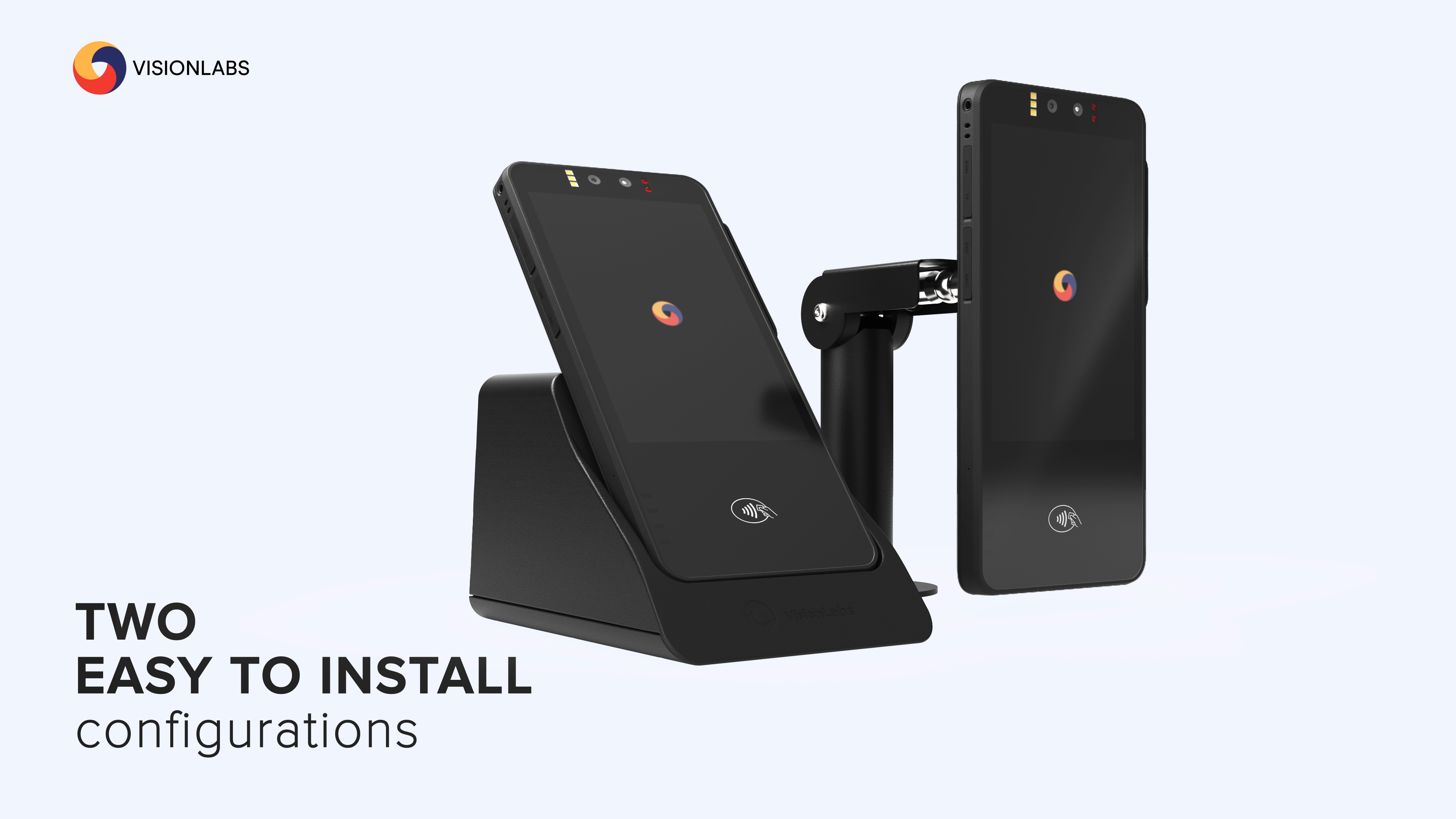
LUNA POS Terminal is the world’s first payment solution to offer both contactless facial recognition payments and traditional card payments to consumers
VisionLabs, the world’s leading facial recognition company, today announced the launch of its pioneering biometric payment hardware — the VisionLabs LUNA POS Terminal. The certified terminal is the first payment device to enable both traditional credit card payments and biometric facial recognition payments in one. With six design and three utility patents filed, the device is set to radically disrupt everyday biometric payments. VisionLabs’ state-of-the-art facial recognition software is already used in more than 60 countries by enterprises across banking and finance, retail, transport and a wide range of other sectors.
A Complete Biometric Payment Solution
The VisionLabs LUNA POS Terminal is the first payment terminal to support both traditional payment methods whilst also facilitating transaction authorization via biometric facial recognition. It offers the hardware, supported by VisionLabs’ AI-driven facial recognition algorithm, to empower banks and merchants to offer their customers the world’s first complete, contactless solution. For consumers, the LUNA POS Terminal offers a better, safer digital transaction experience.
“We introduced our first generation of LUNA POS with no credit card support in 2019 to simply try out the face-based payment process. It quickly turned out that the adoption rate of this technology exceeded our expectations: we have recorded a conversion rate upwards of 40% to face payments among different types of major national banks and retailers”, said Anton Nazarkin, Global Business Development Director at VisionLabs.
“With the LUNA POS, we pushed ourselves to the limit in designing a unit that not only meets our strict requirements as a best-in-class facial recognition solutions vendor but also implements the highest security standards that exist in the payments industry”.
Technology For The Times
The creation of the terminal comes as a direct response to the COVID-19 pandemic, which has radically accelerated the shift to biometric contactless payment methods. While some banks are already using smartphone-supported facial recognition to authenticate online payments, this is not enough to satisfy consumers’ growing demand for safer and more secure ways to pay, contact-free. This appetite will see the number of users securing payments via software-based facial recognition exceed 1.4 billion globally by 2025 compared to just 671 million in 2020. Beyond this, facial recognition payments offer consumers a quick, convenient and more secure alternative to traditional card payments.
The LUNA POS Terminal offers merchants and banks a complete contactless solution. For customers, this means a seamless way to pay using biometrics, though they can still opt for traditional payment methods — chip cards, magnet stripe, standard contactless payment, and Near Field Communication (NFC) — should they wish to.
How It Works
The terminal scans the customer’s face, similar to using facial recognition to unlock a smartphone.
The terminal does not save facial data and will never capture any faces without consent from the customer and authorisation from the terminal operator.
Milliseconds later, the face template is sent to the payment service provider or bank for identification.
VisionLab’s world class algorithm identifies whether the customer is who they say they are, determining transaction success or failure
The LUNA POS Terminal is vendor agnostic, portable, and available to a range of sectors via their chosen systems integrator, making it suitable for a vast range of applications including restaurants, banking centers, delivery couriers, gas stations, sports venues, airport lounges, and much more.
- 05:00 am

Softing Industrial introduces smartLink SW-HT – a HART multiplexer software for accessing configuration and diagnostic data via Emerson's AMS Device Manager or other HART IP-enabled plant asset management applications. Version 1.10 supports Allen-Bradley controllers and remote I/Os in addition to Schneider Electric M580 controllers and drop I/Os.
An increasing number of modern remote IOs are using Ethernet as the connection to the controller.
smartLink SW-HT addresses this trend by providing an Ethernet connection to tunnel the HART commands to the remote IOs. smartLink SW-HT provides access from Emerson's AMS Device Manager to HART field devices connected to Allen-Bradley or Schneider Electric M580 controller HART IO modules or remote I/Os.
An integrated HART IP server ensures transparent access to configuration and diagnostic data. Users save time and costs as they do not need additional HART multiplexer hardware. The product comes as a Docker
container and is deployed with additional virtual machines, making it easy to use under Windows.
smartLink SW-HT scans all configured HART modules for the connected HART devices and maintains a live
list of the devices. This eliminates the need to scan the entire AMS Device Manager device tree when a new HART device is added. The application converts the incoming HART IP commands into the Ethernet-base communication used by the Allen-Bradley and Schneider Electric HART modules. Optimized scheduling of
the commands is performed to achieve the optimal communication performance.
To access just one HART device, the smartLink SW-HT software can be downloaded free of charge. The costs for additional licenses are scalable and depend on the number of HART devices to be connected.
More Information is available on the Product Page.








