
Published

Amal Ahmed
Director at Signifyd
Global expansion is the way forward for businesses looking to upscale in 2023 and beyond. see more

Galit Shani-Michel
VP of Payments at Forter
Customers expect their entire purchase journey to be seamless, smooth and feel part of a coherent, cohesive whole. see more
- 02:00 am

Fils, a groundbreaking fintech platform, has launched today to help global businesses turn intent into action when integrating sustainable values into the core of digital payments. The new innovation paves the way for trust and safety in carbon markets, bringing together buyers with capital, and suppliers with high-integrity carbon credits, at the rate and scale required to rebalance the planet.
Designed as a holistic, enterprise-grade B2B2C product offering, Fils leverages the power of leading technologies for its end-to-end infrastructure to transform various industries, including financial services, hospitality, and e-commerce. This makes it easier for businesses to act on the core values of Environmental, Social, and corporate Governance (ESG).
With major partnerships with some of the leading names in the industry, soon to be announced – the company has been founded by Nameer Khan, a respected future fintech leader who has been recognised by his peers for his outstanding contributions to industry-wide growth and collaboration. He is also Chairman of the MENA Fintech Association (MFTA).
Fils’ unique pillars of technology are poised to transform the world of ESG, through an API-first digital payment infrastructure that makes sustainability a lifestyle and can be easily embedded into platforms across sectors.
The launch of Fils comes ahead of COP28, further reinforcing the need to act now. The global climate crisis is a pressing issue that can no longer be ignored; however, many companies fail to incorporate climate action into their core operations and transactions. ESG values are here to stay, thanks to consumer and investor demand for greater transparency and social responsibility from businesses.
Companies across all industries are increasingly looking to align their ambitions with ESG principles and pursue opportunities that offer long-term societal benefits and business growth.
In a bold stride towards sustainable business practices, Fils aims to address ESG implementation challenges head-on, making it easier for businesses to play a vital role in driving a more sustainable future - one that is not only climate-neutral but also one that supports the most vulnerable in society - the financially excluded and those most impacted by global disasters.
Commenting on the launch of his new company, Nameer Khan said. “Fils is a catalyst for the evolution of ESG enforcement and has the right team, technology, experience and expertise to lead the market. With our robust infrastructure, it spells the end of greenwashing and clears a path towards greater accountability and implementation of actionable outcomes that can improve the sustainability of the world we live in.”
By taking a technology-first approach to sustainable action, Fils has created a game-changing digital ecosystem connecting payment infrastructure, organisations, impact makers and consumers. It is a best-of-breed fintech that enables organisations to increase the scalability of their sustainability practices and provides projects across 17 United Nations Sustainable Development Groups (UN SDGS) with the ability to receive digital payments faster, easier, more securely, and with greater transparency.
- 01:00 am
TotalEnergies has implemented nexo standards specifications in all new payment acceptance systems to harmonize its global payment infrastructure and benefit from cost and management efficiencies long-term. The initiative has significantly reduced time to market for TotalEnergies’ payments innovations, such as its new POI terminals, enabling the easy deployment of new payments technology into target markets.
nexo standards simplify payments acceptance solutions by creating a common, global language that standardizes the exchange of data between players within this ecosystem. This removes decades of regional industry fragmentation and simplifies solution interoperability, reducing complexity, costs and time to market when implementing and managing acceptance systems.
Working with leading payment solution providers Castles Technology and Aevi, TotalEnergies aligned its payment acceptance infrastructure to nexo standards across its entire international payments operation to consolidate and modernize how it accepts payments. This has streamlined all its payment acceptance processes into one, which offers a consistent approach that also meets the needs of each domestic market.
François Mezzina, Payments Specialist at TotalEnergies, comments: “We see clear advantages in using nexo standards for the deployment of new payment solutions, such as interoperability, cross-border payments, simplification of local certifications and acceleration of time-to-market. All of which will benefit customers and operators of the various networks of TotalEnergies.”
TotalEnergies has now rolled out approximately 7,000 nexo-compliant android devices across Europe.
“We are delighted to be part of this remarkable achievement and integration in our nexo-compliant android devices,” adds Jean-Philippe Niedergang, CCO & EMEA CEO at Castles Technology. “Our devices show appealing interface with nexo protocols and, as the market demand grows for multi-country and international acceptance solutions, we’re actively working to implement nexo specifications and protocols in all of our payment devices. We are happy to be part of the growing success of nexo standards.”
Mike Camerling, CEO at Aevi, concludes: “We are pleased to support TotalEnergies with our holistic payments system, utilizing nexo standards to provide the global multi-energy company with advanced capabilities and efficiencies in cross-border payments. Integrating nexo standards with Aevi’s cloud-based payment orchestration platform has enabled the development of an agnostic, multi-modal and omnichannel acceptance and services platform for a worldwide market.”
- 01:00 am
Wolters Kluwer, the Dutch software firm with a leading financial technology arm, has achieved top honors in two solution areas in this year’s hotly contested Chartis RiskTech100® rankings. The company also increased its Overall Score—moving from 69.3% in last year’s report to 69.49% this year—also raising its scores across the Core Technology, Customer Satisfaction, Market Presence and Innovation categories.
The company has been named a Category Leader in Regulatory Intelligence for a third consecutive time and, for the second year running, has earned a Category Leader status for its capabilities in Long-Duration Targeted Improvements (LDTI). This comprehensive and independent study of the world’s leading risk and compliance technology companies is compiled by Chartis Research, part of Infopro Digital, publishers of Risk.net and Waters Technology.
“For almost 20 years, the RiskTech100 has been a lens through which we can examine the risk technology landscape and ecosystem,” said Sidhartha Dash, Chief Researcher at Chartis Research.
“Wolters Kluwer’s overall ranking and category leader wins, built on the foundation of an effective technology development strategy, reflects its continued achievements in delivering high value to customers, helping them manage financial risk and meet regulatory obligations.”
“These latest honors follow on category wins achieved by Wolters Kluwer for its Enterprise GRC capabilities, along with its Operational Risk, Conduct Risk and Control solutions as previously announced by Chartis,” Wolters Kluwer said in a statement
- 09:00 am

Moneyhub, a top 100 global fintech start-up built on the principles of Open Banking and Open Finance, is pleased to announce the appointment of Nick Middleton as a Strategic Account Director within its Partnerships division.
Nick brings a wealth of experience in Payments and Open Banking Strategy having delivered major transformation projects including industry leading payments infrastructure.
Nick has worked on change programmes for a number of major financial institutions including Lloyds, Nationwide, TSB and Virgin Money.
He was most recently Account Director at payment technology platform, Form 3, where he led the company’s growth in the UK market and was responsible for business development and the account management of its largest banking customers.
At Moneyhub, he will be responsible for working with the current team to drive the growth of several of Moneyhub’s strategic accounts and partnerships.
Commenting on the appointment Vaughan Jenkins, Managing Director, Strategic Accounts and Partnerships, said: “I’m delighted to welcome Nick to the Moneyhub team. His stellar track record within payments and the banking industry will be instrumental when it comes to supporting and growing our relationships with some of our strategic clients to deliver business and customer value.”
Nick Middleton, Strategic Account Director for Partnerships, Moneyhub, said: “Moneyhub is at an exciting stage in its progress, and the financial services market sees the value of the data and insights that the business has built over the last 10 years. Moneyhub’s ability to support businesses to engage in hyper personalised interactions with their customers, , is industry leading. Alongside Moneyhub’s exemplary capabilities, the passion and expertise within the team was a huge attraction to me. I look forward to being a part of the next stage of the growth story as we enter a new era of Smart Data opportunities.”
- 08:00 am
Mashreq, a leading financial institution in the MENA region, in partnership with Visa and ecolytiq, is announcing the roll out of its new climate banking platform to its nearly one million customers – a first of its kind product in both the UAE and in the MENA region overall.
Mashreq customers will receive access to a host of value-added features that will help them take control of their personal environmental impact. The climate banking platform overlays carbon emissions calculations seamlessly onto transaction data, giving customers more transparency on their spending. With advanced carbon footprint analytics, the platform then personalizes climate insights to customers to educate and encourage climate action. These products are designed to promote climate-positive behaviors while delivering tangible impact for Mashreq customers.
The Eco Benefits Bundle, which launched by Visa and ecolytiq in the UAE earlier this year, combines the payments capabilities of Visa with the sustainability expertise of ecolytiq to help financial institutions address the growing demand from banking customers. Mashreq marks the first implementation of the -environmental solution in the region.
This collaboration is another step in Mashreq’s ambitious climate commitment, one that strives to offer customers climate-focused products, helping them reach their own sustainability goals and contribute to the environment. The launch comes at a pivotal moment for sustainability in the region, as Dubai hosts the global climate conference, known as COP 28, of which Mashreq is an official sponsor. This comes off the heels of a summer of scorching heat across the globe, with July 2023 having been the hottest month on record to date.
Fernando Morillo, Group Head of Retail Banking at Mashreq, stated: “As a bank, we believe we can make the biggest difference through our ability to direct capital flows and provide our clients with solutions that go beyond the realm of financing. To this end, we recognise the role we must play in facilitating the transition to a low carbon society and we are committed to opening up new opportunities for our clients to access solutions that support them on their own transition journeys. He added, “Introducing features that increase visibility over carbon emissions information for our clients is a step in the right direction that increases climate awareness and aligns with our ambitions to accelerate positive environmental impact, underscoring Mashreq’s unwavering commitment to driving sustainability and cementing our position as a sustainability trailblazer in MENA. This collaboration represents another endeavor within Mashreq’s Climb2Change initiative, which showcases the bank's commitment to sustainability through a variety of ESG initiatives and reinforces its proactive approach to creating a positive impact on the environment and society.”
Dr. Saeeda Jaffar, SVP and Group Country Manager for GCC, Visa. said: "By providing consumers with insights into the environmental impact of their purchases, we believe we can drive a significant shift in behavior towards more sustainable choices. This new platform also directly supports the UAE government's green agenda, contributing to the country's broader sustainability goals. This launch, coinciding with the upcoming COP28, underscores the urgency and global focus on addressing climate change, and we are proud to partner with Mashreq Bank and ecolytiq on this important initiative."
David Lais, ecolytiq Co-founder and Managing Director highlighted the significance of the announcement, adding: “The fuel for the sustainability transformation is education. Empowering customers with sustainability knowledge is a cornerstone solution to address the climate crisis. Mashreq knows this well and we’re excited to help them lead in sustainable banking in this new market. This is sure to send signals that the time to act is now.”
- 07:00 am

HPS, the leading global provider of payment solutions and services, today announces it has been awarded a top three placement in the latest global vendor guide by Datos Insights.
The “2023 Datos Insights Vendor Guide: Global Debit Card Providers” evaluates 14 of the world’s biggest providers, focusing on the following four components: provider stability, client strength, product features, and client services. Client interviews and analyses of the provider platforms also contribute to the final ratings.
As well as being named Leading Contender, HPS achieved the highest score (93%) in the product features category, with the report giving credit to the robust capabilities of HPS’ PowerCARD platform and its ability to support various payment product types.
The report also outlines HPS’ overall key strengths as a global payments provider. These include HPS’ cloud-native solutions, its white-label online banking and mobile apps, and its offering of multiple payments-related services to support all major client needs for card issuing and payments.
David Shipper, Strategic Advisor, Datos Insights, comments: “The PowerCARD platform from HPS checks many important boxes for card issuers. The company achieved a Top 3 placement in our Debit Card Vendor Guide evaluation and is a strong competitor in the card issuing and processing space.”
Abdeslam Alaoui Smaili, CEO of HPS, comments: “We are so proud of our performance in this year’s vendor guide. The report not only showcases the extensive and growing capabilities of our PowerCARD solutions, but the importance we place on building strong relationships with our customers. This is demonstrated by the positive feedback cited in the report which praises our regional customer support, our responsiveness and our ability to support customers with their unique and individual needs.”
- 02:00 am

Ahead of the Black Friday sales and Christmas, 16 million people in the UK are still unaware you can get into debt using ‘Buy Now Pay Later’ (BNPL) services*, according to research from responsible lender, Creditspring.
A third of people (31%) still don’t think that BNPL purchases can lead to debt, however, this jumps to over half (51%) for those aged 18-24 who are a third more likely to use BNPL than the UK average.
Almost one in three (29%) of people remain unaware that BNPL is a form of borrowing, similar to using a credit card. Again, this is significantly higher for younger people, with four in ten (39%) 18-24s not unaware of the risks.
Recent figures from Adobe suggest that £3.7bn will be spent via BNPL throughout November and December (with total BNPL spend across 2023 exceeding £17bn). Research ahead of Black Friday last year suggested that BNPL was the third most popular payment option – ahead of cash**.
Recent research from TSB revealed that over four in ten (42%) of people plan to make purchases over Black Friday – with over half (56%) of those spending set to use a credit product. The research also shows BNPL spending spiked over this period last year, with Black Friday spend 77% than the 2022 average.
However, it is concerning that awareness of the risks of BNPL remains low across the board:
- Half (50%) of younger people also did not know that BNPL providers can add extra costs or late fees if payments are missed – compared to a UK average of 41%.
- Nearly half (46%) of all people were still unaware that they could be referred to a debt collector for missing a BNPL payment.
- Just 44% of people using BNPL were able to repay loans without issue with one in ten (9%) admitting that it pushed them into debt.
This misunderstanding is ultimately hurting borrowers – less than a quarter (23%) of BNPL users say they feel in control of their spending and a fifth (18%) have had to use savings to pay off debts such as BNPL purchases.
With continued delays around the regulation of BNPL, shoppers are at increased risk due to a lack of understanding on BNPL products and a lack of transparency from providers. With BNPL payments set to spike during this busy retail period, lenders need to ensure they are protecting borrowers by ensuring that they fully understand the credit agreements they are entering and the risks from missed repayments.
Neil Kadagathur, CEO of leading subscription finance company, Creditspring, comments: “It’s hugely concerning that shoppers remain unaware of the risks of relying on BNPL for their purchases ahead of Black Friday. After a couple of years of rising costs, savings pots have been wiped out and household finances have been stretched to breaking point and with Black Friday landing before most people’s payday this month, many view BNPL as a crutch until payday without being fully aware of the risks of doing so.
“If used correctly, BNPL offers flexibility to UK shoppers - however, lenders don’t communicate the risks of entering these agreements clearly enough and there is a worrying lack of transparency in the total costs that shoppers face or the impact of not paying. As we’re entering one of the most expensive periods of the year, credit plays a vital role in household spending – however, borrowers need simple, transparent and accessible products that don’t put their long-term financial security at risk. Ultimately, the onus has to be on lenders to ensure that borrowers understand the risks and support them before they rack up huge debt piles.
“Given it’s so easy to unwittingly enter a risky BNPL agreement, there will be many people who quickly end up with multiple monthly repayments after making several BNPL purchases. These regular users are the people most likely to face late fees and eventually large and unaffordable debts – as well as having a knock-on effect on their credit scores which impacts their future borrowing options. Regulation of this sector can’t come soon enough yet it doesn’t seem on the horizon anytime soon – as a first step, borrowers urgently need lenders to improve their communication and be much more transparent around the inherent risks of using credit products such as BNPL.”
Creditspring provides a new way to access credit safely. FCA-regulated, it is a credit subscription service that offers affordable, responsible credit to borrowers. Members pay a fixed membership fee every month to allow them to access two no-interest loans per year with clear repayment terms, capped costs and no hidden charges, late fees or confusing interest rates.
- 03:00 am
The future of Philippine fintechs, which have basic characteristics centered around innovation and sustainability, will be driven in major part by investments that value environmental, social and governance (ESG) principles, analysis from consumer finance company Digido revealed.
The global sustainability technology (SusTech) industry, characterized to have a key role in achieving ESG goals, has so far attracted about USD 400 billion in investments, with main growth occurring from 2014 to 2022, according to Tracxn. Of this USD 400 billion, about USD 8.8 billion has been used to finance the fintech microfinance sector, an integral part of sustainable development. At the same time, according to disclosed data, only USD 4 million was invested in 169 SusTech companies in the Philippines — indicative of opportunities to accrue more investments.
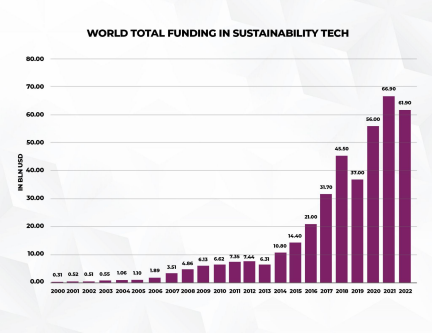
Possible measures for ESG-bent investments to become the mainstream driver of fintech development in the country include the development of recommendations for integrating ESG indicators into the investment decision-making process and increasing investor literacy and awareness regarding ESG investing, for example, through information campaigns and corporate training.
Digido views these measures to further promote sustainable and responsible investment practices in the Philippines, thereby multiplying investments through funding rounds. Companies that integrate ESG into their operations can expect more support from investors and consumers.
Moreover, they can play an important and tangible role in the sustainable development of the economy and the fight against climate change, as they expand their influence beyond business interests.
Growth of Philippines’ sustainability technology segment holding steady with SEA peers The growth of the Philippines’ SusTech segment is expected to hold steady with its peers in Southeast Asia.

Digido observes that the 216 SusTech companies in the Philippines (as of 2022) account for 10.1% of those in Southeast Asia, coming in joint fourth place with Thailand, after Singapore,
Indonesia, and Malaysia.1 The share of Philippine SusTech companies in SEA will maintain its pace for the foreseeable future, landing between 10 to 11%.
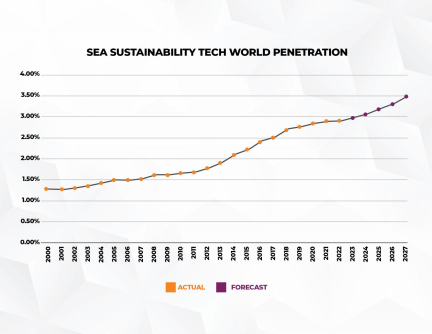
Comparing regional dynamics with global trends, SusTech companies in Southeast Asia are anticipated to grow at a faster pace.








