
Published
- 02:00 am

Worldline, a global leader in payment services, announces it has been granted Payment Institution Authorisation by the Financial Conduct Authority (FCA). The licensing confirms Worldline’s ambitions to further reinforce its presence in the UK and enhance its offerings for both local and international merchants operating across the country.
After decades of servicing both UK-based companies and large international merchants’ UK operations with acquiring, acceptance and other complementary solutions, Worldline has seized the opportunity to further strengthen its position in the country.
Worldline will consolidate all merchant customer-related activities under one UK roof and significantly invest in its offering for local customers.
This important milestone demonstrates Worldline’s ability to navigate the complexities of UK regulations for the benefit of its customers. With the Temporary Permission Regime (TPR) due to conclude later this year, Worldline's new Payment Institution (PI) licence ensures compliance and business continuity for all existing customers.
The new licence also opens the door to domestic processing capabilities, catering to the evolving needs of the market. Worldline's approach of complete in-house acquiring means that payment facilitation rests entirely within the organisation, fostering transparency and reliability.
An enlarged UK team of Worldline experts will apply in-depth market knowledge to support merchants’ payments operations and cost optimisation. Facilitated by the new domestic licence, merchants can rely on optimised Interchange and Scheme Fees and - with the help of the latest AI – will see further improvement in their authorisation rates.
Enhanced by UK functionalities, Worldline will give customers access to ‘best of breed’ features made available through Worldline’s global platform development programme.
“Worldline is committed to playing an important role in the post-Brexit payments landscape of the UK. I am proud that we have been granted our new licence, which guarantees an even stronger presence in the UK market. Paramount for our local service scope and excellence, it sets us apart from many international competitors by bolstering our presence and enhancing our service capabilities, while providing more choice for UK merchants” says Lee Jones, CEO of Worldline Merchant Services UK.
- 09:00 am

A new study by Juniper Research, the foremost experts in fintech and payments markets, found that by 2028, global virtual card spend will have increased by 355%; from $3.1 trillion in 2023. The key driver will be the adoption of API-based virtual card issuing platforms.
Virtual cards use randomly generated and generally temporary card numbers linked to a payment account, which are used to process payments; replacing genuine payment details. Virtual cards provide a secure and fast way to distribute funds, while effectively managing spending limits.
API-based virtual card issuing enables cards to be issued in a more seamless and cheaper way, improving efficiency and unlocking greater use cases within B2B and consumer payments.
Find out more about the new report, Global Virtual Cards Market 2023-2028, or download a free sample.
Stripe, Revolut and Marqeta Lead
The new Juniper Research Competitor Leaderboard report reveals that Stripe, Revolut and Marqeta are the established leaders in the virtual cards space. The report identified intuitive, API-based platforms, with easy-to-use functionality to securely deploy cards and manage spending restrictions, as the most important factors in their success.
Research author Daniel Bedford commented: “Virtual cards offer an adaptable solution that can be heavily customised, including spending limits and restrictions; enabling businesses to significantly improve their spend management, while reducing costs.”
Incentives Driving Adoption
In the highly competitive consumer virtual cards space, Juniper Research recommends that vendors offer loyalty- and rewards-linked cards, to differentiate themselves. Exclusive offers on partner products, rewards points and cashback on specific merchants can successfully encourage virtual card spending and customer retention. This will require virtual card platforms to build out partnership ecosystems, either by partnering directly with merchants, or with existing loyalty services.
The Research Suite
The new market research suite offers the most comprehensive assessment of the virtual cards market to date, providing analysis and forecasts of over 39,000 datapoints across 60 markets over five years. It includes a ‘Competitor Leaderboard’ and examination of future market opportunities.
- 03:00 am

Xero, the global small business platform, today announced the release of its auto sales tax capability, helping to provide reliable sales tax calculations, comprehensive reporting, and automated filing options for small business owners and their advisors.
Developed in partnership with Avalara, a market leader in tax compliance automation, the embedded solution brings advanced sales tax workflows and management directly into the Xero platform, enabling advisors and business owners to automate sales tax calculations, reporting and filing.
This new capability is currently best suited for those who invoice for their goods and services in Xero, operate across multiple jurisdictions, and have a mix of taxable, non-taxable and exempt goods. Use cases for auto sales tax will expand beyond invoices in the coming months.
"With more than 13,000 sales and use tax jurisdictions in the U.S., and constantly changing rules and regulations, businesses are spending valuable time on calculations and reporting — and still ending up with errors," said Meg Higgins, SVP, Global Partners at Avalara. "Avalara's expansive tax content database and sales tax calculation engine, coupled with Xero's invoice and reporting capabilities, make it easy for both small business customers and their advisors — who often file on their customers' behalf — to get tax right. With Avalara embedded in the Xero platform, customers and advisors will benefit from a seamless delivery of tax determinations and calculations on every transaction."
Key features include:
- Quick, guided setup: Users can easily set up sales tax in every state where a business is registered to collect sales tax. Additionally, sales tax attributes can be managed on services or products offered to save time and increase accuracy.
- Ability to calculate appropriate sales tax rates on invoices, automatically: Avalara handles the ever-changing rates and rules of what's taxable. Tax rates are calculated based on where a business is selling from, selling to, and whether an item is taxable according to state rules.
- Comprehensive sales tax reports - all in one place: View a summary of sales tax obligations or break this information down by state, jurisdiction, and tax exemption to make sales tax filing easier. Breaking this down further by transaction also helps trace discrepancies to invoices before exporting reports.
- Option for seamless e-filing with Avalara: Xero customers have the option to sign up for Avalara's automated e-filing capabilities. Xero's sales tax data will connect into Avalara for easy filing to all jurisdictions where they have a connection.
Xero plans to add new features and functionality to the solution over time, including enhancements like adding filing deadlines, expanding past invoicing to other documentation and adding other revenue sources.
"Services and goods-based businesses struggle with sales tax implications while navigating a multitude of channels. This is particularly challenging for goods-based businesses who have been underserved in having a reliable sales tax solution, and it is essential to their operations. We are thrilled to unlock incremental value for them, giving them time back to focus on growing their business, and increased peace of mind," said Diya Jolly, Chief Product Officer at Xero.
Customers can access Xero's auto sales tax feature on Xero's new version of invoicing. This version makes invoicing easy for small businesses, including time-saving and customization tools, and is where all new invoicing functionality and updates will be available going forward. For more information, please visit Xero auto sales tax.
- 07:00 am
Today ICC United Kingdom and the Centre for Digital Trade and Innovation launched a major report – Seizing the moment: Unleashing the potential of trade digitalisation - which for the first time sets out the tangible benefits of the Electronic Trade Documents Act and the opportunities this offers international trading companies.
The report is aimed at key decision-makers in corporate finance and strategy teams within companies, and policymakers within governments. It highlights how the change in law now enables transactions to happen in minutes, not weeks and months, allowing companies to handle finance with much more agility. Evidence shows that this can result in a 100% increase in trade flow, 15% increase in profitability and an 18% reduction in shipping costs.
A total of 16 case studies are included in this report, covering UK imports and exports, digital transactions across other jurisdictions, delivering a paperless trade ecosystem, and innovations in trade finance.
The report also acknowledges that though momentum on trade digitalisation is growing, barriers still remain. The fragmented nature of trade processes within companies mirrors that across government departments and the wider trade ecosystem. To capture and scale the benefits requires stronger coordination.
The law aligns the UK to Singaporean and US trade regimes enabling 80-90% of all international trade transactions to now be handled digitally including 60% of global trade finance. This represents a potential $10 trillion in trade growth across the G7 and Commonwealth.
Chris Southworth, Secretary General ICC United Kingdom said:
“We believe the time is now for a much-needed overhaul of the way we trade. It is time to remove paper and antiquated processes once and for all and use far more effective ways of operating using technology. This report begins to set out the scale of the opportunity on offer.”
Lord Offord, Minister for Exports and Parliamentary Under Secretary of State said:
“The Electronic Trade Documents Act is a game changer for both the UK and world trade, cutting costs for businesses and helping to grow the UK economy. We’re backing British businesses by knocking down trade barriers, signing new trade deals, giving expert advice via our Export Support Service and funding through UK Export Finance – our award-winning export credit agency”.
- 04:00 am

Experian has today announced that Datagraphic will be the latest company to join the growing network of payroll providers powering its digital verification service, Work ReportTM.
The strategic partnership allows employees who are paid using Datagraphic’s e-payslip software, Epay, to have an option to consent to share their payroll information with another organisation digitally. Querying payslip history allows organisations to perform identity checks and quickly gain more accurate access to products and services that require proof of current employment. For example, mortgage applications, renting a property, or applying for car finance would usually rely on manually providing evidence of 3 months payroll and can delay the process.
With the employee’s consent, Work ReportTM can provide direct confirmation of a consumer’s gross and net income, as well as employment status and tenure, in a matter of seconds saving valuable time for employees, employers and service providers.
Experian’s employment and income verification services now cover 82% of UK employees.
Paul Speirs, Managing Director of Consumer Information Services at Experian, said: “Applying for credit, a rental property or a new job role can be frustrating, and slow. Applications often ask for lots of information you don’t have to hand and without this your application doesn’t go anywhere fast.
“Experian’s Work ReportTM is changing all that by providing a quick, simple, and secure way for consumers to consent to digitally share their verified employment and income information almost instantly. We’re delighted to welcome Datagraphic as our latest payroll data provider, helping more people get better access to a range of products and services.”
Glyn King, Managing Director at Datagraphic, said: “Our secure online payslip portal, Epay, is a convenient way to store employment history and can be accessed 24/7/365. We recognise that in the current economic uncertainty, time is of the essence in securing the best financial products or judgments. We’re excited therefore to be able to support our users in securely and efficiently syncing their personal information with trusted third parties to transform outdated processes and accelerate important decisions at life-changing events.
- 05:00 am
Bigcrafters, the new digital delivery platform for artisan products powered by Estrella Galicia, has selected Mangopay, a modular and flexible payment infrastructure provider for marketplaces and platforms, as its new payment partner.
Through its new Spanish marketplace, Bigcrafters aims to make it easy for consumers to enjoy the best craft experience through easy access to artisanal products, and offer craft businesses an online sales platform for their products. The initiative is designed to help accelerate the bigcraft movement to support small businesses and their positive impact on the planet.
Mangopay provides its flexible modular payments infrastructure to platforms and marketplaces of all types to create payment flows which enable them to provide locally relevant services with the ability to scale.
Through the new collaboration, Mangopay will support payments between consumers and Bigcrafters sellers, and enable the seamless onboarding of new local businesses to the platform.
“We are very proud of the growth that BigCrafters is experiencing, as a community of producers who, like us, want to challenge the status quo, love things to be well made and create products with passion. Our ultimate goal is to build positive impact commerce that reconnects society with the community of small and large artisans," said Ignacio Rivera, president of Hijos de Rivera Corporation.
“We’re delighted to be supporting Estrella Galicia on its mission to drive the bigcraft movement and support local businesses in Spain,” said Nicolas Fournie, Head of Sales for Mangopay in Spain. “Our team at Mangopay is passionate about making payments simple for marketplaces - whether that’s established, global platforms or those which are just starting out. We don't believe in ‘one size fits all’, so a new initiative like Bigcrafters was the perfect example of how we can use our modular technology to create a unique solution with specific marketplace needs in mind. Bigcrafters brings a fresh way of thinking to support local artisanal business and we’re excited to help them launch in Spain, and about the future of our collaboration.”
- 07:00 am

Paydock, the leading institutional payment orchestration platform, and Australia’s leading bank, Commonwealth Bank (CBA), have officially rolled out PowerBoard, an innovative payments offering that gives Australian merchants flexibility and choice over the payment options they provide to customers.
The partnership between Paydock and CBA is the first of its kind in the global banking industry, allowing a major bank to deliver a dynamic payments experience to its customers through a single API integration, without having to overhaul their current infrastructure. Following extensive trials, Powerboard has been developed in record time and is now available to eligible CBA business customers across Australia.
“Our partnership with CommBank sets a global precedent for financial institutions,” said Rob Lincolne, CEO and co-founder of Paydock. “It shows not only how banks can bring flexible payment strategies to customers in record time with payments orchestration, but also it establishes a new paradigm whereby banks can become more competitive and deliver more value by working with fintech players.”
PowerBoard enables CBA to provide merchants with a single access to an unlimited number of payment methods and providers, while making these services simpler, smoother and more reliable for them in turn. Through a simple interface, merchants can easily add on other integrations, such as enhanced security tools to detect and prevent fraud, to customise the payments experience they want to deliver to customers.
As peak sales season fast approaches and with Australians spending $63.8 billion online in 2022 alone, merchants are looking for new ways to drive checkouts, increase spend and ensure robust uptime. PowerBoard makes it easier for CBA to seamlessly deploy the latest payment method, type, service provider or processor to merchants to offer greater choice and flexibility to consumers, while also achieving bank-grade security requirements.
“Consumers are becoming increasingly savvy, looking for added value in their purchases and being able to choose their preferred payment methods online, whether that's through traditional credit card payments, local account to account payment schemes, digital wallets or Buy Now Pay Later,” said Karen Last, General Manager of Merchant Solutions at CBA. “PowerBoard makes it significantly easier for Australian merchants to offer choice to customers and manage their payments ecosystems, without all the costly integrations.
Demand for payments orchestration platforms has surged due to the value they offer for major financial institutions and merchants and continued growth in ecommerce activity around the world. Paydock has experienced rapid growth over the last two years, as the market embraces the role of payments orchestration in empowering merchants to create their payment setup from a single access point.
Today, Paydock processes millions of payments a month for businesses across all industries. The company recently closed a £25 million [AUD $48 million] Series A funding round with Silverstripe Investment Management Limited in the UK, to scale its software-as-a-service payments orchestration services globally. Founded in Australia in 2015, Paydock now has operations across Australia, the UK and the US.
- 08:00 am
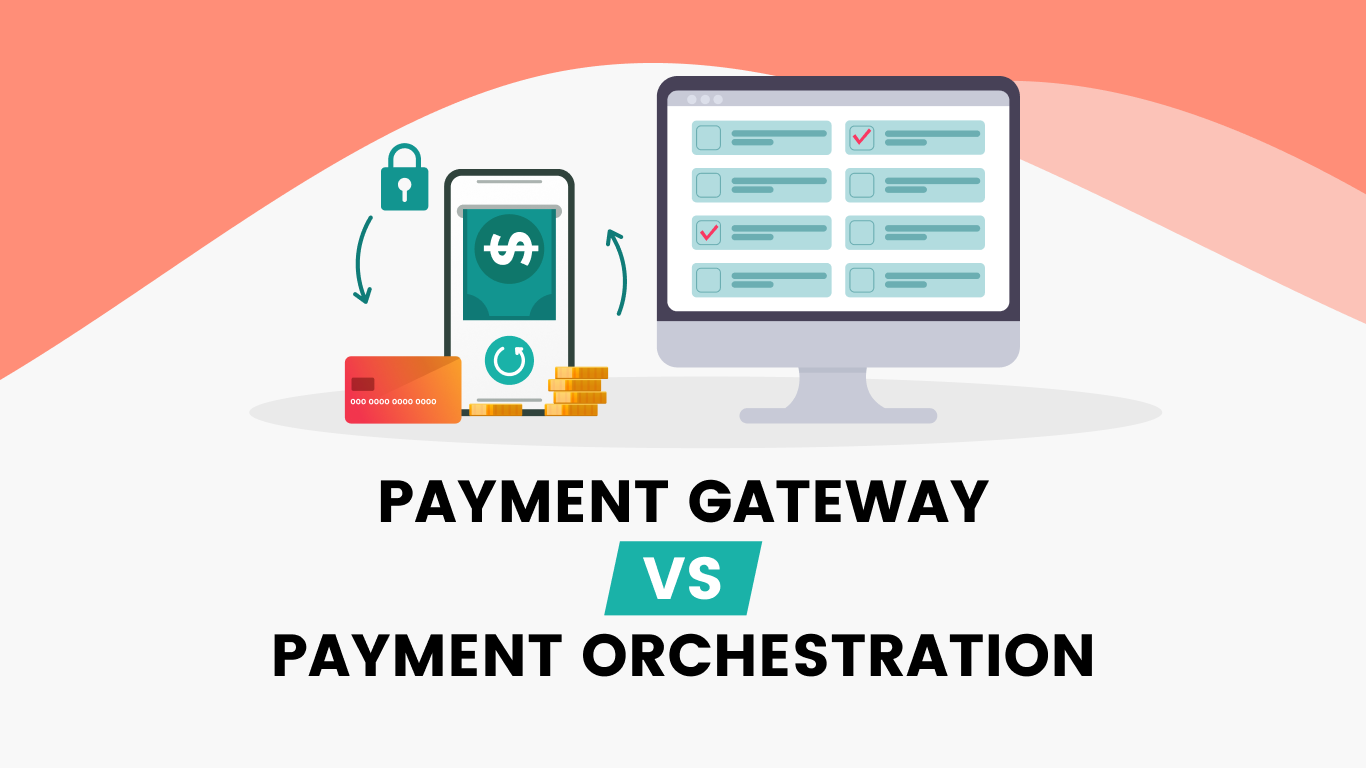
The payment industry is undergoing a remarkable transformation, shaped by technological innovations and evolving consumer preferences. Payment Service Providers (PSPs), at the heart of this dynamic landscape, often grapple with a critical choice: sticking to traditional payment gateways or embracing the emerging concept of payment orchestration. In this article, we'll explore this decision and delve into the advantages of payment orchestration.
Traditional Payment Gateways: A Tried and Tested Approach
For years, payment gateways have been the bedrock of online payment processing. These gateways act as a bridge between online businesses and financial institutions, ensuring secure and smooth transactions. While they've played a pivotal role in the growth of e-commerce, they come with inherent limitations.
Traditional payment gateways are typically integrated into a PSP's system, offering access to a fixed set of payment methods. This lack of flexibility can hinder PSPs from adapting to changing customer preferences. Moreover, scaling operations or expanding into new markets can be challenging due to the rigidity of these gateways.
Payment Orchestration: The Evolutionary Leap
Enter payment orchestration, a progressive approach designed to overcome the constraints of traditional payment gateways. It's a dynamic system that connects PSPs to an extensive network of payment providers, methods, and technologies. Unlike rigid gateways, payment orchestration platforms are marked by their flexibility, adaptability, and support for a diverse array of payment options.
Payment orchestration functions as a central hub that PSPs can seamlessly connect to via an open Application Programming Interface (API). Through this connection, PSPs gain access to a vast ecosystem of payment methods, banks, and providers. This centralized platform simplifies payment processing, enabling PSPs to manage multiple payment methods with ease.
One of the standout features of payment orchestration is its ability to streamline payment processes. PSPs can handle various payment methods through a single integration, simplifying operations and enhancing the customer experience. This adaptability empowers PSPs to remain competitive and meet the diverse needs of their clientele.
Comparative Analysis: Payment Gateways vs. Payment Orchestration
Let's conduct a comparative analysis of payment gateways and payment orchestration:
1. Payment Method Support:
Payment Gateways: Offer a limited range of payment methods.
Payment Orchestration: Provide access to a comprehensive set, including emerging options like cryptocurrencies.
2. Scalability:
Payment Gateways: May struggle to scale operations without major infrastructure changes.
Payment Orchestration: Allows PSPs to scale seamlessly, accommodating increased transaction volumes.
3. Adaptability:
Payment Gateways: These are relatively inflexible, making it challenging to integrate new payment methods.
Payment Orchestration: Swiftly integrates new payment methods and technologies, ensuring PSPs stay ahead of industry trends.
4. Customer Experience:
Payment Gateways: Offer a limited range of options, potentially leading to a less satisfying customer experience.
Payment Orchestration: Simplify the payment process for customers, offering a broader range of choices and a smoother checkout experience.
The Role of Payment Orchestration in the Future
In the realm of payment orchestration, Akurateco stands at the forefront, offering a solution that empowers PSPs to thrive in the ever-evolving payment landscape. With advanced technologies and an extensive network of integrated banks and payment providers, Akurateco enhances the capabilities of PSPs.
One of Akurateco's standout features is its adaptability. PSPs can seamlessly transition to Akurateco's payment orchestration platform, maintaining their core functionality while gaining access to a wide array of payment methods. This flexibility ensures PSPs can cater to diverse customer preferences without the need for extensive development.
Conclusion: The Path Forward
The choice between traditional payment gateways and payment orchestration is pivotal for PSPs in today's competitive environment. While payment gateways have served their purpose admirably, payment orchestration offers a path forward.
Payment orchestration provides the flexibility, scalability, and adaptability needed to thrive in the ever-changing payment landscape. As consumers demand more payment options and a seamless experience, PSPs can turn to solutions like payment orchestration to meet these expectations. By embracing payment orchestration, PSPs can position themselves for success and remain agile in an industry that continues to evolve.
- 02:00 am
Brits are officially ‘over’ Christmas marketing efforts by 27th November, according to the latest research from Twilio, the customer engagement platform that drives real-time, personalised experiences for today’s leading brands.
The survey of 2,000 UK consumers suggests that festive fatigue is in part caused by the fact that almost half (48%) are regularly targeted with irrelevant gift ideas in the run up to the Christmas period.
Sam Richardson, CX Consultant at Twilio, comments: “With Christmas marketing often in full swing for weeks or even months before the big day, it’s no surprise that consumers are turning off before December even starts – especially if the ads they are being bombarded with are irrelevant. That’s not to say Christmas is cancelled, and there is still an opportunity for brands to reverse this festive fatigue by making their communications hyper-targeted and engaging.”
The brand opportunity to engage
This Christmas, consumers expect brands to personalise content according to who they are and who they’re buying for. In fact, nearly four in ten (38%) said they need more help this year in finding relevant and creative gifts for their loved ones, with over half (51%) hoping that brands can assist them with this.
Consumers recognise the potential that AI has to better personalise the engagements they have with brands, with over half (52%) going as far to say that they would like AI to aid them with their Christmas shopping this year. Specifically, 23% want to receive real-time recommendations for products that are in stock.
One in five (18%) would welcome specific recommendations for everyone on their gift giving list, 14% would like a virtual shopping assistant to be on hand, and 13% want high performing chatbots to help with any and all customer enquiries.
Positive Christmas experiences could turn into year-long loyalty
Creating a personalised customer engagement experience this festive season could turn into year-long loyalty, with over half (53%) saying this could convert them to being permanent customers.
At the same time, brands need to get the balance right between personalisation and all the other elements that make for compelling customer experiences - as three quarters (79%) of consumers stated that a bad experience could make them shop elsewhere in the future, while 59% say they feel frustrated when targeted with adverts that are no longer relevant post-Christmas
Richardson adds: “A standout customer experience over the coming weeks could help companies win repeat business and drive long-term revenues. As this research shows, there’s a real scarcity of organisations that are going the extra mile and providing creative and relevant gift ideas, so there’s a big opportunity here for brands to meet this demand and build long-term loyalty.
“Brands should make use of the first-party data that customers are giving to them as they interact directly to ensure they truly understand their shopping needs, and turn that insight into relevant, hyper-personalised, and real-time recommendations. The more seamless and convenient brands can make a shopping experience for customers, the better.
“Go for quality over quantity rather than potentially bombarding customers with irrelevant marketing emails, and start to think about how emerging technologies could help your brand stand out from the crowd during the busy Christmas period. It’s also worth being cognizant of your customers’ needs and preferences - including accommodating those who may not be celebrating Christmas, or may be going through a difficult time amidst the cost of living crisis.
“Being mindful and empathetic as a brand is an opportunity to show you truly care and value them as customers. It’s from these foundations that they can start to build the kind of customer trust and loyalty that will deliver value over the long-term, and not just in the brief run up to the Christmas period.”
- 01:00 am

Revolut, the financial global super app with over 35 million customers, has announced the appointment of Dan Teodosiu to the Board as a Non-Executive Director.
Dan has over 30 years of experience building and managing high-performing engineering and research teams, as well as scaling platforms and infrastructure that can support billions of customers. Dan held senior positions at Google in Paris, at Microsoft in Redmond and Dublin, and at HP Labs in Palo Alto.
Most recently, Dan spent two years as the CTO of Onfido, an identity verification platform, where he oversaw the development of Onfido’s new AI-based solutions stack for document verification and industry-leading face matching. Prior to Onfido, Dan spent six years as the CTO of Criteo, Europe’s largest ad tech company, where he supported the company’s successful IPO and subsequent rapid growth.
Martin Gilbert, Chairman of Revolut, added: “I am thrilled to welcome Dan to the Revolut Board. Dan’s expertise and experience across multiple technology sectors further strengthens the governance and oversight of the Board. Dan will undoubtedly bring fresh and practical ideas to support this, and I look forward to seeing the results of his efforts in the weeks and months to come.”
Dan Teodosiu, commented: “Revolut is a technological force for change across many financial mediums. With tens of millions of customers across the globe, all in less than a decade, Revolut’s growth shows no signs of slowing. I look forward to bringing my experience as a leader in the tech industry and as an entrepreneur to a business that has broken away from its competitors and is establishing itself as a market leader.”
A former entrepreneur, Dan also co-founded two companies in California, one of which was acquired by Microsoft in 2002. Dan holds MS and PhD degrees in Computer Science from Stanford University.








