AI, Legacy Systems and the Future of Core Banking: Why Standing Still Is Now the Biggest Risk

  • Nikhil Sengupta, Commercial Director at 10x Banking;, Ohad Kotler, CEO & Co-Founder at Tweezr

  • 03.08.2026 03:19 pm

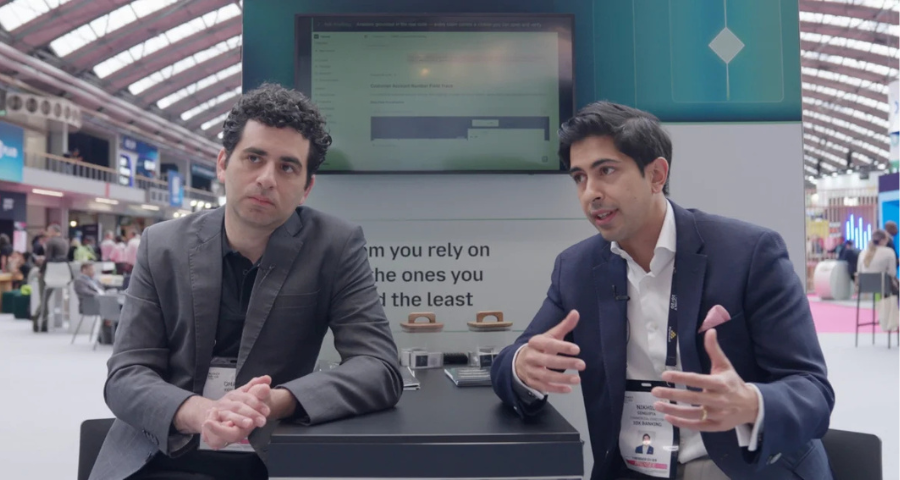
At Money20/20 Europe 2026, Financial IT sat down with Nikhil Sengupta, Commercial Director at 10x Banking, and Ohad Kotler, CEO & Co-Founder of Tweezr, to discuss one of banking's most pressing transformation challenges: migrating away from legacy core infrastructure. With advances in AI, deterministic analysis, and modern cloud-native platforms, the calculus around core migration is changing fast.

1. Financial IT: Core migration has traditionally been seen as one of banking's biggest risks. What's fundamentally changed over the last few years?

Ohad Kotler: Historically, core migration was difficult because of the sheer level of uncertainty. Legacy banking systems are incredibly layered — almost like a city built over decades, with streets, buildings, and infrastructure added piece by piece. Trying to move that entire city into a new environment without fully understanding how every component works or why it exists is enormously difficult. That lack of visibility is why so many migration projects have taken years, cost hundreds of millions, or failed entirely.

Nikhil Sengupta: That's exactly right. Migration used to be viewed as inherently high risk. Today, however, fourth-generation cloud-native platforms combined with AI-enabled migration capabilities allow banks to approach transformation in a far more scalable, testable, and repeatable way. That fundamentally reduces risk.

2. Financial IT: For many institutions today, is the bigger risk actually standing still rather than modernising?

Nikhil Sengupta: Absolutely. Banks used to face a difficult trade-off: stay with familiar legacy systems or take a leap into modernisation. That trade-off has changed. In today's competitive landscape, technical debt, rising operational costs, and lack of agility are becoming serious liabilities. Standing still is no longer a safe option.

To compete in an AI-driven future, modernisation is essential. Institutions that delay transformation risk falling behind both digitally native challengers and more agile incumbents.

3. Financial IT: Legacy systems have often been treated as black boxes. Why has understanding them historically been such a challenge?

Ohad Kotler: Legacy systems are the product of decades of accumulated logic and business decisions. The challenge is that much of the original institutional knowledge has disappeared. The people who built these systems may have retired or are no longer available. Documentation is often incomplete or outdated, and many of these environments rely on infrastructure that very few engineers fully understand today.

That creates a major barrier. Before you can modernise, you need to understand what the system actually does — and historically, that has been extremely difficult.

4. Financial IT: How are AI and improved visibility into legacy environments changing the migration conversation?

Ohad Kotler: AI changes the equation completely. For the first time, banks can extract not just technical relationships within legacy systems, but also business intent. AI helps answer critical questions: why was this function built? What business problem was it solving? Do we still need it today?

That matters enormously because migration is no longer just about replicating the past. Banks are moving into an AI-first era — one where decision-making, reasoning, and automation increasingly involve intelligent systems. To modernise effectively, banks must understand historical logic and determine what should remain, what should change, and what can be reinvented entirely. AI provides that visibility.

5. Financial IT: We're hearing more about deterministic or explainable AI in transformation projects. What does that actually mean in practice for banks?

Ohad Kotler: Large language models are inherently probabilistic — they generate the most likely answer, not necessarily the exact one. That's acceptable in many use cases, but banking is different. When people's money, regulatory compliance, and operational resilience are involved, guesswork is unacceptable.

That's where deterministic AI becomes critical. Deterministic analysis focuses on facts that can be verified with certainty: which function calls another function, which database is triggered, under what conditions a process executes. This creates a ground truth layer. AI can then explain the system using that verified data rather than making assumptions.

In practice, this dramatically reduces the uncertainty involved in migration and gives banks confidence that transformation decisions are based on facts — not probabilities.

6. Financial IT: Modern migration has moved away from the risky all-at-once replacement model. What does a more controlled, phased approach look like?

Nikhil Sengupta: Today, successful migration is about phasing. Banks move specific customer segments, products, or portfolios in controlled waves. This allows them to realise value faster while reducing risk, and it creates rollback options if something doesn't go as planned.

Ohad Kotler: Regulators increasingly recognise that wholesale replacement introduces systemic risk. The goal is not to eliminate risk entirely — it's to manage it intelligently. A phased strategy means identifying migration waves that are both business meaningful and technically feasible, and AI now makes that process dramatically faster.

Previously, this required armies of consultants spending months mapping dependencies. Today, deterministic analysis combined with AI can identify the best migration paths quickly and accurately. Each wave also improves the next — banks learn, adapt, and progressively reduce friction across the journey.

7. Financial IT: What role does coexistence between old and new systems play in reducing migration risk?

Nikhil Sengupta: Coexistence is essential. Rather than switching off the old core overnight, banks increasingly run old and new systems in parallel for a transition period. This enables gradual migration of products and customers while continuously validating outcomes — reducing operational risk and allowing banks to realise benefits earlier while ensuring service continuity. In most transformation programmes, a coexistence phase is a critical component of a safe migration strategy.

8. Financial IT: How do 10x Banking and Tweezr work together in practice, and where does that partnership reduce risk most meaningfully for banks?

Ohad Kotler: The partnership is highly complementary. 10x Banking provides one of the industry's most advanced future-ready core banking platforms. Tweezr helps banks understand and safely transition from their existing legacy environments. We create a deterministic map of the old system and align it with how 10x operates — identifying exactly which processes, data, and dependencies should move, and when. That significantly reduces exploration time, uncertainty, and implementation friction.

Nikhil Sengupta: Tweezr helps banks move from legacy complexity to clarity, while 10x Banking provides the modern end state: a cloud-native, API-first core designed for future innovation. Together, we help banks move faster and more safely.

9. Financial IT: What does successful migration ultimately unlock for banks and why should leaders act now?

Nikhil Sengupta: Ultimately, migration is not about technology for technology's sake. The real objective is to create a more resilient, flexible infrastructure that improves outcomes for customers. Modern core architecture enables faster product launches, greater agility, improved innovation, and significantly lower technical debt. It also reduces the operational costs associated with maintaining ageing infrastructure.

Most importantly, it gives banks strategic optionality. Those that modernise today position themselves to fully capitalise on AI, embedded finance, and future digital business models. Those that wait risk becoming constrained by legacy systems in a market moving faster than ever.

Other Interviews