
Published
- 07:00 am
Worldline India, a leader in digital payment services today announced the launch of Paytech Pioneer Programme to onboard some of India’s best Engineering Talent from college campuses across the country.
Worldline India plans to induct over 200 Trainee Engineers across its Mumbai, Pune, Bangalore and Chennai offices in the 2023 batch and plans to increase the headcount to 3000 in three years. New joiners will begin their transformational journey from fresh graduates to full stack developers in a span of 3 years while training on the job for silks sets like Java, Dot Net, C++, Testing, PHP, Python, MYSQL, Postgres among others.
In addition, Paytech Pioneers will be working on key tasks such as executing the full software development life cycle, gathering requirements, documenting and proposing solutions, maintaining the code quality, reliability and redundancy, troubleshooting, debugging and enhancing existing systems.
Jose Raj, Senior Vice President and Head – HR, Worldline India and APAC said,
“We are delighted to launch Paytech Pioneer Programme which is in line with our vision to establish Worldline as a premium global Paytech company. We deeply value, engage and interact with young talents and it is one of the reasons we are recognised as an employer of choice. We believe young talent will bring fresh perspectives to an organisation as we continue to shape new ways of paying, living, and doing business. It’s a great time for a technology professional in the country as India continues to be a hotbed of tech talent. The advantage Worldline offers is we are at the forefront of innovation in paytech. The Worldline family in India is excited to invite talents to join us, develop the next generation of paytech products, and grow with us.”
Worldline India will be visiting colleges for pre-placement talks starting in September. Fresh graduates will be evaluated basis of three rounds of the selection process viz. Online Test, Aptitude & Logical Evaluation, Technical Managerial Aptitude & Skills. Candidates having BE/B Tech – CS/IT with 6 & above CGPA till final semester 70% & above in 10th & 12th will be considered for the qualifying rounds.
Worldline India plans to induct paytech pioneers starting January 2023 as interns and on board as Worldliner from July 2023.
- 06:00 am
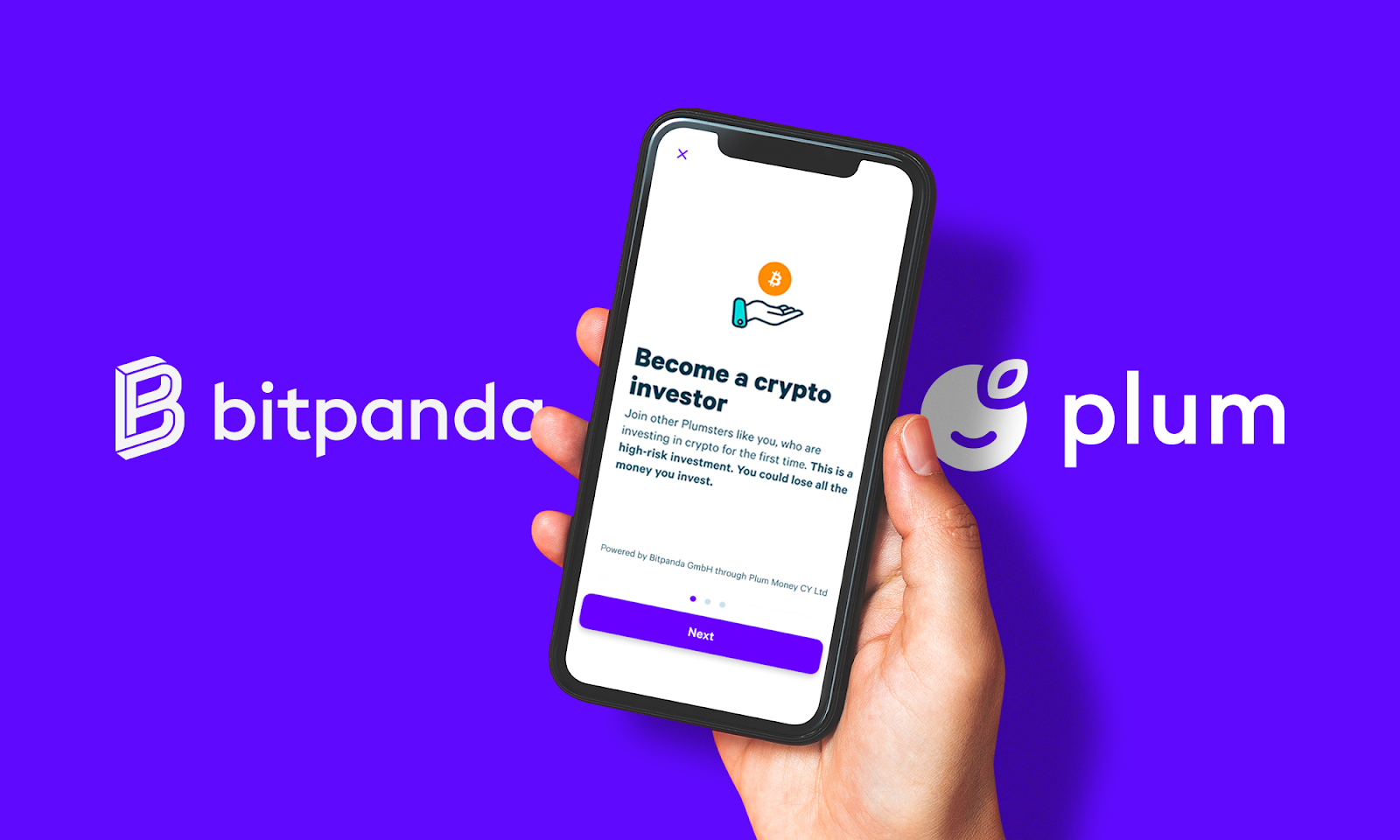
Smart money app Plum and fintech unicorn Bitpanda have joined forces to make crypto investing available to Plum’s rapidly growing European customer base.
The development reflects rising investor demand across Europe for access to safe and simple crypto trading, giving them the ability to diversify their investment portfolios.
Bitpanda’s cutting-edge API solution that enables fintechs and traditional banks to give their customers 24/7 access to investing, is now fully integrated with Plum’s specialised financial services app. As a result, Bitpanda’s crypto services can be accessed through Plum’s interface, with all transactions executed by Bitpanda.
Victor Trokoudes, CEO and co-founder of Plum, says:
“It’s our ambition to provide access to a broad range of assets for our customers so they can properly diversify their investment portfolios and support their growth over the long-term. We’re delighted to work with Bitpanda, a digital asset leader, so our customers can now also access crypto in a secure, convenient and simple way, alongside our existing, broad range of stocks and funds. We have a shared mission of a more accessible and informative financial system that helps people get the most from their money. Plum already enables people to save, invest, spend and budget more easily. The addition of crypto to our app helps our customers to manage their finances in one place.”
Eric Demuth, co-founder and CEO of Bitpanda, adds:
“At Bitpanda, we are keen to bring investing closer to everyone, everywhere. In a world where financial services are rapidly evolving, and consumers demand more convenience and safety, we have created an innovative API-based infrastructure that provides other companies and their customers with access to a state-of-the-art trading experience. This saves time and money and ensures they are trading via one of Europe’s leading exchanges, which complies with the strictest regulatory standards - something that our partners can rely on. We share a core mission with Plum, to make investing accessible to all, and I’m excited we are now able to do that together.”
Since the development of Bitpanda’s API solution, a number of major fintech companies and online platforms have partnered with Bitpanda to make use of a trading infrastructure that is both compliant and secure.
These relationships have been possible because of Bitpanda’s commitment to regulatory compliance and its long history of reliability. The Bitpanda Group is also registered with the Austrian Financial Market Authority (FMA), the French Autorité Des Marchés Financiers (AMF), the Czech Trade Authority as VASP, holds the PSD2 licence, the MiFID II licence and became Austria’s first Electronic Money Institution (EMI) in accordance with European law (EMD2), plus has a fully AML5 compliant KYC process. Furthermore, Bitpanda became the first foreign crypto provider to become fully licensed in Sweden, and also secured registration with the Italian Virtual Asset Services Provider (VASP) and the Bank of Spain.
- 09:00 am

Scottish fintech Guiide has raised a new investment of around £200K and welcomes three new additions to the team.
Guiide is delighted to announce it has raised this new money from existing investors. It has also strengthened its team with the addition of two new Directors and a highly experienced adviser.
The two new Directors are Clare Hawkins, a former NHS Trust Chief Executive, who will lead on governance and Stewart Lawrie, an experienced financial systems developer, who will lead our development team for the future.
Additionally, Mike Robins, former partner at 3i, who has a wealth of knowledge on capital funding and small business growth, has joined Guiide as a board adviser.
New initiatives - Guiide +
The funding will be used to support two new initiatives.
The first is Guiide+, launching soon. This is an addition to our free online service for registered users. The centrepiece of this development will be a full retirement dashboard showing real-time values for a person's pensions, and all other sources of income and savings.
The dashboard will be accompanied by Guiide's tracking tools showing how a person's long-term plan is affected as they draw income and as their live pension pot values vary over time.
Guiide+ will also be modelling and supporting more complex and detailed retirement income inputs, including equity release, guaranteed income, and partner income. This will make Guiide+ the “holding hand” tool to be used through to the 'end' of retirement for later life income planning and support, particularly for the non-advised mass market.
Guiide.auto
A natural follow-on from the planning tools is to make drawdown safer and simpler for users via Guiide.auto.
A collaboration with a tech-focused pension provider and a guaranteed income provider, Guiide.auto will pay plans built with Guiide automatically by default until changed. It will allow individuals to monitor, track and adjust plans and add an element of guaranteed income paid into the pension pot if desired, whilst still maintaining all the flexibility of drawdown.
Guiide.auto is the “put everything together and do it for me” option that we believe the non-advised market needs. This has been a popular concept with Guiide users, with hundreds of registrations of interest for the product launch in November 2022.
Kevin Hollister, Founder of Guiide, stated: “Retirement is no longer just about pensions. Our continued goal is to use tech to simplify the mystifying subject which is retirement planning and later life products. We believe a ‘put it all together and do it for me’ approach is the optimal route for the non-advised mass market to get the best retirement outcome.”
- 07:00 am

In the latest of its series of insightful industry reports, fraud fighters, SEON has released a new research paper, which assesses the state of the neobanking sector around the world following the Covid-19 pandemic.
With continued capital investment and soaring adoption rates, it’s clear that the neobanking industry has experienced a significant uplift in recent years. Many commentators feel the emerging sector owes much of this success to the effects of the Covid-19 pandemic, which forced many brick-and-mortar banks to close temporarily, thus creating a huge incentive among customers to adopt more online solutions.
Now, online fraud prevention expert, SEON, has taken a closer look at this trend in its new ‘Neobanking Index’. The insightful guide, which is available to read on the company’s website, assesses the growth of this thriving industry, analyzing how adoption rates of neobanking solutions differ across some of the world’s leading markets. Likewise, the report details the countries that are adopting neobanking solutions at the fastest rates.
While neobanking solutions have seen a rise in popularity across multiple regions in recent times, there are areas of the world, which clearly lead the way when it comes to adoption rates. For example, in Brazil, around 43% of people have a neobank account, while in Portugal that figure is as low as 14%. In addition to these figures, SEON’s index details the countries that expect to see the biggest growth in neobanking adoption in the next five years.
Alongside highlighting broader industry trends, SEON’s new index identifies the businesses within the neobanking sector that have received the highest volume of capital investment. As SEON’s report shows, the ten best-performing neobanks from an investment perspective have collectively raised around USD $35 billion in recent times. This astonishing figure demonstrates the significant growth of the neobanking sector since Covid-19.
Speaking on the new index, PJ Rohall, Head of Fraud Strategy & Education at SEON commented: “The neobanking industry has grown as a result of the Covid-19 pandemic, as well as the increased demand for digital financial services. On the back of this growth, we wanted to assess the sector in 2022, discovering which neobanks have raised the most capital, among other things. As our research showcases, it’s a sector that is certainly flourishing.”
Later in the report, SEON explains the differences between neobanking businesses and traditional financial institutions from a legal perspective. This section of the guide provides specific details on the legal rights of an individual when using a neobanking account. Following this, SEON outlines some of the advantages of adopting neobanking solutions, before explaining how these benefits have underpinned the sector’s recent success.
At the same time, SEON provides insights into some of the perceived disadvantages of neobanking companies. In concluding the report, SEON evaluates some of the fraud risks associated with the neobanking business model. From identity theft, to account takeover attacks, the neobanking sector remains vulnerable to certain types of fraud, which makes fraud prevention solutions like the one SEON supply so necessary to those operating in the field.
- 04:00 am

Traditional banks cannot avoid adapting to the new requirements and desires of their customers if they want to stay relevant. The focus, therefore, should be on creating a compelling mobile wallet solution that cuts across all situations in life. G+D’s insights show how banks can take centre stage in their customers' digitally connected lifestyles.
The finance industry is considered a highly competitive landscape, where Big Techs and fintechs have created additional competitive pressure through innovative digital products. Banks that want to stay relevant in this market must keep pace with the latest developments in user experience and adapt their portfolio to the increasing expectations of their customers. While digital wallets were a big first step, leveraging the existing touchpoints between consumers and digital banking services, the next step needs to be taken as banks run the risk of just bringing another bank app with limited functionality to an already overcrowded market.
Customers already have numerous touchpoints with their banks for payment-related matters, such as buying a financial product, checking on a payment, or paying a bill. Added to this is the high level of trust that many people have in their “traditional” bank – more than three-quarters of consumers in key European markets say that their main financial relationship is with a traditional bank. Digital wallet adoption is on the rise, with globally 53% of consumers holding a mobile wallet. Usage varies between 25% in Germany, 65% in Brazil and 88% in India. (1) Creating an ecosystem of digital services tailored to the demands of customers is not only viable but desirable, too. G+D and its strategic partner Netcetera present three ways for banks to turn their digital wallets into customer-focused super wallets.
Meeting the needs of target groups. Super wallets are not limited merely to pure financial services, such as transactions, but rather cover the entire lifestyle of the very very customer base, independently of their age, tech-savviness, or financial knowledge. They enable banks to offer a wide range of services for a variety of target groups: from traditional banking services and payment offerings to loans, investments, insurance, and cryptocurrencies, as well as travel or even services related to sustainability. The banking solutions of the future meet the demands of customers who want to use digital solutions easily and quickly – thus improving the customer experience. True to the motto: One app for all circumstances.
Building a customer-centric ecosystem. The foundation for super wallets and integrated offerings that target the needs of consumers are strongly networked ecosystems. In these networks of partner organizations and complementary providers, banks must be at the centre and act as the main player – regardless of whether it is a self-founded ecosystem or not. In this way, traditional retail banks can survive in the competitive financial services market and secure a firm footing in their customers’ digital universe through genuine added value.
Offer a unique and personalized customer experience. Today, consumers expect their banks to address them in a way that is tailored to their needs and provide them with corresponding services. However, the spectrum is wide: depending on personal preferences, it ranges from personalized shopping offers to notifications when a certain account balance is reached, to concrete savings tips based on a customer’s spending. For banks, having all this data at their disposal, the starting points are manifold. The challenge is to convert the existing treasure trove of data into actionable insights, play them out automatically, and thus deliver added value to consumers. The important thing here is that data protection must not be disregarded under any circumstances. New solutions such as Privacy Enhancing Technologies (PET) remedy this by working exclusively with anonymized and encrypted data. In this way, banks can offer personalized products and services without using personal information.
"Digital wallets are not just a trend for banks to jump on, but a necessity in a market that is already oversaturated in some areas," explains Dr. Carsten Wengel, Head of Global Sales & Distribution in the Card & Digital Payment Business at G+D. "Many customers already use these and similar technologies in their everyday lives and now expect their bank to follow suit and provide a corresponding range of digital products and services, compactly brought together in an app. G+D together with its strategic partner, Netcetera supports banks in this endeavour with expertise and experience in delivering these solutions."
- 08:00 am

Worldline, a global leader in payment services, announces an agreement for the acquisition of a 40% stake in Online Payment Platform B.V., an online Payment Service Provider with a dedicated payment solution for marketplaces and platforms.
Marketplaces and platforms: a fast-growing e-commerce market
Transactions through marketplaces and platforms make up approximately one-third of the European e-commerce volumes and are expected to increase to more than half in 2025.
Business and consumer habits across the globe have undoubtedly evolved during the Covid-19 pandemic. From accelerating e-commerce trends and the transition from cash to digital payments to encouraging innovative companies and disruptive entrepreneurs to launch new platforms, whilst existing retailers were stimulated to create their own marketplaces.
Traditionally, the majority of e-commerce transactions take place on B2C web shops where payments are supported by a few global PSPs. The dynamics of marketplace and platform payments however require expertise that differs from the traditional e-commerce market. Such skills involve dealing with large quantities of merchants with a relatively low volume of sales, and the handling of escrow payments with the dispute and mediation management even between consumers for marketplaces that cover as well C2C (ie Consumer to Consumer) business.
Online Payment Platform (OPP), a Dutch online PSP focused on e-commerce marketplaces
Founded in 2011, Online Payment Platform (OPP) is a Dutch online PSP co-led by its founder Richard Straver, and Maurice Jongmans, CEO. The company focuses on digital payments for marketplaces and platforms with a specific focus in the C2C segment. With a team of over 60 employees, they offer their services in the entire European Union and the UK, passports their Dutch PI licence which they obtained in 2014. OPP serves over a hundred marketplaces and platforms, such as e-Bay Kleinanzeigen, Marktplaats (both part of Adevinta), Gumtree, Royal FloraHolland and PayPal. OPP has strong expertise in customer support for marketplaces, including fast merchant onboarding and dispute management.
In this rapidly changing industry, OPP is perfectly positioned to comprehensively target the C2C marketplaces’ need to outsource their payment requirements and to focus on significant growth opportunities in the B2B and B2C marketplaces segments.
Richard Straver,founder of OPP, stated: We are proud to join forces with the European leader in payments, Worldline. We can leverage each others strengths to improve the service offering to OPP s client base and roll it out to new geographies for new clients. Our team is delighted to join the Worldline family and embark on this incredibly exciting next growth chapter.”
Strategic rationale
OPP was looking for a global strategic partner to accelerate its growth and to expand within Worldline core European markets to be able to quickly capture the fast-growing market opportunity of marketplaces and platforms. Worldline, being a global payments leader, fits that profile perfectly.
The transaction enriches the growth profile of Worldline, and enables synergy for both parties involved through Worldline’s sale infrastructure. This transaction is perfectly in line with Worldline’s strategic roadmap as it expands its exposure to e-commerce and brings a proven technological brick with a unique solution built from the ground up.
Marc-Henri Desportes, Deputy CEO of Worldline, stated: “I am very happy to announce today that we’ve signed an agreement for this strategic investment in OPP. This enables Worldline to get access to the exciting growth market of digital marketplaces and platforms via OPP’s European footprint and market-leading scalable technology, as we continue to establish Worldline as a truly global paytech leader.”
- 04:00 am

Further to the Company’s announcement of 4 March 2022 announcing the variation of terms attached to the Convertible Loan note between the Company and Mr. William Newton (“BN”), Cornerstone FS plc (AIM: CSFS), the cloud-based provider of international payment, currency risk management and electronic account services to SMEs, announces that on 28 September 2022 BN assigned to Atlantic Partners Asia (“APA”), a strategic partner of the Group, the convertible loan instrument (the “Facility”) originally executed between BN and the Company on 17 March 2021 (the “Assignment”). Concurrent with the Assignment, under the terms of the Facility the Company gave notice to draw down on the Facility and APA has 5 working days to transmit £350,000. Upon receipt of funds the Company will contemporaneously issue APA with Loan Notes immediately convertible into 4,375,000 new ordinary shares (“New Shares”) in the Company at a conversion price of 8 pence per share.
Strategic Partnership
Headquartered in Singapore, APA provides currency and payments solutions to high-net-worth individuals, SMEs and multinational companies around the globe, and specialises in Asian currencies. APA has been a partner of Cornerstone since April 2019 primarily undertaking transactions on behalf of the Group (with Cornerstone receiving commission) in cases where the Group does not have the requisite regulatory authority, such as accessing funds in local Asian jurisdictions while also cross-referring business to Cornerstone.
This strategic investment into Cornerstone by APA represents the expansion of the relationship between the two parties, with the intention of diversifying payment solutions, creating a wider global reach and leveraging Cornerstone’s flexible and scalable technology. This also creates some additional commercial opportunities and efficiencies across both parties.
Convertible Loan Note Facility
The Assignment included amending certain terms of the Facility – namely, that in the event of a drawdown and the Company issuing APA with unsecured convertible loan notes (the “Loan Notes”), the Loan Notes could be converted at a subscription price reduced from 26.5 pence to 8.0 pence. (This represents a 6.7% premium to the closing mid-market price of 7.5 pence on 28 September 2022, and a 23.1% premium to 6.5 pence placing price at which shares were issued in the Placing notified on 5 August 2022). All other details of the Facility were unchanged and were as set out previously.
On 28 September 2022, Cornerstone drew down on the Facility and APA has 5 working days to transmit £350,000. Upon receipt of funds the Company will contemporaneously issue APA with Loan Notes immediately convertible into 4,375,000 New Shares in the Company at a conversion price of 8 pence per share. The proceeds will be used for working capital purposes.
Upon receipt of funds application will be made for the admission of the 4,375,000 New Shares to trading on AIM (“Admission”). A further announcement confirming the expected Admission Date will be made at that time. On Admission, the New Shares will rank pari passu in all respects with the Company’s existing ordinary shares.
Total Voting Rights
Following Admission, the total issued share capital of the Company will consist of 48,036,199 ordinary shares, with no shares held in treasury. As such the total number of voting rights in the Company will be 48,036,199 ordinary shares. This figure may be used by shareholders as the denominator for the calculations by which they will determine if they are required to notify their interest in, or a change to their interest in, the Company under the FCA’s Disclosure Guidance and Transparency Rules.
James Hickman, Chief Executive Officer of Cornerstone, said: “We are delighted to have received this strategic investment from Atlantic Partners Asia and to be deepening our partnership with them. They have played an important role in the growth of our Asia business to date, and with their expansive Asian currency network, we look forward to working together to drive more progress in a region that offers a significant cross-border payments opportunity.”
Jeremy Brown, Chief Operating Officer of APA, added: “We are thrilled to announce the expansion of our partnership with Cornerstone. This will mean significantly improved payment options in and out of Asia at a time when SMEs need it most. This partnership enhances strong growth, provides access to scalable technology capabilities, and aligns with our core mission of delivering premium Asian Currency Solutions
Related Party Transaction
As BN is a substantial shareholder (as defined in the AIM Rules) of the Company and an Executive Director of the Company, the Assignment is classified as a related party transaction under the Rule 13 of the AIM Rules.
All the directors of the Company excepting BN and Phil Barry (being Dan Mackinnon, Gareth Edwards, James Hickman and Judy Happe) are considered to be independent directors for the purposes Rule 13 (“Independent Directors”).
The Independent Directors, having consulted with the Company’s Nominated Adviser, SPARK Advisory Partners Limited, consider that the terms of the Assignment are fair and reasonable insofar as shareholders are concerned.
- 01:00 am

Fast-growing fintech SaaS provider Toqio announced today it has closed €20 million in funding to become the platform of choice for creating new fintech solutions. The €18.7M Series A investment was led by AlbionVC and includes Aldea Ventures, as well as previous investors Seaya, Speedinvest, SIX FinTech Ventures and angel investors, including Leandro Sigman, Board Member at Endeavor Spain.
Eduardo Martinez Garcia, CEO & Co-Founder of Toqio, said: “After rapidly growing our team and entering the Spanish market, we’ll now be broadening our focus within Europe, including expansion into France and Germany. This new funding round will enable us to keep evolving and delivering on our vision: we aim to become the world's premier fintech SaaS platform, giving our clients the ability to create, customise, and launch bank-grade digital finance solutions, enriched by our Marketplace of reputable and trusted partners.”
Jay Wilson, Investment Director at AlbionVC, said: “We have been incredibly impressed by Toqio’s growth to date and the exceptional quality of the SaaS business it is building. We are well aligned with the company’s vision of bridging the gap between financial services and financial outcomes. The digitisation of finance is only just beginning and Toqio has a massive market to go after. Mostly, we have been incredibly impressed with Eduardo and Mike and the team they have built around them and look forward to playing a small part to support them in delivering on their bold ambition.”
Aristotelis Xenofontos, Partner at Seaya, who have followed on having invested in Toqio’s seed round, commented: “Having witnessed the outstanding execution of Eduardo and Michael, the business’ growth, and their ability to put together an exceptionally talented team, continuing our support was without question. Toqio have built the first true embedded finance platform, which puts them in a unique position to lead the category and make a considerable impact on the market, particularly as more and more businesses realise the time and cost to be saved by using low-code solutions.”
Alfonso Bassols, Managing Partner at Aldea Ventures, added: “Toqio is in an exceptional position to grow further as the market continues to mature and more businesses recognise they don’t need to build from scratch to deliver exceptional financial services to their customers. The business has accomplished a lot to date with clients across Europe, and we are eager to rally behind the Toqio team as they continue to scale in France and Germany.”
- 03:00 am
Henrik Grim, GM of Europe at Capchase, said: “This integration is a huge step forward for alternative finance in the UK. Thousands of small businesses could now be able to gain fast access to capital.
“With other sources of funding drying up and increasing economic uncertainty, well-run businesses can find it very difficult to get the financing they need to keep growing. Capchase provides a great option for these companies and now, by working with Xero, we have really streamlined the process to save business owners one of their most valuable commodities - time.”
- 04:00 am

Europe’s leading open banking platform Tink is urging lenders to prioritise upgrading creditworthiness assessment models to ensure more accurate lending decisions.
Traditional lending models are broken, and against a backdrop of the cost-of-living crisis, a blinkered view of income and expenses is no longer fit for purpose. As the economic crisis worsens, better decisions on lending are needed to protect and support consumers and businesses who might be struggling with affordability over the coming months, while reducing the risks to lenders from a potential new wave of defaults.
Evidence of inadequate adoption of new models
According to Tink’s 2022 survey of financial executives, two-thirds (68%) of UK lenders have tightened affordability criteria since the pandemic, but blind spots still exist in their credit assessments. This has led to some people being denied access to borrowing unnecessarily.
For example, UK lenders say that some of the main reasons that people are denied credit include the inability to verify their identity or legal status (41%) or the inability to access payment history (35%). Mirroring these findings, another Tink study finds that UK consumer cohorts are also citing unfair assessments, as a third (33%) of self-employed workers say their employment status has been an obstacle for them getting a mortgage, and a further 31% believe it has hampered their ability to obtain credit.
The ugly truth for consumers and lenders alike
This research unveils two stark truths about traditional underwriting methods, firstly some people who can afford credit are being excluded because of outdated and blinkered credit scoring models. And the static, retrospective nature of traditional credit checks means there is no robust way of protecting consumers if economic circumstances change and affordability become an issue.
UK lenders can adopt new open banking-powered affordability assessment models which anticipate future affordability, using up-to-date, holistic data. Lenders can therefore make better decisions that take into account expenses and incomes such as housing costs, loan payments, insurance, utilities and transportation.
Currently, 50% of lenders are still not using this technology to generate a credit score based on transaction data, while more than a third (35%) are not using it to assess expenses and overall affordability. Yet encouragingly, Tink’s findings indicate a growing appetite to embrace open banking-powered technologies, with 41% planning to adopt digital solutions for data-driven credit scoring.
Tasha Chouhan, UK & IE Banking and Lending Director at Tink commented: “It’s clear many lenders still rely on traditional credit checks to determine eligibility for loans. There is no place for such models in our current economic climate, and the sooner this is recognised, the better the outcome will be for both lenders and consumers.”
“New forward-looking models are drawing on open banking technology to provide a holistic picture of people's finances. It’s vital to protect potentially at-risk or vulnerable consumers from problem debt or default as the economic climate worsens. At the same time, it’s key to promoting financial inclusion, as people now more than ever need access to safe, affordable, and regulated borrowing options.”








