
Published
- 03:00 am

This event builds on our previous marcus evans Model Risk events but focuses on the various risks associated with AI, largely though not entirely AI models. The primary reason this is so topical is a set of incoming regulations and regulatory proposals, including an EU AI proposal expected to come into force perhaps sometime in 2023, and a PRA report leading into regulation. Furthermore, in general, financial institutions face increased risks and regulatory scrutiny as a result of developing and using complex AI models. These models are often difficult to manage and validate, as well as to incorporate into risk management and validation. Beyond this, AI also raises or exacerbates many ethical issues such as bias and privacy, which are not only inherent concerns but play into issues of compliance and reputational risk. The conference will also touch on third-party risks, which are brought into AI due to the risk of cyber-attacks as well as the concentration risk due to the large quantities of data required for AI and subsequent reliance on cloud storage
This marcus evans event will present the experiences of best-in-class industry professionals to help delegates implement AI systems and mitigate AI risk. It will include in-depth sessions addressing emerging regulatory standards, validation and monitoring strategies, AI risk management and governance, ethics and data privacy and mitigating third-party and cyber risk. This meeting will provide attendees with practical insight into how to update their risk management and governance frameworks to meet the demands imposed by the ever-increasing use of AI and machine learning.
Key Sessions:
Adapt to the emerging regulatory focus on AI and model risk
Ensure effective validation and ongoing monitoring of AI models
Incorporate AI into risk management and governance frameworks
Maintain ethics and privacy standards within AI and data usage
Manage the risks involved with vendor and third-party models
Will you be able to join us? Click here for more info, or send an email to Ayis Panayi ayisp@marcusevanscy.com.
- 06:00 am

VikingCloud, a leading provider of cyber security and compliance solutions, today announces the appointment of its new President.
Dallas-based Ben Peters joined VikingCloud on 1 November from VPay Inc, where he was Chief Operating Officer. Prior to VPay, Peters held executive positions at FleetOne Holdings and IOD Inc. where he was instrumental in the success of both businesses.
Commenting on the announcement, Ben said: “I’m delighted to be working with Robert McCullen and the rest of the VikingCloud team on the next part of the company’s exciting journey. The team has already made impressive strides in building a scalable corporate infrastructure, robust systems, streamlined processes and a unified technology platform. These form a great basis from which to accelerate the growth of the business and I look forward to enhancing those efforts so VikingCloud can strengthen its leadership position in the industry.”
Commenting on the appointment, Bob McCullen, Chairman and Chief Executive Officer of VikingCloud, said: “VikingCloud is at a pivotal moment in its journey, having enjoyed significant growth over the past 2 years. Ben’s broad management experience and payments background will bring invaluable expertise and help us as we continue to establish VikingCloud as the best in class for ensuring the security of millions of businesses across the globe.”
The new appointment comes as the business solidifies its position as a market leader in cybersecurity and compliance solutions following a series of strategic acquisitions.
This expansion is helping VikingCloud deliver enhanced solutions to clients of all sizes throughout 2022 and beyond.
- 05:00 am

Since its inception in 2016, Unified Payments Interface (UPI) transactions have been witnessing a meteoric rise. According to the latest data released by the National Payments Corporation of India (NPCI), UPI transactions have reached a record-high both in terms of volume and value, i.e. 7,305.4 million transactions amounting to INR 12.11 crores. With the rapid adoption of UPI, the banking and fintech industry, along with the Indian Government, have been bullish on this digital mode of payment.
Hence, after gaining traction on UPI 1.0, NPCI came up with an advanced version of UPI, i.e., UPI 2.0, which further introduced features that provide more accessibility and flexibility to the user, including linking of overdraft account, e-mandates and payment via QR code.
In July 2022, UPI Autopay - one crucial feature of UPI 2.0, was introduced to enable recurring e-mandate using any UPI application for repetitive payments such as mobile bills, electricity bills, EMIs, entertainment/OTT subscriptions, insurance, and mutual funds, among others. Recently, the cap of INR 2000 was changed to INR 15,000 as the feature gained popularity. This implies that all auto-debits are now permitted up to INR 15K without a PIN, expanding the use cases and enabling more customers to choose this service.
Compared to credit cards, where card issuers are prohibited from using a credit card to make an unauthorised direct debit without giving 24hrs prior notice to the credit card user, UPI autopay provides the flexibility of instant auto-debit.
Many payment service providers (PSPs) are adopting this feature such as Paytm, BHIM, Razorpay, etc. For Indian users who pay for in-app subscriptions, Google Play has recently unveiled its own UPI-based automatic payment option. This feature enables users to easily set up recurring payments using any UPI application. The industry anticipates that more players will join the list in the upcoming days as the feature continues to gain traction.
Mr. Mandar Agashe, Founder and Chairman of Sarvatra Technologies can elaborate further on this topic. Sarvatra Technologies is a leading end-to-end payments and banking technology solutions provider in India. It holds a leadership position in providing technology for UPI transactions in India. It manages a major portion of the total transaction volume that is generated on UPI nationally. Sarvatra provides back-end UPI technology to apps such as Google Pay, Whatsapp Pay, Tata Neu and more.
- 06:00 am

- Geography: Throughout the downturn, European companies have opted to maintain their cash runways and customer retention to ensure stability, and have done so more effectively than their US counterparts. US companies have focused on revenue growth, which decreased from 70% to 51%, but stayed above European companies that saw their growth drop to 43% post-downturn. However, the top quartile companies in both geographies continued to show healthy growth (126% in US and 90% in Europe).
- Funding: Bootstrapped companies have more experience operating in a cash-strapped environment. As a result, these companies have shown resilience because they invested in a longer runway before the downturn and spent efficiently to maintain metrics similar to their venture capital-backed counterparts. Despite the macroeconomic environment, bootstrapped companies continue to perform well, in particular with a strong median R40 (24%) and median net margin (-20%) post-downturn (compared to R40 of -13% and -66% for venture-backed companies). Top quartile bootstrapped companies fared even better, with R40 of 91% and net margin of -4%. Across all segments, top-quartile companies by performance (R40) increased their spend on customer acquisition during this time, while reducing expenditures as a per cent of ARR in other areas.
- Size: In an environment where potential customers tend to drift towards more experienced players, smaller companies have struggled to thrive. Small companies fared worse than their larger counterparts across net margin, retention, runway, and expenses/ARR, and their median YoY growth has been hit - dropping from 72% pre-downturn to 54% post-downturn.
Miguel Fernandez, co-founder and CEO of Capchase said, “While a large part of the narrative has focused on public tech companies dropping in valuation, data from more than 500 SaaS startups we have worked with paints a different and more detailed picture of how these companies have performed over the past several months. Startups continue to benefit from the automation and use of software in various sectors, and the companies that navigate the current slowdown well have an opportunity to consolidate and capture market share from their competitors.”
- European companies that seem to have focused on maintaining runway should seek opportunities to invest in growth and win market share.
- Venture capital-backed startups with a low R40 should focus on improving efficiency and diagnosing areas of spend with inadequate returns and reallocating spend. This should be done while continuing to maintain a strong cash runway.
- 02:00 am

Authorize payment transactions by simply placing your finger on your credit card, securely and quickly. Sella is launching a trial of a biometric recognition credit card that, thanks to a small chip sensor, allows people to make payments by using their fingerprints.
The rollout of the new card, providing biometric verification for both direct and contactless payments, is led by Sella Personal Credit, the company of the Sella group specializing in credit to families, through a pilot project involving a selected target of customers in Italy.
Each customer receives a kit containing a particular device ("sleeve"), allowing for the enrollment of their fingerprint on the card in complete autonomy in a few simple steps, without having to go to the bank branch. Once acquired the fingerprint, the card is ready for use and requires no batteries: the biometric chip is powered directly by the POS in case of contact payments and through a magnetic field for contactless transactions. It will be sufficient to place your finger on the biometric chip on the front of the card to have a payment securely authorized.
The new F. CODE biometric card issued by Sella Personal Credit on the Visa scheme is developed in partnership with IDEMIA, a world leader in Identity Technologies with multi-year know-how of design and implementation in the payment card sector and a proven track record in similar pilot projects worldwide.
The biometric cards can be used worldwide and are recognizable by any EMV-certified POS and ATM terminal.
"This new card enables a recognition mode that daily, is already in use by many people on their smartphones. At the same time, it highlights the Group's constant focus on offering increasingly cutting-edge solutions to meet renewed personal needs", says Giorgio Orioli, CEO and General Manager of Sella Personal Credit. "The collaboration with IDEMIA and Visa confirms this vision, aiming to enrich our customers' payment experience while ensuring simplicity and security."
"At IDEMIA, we are convinced that digital and innovation in payment will change how people shop and pay by bringing more convenience and security to the payment experience. Alongside our long-standing knowledge and expertise in Biometrics for decades, we are thrilled to participate in the deployment of the first biometric card in Italy issued on the VISA Scheme and look forward to shaping the future of payments with our partner Sella" says Aaron Davis, SVP – Financial Institutions, Europe at IDEMIA.
- 03:00 am

Recognising the steady expansion and growth of the investment management industry, Clausematch, a global regulatory technology company, announced today it has rejoined the UK’s Investment Association.
Returning in front of IA partners, which are some of the largest wealth, investment, and asset managers in the world, allows Clausematch to spotlight its SaaS technology to help those organisations operate safely and bring compliant products to the market.
Henry Bewley, Membership and Engine Coordinator at the Investment Association said: "Engine, the Investment Association’s FinTech hub and accelerator, was set up in 2018 to fuel the adoption of technology within investment management, for the benefit and changing needs of clients. We work with 150+ FinTech firms and partners across the investment value chain to open up tech-driven possibilities, actively connecting the investment management industry with start-ups that can offer real solutions to real problems that impact different parts of the business such as operations, distribution, compliance, and investment."
To recall, Clausematch became the IA’s first fintech member in 2018. Since then, the regtech has grown substantially, adding several dozens of employees and expanding its services to North America and Singapore.
IA partners face global stresses like inflation, a possible economic downturn, ESG reporting and disclosing, as well as hundreds of new regulations coming online every day. In April, the UK’s financial services regulator, the Financial Conduct Authority, outlined more than a dozen new commitments to regulatory activity, significantly impacting private capital sponsors and advisors and other asset managers. Remaining compliant is no longer a ‘check-the-box’ measure, but an act that could save investment management companies money, time, and reputational damage.
Clausematch has already proved a worthwhile tool for the Investment Management industry, as the company services one of the largest asset managers in the world and ZEDRA, an international provider of corporate and global expansion, active wealth, Pensions & Incentives and Fund solutions.
“Becoming members of the IA will allow us to more personally connect and further expand our presence in the highly-regulated Investment, Wealth, and Asset Management space. Given Clausematch’s existing client base in this industry, I’m excited about this renewed commitment and can’t wait to share more with people I know will benefit from our product and services,” said Claudia Coutinho-De Somma, EMEA Account Executive.
Coutinho-De Somma also submitted an application for IA’s Innovator Programme, which, if selected, will allow Clausematch exclusive access to the IA and industry expertise, as well as valuable exposure to industry networks and potential clients. The next cohort is starting in March 2023.
- 05:00 am
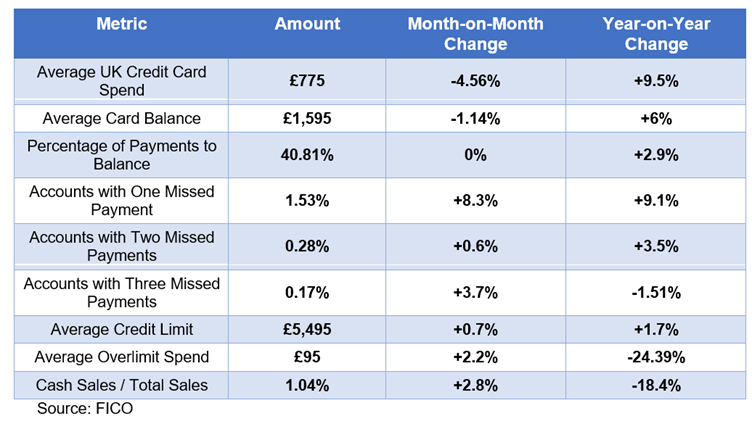
FICO’s latest report of UK card trends — for September 2022 — provides clear signs of consumer indebtedness as the cost of living crisis impacts finances.
Highlights
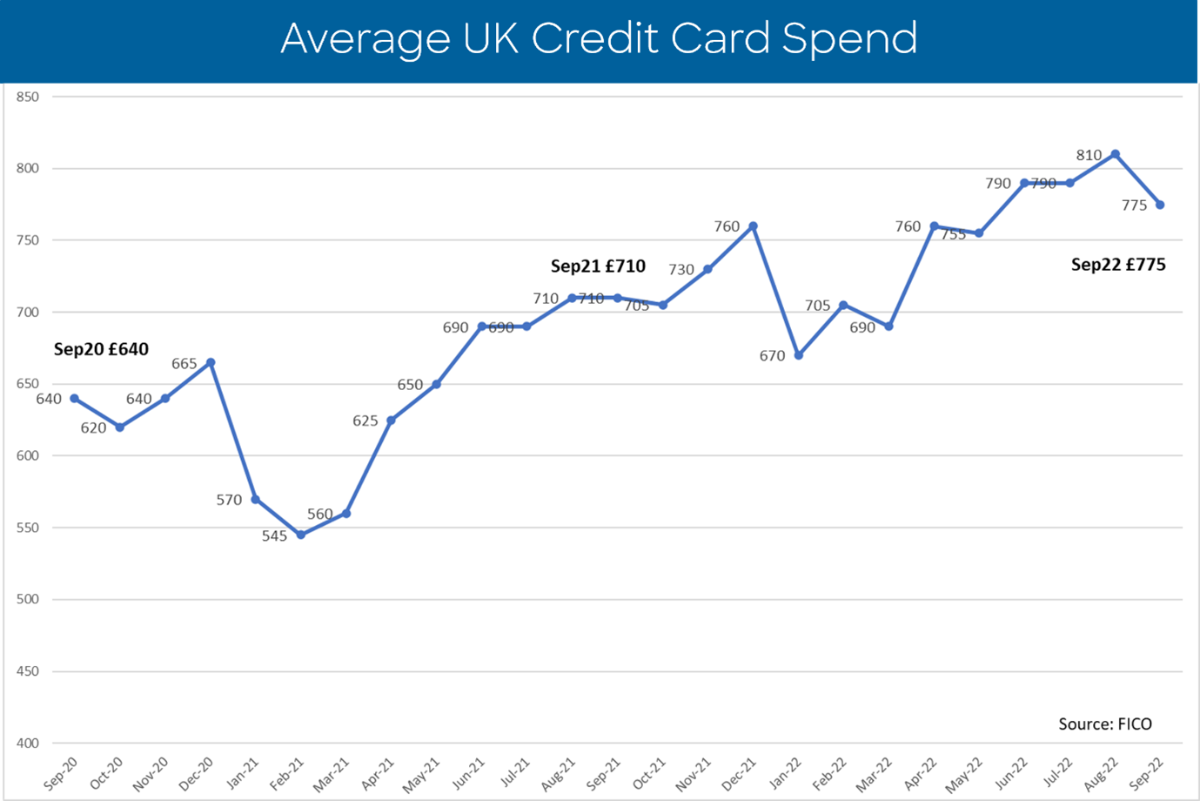
- Average total sales were £775 – 4.56 per cent lower than August
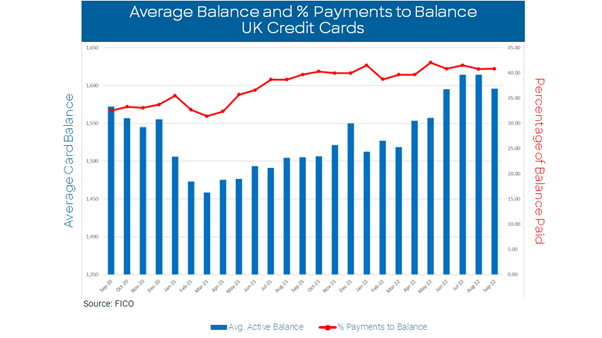
- The average active balance also dropped in September to £1,595 – 1.14 per cent lower than August and reversing the upward trend seen over the previous 18 months
- Customers missing one payment increased by 8.3 per cent compared to August and 9.1 per cent year on year
- Accounts with two missed payments increased marginally month on month — by 0.6 per cent — but those missing three payments increased by 3.7 per cent compared to August
FICO comment
Analysis of the largest consortium of UK cards data shows clear signs of the impact of the cost-of-living crisis.
In particular, the FICO data reveals that veteran credit card accounts — those that have been open for five years or more and which are normally considered low-risk by lenders — have shown an increase in the average balance where they have missed two or more payments. This will be a concern for credit card providers.
The percentage of cardholders missing one payment is also rising, although, overall, the average balance for customers missing two payments is trending downwards. This suggests that lenders have already taken targeted activity earlier in the year to help customers who have missed one payment to avoid the debt escalating. This targeted activity will be critical now as the numbers of cardholders missing one payment increases.
Another indicator of consumers reining in spending is in the total average sales on credit cards. This has dropped in September, in contrast to the summer months.
There is, however, another worrying trend in the percentage of payments to balance. Cardholders are starting to pay less than earlier in the year, perhaps suggesting they are no longer able to rely on pandemic savings. The percentage of accounts paying the full balance has also decreased for the last three months, which may be a reflection that customers are now not able to make the full balance.
Lenders can use segmentation analysis on their portfolios to ensure that their web and mobile applications encourage consumers in distress to make contact at the first indications of difficulty, and to consider establishing special payment plans for those struggling to stay on top.
Key Trend Indicators – UK Cards September 2022
The Data Charts
These card performance figures are part of the data shared with subscribers of the FICO® Benchmark Reporting Service produced by FICO® Advisors, the business consulting arm of FICO. The data sample comes from client reports generated by the FICO® TRIAD® Customer Manager solution in use by some 80 per cent of UK card issuers.
- 08:00 am
Azentio Software (“Azentio”), a Singapore-headquartered technology firm owned by funds advised by Apax Partners, announced today that it has won the ‘Excellence in Islamic Banking Solutions’ award at Finnovex Saudi Arabia 2022, for the Azentio ONEBanking Islamic Software Suite, industry-leading technology and best-selling Islamic core banking suite globally. The event comes under the aegis of the eminent Finnovex Global Series, focused on the financial services industry.
The award was formally presented to Azentio on 8 November at a high-profile ceremony held in Riyadh, Saudi Arabia, which was well attended by prominent members from the regional financial services industry and global technology companies.
The ‘Excellence in Islamic Banking Solutions’ award was presented to Azentio’s Islamic Banking Suite in recognition of its exceptional track record in helping financial institutions accelerate digital transformation, maintain high operational efficiency, and meet their growth objectives – all while adhering efficiently to the Shariah compliance and evolving regulatory requirements.
The Azentio ONEBanking Islamic Software Suite includes a varied range of Shariah-compliant software offerings that cater advantageously to the requirements of new, innovative financing and investment products, covering the entire spectrum of Islamic finance, investments, deposits, treasury and capital markets. The suite combines front-to-back-office functionality with unparalleled scalability, customer-centricity, flexibility, and built-in parameterization – making it a widely trusted solution by a broad client base in over 40 countries.
Tony Kinnear, Chief Executive Officer of Azentio, stated, “It is an honour to win this award presented by Finnovex. We are committed to enabling our clients to offer world-class Shariah-compliant products to compete and thrive in the digital age.”
- 03:00 am

Cohesity has announced the addition of Kelly Bissell, CVP of Microsoft Security Services, to the Cohesity Security Advisory Council. As the council’s seventh member, Bissell brings nearly 30 years of experience in IT and cybersecurity with former security leadership roles at Accenture and Deloitte.
The Cohesity Security Advisory Council, led by Mandiant CEO, Kevin Mandia, brings together industry-leading visionaries with deep security and IT expertise from a host of enterprise and government agencies — including Mandiant, Netflix, Facebook, and the National Security Agency (NSA) - and now Microsoft, Accenture, and Deloitte. Bissell’s addition is a testament to the high priority Cohesity places on helping customers and partners advance data security and cyber resiliency within their environments while addressing emerging and ongoing cyberattacks, including ransomware.
“Cyberattacks continue to increase in complexity, sophistication, and volume. Leaders in cyber security and data security and management must unite efforts in protecting data against attacks,” said Bissell. “I’m excited to join the Cohesity Security Advisory Council. The company plays a paramount role in helping enterprises improve their security posture through a modern data security and management platform that makes data protection, cyber vaulting, classification, and rapid recovery seamless, which is essential to helping customers return their businesses to normal operation in the event of an attack.”
“In today’s threat landscape, just like healthcare where it takes the best doctors to fight diseases, it takes the best security minds working together to protect businesses from cyberattacks such as ransomware,” said Sanjay Poonen, CEO and President, Cohesity. “Kelly is one of the industry’s most seasoned security veterans and his mission – to transform the security market to better serve customers – is a great complement to our efforts at Cohesity. I’m delighted to be partnering with him, and the rest of our Cohesity Security Advisory Council experts to utilise our combined forces in creating a more secure world for our customers.”
Building on a Distinguished Security Advisory Council
With newly added strength, the Cohesity Security Advisory Council will advise the Cohesity team, customers, and partners on security trends and emerging cyber threats and vulnerabilities. The council is composed of industry leaders that bring decades of expertise in developing technologies and standards to help organisations protect their data and increase cyber resilience. The council will work with industry groups and the broad technology ecosystem to prevent the impact of cyberattacks.
In addition to Bissell, the council is comprised of leading industry experts, including:
Kevin Mandia: Current Cohesity board member and CEO of Mandiant, Inc.
Alex Stamos: Director of Stanford Internet Observatory, partner at the Krebs Stamos Group, and former CSO at Facebook and Yahoo!.
Jason Chan: Former vice president of Information Security at Netflix.
Marianne Bailey: Partner at Guidehouse, and former senior cybersecurity executive at the NSA.
Laura Barrowman: Current Cohesity board advisor and chief information officer at Credit Suisse.
Sheila Jordan: Current Cohesity board advisor and chief digital technology officer at Honeywell, former CIO at Symantec.
- 07:00 am
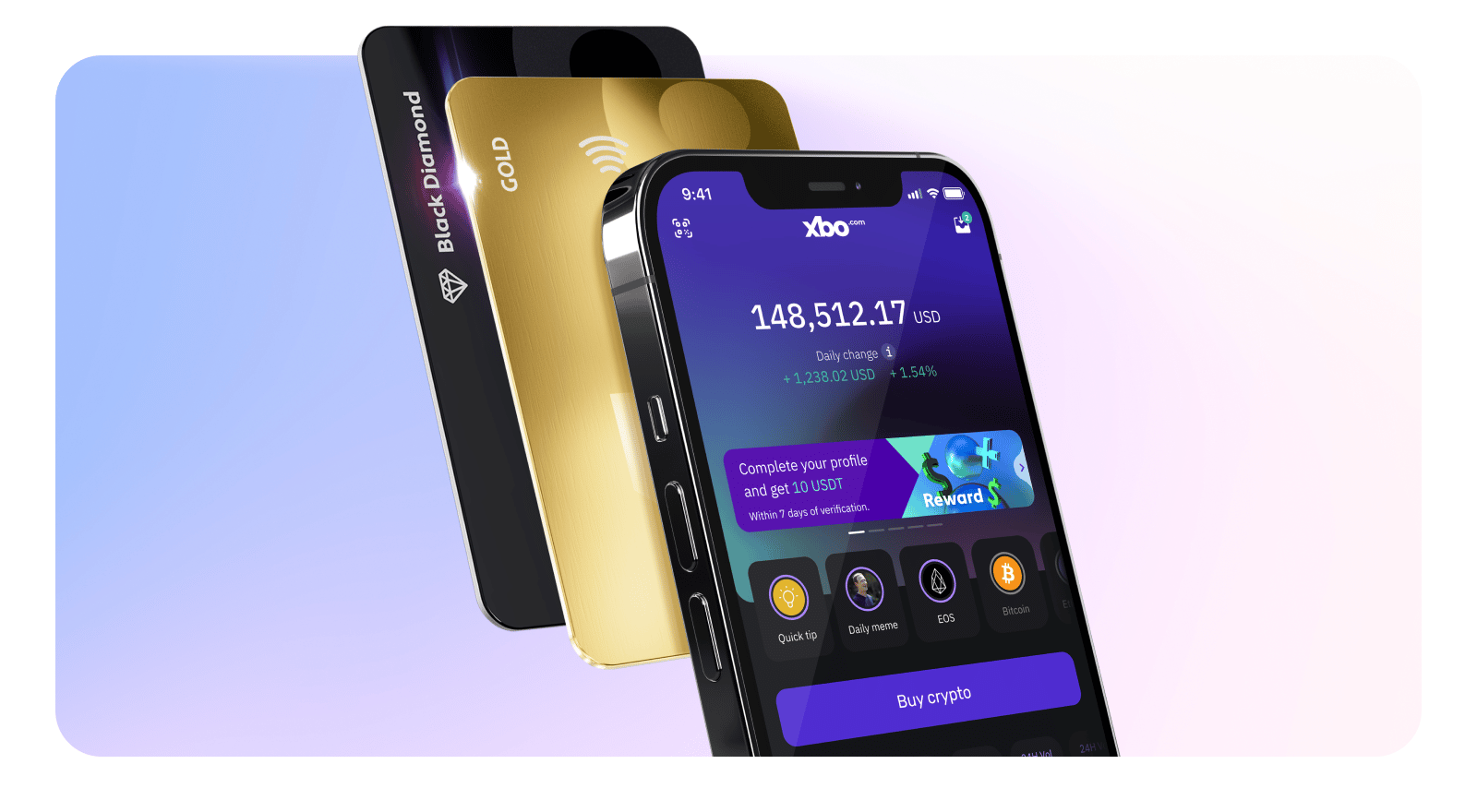
XBO.com, the cryptocurrency exchange making the benefits of crypto more accessible to everyone, reassures its users their funds are safe with the exchange, promising no mishandling of funds is possible. XBO.com is working on a proof-of-reserves protocol and is holding all assets of their users 1:1 in segregated accounts through its collaboration with Fireblocks, on its recently launched platform, which merges gaming-inspired UI and top security solutions to offer traders a user-friendly and reliable alternative to existing exchange platforms.
With Bitcoin and Ethereum reaching new lows that were not seen since 2020, the crypto world is licking its wounds from the FTX crash. When Binance backed out of its rescue deal for FTX over reports of mishandling of customer funds, investors’ trust in centralized crypto exchanges dropped drastically. As many have noted, however, it was poor management that led to FTX’s downfall, not a failure of the centralized-exchange business model or underlying technology. Sam Bankman-Fried’s trading firm Alameda Research heavily invested in the FTX exchange’s FTT token, essentially inflating the token’s price using investors’ money to back it up.
Today, XBO.com reassures users that such a prospect isn’t even possible on its platform. XBO.com doesn’t have a native token. XBO.com meets the need for a user-friendly and accessible crypto trading platform. Leveraging an intimate familiarity of crypto users’ pain points and a deep understanding of social gaming UX, XBO.com makes buying and selling digital assets simple and enjoyable for both amateur and experienced crypto users who find traditional crypto trading platforms intimidating.
“The FTX crash is unfortunate first and foremost to investors on the exchange, but the mistrust users have for centralized exchanges now is harming the whole crypto industry,” says CFO of XBO.com, Dor Maman. “We want to ensure users who invest through XBO that their assets are safe and held 1:1 with zero exposure to currency rate fluctuations. We comply with the highest industry standards in terms of safety and security, and always believe our users come first.”








