
Published
- 06:00 am

Sumsub, a global verification platform providing customizable KYC, KYB, transaction monitoring, and AML solutions for the whole customer journey, today published its second annual Identity Fraud Report, which identifies fraud trends and statistics based on millions of identity checks across 21 industries and over 500,000 fraud cases between 2021-2022.
Seven Key findings from Sumsub’s Identity Fraud Report:
- 55.8% of all identity fraud occurs in 5 countries–with 5.1% in the USA alone - E-sports has the highest fraud incidence with a 2.9% share of total cases - Crypto and banking both experienced a nearly two-fold increase in identity fraud in 2022
- Payment fraud increased by 40% in 2022 - ID cards are the most commonly forged document type in 2022
- 79% of all forged documents used male personas in 2022
- Deepfakes are getting more advanced and growing in popularity
Countries and documents most vulnerable to fraud in 2022
In 2022, over half of all fraud cases happened in five countries: Bangladesh (22%), Pakistan (15.2%), Vietnam (8.1%), Nigeria (5.4%) and the USA (5.1%).
In 2022, ID cards have accounted for 8 out of the top 10 document types used for fraud. In 2021, Nigerian driving licenses were the most vulnerable to forgery (7.6% of them were forged), followed by Bangladesh and Pakistan ID cards. This year, the only driving license to make it to the top 10 is from the US.
Fraud trends in various industries
In 2021, the landscape was different, with payment and consulting targeted the most. In 2022, things changed: the payment industry no longer leads the chart, and consulting has dropped in popularity. Instead, fraudsters have begun targeting E-sports–a form of virtual multiplayer competition using video games–more frequently (2.9% of all fraud cases) due to the explosive growth of the industry over the past two years and relatively low onboarding barriers.
The Sumsub report also highlights an approximately twofold increase in fraud targeting the crypto industry—from 0.7% of all fraud cases to 1.5%. Likewise, banking has seen nearly 100% growth in fraud cases, while e-commerce has seen a thirteen-fold increase in the proportion of fraud (from 0.1% of all cases in 2021 to 1.3% in 2022).
Transaction fraud in 2022
Fraudsters are particularly keen on using stolen bank cards, chiefly targeting financial services, e-commerce, and gambling industries. 3.6% of all e-commerce revenue in 2022 has been stolen by fraudsters. Payment fraud grew 40% from 2021 to 2022, significantly increasing the share of this type of fraud worldwide. So it’s no wonder that 46% of payment merchants now prioritize the prevention of illegal chargebacks.
“As transaction fraud increases and evolves rapidly, the need to safeguard your business is higher than before, and the easiest way to do this is by implementing an advanced transaction monitoring and risk-management solution that cross-checks user KYC data and transaction information to prevent fraud – just like Sumsub’s KYT solution does,” – comments Vyacheslav Zholudev, Sumsub’s co-founder and CTO.
The most popular fraud schemes and behavioural trends
In 2022, the main fraud vectors are account takeovers (gaining illegitimate access to another person’s account), multi-accounting (registering more accounts than permitted), chargeback fraud (raising fake disputes with the bank) and biometric spoofing (using life-like masks, deepfakes, and other advanced methods).
Sumsub found that websites are getting attacked more often in 2022, while mobile apps attack vectors are not as popular. Still, the number of cases continues to grow both for mobile and web applications. As for the operating systems fraudsters target, this year Android extended its lead, seeing 0.4% more fraud than iOS, as opposed to a 0.1% difference in 2021.
Gender statistics on identity fraud suggest that male documents make up the majority of forgeries. This gap has widened even more in 2022, reaching 79% compared to 72% in 2021.
Tampered images out of fashion, advanced deepfakes on the rise
According to Sumsub’s analytics, fraudsters have developed more advanced deepfake technology that is exceptionally difficult to distinguish from reality. Fraudsters no longer rely on blatant attacks like printed images, phone screens, etc. Now, just about every attempt at bypassing verification is made with the help of carefully crafted deepfakes and fabricated IDs that require robust anti-fraud technology to detect.
Since fraud technology is advancing rapidly, pattern recognition is becoming a must-have in order to catch fraudsters early. This includes behavioral analysis which can indicate if a person spends too much time (or too little) on a check.
Predictions for 2023
Sumsub’s AI/ML experts see deepfakes as a growing threat that will continue in 2023. As image generation and AI technologies become more available, fraudsters will get more advanced. At the same time, businesses will have more tools at their disposal to prevent fraud.
“In 2023, we expect developing countries to lead the fraud charts due to the vulnerability of local documents. It is also likely that the crypto, trading, and e-commerce industries will take the biggest hit from criminals using advanced fraud tools. Staying up to date with the recent antifraud developments will be crucial for companies operating online. Sumsub will be looking carefully into the changing identity fraud landscape, and we update our product solutions accordingly to ensure 100% fraud protection for our global clients”, – says Vyacheslav Zholudev, Co-founder and CTO at Sumsub.
Sumsub’s annual identity fraud report for 2022 is available for download at this link: https://sumsub.com/fraud-report-2022/
Note on Sumsub’s research methodology
Sumsub research was performed between 2021 and 2022 with a focus on global fraud trends. The study is based on anonymous verification statistics on millions of users from 21 industries worldwide, with 500,000+ fraud cases studied, compared year-over-year between 2021 and 2022. All data is gathered from internal sources and supported by detailed analysis from the company’s AI/ML experts.
- 02:00 am
Medius, a leading provider of AP Automation and wider spend management solutions, today announces the full integration of OnPay Solutions into the Medius platform, providing an end-to-end payments offering for customers in North America.
The acquisition of Jacksonville-based OnPay Solutions in March 2022 enables the company to integrate payments into its source-to-pay platform. The six-month integration has combined OnPay Solutions' technology, its network of 360,000 vendors and 40 different banking integrations into Medius’s source-to-pay suite.
For customers, this means increased operational efficiency and control by simplifying, streamlining, and automating the payments workflow. The integration also provides customers with complete visibility and control over supplier payment details and set-up within Medius, with added security checks. This is a significant benefit in the current economic climate, speeding up the operational process, with the potential for cost savings and reduced risk exposure.
The platform offers a progressive pricing model designed to return even more value back to clients. Organizations that use the platform to automate their invoice payments benefit from a guaranteed annual dividend - a cash rebate - on their spend, opening a new revenue stream into their organization. This dividend forms a part of the supplier outreach program, engaging with suppliers on the move from expensive check payments to virtual card payments, powering the ability to deliver a guaranteed dividend to customers.
The acquisition and integration also mark the next step in the expansion of Medius’s U.S. operations, providing a U.S. hub for payments, particularly in Jacksonville, where half of its new hires will be based, which includes professional services, customer support and development.
Daniel Ball, SVP Innovation, Medius, comments: “Business leaders across the globe face turbulent times ahead, and many are already struggling with cash management, inefficient processes, and the rise of fraud. In everything we do, we aim to make our customers' lives easier. The integration with OnPay Solutions is just one example of that.
While many Accounts Payable departments deploy automation to streamline invoice processing, significant inefficiencies still exist in the “last mile” of the AP process: payments. By bringing payments processing within the platform, we can provide this service to our U.S. customers. Going forward we will continue to invest across the procure-to-pay process, and double-down on fraud and risk mitigation.”
Neal Anderson, VP Payments Strategy, Medius comments: "Since Medius’s acquisition of OnPay in March, we’ve gone from strength to strength in improving operational efficiency for customers. Looking ahead, we’re committed to building on our partnership, in furthering innovation within the AP process.
Jacksonville is a burgeoning tech hub bursting with tech talent, including the best and brightest tech graduates, and is following a similar trajectory to cities like Austin, Miami, and Nashville. Jacksonville is already home to several innovative fintech businesses, and we’re proud to be a part of that growth.”
Medius Pay customer, Coastal Construction Product, David Sheffield, CFO, comments on his experience:“We use Medius Pay to send ACH payments and Virtual Card payments to our suppliers and vendors. The solution has been a perfect bolt-on to Microsoft Dynamics and connects us with our existing bank accounts. Medius Pay even recently migrated our ACH disbursements from our old bank to our new bank.”
Clint Blaylock, VP of Payments, Restaurant 365, another Medius Pay customer says: “Our partnership with Medius Pay has truly positioned us to offer an automated AP solution to our restaurant customer base. Not only has the process been seamless but leveraging the "graybox" design has allowed us to maximize operational efficiency and maintain the proper control for our audits.”
The integration with OnPay Solutions adds to Medius’s global payments capability, catering to the specific needs of U.S. customers. The Medius Pay application has continued to develop at pace over the course of the past six months, with the focus being on strengthening the applications anomaly, fraud, and risk detection capabilities.
Medius has ramped up its work on fraud and risk detection, as businesses are increasingly subject to phishing attacks and payments fraud. Medius intelligently codes payment files and highlights dubious payments to approvers - providing a huge benefit to customers, all while driving adoption.

Ralph Chammah
Chief Executive Officer at OwlGaze
Cybercriminals stole almost £1.7 billion of crypto funds through cryptocurrency exploits in the first half of 2022 alone, according to data based on the numbers provide see more
- 01:00 am

Tuum, the next-generation core banking platform, has today announced the appointment of Giorgio Daher as UK Sales Director. The appointment is part of the company’s wider strategy to support strong demand for Tuum’s technology in the UK , including the opening of a new office in London. More widely, Tuum is rapidly expanding its customer base across Europe and has grown its Annual Recurring Revenue (ARR) by 388% over the last 12 months.
Rivo Uibo, Co-founder & Chief Business Officer at Tuum commented: “The current economic climate is putting further pressure on financial service providers to quickly roll out services that make customers’ lives easier and fit their individual circumstances. Our modular core banking technology offers companies a simple way of upgrading their tech stack to offer new services without the need for costly and disruptive IT overhauls.”“We are delighted to have Giorgio Daher join our team. As an expert in the field of modern banking, Giorgio will be a huge asset in expanding our growing customer base in the UK and responding to local demand from financial service providers for modular banking technology to enable them to offer the services their customers really need at this time of economic difficulty.”
- 08:00 am

RiskLogix Solutions, an award-winning solution provider for governance, risk and compliance (GRC) software today announces that 7IM, a leading asset management company with over £19 billion of assets under management, has selected the RiskLogix GRC software solution, aCCelerate GRC +, for its integrated risk management program.
aCCelerate GRC+ enables firms to automate many aspects of GRC such as operational risk, compliance, ESG, audit, and business resiliency, for example, and integrate these within a central database with personalised user experiences specifically aligned to each discipline.
Jana Sivananthan, Chief Risk Officer at 7IM said “Risk management is integral to the culture at 7IM and has been one of our key principles from our inception in 2002.
“We are committed to having a best-in-class risk management program and the aCCelerate GRC + software suite will enable us to maintain and further enhance our integrated risk management processes.
“RiskLogix provides leading-edge GRC software, with highly intuitive user interfaces and a host of features such as Business Intelligence and scenario analytics. Their comprehensive and robust solution makes them an ideal partner for 7IM, both now and in the future as we ensure our risk and GRC processes continue to be at the highest level.”
John Kiddy, CEO at RiskLogix said, “We are delighted to welcome 7IM as highly valued customers of RiskLogix. The RiskLogix GRC platform enables firms to automate many aspects of GRC and facilitates the development of sophisticated risk management programs such as that being implemented at 7IM.
“In addition, the flexibility of the system future proofs the investment made by ensuring that new requirements and developments such as enhanced mitigation and predictive techniques, digitalisation, and the analytic opportunities deriving from these trends will be readily available within the GRC software.
“We look forward to a long-standing partnership with 7IM as they develop their business and GRC processes even further."
- 02:00 am

Millennial investors opted for US and Health stocks in Q3 as they brace their finances for a winter recession, according to new data from smart money app Plum.
The three months to September 2022 saw a notable increase in the allocation of funds to American Dream, which tracks US firms from the S&P 500. American Dream took 15.49% of investment in September 2022, up from 11.94% in July.
Healthcare inflows have continued to rise among customers as investors view it as a defensive option in the current economic climate. The Medic, Plum’s health fund, now takes just under 10% (9.89%) of allocation, though this is slightly lower than a peak of 10.45% in July. Looking back to January 2022, only 4.96% of inflows at that time were invested in The Medic.
Investment in British companies meanwhile has remained stable through a summer of uncertainty. Inflows to the Best of British, a fund tracking the performance of the FTSE All-Share index, remained at around 3% from July (2.99%) until the end of September (2.82%), which is nearly double the share it had at the start of the year (1.65% in January 22).
Meanwhile, Plum’s Tech Giants fund, which tracks the largest global technology firms like Apple, Microsoft and Alphabet, has seen its allocation shrink over time. While Tech Giants continues to take the largest share overall, 2022 has seen a notable reduction as customers choose to invest more in other funds. Tech Giants took 39.44% of the share in September, a substantial drop since the beginning of 2022 when it was taking close to half the total share of investments (48.76% in January 2022).
Commenting of the findings, Victor Trokoudes, CEO and Co-founder of Plum says:
“It’s interesting that the funds tracking the S&P 500 seem to be coming into favour with our customers who will have benefited from the recent improvement in market performance. Perhaps this reflects a view of the US market as the global crucible of wealth creation and a belief that the Bank of America is getting closer to the end of its rate-rising cycle. Healthcare continues to grow its inflows too, as customers consider this an essential defensive sector during unstable times.
“Our Best of British fund is more popular than it was, reflecting how the FTSE All Share index has fallen less than many other major market indices. It features value companies that have increasingly come into favour following global events this year, such as miners and energy stocks, while missing the fast-growing tech companies that have struggled against a backdrop of rising interest rates. In fact, the UK features the best-performing developed stock market this year in local currency terms. With many of these FTSE companies providing dividends as well, they offer an opportunity to fight back against rising inflation. It will be interesting to see if our investors’ behaviour changes again in the last quarter of 2022 following the turbulence in the UK economy.
“In general we’re seeing increased diversification as funds which previously dominated, like Tech Giants, lose out to other funds. This is a smart strategy when times get tough; as the recent turmoil at large tech companies like Meta has shown, no company or industry is a safe bet, even when they wield a lot of influence. Younger investors like those we have at Plum are also learning that the biggest names are not always the best choice.
“As volatility continues, we’re pleased to see our customers continuing to keep calm and largely focus on the long-term horizon. Growth is all about the big picture and dramatic events often become small bumps in the road for those who remain focused on the destination.”
Plum currently offers 12 different investment funds, which cover a range of different sectors and mirror the performance of stock indices, via a Stocks and Shares ISA or General Investment Account. The app recently launched commission-free investing in the UK, offering access to 1500 US stocks, with another 1500 stocks added soon. Plum is a popular choice for millennial investors, with around 75% of customers under the age of 35.
- 05:00 am

A new survey from cybersecurity company Nixu reveals significant security concerns among Northern European organizations. 39% of respondents assess themselves as having poor or deficient cybersecurity maturity. The survey also reveals that supply chain security is increasing its importance as a key issue, the focus on risk management is surprisingly low, and deep expertise is the service providers’ most valued quality. Additionally, cybersecurity budgets are often not optimally spent.
The Nixu Cybersecurity Index measures cybersecurity maturity in Northern European organizations by evaluating four aspects of cybersecurity performance: current state, management, financial investments, and future development plans. In the first survey conducted with this approach, the average score was 67, which is barely satisfactory on the 10–100 scale. The scores are based on self-assessment.
The survey was conducted in September–October 2022. It includes responses from 180 Northern European cybersecurity leaders from various industries and countries, sharing their views on the current and future state of cybersecurity in their organizations.
According to the survey results, security awareness is identified as the most critical cybersecurity capability, and organizations plan to strengthen it in the next 12 months. On the other hand, cybersecurity decision-makers assess risk management as a surprisingly uncritical capability. Only 24% stated that risk management is one of the most critical capabilities, and just 21% are planning to strengthen it within the next year. Nevertheless, more than a third of the respondents (38%) say risk management is not well initiated.
“This indicates that cybersecurity has been driven more as a technology item than an integral part of corporate risk management. But the fact is that cybersecurity is all about risk management, and it should be addressed as a business issue,” says Jan Mickos, Business Area Lead, Managed Services, at Nixu.
Supply chain security replacing ransomware as the hottest topic
The role of supply chain security is among the key trends revealed by the survey. Respondents see it as the hottest topic in cybersecurity within the next 12 months. It is replacing ransomware as their leading topic during the last 12 months. A typical supply chain cyberattack can be targeted against one critical service largely used within a specific industry. For instance, the retail sector has already experienced such attacks when payment system providers have been breached.
“It is very difficult to defend against these kinds of attacks, but they are preventable. The real shortcomings and the main responsibility for preventing attacks through the supply chain lies, of course, with the suppliers, mainly the software companies. They need to convince customers that their products both work and are secure. For a long time, we have been able to take this more or less for granted, but it is reasonable that liability issues and guarantees will be given higher priority in IT procurement in the future,” says Jan Mickos.
26% say their cybersecurity budget is not spent in the most effective way. On the other hand, two-thirds of the respondents are certain or quite certain that their cybersecurity spending is optimized and appropriate.
Organizations value quality strongly over price when making cybersecurity decisions. A service provider’s deep expertise in cybersecurity was valued highly or extremely highly by 97% of respondents.
Nixu has operated in the cybersecurity field for more than 30 years. In recent decades, the field has evolved and changed significantly. Current geopolitical developments also increase the need for comprehensive security thinking, regardless of industry or geographic location.
“Under such circumstances, any organization benefits from seeking assistance to remain on the safe side and do it effectively. Since there is a global cybersecurity skills shortage, organizations should not compete in who gets to recruit. Instead, the best way to go is to outsource cybersecurity and make skills scale for everyone,” Mickos concludes.
The whole survey report is available here: https://www2.nixu.com/NIXU_Cybersecurity_Index_Report_2022.pdf
- 07:00 am
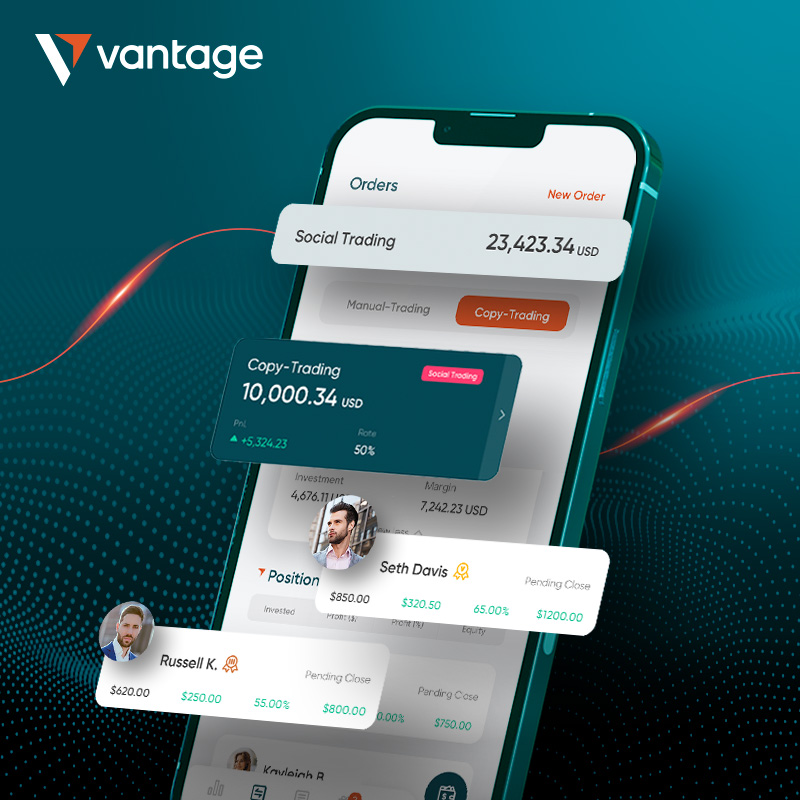
Vantage (or “Vantage Markets”), the multi-asset broker, has launched social trading on the Vantage App, making it an all-in-one trading app that supports both regular trading and social trading.
Social trading is an innovative feature that turns trading into a social event. Experienced traders can share their trading strategies as signal providers. Novice traders will be able to follow numerous signal providers, gain insights from experienced investors, and trade their strategies by mirroring the trades of others.
The Vantage App offers access to over 1000 trading instruments including CFDs on Forex, Commodities, Indices, Energy, Shares, ETFs and Bonds.
It has intuitive in-app navigation and provides a comprehensive range of charts, technical tools, order types, personalised trading reports and alerts. Available in 14 languages, the Vantage App also offers market analysis and market news powered by Trading Central and FX Street.
With the growing demand for mobile trading in mobile-centric markets, the Vantage App is now supported on OPPO, VIVO, Huawei, Xiaomi, and Samsung devices, on top of iOS and Android devices.
Lian Jie, Assistant App Marketing Director at Vantage explains how the new feature is revolutionizing the traditional CFD industry. “As our active investor profile gets younger, our clients have been more willing to explore and adopt innovative trading methods like social trading, going beyond traditional trading methods. At Vantage, we understand how technology and innovation can transcend boundaries, so we have utilized the power of technology in our Vantage App to meet the needs of the next generation and provide a seamless and convenient experience for all our clients.”
- 06:00 am
T-Scape, a leading digital technology services company, announced today that Western Asset, one of the world’s leading active fixed-income investment managers, has renewed its agreement with the company, specifically for its corporate action application, iActs, with the signing of a new multi-year contract.
The contract renewal will enable Western Asset to continue to evolve its global corporate action operating model, adapting it to changing business requirements; doing so will help increase efficiency. Leveraging its deep understanding of corporate actions and digital expertise T-Scape will help Western Asset elevate its operations still further, allowing additional increases in productivity, reduced levels of risk, and ultimately a greater level of control over
the entire corporate action operation.
“Western Asset is delighted to extend its relationship with T-Scape, a provider with a proven track record that has demonstrated its capacity to help us transform and significantly improve our global corporate action processes using iActs,” said Danny Shiggins, Head of International Securities Operations at Western Asset. “A lot of effort went into researching corporate action providers back in 2019; we determined then that T-Scape and iActs were the best fit for Western Asset. We felt we’d made the right decision then, and with this new deal we are reaffirming that decision.”
The next significant step in the evolution of iActs at Western Asset is extending its usage beyond operations and into the front office. This will result in front office participants such as portfolio managers having both a window through which they can view corporate action activity and the tools to actively engage in the process. This active engagement will also include compliance and client services and will mean further automation and improved efficiencies throughout.
“It has been a hugely satisfying experience working with the team at T-Scape. We developed a good working relationship early on and that’s continued. We’re very much looking forward to improving our processes across the board,” said Dan Place, Head of NY Securities Operations at Western Asset. “iActs is spot-on in terms of delivering to an investment manager’s requirement, but it’s what is yet to come that excites me. Bringing the front office into the equation and managing that from a compliance perspective is something we have been keen to address for some time. With iActs we now have an operating model that can bring all the pieces together.”
“As you can imagine, we are absolutely delighted that Western Asset has put its trust in T-Scape continuing to fulfil the Firm’s business requirement, it’s a fantastic deal for both companies,” said David Baxter, Managing Director at T Scape. “Good collaboration is absolutely critical if a project is to succeed and, it’s this as much as anything, that is enabling us to build mutually beneficial long-term relationships. We look forward to building upon what’s already been achieved, adding value at every juncture and ensuring Western Asset maintains a global corporate actions operating model that is second to none.”
- 01:00 am
Centralis Group today announced the further expansion of its Governance, Risk and Compliance service line and Cayman Islands business operations with the appointment of offshore anti-money laundering (AML) specialist Gary McLean. Gary will lead a new independent anti-money laundering risk management team that will focus on the provision of specialised AML services to alternative investment funds domiciled in all major jurisdictions. This development comes on the back of the acquisition of the independent directorship services provider Danesmead Limited in November.
Under Gary's leadership, tailored investment fund-specific AML risk solutions will be delivered via a high-calibre team of experienced AML professionals. Services include client funds' Anti Money Laundering Compliance Officer, Money Laundering Reporting Officer, Deputy Money Laundering Reporting Officer roles and delivering AML Advisory.
Matthew Crisp, Head of Centralis Governance, Risk & Compliance commented: "Hot on the heels of welcoming our highly experienced independent fund directors to the group, it is immensely satisfying that we are now further extending our services for alternative investment managers. I am delighted to welcome Gary. As an accomplished AML professional who has worked with some of the world's leading asset managers, the experience he brings to bear demonstrates a world class understanding of the AML risk requirements that investment funds face and must comply with, along with the practical means of discharging the attendant obligations. With this latest development, as well as those to come, we strive to bring best-in-class solutions to both current and new clients."
Gary McLean commented: "I am absolutely delighted to join the growing team of Centralis professionals. The goal is to provide high quality AML risk solutions that are tailored to address the specific needs of investment funds. The independence and support network of Centralis Group provides the perfect environment to do so."
Centralis Group is a leading alternative asset and corporate services provider, offering a full range of services and expertise to its global client base. It has established itself as an industry leader in providing a customer-centric tailored service via over 270 highly experienced professionals. The Group is headquartered in Luxembourg, with a presence in 13 countries globally.








