
Published

Freddie McMahon
Chatbot thought leader at N/A
There is a very early emergence of Chatbot capabilities being enriched by Blockchain. There are three distinctive use cases: Conversational Customer Consent see more
- 06:00 am

eftpos today announced that eftpos is now available on Android Pay, with ANZ and Cuscal being the first Australian financial institutions to make the service available to eftpos-only cardholders.
The service will use Australia’s first domestic Token Service Provider (TSP) for increased security, by removing confidential consumer card data from the eftpos payment network and replacing it with a unique payment token. The eftpos TSP, which was built in partnership with Rambus, enables eftpos to generate and manage its own payment tokens, facilitating secure digital payment experiences for eftpos cardholders.
The technology provides additional benefits to consumers when faced with a lost or stolen mobile phone or card. The user is able to disable mobile payments quickly, without needing to cancel the physical card itself.
ANZ and eight Cuscal sponsored credit unions and banks are all offering their customers the choice of using eftpos on Android Pay, including People’s Choice Credit Union, Sydney Credit Union, Woolworths Employee’s Credit Union, CUA, Nexus Mutual, and FCCS.
“Almost 2 million cardholders will now be able to make eftpos payments on their Android mobile devices. This will bring the convenience of secure, in store mobile payments to many Australians for the first time,” Mr Jennings said.
“We are thrilled to team up with Google, ANZ and Cuscal to provide customers with access to their own money via their Android mobiles at the shops, with added benefits such as the ability to track their bank balances in real time.”
To use the service, cardholders simply need to download Android Pay at the Google Play Store and follow the prompts.
"We're excited to bring the security and simplicity of mobile payments via eftpos for Android device owners in Australia. Using Android Pay is more secure — and much faster — than rummaging through your wallet for a plastic card. That’s why we've worked with eftpos to enable Android Pay at almost 800,000 contactless payment terminals in Australia where people can seamlessly Tap & Pay with eftpos using their Android devices," said Pali Bhat, VP of Product Management, Payments, Google.
Cuscal’s General Manager Product and Service, Robert Bell, said: “We’ve partnered with eftpos and Google to ensure that our clients’ eftpos cardholders now have the convenience of paying via their Android phones. This adds to our large portfolio of leading digital payment solutions. Cuscal enables multiple financial institutions to compete and lead in payments solutions vs the Big 4 banks. We provide our clients’ customers choice in the way they want to pay.”
- 03:00 am

EY today announces that it is working together with SAP to further advance deployment of blockchain across industries worldwide. Under their existing alliance relationship, the organizations are collaborating to integrate blockchain applications and services with the SAP® Leonardo digital innovation system to help accelerate enterprises' implementation of blockchain across their business operations.
EY Ops Chain, which is designed for customers to use to simplify supply chain management, is one of the first blockchain-based solutions that will be integrated on SAP Leonardo. Using EY Ops Chain, companies will be able to tightly integrate digital contracts, shared inventory and logistics information, pricing, invoicing and payments. This will improve forecast accuracy and fulfillment performance while reducing working capital requirements.
SAP Leonardo helps simplify innovating with new technologies and incorporates them into a customer's business with full scalability. The digital innovation system encompasses services and technologies such as the Internet of Things (IoT), machine learning and blockchain. SAP Leonardo can transform "systems of record" — back-end systems, like enterprise resource systems (ERP) or customer relationship management (CRM), focused on managing workflow, business processes and records — into "systems of intelligence" that automatically detect, interpret and act upon large amounts of data.
Paul Brody, EY Global Innovation Leader, Blockchain Technology, says:
"Blockchains are quickly becoming routine tools for business processing that companies can use to manage and take action from the huge amounts of data their systems collect and process. This data is often collected across a disconnected, fragmented infrastructure. EY Ops Chain on SAP Leonardo will help companies quickly develop and deploy blockchain solutions that connect business operations across their systems, on a platform already widely used by companies worldwide."
Saurabh Gupta, Chief Strategy Officer, HfS Research, says:
"Blockchain use cases are expanding to almost every vertical as enterprises realize its potential to create more distributed, equitable and more 'tamper-proof' business models. EY's holistic understanding of a blockchain-based business strategy, combined with SAP Leonardo's digital innovation capabilities, is a significant step forward in the deployment of blockchain for supply chain. Collaboration between industry leaders like EY and SAP will be essential to fulfilling the promise of blockchain."
Juergen Mueller, SAP Chief Innovation Officer, says:
"Blockchain helps deliver secure and simplified data sharing in complex multi-party processes. With SAP Leonardo, we provide a toolbox for our customers to access and innovate with all the latest technologies, such as SAP Leonardo Blockchain capabilities. By joining forces with EY, we will work together on blockchain use cases for our customers to help them streamline their complex transactions in the digital economy."
- 03:00 am

Zilliqa, a high-speed blockchain platform from researchers at the National University of Singapore, has today announced a strategic partnership with FBG Capital, one of the world’s leading digital asset management firms.
The firm will be investing into the project and Zhuo Shuoji, founding partner of FBG and a veteran cryptocurrency trader, will be joining Zilliqa as an advisor to help guide commercial and financial industry adoption of the new blockchain platform.
Zilliqa was created by researchers at the National University of Singapore to solve the issue of scalability of blockchains, one of the most pressing problems facing the technology today. The new platform they have developed is based upon the technology of sharding that was originally proposed by the research team in an academic paper in 2015.
“Zilliqa is an example of pure innovation being applied towards providing a solution to critical business challenges,” said Zhuo Shuoji, Founding Partner of FBG Capital. “We are excited to work with their top-notch team and help them build the next generation of high-throughput blockchain applications.”
“Having the expertise of Zhuo Shuoji and FBG Capital guiding us truly an honor,” said Xinshu Dong, CEO of Zilliqa. “We are confident that our technology combined with our amazing team and advisors will drive the adoption of our platform towards providing solutions to everyday business and consumer applications.”
Zilliqa has already built a working platform and has recently announced that their internal testnet has reached a peak throughput of 2,488 transactions per second (TX/s). For perspective, if Zilliqa were fully functional on the same number of computer nodes as Ethereum (~22,000) their transaction rate would be over 15,000 TX/s, nearly double the average of VISA, the largest electronic payment network in the world.
Zhuo Shuoji will be joining banking tech leaders Alexander Lipton and Stuart Prior as well as blockchain innovators Loi Luu and Aquinas Hobor as advisors on the project. The original scientific research for the project was done in the laboratory of Dr. Prateek Saxena, who is now Chief Scientific Officer with Zilliqa. Earlier projects and ventures that emerged from Dr. Saxena’s research group include KyberNetwork, TrueBit, SmartPool, and Anquan Capital.
Zilliqa plans to release their source code and a public testnet in December 2017. The public release of their protocol will enable the public and developers to participate in testing its functionality, performance, and robustness, and to start designing the next generation of blockchain applications that can be developed on the platform.
The company has stated that they will soon announce details of their public token generation event with their early contribution phase being currently underway.
- 07:00 am
Token, Inc., a turnkey open banking platform provider, and Envestnet | Yodlee, a leading data aggregation and data analytics platform powering dynamic, cloud-based innovation for digital financial services, today announced a strategic partnership to combine their expertise in PSD2-compliant payments and financial data aggregation.
Token’s open banking operating system, TokenOS™, enables banks to generate revenue from PSD2 compliant payments and simplifies access to banks for third-party service providers, via a universal API. Token OS helps reduce the cost, enhance the security and remove friction from a wide variety of payment types, including bill pay, e-commerce, B2B payments and money transfers.
The Envestnet | Yodlee Financial Data Platform enables personalized financial apps by delivering data from more than 16,000 global sources. Using consumer permission-based access to financial accounts and transaction information supported by bank-level security, the Envestnet | Yodlee Platform and its Aggregation API deliver bank, credit card, investment, loans, rewards, and other financial account data needed for personal financial wellness, lending, and wealth advisory apps and services.
By launching a synergetic partnership that empowers both companies to leverage each other’s strengths, Token and Envestnet | Yodlee can now serve EU banks with a powerful joint proposition. Combining the universality and security of TokenOS and the depth and breadth of Envestnet | Yodlee’s Platform and API integration creates the most compelling, secure and comprehensive open banking payment and information solution available to EU banks.
Steve Kirsch, CEO and Founder of Token, commented: “We are delighted to work with Envestnet | Yodlee to transform the future of banking. When it comes to PSD2, developers are not going to support hundreds of unique bank APIs; they will only write to one common API, maybe two. This means that banks that create their own proprietary API risk not being able to deliver the variety and freedom that customers expect in the digital age.”
“Instead, banks should support a common open banking platform – one that is easy, secure, interoperable, low cost and developer friendly. Our partnership with Envestnet | Yodlee, the market-leading API aggregator, makes Token’s proposition more attractive than ever for both banks and developers.”
Jason O’Shaughnessy, Senior Vice President for EMEA and Australia at Envestnet | Yodlee, added: “Both Token and Envestnet | Yodlee believe that open data access is critical to enabling innovative tools that can help consumers improve their financial lives. Our shared dedication to improving the banking end-user experience means that Token and Envestnet | Yodlee are a natural partnership, and it’s great to see Token leverage our financial data aggregation platform to deliver secure, customer-centric solutions to their clients.”
- 04:00 am

To help device manufacturers meet a growing demand for long-lasting low-power NarrowBand (NB) IoT modules, Gemalto and Huawei – via its semiconductor arm, HiSilicon – are working together to develop the next generation of modules that combine an extra level of security and consume very low power. By combining the expertise from both companies, these NB-IoT modules will help manufacturers reduce the cost and size of their devices, and lengthen the battery life of the devices to up to ten years.
NB IoT has been developed to address lower bit rates and lower cost segments, and works virtually anywhere. It offers ultra-low power consumption enabling devices to be battery operated for periods of up to 10 years. Applications include smart parking sensors, intruder and fire alarms, personal healthcare appliances, tracking devices, and street lamps to name a few. According to ABI Research, NB IoT modules connecting objects to networks are forecast to represent over 20% of all cellular shipmentsby 2021.
"2017 is the year of commercial NB IoT rollouts for us, and we will be building 30 such networks in 20 countries worldwide by the end of the year. Huawei has been a major player in this arena, and we continue to capitalize on this vast opportunity," said XiongWei, president of LTE solution, Huawei. "We look to supply the market with solutions that provide stable connectivity, low energy consumption, and cost efficiency. The network roll-out will now come with an enhanced integration and flexibility thanks to this collaboration with Gemalto."
"The combination of our expertise in IOT cellular connectivity, and digital security, and Huawei's high-performance NB IoT chipsets will help device manufacturers and service providers take the plunge into cellular IoT mass deployment thanks to a standardized solution," said Suzanne Tong-Li, SVP Greater China and Korea for Mobile Services and IoT and China President, Gemalto. "Our collaboration simplifies the implementation of NB IoT projects combining solid security and flexibility."
- 04:00 am

BLIK mobile payment system has become “BLIK Payment Scheme” as well.
On August 7th Polish Payment Standard Ltd. filed to the President of the National Bank of Poland, the central bank, a formal request for permission to introduce “BLIK Payment Scheme”. The administrative proceeding initiated by the submitter was the consequence of the amended bill on payment service that had come into force. The bill introduced the notion of payment scheme to the Polish law system.
The swift decision by the President of the National Bank of Poland has made BLIK the first non-card payment scheme in Poland. The decision confirms that BLIK abides by all the regulatory requirements to ensure safety and stability of the scheme.
Payment scheme is a set of rules defining the process of servicing transactions made through payment instruments (e.g. debit cards, mobile applications, electronic wallets). The rules pertain to the issuance of payment instruments, provision of acquiring services, including agreements with businesses concerning acceptance and processing of transactions made through payment instruments. Under the law, payment schemes are supervised by the National Bank of Poland, the central bank.
- BLIK is an innovative payment scheme not only in Poland, but worldwide. Now it has become the first non-card payment scheme. It’s a huge step towards its further development and dissemination - says Dariusz Mazurkiewicz, CEO of the Polish Payment Standard, BLIK operator.
About BLIK
BLIK is a mobile payment system and scheme, one of the first on the European market, with a unique model of co-operation between banks, payment acquirers and merchants all supported by innovative information technology, architecture and design. Built on a partnership of Poland’s six largest banks, the payment scheme allows for a single, integrated platform across all mobile devices.
With the growth of its acceptance network, BLIK allows its users to pay in numerous points - online, in a mobile channel, in a physical network of ATM’s, shops, post offices, local administration offices and various other service providers.
Polish Payment Standard Ltd. (PSP) is an operator of BLIK. The joint-venture was established in Dec. of 2013 by the six largest banks in Poland. The shareholders of PSP include: Alior Bank (PZU Group), Bank Millennium (Banco Comercial Portugues Group), Bank Zachodni WBK (Santander Group), ING Bank Śląski (ING Group), mBank (Commerzbank Group) and PKO Bank Polski (the biggest retail bank in Poland and middle and eastern Europe). Affiliated banks serve about twenty million customers - approximately 70% of the Polish market.
- 01:00 am
AbacusNext®, the largest Technology-as-a- Service (TaaS) provider for the professional services industry, is pleased to announce the acquisition of HotDocs, the global leader in document automation. Integration of HotDocs into the existing technology solutions for legal, accounting, and business management makes AbacusNext the most complete technology provider to the professional services industry.
Highlights of Acquisition:
- HotDocs is the leading provider of document automation software, with customers in 60 different countries and a user-base, globally, that exceeds one million.
- AbacusNext pioneered the only Compliance-Ready(TM) suite of technology solutions designed exclusively to cloud-enable desktop, mobile and SaaS applications in a single sign-on, secured and fully managed environment.
- HotDocs is widely used in the legal, banking, insurance, government, public and corporate sectors for increasing accuracy, reducing cost, mitigating risk, and improving efficiency in the generation of complex documentation. Users can quickly and efficiently generate customized documents such as contracts, sales agreements, government forms, and loan documentation.
- HotDocs Market, the standalone marketplace and publishing platform, gives professionals access to thousands of premium templates. Utilized by over 9,000 users, HotDocs Market is populated with content created by leading publishers and state bar associations.
- AbacusNext's combined user base, 1.5 million worldwide, will benefit from the most compelling products and services portfolio in the industry, including case management and practice management software solutions, private cloud hosting, Desktop-as-a-Service (DaaS), IT infrastructure management, security endpoint protection, and business automation.
This caps a year of expansion for AbacusNext-which saw acquisitions of Results Software, an award-winning CRM, OfficeTools, an industry leading practice management application, and Cloudnine Realtime, a hosting platform for accounting firms. The combination represents a unique opportunity to bring end-to-end technology services to existing clients, and AbacusNext will be positioned to capture significant market share in a highly fragmented market as the first company to provide a comprehensive suite of enterprise-level technology services and products.
In addition to core products, AbacusNext acquires HotDocs Market, an online ecommerce marketplace that allows clients to purchase and use HotDocs templates whenever and wherever they want. This unique, self-contained e-store built by HotDocs will ultimately allow on-demand access to products and templates across the unified AbacusNext portfolio. Incorporating HotDocs Market into the AbacusNext ecosystem will deliver yet another game-changing automation platform for clients.
"Today marks another milestone as we continue building on our unique technology services platform for our current and future clients," said Alessandra Lezama, CEO of AbacusNext. "HotDocs' document automation software is the perfect addition to our portfolio and will make an immediate impact for our client base of legal and accounting firms. By leveraging the HotDocs platform and support staff, we'll be able to offer organizations greater business efficiency than ever before, with the broadest value proposition to support customer growth. The combined company will have an unmatched position in serving clients by providing a complete end-to-end solution."
Rapid technology changes in recent years, together with increased pressure to reduce costs and increased mobility, is driving the movement to cloud-enable firms in the professional services industry to considerably reduce their costs and increase revenues. With this acquisition, AbacusNext builds HotDocs service offerings into its platform, allowing deeper relationships with business clients by providing the solutions they need to maximize operational efficiency and strengthen profit margins.
"HotDocs and AbacusNext work across many of the same markets and are a natural fit," said Russell Shepherd, outgoing CEO of HotDocs. "I was looking for an acquirer with the same grand scale of ambition as the HotDocs team, and Abacus has the ambition to take the combined businesses on to even greater heights. HotDocs offers Abacus the opportunity to expand vertically and internationally in one bold strategic move, through the acquisition of a global, market leading brand, and I am delighted to be passing on the leadership and ownership of HotDocs to this successful and expanding company."
Steve Spratt, COO at HotDocs, commented, "HotDocs document automation technology will enhance the existing product suite that AbacusNext already provides to its impressive client base and the 11,500 existing HotDocs client organizations will now have access to new CRM, practice management and hosting services under one roof. We welcome this new partnership and I look forward to sharing the benefits it brings with existing and new customers across our key verticals of banking, legal and large enterprise."

- Product Reviews
- 13.11.2017 10:51 am
Could you please introduce Pundi X’s POS solution for cryptocurrency?
The Pundi X POS (Point of Sale) smart device enables shops, cafes and convenience stores to sell cryptocurrency to a broad cross section of regular consumers who would otherwise have little or no access to cryptocurrency. In the blockchain ecosystem Pundi X plays the role of a distribution centre for blockchain technology and cryptocurrency - think of it as the ‘7-Eleven’ of blockchains. Traders can sell cryptocurrency and supporting services to regular consumers through an extremely wide Sales Network that reaches millions of additional users outside online cryptocurrency exchanges. Apart from the Sales Network, Pundi X also has an Advertising and Management Platform that keeps consumers informed about new cryptocurrencies and supporting services.
How did you come up with idea to launch the service?
Pundi X follows the success of our existing business which delivers fintech services in the form of Pundi-Pundi, Pundi Booster, Pundi Toko and Scanbersama apps to users across Indonesia.
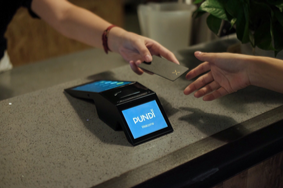
For example, Pundi-Pundi is already one of Indonesia’s largest QR payment applications (think Alipay). Since February 2017, Pundi-Pundi has been downloaded over 100,000 times, achieving 20,000 monthly active users. Today, over 500 retail outlets, restaurants and cafes accept our Pay-By-QR apps. Users are concentrated in Indonesia’s capital city of Jakarta with an eventual roll out planned across the whole of South East Asia. Pundi-Pundi is available on the iOS AppStore and on Google Play.
What is the core function of the Pundi X POS Solution?
When installed in retail outlets, Pundi X POS device enables consumers to quickly and easily buy or sell cryptocurrency using fiat money (Dollars, Rupiah, Baht etc.), bank card, mobile wallet or Pundi X Pass. The purchased cryptocurrency can be stored in a digital wallet or used to make cashless payments to top up phones, pay utility bills or buy goods. The Pundi X POS is a smart device that is built to distribute cryptocurrency and is connected to the blockchain, so that each transaction is recorded on the blockchain information ledger.
Consumers use Pundi X POS to:
- buy BTC, ETH, LTC, PXS (Pundi X Tokens) and cryptocurrency using cash or card
- sell BTC, ETH, LTC, PXS (Pundi X Tokens) and cryptocurrency for cash
- top up fiat money in a digital wallet
- buy utilities and services, e.g. electricity using cryptocurrency
- buy physical goods using cryptocurrency
Since each Pundi X POS device is connected to the web, software and feature updates can be performed remotely. For example, an update may introduce new blockchain features; schedule the sale of new tokens; or arrange for a new cryptocurrency to be issued by means of an ICO (Initial Coin Offering).
Who needs this service?
Unlike markets such as China where Alipay and WeChat Pay set the standard, cashless payments in Indonesia have been slow to take off - in part, because of a low level of just 23% bank account ownership and limited mobile digital payment penetration in a market where consumer purchases are still largely cash-based and offline. Consequently, Pundi X will play an important role in helping to deliver financial services to the very significant ‘unbanked’population of South East Asia.
After a roll out across Indonesia, Pundi X will deploy its service in South Korea and other parts of Asia. We will also explore a partnership model for faster deployment in different parts of the world.
Regular consumers are not cryptocurrency experts. They have read stories about bitcoin and the blockchain; they have also witnessed the rise and fall in the value of bitcoin; yet 99% of these people don’t know how to buy bitcoin or other cryptocurrencies. Only specialists really understand the meaning of terminology such as ‘private and public key’, ‘bitcoin addresses’ and ‘digital signatures’. For most consumers, this is just a confusing muddle of information. So suggesting that regular consumers go out and purchase bitcoin today is unimaginable. What is even harder to understand is that very few people are trying to address this issue today! Pundi X is here to solve this important problem by helping regular consumers buy cryptocurrency - by making the process as easy as buying a bottle of water from a convenience store! We ensure that cryptocurrency investors, developers, exchanges and blockchain companies all benefit from our Pundi X solution.
What are the key features of the service?
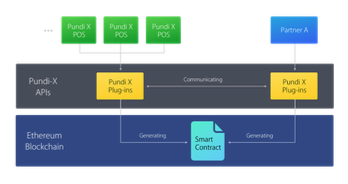
The target for Pundi X is to enable every convenience store to be part of the blockchain ecosystem. With Pundi X POS devices, we now have a cost-effective approach to achieving this goal. Each device is connected to the blockchain using XPlugins via two layers: the communication layer and the blockchain layer. The communication layer delivers a ‘buy’ request and uses the blockchain layer to make a record of the sale. This information is then stored permanently in the blockchain. As a result, developers all over the world can now collaborate with all Pundi X devices.
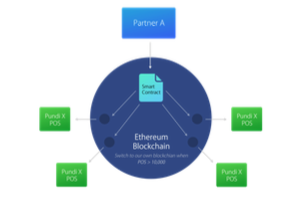
We allow developers as well as cryptocurrency traders and holders to sell their cryptocurrency via our sales network. Major cryptocurrency and ERC20 tokens can be accepted and sold on Pundi X POS and developers can use XPlugins to connect to digital wallets, creating smart contract requests that can be supported by Pundi X devices. The system automatically generates smart contractS in the Ethereum blockchain after receiving orders from XPlugins.
How user-friendly and easily accessible is the service?
Pundi X POS is the most user-friendly way to buy, sell or use cryptocurrencies. When making cashless payments using cryptocurrency, the cryptocurrency is exchanged back to fiat money in real time before buying goods, making the currency conversion process completely seamless to the user.
On the merchant side, the POS works like any other POS with the addition of the cryptocurrency service that is also implemented seamlessly here.
What reporting capabilities are available?
Approximately 73% of the population of South East Asia does not have a bank account. In addition, tracking user credit ratings presents a major challenge without a workable credit rating system and so bank loan approval causes many difficulties. Consequently, Pundi X aims to collaborate with local financial institutions to create an effective credit rating system by addressing the biggest challenges of privacy and decentralized control by using blockchain technologies.
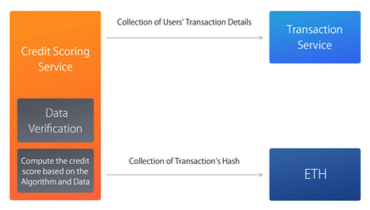
Pundi X has an API suite that connects to the Ethereum blockchain and stores user data in the blockchain in the form of hash calculations. The aim is to store all data indefinitely - including utility bill history.
Our approach is to store the hash results in the Ethereum blockchain instead of all the credit data. The hash data can then be retrieved and validated in order to check the full set of data stored outside the blockchain.
By accessing the open database and calculating a hash, Pundi X partners can match the result with the hash record that is stored in the Ethereum blockchain: if both results match, then user identity and data-integrity is validated. By avoiding the need to store all data in the Ethereum blockchain, we have developed a cost-effective method that also effectively addresses privacy issues. Today, no user data is stored in the Ethereum blockchain, only hashes. Financial institutions can now retrieve credit rating data effectively and perform further calculations on their own servers, while avoiding impinging on client privacy.
What is your pricing strategy?
The X POS device is geared towards a low fee or free model whereby shop merchants are encouraged to acquire devices from Pundi X at minimal cost. Revenue is shared between shop merchants and Pundi X each time a service or cryptocurrency is delivered to users.
This revenue model comes from the sale and usage of the Pundi X native token called PXS in the Pundi X ecosystem, enabling B2B merchants (such as online cryptocurrency trading platforms or other companies selling virtual goods) to use PXS tokens to enter the Sales Network ecosystem. PXS tokens are available for sale during the Pundi X ICO in October.
About Pundi X
Pundi X is a blockchain startup that aims to make cryptocurrency an enabler of ubiquitous cashless payment environments across South East Asia and beyond. Pundi X POS (Point of Sale) enables shops, cafes and convenience stores to sell cryptocurrency to a broad cross section of regular consumers and builds on the success of Pundi-Pundi which is one of Indonesia’s most popular QR code cashless payment apps. The launch of Pundi X POS is a stepping stone towards an ICO in late 2017 that will provide funding for between 100,000 and 700,000 Pundi X POS devices to be installed over the next three years across all target markets.
Pundi X’s pre-ICO commenced on 7 October 2017 at www.pundix.com. Participants need to complete a simple KYC (Know Your Customer) process to meet compliance requirements before participating in the pre-ICO.
Other Product Reviews
- 02:00 am
ACI Worldwide, a leading global provider of real-time electronic payment and banking solutions, today announced that Payments Network Malaysia (PayNet), the national financial market infrastructure provider, will build Malaysia’s Real-time Retail Payments Platform (RPP) using ACI’s UP Immediate Payments solution.
RPP is PayNet’s strategic initiative to modernize Malaysia’s retail payments infrastructure, drive innovation in electronics payments and bring the benefits of immediate payments to all participants in the payments ecosystem, including banks, payment institutions, businesses, consumers and the government. Tasked with developing Malaysia’s payments ecosystem, PayNet resulted from the merger of Bank Negara Malaysia’s (Central Bank of Malaysia) wholly-owned subsidiary, Malaysian Electronic Clearing Corporation (MyClear), with Malaysian Electronic Payment System (MEPS), in August 2017.
PayNet selected ACI’s UP Immediate Payments solution for its central infrastructure because of its flexibility as a platform to build transformative payment capabilities, as well as its potential to serve as an enabler for innovative new payment products. In 2017, PayNet will build the Core RPP infrastructure, while 2018 will see the launch of Instant Credits, Request-to-Pay for e-commerce and person-to-person (P2P) Payments with Proxy Address Resolution. This will allow payments to be addressed seamlessly by mobile numbers, National Registration Identity Card (NRIC) numbers, or business registration numbers.
“ACI’s UP Immediate Payments provides the flexibility and agility that PayNet needs to continue innovating and improving the value proposition of electronic payments. Our ability to rapidly bring to market the payment products of the future is essential to keep abreast with the fast pace of change in the e-Payments market,” said Mr. Peter Schiesser, Group CEO, PayNet. “Among the innovative new products in our pipeline is instant cross-border payments where sending payments regionally and globally would be as quick and easy as sending a text message. We are in discussions with our counterparts in Thailand and Singapore to bring this exciting new service to life. We look forward to tapping into ACI’s understanding of the global payments market and its wealth of experience in payments to make e-Payments fast, frictionless and convenient—meeting demands for immediacy in an online, interconnected world.”
“ACI has a long track record of developing powerful and flexible immediate payments platforms and we are excited to partner with PayNet on its RPP initiative, which will benefit Malaysian consumers, financial institutions and businesses. Moreover, it will also position the country as a leader within the larger regional and global payments marketplace,” said Leslie Choo, Vice President & GM, Asia, ACI Worldwide. “PayNet will benefit from our highly agile and responsive immediate payments solution, which can address its future needs as the Malaysian payments ecosystem evolves and matures—with cross-border connectivity to other real-time payment systems around the globe.”
ACI has an unmatched global customer base of financial institutions and payment service providers using its UP Immediate Payments solution. In the UK, the solution has been used by financial institutions to access the UK Faster Payments scheme since its launch in 2008. Currently, over 70 percent of the direct participants of the UK’s Faster Payments Scheme use ACI’s solutions. Last year, EBA Clearing selected ACI as one of the ‘frontrunner service providers’ for the pan-European EBA SEPA Instant Credit scheme. ACI has also partnered with VocaLink to offer a complete end-to-end immediate payments solution for a domestic or regional immediate payments network. Additionally, ACI has customers using UP Immediate Payments to access Singapore FAST and the Australian NPP (New Payments Platform); it is also implementing The Clearing House RTP system and Zelle for customers in the US. ACI serves on the ISO 20022 Real-Time Payments Group, the EPC Instant Payments Technology Group and chairs the IPFA rules working group.








