
Published
- 03:00 am

JSC Russian Agriculture Bank ("RSHB") and JCB International Co., Ltd., the international operations subsidiary of JCB Co., Ltd., are pleased to announce the launch of JCB card acceptance on the RSHB ATM and POS terminal network.
Irina Zhachkina, Deputy Chairman of the Board of JSC Russian Agriculture Bank noted: "The cooperation between Russian Agriculture Bank and JCB contributes to the development of bilateral trade and economic relations between Russian and Japan. It aims to activate payment flows inside the country and abroad, primarily providing a settlement infrastructure for tourists and business travelers from Japan".
Takashi Suetsugu, General Director of JCB International Eurasia commented: "We welcome this first stage of cooperation with JSC Russian Agriculture Bank, where the team professionally and effectively implemented our new project, providing reliable service to not only foreign JCB cards, but also to JCB cards issued in Russia, in the central as well as the remote areas of Russia through one of the largest banking service network in the Russian Federation. From now using JCB cards will become even more convenient".
- 01:00 am

Global technical association, OSPT Alliance, today announces that its open, non-proprietary CIPURSE™ standard has been selected for a new automated fare collection solution trial across Moscow’s Skolkovo bus route. The trial will provide a secure and cost-effective ticketing solution for travelers between Moscow City’s business district and the city’s famed start-up and innovation hub, Skolkovo.
Utilizing the CIPURSE standard across the solution – including the card’s hardware and software, validators, and all ticketing vending machines – Elpass, a leading system integrator and transport ticketing solution provider in Russia, was able to realise a significantly reduced time to project launch and greatly simplified integration. The solution took just three months to develop and has already seen 1,600 cards issued and over 1,000 travelers welcomed in its first week.
“Russia’s transport ecosystem is unique in both its scale and complexity. For us, adopting industry standards offers the time and cost efficiencies necessary to best meet the challenges of this rapidly expanding market. With such a quick turnaround for this project, the maturity of the CIPURSE standard in transport ticketing made it an obvious choice,” comments Mr. Ruslan Zavgorodski, President of the Board of Directors, Elpass.
In addition to this initial trial service, Elpass hopes to extend this service into other regions across Russia. The CIPURSE Specification is built on proven standards, including ISO 7816 and ISO/IEC 14443-3, and utilizes AES encryption, ensuring its resistance to typical attacks. Fully form-factor agnostic, the standard offers an advanced foundation for developing secure, interoperable and flexible mobility solutions.
Mr. Zavgorodski continues, “CIPURSE’s interoperability and high level of security was central to our selection, too. Not only did it simplify the development of this end-to-end solution, but it offers us a platform to expand the solution easily, with guaranteed operational soundness.”
Philippe Martineau, President of the OSPT Alliance Board, adds: “This trial is a perfect illustration of the growing popularity of CIPURSE across Russia and the potential open standards can deliver in such a large market.
“For players like Elpass with growing domestic and international ambitions, CIPURSE empowers them to scale seamlessly with these aspirations, uninhibited by high integration costs and complexities. Serving Skolkovo’s innovative, tech-savvy commuters seems the fitting place to begin a trial and we look forward to continuing to support the adoption of our standard across adjacent regions and beyond.”
- 08:00 am

Workday, Inc. (NASDAQ:WDAY), a leader in enterprise cloud applications for finance and human resources, today announced results for the fiscal 2019 first quarter ended April 30, 2018.
Fiscal First Quarter Results
- Total revenues were $618.6 million, an increase of 28.9% from the first quarter of fiscal 2018. Subscription revenues were $522.1 million, an increase of 30.6% from the same period last year.
- Operating loss was $71.3 million, or negative 11.5% of revenues, compared to an operating loss of $60.2 million, or negative 12.5% of revenues, in the same period last year. Non-GAAP operating income for the first quarter was $80.8 million, or 13.1% of revenues, compared to a non-GAAP operating income of $61.0 million, or 12.7% of revenues, in the same period last year.1
- Net loss per basic and diluted share was $0.35, compared to a net loss per basic and diluted share of $0.31 in the first quarter of fiscal 2018. Non-GAAP net income per diluted share was $0.33, compared to a non-GAAP net income per diluted share of $0.29 in the same period last year.2
- Operating cash flows were $184.2 million and free cash flows were $135.4 million.3
- Cash, cash equivalents, and marketable securities were $3.4 billion as of April 30, 2018. Unearned revenues were over $1.4 billion, a 17.9% increase from the same period last year.
Comments on the News
“We had a great first quarter driven by strong adoption and notable deployments of our finance and HR applications across customer sizes, geographies, and industries,” said Aneel Bhusri, co-founder and CEO, Workday. “As we look toward the rest of FY19 and beyond, we expect continued momentum for our growing suite of products, as we stay relentlessly focused on innovation, customer satisfaction, and our commitment to culture as we further our position as a great place to work globally.”
“We are very pleased with our first quarter results, delivering strong growth and record non-GAAP operating income and operating cash flow,” said Robynne Sisco, co-president and chief financial officer, Workday. “Based on our strong first quarter results, we are raising our fiscal 2019 outlook and are now expecting subscription revenue of $2.275 to $2.290 billion, growth of 27% to 28%. We expect our second quarter subscription revenue to be between $557 and $559 million, growth of 28% to 29%. Our focus remains centered on investing in product innovation to drive strong, sustainable growth.”
Recent Highlights
- Workday announced that it has promoted Robynne Sisco and Chano Fernandez to co-presidents, expanding their current responsibilities as chief financial officer and global head of field operations, respectively. In addition, Workday appointed Phil Wilmington to vice chairman and Mark Peek to managing director and co-head of Workday Ventures.
- Workday announced a $250 million Workday Ventures fund, which will be used to invest in emerging enterprise technology. In addition to Mark Peek, Workday executive Leighanne Levensaler was also named managing director and co-head of Workday Ventures.
- Workday was ranked #2 on the list of the World’s Most Innovative Companies by Forbes.
- Workday announced that it expanded its global operations, with new offices in Italy, South Africa, and Thailand.
- Workday was positioned by Gartner, Inc. in the Leaders quadrant of the Magic Quadrant for Cloud Core Financial Management Suites for Midsize, Large, and Global Enterprises. Workday was acknowledged as a Leader for the second year in a row and achieved the furthest overall position for completeness of vision this year.4
- As part of its latest feature release, Workday 30, Workday announced new data discovery capabilities within Workday Prism Analytics that enable customers to more quickly visualize data to understand their financials and people.
- Workday announced a strategic partnership with Slack, which will allow customers to complete tasks more efficiently by engaging with Workday from within the Slack interface.
- Demonstrating continued commitment to enhancing its compliance programs, Workday receivedapproval from EU data protection authorities for global Binding Corporate Rules for Processors (BCRs) that focus on safeguarding customer data.
- In the U.S., Workday was ranked #7 on the list of 100 Best Companies to Work For by Fortune and Great Place to Work Institute. Globally, Workday was named one of the best workplaces by Great Place to Work Institute, ranking #1 in the UK, #2 in Ireland, and #3 in Germany.
Earnings Call Details
Workday plans to host a conference call today to review its fiscal 2019 first quarter financial results and to discuss its financial outlook. The call is scheduled to begin at 2:00 p.m. PT/ 5:00 p.m. ET and can be accessed via webcast.
The webcast will be available live and a replay will be available following completion of the live broadcast for approximately 90 days.
Workday uses the Workday Blog as a means of disclosing material non-public information and for complying with its disclosure obligations under Regulation FD.
1 Non-GAAP operating income excludes share-based compensation expenses, employer payroll tax-related items on employee stock transactions, and amortization expense for acquisition-related intangible assets. See the section titled "About Non-GAAP Financial Measures" in the accompanying financial tables for further details.
2 Non-GAAP net income per share excludes share-based compensation expenses, employer payroll tax-related items on employee stock transactions, amortization expense for acquisition-related intangible assets, non-cash interest expense related to our convertible senior notes, and income tax effects. See the section titled "About Non-GAAP Financial Measures" in the accompanying financial tables for further details.
3 Free cash flows are defined as operating cash flows minus capital expenditures (excluding owned real estate projects). See the section titled "About Non-GAAP Financial Measures" in the accompanying financial tables for further details.
4 Gartner, Magic Quadrant for Cloud Core Financial Management Suites for Midsize, Large, and Global Enterprises, 29 May 2018
Disclaimer - Gartner does not endorse any vendor, product or service depicted in its research publications, and does not advise technology users to select only those vendors with the highest ratings or other designation. Gartner research publications consist of the opinions of Gartner's research organization and should not be construed as statements of fact. Gartner disclaims all warranties, expressed or implied, with respect to this research, including any warranties of merchantability or fitness for a particular purpose.
- 01:00 am

AirPod, the cutting-edge airport sleeping pod, today announces the launch of its beta prototype, in preparation for the first commercial trial to be implemented in EU airports in autumn 2018.
AirPod is a private capsule-like unit designed to be installed in public locations such as airports, hotels, train and bus stations or shopping centres. This comes as a solution for people seeking a private area to relax, sleep or work without having to leave the airport. In order to provide comfort and enhance user experience, the AirPod encompasses features such as an ergonomically designed seat that converts into a bed, free high-speed WiFi, air conditioning & air purifiers, power sockets (USB/electricity), luggage and personal belongings storage and information about flight status.
Recently presented at the Crypto conference in Belgrade, Serbia, AirPod will be privately funded until it is ready for crowd sale (ICO - Initial coin offering). Currently in its last phase of development, blueprints for beta prototype are underway, with plans firmed up for a commercial trial to begin in autumn 2018 at EU airports, thanks to a global distributer that enables access to a global network of airports.
Pioneering a new business model, the AirPod uses blockchain technology, having established its own cryptocurrency called APOD. Purchasing an APOD or APOD token will make an individual eligible for profit sharing created by AirPod unit, giving token holders the opportunity for earning stable passive crypto-income.
AirPod was inspired by personal experience while travelling by Slovenian business men Mihael Meolic (COO) and Grega Mrgole (CEO), who identified a need for a convenient way to maximise comfort for those transiting through airport terminals. Grega Mrgole, CEO, thinks that “AirPod’s vision is to improve travel experience overall and additionally to offer those interested in the business the opportunity to earn passive crypto-income.”
Research shows that there are 667 million passengers worldwide every year, with transit and transfer passengers representing 10% of that majority and 2% of these facing delayed or cancelled flights. AirPod sleeping pods aim to fulfill travellers’ need for a comfortable airport experience, with a study conducted by Skyscanner reporting that 36% of respondents see a need for sleeping pods at airports. Additionally, a survey conducted by sleepingairport.netrevealed that over 90% of passengers would pay for a sleeping pod at an affordable price.
- 08:00 am
The total number of complaints against financial service institutions has increased, despite investment in customer service processes. Complaints data from Financial Ombudsman Service revealed a rise from 1,456,396 between 2017/2018 up from 1,394,379 the year before.
Poor customer experience costs the banking and financial services industry £5.81 billion in 2017. Businesses are mistakenly focusing on optimising their business operations without the customer in mind, according to Business Process Management Company Signavio.
Improving customer experience is helping traditional players regain their lead position against a backdrop of mounting competition from agile challengers.
Dr Gero Decker, CEO & Founder of Signavio, comments: “Focusing on saving time and resources to become more efficient is an outdated way of looking at customer experience. Customer journeys are proving to be a great way of shifting the mindset when it comes to back-end processes. Although it is a business problem and not a customer issue, businesses need to align their processes with customer experience by looking at them from the eyes of the customer, asking how these processes will help to achieve a better experience for the customer.
“Today, businesses need to change their way of thinking and connect the dots between customer experience and business operations by mapping out the customer journey and aligning it with internal processes. This shifts the thinking from internal efficiency to external, customer-driven effectiveness.”
Gero continues: “Businesses need to empower every human agent to be able to derive customer insights from different touch points of the customer journey. Customer data is essential for effective complaint handling not only to appropriately calculate the right response in terms of reimbursement, but also to fulfil your regulatory obligations.
“Setting up processes to log and capture all complaints, classifying them and addressing their root cause gives all business users full visibility. This can help all business users create a positive cycle where data is used to improve customer satisfaction and speed up resolution.”

Elina Mattila
at Mobey Forum
Earlier this week, futurists and innovators from across financial services industry gathered at Mobey Day Toronto to explore the social, economic and technological forces shaping a new generati see more
- 04:00 am

Mastercard today announces the creation of Accelerate, a new programme to drive growth at scale for the fast-evolving FinTech industry. The initiative is designed to support the ambitions of players in the FinTech sector through tailored support arrangements including access to insight, tools, technology and investment to support innovation. Designed to operate alongside the successful Start Path programme, Accelerate broadens and deepens Mastercard’s engagement with the payment Fintech community including the next generation of digital banks.
Tools include dedicated Mastercard licensing specialists to support market expansion, in-market access to account expertise to fast track growth, and unparalleled ability to connect to comprehensive processing assets and tools. Resources will include Mastercard Advisors for in-market execution support, data insights and analytics. The program also provides market-based resources for related strategic investing and flexible early-stage collateral requirements.
“Creating this platform is the next step in our long-term focus on being partner of choice for FinTech companies around the world” commented Ann Cairns, Vice Chairman, Mastercard. “Globally, the Fintech community is one of the most vibrant and fast-paced, and Mastercard is committed to help these fast growing businesses unleash their full potential. With more than half a century of experience in supporting growth of the financial services industry, Mastercard is uniquely positioned to provide the platform which can propel FinTech businesses along increasingly ambitious growth paths.”
Mastercard has been committed to Fintech for many years, fostering partnerships with pioneers who have grown into global brands. Mastercard currently supports over 30 emerging and established digital banks in Europe alone. Mastercard research shows unequivocally that consumers are engaging with digital banking with greater frequency, and with greater expectation. The market opportunity for ambitious digital banking businesses and Fintechs is clear and Mastercard is prepared to help them seize it.
- 08:00 am

Mobile voice service revenue in Latin America (LATAM) will decline from $33.7bn in 2017 to $27.1bn by 2020, with a negative Compound Annual Growth Rate (CAGR) of 7.0% between 2017 and 2020, due to the growing adoption of over-the-top (OTT) voice applications such as Skype, WhatsApp and Facebook Messenger, according to GlobalData, a leading data and analytics company.
LATAM’s OTT voice applications users reached 150.4 million in 2017 and will increase to 264.8 million by 2020, growing at a CAGR of 14.4% over the forecast period. OTT voice applications penetration of population will more than double from 13.9% in 2017 to 34.7% in 2020.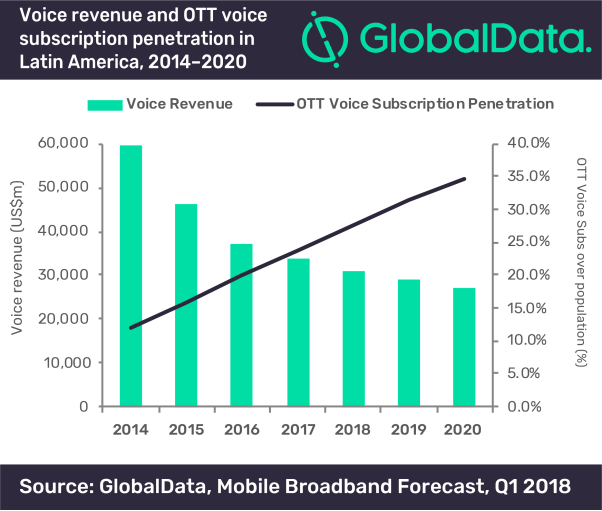
Leandro Agion, Senior Technology Analyst at GlobalData, comments: “In an attempt to offset the decline from mobile voice service revenue, operators are focusing on data-intensive plans to drive mobile data service revenue by taking advantage of growing smartphone adoption, along with expanding 4G network availability.
“To achieve this, telecom operators in the region are leveraging plans with zero-rating OTT usage, such as WhatsApp messaging, and larger mobile data quotas, thus fostering OTT voice usage. This is a regional go-to-market strategy followed by pan-regional operators such as Telefónica and América Móvil, and local ones such as Personal Argentina, Tim Brazil, among others.”

Karina Skara
UX Architect / UX Consultant at UX Design Agency
Most people can remember a situation in their lives in which they experienced a huge amount of stress when dealing with money. see more
- 06:00 am

Mastercard today announced that leading cybersecurity expert Simon Hunt will join the company as executive vice president to head its cybersecurity solutions unit.
Hunt’s role will be to further enhance Mastercard security capabilities for cardholders, customers, merchants and other stakeholders in light of the growing cybercrime threat.
Cybercrime is forecast to double in the next five years hitting $6 trillion by 2021. While cybercrime can have a major impact upon revenues and reputation of a large company, the rapid increase in threats can often have catastrophic effects for all businesses—with many never recovering from an attack. That’s why enhanced cybersecurity solutions—including strategic partnerships, standards development and new products innovation under the leadership of Hunt—are an increasingly important part of how Mastercard delivers security leadership in the digital world.Simon Hunt
“The digital security ecosystem is only as strong as its weakest link,” said Ajay Bhalla, chief security solutions officer at Mastercard. “We believe it’s time to redefine the rules for good cybersecurity practice and use the latest technologies, including artificial intelligence, to help protect those sectors that need the most support. Bringing a proven cybersecurity leader like Simon on board will help us continue to build out and enhance our multi-layered defense approach for our customers, cardholders, merchants and other stakeholders.”
Hunt has been a leader in the cybersecurity space for more than 20 years, widely recognized as an industry speaker and seasoned entrepreneur. He previously served in executive technology roles at McAfee, Intel, and most recently as the chief technology officer at the data protection firm Winmagic.
Hunt will take overall responsibility for Mastercard global cybersecurity solutions as well as industry standards, fraud reporting, our Security Labs and cyber partnership programs. His appointment comes on the back of the recent launch of Early Detection, a Mastercard service that uses predictive capability to help issuers manage potential fraud as a result of card or identity hacks.








