
Published
- 02:00 am
Financial services companies are prioritizing collaboration and direct engagement with FinTechs, particularly for payments technology, according to a new report by law firm DLA Piper - Digital Transformation in Financial Services.
The ambition to gain access to a range of innovative technologies and business models, while maintaining a core offering, is radically shifting the model for how financial services organizations and FinTechs engage with one another. Collaboration can take multiple forms. 29% of survey respondents are planning to engage with FinTechs via a range of partnerships, collaborations or joint ventures. A further fifth (19%) plan to invest in FinTechs, either directly or through their corporate venture capital arm, and 13% plan to acquire or buy FinTechs on an outright basis.
The report, based on an international survey of more than 270 international financial services companies, including retail banks and FinTechs, also showed four in ten (41%) view payments technology as the primary area for investment. The introduction of Open Banking and Application Programming Interfaces (APIs) are transforming the way financial services companies are engaging with FinTechs, with the evolution of payments technology being the industry's main focus. This development correlates with the finding that APIs and Open Banking is viewed as the most compelling area for innovation (24%), followed by payment platforms and infrastructure (18 percent) and real time payments (15 percent).
Martin Bartlam, International Group Head of Finance & Projects and Global Co-chair of FinTech at DLA Piper said: "Payments technology is set for profound transformation in this new era for the financial services industry. This concentration of investment in payments tech makes sense in today’s digital era, as it represents the interface between financial services and its client base, so is likely to be highly impactful on a number of levels, from customer experience to transactional efficiency."
Martin continues: "Financial services companies are also recognizing that in order to achieve their ambitions of creating a digitally transformed and highly compelling proposition, driven in part by PSD2, true and embedded collaboration with FinTechs is the order of the day."
The report also highlights not only the impact of changes on existing payments instruments, but the rapidly growing recognition of new instruments such as crypto assets and tokens. 15% of all participants in the research are currently offering or evaluating offering crypto to fiat currency conversion and 17% of surveyed asset managers having developed or are planning to develop a strategy for cryptocurrencies and other digital assets.
Challenges
Whilst collaboration is viewed as the best approach to innovation, the survey highlights several barriers and challenges to partnering. Top of the list for retail banks is their own procurement and approval processes – almost a third (30%) said this was the biggest challenge to partnering with FinTechs. For investment banks, insolvency is the primary concern, with 23% scoring this is as their top challenge to partnering with FinTechs.
Uncertainty around cybersecurity measures, differences in culture, potential for insolvency and regulatory compliance also pose similar hurdles, with 82% of financial services organizations worried about a cyberattack. Regulatory and compliance obligations are limiting almost three quarters (74%) of businesses from utilizing disruptive technology and business models.
Global Co-chair of FinTech and partner at DLA Piper, Anthony Day said: "There is no question that companies must continue to evolve their digital capabilities to survive. While there is strong evidence to suggest we are entering a period of unprecedented acceleration in the digitization of financial services, there are a number of regulatory and procurement obstacles to navigate. And while it appears the will to collaborate is there, there is most definitely room to develop a clearer understanding of how financial services companies and FinTechs can more effectively work together in complex, regulated markets."
- 01:00 am

Open Banking Expo has today announced the appointment of two fintech heavy-weight speakers for its morning and afternoon keynote sessions.
Google’s renowned former managing director is confirmed as the morning keynote, who will offer a unique insight on the future of Open Banking. Now MD, Fintech at Blenheim Chalcot, Dan Cobley has always been ahead of the technology curve and his appointment will empower delegates in their Open Banking journeys.
Dan comments: "Open Banking marks the start of a new era, and has the potential to bring about tectonic shifts in the financial services industry. Customers stand to benefit, as innovative businesses begin to deliver tailored services to customers, replacing the arcane 'one-size-fits-all' offerings to which customers have grown accustomed. Competition in the industry will increase too -- the high street banks will either lose ground to the nimble challengers, or need to innovate fast to retain their customer base."
The Open Banking Expo is the UK’s largest marketplace for ideas, connections and deals in Open Banking, and it takes place on Tuesday 27th November 2018 in Central London. It.will bring together a cross section of the UK’s brightest minds to put the second payment services directive (PSD2) under the spotlight and encourage financial services to embrace the new legislation in order to drive product innovation and enhance customer experience.
Financial services visionary Dr Louise Beaumont is confirmed as the afternoon’s champagne keynote. She will fast-forward delegates to a future where GAFA (Google, Amazon, Facebook and Apple) have cemented their hold on financial services. As Louise said: “The financial services industry needs to be on high alert. Data freedoms challenge the status quo and pave the way for much-needed innovation in the sector, but the impact of new, non-financial services entrants is very real. I’ll take delegates on a journey, explaining today and setting the scene for tomorrow.”
The keynote speakers take a seat alongside the largest assimilation of speakers from financial institutions working within the Open Banking regulatory framework. C-level experts from HSBC, Lloyds Banking Group, Nationwide, First Direct, Starling Bank and Tandem Bank will lead engaging panel debates, not-to-be missed interviews and the first Open Banking case studies
Open Banking Expo’s managing director Adam Cox, comments: “We are delighted to confirm Dan and Louise for our keynote sessions. As an event we want to give delegates a real look ahead to the future of financial services, and their appointment is sure to offer the most credible and unique insight to give attendees an advantage in their Open Banking strategies.”
- 06:00 am
In October 2017, shareholders of the Saxo Bank Group ("Saxo”) announced an offer received from Geely Financials Denmark A/S, a subsidiary of Geely Holding Group, to acquire a majority stake in Saxo Bank. At the same time, Sampo, a leading Nordic financial services group, made an offer to acquire a 19.9 percent interest in the Bank.
The closing of the transactions means that TPG Capital, Lars Seier Christensen and SinarMas sell their interests in Saxo Bank amounting to 29.26 percent, 25.71 percent and 9.9 percent respectively. Some minority shareholders have also agreed to sell their shares to Geely Holding Group and Sampo resulting in stakes of 52 percent and 19.9 percent respectively. CEO and Founder Kim Fournais’ share of 25.71 percent of the Bank remains unchanged.
The transaction values Saxo Bank at EUR 1.325 bn.
In proportion to Saxo Bank’s international presence the process of closing the transactions has been subject to regulatory approvals from 11 different financial and competition authorities with Geely Holding Group and Sampo receiving approval to buy the shares from the Danish FSA earlier this year.
At an extraordinary general meeting on 13 September 2018, the shareholders of Saxo Bank agreed to change the composition of the Board of Directors with Daniel Donghui Li, Chief Financial Officer and Executive Vice President of Geely Holding Group becoming the Chairman of Saxo Bank and Henrik Normann Vice-chairman. After the general meeting, Saxo Bank’s board consists of:
- Daniel Donghui Li, Chairman
- Henrik Normann, Vice-chairman
- Ian Zhang, Board Member
- Preben Damgaard, Board Member
- Patrick Lapveteläinen, Board Member
CEO and Founder, Kim Fournais, said:
“Today, we proudly welcome Geely and Sampo as shareholders. It is an important milestone for Saxo Bank and for me personally as CEO, founder and shareholder. The track-records of both Geely and Sampo are unparalleled and I am confident that the new ownership structure will provide us with the right foundation to deliver long term growth. With Geely as a shareholder, we will benefit from a strong position in growth markets in the Asia region, with Greater China at its core. At the same time Sampo, as the leading blue-chip investor in the Nordic financial industry, further strengthens our Nordic foundation.”
Daniel Donghui Li, Chief Financial Officer and Executive Vice President of Geely Holding Group and Chairman of the board at Saxo Bank, said:
“We believe that Saxo Bank’s technologies and products can be effectively expanded across Asia, where we hope to build on its strong reputation in global financial and regulatory technology. This is expected to generate synergies from the development of financial services in the Chinese market.”
Kari Stadigh, Chief Executive Officer and President, Sampo Group, added:
“Saxo Bank is one of the most interesting companies in the Nordic fintech sector. Saxo Bank’s unique and highly advanced trading and investment platforms are, in our view, the best in the market and have great potential globally. We are excited to be part of this success story.”
In due course, Saxo Bank and its new shareholders will announce potential new areas of cooperation and partnerships to enable the business to capitalize fully on its financial technology capabilities around the world.
- 01:00 am
Yolt, the smart thinking money app, has announced its latest partnership with smart independent life insurance adviser, Anorak. Yolt and Anorak are aligned in their missions to empower users to take control and make better money decisions - making finances and life insurance more accessible. Connecting Anorak to the Yolt platform means that users now have access to Anorak’s personalised, transparent, impartial and regulated life insurance advice in minutes.
Through this partnership, Anorak’s advice is based on the financial insights offered by Yolt, showing users how much life cover they need (if any), for how long and why. Based on this, Anorak matches the user with the best policy from the major insurers, to suit the person’s unique circumstances. The aim is to help people to make the right choice, not just the cheapest.
This news comes as Yolt continues to build on its vision to become the only money app users need, providing a partner platform across three key sectors: utilities & bills, financial products and leisure & experience. Anorak joins Runpath, the energy comparison platform, and Moneytis, the international money exchange fintech firm.
Frank Jan Risseeuw, CEO, Yolt, says: "It is a very exciting time for Yolt and our community as we continue to expand our partnerships empowering users to Unthink Money. We are delighted to have Anorak on board as a trusted life insurance partner and look forward to working closely with them to provide our users with access to a wide range of innovative products and services tailored to their needs.”
David Vanek, Co-Founder and CEO at Anorak, says: “We are proud to be the first major player in the life insurance space to partner with Yolt. This partnership has great promise as Yolt and Anorak are strategically aligned in our missions to put people back in control of their money. We’re looking forward to harnessing the power of Open Banking to enable consumers to make the right choice and help them to protect their families financially.”
- 04:00 am

Nordea takes a major step by extending Open Banking to Sweden. This gives developers the possibility to begin building applications designed for both Finnish and Swedish customers. “We see open banking as a huge opportunity to create better financial solutions”, says Casper von Koskull, CEO of Nordea.
Nordea’s Open Banking platform was launched at the end of 2017 when Finnish customer data was made available to third party developers. Nordea was one of the first banks in Europe to see the potential opportunities offered by PSD2 (Payment Services Directive) regulations which require banks to open up to third parties to offer services to account holders. Since the launch of Open Banking, more than 2500 developers have registered to test Nordea’s APIs.
“Since going live with Open Banking, we’ve received an overwhelming response from interested developers. This is an exciting expansion and gives us the possibility of inviting third parties targeting Swedish consumers to use our Open Banking service. By moving forward with Sweden, we are maintaining our position as a frontrunner in Open Banking and are the first bank to open up two countries in the Nordics on this scale”, says Erik Zingmark, Head of Transaction Banking at Nordea.
Extending Open Banking into Sweden gives developers the possibility to begin building applications designed for both Finnish and Swedish customers. Following the launch, test data is available to everyone in Nordea’s Developer portal. To access real customer data, third parties are required to obtain a PSD2 licence from the relevant national financial authority.
“We’ve decided to embrace open banking – and not just for the sake of compliance with the latest PSD2 regulations. We see open banking as a huge opportunity to create better financial solutions. We know that co-creation with third parties will be essential to innovation and that’s why we’ve opened our APIs to everyone, even our competitors. We’re combining our extensive knowledge and resources with the agility of developers to drive innovation”, says Casper von Koskull, CEO of Nordea.
Nordea’s Open Banking team are now working on extending the services to Denmark and Norway.
Developers will be able to use the Account Information Service (AIS) API where they can retrieve account information details and initiate payments through the Payment Initiation Service (PIS) API. The end users, Nordea customers, will be able to authenticate themselves, and give consent to the third-party providers to access their accounts.
- 07:00 am
Profile Software, an international financial solutions provider, announced today that it supports the proceedings of the UK Finance Digital Innovation Summit, taking place on 18 September 2018 in CodeNode, London, to showcase the latest developments in its award-winning Banking and Investment Management solutions.
During the Summit, Profile’s executives will have the opportunity to discuss with the delegates on Profile’s recent product enhancements and successful implementations as well as the challenging market trends that are fully accommodated in the company’s platforms to empower a Digital Banking experience.
At its stand, Profile Software will be presenting amongst others its FMS.next Digital Banking solution that incorporates the entire spectrum of banking operations, on a single platform, with online and powerful features for client onboarding, transactions, loans, mortgages, automated credit scoring and payments. The company will also present its FMS.next Loans Servicer solution that streamlines the Loan Management process efficiently responding to the evolving market challenges. Also featured at Profile’s stand will be RiskAvert, its advanced regulatory capital calculation, liquidity risk and reporting platform that ensures seamless integration with various data sources, while enhancing performance, stability, scalability and unique user experience. Profile has also recently launched Axia Robo Advisor that automates the investment management advisory process and can alternatively be implemented as a hybrid service model.
Profile Software’s key solutions include:
- FMS.next: the internationally implemented Digital Banking system available in the Cloud and SaaS, covering Core Banking, Lending and Loans, Payments, Alternative Finance and FinTech requirements.
- RiskAvert: the complete and modern Risk, Capital Management and Regulatory Reporting platform for Credit, Market, Operational and Liquidity Risk according to the international frameworks (Basel ΙΙΙ, IFRS9), supporting XBRL validation and conversion functions.
- Acumennet: the comprehensive Front-to-Back Office Treasury platform, covering all financial instruments, including very complex structures.
- Axia & IMSplus: the award-winning Investment Management platforms for advanced Wealth, Asset and Fund Management, Insurance Investment Management, Personal/Private Banking, Robo Advisory and Custody operations as a cloud/web-based, omni-channel system over an automated and risk-free architectural environment.
The UK Finance Digital Innovation Summit will bring together industry experts and renowned speakers to explore multiple topics of financial services digital policy and innovation. This multi-stream conference will look in depth at the biggest digital issues and opportunities UK Finance members are facing such as open banking, data security, GDPR, artificial intelligence PSD2 and digital challenges, with dedicated content. To register to the Summit follow the link here.
- 05:00 am

SDL (LSE: SDL), a leader in global content management, translation and digital experience, today announced a strategic partnership with Alibaba Cloud, the cloud computing arm of Alibaba Group, to launch a co-developed solution designed to help global brands launch and grow their digital business across the China and Asia markets.
China, which represents the globe’s largest retail economy, holds enormous potential for global brands. Engaging with customers across China and Asia involves language and other complex challenges. Global organizations can now use SDL’s web content management, SDL Tridion DX, and machine translation solutions, hosted on Alibaba Cloud, to deliver next-generation digital experiences – in any language – for customers across Asia.
“As a burgeoning economy, many companies are now looking to break into Asia and China to deliver growth. They’re exciting, fast moving markets, but they also hold their own language, and compliance challenges,” said Thomas Labarthe, Chief Revenue Officer, SDL. “This partnership solves these problems for companies, making it almost effortless to build a local presence and engage with customers across different languages and devices.”
The partnership between SDL and Alibaba Cloud is aligned with both companies’ commitment to facilitating cross border business – SDL on content management and translation and Alibaba on promoting international trade. SDL Tridion DX, which combines the best of web content management with SDL Tridion Sites, and Structured Content Management with SDL Tridion Docs, is supported by machine translation with SDL Enterprise Translation Server (ETS). This approach ensures content is created, managed, translated and delivered to customers in a way that provides one continuous digital experience.
“In the age of Digital Transformation, a reliable, secure and fast web presence is one of the most important assets to businesses and organizations of all sizes,” said Yeming Wang, Alibaba Cloud EMEA General Manager. “Our partnership with SDL enables companies to deliver effective and engaging communications to their customers in China and internationally, through a managed cloud-based solution.”
Alibaba Cloud provides a comprehensive suite of cloud computing services to help power and grow a business, including merchants doing business on Alibaba Group marketplaces, start-ups, corporations and government organizations. Alibaba Cloud ranks as the third largest public cloud services provider globally and is the largest public cloud services provider in the China market. It currently powers over half of China-based websites.
- 04:00 am
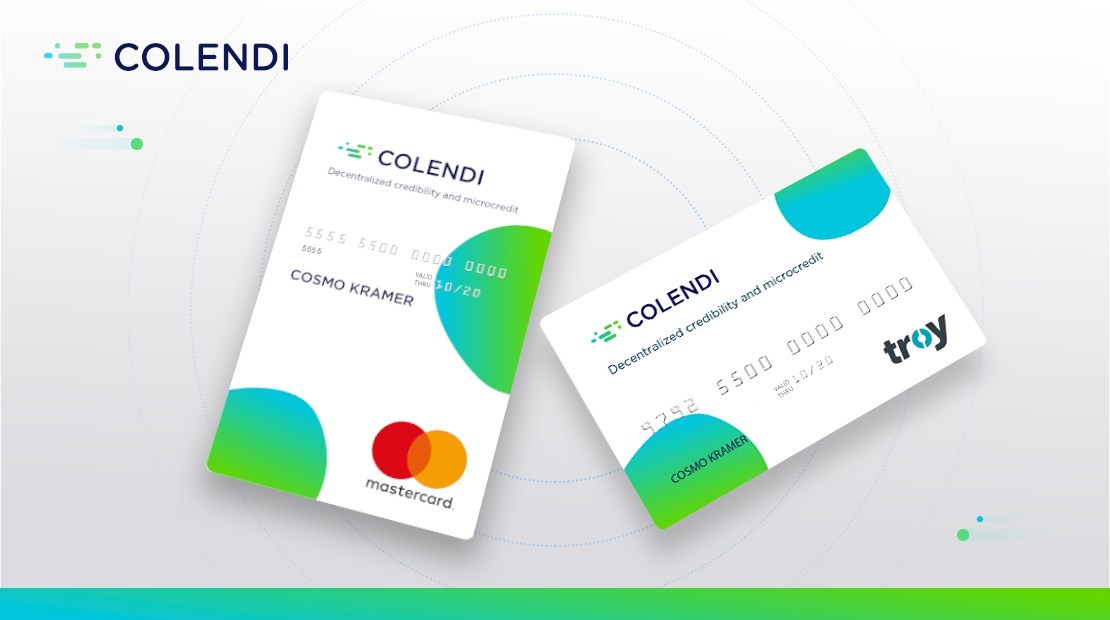
Colendi, the microfinance and credit scoring protocol for the unbanked and underbanked, today announced the release of the Colendi Card, a debit loan card for spending and repayments.
With the Colendi Card, and leveraging the Colendi protocol, users can build their Colendi Score with each transaction. They can do so without the risks carried by typical credit cards, like overborrowing and high interest rates, and can easily transact with merchants in the rapidly-growing Colendi ecosystem, or anywhere a MasterCard®️ and Troy®️ is accepted.
"This Colendi Card is a key component in helping to achieve financial inclusion, especially for the unbanked and underbanked around the globe," said CEO and co-founder, Bulent Tekmen. "This card opens up new doors for people by removing traditional barriers and bringing them closer to regular interactions with the banking and financial system. Traditional financial institutions are often averse to issuing credit to people without an established track record, and with the Colendi Card, we're giving everyone the opportunity to establish and build their Colendi Score in a safe and secure environment backed by blockchain."
"As an active part of the Colendi ecosystem, we couldn't be more thrilled about the Colendi Card and the additional opportunities it provides for us," said Mehmet Ozcelik, co-founder of restaurant point of sale software leader SambaPOS. "This will benefit us as it will offers better reach to our merchants as well as growing our overall merchant base with the easy-to-use Colendi Card and app."
Colendi's mission is to bring simple financing solutions to people everywhere. It employs a transparent system built on blockchain and is accessible via smartphone. The Colendi dApp will ultimately be connected to the Colendi Card, allowing users to manage and pay via multiple wallets using fiat or cryptocurrencies. The Colendi Card will be available via the Colendi website over the short term.

Ivy Schmerken
Editorial Director at FlexTrade
Despite the view that MiFID II is a European regulation, US investment managers are experiencing disruption as they align their research payment and execution practices with the influential standar see more
- 01:00 am

Advanced is working with HMRC to support the success of Making Tax Digital (MTD), a key part of the government’s plans for the digital transformation of the tax system. Advanced’s innovative new Business Tax Portal will make it easier and more efficient for individuals, businesses and charities to get their tax right, helping them to automate the new online processing requirements, saving both time and eradicating errors.
Each year the government loses out on an estimated £9bn in unpaid taxes resulting from errors, while the overall tax gap is a staggering £34bn. Advanced will provide UK businesses with a solution which will assist their compliance with the new MTD requirements that come into effect from the 1st April 2019.
Advanced’s Business Tax Portal will bring benefits in five key areas:
- Accuracy - reducing opportunities for error or miscalculations
- Productivity - automation removes laborious manual entry of VAT forms
- Collaboration - access to VAT information in a central repository
- Efficiency - faster, simpler process to record and file tax returns
- Transparency - with the opportunity for monthly tax updates
Jon Wrennall, Chief Technology Officer - Advanced, says: “Being recognised by HMRC as a supplier supporting Making Tax Digital for VAT through the delivery of our Business Tax Portal is a clear example of how Advanced is supporting British businesses with digital innovation. Our solution ensures that the new process, which could be regarded as complex, is made simple and efficient. We’re delighted to be working with HMRC to provide new and existing customers with an automated approach, which will not only assist their compliance with MTD but make the process quicker, more accurate, easier and more transparent.”
From 1 April 2019, VAT-registered businesses and not-for-profit organisations, including charities, operating above the threshold of £85,000 will have to keep digital records and submit VAT returns using compatible software. To get ready for MTD, businesses will therefore need to use software that complies with HMRC systems to keep and maintain digital records according to MTD regulations; digitally send VAT returns containing/alongside information held within the software; provide VAT data to HMRC; and access information sent by HMRC via an API platform.








