
Published
- 03:00 am

Fidor Solutions, an innovative provider of digital banking services, today signed an agreement with AFIN to create ASEAN’s first API Exchange (APIX) platform as Fintech Marketplace and Sandbox - together in a consortium formed with Virtusa and Percipient. This ambitious project will see a trusted and transparent API-based marketplace and sandbox environment made available to both FinTechs and banks with the objective to fuel innovation, increase collaboration and ultimately engender greater financial inclusion across the ASEAN region.
AFIN is an initiative of IFC (International Finance Corporation), MAS (Monetary Authority of Singapore) and ABA (Asean Bankers Association) with the aim to lead to an expansion in access to and usage of financial services, according to 3 key pillars:
Creating a collaborative ecosystem of FinTechs and banks: Facilitate access by banks to a broader range of competitive (FinTech) solutions to match banks' opportunities and challenges
Fast track the delivery of innovation: Accelerate business and product development through use of efficient testing, design and integration tools for both banks and FinTechs
Empower new technology developments: Support development of IT architecture strategy and management skills within individual financial institutions
While open banking is being adopted across Europe, the UK and few APAC countries, it is in fact having a stronger impact at a global level, changing both the way markets and players operate, as well as the way consumers bank. AFIN identified the need in Asia for a successful ecosystem for sourcing solutions, as well as testing, operating and reducing implementation timescales to faster respond to financial inclusion needs.
Fidor, which owns its own community-based digital bank powered by its proprietary open API platform, took part in the procurement process which started late 2017 and included 30 applicants under 12 consortia. In a consortium alongside Virtusa and Percipient, Fidor brings a social component to this ambitious project - by providing its community-based platform which acts as an acquisition and engagement platform with a wide range of features. The Fidor Community platform will be the first point of engagement between banks and FinTechs, and aims at increasing the level of interaction between banks and their potential FinTech partners.
Matthias Kröner, Founder and CEO of Fidor, commented, “I am glad that AFIN selected the consortium with Fidor and we look forward to being part of such as an ambitious project which will have a direct impact on financial inclusion, a topic that is important to Fidor and its future development.”
Ge Drossaert, Board Member and Group CCO of Fidor, commented, “Fidor is a progressive institution that continues to successfully collaborate with both traditional banks and FinTechs. We adopted an API-first strategy which proved to be successful while we also added a social component to keep strong engagement and trust between all parties. This initiative with AFIN marks the start of Fidor’s expansion to the APAC region which we are very excited about.”
- 05:00 am

Asia-Pacific (APAC) is leading the world in the adoption of digital banking due to consumers’ constantly evolving demands, combined with the unbanked potential and benign regulation. Non-traditional challengers such as Ant Financial and Tencent are shaking up the market. Temenos argues that in the battle between banks and fintech giants, banks that embrace digital transformation will emerge as champions.
Insights from Jun Zhu, President of Greater China, Temenos: “Mobile payment penetration covers 70% of the population in China and across APAC. In China, Alipay and WeChat illustrate how mobile-based banking can be executed on a massive scale. Banks have taken notice; and expect that payments players will be their biggest competition over the next three years. Furthermore, APAC’s young population is driving the cashless revolution through a surge in mobile payment apps and expect a single entry point to all their financial needs. ”
Insights from Jean-Michel Hilsenkopf, Chief Revenue Officer, Temenos: “Challenger banks and non-traditional players are entering the financial services landscape. This is a global trends which we see exacerbated in APAC. We believe that the move of fintech giants into banking will drive the digital transformation of the incumbent banks. Forward-thinking banks are rethinking their business models and the IT infrastructures that underpin them in order to scale fast and reduce their cost base. The banks that invest in delivering compelling, personalized experiences to their customers will be those that emerge as champions.”
Temenos is leading the digital transformation of banking services in APAC and around the world.
For 25 years, over 3,000 firms in 150 countries, including 41 of the top 50 banks, rely on Temenos to process the daily transactions of more than 500 million banking customers. Temenos has the market knowledge and understanding that helps guide banks through the biggest technology and business decisions they will make in a decade. Temenos also has a strong presence in the APAC region: customers include Bank of Shanghai, Julius Baer, Standard Chartered as well as challenger banks such as volt bank and Judo Capital in Australia, just to name but a few.
If you would like to meet with the Temenos executives during The Annual Meeting of the New Champions, Tianjin, China, 17 – 20 September, please contact Newgate Communications.
- 02:00 am

NYMBUS, the world’s most advanced revenue and technology solutions company, today announced TransPecos Banks has selected NYMBUS SmartLaunch to outsource the operation of its new digital bank brand, BankMD. Already serving its established banking customers throughout three regional locations in West Texas, SmartLaunch supports TransPecos Banks’ latest business transformation strategy to stand up a separate digital brand for expanding its digital reach and engaging loyal new consumers and revenue opportunities.
“We entered 2018 with a goal of improving all of our customer experiences and developing targeted products and services for specific customer types, but quickly realized that our current technology was not capable of delivering the experiences, innovative solutions or services that met our or our customers’ expectations,” said Dub Sutherland, Vice President and Secretary of TransPecos Financial Corp., bank holding company of TransPecos Banks. “What attracted us to NYMBUS was the ability for SmartLaunch to rapidly support our new standalone BankMD brand and provide a modern customer experience to this targeted digital audience of medical professionals. NYMBUS does this with no disruption or cost to our existing bank infrastructure and they are willing and able to integrate with our cloud-based loan origination platform. Not only does this eliminate the need to manage another project or go through a technology conversion, but also the risks and obstacles we’ve previously faced while exploring digital transformation strategies.”
Recognizing that innovation has to happen immediately for financial institutions to compete and stay relevant, NYMBUS recently introduced SmartLaunch as a low-risk digital brand alternative that can be up and running in record time to quickly generate sustainable new deposits and revenue. This Banking-as-a-Service (BaaS) model outsources the entire operation of a bank’s digital brand—from a customer-facing call center to back-office operations to targeted digital marketing and website services—to the company’s team of industry banking experts. SmartLaunch is also built on NYMBUS’ modern, digital-first SmartCore® platform, which bypasses the need to undergo a technology conversion. The legacy operation isn’t disrupted and no additional staff is required.
“TransPecos is not alone, as more financial institutions recognize the land grab opportunity to establish a digital-only bank brand for revenue protection and growth,” said David Mitchell, President of NYMBUS. “What we are pioneering is a strategy to help financial institutions with a business transformation which is focused on keeping their core competencies and shedding non-core operations to NYMBUS’ best-practice sourcing center.”
Furthered Mitchell, “Assembling all of the required technical and human components would typically burden an organization’s time-to-market and bottom line. SmartLaunch resolves these barriers to entry by providing all of the necessary technology, expert staff and full marketing support to ensure that the new brand gets maximum exposure to quickly and efficiently capture its new targeted audience.”
Specific to TransPecos Banks, SmartLaunch is delivering outsourced support for BankMD—their separate digital-only brand that is focused on serving the unique financial needs of medical professionals. Financial institutions can also use their established market brand for introducing a digital bank with SmartLaunch. In either scenario, NYMBUS handles this in as few as 90 days under the institution’s existing charter.
- 06:00 am

For almost three quarters (73%) of financials services leaders, customers are the main driving force behind their company’s digital transformation, however fear of failure is holding back the implementation of digital projects, with almost three quarters of financials services leaders put off by the costs of failed projects. This comes as no surprise, as seven-in-10 admit to cancelled projects in the last two years, according to Fujitsu’s Digital Transformation PACT Report.
“Financial services firms are under pressure from their customers to deliver greater speed, convenience and personalisation, as well as better customer services,” said Ian Bradbury, CTO Financial Services at Fujitsu UK & Ireland. “Digital transformation is certainly a key strategy in helping banks and insurers achieve this, however, despite the sector going from strength to strength, financial sector firms have undertaken unsuccessful projects and lost money. This has made them nervous about deploying new projects. But we feel that success can be born out of previous unsuccessful projects, as previous failures allow organisations to learn. In an ever-changing market, there is no such thing as permanent success. Organisations must continuously improve, learning from their mistakes along the way.”
Even though over four-in-five (87%) have a clearly defined digital strategy, almost three quarters (73%) admit that their digital transformation projects often aren’t linked to the overarching business strategy. But is this the sole reason UK financial services leaders can’t get to grips with their digital projects?
Realising a digital vision is not just about having the right technology. In order to successfully digitally transform, this research highlights four strategic elements businesses must focus on: People, Actions, Collaboration and Technology – the Digital PACT.
1. People
While admitting to a problematic skills gap – especially as 80% believe the lack of skills within the business is the biggest hindrance to addressing cybersecurity – it is encouraging to see that over nine-in-10 believe they have a culture of innovation within their organisation. Despite this believe, 87% believe that fear of failure is a hindrance to digital transformation projects. There is therefore a long way to go for financial services companies to truly transform their culture to thrive on innovation. As UK financial services firms are taking measures to increase their access to digital skills and expertise (93%), four-in-five believe attracting ‘digitally native’ staff will be vital to their firms’ success in the next three years, as well as turning towards targeted recruitment (72%) and apprenticeships (50%) to support digital transformation.
2. Actions
Although having the right processes, attitudes and behaviours within the organisation to ensure digital projects are successful are seen as the least important of the four key elements of digital transformation, 87% are taking specific measures to support collaboration on digital innovation and over two-in-five (43%) are creating networks for employees to share expertise across the business.
3. Collaboration
Over a quarter (28%) of UK financial services leaders believe collaboration is an important element in realising the company’s digital strategy. While almost four-in-five (78%) turn to technology experts for co-creation, 67% go as far as seeking consultancy and training from start ups and organisations outside their industry.
4. Technology
Many organisations are already leveraging new technology that will radically change the way they do business. A fifth of financial services leaders believe implementing technology will be the most important factor to realising their digital strategy, with cloud computing and big data and analytics playing a key role in helping drive the financial success of their organisations over the next 10 years.
Bradbury continues: “Historically, financial services firms have been cautious when it comes to innovation. They are working under strict regulations and the very nature of what they do, means that a radical digital transformation project could have a detrimental impact on people’s lives – for example, negatively impacting access to bank accounts or making insurance claims. But this shouldn’t hinder innovation across the sector. Quite the opposite – with the help of external expertise and willingness to implement digital transformation, we can be soon pleasantly surprised at a revamp of the industry. Change doesn’t always come naturally, but the financial sector understands what’s at stake, with 86% admitting that the ability to change will be crucial for the business’ survival in the next five years.”
- 08:00 am

“Infrastructure and Operations (I&O) leaders tasked with IT operations transformation must prepare for the challenges of contextualizing data acquired by IT Infrastructure monitoring tools from highly modular IT architectures by utilizing AIOps to deal with the volume, variety and velocity of data.”
OP5, part of ITRS Group, and a leader in infrastructure monitoring, has been included by Gartner in two recent reports. The first report is Market Guide for IT Infrastructure Monitoring Tools and the second report is Hype Cycle for IT Performance Analysis, 2018. Both reports outline recommendations for Infrastructure and Operations leaders when evaluating monitoring tools
This is the third time that OP5 has been included in the Market Guide for IT Infrastructure Monitoring Tools.
“We believe consistent recognition by Gartner over the last few years clearly solidifies our position as a leader, innovator and major provider in the IT monitoring marketplace. To us, being included on these lists clearly confirms our alignment with the overall recommendations from Gartner,” says Jonas Vestin, CEO of OP5.
Prepare for Containers and IoT
In the Market Guide, Gartner recommends I&O leaders reduce tool management overheads by shortlisting vendors that have modern user interfaces and are architected to support emerging technologies, such as containers and the Internet of Things (IoT). Additionally, I&O leaders should enhance the decision-making capability of non-IT teams (e.g. LOBs and developers) by providing contextualized data across IT and business.
“We are working closely with our customers to support them as IT environments become more dynamic, the need for visibility increases and digital transformation is key to stay competitive. The future of IT monitoring lies in not only finding issues but also predicting potential IT problems and ultimately recommending solutions to them,” added Jonas Vestin.
Gartner, Market Guide for IT Infrastructure Monitoring Tools, Pankaj Prasad, 9 July 2018. Gartner, Hype Cycle for IT Performance Analysis, 2018, Vivek Bhalla, 18 July 2018.
Gartner does not endorse any vendor, product or service depicted in its research publications, and does not advise technology users to select only those vendors with the highest ratings or other designation. Gartner research publications consist of the opinions of Gartner’s research organization and should not be construed as statements of fact. Garner disclaims all warranties, expressed or implied, with resect to this research, including any warranties of merchantability or fitness for a particular purpose.
- 09:00 am

The Bank Recovery and Resolution Directive (BRRD) has been in effect for some time but this will now be accompanied by reporting obligations to both EBA and PRA.
EBA ‘Z’ templates – applicable to all current BRRD firms – and PRA MRL templates – applicable by notification from the Regulator – are both effective as at 2018 year-end and are supported in Lombard Risk’s Regulatory Reporting platform. The return templates will, of course, be supplied with all Regulator mandated validations and concomitant EBA and PRA XBRL production.
Lombard Risk experts will be ready to supply guidance and advice as to necessary data that may not have been included in a firm’s regulatory submissions to date.
Additionally, Bank of England updates due to take effect in 2019 are supported. Two new templates will be effective March 2019.
AS: a Securities Holdings report in accordance with Handbook of Securities Statistics;
FV (Financial Vehicles): for reporting on entities such as securitisation vehicles.
Moreover, changes to the existing AD (Analysis of Deposits) and AL (Analysis of Lending to UK Residents) are also being rolled out.
Andrew Kesbey, Solutions Director, Lombard Risk commented: “These developments are yet further examples of how Lombard Risk’s Regulatory update service ensures that its client community benefits from our Regulatory Strategy team’s ongoing scrutiny of the regulatory horizon. This aspect of Lombard Risk’s Regulatory Reporting offering gives both comfort and value to clients, removing the headache of monitoring, interpreting and executing regulatory change that is associated with an inhouse or manual solution”.
- 02:00 am

A consortium of international Fintech companies together with Fife Council, Fife College and Fintech Scotland, have joined forces to launch Scotland’s first ‘Fintech Skills Academy’.
The consortium, which includes Renovite Technologies and Ingenico Group, officially launched the Fintech Skills Academy at the premises of Paywizard in Kirkcaldy on September 13th.
The aim of the Academy is to provide a steady flow of highly qualified applicants for the growing number of specialist roles in Fintech in the region and to avoid the potential of a skills gap developing.
The core members of the consortium were joined by members of the public, including current students of the college, along with other local Fintech businesses that have expressed an interest in joining the Academy consortium
Speaking at the launch event Jim Tomaney, chief operating officer at Renovite Technologies said:
“As Scotland’s Fintech sector grows so does the demand for people with the right skills. To avoid the emergence of a skills gap, as we’ve seen happen in several other STEM industries, we’ve developed an innovative plan to pre-emptively plug it.
“The Fintech Skills Academy programme will help candidates successfully prepare for new roles while at the same time, help employers by improving candidate’s understanding of the standards Fintech employers want. It’s a win-win scenario that we hope will be replicated nationwide.”
Matthew Jones, solution architect for Ingenico Group, added:
“Ingenico Group are strong investors in the training and development of our teams, but for start-ups and smaller businesses, allocating resources to bridging the gap between what students learn in the classroom and what they need to know at work is something rarely affordable. Our aim is to help provide that extra bit of experience and training through the Fintech Skills Academy, so when this generation of workers retire, the next generation will be ready.”
Courses to pilot from January 2019
The Fintech Skills Academy syllabus is aimed at both young people about to enter work for the first time and adults with a background in IT wishing to upskill or retrain specifically for employment in financial technology environments. Courses will be based on practical industry experience but taught in a structured learning framework, having been designed in a collaboration between Fife College and Fintech businesses.
Krystyna Marett of Fife College who is developing the course curriculums said:
“We are launching the Fintech Academy with a Retail Card Business Course January 2019 for IT professionals already working in the payments industry. We are excited to be working with Fife Fintech employers to develop training for their sector.”
Subject areas will range from specialisms such as payment processing to systems testing, device certification and business domain knowledge, amongst others. The courses at the Fintech Skills Academy will be funded by partaking businesses with the potential for further support where applicable.
Cllr. Altany Craik, Fife Council’s Economy, Tourism, Strategic Planning & Transportation Committee, said:
“This Fintech Skills Academy will provide an opportunity for Fife residents to access skills and jobs in a dynamic and growing sector within our economy. Building on the success of the Skills Academy model in other key STEM (Science, Technology, Engineering and Maths) industries, it will help to expand the Fintech Payments skills pool.
“I am delighted that the Opportunities Fife Partnership is working with Fintech Scotland and industry-leading, Fife-based companies such as Ingenico Group, Renovite Technologies and FIS Global to shape the content of the Fintech Skills Academy and offer opportunities to access their skills and experience.”
The FinTech Skills Academy launch is the first event in Fintech Scotland’s Fintech Fortnight which runs from September 13th – 27th.
Stephen Ingledew, chief executive of FinTech Scotland, said:
“Developing people’s skills in an imperative for the future growth of the fintech sector in Scotland and the launch of the Academy is a further indication that the community is turning its aspirations into tangible actions that will create great opportunities. It is very poignant that the Academy is being launched in Fife which has a deep heritage of innovation in financial services, especially in the category of payments, and I am delighted the initiative is being unveiled at the start of FinTech Fortnight.”
- 06:00 am
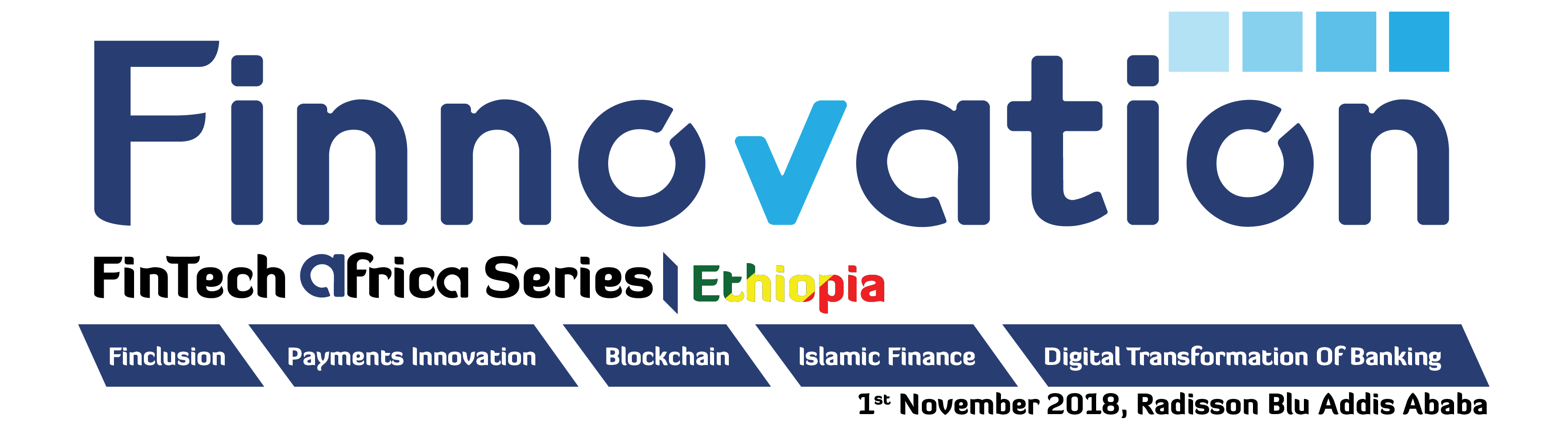
The unique environment for financial services in Africa is fertile ground for innovative FinTech players who are not only disrupting but also building it from the scratch which is bringing Financial inclusions and attracting other investments across the continent.
New technological advancements are the real disruptors for the banking and finance industry, especially in FinTech Start-ups. FinTech players and the incumbent banks have the potential to accelerate the digital transformation of financial services in Africa and to make financial services more efficient and accessible to under-served markets across the continent. FinTech players are playing a major role in shaping up the Africa’s financial services ecosystem and the leading incumbent banks on the continent more exigently seeking to harness technology innovations, collaboration with FinTech Start-ups, and creating a platform to scale much faster – to make the digital financial services pay.
The hugely successful events in our Finnovation Africa Series in Uganda, Ethiopia, Kenya and South Africa saw more than 800 thought leaders, FinTech pioneers and bankers representing the foremost financial institutions from across the continent gather to address how FinTech can contribute to the positive and profitable transformation of financial services in Africa. From banking powerhouses to start-up FinTech disruptors, Finnovation World sets the stage for the positive and profitable transformation of financial services – and Ethico Live! is now excited to announce the expansion of the conversation to Finnovation Ethiopia 2018 for the 2nd year at the Radisson Blu Addis Ababa on the 1st of November 2018. The event will seek to harness the FinTech revolution to boost strategic economic priorities such as financial inclusion and deepening – and how FinTech can make a positive and profitable difference in Africa.
With a focus on the most significant technologies driving the financial services paradigm shift, including Blockchain & Cryptocurrencies, Open Banking & APIs, Payments innovation and Mobile Money, Finnovation Africa: Ethiopia 2018 also features a number of innovative sessions such as The Wolves’ Den, Sheba Valley: Harnessing Ethiopia’s FinTech boom, Inside the Investor’s Mind, and live-on-stage interviews with international Finnovators and African FinTech pioneers.
Speaking at the announcement of the launch of 2nd annual Edition of Finnovation Africa: Ethiopia, David McLean, President of Ethico Live, said that: “FinTech holds a particularly powerful promise for Africa especially as an enabler of key strategic priorities, such as financial inclusion and deepening. The impact of new disruptive financial technologies is well placed to be genuinely socially useful, meaningfully improving how ordinary people engage with financial services and therefore deliver broader-based positive economic outcomes across the continent. FinTech also sets the bar higher for incumbent banks in terms of their own innovation agendas as the leading banks internationally and in Africa seek to make digital pay and explore collaboration opportunities with FinTech trail-blazers. We are very excited to bring Finnovation again for the second time to the high-growth Ethiopian market and look forward to progressing discussions on the digital transformation of financial services in Africa.”
Chris Principe, international FinTech thought leader, shared some persuasive insights while speaking on the sidelines of the Finnovation Africa Series: “A very positive story, if one that is not yet well understood, is unfolding in Africa. New technology, new ideas and new business models are producing new opportunities. The distinctions between telecom services providers, payments services providers and financial institutions are breaking down. In virtually all African countries, there are sufficient numbers of mobile phones ‐ which are not necessarily smartphones ‐ for previously unbanked people to have access to high quality financial services at low cost. Innovative companies are using Blockchain technology and crypto‐currencies to resolve fundamental problems such as lack of access to electricity and lack of access to global financial markets. Finnovation Africa highlights how FinTech is transforming Africa for the better, facilitating payments, boosting financial inclusion and developing new enterprises. However, the conference does much more than that, as it engages key stakeholders to reveal how the entire world is changing. In many ways, Africa is a FinTech leader, rather than a follower.”
Combining a highly innovative and interactive event format with world‐class speakers and more than 300 carefully selected participants, Finnovation Africa: Ethiopia 2018 will take place at the Radisson Blu Addis Ababa on the 1st of November 2018 and will tackle the most pressing questions for the progress of FinTech in Africa, providing a platform for all stakeholders to engage in creating the future of financial services on the continent – from established banking powerhouses to FinTech start‐ups.
- 02:00 am

Synechron, the global financial services consulting and technology services provider, has today announced that Sébastien Glineur has joined as Head of its digital practice in Paris.
Sébastien Glineur brings over 15+ years’ experience in the banking sector, including nearly 12 years in Strategy and Organizational Consulting within the largest French banking institutions such as BNP Paribas, Société Générale, and La Banque Postale, where he led complex and strategic programs, and focused on both operational performance and optimization of processes and organizations. He also led the creation and implementation of Target Operating Models in these organizations. Sébastien Glineur’s experience has spanned the Retail, Private Banking, and Investment Banking sectors, specializing on Digital Transformation issues, including automation and artificial intelligence implementations, at major French banks. Sébastien Glineur will leverage this unique range of experience to add value and expand the profile of the Digital services in France.
“Given Sébastien’s expertise in financial services and special focus on digitalization, the value-add of his experience, leadership, and drive to be at the forefront of change within financial institutions aligns with Synechron’s commitments to innovation and a strong digital approach as part of its ‘Power of 3’ strategy – Digital, Business Consulting, and Technology together,” said Laurent Salvinien, Managing Director and Head of Synechron Paris. “Because of his proven track record for strategic digital implementations and strong digital and financial services sector experience, the addition of Sébastien to Synechron’s management team as Head of Digital in Paris will strengthen our Digital practice, locally and globally.”
Sébastien Glineur said, “Financial services firms are looking toward investment in digital strategies and innovation now more than ever, and at a quick pace as to not be left behind, since everyone wants to be a leader in the space. Synechron’s heavy investment into being on the leading-edge of the newest technologies and approaches to digital innovation, Synechron is well-positioned to serve clients looking to innovate and stay on the leading-edge while providing the support they need from start to finish thanks to its ‘Power of 3’ strategic approach. I look forward to joining the Synechron team to drive forward digital growth for Synechron and its clients.”
- 09:00 am

Today, optile, a next-generation open payment platform for global online businesses, announced that optile Open Payments 1.0 has achieved certified integration with SAP® Applications. optile’s innovative solution can deliver faster growth opportunities to businesses while providing a frictionless, unified payment experience to their customers.
The SAP Integration and Certification Center has certified that optile Open Payments version 1.0 integrates with the current version of SAP® Commerce via an add-on. This represents an end-to-end payment solution with a range of key features as well as simple and advanced integration scenarios. From one-click and express checkout to recurring charges, redirects and deferred payments to chargebacks, refunds and more, the features of optile Open Payments offer businesses flexibility in managing their payment processes. optile Open Payments also offers payment optimization tools that go beyond its core functionality and cover smart payment routing, in-depth analytic and reporting applications, powerful risk management and PCI-compliant secure data storage.
“We are happy to announce our successful SAP certification for optile Open Payments,” says Manuel Sandhofer, VP Sales and Partner at optile. “The ability of our next-generation open payment platform to leverage the business potential of assets provided by solutions from SAP and other vendors will prove highly beneficial for our existing and future customers. optile Open Payments can now enable more businesses to access unlimited payment opportunities and quickly grow their market coverage in any part of the world.”
Having achieved a certified integration with SAP applications, optile Open Payments can now provide more and more businesses with yet unexplored global scalability opportunities through access to a greater number of payment methods, payment providers, acquirers and third-party solutions worldwide. All back-end processes powered by optile Open Payments such as refunds or cancellations, need to be implemented only once. This “implement once, expand anywhere” approach complies with the needs of businesses to manage their payment setup across countries with minimal effort and cost while offering the payment mix preferred by their international customers. optile’s intelligent payment optimisation tools can also help businesses increase their revenue, offer best-in-class customer experience and increase customer lifetime value.








