Published
- 04:00 am

Wealth management fintech firm JHC Systems (JHC) has today announced that Davy Private Clients has implemented its digital portfolio monitoring tool, JHC Neon (Neon), for its Portfolio Construction Team. Neon will automatically monitor and analyse every client portfolio daily in order to assess all positions, asset allocations and risk profiles within the team’s investment models. Through the system’s unique digital dashboard, Davy will have access to all the information the team needs to analyse, track and resolve any adjustments required.
The Davy Group is Ireland's largest wealth manager with assets under management in excess of €14 Billion (£12.5 Billion). Its Portfolio Construction Team designs multi-asset portfolios for clients, which are tailored to individual risk and return objectives. With Neon, the team now has the technology in place to systematically scan and monitor every portfolio every night, on an ongoing basis. They will also have access to clear, transparent analytics that can be accessed across all devices via Neon’s unique digital dashboard and understood by key investment personnel. This means Davy can maximise efficiency and increase the scalability of its Private Clients’ business.
Pat Cooney, Head of Private Clients at Davy said: “Davy continues to invest in technology to ensure it has the highest quality bespoke portfolio management offering in the marketplace. We knew Neon presented us with a perfect opportunity to automate our processes so that we can continue to focus on delivering the best possible service for our clients. But the benefits don’t stop there. The accuracy of the monitoring plus the quality of the analytics have reduced operational risk. The whole offering supports Davy’s own level of focus towards, and commitment to, every one of our clients.”
Edward Lopez, Chief Revenue Officer, at JHC added: “We’re delighted Davy has seen the potential that Neon has to offer. Digital transformation, automation and speed are vital for wealth managers to succeed in this evolving and competitive market. With our technology, companies are able to make smarter, more informed decisions so that they can grow their business. We look forward to supporting Davy and are excited to see Neon helping another leading firm evolve and embrace the future of its business and its clients.”

Chris Mayers
Chief security architect at Citrix
Having been in force for just six months, the GDPR has changed the face of data protection as we know it – even at this early stage of its implementation. see more
- 06:00 am

Open Banking is one of the most radical changes in the recent history of financial services and has already dramatically impacted the investment decisions of financial services companies, according to a new report (Opportunity Knocks) published today by UK law firm TLT.
The new research – based on survey responses from 130 senior decision makers representing a diverse range of financial companies across the UK – reports that a vast majority (84%) are investing in Open Banking products and services. 44% are also considering launching new products or services to improve the Open Banking experience for customers. A significant majority (77%) say Open Banking and PSD2 is one of the most radical changes in recent history for financial services, with 35% saying they strongly agree.
However, more than half (53%) of respondents say the industry has found it difficult to adapt to these new regulations. Despite high levels of enthusiasm and investment, many financial services firms – both banks and non-banks such as fintechs and payment services providers – are struggling to formulate and implement comprehensive strategies to deal with Open Banking. Two thirds (62%) say they do not have a comprehensive strategy in place and 13% have no investment strategy at all.
Looming competitive threats, including from big tech
Financial services companies are also clearly worried about competitive threats in the wake of the implementation of Open Banking, the research finds. In particular, banks see ‘big tech’ companies – such as Google, Amazon, Facebook and Apple – as the biggest perceived competitive threat in the Open Banking space (63%). 45% of non-banks agree. Other threats come from within the existing ecosystem of banks, challengers and fintechs.
Two thirds (66%) of respondents believe the market will ultimately become more consolidated with larger banks and corporates buying fintech businesses and smaller banks to keep pace with the level of innovation and speed of product development required to make a success of Open Banking.
Even amidst myriad challenges and competitive threats, respondents suggest Open Banking is on track to achieve the aspirations of the industry's regulators. More than two-thirds say that Open Banking, once fully implemented, will bring greater innovation to the industry (70%) and more choice for customers (65%), while half agree it will enable greater customer control of banking data and services (50%) and easier industry collaboration (48%). Overall, a large majority (72%) believe that Open Banking has been a positive step forward for the industry.
David Gardner, partner in the financial services team at TLT, commented:
"Our research reveals the true scale of disruption that financial services companies are grappling with, alongside the opportunities that these far-reaching changes have created – provided that companies can keep up with the pace of change. It is encouraging to see that the vast majority of respondents hold Open Banking up as a positive initiative and – despite the challenges with defining a clear Open Banking strategy – the industry is not standing still.
"Innovation is happening all the time as more participants define their strategy and find new ways to collaborate,, which is creating a huge sense of anticipation in the market. The race is on for every participant to identify their position and launch a "killer app" or product to capture that opportunity. Open Banking will open up the market to new participants and continue to drive disruption for all. This could result in a more polarised market, split between niche offerings and financial services platforms, and between those who embrace agile transformation and those that are more reactive and slower to adapt.
"There are considerable challenges for existing players and new entrants – from complying with regulatory technical standards to identifying market opportunities and potential partnerships and making sure that customer data is adequately protected. Customer confidence and trust must be a major area of focus in order to realise the potential benefits that Open Banking can deliver. Would-be Open Banking champions need to consider their position, their partners and their strategy carefully, but make sure they can act and react quickly enough to take full advantage, before someone else does."
- 07:00 am

As part of their latest project, MTN, the top African telecoms operator is preparing to apply for a mobile banking license in Nigeria. This is the latest push by the Nigerian central bank to increase access to basic financial services.[1]
Currently, one-third of Nigeria’s entire population, more than 60M people, do not have bank accounts[2]. Globally there are around two billion people without access to any financial services. This is largely due to the fact they lack adequate identification documentation, such as passports or driving licenses, to meet the regulation requirements set out by banks.[3]
Although MTN is trying to solve the unbanked problem in Nigeria with a bank license, the larger issue of the two billion unbanked citizens of the world still stands. According to identity verification experts at Trulioo,the mounting problems faced by unbanked individuals can be helped by leveraging access to mobile carrier data, offering a global approach to financial inclusion. Currently it is estimated that six billion people worldwide, including 80 percent of the population of Nigeria, are in possession of a mobile phone.[4]
Zac Cohen General Manager at Trulioo comments: “By connecting with mobile network operators, ID verification services can offer organisations access to unique data sources from emerging markets. Traditional sources, such as credit, government or utility data are non-existent or limited in these markets. By taking a global approach to financial inclusion, businesses and consumers can access financial services across borders just as easy as they would locally –fuelling a true global economy.”
“This has significant potential impact for unbanked individuals. Even in digitally forward-thinking countries such as Britain there are around 1.5 million people do not have access to a bank account.
“With Trulioo’s global marketplace of identity data and services, the unbanked will have a more promising way to prove their identity to access basic financial services – enabling them to save, borrow, and transact.”
- 06:00 am

Singapore-based community cryptocurrency exchange, Cryptology Exchange today launches a new functionality that allows users to trade cryptocurrency on margin – letting experienced traders execute trades with borrowed money.
Responding to community demand, Cryptology users can now margin trade BTC/EURO and ETH/EURO, with leverage of up to 5-times and 10-times, with more trading pairs set to be announced in the future. Alternatively, they can earn interest by providing funding to other margin traders.
Herbert Sim, Chief Marketing Officer at Cryptology, said: “The Cryptology community has been clear in its desire for margin trading opportunities, which are not commonly offered in the crypto arena. We’re responding to that desire by offering our own functionality for experienced and institutional traders.
“This is the latest step in our ongoing efforts to help Cryptology users get the most value out of their trades by bringing in a suite of trading options. The ability to buy and sell on margin means that users can capitalise on their positions even in bear market conditions.”
This new function comes in the wake of an increasingly mature cryptocurrency market. In the past year the industry has seen increased demand for more professional trading features, such as margin trading and P2P funding. Next year could see this demand increasing even further, as experts are predicting a significant institutional money flow in the first half of next year, 2019.
As these opportunities become more widespread and users borrow more funds to trade, the market is likely to become more liquid – lessening volatility and bringing cryptocurrency markets more into line with conventional trading options, such as equities. In turn, this could lead to increased adoption of cryptocurrency trading in the years to come.
Sim concludes: “In the cryptocurrency space, the best is yet to come. With this move, we are helping to professionalise cryptocurrency trading – bringing stability to the market and making it simpler for anybody to trade in future. That’s true democratisation of finance.”
- 07:00 am

Saxo Bank, the leading Fintech specialist focused on multi-asset trading and investment, launches a new user-friendly and simpler platform tailored to the growing segment of investors.
Today, Saxo Bank launches SaxoInvestor, a new platform that gives the growing investor segment the opportunity to build long-term portfolios across stocks, bonds, mutual funds, ETFs, and SaxoSelect portfolios.
The platform is initially launched in Denmark with international roll-out planned for the first quarter of 2019. Furthermore, SaxoInvestor will be an integral part of the Group’s white label and partner offering across markets as the platform is developed with a dedicated focus on flexibility and customisation.
SaxoInvestor is built on the same technology as the Group’s other platforms, SaxoTraderGO and SaxoTraderPRO, but has a simpler interface that caters for the needs of the typical investor.
The platform gives access to cash products solely and has a new feature called investment themes. The themes cover several long term investment trends such as robotics, electrical vehicles, ESG, and cyber security. The investment themes section is dynamic and offers investors with inspiration and a curated list of relevant stocks, mutual funds and ETFs that provide the best exposure to the long term trend.
Kim Fournais, CEO & founder, commented:
“The opportunities for investors have for too long been constrained by limited access to international stocks, high and opaque prices and outdated technology. With SaxoInvestor, we make it much simpler to build a diversified portfolio across markets and offer high quality inspiration on the major investment themes that shape the future of this world.”
“The investor segment is among the fastest growing. And by leveraging our state-of-the-art technology and access to global capital markets, we deliver a product perfectly tailored to the investor with a longer investment horizon. For this segment it is paramount to not only diversify across markets and asset classes but to do so at low costs.”
- 07:00 am
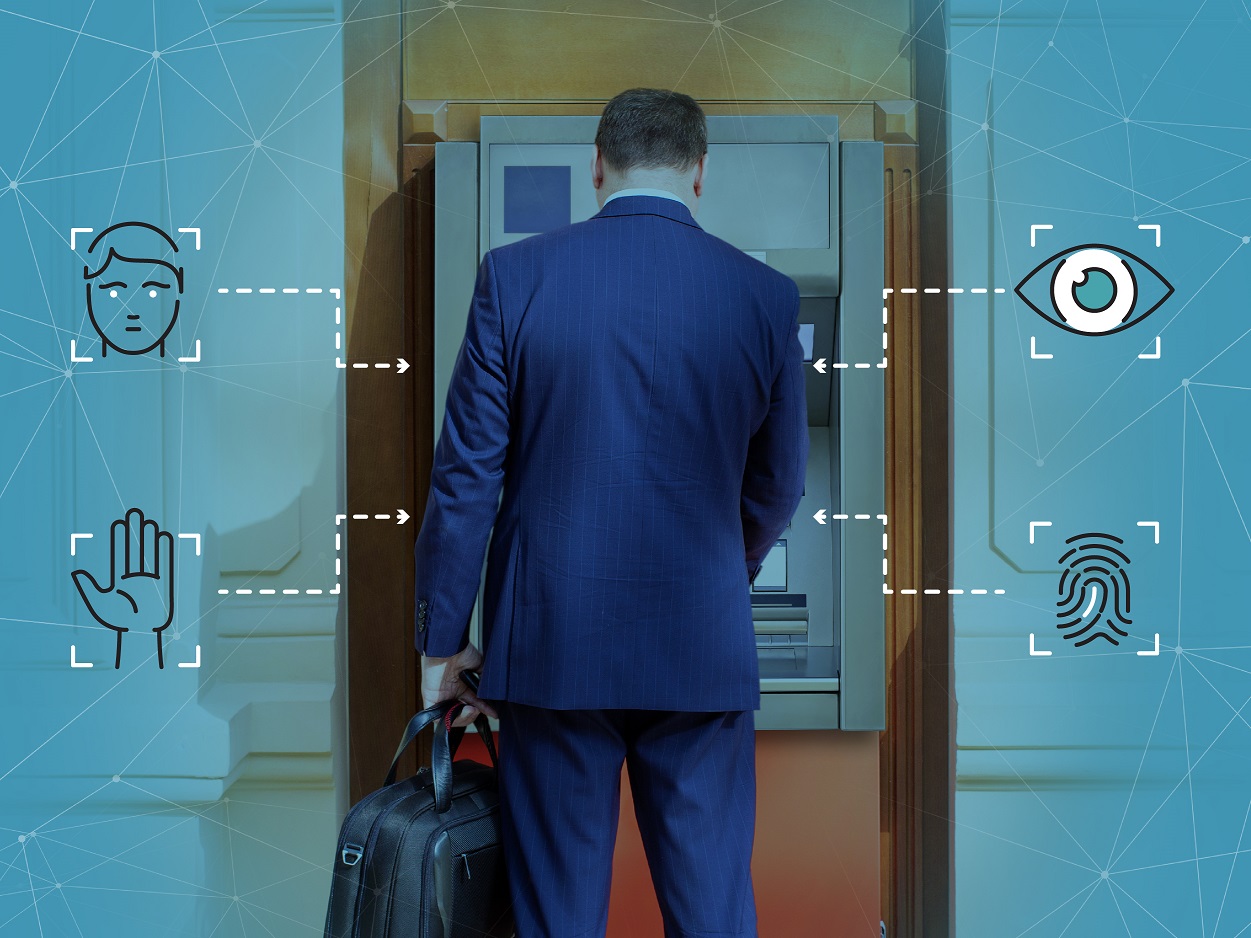
Anti-Money Laundering (AML) and terrorism prevention are key questions in modern finance. Most such policies are determined on a governmental or even international level. A company’s failure to comply with AML regulations may result in hefty fines and loss of credibility. In order to prevent such incidents the banks form their customer relationship policies based on Know Your Customer (KYC) principles.
KYC is based on client personal data collection and it allows to:
- Confirm the identity of the client
- Perform customer due diligence
- Identify a fraudster or a politically exposed person
- Predict patterns of customer operations
- Monitor client activities
The implementation of KYC policies is not easy. The tasks include protecting client personal data, constant monitoring and emergency predicting. Such duties require financial, logical and, primarily, human resources.
It used to be that in order for the bank to confirm the identity of a client, the client would need to physically come to the branch. As the number of bank customers grows and the AML policies get tougher, the bank departments get more crowded. To redistribute the stream of customers banks find alternatives for distanced client authentication.
METHODS OF CUSTOMER IDENTIFICATION
The most precise method to confirm a person’s identity is biometrics. Fingerprint, face or eye retina recognition are among more common means of biometric identification.
For financial institutions, the most convenient way of biometric authentication is face recognition – introducing the technology doesn’t require additional technical means. ATMs, mobile devices and bank offices are equipped with digital cameras. Installing facial recognition software simply leads to enabling a pre-established system.
FACIAL RECOGNITION USED IN PRACTICE
The possibilities of personal identification technology application vary significantly. Two factor authentication allows conducting more everyday bank operations remotely, personalize the approach to customers and prevent fraud.
EVERYDAY OPERATIONS ON SELF-SERVICE TERMINALS
Cash withdrawal using an ATM is a casual thing in the eyes of a modern consumer. Yet to withdraw significant amounts of money the bank client should still undergo a number of security checks. The AML regulations directly affect the amount of cash that can be withdrawn without additional personal identification. Two factor authentication helps to confirm the identity of the client remotely, thus allowing for large financial operations to be processed using self-service.
On the other hand, biometric identification solves the issue of illegitimate use of bank cards. According to law, only the card owner or an authorized representative may use the card. ATM user authentication using both a PIN code and facial recognition will prevent illegitimate operations from happening. Should it be detected that multiple people are trying to use the same card, the bank account may be frozen until the circumstances are confirmed.
Anti-money laundering policies have affected currency exchange as well. AML restricts the client in exchanging large amounts of currency. An exchange terminal equipped with face recognition will not process currency exchange requests from the same person once the limit is reached. As a result, the client will have to visit a bank branch and present supportive documents.
PERSONALIZED APPROACH TO SECURITY
The aim of AML policy is to gradually develop a universal infrastructure to exchange information about certain individuals. The two groups of interest being blacklisted people and politically exposed persons.
The reasoning behind someone being put on a blacklist may vary. As consequence, response strategies may also vary depending on the status of the person. Detecting a convicted criminal would lead to immediate notification of security services. Then again, an indebted client may face a scenario where, for example, a terminal would not process their request to take out a new loan.
A special approach is also needed when dealing with the so-called Politically Exposed People (PEP). In the context of AML, people who take up significant political positions require additional supervision to prevent corruption. The bank’s biometric solution integrated with the customer database can confirm that the PEP is operating their personal assets that were acquired legally. An in-depth approach to servicing such customers guarantees that appropriate measures be immediately taken should atypical account behavior be noticed.
Thus, biometrics is a reliable way for financial institutions to ensure AML and KYC compliance. Face recognition technologies are the simplest to adapt into an already-established infrastructure of a bank.
- 02:00 am

In today’s competitive business environment, organisations recognise the critical role technology innovation plays in achieving their goals. Four in ten companies (42 per cent) have increased R&D spending in the last five years, and over three-quarters (77 per cent) have adopted more agile ways of working so they can be swift in testing new approaches.
To set their companies up for success, CIOs aren’t just considering the potential of new technologies, they are actively embracing them. Three in ten CIOs (30 per cent) say their business is piloting or using Internet of Things (IoT) solutions, with a further 56 per cent planning to implement such projects within the next five years. The main factors attributed to driving this transformation are improved business intelligence (31 per cent) and sales efforts (23 per cent) – with greater connectivity between people and devices cited as a fundamental factor in enhancing operational efficiencies.
Amongst other technology of interest to CIOs is blockchain, which 35 per cent have adopted or are piloting to provide greater transparency and increased security for data. In addition, 45 per cent are using or testing artificial intelligence (AI), with a further four in ten CIOs (43 per cent) planning to adopt AI in the next five years. One in five (20 per cent) are also using or testing quantum computing.
The evolving role of the CIO
Against this backdrop, the CIO’s role is fast evolving as tech leaders take on new responsibilities and are required to collaborate more with others across their organisation. Accordingly, 78 per cent believe today’s CIOs need a broader skill set than they did five years ago, as they focus on meeting wider business goals such as driving growth (53 per cent) or being more accountable for improving customer experience (51 per cent).
As a result, 53 per cent are more aligned with other teams across the business than they were five years ago, while 35 per cent work in closer collaboration with their CEO. Payments are also now a greater focus for four in ten CIOs (42 per cent), with three-quarters (73 per cent) saying payment technology has become an increasingly prominent topic in boardroom discussions. As technology leaders look to generate valuable business insights, 70 per cent would like to have access to more payments data to improve decision-making.
CIOs need access to talent and resources to train existing teams
While CIOs are enthusiastic about the potential of new technologies, they recognise that this rapid pace of change must be supported by continual up-skilling of employees. Over half (55 per cent) are extremely or moderately concerned that the expertise of their teams won’t keep up with the needs of their organisation. A similar proportion (51 per cent) are worried they won’t be able to recruit enough employees with the right technical skills after Brexit.
However, significant progress has been made already to bridge an impending skills gap, with 72 per cent of CIOs saying colleagues across the business are more tech-savvy than five years ago. A similar proportion – 71 per cent – claim their C-Suite colleagues are now more knowledgeable about technology issues.
Keith Little, CIO, Barclaycard, said:
“While technology developments like artificial intelligence and the Internet of Things have been the subject of much discussion in recent years, our data shows this isn’t just hype. In fact, many CIOs are already well underway with testing and implementing such technologies to benefit their business. AI and machine learning, for example, are opening up new capabilities to benefit customers, such as fraud detection and customer insights.
“Over the next five years, the technology transformation of UK businesses looks set to gather pace as the solutions currently at pilot stage enter mainstream use across organisations. With this in mind, it’s important that CIOs focus on building the skills and expertise of their employees as an ongoing priority.”
- 05:00 am

Specialist research firm RegTech Analyst has just named Eventus Systems, Inc., a provider of regulatory technology software solutions for the capital markets, to its global RegTech 100 list for 2019, recognizing the pioneering companies transforming compliance, risk management and cybersecurity.
Identified as the “world’s most innovative technology solution providers that address the challenges of dealing with regulatory issues within financial services,” the RegTech 100 were chosen by a panel of analysts and industry experts based on RegTech Analyst’s review this year of 824 companies worldwide. Eventus is one of only 27 companies selected from the United States.
According to RegTech Analyst, the regulatory technology industry has seen huge growth in the last two years as banks and financial institutions grapple with the unrelenting pace of regulatory change across all jurisdictions. Over $4 billion has been invested in RegTech companies since the beginning of 2016.
Those selected were recognized for their innovative use of technology to solve a significant industry problem, or to generate costs savings or efficiency improvements across the compliance function.
Eventus CEO Travis Schwab said: “We’re honored to be included on this prestigious global list. This has been a year of tremendous traction as we’ve broadened our reach to new asset classes, enhanced our Validus platform, introduced machine learning capabilities and attracted both key investments and premier clients.”
Available as an on-premise or cloud solution, Validus provides comprehensive market surveillance and trading risk management for firms and marketplaces in global equities, equity options, futures, fixed income, foreign exchange and cryptocurrencies.
Mariyan Dimitrov, head of research at RegTech Analyst, said: “The impact of the most innovative RegTech companies will be measured in billions of dollars over the next few years. RegTech 100 companies offer solutions that enhance processes across the entire compliance function, including onboarding verification, risk management, communications monitoring, information security and reporting by using the latest technologies such as artificial intelligence, blockchain, natural language processing and biometrics.”
A full list of the RegTech 100 is available at www.RegTech100.com. More detailed information on all companies as well as in-depth industry analysis is available in the Global RegTech Review (www.GlobalRegTechReview.com).
- 09:00 am

European investors are waiting hopefully for further progress in the US-China trade dispute to happen after some positive developments have occurred along this avenue. On the negative side, markets will continue to face pressures due to Brexit uncertainties and Italy’s next-year’s budget issues that have still not been fully resolved, financial scouts note.
Meanwhile, investors keep hoping that US won’t slap new tariffs on the Chinese imports. China says it doesn’t want to fight a trade war with the United States, while the US pledges Washington “will not change course” on trade policy “until China changes its ways.”
European traders are also anxious to know what new Brexit moves are actually to be made now that London and Brussels have worked out a draft divorce deal, as the UK prepares to leave the European Union on March 29, 2019. After the draft deal has been pulled off, it needs the approval of UK MPs and each EU member state. And if it has not been approved before the Brexit day, ‘hard’ Brexit might be brought about with negative outcomes to possibly hurt the UK and the remaining EU members.
Yet another source of concern for investors is Italy’s 2019 budget turmoil with European Commission’s report on Italy's debt to be issued on upcoming Wednesday, November 21. Traders are wary that disciplinary procedure might be brought against Italy, if the country’s draft budget challenges its tax and budget commitments to the EU.
In France, the “yellow vest” protests against fuel price rises still continue. And though President Emmanuel Macron says he “hears the anger”, he seems to be set to keep taxing fuel.