
Published
- 08:00 am
Profile, a leading international financial solutions provider, has announced that the latest version of its treasury management platform, Acumen.plus – the fully STP, real-time cloud-native platform that delivers advanced UX and automation to the modern Treasurer – has been successfully implemented at Intesa Sanpaolo Bank in Albania.
Intesa Sanpaolo Bank Albania, part of the Intesa Sanpaolo Group, is a leading bank in the country offering quality banking services, financial solutions, innovative products and services to corporate, institutional, and high net worth clients, small and medium businesses, and individual customers. The bank has a network of 35 branches in different cities of the country.
Acumen.plus covers all operations that go through Treasury from Forex (interbank and client operations) to Money Market, Security deals (Proprietary trading and clients’ portfolios), Interest Rate and Currency Swaps as well as Client loans and Deposits. Amongst the key features of the platform is Treasury reporting, offering on-demand charts and boards and enabling Treasurers to have a real-time holistic view of the activity, profitability, positions, liquidity and risks focusing on specific tasks or instruments where needed.
In addition, the users benefit from the platform’s flexibility to easily configure the environment by working on familiar screens used in other applications or in legacy systems and then focus on the relevant information needed. The platform’s instant access to information feature leads to better and faster decision-making. Finally, the platform and Profile’s services, by incorporating DevOps and Agile methodologies that address the bank’s technical and functional requirements, meet the standards set in terms of compliance and interoperability with the IT systems of the bank.
Mrs. Suela Aliaj, Head of Treasury and Customer Execution at Intesa Sanpaolo Bank Albania says that “Profile’s experienced team focuses on delivering exceptional customer care and services to our bank on short time frames. The Acumen.plus Treasury management platform has enabled us to produce sustainable results by facilitating immediate access to information whilst supporting regulatory requirements, new operating models and evolving standards.”
Mrs. Pascale Hertzog, Treasury Management Director at Profile mentions that “We are delighted to collaborate with Intesa Sanpaolo Bank Albania with whom we have built a relationship of trust that remains unchanged over time. The bank encourages a style of growth that is attentive to sustainable results achieved through the use of latest technology standards to generate a better customer experience and increased shareholder satisfaction.”
Profile remains committed to developing new products that satisfy clients’ evolving needs and meet their expectations.
- 06:00 am
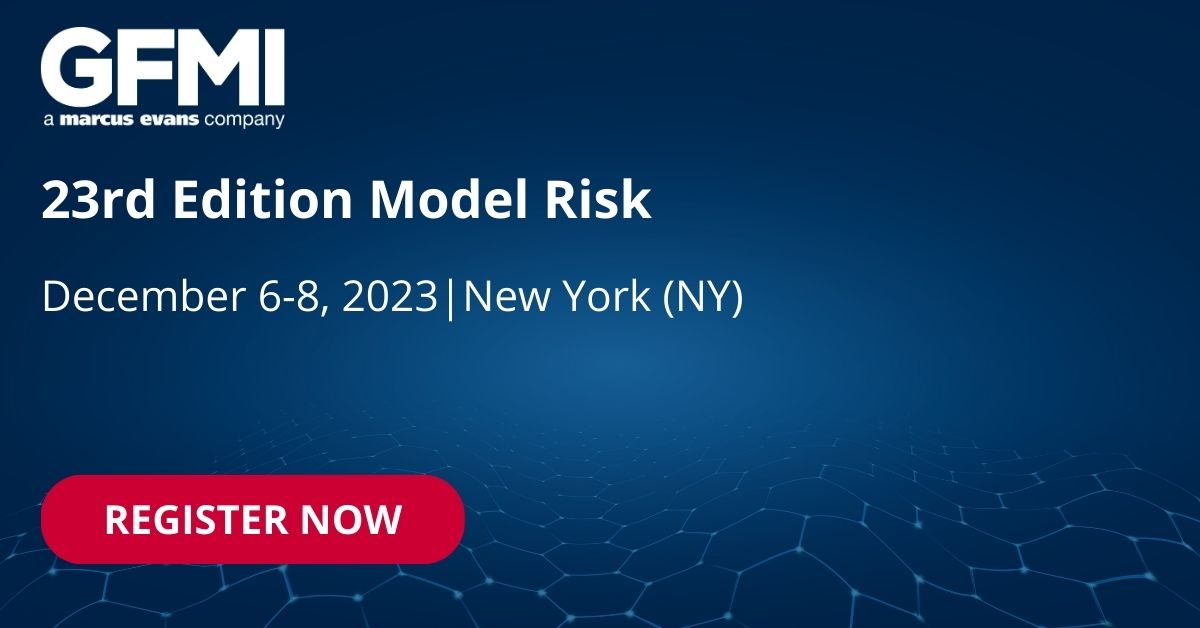
Financial IT, a leading source of news and information on financial technology, is proud to announce its partnership with the Global Financial Markets Intelligence (GFMI) as the official media partner for the highly anticipated 23rd Model Risk Conference. The conference is scheduled to take place from December 6 to 8, 2023, in New York.
The GFMI 23rd Model Risk Conference will be a pivotal event, focusing on the critical challenges within model risk management, particularly in the realm of generative AI and machine learning. This conference is set to showcase industry best practices for effectively managing emerging risks, including cybercrime, climate-related challenges, and third-party model risk.
Attendees can expect in-depth discussions and insights into the latest technological developments addressing the complexities of model inventory, validation, and governance. Renowned experts in the field will present case studies, demonstrating the practical applications of cutting-edge tools, methodologies, and team management approaches, all of which serve to enhance the effectiveness of Model Risk Management (MRM) across the three lines of defence.
One of the highlights of the event will be the updates from regulators, offering their perspectives on the use of AI and ML in machine learning. These insights will be invaluable for professionals seeking to align their practices with evolving regulatory standards.
Key Themes of the GFMI 23rd Model Risk Conference:
Addressing challenges within model risk management in the context of generative AI and machine learning.
Showcasing industry best practices for managing emerging risks like cybercrime, climate-related challenges, and third-party model risk.
Discussing the latest technological advancements in model inventory, validation, and governance.
Presenting practical case studies highlighting the effective application of tools, methodologies, and team management approaches in MRM.
Gaining regulatory updates and perspectives on the use of AI and ML in machine learning.
FinancialIT.net is thrilled to be part of this event, which promises to be a significant milestone in the field of Model Risk Management. Stay tuned for live coverage, interviews, and exclusive insights from the conference.
For more information on the GFMI 23rd Model Risk Conference, please visit https://bit.ly/3rmD58G.
For registrations and inquiries, send us an email at ayisp@marcusevanscy.com
- 09:00 am

The implementation of new software projects, such as a key initiative at Banorte in Mexico, means Latin America was the fastest-growing region for multivendor ATM software over the past two years
ATMs using multivendor software in Mexico increase by 66% since 2020
RBR Data Services’ ATM Software 2023 shows that six of the seven Latin American markets surveyed, showed at least a double-digit percentage increase in the number of ATMs using multivendor software. 13 major new projects were launched across the region over a 24-month period.
RBR Data Services defines a multivendor software project as one in which at least some of the ATMs running the same application software are not manufactured by the supplier of that software. The study looks at “bank-grade” ATMs running a full version of Windows, or other operating system.
Mexico led the recent growth in Latin America, with the number of Mexican ATMs using multivendor software increasing by 11,600 between 2020 and 2022. Deployers in Latin America increasingly value a unified approach to managing software updates, as well as the flexibility multivendor software can offer in terms of using different hardware vendors.

Global decline masks a mixed picture across countries and regions
The number of ATMs running multivendor software worldwide decreased by 4% between 2020 and 2022; this was driven largely by a precipitous drop in the total number of ATMs in China, with the remaining machines in this country increasingly using vendor-native software solutions. Elsewhere in the Asia-Pacific region, India, Pakistan and Australia saw strong growth as multivendor projects at deployers such as SBI increased in size, while other markets stayed relatively stable or shrank.
North America and western Europe also saw declines at a regional level, as banks rationalise their ATM fleets in the context of increases in the use of cashless payments. Moreover, a growing number of ATMs in the UK, and several other markets, are now part of unified software and hardware estates, as deployers see cost benefits in simplifying their ongoing software testing and maintenance processes by moving back to this approach.
By contrast, the Middle East and Africa and Central and Eastern Europe both showed strong regional growth, the latter despite the ongoing Russia-Ukraine conflict. Both Russia and Kazakhstan saw significant increases in the number of ATMs using multivendor application software, as a small number of mid-sized banks greatly increased the size of their multivendor projects.
Rachel Kelley, who led RBR Data Services’ ATM Software 2023 research, remarked: “It will be interesting to see how the global multivendor ATM software market develops, as younger markets hold potential for expansion while more mature markets revert to a unified approach. We expect India to have a large impact as banks with mixed hardware vendor fleets migrate to, or increase their fleets’ shares of, multivendor software”.
- 07:00 am
BlueSnap, a global payment orchestration platform of choice for leading B2B and B2C businesses, has partnered with BigTime Software, the leading operating platform for professional services organizations, to bring online payment and financial management capabilities to customers around the world.
Powered by BlueSnap’s payment processing technology, BigTime will extend the availability of BigTime Wallet, its award-winning payments solution, to small and mid-sized professional services organizations in Canada seeking optimized financial management, streamlined accounts receivable (AR) processes, and efficient online payment capabilities to enhance cash flow and client interactions.
“Even though paper-based checks slow payment and AR processes and present a range of hidden costs and security risks, they continue to be the primary form of payment used by Canada’s professional services companies today,” said Ralph Dangelmaier, CEO at BlueSnap. “By enabling the availability of BigTime Wallet in Canada through this partnership, we’re helping BigTime meet the demands of clients in need of modernized, online payment and financial management capabilities.”
BigTime Software provides industry-leading time tracking, billing, and project management software to empower professional services organizations with enhanced operational efficiency. Canadian organizations that adopt BigTime Wallet will be able to leverage BlueSnap technology to process payments via their customers' preferred method, resulting in an improved invoice and billing experience for their clients and an increase in time to revenue. Moreover, Canadian businesses will have the advantage of utilizing a client portal integrated within BigTime, facilitating seamless and secure communication with customers.
According to reports, B2B companies offering multiple payment options within an integrated payments experience can see as much as a 30% boost in revenue. With BigTime Wallet, finance leaders can align automated accounts receivable processes with improved speed, security, and cost-effectiveness to enhance cash flow and drive profit growth. Concurrently, operations and project managers can optimize financial operations for seamless project execution and efficient financial management.
"Simplifying the payment process to expedite cash flow is a shared priority among professional service firms,” said Mark Johnson, Chief Product Officer at BigTime. “Our partnership with BlueSnap now extends this service to Canada, offering fully integrated payments, invoicing, and accounting reconciliation for our customers in that market."
In addition to the existing features available to all BigTime Wallet customers, Canadian organizations will also have access to exclusive benefits such as a Pre-Authorized Debit payment option, which eliminates payment size limits, reduces the likelihood of payment failures, and contributes to a decrease in Days Sales Outstanding (DSO), enhancing financial management and cash flow.
"Upgrading to BigTime was a great step forward in streamlining and modernizing our software landscape. When we heard about Wallet coming to Canada, we were excited,” said Miles A. Purvis, CMSE, President at ProSafe Inc. “We are not a point-of-sale type business, so cash flow is always an ongoing concern. We provide any means we can to make paying an invoice as easy as possible for clients, and we anticipate Wallet becoming another mainstream option."
- 01:00 am
Recharge, a leading player in the prepaid payments industry, has announced its successful acquisition of Startselect, a European digital gift and gaming cards company. This significant move positions the company on course to generate 750 million EUR in annual sales in 2024.
Since 2010 Recharge has been on an aggressive growth path with their online ‘supermarket’ for digital gift cards and mobile top-ups. They were one of the first companies to offer easy online purchase of digital prepaid cards through their webshops and apps. Recharge early on recognized that many consumers sought more convenience through buying gift cards online. Since conception, Recharge has processed over 100 million transactions for satisfied customers globally.
This is Recharge’s first achievement in their M&A strategy to consolidate the digital prepaid payments market and further build out their global leadership position. The recent macroeconomic headwinds have unlocked momentum for M&A opportunities and the company has the ambition to close another 2-3 acquisitions in the next 12 months.
The acquired company, Startselect, has a long-standing track record of providing a high-quality digital marketplace for gamers with a broad assortment of gaming products The acquisition of Startselect strengthens Recharge's diversified prepaid product offerings, now adding Startselect’s stronghold in the gaming cards market.
Günther Vogelpoel, CEO of Recharge, commented, "Consolidation has been a theme in fintech in the recent period and I have no doubt in the value of this combination for our company. I’m also excited to welcome the Startselect team to the Recharge family. Combining our strengths and capabilities leads to a powerful competitive position in the industry. Together, with our larger scale, we can offer an even better service to prepaid users worldwide.”
Max Gudden, Founder of Startselect, shared, “I feel proud of the whole team at Startselect that made this milestone possible. Being a part of Recharge starts a new chapter for us, where we can reach new heights. We are eager to continue our growth path together.”
This acquisition comes after the company's recent expansion into the U.S. and Canada with Blackhawk. Startselect will extend Recharge’s consumer label offering, which includes global shop Recharge.com and country-specific labels Beltegoed.nl, Recharge.fr, Guthaben.de, Herladen.com, and Mobiletopup.co.uk. With the addition of Startselect the company continues to build out their global network of digital marketplaces with prepaid payment products.
- 02:00 am
In today’s world, software must be accessible and inclusive, even regarding billing tools. These software systems are essential for managing finances, and they should be usable by everyone, regardless of any disabilities they may have. Accessibility isn’t just about following rules; it’s about creating a fair and diverse environment within a company.
This article will explore why making lawyer billing software accessible is important and how it contributes to creating a more inclusive and equal workforce. We’ll also delve into how it benefits both businesses and their employees.
Understanding Accessibility in Billing Software
When we talk about accessibility in relation to billing software, it expands beyond accommodations like wheelchair ramps or Braille signage. In software applications such as billing systems, accessibility refers to ensuring that people with disabilities can use the application's functionalities without any hindrance or discrimination.
For instance, individuals rely on screen readers or magnification tools to access information from their computers or mobile devices. Therefore, billing software must follow coding standards that enable these technologies to interpret content accurately.
The Importance of Billing Software Accessibility
Let’s explore why billing software accessibility is a paramount consideration for organizations:
1. Compliance with Legal Requirements: Companies prioritize billing software to comply with legal regulations. The Americans with Disabilities Act (ADA) and other international laws require access and non-discrimination in spaces. Organizations that fail to comply are at risk of lawsuits and damage to their reputation.
2. Expanding Customer Base: By embracing accessibility, you can reach a range of customers beyond those without disabilities. By making your billing software accessible to individuals with disabilities, you open up opportunities in a market segment that seeks services tailored to their needs.
3. User Experience: Billing software needs to be user-friendly for everyone who interacts with it regularly, whether they are employees handling invoices internally or clients reviewing their bills externally. Enhancing accessibility does not benefit individuals with disabilities. It also enhances the overall user experience. This approach promotes customer satisfaction and loyalty.
4. Fostering Equality and Diversity: By ensuring your billing software is accessible, you actively promote equality and diversity within your organization. Embracing inclusivity fosters a sense of belonging among employees and customers, showcasing your company's commitment to diversity in all operations.
Ensuring Inclusivity in Financial Management
Here are essential strategies to ensure inclusivity in financial management through accessible billing software:
1. Typography and Text Alternatives: To enhance the accessibility of billing software, it is crucial to use typography with font sizes, sufficient spacing between lines and letters, and high-contrast colors. This feature is designed to assist users with impairments in reading the text. Furthermore, including text for textual elements like images or graphics allows screen readers to convey the information to users with visual impairments accurately.
2. Keyboard Navigation: Many individuals with motor disabilities rely on keyboards with mouse-operated interfaces for navigating through applications. Billing software should include features that enable keyboard navigation, such as links for quick access to important sections of the application.
3. Voice Commands: The functionality of voice commands allows individuals with mobility or dexterity due to disabilities to operate billing software without relying solely on keyboards or traditional mouse setups.
4. Closed Captioning and Transcripts: If your billing software includes video tutorials or webinars, it's crucial to provide options and accompanying transcripts for individuals who are deaf or have hearing difficulties.
5. Accessibility of Training Materials: When providing training materials for billing software, it is important to consider offering versions such as PDFs with tagging for screen readers or providing documents in alternate formats upon request.
6. User Testing: Usability testing ensures accessibility during the development cycles of billing software. Incorporate feedback from users from different backgrounds throughout the testing phases to improve usability features iteratively.
Conclusion
Inclusivity goes beyond being a term; it promotes equality and diversity within organizations. When businesses adopt billing software, they meet legal requirements, expand their customer base, improve the user experience, and ensure fairness in financial management.
Companies should follow practices to create an environment that allows individuals to access and manage their finances effectively. These include using typography, providing keyboard navigation options incorporating voice command functionalities, offering closed captioning and transcripts for videos, ensuring accessibility of training materials, and conducting usability testing with users throughout the development process. As more organizations recognize the significance of inclusivity in financial management systems like billing software, we take a step closer to achieving equality for all users worldwide.
- 06:00 am
Gr4vy, the leading cloud-native payments infrastructure company, today announced the expansion of its enterprise-grade cloud vault to merchants of all sizes through a subscription-based, self-service model. With three tailored plans, merchants can now simplify payment data management and storage while accessing highly scalable cloud infrastructure. PCI DSS Level 1 certified, Gr4vy's vault ensures data portability, PSP independence and helps manage an entire tokenization strategy within a secure environment.
"The ability to store card details and replace them with network-specific tokens while ensuring enhanced security and data portability can be complex. Merchants must contend with infrastructure, PSP-specific tokens and other restrictions as they grow," said John Lunn, founder and CEO of Gr4vy, "Merchants require a ready-made vault that provides network tokens for payment processing and keeps card data secure. This is why we've expanded our vault. We wanted to give merchants a level of service that fits their individual needs while allowing them to take on tokenization and scale."
Tokenization is part of payments and fintech at a time when the fintech as a service market will surpass $995.9 Bn in 2023, and the total volume of tokenized payment transactions was $680M in 2022 and projected to surpass $1T by 2026. With growing data breaches, data compliance regulations, and growth within the tokenized payment transactions market, merchants can no longer afford to put their tokenization strategy on the back burner.
Gr4vy's vault-as-a-service makes it easy to store, pull, update and distribute card data while minimizing the PCI compliance process. Merchants can easily store original raw card data, billing and shipping details and link them to a vaulted card. Token management is made effortless as merchants can provision network tokens and their cryptograms, provision PSP tokens and distribute card data for third-party processing. The centralized cloud vault supports regional data deployment, keeping merchants compliant and ahead of local data regulations.
Data portability concerns also become a thing of the past with Gr4vy's subscription cloud vault services. Merchants can quickly import existing card data and PSP tokens from any PSP into Gr4vy's vault. They can export data as a PSP token, Network Token, Card Push, or export it into a new service. Additionally, data stored in the cloud vault belongs to the merchant, removing vendor lock-in for maximum portability and flexibility.
- 02:00 am
Trading Technologies International, Inc. (TT), a global capital markets technology platform provider, has just been named to the Crain’s Chicago Business Best Places to Work list for 2023.
Crain’s recognizes the Best Places to Work in Chicago that, according to their employees, go above and beyond in putting a focus on quality workplace culture. The full feature on the companies selected will appear in the September 18 issue of the magazine.
TT CEO Keith Todd said: “We are so honoured to receive this recognition, particularly as we place a strong emphasis on employee empowerment. We have an extraordinarily smart, talented and experienced group of employees, and their ideas, execution and service are key to our success.”
TT and the other companies were recognized at a luncheon event hosted by Crain’s yesterday.
Best Places to Work in Chicago is a research-driven program from Best Companies Group examining a company’s practices, programs and benefits, and it surveys employees for their perspective and honest feedback after employers complete an in-depth questionnaire. Best Companies Group then analyzes and categorizes the results according to eight core focus areas: Leadership and Planning; Corporate Culture and Communications; Role Satisfaction; Work Environment; Relationship with Supervisor; Training, Development and Resources; Pay and Benefits, and Overall Engagement.
- 07:00 am
Horizon Software, provider of electronic trading solutions and algorithmic technology for the global capital markets, in collaboration with PT RHB Sekuritas Indonesia (“RHB Sekuritas”), a subsidiary of RHB Investment Bank in Malaysia, have deployed Horizon’s Platform for Warrants Market Making that connects to the Indonesia Stock Exchange (“IDX”), providing convenience for investors to trade with RHB Sekuritas.
In doing so, RHB Sekuritas aims to expand its market-making capabilities and provide increased liquidity and trading opportunities for warrant market participants on the IDX.
Kenneth Zhao, Head of Equity Derivatives at RHB Sekuritas, said: “As part of our efforts to scale the structured warrant business in Indonesia, Horizon’s Platform for Warrants Market Making provides our investors live warrant pricing that instantly reflects the underlying share price movement and automates the pricing and quotation of structured warrants listed by RHB Sekuritas. Our clients can now take advantage of the warrants movement even at a quick dip or a brief rebound and conveniently trade RHB Sekuritas-listed warrants in their daily market-making activities.”
Kenneth added: “Our Structured Warrants have received a positive response within the Indonesian market since its launch in September 2022. For the first quarter of 2023, we achieved IDR 243 billion in turnover for structured warrants. This is triple the Equity Exchange Traded-Fund turnover, a product that has been traded in the Indonesian stock market since 2007. As demand grows, the Horizon Platform for Warrants Market Making will allow us to issue more structured warrants with different underlying and risk appetite to cater to investors looking for exposure in the Indonesian market.”
Emmanuel Faure, Head of APAC at Horizon Software, added: “We are honored to support RHB Sekuritas' development in the APAC region, specifically in the warrants market making space on the IDX. Horizon's software has played a pivotal role in empowering market participants with sophisticated trading tools, advanced algorithms, and comprehensive risk management capabilities. By leveraging Horizon's technology, RHB Sekuritas can offer enhanced liquidity, tighter spreads, and improved execution quality, ultimately contributing to the growth and vibrancy of the warrant market in Indonesia.”
This collaboration represents a strategic move that aligns with both organizations' goals to provide advanced technology solutions and enhance the efficiency of capital markets globally.
As a subsidiary of RHB Investment Bank, part of the RHB Banking Group, one of Malaysia's largest financial services groups, RHB Sekuritas possesses a solid foundation in the equity and capital markets. RHB Sekuritas’ deployment of Horizon Software is in line with the Group’s 3-year corporate strategy of ‘Together We Progress 2024” (“TWP24”) that drives the organization’s ambition to be a leader by continuously investing in modern systems and technologies to deliver market-leading and differentiated customer experience and service levels. RHB Sekuritas leveraged its expertise and market knowledge to launch the first Structured Warrants issuance listed on IDX.
- 09:00 am

Colt Technology Services, the digital infrastructure company, today published research from its new Digital Infrastructure report, ‘Building intelligence into your business’. The findings uncover a new wave of younger IT decision-makers driving AI adoption across enterprises. Overall, 91% of businesses intend on adopting AI in some form – up from 33% since December 2022. 83% of IT leaders surveyed expect their IT/digital infrastructure spend to grow over the next 12 months, to support enterprise applications including AI and On Demand networking, with one in four saying their spend will grow between 21-30%.
The results also reveal that hopes are high for digital infrastructure to support wider business goals, from ESG commitments to employee retention, as powerful, sustainable enterprise networks form the foundations for business of the future.
Keri Gilder, CEO, Colt Technology Services said, “2023 will be remembered as the year generative AI went mainstream, dominating conversations in cafes, on the sidelines of sports pitches, in homes and in the workplace, so this year we’ve refocused our digital infrastructure report to track AI’s monumental impact on businesses. Of all the insights highlighted in this exciting research, the major point for me is the emergence of intelligent digital infrastructure as the powerhouse of progressive business.”
In the study of 755 IT leaders from France, Germany, Italy, Japan, the UK, Singapore and Spain, IT leaders aged 25-34 were more likely than those in the 35-44 and 45-54 age groups to have already rolled out AI for a diversity of day-to-day business applications including risk management (58%), sales (53%), HR (53%) fraud detection (51%), service/product delivery (51%) and R&D (45%). By comparison, IT leaders aged 45-54 were more likely to use AI for marketing (47%) and training purposes (43%). Those aged 35-44 were the most likely to have rolled out custom AI applications (44%) and to use AI for security (46%).
The research highlights marked differences between countries in their adoption and roll out of AI:
- Japan and Singapore are at the forefront of AI adoption
- Japan noted the highest application of AI in the survey for service/product delivery (55%) sales (54%) and HR purposes (53%)
- Singapore rated the highest for use of AI in digital infrastructure (52%) and Operations (52%)
- Germany and Italy rated the joint highest in the study for their rollout of AI in fraud detection (50%), and Germany also rated highest for its application of AI in customer experience (50%)
- Across all age groups and all countries surveyed, AI usage was most popular when used as part of enterprises’ digital infrastructure management– noted by 45% of respondents – fraud detection (45%) and HR (45%)
- IT leaders in France (27%) and Germany (21%) are the most likely to name AI as the biggest driver for their IT/technology spend over the next 12-14 months.
Big investments and high hopes
As organisations embrace new working practices and high-profile tech applications bridge the consumer/enterprise gap, a wider understanding of the strategic benefits of digital infrastructure is influencing IT spend. 92% of IT leaders in the survey have already invested or intend to invest in intelligent digital infrastructure* and on average, increase in IT/digital infrastructure spend is planned to rise by 17% over the next 12 months. Spain (23%) and Japan (21%) expect their investment to grow at the highest rate of all countries. IT leaders in Germany expected their spend to grow the least, at 12%.
Those from the UK (22%), Japan (24%), Italy (19%) and Singapore (21%) are most likely to say security is a key driver for their IT/technology spend in the next 12-14 months. In contrast, those from France (27%) and Germany (21%) are most likely to say AI, while those from Spain (29%) are most likely to say partner consolidation. Digital transformation remains a key driver for those in Germany (20%) and Italy (19%).
The findings also point to businesses looking to gain a competitive edge, keep employees happy and contribute towards their ESG goals with their digital infrastructure. Sustainable by design, digital infrastructure is built to minimise its impact on the environment. Respondents outlined the benefits they hoped intelligent infrastructure would deliver:
- Business efficiency cited by 90%, rising to 94% for Singapore
- Customer experience is 86% rising to 90% for Singapore
- Employee retention is 89% rising to 98% for Japan and 91% for France
- Hope it will meet their ESG goals of 86% increasing to 93% in both Japan and Singapore and 92% in France
- Improve security – 89% rising to 95% for Japan
- Optimise their spending – 88% increasing to 93% for Japan
- Reduce their downtime – 89% rising to 93% for Japan and 91% for Germany
- Help them accelerate into (new) markets - 88% increasing to 93% in Japan and 93% in France
“We’ve reached a defining moment, as enterprises look to their network to solve strategic business challenges,” said Keri. “Digital infrastructure is no longer a means to connect A to B, but it’s the driving force behind the global economy.”
Download the report here.
* Senior IT decision-makers cited a variety of capabilities when asked to define what intelligent digital infrastructure means to them. They were most likely to say:
- Control from any device (21%)
- Generative AI (e.g. ChatGPT style) (20%)
- Predictive maintenance (20%)
- Learning from usage patterns (20%)
- Self-healing networks (20%)
- On-demand bare metal (19%)
- Flexible bandwidth consumption (19%)
- Automatic reporting (19%)
- On-demand, virtualised network functions (19%)
Methodology: 755 senior IT decision makers, aged 18 and over, completed an online survey by Censuswide, the research consultants, between 13.07.2023 and 24.07.2023. Survey respondents included cloud decision-makers and C-suite leaders, in companies with 5000 employees or more in France, Germany, Italy, Japan, the UK, Singapore and Spain. Censuswide abides by and employs members of the Market Research Society and follows the MRS code of conduct which is based on the ESOMAR principles.








