
Published
- 03:00 am
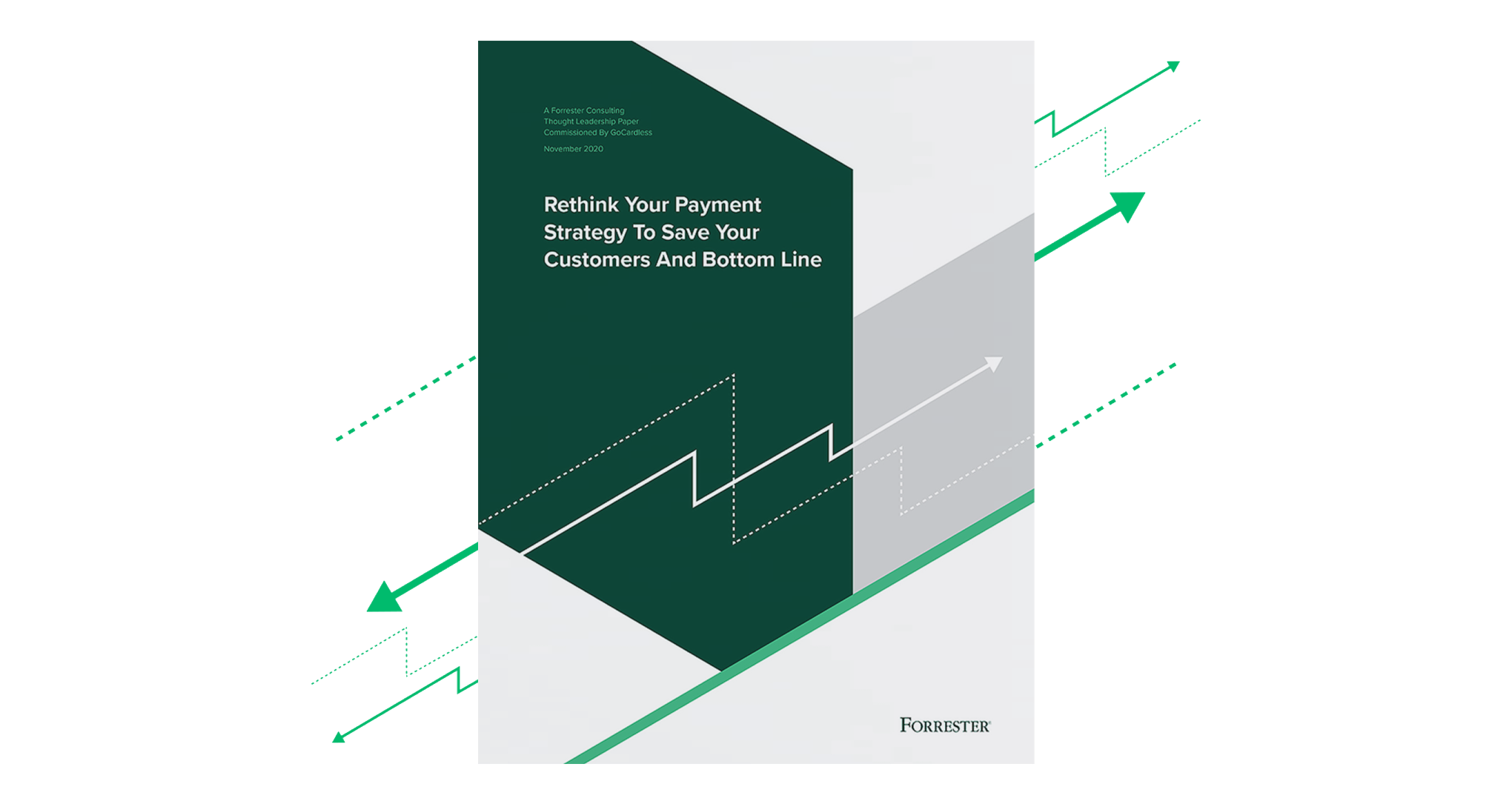
96% of businesses have had outstanding payments for 10+ days over the last year, according to a new Forrester Consulting study commissioned by GoCardless, a leading fintech for recurring payments. The study, ‘Rethink Your Payment Strategy To Save Your Customers And Bottom Line’, examines how companies can use recurring payments solutions to boost their payments strategy, shorten DSO (Days Sales Outstanding), and protect their bottom line.
Forrester surveyed 700 payment decision-makers in organisations that serve a mix of businesses and consumers, or business customers only. The results highlight the extent to which lengthy DSOs and failed payments can impact customer churn and bad debt.
The study found that having a high DSO is a key operational challenge for many businesses. While only 4% of businesses have a DSO of less than 10 days, the research shows four out of five businesses have wait times of 20-30 days to receive payments. In addition to this, almost half (47%) of businesses say that the time taken to collect their accounts receivables has increased in the last 12 months - this demonstrates the struggle for many businesses to get paid in the current challenging environment of COVID-19.
Another key finding is that failed payments continue to impact customer churn. In the UK, on average, failed payments result in churn 11%-15% of the time. A Forrester Consulting study found that 50% of firms experienced payment failures for 7% or more of their payments in the last 12 months, and two in three businesses surveyed are seeing failed payments turn into churn more than 10% of the time. This can negatively impact customer relationships, with over half (54%) of decision-makers surveyed saying that payment failures lead to an increase in customer dissatisfaction.
Payment failures are also costly and labour-intensive for businesses to collect, with the average B2B business spending 16%-20% of the payment value to recover it. Half (51%) of the businesses surveyed said that failed payments led to an increased cost of recovery, while 45% of businesses say that payment failures turn into bad debt.
Hiroki Takeuchi, CEO, GoCardless, said: “Forrester consulting findings demonstrate exactly why payments are high leverage. There are clear connections between failed payments and negative business impacts such as bad debt, churn and customer dissatisfaction. In this environment in particular, firms recognise the importance of recurring payment solutions that optimise their payment strategy and prevent failure, to avoid increased costs and damaging customer relationships. That’s why we developed Success+, which helps businesses efficiently recover an average of 76% of failed payments.”
Further findings include:
- 86% of enterprise companies have more than 20 full-time employees to handle recurring payments, primarily relying on CRM, billing, and accounting systems
- 59% of businesses say that higher churn rates result in increased chargeback rates, whilst 57% of businesses say that higher churn rates result in an increase in customer service contact
- On average, B2B businesses spend 16%-20% of the payment value to recover the payment. If a business has $100m in annual revenue, with a 7% payment failure rate, and it costs 16% of that value to attempt to recover, that's >$1m.
- 03:00 am
Juvo, a pioneer of financial identities for the underbanked, today announced a new partnership with Mastercard. Juvo was accepted into Mastercard’s global fintech startup engagement program, Start Path, last August. Now, Juvo is collaborating with Mastercard’s Latin America and Caribbean (LAC) team to introduce its FiDaaS (Financial Identity as a Service) platform to hundreds of financial institutions across the region. FiDaaS will enable these institutions to confidently serve a much broader base of customers and drive financial inclusion.
Juvo's FiDaaS platform builds financial identities using alternative transaction data. With the help of machine learning tools, Juvo analyzes users’ transactions and verifies their ability to access financial services, take out insurance and repay loans. Across Latin America tens, possibly hundreds of millions of people are outside the reach of traditional credit bureaus. This creates a lack of meaningful data on which financial institutions can make decisions about who they serve. The result is that the majority of Latin American and Caribbean consumers remain underbanked, and the addressable market for financial institutions across the region is significantly reduced.
“Mastercard’s Start Path program identifies the best and brightest later stage fintech startups - Juvo is firmly in this category,” said Amy Neale, Senior Vice President, Mastercard. “We work with fintechs to co-innovate and uncover opportunities to drive the next generation of commerce, payment & fintech solutions between Mastercard and banking and commerce partners. We have been very impressed by Juvo’s track record of delivery to mobile and banking customers, and the innovation, robustness and suitability of its FiDaaS platform.”
“We have hundreds of financial institutions, retailers and fintechs as customers across Latin America and the Caribbean. Juvo’s FiDaaS platform can help every one of them grow - it has excellent market fit,” said Thiago Dias, VP Fintech Strategy and Labs, LAC, Mastercard. “The traditional credit bureau system works well in developed countries, but across LAC lack of credit data restricts access to vital financial services for hundreds of millions of credit-worthy people. Using alternative data, FiDaaS provides financial institutions the information they need to make critical business decisions. In turn, these insights will open access to financial services for huge swathes of the population, supporting the drive for financial inclusion.”
“Over the last 6 years, we’ve proven the reliability of the FiDaaS platform by offering mobile phone users in developing markets more than $1 billion in micro loans for mobile airtime. That was important in helping to perfect the FiDaaS platform but make no mistake, this deal with Mastercard represents a huge step towards the achievement of our vision for Juvo,” said Steve Polsky, founder and CEO of Juvo. “Financial institutions across LAC face a dilemma: consumers can’t demonstrate their creditworthiness to gain access to credit. Without access to credit, however, consumers can’t establish creditworthiness. Using FiDaaS, financial institutions can rapidly and dramatically expand the addressable market for their services while minimizing risk. Banks face new competitive pressures and commodification of transactional services, and they need to unlock new addressable markets and deliver new services. We believe that establishing reliable, secure financial identities for underbanked consumers is the key to solving this problem,” concluded Polsky.
- 03:00 am

Revolut announced today the introduction of Open Banking for its users in Germany. With the new feature, German customers can now connect their accounts at Comdirect, Commerzbank, Deutsche Bank, ING-DiBa and Sparkasse with the Revolut App and view all their finances in one place - directly from their smartphones.
Revolut's new open banking offer has been developed in cooperation with Europe's leading provider of financial APIs (programming interfaces), London-based Fintech, TrueLayer. The use of the TrueLayer platform ensures that account information from major German banks is securely integrated and updated in real time in the Revolut app.
Functions at a glance
In concrete terms, this means: With Open Banking, German customers can connect all their bank accounts with the supported financial institutions via Revolut App. But that's not all: users can now transfer money between Revolut and other bank accounts, create personalised budget analyses across different accounts and send money to friends and family and from one account to another using only the Revolut app. All in one place and without losing track. Open Banking also supports the top-up function: Revolut accounts can be easily topped up directly in the app with simple transfers from the linked accounts, without having to enter a card or IBAN and, above all, without logging into the online banking of other financial institutions.
Open Banking is free of charge for all Revolut users. With the introduction of this feature, Revolut laid another milestone for more financial well-being and stays true to its mission of giving people more control over their financial lives.
In terms of safety
Currently Revolut supports Open Banking for customers who have accounts with Comdirect, Commerzbank, Deutsche Bank, ING-DiBa and Sparkasse.
Revolut Ltd. is authorised by the UK Financial Services Authority (FCA) as an electronic money institution and as such is licensed to provide account information and payment initiation services in the UK and other countries, including Germany. Via the Revolut App, German customers can give their consent to Open Banking. Revolut will continue providing these services to German customers post-Brexit from european-licensed companies in its group. Revolut will continue providing these services to German customers post-Brexit from european-licensed companies in its group.
Accounts are linked via the so-called APIs (Application Program Interface). The PSD2 API requirements was specially developed to avoid security risks and data leaks: Access to other accounts is authorised via the trusted websites of the respective banks and Revolut cannot see passwords or personal data at any time. Furthermore, data is encrypted, while account links must be re-authorised every 90 days and can be paused and released at any time.
Once customers have given their consent to Revolut, it can request their account information from other financial institutions and display it in the Revolut app.
Joshua Fernandes, Product Owner for Open Banking at Revolut, explains: "With the introduction of the Open Banking function, our offering in Germany will be even more competitive, user-friendly, fast and accessible. We are delighted that the legislators have created the framework for a new digital financial landscape and are personally very proud that Revolut and TrueLayer are pioneering in this respect."
Francesco Simoneschi, co-founder and CEO of TrueLayer, adds: "The introduction of Open Banking with Revolut in Germany also marks a significant expansion for us in the country. As the leading open banking platform in Europe, our collaboration with Revolut is continuing at pace and this is just the beginning of what will be a fruitful partnership bringing further innovation to the German market. Revolut’s customers in Germany can benefit from a better user experience, offering a comprehensive view of their finances, as well as greater control and oversight."
- 09:00 am

ConsenSys has acquired the team and technology of Truffle. Among the most widely used blockchain developer tools, the Truffle Suite is a development environment, testing framework, and asset pipeline all rolled into one. The terms of the acquisition were not disclosed.
With Truffle, users can access built-in smart contract compilation, linking, deployment, and binary management. With more than 8.5 million downloads and a vibrant developer community, Truffle has long been an ecosystem favorite for new and experienced developers seeking the tools to expedite the smart contract and front end app development process. Truffle accelerated the growth of the open source Ethereum ecosystem as one of the first projects incubated by ConsenSys, and has since grown a dedicated following of developers. With the successful integration of Truffle with ConsenSys Quorum, Filecoin, and other protocols, Truffle is setting its sights on global enterprise adoption of blockchain.
Relied upon by more than 1.3 million developers worldwide, the Truffle Suite is committed to making Solidity development elegant, productive, and safe. Free Truffle Boxes contain helpful modules, Solidity contracts and libraries, front-end views, and even complete example dApps to make it easier for new developers. Truffle Teams enables engineering teams of all sizes to collaborate on shared work in testing environments to make sure an application works before incurring the cost to deploy on mainnet Ethereum.
The addition of Truffle to the ConsenSys developer product stack provides enterprise customers a wider array of services to deploy their applications with confidence. The team will continue to build Truffle with the support of the industry-leading business development, engineering, and marketing teams at ConsenSys. Truffle technology will also be leveraged by Quorum, Diligence, and Infura. The blockchain engineers and development experts behind Truffle will continue to elevate the experience of blockchain developers and provide them with high-quality, enterprise-grade development tools.
“The Truffle Suite is essential for developers to get started on Ethereum and Web3, and is invaluable for increasing adoption of Mainnet applications and enterprise blockchain solutions alike. Truffle will often be top-of-the funnel for all our products and services since nearly all developers begin their smart contract development journey with the Truffle Suite. We are excited about further integrations with ConsenSys’ suite of developer tooling and applications,” said Joseph Lubin, Founder of ConsenSys.
Launched in 2015, Truffle is a development suite designed to manage blockchain developers’ entire workflow from smart contract development to front-end application, offering the most popular development framework for building on the Ethereum blockchain based on Github stars.
The Truffle Suite is comprised of the following elements to facilitate the smooth and seamless development of dApps:
- Truffle Teams – Streamlines a team’s workflow, providing a shared compilation and testing environment for continuous integration, and allows a team to monitor deployed smart contracts’ transaction, state, and events. It also enables visual presentation of useful data and configurable notifications of errors for critical insight.
- Truffle – The actual development environment that integrates compilation, testing, and deployment of smart contracts.
- Ganache – A locally deployed blockchain simulator, Ganache features a graphical user interface that can simulate blockchain networks and enable live-testing of smart contracts without requiring the set up of real test networks or using a remote network.
- Drizzle – An assortment of front-end libraries that offer useful components for developing web applications that can seamlessly connect with smart contracts.
“As the most popular Ethereum development framework, it is a natural fit for Truffle to be part of the ConsenSys product stack. We look forward to delivering enterprise grade solutions that enable developers to build and deploy blockchain systems using Ethereum and across multiple blockchains,” said Tim Coulter, Founder of Truffle.
- White Papers
- 17.11.2020 05:44 pm
Over the last decade, the payments industry has changed significantly. Today, financial institutions require their system to be flexible and offer them the ability to bring products and services to the market quickly to be able to compete in the market. However, many continue to operate on card-based platforms that are entering their fourth decade, instead of moving to moving to modern, third generation payments platforms which were built to provide FIs with the means to launch ground-breaking products and solutions suitable for the market today, and in the years to come.
The question is: can a payments platform born in the 1990s truly meet your business needs? And, more importantly, for how long?
Compass Plus and Consult Hyperion joined forces to address this in an insightful whitepaper, which brings together experts from each company to explore the differences between payment platforms born in the 1990s and those developed and launched in the 2010s, and how the latter can transform your business, providing a platform that will meet the needs of today's market and tomorrow's unknown.
Download Paper
Other White Papers

n/a
n/a at n/a
The advanced financial apps that are in use today are the natural outcome of increasing synergy between modern technology and the financial sector. see more
- 04:00 am
Diasoft, a leading provider of IT solutions for the global financial services market, has signed a partnership agreement with Rostelecom-Solar, a national provider of cyber security technologies and part of the Rostelecom Group. The partnership is aimed at the creation of the banking segment of the National Cyber Range that will be used by domestic banks to practice protection against cyber threats.
The Cyber Range is one of the largest information security projects that is being implemented in 2020 under the “Digital Economy” National Program. This task was entrusted to Rostelecom, which involved its subsidiary company Rostelecom-Solar to implement the project. The Cyber Range consists of several segments that imitate standard infrastructures of companies from different industries, including the financial services and banking sector.
To ensure that the cyber training of security experts was as close to real conditions as possible, the virtual infrastructure of the Cyber Range must comprise the full range of banking systems: the core banking and its supplementary components. The core banking system will be represented by Diasoft’s core banking solution that is widely used by Russian banks. Among Diasoft customers, there are more than half of the TOP 100 Russian banks, 27 of 61 foreign banks operating in Russia, leading investment, asset management and insurance companies, private pension funds and MFIs.
“According to Solar JSOC, the center of monitoring and response to cyber threats, every fifth cyber attack in 2019 was aimed at banks. Attackers constantly improve their methods and tools, and the penetration of hackers into the infrastructure of any financial institution is just a matter of time. That is why, the most important thing is to focus on early detection of attacks and ensure quick response and effective counter measures to them. Even banks that use external services for monitoring and response to cyber attacks, prefer to carry out technical counter measures on their own. That is why hands-on training of experts of internal information security services becomes an essential component of cyber security,” commented Mikhail Klimov, Director for Development of the National Cyber Range, Rostelecom-Solar.
According to Diasoft experts, automation of the banking business involves creation of multiple points of interaction between different systems, which inevitably leads to appearance of vulnerabilities. That is why the company enthusiastically welcomed Rostelecom’s initiative for improvement of security of the national financial services industry.
Besides cyber training, the virtual infrastructure of the Cyber Range will be applied for stress testing of domestic solutions that are used by banks in complex information security projects.
In the future, Rostelecom’s digital platform will be enhanced with three regional Cyber Range centers in the Russian Far East, the Volga District and the Southern Federal District. This will make the Cyber Range the largest project in this information security segment and help to improve the security of all key Russian industries.
- 03:00 am

Curv, the leader in digital asset security, today announced that Solaris Digital Assets GmbH, a 100% subsidiary of Europe's leading banking-as-a-service platform Solarisbank, has become a Curv client. This new relationship is a strategic inroad for Curv as the company plans to extend its existing presence in Europe following the onboarding of several BaFin-regulated custodians earlier this year.
Solarisbank AG, the tech company with a full German banking license, enables businesses to offer their own financial products in Europe. By leveraging Solarisbank’s modular platform, partners like Samsung, American Express and BP access a wealth of services, including digital bank accounts and payment cards as well as identification and lending services.
Earlier today, Solarisbank additionally announced Bitwala, Germany’s crypto-banking flagship company, as a new client for Solaris Digital Assets. Bitwala is leveraging Solarisbank’s platform to offer its customers digital bank accounts and cards. Curv’s technology underpins Solarisbank’s new partnership and digital asset product delivery to Bitwala.
“Our companies are uniquely aligned to provide a flexible yet secure banking infrastructure that demonstrates the future of global finance,” said Curv Co-Founder and CEO Itay Malinger. “As a protocol-agnostic technology partner, we deliver a multi-party computation (MPC)-based security infrastructure that eliminates all single points of failure and affords institutions the option of a customized deployment to suit their specific needs for hot, warm, or cold wallet environments.”
Since its founding in 2016, Berlin-based Solarisbank has established itself as the banking partner of choice for blockchain and crypto businesses. In 2019, Solarisbank founded its wholly owned Solaris Digital Assets subsidiary, which provides digital asset custody, complementing its existing banking services.
“When we set about our search for a security partner, we found Curv to be the first of its kind. Its technologically advanced cloud-based model and mathematically secure offering aligns with our modular approach,” said Alexis Hamel, Managing Director of Solaris Digital Assets. “As a crypto-custodian fulfilling all license requirements, we offer our partners a cutting-edge custody solution that is also fully compliant with anti-money laundering regulations in Europe. Turning to a segment leader like Curv gives us peace of mind that we can continue to accelerate the adoption of digital assets.”
The new relationship is well-timed given Curv’s aggressive international growth plans and supportive regulatory developments in Germany, APAC and most recently the United States. Earlier this year, the Office of the Comptroller of the Currency (OCC) announced that US national banks could custody digital assets.
In October, Curv announced an engagement with global bank BNP Paribas as well as a fresh injection of capital from Franklin Templeton and Illuminate Financial, bringing the firm’s total amount raised to $30 million. This news followed Curv’s July announcement that the company secured $23 million in Series A funding from digital asset leaders that include Digital Currency Group, Coinbase Ventures and Commerzventures. Curv additionally shared news of its ISO 27001 accreditation, recognizing Curv as a service provider suitable for enterprises with the highest level of security requirements.
- 07:00 am

Verve Management, the organizer of Future Banks Summit KSA has received great interest for the virtual summit and the demand of seats is extremely high. The summit takes place on 23-24 November 2020 from 10:00 AM to 12:30 PM (KSA time) and the registrations are due to close soon.
You may register here to get your VIP Pass: https://bit.ly/2FhdwOn. Registrations close by 19th November 2020.
The summit is expected to bring together more than 200 leading experts from the banking, finance and investment industry.
It is a two-day event full of insights with rich agenda of over 16 topics which includes presentations, panel discussions, Q&A, virtual exhibition, and networking sessions. The program will focus on the future of financial industry in KSA driven by innovation and digital advancements with adoption of technologies such as AI, intelligent automation, Regtech, data analytics, cloud migration, cyber security, digital payment models along with tech-driven redefined business continuity planning strategies. The session and discussions of the Future Banks Summit are focused on ‘Solutions and Answers’ to some of the most pressing issues the banking fraternity is facing in the current challenging times.
It will be addressed by over 19 distinguished speakers, leaders and panelist including but not limited to Abdulaziz Aldahmash - SABB, Abdulmohsen Al-Mulhem - Bank AlBilad, Ali Alomran - Arab National Bank, Ameet Jugnauth - Lloyds Banking Group (UK), Dr. Amer Alzaidi - The Saudi Investment Bank, Basil Al Alola - Al Rajhi Bank, Ewa Kostórkiewicz - First Abu Dhabi Bank (FAB), Fahad Albaz - Banque Saudi Fransi, Fahad Altwaijri - SABB, Faisal Al-Rashoudi - Bank Al Jazira, Faisal M. Sibai - Public Investment Fund (PIF), Grant Niven - Banque Saudi Fransi, Majed Alsadhan - Banque Saudi Fransi,Millie Gillon - Standard Chartered Bank (Singapore), Mohammed AlDahlawi - Alinma Bank, Mohammed Ammar Shaheen - Bank AlJazira, Russell Burden - AppsFlyer, and Saleh Al Shareef - The National Commercial Bank - Alahli NCB.
The summit is also supported by top technology solution providers namely iGTB as Platinum Sponsor, Comarch as Titanium Sponsor, Alteryx as Strategic Analytics Partner, AppsFlyer as Silver Sponsor and SWIFT as Financial Messaging Partner and more.
For more information about this event, visit www.futurebanksummit.com or email at info@verve-management.com.
For enquires contact:
Yzel Alarcon, Operations Business Solution Manager
M: +971 56 215 2121 | E: yzel@verve-management.com
- 06:00 am
Nationwide, the world’s largest building society, has joined forces with Accuity, the global compliance provider to start accepting cross-border transactions via Visa Direct. Customers can send Visa Direct payments to Nationwide accounts in real-time, creating a frictionless user experience
Visa Direct is Visa’s push payment capability that allows cardholders to receive funds to their Visa cards in real-time to billions of accounts around the world. Since financial institutions are required to meet stringent Anti-Money Laundering/Combating the Financing of Terrorism (AML/CFT) regulations, Nationwide needed to ensure it could screen Visa Direct payments in line with its existing financial crime compliance process to satisfy local regulators and ensure a rapid transfer of funds.
Through Firco Continuity, Acuity’s transaction screening solution, Accuity and Nationwide were able work together and adapt the solution for cross-border Vis direct payments, enabling the bank to identify financial crime red flags via an automated workflow, which can then be reviewed and escalated appropriately, while allowing risk-free payments to be processed without delay.
As regulators require more comprehensive explanations and greater transparency of the technology used for screening, Firco Continuity provides time stamps and an electronic audit trail to ensure Nationwide can provide evidence of its decision-making process. The solution also scales seamlessly, so as payment volumes increase, Nationwide can accept them without adding to the operational burden.
Sophie Lagouanelle, Vice President Financial Crime Screening, Accuity, comments: “For consumers and businesses, faster and more convenient payments are good news; but as payment volumes increase, so does the potential for financial crime. By helping Nationwide to automate the screening of Visa Direct payments in line with its risk policy, we have proven that speed and efficiency can be achieved without compromising compliance.”








