
Published
- 02:00 am
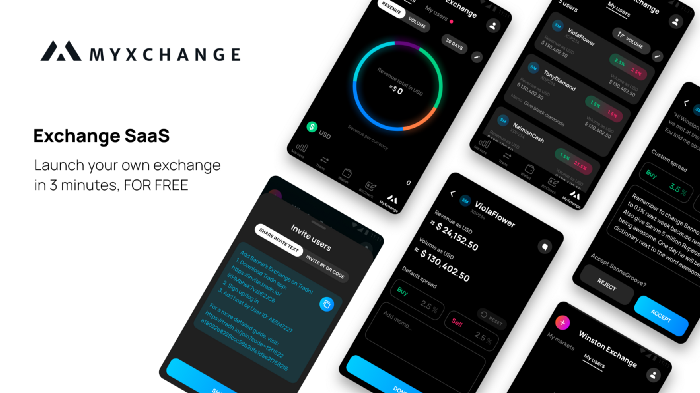
XREX (https://www.xrex.io/), a blockchain TradeTech company serving cross-border businesses that operate in emerging economies, today announced the launch of MyXchange, a first-of-a-kind digital currency Exchange-as-a-Service (EaaS) platform.
MyXchange makes it easy for any Money Transfer Organization (MTO) to run a secure crypto-fiat exchange that features full Know Your Customer (KYC), Anti-Money Laundering (AML), liquidity, wallet security, and fiat (US Dollar, Indian Rupee) on-off ramps. In the same way that Shopify makes it easy to launch an online store, MyXchange simplifies creating a secure exchange, passing along low fees with seamless cross-border escrowed payments across emerging markets.
XREX is backed by well-known venture capital firms AppWorks, WI Harper, BlackMarble, and CDIB (TWSE: 2883), along with Taiwan’s National Development Fund and Skype’s co-founders Toivo Annus and Jaan Tallinn.
As oil prices fall, according to an earlier Bloomberg report (1), “the Nigerian government’s coffers have emptied after crude prices plunged in the wake of the coronavirus pandemic,” and “Nigeria’s foreign-currency shortage is squeezing the life out of Africa’s biggest economy.”
“A lot of the members can’t access the amount of dollars they need from the banks,” said Eke Ubiji, executive secretary of the Nigerian Association of Small and Medium Enterprises. “That is constraining business.”
Financial Times also recently wrote about this African dollar shortage issue (2): “Nigeria imports the vast majority of its raw materials and goods, and companies across the spectrum, from big conglomerates to small manufacturers, are being hit,” said Muda Yusuf, head of the Lagos Chamber of Commerce and Industry, the country’s largest business lobby.
“Some of [our members] said they were about to lose their credit lines,” he said. “Businesses are likely to go under, if some of them have not already gone under.”
The dollar crunch has caused most banks to avoid these high-volatility markets, making it difficult for merchants to secure letters of credit or credit insurances. It’s also caused the invoice-to-pay processes to become even more slow and risky.
The XREX MyXchange fixes this situation in one simple, SaaS-based, fully auditable solution. Licensed Money Transfer Organizations (MTOs) / Money Transfer Services (MTSs), Money Service Businesses (MSBs), and digital currency service providers can help mitigate these issues by using MyXchange to launch their crypto-fiat exchanges. Until now, these MTOs have had to either outsource this technology or build it from scratch.
Building an exchange in-house requires tremendous resources to find and pay liquidity providers, custodians, KYC providers, AML providers, and cybersecurity providers, as well as convince banks to serve as fiat on-off ramps. Outsourcing to an “exchange managed services (white label) provider” often requires an investment of over $1 million.
“Much like building an e-commerce website was a lengthy, expensive undertaking at the turn of the century, developing an exchange is an onerous process today,” said Wayne Huang, CEO of XREX. “More MTOs see the advantages of offering their own suite of digital currency services, and MyXchange provides tools to make it easier than ever to deploy a full-service exchange.”
XREX has seen significant traction among global MyXchange alpha testers, including merchants and MTOs in India, Africa, and the Middle East. The B2B global payment volume is projected to reach $63 trillion by 2026 (3), driven by a rise in the availability of new payment options.
Emerging market’s increase in crypto adoption (Reuters (4), Decrypt (5)) has given MTOs new opportunities to help enterprises and merchants securely and efficiently send money across emerging markets. With MyXchange, XREX provides all of the technology needed for MTOs to facilitate international trade finance, whether it's serving cross-border commodity trading or providing fiat bridges for offshore dollar banking. At launch, the following trading pairs will be available in cryptocurrency: BTC, BCH, ETH, XRP, USDT, and in fiat: USD, INR.
For more MyXchange information, please visit https://www.myxchange.io.
- 03:00 am

The Financial Data Exchange (FDX) announced its Fall release this morning which includes a myriad of technical standards and updates to the existing specification that have now been launched into the financial services marketplace, thereby cementing FDX’s position as one of the most comprehensive Open Finance data models in the world today.
“FDX’s Fall release is another milestone and proof point of how FDX continues to deliver on its promise to unify the financial industry around secure, common, interoperable and royalty-free standards for user-permissioned data sharing and Open Finance,” said FDX Managing Director Don Cardinal.
The FDX release includes Version 4.5 of the FDX API, User Experience Guidelines 1.0, FDX’s first user-permissioned data sharing Use Case (Personal Financial Management - PFM), Foundational Requirements for Certification, an industry Taxonomy of Permissioned Data Sharing, Control Considerations, and adoption of Version 3.2 of the FDX Financial-Grade API Security Specification.
“While this release represents many technical components of consumer data sharing and Open Finance, the end result is a more robust, secure and transparent way forward for consumers to understand, leverage, and benefit from their own financial data and improve their financial lives,” added Cardinal.
The components of the FDX Fall release include:
- FDX API v4.5 – This latest version of FDX API includes new features that improve account number security via an optional use of tokenized data for payments and improves the data quality for use cases such as lending via expanded account holder information fields.
- User Experience (UX) Guidelines v1.0 – This first iteration of the FDX UX Guidelines provide implementers of the FDX API with clear direction for designing permissioning processes for end-users to grant consent to access their financial data. Based on extensive user research and drawing on the collective expertise of our members, the documentation describes the concepts of financial data sharing, data flow, and data clusters, followed by specific guidelines to ensure that the data sharing user experience will increasingly be a consistent, familiar, and friction-free process.
- Personal Financial Management (PFM) Use Case – Developed after months of consultation among FDX members, this first FDX defined use case provides end-users with access to data they need to manage their personal finances while ensuring data minimization so that only necessary data is shared. Specifically, the PFM Use Case defines the minimum required data elements consumers must share to power Personal Financial Management apps and services without sharing additional unneeded financial data. FDX plans to approve and certify additional use cases in the future such as credit management and servicing, account verification and tax preparation.
- Taxonomy of Permissioned Data Sharing – FDX is providing this set of common data sharing terminology to align industry stakeholders and help regulators and policymakers better understand and define the various roles and perspectives within the user-permissioned financial data ecosystem. The Taxonomy also includes comparison of similar terminology defined by regulators, policymakers, and other financial services industry bodies.
- FDX Financial-Grade API Security Specification v3.2 – Adopted from globally recognized FAPI v1 standard from OpenID Foundation, this Security Specification aims to provide specific implementation guidelines for online financial services to adopt by developing a REST/JSON data model protected by a highly secured OAuth profile.
- Control Considerations v3.2 – This documentation represents a reference architecture addressing security, and fraud concerns in user-permissioned financial data exchange between financial institutions (data providers), data aggregators (data access platforms), and fintech applications and services (data recipients). This reference architecture will better align security, risk, cost, fraud, and user-experience with consumer expectations to be able to view and manage all their financial relationships in one convenient location. Specifically, version 3.2 includes guidelines for application-level encryption in data transmission, and updated references to FIDO 2.0 - a design pattern for direct authentication of end-user via mechanisms such as biometrics.
- Foundational Requirements v1.0 – The document covers operational quality requirements that data providers must meet to apply for a FDX use case certification. The document covers availability, performance, and security requirements, and is part of a series of certification documents that will outline the FDX certification requirements.
All FDX releases originate with work by FDX’s global array of members from across the financial industry spectrum in FDX’s Committees, Working Groups and Task Forces to arrive at technical standards for the entire financial services industry. Today’s release was approved by the FDX Board of Directors in September and completed satisfaction of a 60-day objection period last week.
“The standards, products and updates contained in today’s release represent the best of financial industry collaboration and offer critical guidance and industry-led standardization that will deliver a more consumer-centric, secure and transparent Open Finance data sharing experience for consumers,” said Dinesh Katyal, FDX’s Director of Product.
- 08:00 am

The 15 winners of the ninth edition of the Tech Trailblazers Awards – a global awards program focused on enterprise technology startups – were announced today. The program rewards winners in 12 major enterprise technology sectors, identifies one outstanding company entrant from any category, and makes two awards to individual female and male executives who have delivered outstanding innovation or change.
The 2020 winners are:
- Female Tech Trailblazer of the Year: Stephanie Fohn, NeuVector, @NeuVector
- Male Tech Trailblazer of the Year: Dean Sysman, Axonius, @AxoniusInc
- Firestarter Award: Codastra, @CodastraDev, UK
- AI: MemVerge, @MemVerge, USA
- Big Data: MemVerge, @MemVerge, USA
- Blockchain: Cognitochain Technologies, @CognitoChain, UK
- Cloud: Bamboo Systems Group, @BambooSystems, UK
- Containers: Styra, Inc., @styrainc, USA
- Developer: Ambassador Labs, @ambassadorlabs, USA
- FinTech: Modulr Finance, @ModulrFinance, UK
- IoT: BehrTech, @BehrTech, Canada
- Mobile: SafeGuard Cyber, @safeguard_cyber, USA
- Networking: Ananda Networks, @AnandaNetworks, USA
- Security: Abnormal Security, @abnormalsec, 8USA
- Storage: VAST Data, @VAST_Data, USA
Visit here for more details of the winners and runners-up in each category.
Rose Ross, founder of the Tech Trailblazers Awards, said: “Despite the difficulties caused by the pandemic we received a record number of entries this year – up by 50% from last year. And we congratulate all the winners both on their innovation and on their efforts to bring their innovations to market – they are all outstanding in their fields.”
Since 2012, the annual Tech Trailblazers Awards have recognised the most innovative entrants and concepts in enterprise technology. The program is limited to early stage, privately funded/VC-backed companies under six years old. Startups are free to nominate themselves.
Shortlists for each category are chosen by the Tech Trailblazers Panel of leading IT industry experts, and winners are identified by a combination of opinions from that judging panel and public vote.
The Awards are supported by sponsors and industry partners:
AfriLabs, Amoo Venture Capital Advisory, beSUCCESS, bnetTV, China AXLR8R, the Cloud Security Alliance, Computing, Enterprise Times, Enterprise Tech London, The Green Grid, GSMA, The Icehouse, Infosecurity Magazine, Innovation Warehouse, Launchpad Europe, MIT/Stanford Venture Lab, Mynewsdesk, The Next Silicon Valley, Outsource, Prezi, RealWire, Silicon Cape Initiative, Skolkovo, StarTau, Startup America, Storage Networking Industry Association (SNIA), Tech Field Day, Tech in Asia, TechNode, The Register, TiE Silicon Valley, Wayra UK, Wazoku, Ventureburn and VMware.
- 09:00 am
The Depository Trust & Clearing Corporation (DTCC), the premier market infrastructure for the global financial services industry, today announced its acquisition of Publicis Sapient’s Compliance Management Reporting System (CMRS), which will be integrated with the DTCC Report Hub service to create the industry’s most comprehensive pre and post trade reporting solution.
With the acquisition, the DTCC Report Hub service will provide an extensive suite of pre and post trade reporting capabilities with the largest jurisdictional and regulation coverage, including Markets in Financial Instruments II (MiFID II), and other mandates in the United States, Europe, Canada, Australia, South Korea (subject to implementation of final regulations) and Hong Kong, among others. Firms using the newly expanded DTCC Report Hub offering will have the ability to manage derivatives, MiFID II, and Securities Financing Transaction Regulation (SFTR) pre and post trade reporting requirements via a unified, single-vendor platform, allowing them to mitigate compliance risks, enhance operational efficiencies and reduce costs.
“As national and global regulatory demands continue to increase, firms need a solution to help them simplify the complexities of their pre and post trade reporting processes,” said Chris Childs, Managing Director, Head of Repository & Derivatives Services, DTCC. “CMRS is an established platform that, when integrated with the DTCC Report Hub service, will provide the industry with a proven pre and post reporting service that offers unrivalled asset and jurisdictional coverage.”
Under the terms of the acquisition, Publicis Sapient will serve as a strategic partner to DTCC by continuing to support, maintain and develop enhancements to the technology platform. “The combined trade reporting and consulting experience that DTCC and Publicis Sapient contribute to the existing technology platform will create a single, highly efficient, evolving, comprehensive reporting solution that will help clients manage the complexities of meeting multiple regulatory mandates across jurisdictions,” said Randall Orbon, Head of Strategy at Publicis Sapient. “Publicis Sapient engineered CMRS to act as an accelerator, and we’ve seen the platform develop a proven record of successfully supporting adherence to ever-evolving global reporting regulations.”
DTCC, a trusted industry partner, plans to begin integrating CMRS with the existing DTCC Report Hub service immediately. The expanded solution will interface with registered trade repositories and an Approved Reporting Mechanism (ARM), allowing firms to access a wide range of services, including pre-reporting facilitation, report generation and submission, automated reconciliation, and data analytics creation.
Industry demand for a complete pre and post trade reporting solution has increased as regulatory pressures have grown both locally and globally in response to the evolving regulatory landscape. Since the 2008 financial crisis, trade reporting rules have created challenges for financial firms, most notably data management complexities and increased burdens on internal compliance teams, who must continually monitor evolving regulations over time. The DTCC Report Hub service helps alleviate these burdens by eliminating the need for firms to build and support expensive in-house data management capabilities and systems that can comply with changing regulatory requirements.
In the coming years, DTCC will continue investing in further expanding the DTCC Report Hub service to meet client needs as regulations continue to evolve globally.
- 06:00 am

Erik Nordahl has been announced as partner and CTO at United Fintech which launched last month to transform banks and fintechs in capital markets.
United Fintech plans to acquire and scale a range of pioneering small to medium sized engineering-led fintech companies, all with a proven capital markets product; and to partner with banks to help them to access and onboard these innovative fintechs.
At United Fintech, Erik Nordahl will play a key role in the due diligence process, assessing potential acquisitions from a technology perspective. He will also work closely with the founders of the acquired fintechs to optimise their organisations and help scale them into global companies.
Erik Nordahl is a highly respected technologist in the financial services sector. His 20 year career began with developer roles at Danske Bank and Saxo Bank before progressing into senior management. He joins United Fintech from BEC, where he was EVP for Capital Markets, Risk/Finance and Business Intelligence, with responsibility for over 300 IT specialists in Denmark and Poland. Prior to that, he was Senior VP and Head of IT Operations at NETs and before that, Business CIO at Nordea. Erik Nordahl spent eight years at Saxo Bank, where he was Head of Front Office and IT, managing IT specialists in both Denmark and India.
Christian Frahm, Founder & CEO, United Fintech, comments: “I worked with Erik at Saxo Bank and have followed his career closely over the last decade. He has exceptional IT skills and an in-depth understanding of the technology requirements in the banking sector. I am delighted that he has joined United Fintech as Partner and CTO, working closely with me on the strategic development of the company. He will be a huge asset in helping to scale the fintechs we acquire.”
Erik Nordahl adds: “Having built my career at large firms, I am excited to be utilising my experience with such a ground-breaking early stage business and having the opportunity to play a significant role in its growth from the inception stage. In addition to having a strategic role on the Board of United Fintech, I am also looking forward to going back to my roots and getting involved in programming when required and working directly with the developers – this is an aspect of my role that I have missed as I’ve progressed into enterprise management.”
Erik Nordahl’s appointment follows the announcement of Tom Robinson, former Managing Director at Goldman Sachs and Jefferies, as Partner & Head of Sales at United Fintech. Additional senior hires will be announced imminently.
- 08:00 am

Tourmaline Partners, LLC, one of the world's leading outsourced trading solutions firms, today announced two senior hires to meet growing demand for its outsourced and supplemental trading services: Keir Collins, based in Dallas, and Yuki Shimada, based in Sydney.
Tourmaline has also announced the opening of a new office in Dallas which will be led by Collins. The firm has seen a continued rise in demand for outsourced and supplemental trading solutions, both in the U.S. and globally, that has been reinforced by recent surges in volumes and volatility as well as the novelty of work-from-home scenarios for the buy side.
Collins joins Tourmaline after spending the last 14 years at HBK, a global multi-strategy alternative investment management firm based in Dallas, where he began as an options trader and rose to the position of Global Head of Equity Trading. In that role, he built the firm’s execution team across all equity products worldwide. Focusing on strategic counterparty development and trade structuring, his team was responsible for implementing trades produced by the diverse business units of the multi-strategy fund, including risk arbitrage, syndicate, relative value, special situations, credit and proprietary volatility books. Prior to HBK, Collins traded options for Goldman Sachs’s Speer Hull Derivatives business in Chicago.
Shimada brings more than 20 years of global equities trading experience in senior roles on both the buy and sell sides. He most recently served as a senior equities trader at CBRE Clarion Securities, a global investment manager specializing in listed real assets, where he spent the past decade overseeing all Asian trading. Before that, he worked for Citi, managing Australia REIT execution and risk for six years. Shimada’s first job in Sydney was at Morgan Stanley as a portfolio trader and general equities market maker. He began his career at Rosehill Capital Management in the U.S., where he was a Japanese equities hedge fund trader.
“I am excited to join Tourmaline and help expand the firm’s reach with the opening of our new Dallas office,” said Collins. “Tourmaline’s commitment to offering a true buy-side trading solution is what sets us apart in a growing field, and I look forward to helping our clients in the southern U.S. and around the world.”
“The buy side in the Asia-Pacific region has evolved in the way it understands and values the benefits outsourced trading provides to in-house trading teams,” said Shimada. “I’m excited to join Tourmaline’s roster of veteran traders and to work with a diverse and growing client list. Tourmaline operates alongside fund managers to greatly enhance their access to liquidity, achieve far better coverage in offshore markets and address bandwidth issues, and it’s great to be working with the Sydney team to deliver clients these benefits in Asia-Pac.”
“Tourmaline’s ability to provided unparalleled service to our clients starts and ends with the deep experience of our team,” said Aaron Hantman, CEO of Tourmaline. “Keir and Yuki each bring decades of experience in solving complex trading challenges at the highest level. With the surge in demand for our offering, it’s essential that we have the best talent on the Street, and we couldn’t be more excited to have Keir and Yuki join us in these pivotal roles.”
- 08:00 am

Exterro Inc., the preferred provider of Legal GRC software and the Association of Corporate Counsel’s exclusive Alliance Partner for E-Discovery, Data Privacy and Cybersecurity Compliance, announced today it has acquired AccessData, the industry’s leading provider of digital forensic investigation technology.
The acquisition furthers Exterro’s vision of empowering customers to proactively and defensibly manage their legal governance, risk and compliance (GRC) obligations while maintaining and ensuring the highest levels of data integrity. By combining forces with AccessData, Exterro can now provide companies, government agencies, law enforcement, law firms and legal service providers with the only solution available to address all Legal GRC and digital investigation needs in one integrated platform.
“Converging market forces in DFIR, e-discovery, privacy and information governance are the driving factors behind this acquisition. To effectively address these critical challenges requires the ability to identify, preserve, analyze and present data in a contextual manner, quickly and inexpensively. It also requires a consistent, defensible process,” said Bobby Balachandran, CEO at Exterro. “Ensuring the integrity of the data supply chain is of the utmost importance. With the acquisition of AccessData, Exterro combines all of these capabilities in a single, integrated platform to give organizations a holistic framework for addressing their Legal GRC challenges and obligations.”
Organizations today are faced with continually expanding legal and regulatory obligations and ever-increasing security risks around their data and the data they hold on behalf of others. However, there is significant overlap between critical components of data management, especially with regard to e-discovery, internal investigations, incident and breach response, and privacy. AccessData’s forensic collection, processing and analysis capabilities complement and round out Exterro’s existing e-discovery, privacy, information governance, and incident and breach management solutions. With the combined technologies, domain expertise and superior track records of Exterro and AccessData, clients will benefit significantly in a variety of ways:
- Get to the facts more quickly and defensibly, at lower cost. No other company in the e-discovery market offers a truly comprehensive solution on a single unified platform that addresses every single phase of the e-discovery and forensic investigation process.
- Rapidly identify, preserve, analyze and present data stored across the enterprise. Offering the industry’s broadest set of connectors to enterprise data sources – including on-premise and cloud applications, new collaborative apps like Slack, mobile devices and PC operating systems – enables Exterro clients to identify, preserve, analyze and present data in a contextual manner, and to do so as quickly and inexpensively as possible within a consistent, defensible process.
- Quickly identify information risks across enterprise endpoints. The integration of AccessData’s technology with Exterro’s Legal GRC offerings allows the combined company to rapidly identify information risks and eliminate them before they become an issue.
- Establish advanced connections between discrete pieces of evidence.
Battle-tested forensic tools such as AccessData’s market-leading investigation solution, FTK, shine when investigators need to conduct data-intensive investigations in less time. Integration of FTK with Exterro’s advanced machine learning will save valuable time and money, and expose “smoking gun” evidence sooner.
- Get deep visibility into live data directly at the endpoint. The combination of AccessData’s forensic tools and Exterro’s Incident and Breach Management™ solution will help organizations conduct faster, more targeted HR and compliance investigations and implement a consistent, documented, defensible response process in a single, robust solution.
With more than 3,000 existing clients, 500 employees spread out across global operations in North America, Europe and Asia Pacific, and its strong financial position, Exterro will continue to aggressively invest in existing product lines like FTK® and new innovations in machine learning and artificial intelligence to address the growing demand from organizations to address their Legal GRC challenges.
“This is an exciting day for AccessData customers. As the leading Legal GRC technology provider, Exterro offers a portfolio that perfectly complements our own innovations,” said Ken Naumann, CEO at AccessData. “The acquisition will bring tremendous new value to our users, helping them strengthen and defensibly accelerate end-to-end forensic investigations and e-discovery. Exterro shares our deep commitment to FTK and is dedicating significant resources and investment to drive additional innovation throughout the combined product lines, with the common goal of taking customer satisfaction to new heights while ensuring the highest level of data integrity.”
- 02:00 am
The Bank of England has appointed self-service cloud-native delivery platform Appvia to support the creation of a new cloud environment.
The announcement follows a public procurement process which commenced in January 2020. The Bank of England will work with Appvia on design, construction and assurance of a modern, fit for purpose cloud environment.
During the two-year partnership, Appvia will be supporting development and project teams within the Bank in testing and deploying code in cloud environments, working with security teams to integrate the cloud into existing operational and security processes; and implementing information governance compliance so staff are able to collaborate safely and securely.
Oliver Tweedie, Head of Digital Platforms at the Bank of England, said: “We have selected Appvia as our Cloud Delivery Partner to help us realise the Bank’s cloud ambitions and unlock the potential of the Cloud. Appvia come with a great pedigree and a wealth of experience delivering Cloud services within government. Working in collaboration with Bank Technology teams, Appvia will help us shape and build the future of Cloud services across our organisation - a key part of our Technology strategy.”
Jon Shanks, CEO and Co-Founder of Appvia, said: “This is an exciting opportunity to work with the Bank as it undergoes a step-change in its approach to the cloud. Harnessing innovative cloud solutions, such as containers and Kubernetes is a real business enabler for the Bank to streamline the software development lifecycle, ways of working and cloud operating model. We look forward to working with all stakeholders at the Bank of England to support its digital transformation journey.”
Appvia, which counts the Home Office among its major clients, is a self-service platform that enables organisations to scale their infrastructure quickly, securely and easily using services such as Kubernetes. In September, Appvia launched the world’s first developer-centric tool to enable teams to predict and control cloud costs.
- 05:00 am

What will happen in payments in 2021? Sirpa Nordlund, SVP Industry Engagement at Nets, shares her views on three big trends to expect next year.
1. In 2021, we'll see the war of platforms continue.
The USA took moves to ban TikTok and WeChat in 2020, while the EU threatened to ban Facebook for sharing data outside of Europe. In turn the social media giant threatened to leave EU operations behind. China of course has already blocked Facebook, YouTube, Instagram and Twitter for several years. These geo-political decisions have added to an increase of uncertainty.
Consequently, the importance and value of regional financial services has risen. Take the European Payments Initiative (EPI) for example. Launched in 2020, it aims to bring European payment providers together to create independence from non-European service providers.
Another example is in Norway's approach to mobile payments: the country’s own Vipps payment system, which combines identity and commerce with payments, is attracting huge investment and garnering strong public support. Expect others to follow suit.
2. The pandemic has increased people's desire for security and safety.
This is reflected in people's behaviour. The use of contactless payments has grown – not just in the Nordics where ‘being digital’ is just part of normal life – but also in countries like Germany, where the percentage of contactless payments has risen to be on par with the Nordics (50% in January to 73%) by the end of the year. Contactless payments and eCommerce are likely to continue increasing in popularity.
Consumers are also looking for safety in savings. More money will be spent on housing and homes, which of course affects banks as the housing market rises. On the other hand, some loan-takers will unfortunately encounter trouble with payments and find themselves even more in debt.
3. Big Tech will continue its march into financial services.
Many banks are facing tough competition, particularly at the customer interface level. Customers increasingly demand the same ease-of-use and overall user experience as they find in other digital services, such as social media.
Many banks, especially the smaller ones, lack the resources to maintain their back-end services while simultaneously enhancing their customer experience. This will lead to more outsourcing of back-end solutions, because banks need to stay focused on what matters: their customers and the customer journey.
The harsh reality for banks is: will they just become the data pipe for financial services or will they evolve to be an essential part of their customers' lives?
- 07:00 am

In anticipation of the recently announced U.S. fiscal stimulus package, which provides $284.5 billion in additional Paycheck Protection Program (PPP) stimulus funding, Wolters Kluwer’s Compliance Solutions business has further enhanced its award-winning Paycheck Protection Program Supported by TSoftPlus™ software to expedite Small Business Administration (SBA) loan applications. Thanks to its recently announced acquisition of eOriginal, Wolters Kluwer Compliance Solutions is also able to offer a digital loan platform that enables compliance with SBA Appendix 8 mandates for digital loans.
These complementary solutions allow lenders to navigate the intricacies of PPP. Benefits include accelerated PPP lending from application, to closing, to pledging to the Federal Reserve under the Borrower-in-Custody program by eliminating the manual post-closing activities that have presented an unanticipated challenge for the industry.
The upgraded TSoftPlus software features SaaS workflow functionality and is designed to help main street lenders support the anticipated flood of new PPP loan applications to help small businesses manage the negative impacts of the Covid-19 pandemic. Wolters Kluwer has integrated its award-winning Online Applications technology to integrate borrowers’ online loan applications directly into the TSoftPlus platform, reducing duplicative manual entry of loan applicant information, while further digitizing the process end-to-end, from origination through the forgiveness phase.
Notably, TSoftPlus also includes combined and complementary capabilities with eOriginal's digital lending platform to simplify the SBA PPP program for lenders in three key ways. This includes the ability for SBA lenders to execute an end-to-end workflow for PPP loans digitally. The solution also enables lenders to meet the SBA’s mandatory compliance requirements for digital loan signature and storage. Finally, lenders can apply standards that align to Borrower-in-Custody requirements for their Federal Reserve Banks, streamlining the pledging process to free up capital.
The enhanced TSoftPlus solution, meanwhile, provides additional functionality for online applications, e-signature, digital asset certainty, closing documents and electronic submission to the SBA. It also provides active monitoring and updating of SBA forms and criteria, transaction status reporting, full forgiveness processing and the ability to electronically pledge loans to the Federal Reserve. Collectively, Wolters Kluwer and eOriginal have enabled almost 500 SBA lenders in the initial rounds of the PPP program, ensuring a contactless borrower experience and, in the process, helped those small businesses save more than two million U.S. workers’ jobs.
“Speed, ease of use, and the ability for lenders to document their applications proved to be critical components during the first two phases of PPP. The improvements we have incorporated into our TSoftPlus tool, combined with eOriginal’s complementary digital lending platform, will further advance those capabilities while easing the demand on human capital. Ultimately, we are enabling main street lenders to more effectively help their PPP customers access this new round of funding, helping them to navigate the various intricacies of the program,” said Steven Meirink, Executive Vice President and General Manager for Wolters Kluwer Compliance Solutions. “The acquisition of eOriginal’s proven platform uniquely provides lenders with complete Digital Asset Certainty in the PPP process, including all SBA requirements to remain an approved participant in the program.”
TSoftPlus and eOrginal users benefit from rapid deployment enabling them to meet the urgent needs of small businesses in their local communities. eOriginal has dedicated web resources for PPP and more information about the TSoftPlus solution, which includes free training and webinars with Wolters Kluwer’s compliance experts, is available on the dedicated webpage for Paycheck Protection Program Supported by TSoftPlus.
Wolters Kluwer Compliance Solutions is a market leader and trusted provider of risk management and regulatory compliance solutions and services to U.S. banks and credit unions, insurers and securities firms. The business, which sits within Wolters Kluwer’s Governance, Risk & Compliance (GRC) division, helps these financial institutions efficiently manage risk and regulatory compliance obligations, and gain the insights needed to focus on better serving their customers and growing their business.








