
Published
- 03:00 am
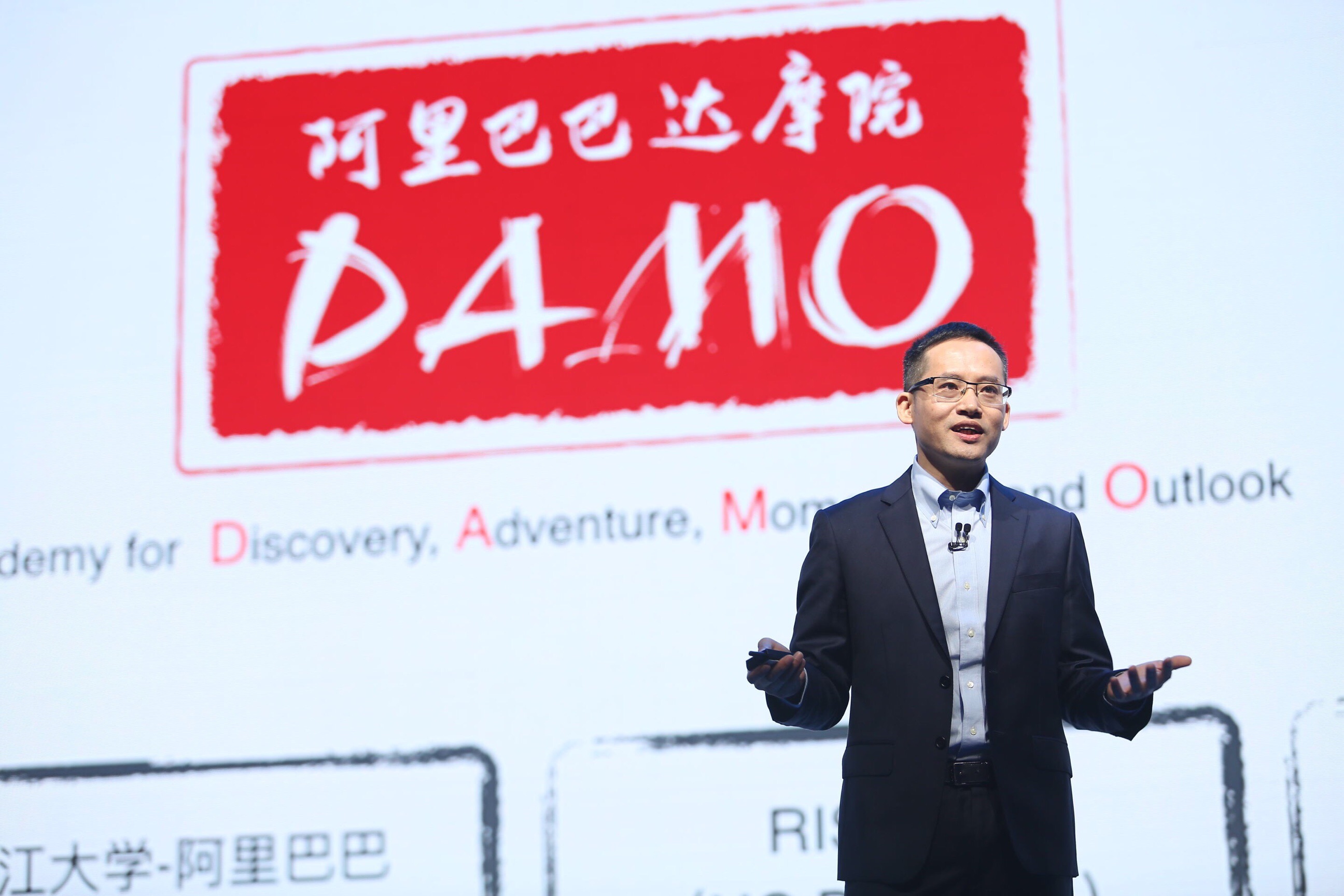
Alibaba DAMO Academy, the global research initiative by Alibaba Group, provides its forecast of the leading trends that would shape the tech industry in the year ahead.
From the application of third-generation semiconductor materials, AI-driven R&D of medicines and vaccines, to automatic optimisation of data management system and data intelligence-powered agriculture, technology breakthroughs are expected to accelerate and make an impact across sectors in the economy and the society at large.
“Technology has played a critical role in fighting against the pandemic since early last year, and it will continue to reshape our society and industries through innovative production models and intelligent services,” said Jeff Zhang, Head of Alibaba DAMO Academy and President of Alibaba Cloud Intelligence. “We hope to work with academia and industry players to accelerate the exploration of frontier research, in the hope that we can make technologies more accessible to various businesses, and together we can rise up to the challenges imposed by the pandemic and accelerate the pace of a digital economy.”
Below are highlights from the Academy’s predicted top 10 tech trends in 2021.
Trend No. 1: The application of third-generation semiconductor materials, represented by GaN and SiC, will expand to new industries
Third-generation semiconductor materials, represented by gallium nitride (GaN) and silicon carbide (SiC), boast high temperature resistance, high breakdown voltage, high frequency, high power, and high radiation resistance. However, for a long time, the application of these materials has been limited only to a narrow scope of fields due to their complex processing methods and high costs. In recent years, breakthroughs in material growth and device fabrication have helped reduce the costs of third-generation semiconductor materials, making a wider range of applications possible. For example, SiC-based devices are used for automobile inverters and GaN-based fast chargers are emerging in the market. In the next five years, the world will witness third-generation semiconductor materials spring up in areas such as 5G base stations, new energy vehicles, ultra-high-voltage power grids, and data centres.
Trend No. 2: Quantum error correction and practical utility of quantum computing will be the top priority of the "post-quantum-supremacy" era
The year 2020 is the first year to pass after quantum supremacy was achieved. In 2020, investors worldwide flocked to the quantum computing field, related technologies and ecosystems thrived, and numerous quantum computing platforms rose to prominence. In 2021, this trend will garner further attention from all corners of society. Quantum computing must deliver enough value to make it worthwhile. The mission in the "post-quantum-supremacy" era must be aligned across the industry: to tackle critical scientific and engineering problems through collaborative innovation and to pave the way for quantum error correction and practical utility, two milestones in quantum computing.
Trend No. 3: Breakthroughs in carbon-based materials will stimulate growth of flexible electronics
Flexible electronics deliver stable performance even after mechanical deformations such as bending, folding, and stretching. They are preferred in wearable devices, electronic skins, and flexible screens. In the past, flexible materials were simply not flexible enough or could not compete with rigid silicon-based materials in terms of electrical characteristics, which limited their commercial use. In recent years, ground breaking developments in carbon-based materials have allowed flexible electronics to go far beyond their previous capabilities. For example, carbon nanotubes are now used to produce large-scale integrated circuits that deliver better performance than silicon-based circuits of the same size. Graphene, a promising carbon-based material for flexible electronics, has also been put into large-scale production.
Trend No. 4: AI accelerates the R&D of medicines and vaccines
Artificial intelligence (AI) technology has been widely adopted to interpret medical images and manage medical records while its application in vaccine development and the clinical research of drugs is still in the pilot stage. As new AI algorithms are emerging and computing power is reaching new heights, this technology will make it easier to complete R&D of medicines and vaccines that were previously very time-consuming and costly. Compound screening, disease model generation, target identification, lead compound discovery, and lead drug optimisation are some of the areas in which the technology excels. The integration will reduce repetitive work and improve R&D efficiency. The beneficiaries will be the wider public, who can enjoy better medical care and pharmaceuticals in the near future.
Trend No. 5: Brain–computer interface technology allows us to go beyond the limits of the human body
Brain-computer interface technology is essential for new-generation human-machine interactions and collaborative intelligence between humans and machines. This technology is the pillar and driving force of neural engineering. It analyses how the human brain works from a higher dimension. A brain-computer interface forms a direct communication pathway between the brain and an external device. It acquires, analyses, and translates brains signals to control machines. In the future, brain-computer interface technology will help control robotic arms more precisely than ever before and help patients who are fully conscious but cannot speak or move to overcome their physical limitations.
Trend No. 6: Data processing will become autonomous and self-evolving
The rapid development of cloud computing and exponential growth in the amount of data have posed daunting challenges to computing task processing, storage cost control, and cluster management during traditional data processing. Manual management and tuning are unable to process massive amounts of data in diversified, complicated scenarios. Therefore, AI-based automatic optimisation of data management systems will inevitably be the best choice for future data processing. AI and machine learning will be adopted in a variety of fields, such as intelligent cold/hot data separation, anomaly detection, intelligent modelling, resource scheduling, parameter tuning, stress testing data generation, and index recommendation. This way, costs for computing, processing, storage, and O&M will be reduced. Autonomous, self-evolving data management systems will be made available.
Trend No. 7: Cloud-native technologies will reshape IT systems
Long product development cycles and low R&D efficiency in traditional software development have long been a source of pain. Cloud-native architectures featuring distribution, scalability, and flexibility look to be the cure. They allow enterprises to utilise and manage their heterogeneous hardware devices and cloud computing resources more effectively. Cloud-native methodologies, tool sets, best practices, products, and techniques allow developers to focus only on creating new applications. In the future, chips, development platforms, applications, and even computers will be cloud-native. The benefits that cloud-native technologies will bring are too numerous to mention. Just to name a few, the technologies help abstract away many layers of infrastructure components such as networks, servers, and operating systems, reduce computing costs, improve technology efficiency, lower barriers to developing applications on the cloud, and expand the scope of cloud applications.
Trend No. 8: Agriculture will be powered by data intelligence
Traditional agriculture can suffer from inefficiencies caused by poor land use and a disconnection between the production and retail sides. Today, new-generation digital technologies, including Internet of Things (IoT), AI, and cloud computing, are being applied to the agriculture industry throughout the production process to retail. New-generation sensors help obtain real-time farmland data. Big data analytics and AI expedite the processing of large amounts of agricultural data. Agricultural practitioners can monitor crops, implement precision breeding, and allocate environmental resources on demand. In addition, technologies such as 5G, IoT, and blockchain are utilised to control and trace the transportation of agricultural products, ensuring their safety and reliable delivery. With these new-generation digital technologies, agriculture is no longer highly dependent on the natural conditions and will be driven by intelligent data analytics.
Trend No. 9: Industrial intelligence leaps from single-point implementation to industry-wide implementation
Industrial intelligence has been mainly used to meet partial requirements because its implementation is costly and complicated, data at the supply side is isolated, and the ecosystem is immature. After the outbreak of COVID-19 in early 2020, the remarkable resilience of the digital economy drew great attention from enterprises, digital technologies developed and spread rapidly, and more investments were injected into the construction of new infrastructure. These factors helped build a picture in which we can see industrial intelligence leap from single-point implementation to industry-wide implementation. This is true particularly in manufacturing industries that have mature IT systems. The industries include automobile, consumer electronics, high quality clothing, steel, cement, and chemical industries. Industrial intelligence will spring up in every corner and help closed-loop decision making in these industries. It will make an impact on a large scale, applying to the supply chain, production, asset management, logistics, and sales.
Trend No. 10 Intelligent operations centres will be a must for cities in the future
Smart city initiatives were first launched a decade ago and have sparked a significant improvement in city governance through digital technologies. However, when coping with the COVID-19 outbreak, a number of smart cities faced challenges. This is why intelligent operations centres are widely accepted and deployed to maximise the usage of data resources and promote global, fine-grained, and real-time governance and public services. In addition, as the Artificial Intelligence of Things (AIoT) becomes mature and widely applied and spatial computing technologies are improved, operations centres will be more intelligent. By keeping "digital twins" of cities, intelligent operations centres consider each city as a unified system and deliver city-wide services capabilities. Intelligent operations centres will become the digital infrastructure of cities in the future.
Additionally, you can find the video here and the infographics here and here that summarises above mentioned trends visually.
- 01:00 am

In a significant development to accelerate the ongoing digital transformation in the insurance industry, INSTANDA, a UK-based SaaS Insurance software platform has entered a partnership with ADROSONIC, a digital consulting firm. Industry experts say that INSTANDA’s no code platform and ADROSONIC's insurance domain expertise will empower insurers with the agility to price risk in ways that meet the client’s needs in a changing post-Covid-19 world.
Delighted over the tie-up, Tim Hardcastle, the CEO & Founder of INSTANDA, said: "Partnerships play a key role in the insurance industry, not merely for the growth and expansion of the business involved, but also for the transformation of the industry. The new partnership with ADROSONIC is exciting as it provides capability to new markets in North America, India, Middle East as well as Europe."
Mayank, CEO & MD, ADROSONIC, said that the tie-up would provide insurers with innovative digital product and customer propositions for new markets as well as liberate insurers from inflexible legacy tech and from high-risk, high-cost and multi-year change programs.
"Given the paradigm shift that the market is undergoing, partnership models need to demonstrate not just agility and flexibility but to do so with high quality execution. ADROSONIC and INSTANDA have an outstanding track record of delivery so I am excited at what we can offer insurers to realise their ambitions and bring new ideas to market,” Hardcastle added.
“An unprecedented event like Covid-19 has left a sudden yet profound impact on the Insurance Industry and their IT Systems, as they are now subject to rigorous scrutiny following the rapid shifting of entire workplaces online that was forced due to the pandemic," Mayank said.
"As the key decision-makers respond to the new market demands and opportunities, they are starting to question the limitations of their existing processes and legacy systems, they also had to reassess the cost base turning to a more cost-effective and agile platform which enables them to provide quicker and more responsive service to their customers and clients. In such a scenario, INSTANDA’s no code platform coupled with ADROSONIC’s domain expertise along with a wide range of digital accelerators including RPA, Data Analytics, & CRM are key in liberating insurers from inflexible legacy technologies.
These accelerators will power transformation across organisations looking at improving their ROI by dramatically reduced product launch times, underwriting and distribution costs and an unrivalled customer experience,” he concluded.
INSTANDA works with the leading carriers, MGAs and brokers in UK, Europe, North America, LATAM, Africa, Middle East and Australia. INSTANDA is the Insurance Industry’s first no-code business platform and allows insurers to break into new markets as well as overcome the drawbacks of legacy IT systems and embrace the benefits of digital transformation.
- 08:00 am
ALPIMA, the B2B SaaS platform for investment management and product design, has appointed Rafael Febres-Cordero to its advisory board during this phase of growth, with a special focus in the Americas, which has $44 trillion in assets under management.
Rafael is an experienced advisor and entrepreneur with over 25 years’ experience in the asset and wealth management industry, including with Fidelity Investments and Fidelity International. He has advised companies across the Americas, Europe and Asia, supporting growth, transformation, innovation, product development and solution delivery and currently serves as advisor and board member for multiple organizations.
Rafael will support ALPIMA during this phase of growth, bringing its innovative technology to transform the asset management industry through accelerated and transparent product design.
Pierre Mendelsohn, CEO and Founder of ALPIMA, said: “We are thrilled to add Rafael to the ALPIMA family. Rafael brings a wealth of expertise and senior contacts in asset and wealth management globally, and a global perspective that will be useful as we take ALPIMA to the next level in 2021 and beyond.”
- 02:00 am

SteelEye, the compliance technology and data analytics firm, has been selected to provide MiFIR and EMIR reporting services to Capital Index, a fully authorised and regulated broker offering CFDs, Spread Betting and FX trading.
Following the announcement that CME Group was closing the NEX Abide business last year, a large number of firms were forced to find a replacement solution for EMIR and MiFIR reporting. As part of this process, Capital Index reviewed a range of different vendor solutions. Aware of the technical challenges of transaction reporting, the broker selected SteelEye because of its advanced solutions, unique approach to compliance and hands-on team.
“Rather than approaching compliance obligations from the perspective of the individual regulations, SteelEye focuses on data and technology first. As we were evaluating our options, this gave us comfort that they would meet all of our needs,” said Matthew Wright, CEO of Capital Index. “We are excited to work with the SteelEye team as we use their solutions for EMIR and MiFIR reporting.”
By implementing SteelEye, Capital Index has been able to improve its reporting processes, many of which they did not realise were inefficient or could be improved. As a result, they now have a futureproofed solution for regulatory change and full confidence in their ability to meet their obligations under MiFID II and EMIR.
“When CME announced their intention to close their regulatory reporting business, we knew that many firms would quickly have to find an alternative – which we wanted to facilitate as efficiently and seamlessly as possible,” said Matt Smith, CEO of SteelEye. “We are delighted to have been selected by Capital Index and to add value to their reporting processes.”
- 06:00 am

SmartKey, a rapidly-growing blockchain company based in Estonia, has today appointed Andy Cheung to spearhead its ambitious expansion plans in the Asia-Pacific region and manage its listing strategy.
Cheung is the CEO of Bitwork, one of the biggest blockchain consultancy firms in Asia. Under Andy's leadership, Bitwork accelerated and incubated multiple projects including Centric, DigiCol, RingX, and the Korean crypto exchange Aprobit. He was previously COO and former executive of the influential OKEx exchange. He has been named the one of TOP 50 most important and influential people in the cryptocurrency space by Cointelegraph and a top global blockchain influencer by CryptoSlate, Bitcoin Insider, and Block Journal.
Andy is also the founder and executive chairman of a next generation cryptocurrency derivatives exchange, ACDX. The serial entrepreneur previously served in executive roles at Groupon Inc., iClick Interactive, and Alibaba Group.
SmartKey connects the world of physical values such as gates and devices with the blockchain of things, via smart contracts on the Ethereum and Waves blockchain. Its ultimate vision is to enable the smart city of the future - connecting multiple data sources, via public blockchain, to power smart devices within the home and also municipal infrastructure such as public transport and utilities. SmartKey recently launched the world’s first blockchain project to assist emergency services with a pilot in one of Poland’s biggest cities, Oltsztyn, using its technology to grant access to rescue teams in an emergency - cutting down response times and helping to save lives. It has also just announced a new global partnership with Ferguson to integrate over 300,000 smart home devices with its technology.
Cheung said: “SmartKey is a project where the potential is clearly shown in working, real world solutions and partnerships with global brands like Kia and Ferguson. Its ability to solidly connect physical values to the blockchain of things will help elevate the technology and bring the project near the top of the coin market cap ranking.”
Szymon Fiedorowicz, CEO of SmartKey, added: “The Asian market is a critical one for this project, in terms of investment and of realising our ultimate vision for smart cities. We know the appetite is there from our community and investors and the listing strategy will be vital in fulfilling SmartKey’s potential.”

Elina Mattila
Executive Director at Mobey Forum
I am sure I will not be alone when I say that 2020 has been a surreal year. For our industry it has certainly been a tumultuous one. see more
- 01:00 am

finnCap Group, leading adviser and broker to ambitious growth companies, both public and private, is pleased to announce a partnership with leading sustainability fintech company World Wide Generation (WWG) in order to provide businesses with a new digital sustainability monitoring and measurement App, Company Tracker, to measure and improve their social, economic and environmental impact, which is also mapped to the Sustainable Development Goals (SDGs).
The Company Tracker is an App on a global multi-stakeholder platform called G17Eco, which empowers companies to monitor and measure their sustainability risks and opportunities, enhancing their credentials with investors who increasingly are demanding companies prove their impact on society, the economy, and the environment. The App also incorporates metrics from finnCap’s recently launched ESG Scorecard, which provides small and mid-cap quoted companies with an objective means of measuring their ESG performance against key policies, standards, and frameworks.
The combination of Company Tracker and the ESG Scorecard makes this reporting tool especially useful for SMEs who want to systematically demonstrate how investable they are from an ESG standpoint.
The launch of Company Tracker follows new research highlighting that SMEs’ recognition of the importance of ESG has not translated into action. A recent study[1] by the QCA found that while 92% of companies considered themselves knowledgeable about ESG, actual practices suggest that the real number is considerably lower. This new partnership between finnCap and WWG aims to close this gap, facilitating the coherent and evidence-based reporting of ESG activities that investors want from firms.
WWG is the technology partner for the UK Government and City of London backed Sustainable Development Capital Initiative. Further to the finnCap partnership, WWG has been securing major global partnerships to support the whole ecosystem of companies (big and small), assurers, rating agencies, data providers, investors. Most recently the United Nations Data Hub has also mandated WWG as their technology partner for cities and governments to also report their sustainability data through the G17Eco platform.
Sam Smith, Chief Executive of finnCap Group plc, said: “We are delighted to begin this partnership with WWG to help businesses realise their growth ambitions responsibly by improving their ESG performance. We believe nothing similar exists in the marketplace, so we are proud to take a pioneering approach that helps companies solve a complex problem which is of increasing importance.”
Raymond Greaves, Head of Research at finnCap Group plc and creator of the finnCap ESG Scorecard, said: “This partnership is a fantastic way to build on the recent launch of our ESG Scorecard, which provides businesses and investors with 15 factors to assess their performance. The new offering incorporating Company Tracker enables enhanced navigation and compliance to globally recognized standards and further helps companies turn what could be a difficult exercise into something that can be used to develop, execute and promote their ESG credentials internally and externally.”
Manjula Lee, founder and CEO of World Wide Generation, said: “Through this collaboration with finnCap we want to play our part in ensuring that even during the pandemic, businesses are able to get access to the tools they need to define their purpose, put sustainability at the core of their business model, become resilient and help get them in front of the investors as soon as possible for scale-up. We want to make sustainability reporting literally and acronymically SIMPLE (strategic, interconnected, meaningful, purposeful, long-term, educative). I’m also particularly excited that two female CEO Founders got this ambitious strategy off the ground for the UK.”
- 05:00 am

Aquapay Payments Technologies (P) Ltd, an Enterprise Payments Solutions expert announced the appointment of Girish Sankaran as Head of Partnership and Alliance.
Girish joins Aquapay with over 20 years of cross cultural experience in sales, business development, client relationship and people management. He has a strong business acumen and a relationship-oriented mindset making him a true asset to establish market presence, drive business growth and capitalize on new revenue potential.
On the appointment, Nitin Chavan, CEO, Aqupay, said: “We are very happy to have Girish joining us at this exciting time of the New Year. He has an excellent track record of creating value in companies, we are confident that he will facilitate us to augment our ability to continue to grow progressively and through new partnerships. At Aquapay, we aim to offer unique and innovative enterprise payments modules. We also realise that there are immense opportunities to add to our portfolio, making smart alliances to continue to enhance our consumer offerings.”
Prior to associating with Aquapay, Girish has handled strategic positions in NeoGrowth Credit, ICICI Bank, American Express, PineLabs, KredX etc.
Girish has completed an advanced programme in Sales and marketing from Indian Institute of Management, Calcutta (IIM-C) and also holds Bachelor degree in Banking, Corporate Finance and Security law from Bharathiar University, Coimbatore.
- 08:00 am

Finastra announces that Bank of Prairie du Sac, a community bank outside of Madison, WI, will upgrade its core operating system to Fusion Phoenix to future-proof its technology. The open, modern core built on Microsoft technology, cloud delivery, and seamless integration with other technologies provided by Finastra, will improve the end-customer experience and support the bank’s growth strategy, with technology that can evolve with its changing needs.
“Our customers are our most important asset, and it is vital that our technology investment yields meaningful benefits for them,” said Brett Kirner, CIO, Bank of Prairie du Sac. “Based on our long relationship with Finastra, we trusted that their vision for open finance would translate to a core which could grow and evolve with the latest technology innovations to satisfy our customers and serve our goals for continued growth. Cloud hosting means easy scalability and less time spent on technology maintenance, increasing our capacity to serve our customers.”
Seamless integration with the other Finastra solutions used by the bank – including Fusion Digital Banking, Fusion LaserPro, and others – will not only generate increased efficiencies, but also provides peace of mind that the core migration will be smooth. In addition, these integrations will result in an enterprise suite of solutions that provides more actionable insight via a 360-degree view of the customer and makes common tasks even more efficient.
“Community banks need to remain nimble and have a modern infrastructure in place that allows them to respond to changing customer behavior and market demands, which directly impacts customer service, profitability, agility, efficiency and growth,” said Chris Zingo, SVP and GM of Americas Field Operations, Finastra. “With Fusion Phoenix core, Bank of Prairie du Sac will be well-positioned to meet these challenges head on, to evolve their business and grow effortlessly.”
- 09:00 am

Analytics software firm FICO today announced that Yapi Kredi, one of the largest private banks in Turkey, will use FICO® Decision Central™ to manage analytics models and decision logic across the enterprise. This is part of Yapi Kredi’s System of Intelligence vision and roadmap to seamlessly conduct and orchestrate smarter analytics and data pipelines and enhance AI / machine learning lifecycle management. FICO Decision Central enables businesses to capture models and other decision assets so that they can be reused, modified and improved over time.
“We position FICO Decision Central as the management layer of our System of Intelligence initiative, which aims to improve the accuracy of each and every decision we take across the bank,” said Hakan Yilmaz, Yapi Kredi’s Chief Data Officer. “With Decision Central, we will not only have full control and visibility over our complete set of analytical assets, but we can also make full and efficient use of our assets through a best-of-breed governance practice over the entire model development lifecycle.”
“Businesses increasingly invest in analytics to make better decisions, but managing those analytics, and the decisions, is critical to making this investment pay off,” said Emre Unlusoy, who manages FICO’s operations in Turkey. “Yapi Kredi understands the value of monitoring and managing every component that goes into making a decision. This investment will contribute not only to the quality of the bank’s decisions, but also to its ability to demonstrate regulatory compliance of every decision and every model.”
FICO® Decision Central™, part of the FICO® Platform, enables the most effective decision governance, minimizes risk, facilitates a continuous learning and improving loop, and promotes collaboration across the enterprise. The software can be used to mangae the complete model lifecycle, from project proposal to development, deployment, maintenance and evolution, all the way to retirement. Granular reporting and adequate controls satisfy the most demanding regulatory compliance requirements, flexibly adjusting to new regulations, ratings policies, capital requirements, and financial and accounting reporting standards.
More information: http://www.fico.com/en/products/fico-decision-central.








