
Published
- 02:00 am

Business Systems (UK) Ltd (BSL), a specialist in Enterprise Communications solutions is delighted to announce that private equity (PE) firm, August Equity has acquired a controlling interest in the company to enable an acceleration of their ambitious growth plans.
Business Systems (UK) Ltd was founded by Richard Mill and Stephen Thurston in 1987 when they recognised a need for call recording in the financial sector to resolve trading disputes and has since grown to be one of the leading Enterprise Communications solutions providers with an enviable reputation in the market.
August Equity (“August”) is a private equity firm which backs management teams of UK headquartered businesses with the purpose of significantly accelerating organic and acquisitive growth. BSL is August’s fourth investment in adjacent managed services businesses following investments in cyber (SecureData), unified comms (Charterhouse Voice & Data) and cloud managed services (Air IT).
August identified an off-market opportunity with BSL, seeing the predicted growth in the company’s core markets, its strategic relationships with leading global partners and excellent levels of customer satisfaction. This investment will allow BSL to better serve its customers and partners as well as develop further opportunities to enter new markets, both domestic and international.
Adam Kantor, previously Chief Commercial Officer, steps up into the role of Chief Executive Officer and Geoff Love, former Chief Executive Officer of business messaging specialist Commify joins as Executive Chairman.
Adam Kantor, CEO of BSL, said: "This is an exciting opportunity for BSL, our employees and our customers. Our legacy of providing compliance & monitoring solutions to the world’s largest financial institutions has been the foundation from which we have built our Workforce Engagement Management and Cloud Contact Centre offers, and this investment opportunity allows us to serve our customers even better with innovative and disruptive technologies as well as providing access to additional expert resources."
Kantor continues: “By working with August Equity, we can help our customers transform the way they work from the inside out, both through market leading vendor solutions as well as our own innovative IP, Wordwatch, a unique platform that solves a multitude of voice recording and compliance challenges.”
Geoff Love, Executive Chairman, said: “Business Systems offers a tremendous platform for growth. It has unrivalled heritage in compliance & monitoring voice recording, partnerships with the world’s leading cloud contact centre and workforce engagement management solution vendors and a blue-chip customer base, with exceptionally high customer satisfaction scores, thanks to the tremendous team at BSL. With private equity backing, we can now take the business to the next level and I’m delighted to be joining.”
Mehul Patel, Partner at August Equity, said: “We are delighted to back the team in growing BSL to become a leading player in its market space. This platform has an opportunity to expand its customer base globally whilst investing more on higher growth segments such as Contact Centre as a Service and its internally developed voice compliance management tool called Wordwatch. August has developed a successful playbook to develop managed services businesses through acquisition and organic strategies and create an outstanding business over the period of our ownership.”
Richard Muckle, Director, said: “We have been mapping and tracking the Enterprise Communications and Contact Centre market for over two years now. BSL as a platform for growth offers best-in-class solutions to highly discerning customers. We look forward to working with Adam and Geoff and to partnering with many more businesses who want to join us on this exciting journey.”
- 03:00 am

Mastercard has partnered with NMI and Global Payments Inc. to launch its first live Cloud Tap on Phone pilot with Computer Engineering Group (CEG), a Napa, Calif.-based independent IT Services provider. Cloud Tap on Phone is one of Mastercard’s innovative next generation acceptance products, with the software hosted on Microsoft’s Azure cloud platform.
Mastercard has been spearheading the transition to contactless payments for years. The demand for faster, more convenient, safe, and now cleaner ways to pay has driven the transition to contactless, and it’s a one-way street with touch-free experiences expected to be permanent for consumers and businesses even after the pandemic ends. In fact, in the third quarter of 2020, contactless penetration represented 41% of in-person purchase transactions globally, up from 37% in the second quarter and 30% a year ago.
With Tap on Phone, any business – regardless of size - can deliver new and best-in-class contactless consumer experiences using a device they already own: a smartphone. Tap on Phone democratizes point-of-sale technology by turning an Android smartphone or tablet into an acceptance device, allowing businesses to accept contactless payments minimizing the need to invest in hardware terminals or extra features. Merchants can offer enhanced and accelerated curbside pick-up or payment on delivery, or provide faster line-skipping checkout in-store, options that are increasingly important as consumers look to touch-free cash alternatives.
With the introduction of Cloud Point of Sale (POS), Mastercard is enhancing its Tap on Phone product and empowering ecosystem partners to develop their own cloud-based products with new tools and capabilities. Cloud POS moves key parts of the acceptance software – the components1 which enable the processing of contactless transactions and certain security functions - from the individual smartphone to the cloud, offering robust security, reducing development and maintenance costs, and creating scalable distribution channels by allowing immediate connectivity to partners. Cloud POS also becomes a new channel for Mastercard and our partners to bring value added services to customers and businesses.
Mastercard will make its pre-certified Cloud POS software development kits (SDKs) openly available in multiple cloud environments, encouraging solution providers, fintechs, acquirers and processors to innovate and co-create new cloud-first products. Mastercard’s pilot with CEG represents the first live deployment of Mastercard Cloud Tap on Phone anywhere in the world.
“We continue to see an accelerating shift to digital payments, with businesses of all sizes wanting to provide swift, secure, compelling point-of-sale experiences. Cloud POS enables us to make these experiences available to our partners with greater speed and efficiency,” said Milan Gauder, Global Head of Mastercard’s Acceptance Solutions Group. “Our partners are the center of everything we do, and our trusted technology powers innovative experiences, choice, flexibility and certainty, creating the products they need. Mastercard’s Cloud Tap on Phone delivers on our promise of ground-breaking products and innovation.”
Mastercard has convened an ecosystem of partners to launch Cloud Tap on Phone.
- Leading payments enablement technology company NMI operates as a key integration partner and distributor.
- Global Payments, a leading worldwide provider of payment technology and software solutions, will provide point of sale acceptance technology.
- Continuing the company’s commitment to empower small businesses, CEG, an independent IT services company from California, serviced by an ISO BNG Payments, becomes the first company to pilot Mastercard’s Cloud Tap on Phone.
Development of Cloud POS technology and the Cloud Tap on Phone product has been spearheaded by Mastercard Labs, the company’s new product development arm. The company’s pilot with CEG follows live product testing on Mastercard’s own Purchase, N.Y. campus. Cloud POS is a product of Mastercard’s multi-cloud strategy, meeting businesses, consumers, financial institutes and partners in the cloud with innovative applications and services. The company will conduct further Cloud Tap on Phone pilots and commercial deployments in other markets in 2021. Currently, Mastercard’s Tap on Phone solution is in 16 markets across Europe, Asia Pacific, Latin America, North America and Middle East & Africa. Pilots are taking place with partners in Costa Rica, Hong Kong, Poland, Kazakhstan, Romania, Canada, Belarus, Russia, Turkey, United Kingdom, among other countries.
Nick Starai, Chief Strategy Officer, NMI, said: "Tap on Phone technology perfectly complements the acceleration of contactless payments in the U.S. market. This is a ground-breaking step in creating a world that enables merchants to turn their smartphones into a payment acceptance device without the need of an externally paired physical card reader.”
Jim Egbert, Senior Vice President, Business Development & Strategic Partnerships, Global Payments, comments: “The pandemic has permanently shifted the way global commerce operates, forcing companies to respond to increased demands for safe commerce solutions, such as mobile ordering and contactless payments. These waves of innovation will continue to accelerate, driving more and more technological advances across the payments industry. As an innovation leader in the payments industry, we are proud to partner with Mastercard on the new Cloud POS acceptance technology solution that will better equip merchants of all sizes to provide a faster, safer and more secure experience to help better serve consumers and their preferences for more advanced digital commerce solutions.”
Eric Ross, General Manager, Computer Engineering Group (CEG), adds: “CEG is very excited with the opportunity to work on the Mastercard pilot program. We are looking forward to using the contactless tap on phone technology to enhance our service experience with our retail customers. As a technology company we are always interested in exploring ways to stay at the cutting edge of technology development for our business and our IT customers. The Mastercard Tap on Phone program fits the bill!”
Ryan Theis, Chief Strategy Officer, BNG Payments, said: "We have been selling and supporting a wide range of mobile POS software and hardware solutions since the inception of mPOS. BNG Payments is constantly striving to increase our support excellence, and one way to do this is to find new and innovative ways to minimize hardware and software issues. With traditional solutions, we are relying on Bluetooth or audio jack connected credit card acceptance devices that are all prone to connectivity issues between the device and smartphone, causing merchants to have transaction issues and down time. With Cloud Tap on Phone, we are reducing potential failure points to just a smartphone and data connection as well as reducing upfront cost by eliminating the need for additional hardware. This will be the future of mobile card-present transactions, and I am happy to see that merchants and cardholders stand to gain the most from this innovation."
- 01:00 am

More than seven in ten Britons say that life through two national lockdowns has fundamentally changed the way they manage money but, for once, the changes have been positive. Nationally, 62% of people say they are in better control of their money than they were before COVID struck, according to new research from ThoughtWorks, a leading global software consultancy.
At the end of a year of prolonged social restrictions and two national lockdowns, technology changed almost every aspect of life in 2020 – from home schooling and food shopping to remote working and online chats with relatives. The way people managed money changed too, with almost one in three people (31%) saying that, after a year of lockdown, they don’t use cash anymore.
As part of a new study, exploring the impact of the pandemic on people’s money and banking habits, ThoughtWorks asked a nationally representative sample of 2,007 adults how their money management had changed, what they had done differently - and what they had stopped doing altogether.
All the positive changes people have made in the way they manage money during 2020 were related to technology:
22% said they were now used to making more payments through Apps and tech platforms rather than banks
18% of people had used the long days at home, using online tools to give their finances a spring clean by building up their savings and cutting back on non-essential spending
A further 15% said they have shopped around for better deals on financial products (fees, charges, interest rates etc) with brands that are not traditional banks
15% said they had streamlined all their payments and banking online, saving time and money
Whilst younger people (under the age of 25) led the move into full online banking (29%) and shopping around for better deals with new entrant brands (20%), the positive impact of technology in improving money management was felt across all age groups. For example, the 35-54 age group were most likely to have gone cashless in 2020 (25%) – and 15% of over 55s said they had streamlined all their payments and banking online.
Beyond technology powering home life in 2020, the economic hardship experienced by many as a result of COVID had also forced changes with money management. For example, people that had been furloughed during the year were more likely to have reviewed their savings and spending (20%) and to have used technology to streamline their money management with 30% making more of their payments through Apps and tech platforms rather than banks, and 24% streamlining all their payments online to save time and money. The research suggests a correlation between using online tools and having a greater sense of control.
Personal banking: the year of seismic change
2020 was a year when there was a major shift in consumer habits with money. Nationally, 39% said they stopped going to a high street branch, 31% stopped carrying cash in their purse or wallet, 28% stopped using cash machines – and for nearly one in four (24%) it was the year when they stopped writing cheques altogether.
In place of this, many people said that lockdown was the first time they experienced modern, online forms of banking. Overall, 33% said they had tried mobile banking for the first time in 2020 and 36% had opened up a PayPal account for the first time.
Other firsts during included:
41% used online banking to check balances
16% cashed a cheque through mobile banking
14% had turned to online chat / AI to get advice
14% opened an account with an internet brand, such as Monzo or Plum
13% had used Apple Pay to buy goods
Phil Hingley, Director of Financial Services at ThoughtWorks UK, commented: “For long periods of 2020, households have adapted to confinement and technology has been a vital tool that has helped people to keep life going and stay connected with work and loved ones. In this context, with high streets empty and banks closed, many people discovered new ways to manage money and make payments online.”
“With hindsight, 2020 could well be the year when cash died. Changes in consumer habits also raise urgent questions for high street banks, as technology and more agile customer interaction have moved consumers away from a reliance on the high street. The question for banks in 2021 is how they will adapt. We believe banks still have a crucial role to play but the days of them just safeguarding cash and issuing cheque books are well and truly over.”
The research was conducted for ThoughtWorks by international polling company MaruBlue among a nationally representative sample of 2,007 adults in November 2020. The research was conducted online.
- 06:00 am

Napier, providers of next-generation anti-money laundering (AML) solutions, has added two key appointments to its senior management team following a period of growth for the business.
Greg Watson joins Napier as Chief Operating Officer while Mariola Marzouk joins as Head of Product.
Mariola began her career working as an M&A analyst and subsequently moved into anti-money laundering, becoming an anti-financial crime strategist and eventually the product manager for BAE Systems AML Compliance Software.
She holds a master’s degree in forensic accounting and is currently working towards her doctorate in criminal justice, with focus on trade-based money laundering. This puts her in a prime position to lead the way in making Napier the industry’s leading customer-centric compliance solution powered by artificial intelligence and machine learning.
Greg brings with him a wealth of experience in operational management, business strategy, transformation, and sales leadership. He has previously worked at client lifecycle management specialist, Fenergo, as Head of Sales and Head of Strategy and Alliances, as well as HSBC where he was a Managing Director and Global Head of the Client Middle Office. Prior to this Greg held a number of COO and business management roles at Coller Capital, UBS and Reuters.
In his role as COO, he will work closely with the Napier CEO, Julian Dixon, and the rest of the executive team to put in place an operating model that supports Napier’s rapid growth. Greg will also be responsible for building out world class functions across HR, Professional Services, Customer Support and Legal & Compliance.
Julian Dixon, CEO of Napier, said: “I’m very excited to welcome Mariola and Greg into the team. Both come to us as major players and bring a wealth of experience to help drive our growth. It’s a real endorsement of the innovative work we’re doing at Napier to have attracted two individuals of their calibre. We are at a point in our growth where we will benefit enormously from the strategic input from Greg, while Mariola will use her fantastic academic knowledge and extensive AML systems experience to help us continue to build our platform as one of the best in the RegTech industry.”
- 01:00 am

PayDashboard, the interactive payslip platform, today announced it has been selected by Innovate UK, the UK’s innovation agency, to receive a £167,072 funding grant to help drive and support its continued growth in the financial wellness space. The London headquartered, fintech innovator was selected to receive the six-figure funding as part of the Government’s sustainable economic recovery plan following the impact of COVID-19 on UK business.
PayDashboard, a driving force of digital innovation in the world of pay, currently offer an interactive payslip experience, where employees can access financial education through their digital payslips and utilise smart features to help them to understand their pay, their payslip and their taxes.
The company plan to use the grant to further expand into the financial wellbeing market and offer tools that support employees’ financial, physical and mental wellbeing beyond just payday. The new service offering will have significant value beyond the traditional payroll process, including financial wellness and education to help employees to understand their individual needs when it comes to their money, and the tools available for them to help improve their financial position.
This latest grant follows a period of significant growth since the company launched in 2016.
Mike Binns, CEO at PayDashboard, commented: “The support behind this Government funded grant from Innovate UK is strongly indicative of our future product vision and continued growth potential. We look forward to expanding our PayDashboard offering to new audiences in the coming months.”
Innovate UK, investing up to £191 million to fund single and collaborative research and development projects as part of the Sustainable Innovation Fund over the next two years. The aim of these competitions is to help all sectors of the UK rebuild after the effects of COVID-19.
The Sustainable Innovation Fund is funding 1,103 projects, 1189 UK businesses and totalling over £130 million in support across the UK.
Innovate UK Executive Chair, Dr Ian Campbell, said: “In these difficult times we have seen the best of British business innovation. The pandemic is not just a health emergency but one that impacts society and the economy.”
He continued: “PayDashboard, along with every initiative Innovate UK has supported through this fund, is an important step forward in driving sustainable economic development. Each one is also helping to realise the ambitions of hard-working people.”
Innovate UK drives productivity and economic growth by supporting businesses to develop and realise the potential of new ideas. Part of UK Research and Innovation (UKRI), the national funding agency investing in science and research, Innovate UK connects businesses to the partners, customers and investors that can help them turn ideas into commercially successful products and services and business growth.
- 02:00 am

Icon Solutions, the specialist provider of world-class payment solutions and consultancy services, has today announced the appointment of Alastair Brown to its Board of Directors. Alastair is the second addition to Icon’s Board since securing strategic investment from J.P. Morgan, joining Sara Castelhano, EMEA Head of Payments, Digital and Solutions, J.P. Morgan Wholesale Payments, and Icon Founders Ben Hallifax, Tom Kelleher and Darren Capehorn.
Alastair brings more than 20 years’ experience across banking, payments and data. He held a range of senior technology and business roles at RBS, including CIO of International Banking, before being appointed CEO at Lombard Risk Management. He is currently Executive Chairman at DTSQUARED, an independent data consultancy, and also serves as a Board Advisor to SaaScada.
“Alastair’s extensive experience applying and scaling technology solutions to accelerate digital initiatives perfectly complements our vision for the years ahead,” comments Tom Kelleher, Co-Founder and Commercial Director at Icon. “This will prove invaluable as we work to drive forward our innovation roadmap and support banks in transforming payments from cost-burden to revenue driver. And with the opportunities and challenges presented by data-driven payments an increasingly key consideration, Alastair’s deep expertise will help build and strengthen our strategic offering in this area.”
Icon Solutions is a leading global provider of payments technology and expertise, with a proven track record developing, implementing and running innovative, mission critical transaction banking solutions. Icon is the creator of IPF: a cloud native, highly cost-effective and collaborative payments platform that combines open source technology with light-weight integration.
Alastair adds: “Strategic investment from J.P. Morgan is both testament to Icon’s achievements to date, and an enormous opportunity for the future. I am immensely pleased to be supporting Icon’s journey and helping banks realise the huge potential of payments.”
Learn more about how Icon is transforming payments.
- 03:00 am

SEON, the fraud fighters, today announces the release of its report, Fraud Prevention During a Pandemic – SEON Sector Report, which delves into how fraud prevention has changed during COVID-19. The findings in the report were collected via a survey of SEON’s clients across a range of sectors including, iGaming, eSports, cryptocurrency and online trading and travel, as well as the inside expertise of the company’s leading executives.
The company created the report after seeing a change in the online landscape during the first lockdown. With consumer spending shifting sectors, risk rising in-line with online activity and difficult circumstances pushing people into situations where fraud seemed like a lucrative option, SEON set out to find how the changes were being perceived by its clients.
It analysed their answers to learn how fraud trends were developing in different industries, whether they were affected by organised crime and if friendly fraud is on the rise. It also looked to find out how businesses were adjusting to these new trends.
SEON addresses some notable findings in the report. With sporting events postponed and cancelled, the popularity of eSports and iGaming grew – but so too did abuse in the sector. At the same time, cryptocurrencies and trading faced circumstances similar to what is experienced by traditional banks during times of economic crisis, including dramatic waves of fraud attempts. And, like many industries, the travel industry rapidly digitised, but also faced an influx of opportunistic fraud often aimed at circumventing regulations affecting individual travellers.
Tamás Kádár, CEO and Founder at SEON, explained the best way for businesses to respond to the situation: “The online space is busier than ever and companies are looking to remain competitive while they find their feet in the new normal. That being said, it’s essential that they don’t focus solely on bolstering conversions at the expense of security and vice versa. It is a balancing act. While security measures should be tightened, businesses should be conducting risk checks that cause minimal obstruction to customers and cause the least friction.”
About the report, he continued: “Throughout the outbreak many businesses have had to adapt quickly to changing circumstances and they should be able to respond to fraud with the same haste. Our report highlights exactly what is happening in terms of fraud across many sectors, including in some of the riskier ones. It will help companies, whether new to the online space, or those that have been operating there for a while, prepare for fraud developments as we head into the new year.”
The full report is now free to download at: https://seon.io/resources/ebook/fraud-prevention-during-a-pandemic-seon-sector-report/
To learn more about SEON’s services, visit: https://seon.io/
- 01:00 am
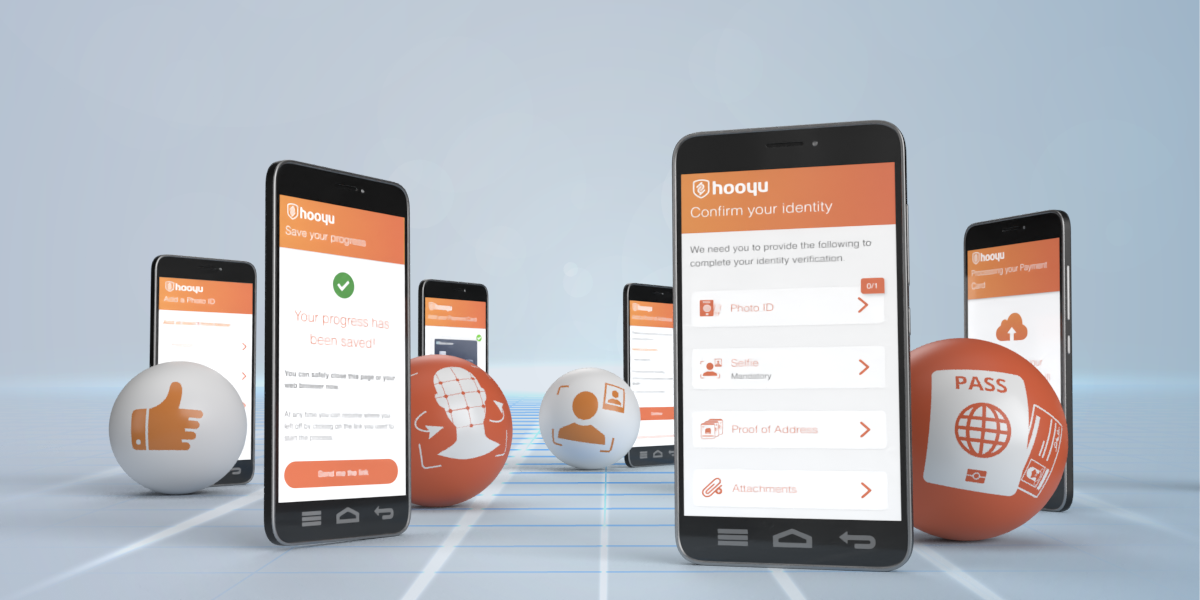
Leading provider of digital KYC onboarding technology, HooYu, today announces the launch of new UI and UX tools to increase success rates for regulated companies that perform Know-Your-Customer (KYC) checks. This comes after research from a HooYu report revealed that more than 85% of fintech and e-money providers see streamlining the effectiveness of customer onboarding as the best tactic to grow their customer numbers.[1]
To create a solution that would streamline customer onboarding and the KYC process, HooYu spent months testing with major players in the banking, fintech and online gambling industries. This ensured the new UI would strike the correct balance of offering best-in-class KYC compliance while improving the process for users to sail through customer onboarding.
By doing so, banks and fintechs will be able to significantly reduce the average 26% drop off rate [2] they experience when onboarding new customers, a costly figure of lost customers and missed revenue.
The revamped user interface provides more choice for users completing a digital KYC onboarding journey. Digitally savvy users can follow dynamic prompts to fast-track through the process and enjoy a straight-through KYC journey. Meanwhile, users that need more support can return to the HooYu Journey Hub where they can get further guidance on what information or documents they have to provide to pass KYC checks.
This new UX is designed to cater to different user personas that need differing levels of support to get across the digital KYC finishing line. Careful consideration has also gone into accessibility to help prevent financial exclusion for those with visual or physical additional needs.
For banks and fintechs, the new UI has more customisation options - firms can edit icons, buttons, fonts and brand colours, as well as adding custom messages. They can also add Custom Style Sheets to control the appearance of the HooYu journey for their users without the need to secure developer resource.
“We’re constantly optimising and A/B testing the Suits Me application process to ensure it is streamlined for our customers,” Kim Roberts, Marketing and Communications Director at Suits Me, a fast growing fintech providing accounts for the underbanked, said. “The new HooYu digital journey UI tools allow us to build the best possible customer journey, driving growth and ensuring KYC controls.”
David Pope, Marketing Director at HooYu, added: “At HooYu, we solve both sides of the customer onboarding equation by helping firms to increase the integrity of KYC and to maximise the success rates of digital customer onboarding. We’re grateful to all our clients that helped us test and refine our new UI and UX tools. Now it’s time to get back into the HooYu lab and start designing the next generation of customer journey tools for today’s digital consumer.”
For more information about HooYu, please visit: https://www.hooyu.com/.
[1] https://www.hooyu.com/h/new-report-fintech-e-money-customer-onboarding-benchmarking-report/
[2] https://www.hooyu.com/h/new-report-fintech-e-money-customer-onboarding-benchmarking-report/
- 09:00 am

Utimaco, a leading global provider of IT security solutions, announced that it has acquired MYHSM, the leading provider of Payment HSM as a Service. This acquisition will fast-forward Utimaco’s Cloud and as-a-Service offering, especially for but not limited to the Retail, Banking and Financial Services industry, and reduce customers’ need for investment in hardware, secure facilities, management, and ongoing PCI compliance, audit and support. MYHSM’s employees and customers will be integrated into Utimaco’s Information Security business.
MYHSM started operations in 2018 and is the first, global provider of Payment HSM as a Service. MYHSM takes on the responsibility of service monitoring & management, incident response, system maintenance, capacity provision, and assurance of regulatory compliance in their data centres, security operations centre and support centre. MYHSM’s cloud and service expertise will boost Utimaco’s existing Cloud offering, providing customers with a compelling state-of-the-art solution, delivering flexibility and reduced cost without compromising on security.
“The increased speed of digitization in 2020 increases the need for organizations to define their cloud strategy and make use of the flexibility as well as the potential for cost reduction that an as-a-Service model can offer. This does include security solutions, and we want to provide our customers with the high standard of HSMs they know from Utimaco in whichever form they need them, be it on premise or in the cloud,” said Stefan Auerbach, Chief Executive Officer of Utimaco. “By acquiring MYHSM, we are taking yet another important next step in complementing Utimaco’s product portfolio by a stronger solution offering in a meaningful way in order to be able to offer customers a cloud-based security solution.”
“2020 has been a momentous year for MYHSM with many achievements,“ said John Cragg, Chief Executive Officer of MYHSM. “We believe that being part of the Utimaco team and combining our respective offerings will benefit our customers and makes us ideally positioned for growth in 2021.”
“With the addition of MYHSM into Utimaco’s u.Cloud suite of services, Utimaco continues to facilitate the path for cloudifying cryptographic keys in a secure and compliant manner. Customers now have a path to move away from legacy on-premise HSM’s to the hybrid and public cloud,” said Eyal Worthalter, Vice President Platform Solutions at Utimaco.
- 02:00 am

A new study from Juniper Research has found that the total number of QR code payment users will exceed 2.2 billion in 2025, up from 1.5 billion in 2020; equating to 29% of all mobile phone users across the world in 2025.
The report predicts that much of this growth will be within emerging markets, where weak card infrastructure creates a strong opportunity. However, the research also found that the US will see a strong growth of 240% in user numbers between 2020-2025, as QR code payments tap into the need for cashless payments stimulated by the pandemic. The research identified PayPal’s roll-out of QR payments and its partnership with CVS as key drivers of the renaissance of QR payments within the US market.
For more insights, download the free whitepaper: QR Code Payments: Beyond China & India Whitepaper Download.
Boosting Merchant Acceptance Essential to Growing Ecosystem
The new research, QR Code Payments: Key Opportunities, Regional Analysis & Market Forecasts 2021-2025 Research, identified that QR codes’ ability to combine payments and loyalty make them ideal for retailers seeking to leverage valuable transactional data. The low-cost nature of these solutions will enable the growth of QR code payments to reach over $2.7 trillion globally in 2025.
Research author Nick Maynard explains: ‘QR code payments have low acceptance costs versus contactless payments, meaning that they are highly competitive and appealing to retailers in emerging markets, which lack card infrastructure. However, the low costs mean that accepting QR codes alongside cards is also viable. Partnerships in developing markets will be critical to driving QR adoption.’
National QR Code Payment Schemes Driving Growth
The research found that national QR code payment standards, such as SGQR in Singapore, will be major accelerators to the growth of QR code payments. By 2025, national QR code payment schemes will account for 22% of all QR code payments by volume, compared with just 8% in 2020. The research recommends national regulators make QR schemes a priority, to ensure widespread digital payments adoption and interoperability of payment methods.
Whitepaper Download: https://www.juniperresearch.com/document-library/white-papers/qr-code-payments-beyond-china-india
QR Code Payments market research: https://www.juniperresearch.com/researchstore/fintech-payments/qr-code-payments-research-report








