
Published
- 06:00 am

InvestCloud, an award winning global FinTech firm has completed a recapitalization that values the business at $1 billion. New financial investors are led by Motive Partners (“Motive”) with Clearlake Capital Group, L.P. (“Clearlake”) and include other InvestCloud client shareholders. Under the terms of the agreement, Motive Partners will also contribute two portfolio businesses, Finantix and Tegra118, into InvestCloud, creating a global Software-as-a-Service (“SaaS”) wealth solutions platform.
“The recapitalization achieves our first objective,” said John Wise, InvestCloud’s Co-founder and Chief Executive Officer. “At a valuation of $1 billion, we can reward early investors in the business, while injecting new capital to fuel the next stage of our growth, further supporting our clients' needs. Crucial to our ultimate objective – which is to build the world’s largest financial supermarket – is the partnership with Rob and the Motive team, Clearlake and the Tegra118 and Finantix businesses. Together with Cheryl, Christine and their exceptional teams, they enable us to accelerate our plans to build platforms serving the main markets in global wealth and asset management, each utilizing the proven SaaS design principles, architecture and data models of the InvestCloud platform.”
John Wise continues: “Tegra118 has the largest integrated platform in the US, with fund sponsors (asset managers: 9 of the top 12 in the USA) connecting to distributors (wealth managers: 7 of the top 10 Broker Dealers in the USA) for financial products. Combining this with the Digital Platform of InvestCloud provides the best-in-class digital advice to Advisor Networks and Advisors. With our existing clients, InvestCloud will now build a worldwide financial supermarket using Tegra118 as the base. Finantix adds further strength in Europe and Asia – particularly in the private banking space – to fulfill our ambition to distribute the InvestCloud platform and our collective solutions globally.”
“Huge forces are impacting the wealth sector,” said Rob Heyvaert, Founder and Managing Partner, Motive Partners and Chairman of InvestCloud. “Whether it’s demographics, democratization or disintermediation, the sector will change massively in years ahead. We believe the use of InvestCloud’s cloud technology and platform with our existing assets (Tegra118 and Finantix) will determine the winners. This investment, and the commitment of two of our existing businesses and their exceptional talent, creates a global wealth platform provider that has proven technology with the ability to scale and serve the needs of our global clients and their customers through existing, new and hyper-personalized solutions.”
"Wealth managers are faced with several operational complexities, including increased demand for tailored, diverse investment products as a result of the shift towards open banking," said Behdad Eghbali, Co-Founder and Managing Partner, and James Pade, Partner, of Clearlake. "We believe InvestCloud's leading software solutions, in combination with Finantix and Tegra118, uniquely position the company to address these trends and deliver significant value to its global customer base."
In addition to their established reputations, blue chip customer base and rich functional capabilities, the addition of the Finantix and Tegra118 businesses further establishes InvestCloud as a leader in the wealth and asset management marketplace. InvestCloud will now have in excess of $4 trillion of assets on its platform and revenues over $285 million, with a team of over 900 people and a truly global footprint, by adding locations and expert knowledge of continental European and Asian markets.
InvestCloud will now organize its business to serve clients through four distinct market opportunities for its unique and proven platform capability within the wealth and asset management arenas:
• Wealth Advisor Platform – with over $2 trillion AUM already, the InvestCloud platform will continue to build upon its success in North America, the UK, continental Europe and Asia.
• Private Banking Platform – using the Finantix product as its core, InvestCloud will offer an international private banking platform using its proven technology.
• Financial Supermarket – using the Tegra118 product (already $2 trillion AUM), and its extensive network of existing distribution relationships with asset managers, broker-dealers and custodians, InvestCloud will continue to build an international financial supermarket to connect manufacturers (asset managers) to distributors (wealth managers).
• Custom Financial Platform – using the hyper-modular cloud platform, clients can truly design and build unique Intellectual Property (IP) using InvestCloud’s design-first methods and AI PWP (Programs Writing Programs)TM to create cloud solutions.
John Wise is Chief Executive Officer of InvestCloud, and Rob Heyvaert (Founder & Managing Partner, Motive Partners) is Chairman. Cheryl Nash of Tegra118 will become the CEO of the Financial Supermarket division and Christine Mar Ciriani of Finantix will become the CEO of the Private Banking division. Both will join the global InvestCloud management team reporting to John Wise.
- 05:00 am

Worldline, the European market leader in payment and transaction services and #4 player worldwide, is pleased to be recognised as a global cloud contact centre provider by OMDIA, the global technology research powerhouse.
The challenges of customer relations are numerous, and the customer experience has taken a central place in many companies. In the meantime, the current COVID-19 pandemic revealed that adaptability and flexibility are key in maintaining a high level of service and business continuity. Choosing a trusted CCaaS partner is crucial to successfully adapting the customer relationship.
According to the 2020 OMDIA Decision Matrix: Selecting a Multichannel Cloud Contact Centre solution report, “When selecting a cloud contact centre vendor, an enterprise should consider how the potential solution can help it to add new functionality in stages as needed. Vendor roadmaps, technology partnerships, and investments in cloud infrastructure and security capabilities should all be reviewed as part of the selection process.”
The 2020 OMDIA Decision Matrix study recognises Worldline as a global cloud contact centre player: "Worldline has now developed into a world-class cloud contact centre provider with a focus on the higher-agent-count marketplace".
As a major partner for the digital transformation of companies, Worldline has developed strong expertise in customer relationship management over the last 15 years, constantly innovating around the WL Contact solution.
Claude France, Head of Mobility & e-Transactional Services Global Business Line at Worldline, says: “With the evolution of consumption habits, companies now need to be ready to answer hyperconnected consumers. The Worldline Cloud-based Contact Centre solution, WL Contact, ensures continuous interactions and a 360° view of customers to support companies omnichannel strategy deployment. Worldline is proud to be recognised by OMDIA report for its solution breadth and depth, its product strategy, as well as the flexible pay-per-use pricing scheme.”
Strategy and innovation
The product strategy outlined by OMDIA has materialised by adding lots of functionalities during the last two years to adapt to the requirements of our customers:
· Extended omnichannel with chat, video and social networks for a 360° customer view;
· A multichannel bot that is easily configurable by business users, enabling them to automate simple processes;
· Adaptable and intelligent routing strategies for personalised customer relationship.
Our product developments are cobuilt with our customers, with whom we work closely to meet their business needs.
Flexibility and adaptability
According to the report, "Cloud solutions give organisations more flexibility to expand or contract the number of agents based on the fluctuating requirements of the company or to switch customer interaction management across a multitude of channels".
Flexibility is one of the main features of WL Contact. It's not only the pay-per-use model which allows to easily manage the fluctuation of activity, but also the easy way to integrate with partners and ecosystem. As the sole contractor, Worldline clients benefit from an end-to-end service and recognise the company’s strong ability to support them in integration and customisation.
A proven track of record
Worldline does not only provide software but also accompanies its clients in their projects to transform the omnichannel customer relationship.
For the past 3 years, Worldline has been providing service and expertise for major banking groups (BNPP, Fortis, LBP), enabling them to benefit from all the advantages of the contact centre in the cloud.
Download the report to learn why Worldline is a world cloud contact centre provider with dominance in financial industry marketplace. You’ll also get:
- Key market trends from an industry expert
- Solution analysis
- 05:00 am

A new study from Juniper Research has found that biometrics will authenticate over $3 trillion of payment transactions in 2025, from just $404 billion in 2020. The report found that biometrics, including fingerprint, iris, voice and facial recognition are becoming critical to offering compelling app experiences, as mobile payments dominate the payments landscape. The extraordinary growth of over 650% will be fuelled by increased use of OEM Pays (such as Apple Pay and Samsung Pay), for both remote and in-store payments, as these applications have already embraced biometric authentication methods.
The research recommends that all payment apps take notice of biometrics and build the most seamless user experience leveraging biometric capabilities, or risk losing out to more secure OEM Pay alternatives.
For more insights, download the free whitepaper: How to Maximise Mobile Payment Security.
Biometric Usage Lagging Behind Hardware Adoption
The new research, Mobile Payment Security: Key Opportunities, Vendor Strategies & Market Forecasts 2021-2025, found that although biometric capabilities will reach 95% of smartphones globally by 2025, only 35% of these smartphones will be used for making biometric payments in eCommerce in the same year. The research identified that stored card-on-file payments without biometric security remain common in eCommerce, and that it will require significant efforts by stakeholders to transition spend to biometrically-secured methods.
Research co-author Susan Morrow explains: ‘While biometrics are now an established part of the ecosystem, payments and eCommerce apps have not kept pace with the rate of innovation. Merchants must adopt biometric capabilities rapidly and educate users to best secure the increasingly massive eCommerce market.’
Contactless Payments Driving Biometrics Use, but Card a Limiting Factor
The research also found that contactless mobile payments are a major driver of increased biometrics use, with the number of contactless mobile transactions secured by biometrics increasing by over 520% between 2020 and 2025. The research identified contactless cards as the main threat, as they do not require the extra verification step, meaning that payment vendors need to incentivise wallet use to drive greater adoption of biometrics.
Whitepaper Download: https://www.juniperresearch.com/document-library/white-papers/how-to-maximise-mobile-payment-security.
Mobile Payment Security market research: https://www.juniperresearch.com/researchstore/fintech-payments/mobile-payment-security-research-report.
- 02:00 am

2020 accelerated the transformative processes that began earlier and highlighted systemic problems that the financial market has not found the solutions to yet. Experts from the international investment company Digital Horizon analyzed the European markets during the pandemic and tried to predict how fintech trends will develop going further.
The full version of the report, with examples of fintech product developments, is available at 2021.digitalhorizon.vc.
Trend #1. Embedded finance
2021 will push banks further away from customers. Embedded finance tools make it possible to integrate payments, debit cards, loans, insurance, and even investment instruments into almost any non-financial product. For example, you can get a loan directly on an online store or supplier company website without filling out any forms. In turn, applications that are seemingly unrelated to finance can now process such transactions. This approach will drive up the profits of banks and fintech companies because they will be able to go up against competitors that are pulling customers into their banking applications.
Trend #2. Real-time data
Information about clients’ financials is becoming outdated so quickly that banks need to track it in almost real-time for decision-making reasons. But more data leads to an increased load on data departments. Consequently, it increases computing costs. Therefore, we can anticipate the rapid growth of analytical and scoring products that can provide real-time insights, calculate historical scoring, and make predictions based on big data.
Trend #3. Transformation of insurance and loans
New user scenarios force us to look differently at traditional financial products. Insurance is going in the direction of loans, loans are getting integrated into areas that were dominated by insurance, and hybrid models are combining credit and insurance components - for example, security deposit financing solutions for renters.
Trend #4. Self-driving finance
2020 has shaken up our financial discipline even further and forced people to look for new ways to maintain and increase their savings. The answer to this is automated financial solutions, the first prototypes being round-up bank accounts. But fintech products can do more. Both regular users and businesses are waiting for a self-driving treasurer that will distribute funds across bank accounts on the best terms.
Trend #5. Account-to-account payments
The pandemic has led to a sharp increase in online payments and exacerbated the issue of transaction costs. The business sector is bringing the request for alternative methods of online payments to the foreground, including e-wallets, QR codes, and cryptocurrencies. Clearly, international payment systems are not going to disappear. However, there will be new developments that will change the roles of Visa, Mastercard, and acquiring banks.
Trend #6. Low-code fintech
Traditional financial institutions have accelerated infrastructure upgrades and digitalization, which creates the trend of simplifying digital infrastructure. In the short term, this will imply low-code developments (i.e., requiring little coding knowledge) and in the long term - no-code solutions. In the future, banks will be able to provide customized solutions to meet customer needs as best as possible.
Trend #7. Rise of digital assets
Following China, in 2020, dozens of countries announced that they were developing their own digital currencies or exploring such an option. At the same time, regulators tightened control over cryptocurrencies, requiring crypto services to identify users the same way as banks do. As a result, many financial industry players changed direction and focused on creating a hybrid model with digital assets. PayPal, BBVA, and Visa have already launched crypto solutions; others are closely monitoring the leaders. In 2021, incumbent players are likely to not only develop their own crypto products but also integrate third-party ones.
Alan Vaksman, Founder and Managing Partner of Digital Horizon, said: "2021 will push banks further away from customers, demonstrating the limited value of banking apps. The growing competition with fintech companies is pushing conventional financial institutions to seek new customer touchpoints through third-party products and services where they can integrate conventional functionality, such as payments and loans, using embedded finance technologies. These can be marketplaces, aggregators, accounting software, business schedulers, games, streaming services - any digital space where users consume products or services. This approach allows banks to service millions of transactions while reducing customer acquisition and infrastructure maintenance costs. These changes will be gradual. But, at the same time, they will be deep-rooted, systemic and long-term: banks are gradually turning into regulated SaaS companies."
The lessons of the COVID-19 pandemic revealed both bottlenecks and the most promising areas for financial developments. Embedded finance, account-to-account payments, smart real-time data, low-code fintech, hybrid products, and digital assets ― European tech companies are sufficiently experienced in these areas. That being said, the entire financial system strives to enable users - both individuals and legal entities - to make the best financial decisions. This is undeniably the main long-term fintech trend.
Learn more at 2021.digitalhorizon.vc.

Volker Lainer
VP of Product Management and Regulatory Affairs at GoldenSource
In recent years, images of environmental disasters and social injustice have become all too familiar. see more
- 03:00 am

DT One partners with UPT in Turkey to launch the country’s first international airtime and data transfer service. For the first time, foreigners living and working in Turkey will be able to send airtime and data to their families back home with global money transfer and payment platform UPT and DT One, the world’s leading B2B network for mobile top-up solutions, bill payments and mobile rewards.
By partnering with DT One, UPT is able to expand its existing remittance offering to include international airtime and data transfers for the 10 million immigrants in Turkey.
“At DT One, we are dedicated to enabling our partners to realise real growth. For this reason, we are very proud to share the partnership with UPT, enabling global data and airtime top-up for the first time in Turkey and expanding our global footprint in central Europe,” says Christophe Morchio, Head of Europe, Sales.
“As UPT, our main aim is to improve our existing services and to offer a wide product range to our customers. And we continue to offer value added services to customers with new services as usual. The cooperation with DTone is one of the best examples of this. As Turkey’s leading and the most innovative payment institution, we led the way and became the first payment provider offering mobile top-up to its customers in Turkey without any commission,” says Mr. Murat KASTAN, International Partnership Executive Vice President.
The service is available immediately at more than 10 000 points of sale in physical stores. Plans are in the works to launch in UPT app later in the year to enable the service digitally.
For more information about the service go to www.upt.com.tr.
- 02:00 am

Legal software vendor Peppermint Technology has reported a record sales performance in 2020, despite the challenge of Covid-19, with 10 significant new engagements with UK Top 200 law firms and corporate legal teams – including Birketts, DWF and Foot Anstey.
Peppermint’s innovative CX365 platform, built on leading Microsoft technology, provides cloud-based case and matter management, client engagement (CRM), document management and financial management solutions to top law firms and other legal services organisations.
Tony Cox, chief sales officer at Peppermint, commented: “Peppermint wrapped up 2020 on a high note, with six significant new multi-year contracts, two proof of concept engagements and two pilot projects. All but one are with a top 100 law firm or large in-house legal team. This is a very positive outcome and materially increases the number of new users on the Peppermint CX365 platform.
“The requirements that come with remote working make modern cloud-based solutions like Peppermint’s - with access anywhere, anytime, on any device - a top priority for law firms. In our conversations with senior decision makers, we see a renewed focus on proactive management of client relationships to create a superior client experience, retain business and drive growth. Similarly, optimising and automating business processes to raise the bar in service delivery is high on the agenda for many managing partners and CIOs.”
Mike Walker, Peppermint’s chief technology officer, added: “Our engagements increasingly drive broader discussions with technology leads around a long-term view of their business objectives and investments. Today’s CTO/CIOs want a unified approach to data and software that provides the flexibility to evolve at a pace that suits the firm; access to embedded capabilities like AI, automation and no-code/low-code tools, and top-grade security for their business-critical systems.
“We are in a unique position as the CX365 modules are built to embrace and extend the value of Microsoft 365 and the Power Platform that firms have already invested in. This gives our customers all of the above, combined with Peppermint’s deep knowledge of how law firms operate, embedded in our products.”
- 08:00 am

B-North, the Manchester-based firm building a regional SME lending bank for the UK, has appointed Jackie Ewer as Head of Operational Risk & Compliance.
Jackie joins with more than 30 years of financial services experience, with the last 15 years focused on operational risk, compliance risk and financial crime risk. Jackie is well versed in the design and implementation of risk management frameworks.
Jackie has worked for major national and international banks, gaining experience across the risk spectrum. Jackie was previously Head of Conduct, Operational and Regulatory Risk at Al Ryan Bank. Before this, she was part of the senior management team at Williams and Glyn, as Director of Operational Risk. Jackie also spent 4 years as Head of Operational, Conduct and Reputational Risk (MBNA) for Bank of America.
Jackie began her career at Citigroup, spending a decade working across risk and audit. Her roles including Head of Audit (EMEA), as well as a Vice President overseeing major areas of risk for the bank.
At B-North, Jackie will help shape policies and systems to manage Operational Risk, Conduct Risk, Compliance Risk and Financial Crime Risk, playing a vital role in delivering the bank. B-North recently announced investment from the Greater Manchester Combined Authority (GMCA) and Channel 4 Ventures as part of its over-subscribed £2.7m bridge funding round. B-North has raised more than £9m since launching and is closing in on its £20m ‘Series A’ fundraise which will enable B-North to secure its banking licence.
Jackie said: “I am so pleased to join B-North at such a vital point in the business’ journey. It is a great privilege to work as part of such a highly experienced and dedicated team helping to deliver the UK’s first truly regional lending bank in the last 150 years. I’m looking forward to working with the team to further strengthen our Risk and Compliance functions, helping to build the best bank we can for all stakeholders, and play our part in getting the UK economy moving.”
Nancy Butler, Founder and Commercial Director of B-North, added: “It is great to welcome Jackie to B-North at such an exciting time for the business. Jackie is another excellent addition to the team and brings with her experience at some of the biggest names in banking. We always look to hire top talent when building our teams so to add such an impressive skill set is another win for B-North. I look forward to working with Jackie as we continue to strengthen our Risk and Compliance functions. I am also delighted to welcome another senior woman to the business – diversity has always been a focus for us, as to best serve our customers we think it is important that we reflect them.”
B-North is making good progress in its mission to shake up the UK’s £150 billion business lending market by establishing a UK-wide network of ‘lending Pods’, delivering loans up to 10x faster than the industry average. The first of B-North's pods are expected to open in Manchester later in 2021.
- 04:00 am
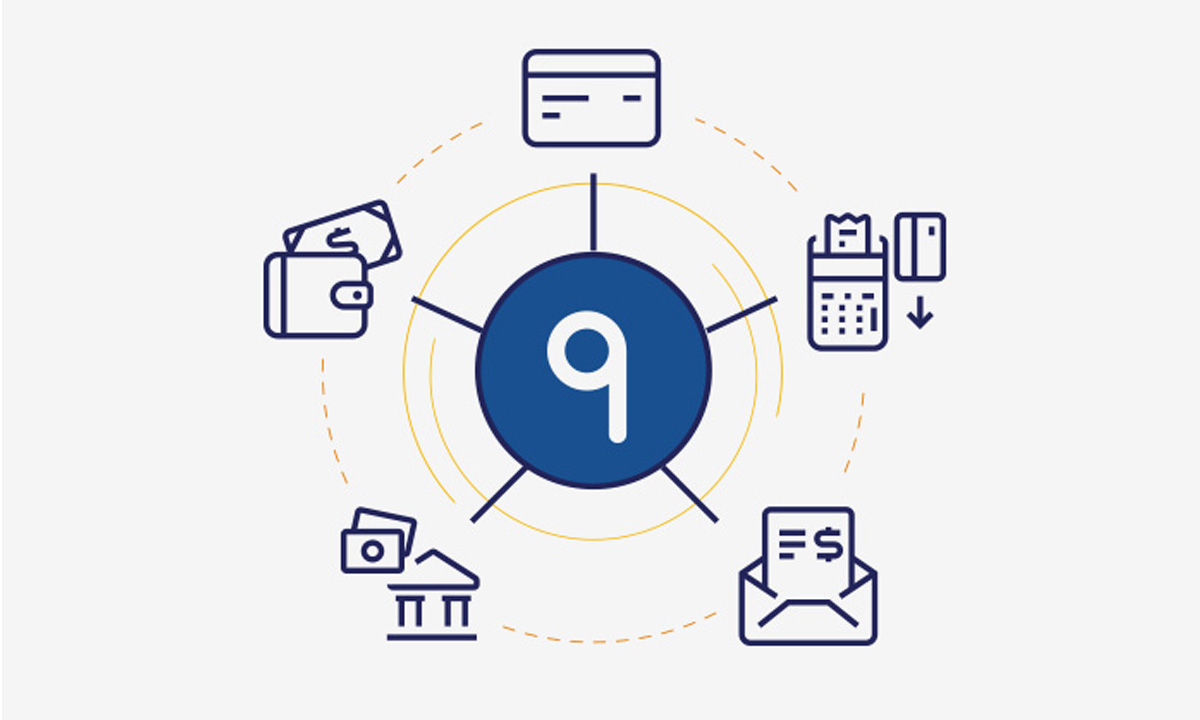
Qolo, the B2B payments hub for the New Economy, today launched its INTERACT embedded processing functionality and platform licensing solutions through its 100% native cloud capability, an industry first.
In response to the payments industry’s challenges of adopting cumbersome integrations and transaction processes that negatively impact customers, Qolo has introduced its INTERACT embedded processing capability. This functionality enables Fintech companies to participate in the payment authorization and funding processes for all payment types.
“For quite some time, the industry has been in desperate need of stronger infrastructure to improve speed, security and functionality that support the demand for flexible omnichannel payments,” said Darren Beyer, Chief Product Officer for Qolo. “Qolo has established a new standard for Fintech by providing these enhanced payment capabilities. Our clients have been very receptive and positive about our embedded processing solutions.”
Embedded processing enables companies to wrap payment functionality around their own systems. They can:
Add their own rules and logic to both the authorization and funding of any type of transaction - acquiring, issuing, money-in and money-out;
Provide card and payment access to any client-side pool of value (crypto, loyalty, credit lines, exchanges, accounts); and,
Fund individual transactions from different sources based on client rules.
Qolo is also launching its platform licensing solutions. The company has pushed the payments industry with its next-generation platform, becoming the first in t building and deploying virtualized HSMs (host service modules), resulting in the first true 100% native cloud issuing processing platform. For Fintech companies looking to bring payment processing in house, this infrastructure enables Qolo to license them the full cloud stack quickly and efficiently.
“Previous payments platform licensing options were hardware-based and took months, if not years to provision and roll out,” said Qolo CEO Patricia Montesi. “We can roll out a new instance in less than a day. While others in the industry can talk about being in the cloud, Qolo is the first to be truly cloud native. This brings unique performance, scale, and deployment advantages.”

- Product Reviews
- 01.02.2021 04:34 pm
What does the product do?
With enterprises holding more content than ever before, and with the importance of that content growing, Nuxeo helps businesses maximise the value they get from their content by building smart content applications that enhance customer experiences, improve decision making, and accelerate products to market.
Nuxeo is helping shape the future of financial services with an innovative platform that digitally transforms the business at speed, and delivers value throughout the organisation. Using modern technologies like open source, cloud, microservices, and AI, Nuxeo accelerates application and solution delivery to solve today’s biggest information management challenges.
Its approach to legacy IT modernisation maximises current IT investments, mitigates risks and minimises business disruptions - while strategically modernising for the future. Nuxeo helps financial services organisations realise measurable results faster and achieves other goals including:
• Deliver Richer Customer Experiences
• Reduce Time to Market
• Increase Operational Efficiency
• Meet Compliance Requirements
Who needs the product?
Large banks willing to modernise their IT systems, get a centralised vision of all their information, improve their customer experiences and provide new services to their customers.
How user-friendly and accessible is the product?
The product provides a user-friendly interface so it is accessible by anyone that needs to do so within an organisation. With its low-code configuration tool Nuxeo Studio, users can easily configure the platform to adapt to their specific needs.
The product is based on rest API so can be connected to the business solutions, allowing the users to keep working on their everyday tools.
What is special about the product?
Nuxeo leverages the latest technology to:
- Provide advanced AI technologies and machine learning helping its customers to get more value from their content.
Whether a user is interested in classifying insurance claims or products, Nuxeo Insight can form intelligent predictions based on the information already held. It will classify, predict, and enrich documents, rich media, and other content, with no coding or machine learning expertise.
- Offers the most scalable platform in the market
Nuxeo has benchmarked its platform on more than 10 billions documents so can scale as far as any organisation needs to.
- Provide a single source of truth
With its federation capabilities and based on rest API Nuxeo can connect with a large number of ECM platform and business solutions to provide to its customers a centralised vision of all their information
- Manage all type of contents
Nuxeo manages documents, videos, photos, 3 files, etc and almost any content type that a modern FS organisation is likely to work with.
What are the main features of the product?
Nuxeo offers a large range of enterprise content management features:
• Ingestion
• Classification
• Search
• Browse
• Native file viewers
• Check-in/out
• Lock
• Collaborative editing
• Document authoring
• Versioning
• Secure file sharing
• Security
• Audit
• Mobile app
• Workflow designer
• Task manager
• Integration to key capture
• Integration to records management
• Integration to digital signature
What are some real case examples of product implementation in the bank or financial institution?
Discover how ABN Amro steps into the Future of Information Management
How a Top UK Bank Improved Customer Experience Through Digital Transformation








