
Published
- 03:00 am

Validis, the provider of open accounting data and analytics, announces the appointment of former Lloyds and Metro Bank product specialist, Ronan O’Dea as Head of Product.
In his new role Ronan will be bringing his extensive experience to lead the product management function at Validis, strengthening the global proposition, unifying the product vision and accelerating innovation and growth plans. He has held leadership roles in product strategy for the last seven years, launching multiple digital SME lending offerings across origination and customer management for Lloyds and most recently, Metro Bank.
Validis currently manages the acquisition and curation of SME accounting data for several top-tier UK banks and the largest global accounting firms. This senior-hire points to ambitious plans as the fintech seeks to enhance a product suite to support accounting and financial firms on a global scale.
“I’m thrilled to be joining Validis at such an exciting time in the evolution of the business”, says Ronan. “The Validis platform offers unrivalled capabilities across the SME landscape, with valuable insights, analytics and financial intelligence that are helping our global accounting and financial services customers re-imagine how they serve their SME clients. I’m looking forward to leading the next phase of customer-centric innovation.”
Paul Thomas, CEO of Validis said, “We’re delighted to welcome Ronan to our senior team as we accelerate our innovation plans. He brings a breadth and depth of SME lending and banking knowledge and experience that will enhance and add to the strength of our very talented team.”
- 04:00 am
The LendTech company released the guide for merchants who want to understand the benefits and logistics of adding Point of Sale finance to their checkout.
Leading LendTech company, DivideBuy, which ranked 1st in Deloitte’s Technology Fast 50 UK, 2020, announces today the release of its brand-new eBook, “How to attract customers with interest free credit: A retailer’s guide to offering credit with confidence.”
Interest free credit has experienced a boom over the last 12 months, with research showing 11.5% of bridge millennials have used Buy Now Pay Later, with users regarding the solution as an effective means of controlling their finances while being able to make the purchases they desire.
With research such as this indicating that the way consumers want to pay for their goods is changing, DivideBuy is releasing the guide to provide merchants with the resources they need to make an informed decision about the payment method.
These include the benefits for retailers and consumers, what merchants can expect during implementation of a solution, and data from its retailer partnerships. For example, when following the company’s best practice guidelines, merchants have seen a 43% increase in big ticket item sales and a 34% increase in average basket value.
Jo Balsamo, Chief Marketing Officer for DivideBuy, commented: “Ecommerce sales have soared since the onset of the pandemic, and so has the demand for new and alternative methods of payment, such as interest free credit. This research and insight comes at a pivotal time in the retailer landscape, with much of this information, including data taken from our recent consumer pulse survey, demonstrating that there is a bounty of opportunities but not all retailers know how to harness them.
“The past 12 months have completely transformed the retail landscape – for merchants large and small. Now, online retailers are looking to continue the success they’ve experienced by improving customer loyalty and increasing conversion rates.
“Ultimately, by promoting different payment methods on their website and at their checkout, retailers can provide consumers with the choice they desire and make the difference between a customer committing to a sale or abandoning their basket. As retailers tend to see a 70% increase in conversion rates overall when implementing an interest free credit solution, it’s vital that retailers understand the benefits it can provide.”
For more details of the benefits of interest free credit, retailers can download the guide here.
- 07:00 am

Cross-border payments leader Thunes today announced the acquisition of Limonetik, a European Payment Methods Platform. This move will complement existing Thunes Cross-Border Payments solutions by enabling businesses to get paid in 70 countries, using over 285 local payment methods such as mobile wallets, payment by installments (BNPL), QR code payments and more. The solution will be known as Thunes Collections.
Limonetik is one of the earliest developers of an alternative payment methods platform suitable for international merchants and marketplaces. And like Thunes, the firm closely partners with payment service providers and financial institutions. Processing more than EUR 2 billion a year, Limonetik is trusted by over 14,000 merchants, marketplaces and fintech players, including Deliveroo, Uber Eats, Veepee, CMA - CGM, Worldline - Ingenico, ACI, Amadeus and Natixis. Founded in Paris in 2008, Limonetik is led by CEO & co-founder Christophe Bourbier, a multiple-time entrepreneur and payment space expert. Today, Limonetik counts 50 employees who will become Thunesters.
Rapid growth in cross-border e-commerce trade has made it essential for global sellers to accept payments in locally preferred methods. There are over 400 alternative payment methods, and this diversity brings integration complexity and back-office costs that Limonetik’s offering resolves with a single API integration. We believe collecting funds globally should be easy regardless of customer location.
By joining the Thunes global payment and collection networks, businesses and their customers can send payments to – and get paid in – even the hardest-to reach corners of the world. With a single, simple connection, Thunes offers fast, transparent and affordable payments across the world and will now also enable more flexible ways to collect funds.
“Thunes is recognised for our far-reaching global network and brilliantly simple payments solution. We are excited to further strengthen our offering with a global collections capability made possible through the acquisition of Limonetik. We welcome the Limonetik team to Thunes, and as one, we look forward to offering a single end-to-end payment solution that connects every corner of the world and makes the global economy accessible to all.” commented Peter De Caluwe, CEO of Thunes.
“Limonetik has been driving the transformation of collections with its platform as-a-service (PaaS) model, while Thunes possesses a powerful global payments network. We are incredibly excited to extend our combined payments and collections solutions across the world,” said Christophe Bourbier, founder of Limonetik.
Thunes is also unveiling a new brand identity, including a new logo and website to better reflect its well-established market position and expanding service offerings. These changes arrive four years after Thunes’ inception and the company's successful diversification and scaling of its offering while broadening its global presence.
In May 2021, Thunes announced a US$60 million Series B growth round led by global private equity and venture capital firm Insight Partners, bringing the company's total funding to US$130 million in less than two years. Insight Partners’ support enables Thunes to speed up investment in its operations, product and technology.
- 01:00 am
Exberry provides its robust infrastructure to enhance user capabilities and price discovery for Arcadier’s marketplace builder platform
Exberry, the marketplace and exchange technology pioneer, has partnered with Arcadier, the world’s fastest-growing marketplace builder company, to provide technology for the next generation of marketplaces.
Many marketplace clients today are looking for a turnkey solution that is quick and easy to deploy, while still having all of the robust features of an established exchange. The growing trend of alternative marketplaces stem from the fact that businesses and consumers today are looking for a more transparent way to make purchases and smarter buying decisions. They want control and choice, to pay a fair price by placing a bid or reserve on a product or service, and to purchase at that set price. At the same time, producers are looking to get fast and accurate data on demand and market prices from the platform.
The Exberry / Arcadier technology partnership will enable Arcadier’s marketplace operators to offer an on-line, innovative trading experience to their sellers and buyers for enhanced price discovery - creating a new, customer-focused, buying experience. Meanwhile, Exberry clients will be able to utilise Arcadier’s marketplace infrastructure and technology to create a fully functioning, customisable marketplace according to their requirements.
Exberry’s cloud native technology is light to deploy and easy to integrate through APIs into the “Marketplace-as-a-Service” concept, allowing Arcadier-powered marketplaces to reap the full benefits of an institutional exchange-grade trading solution.
Dinuke Ranasinghe, CEO & co- Founder of Arcadier commented: “Our partnership with Exberry will benefit all Arcadier marketplace operators, no matter their size or type, from healthcare all the way through to retail. Client centricity is driving the agenda and we are seeing a more active consumer base with specific and unique marketplace requirements. This collaboration has the potential to reshape the world of trading and marketplaces by offering a more accessible and efficient exchange experience, inviting both sellers and buyers to define the terms and set prices.”
He added: “We have been impressed by Exberry’s deep tech capabilities and flexible approach to integration, without compromising the stability of this unique technology.”
Guy Melamed, CEO of Exberry said: “We are very excited to collaborate with a visionary firm like Arcadier, and this is an important and strategic partnership for our business. Our goal is to improve and simplify the way marketplaces are built, operate and develop by customising and adapting to the changing market needs. Enhancing Arcadier’s marketplace capabilities with exchange features such as dynamic pricing and price discovery where buyers and sellers both contribute to finding the market price at that moment in time is exactly what our technology is designed to deliver. We are delighted to be playing our part as Arcadier continues to expand its offering globally, while also deepening Exberry’s offering to our clients by leveraging Arcadier’s technology and providing a truly turnkey exchange marketplace solution.”
Exberry architecture is designed to support fast growing markets using the latest technologies combined with the safety, security and maturity provided by experienced market participants. There are use cases across the entire spectrum of the market, from national stock exchanges through emerging opportunities in eCommerce, from digital securities and tokenized markets to established players modernising their platforms.
- 02:00 am

Eighty-four percent of consumers believe businesses need to use AI and automation to protect against sophisticated fraudsters
With concerns around online fraud and identity theft rising, consumers expect businesses to utilize new technologies to protect them online. According to research from Trulioo, the leading global identity verification company, 84% of people believe that businesses will need to rely more on automated fraud protection to protect customers as fraudsters become more sophisticated.
The research revealed positive attitudes towards a number of newer methods of identity authentication amongst consumers in China, the UK and the U.S. Almost three quarters (74%) of people said they feel secure when they are asked to log into their bank account to verify their identity for other online services. A further 72% feel secure when behavioral biometrics, such as AI-enabled analysis of their voice and typing speed, is used.
The findings are launched today in a new white paper, ‘New Fraud Threats in the Digital-First World’, which examines how online brands can find the right balance between online security and customer experience in a digital-first world.
“People are demanding more from online brands when it comes to their online security and they’re expecting greater variety and choice in how they verify their identity when opening new online accounts,” said Zac Cohen, COO at Trulioo. “People expect their online experience to be both secure and convenient, and they recognize how advancements in technology have a big part to play in this. Online brands should take note - if they can get this right, then they can lay the foundations for a long and trusted relationship with customers.”
One of the most striking findings of the research is the extent to which consumers are comfortable with bank account verification, where they log in to their bank account as a way to authenticate their identity for other digital services. Eighty-two percent of people stated that they trust their bank as a central place to authenticate and manage their identity, and 70% reported feeling comfortable using their bank account to authenticate their identities for all new online accounts.
Nearly half of all consumers (48%) believe that online brands are ultimately responsible for protecting them from online fraud and identity theft, and 32% feel that the onus lies with their bank or credit card company. Fewer than one in five people (18%) stated that it is their own sole responsibility. Interestingly, consumers in the UK are more likely to assume responsibility for protecting themselves online (26%) than people in the U.S. (19%) and China (9%).
The research explored opinions on which identity authentication measures feel the most secure and convenient when creating a new online account.
Two-factor authentication, where people are asked to provide two forms of verification, for example, a pin code and a One Time Password (OTP) or a biometric scan and a password), is perceived to be the most secure method. Close behind this are OTPs on their own and biometrics like facial recognition that are critical for providing secure account opening and preventing account takeover fraud (ATO).
Cohen concluded, “After a year of digital upheaval, this research highlights the need for online brands to re-think their online security strategies to address rising consumer concerns (and expectations) around online fraud and identity theft. Businesses need to demonstrate that they are doing all they can to protect customers while also delivering as seamless an onboarding experience as possible. This means offering a choice of secure and convenient identity verification methods, with clear and transparent communication on why they are requesting data or pass codes at each stage of the process.”
Download the ‘New Fraud Threats in the Digital-First World’ whitepaper here.
- 03:00 am
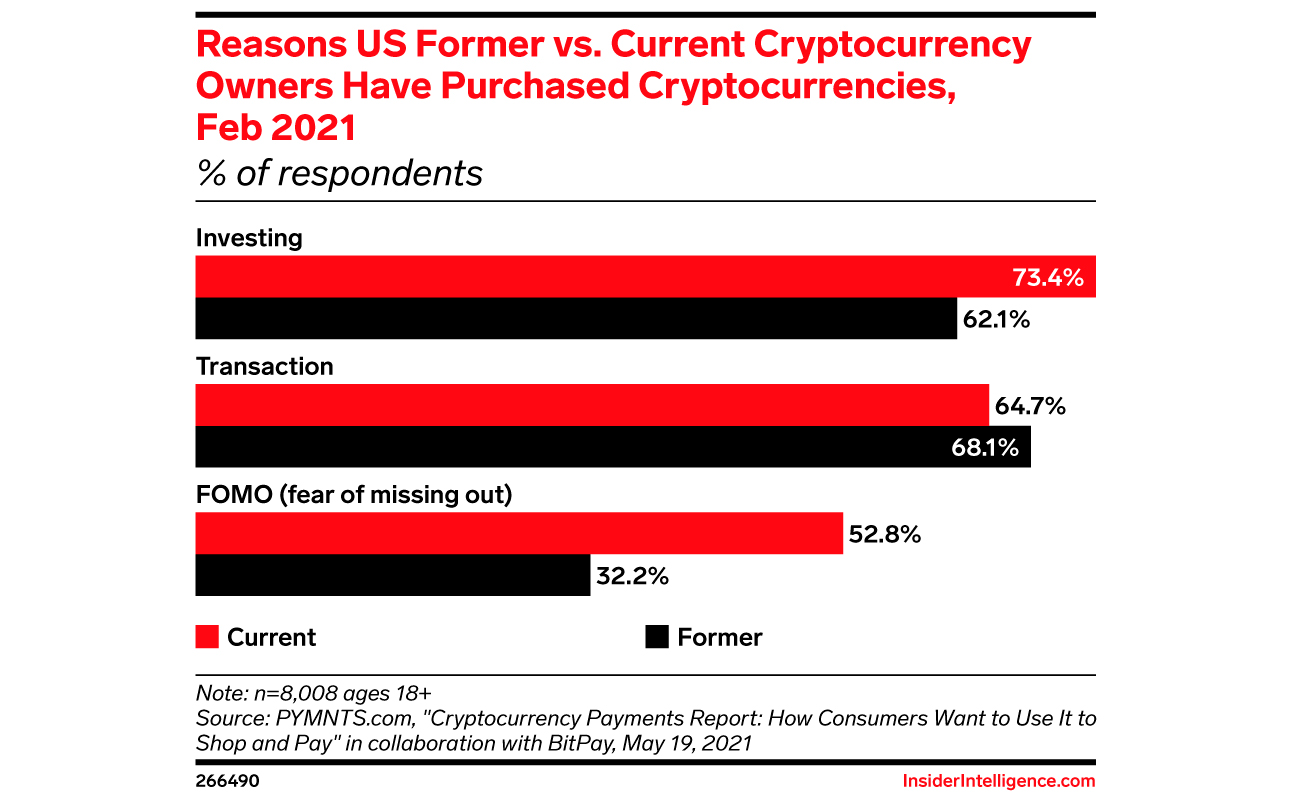
What’s on our mind: As more consumers invest in cryptos, a new issue is arising: It’s difficult for beneficiaries to access these assets after the owner dies.
The challenge with cryptos: Crypto assets can be much harder to retrieve than traditional assets because of the way blockchains work.
To access and move crypto funds, one needs to know the private key: a random string of numbers and letters, much like a strong password. Crypto exchanges can only use private keys when they operate as custodial wallets, meaning they retain ownership of private keys—as opposed to non-custodial wallets, where the user keeps the private keys. Some of the largest market players, like Gemini and Kraken, offer custodial wallets, while Coinbase offers both custodial and non-custodial wallets.
This means that if the deceased used a non-custodial wallet provider and didn't take precautions to share their private keys before their death, beneficiaries are out of luck. For example, in 2018, when the founder of crypto exchange QuadrigaCX allegedly died, he took to the grave over $140 million worth of crypto from investors, as he alone had access to the private keys.
What it means for the industry: We expect both fintechs and incumbents that offer crypto services to introduce solutions to this issue.
Coinbase, for example, already outlines steps the executor or family can take to access the deceased’s cryptos. This process is simpler for users when Coinbase holds the private keys, which lets it directly transfer ownership.
Crypto firms that offer non-custodial wallets will likely add educational tools, raising user awareness that they must be proactive and take action to avoid locking away their crypto holdings forever from their beneficiaries. These actions could include sharing private keys within a will.
Finally, wealth managers at incumbents will need to understand the challenges of dealing with cryptos, which they are increasingly likely to encounter as part of their retirement planning services as more consumers globally invest in this emerging asset class.
- 05:00 am

The new partnership provides financial institutions with the data they need to offer a more personalized experience to their business clients
Zafin, the world’s leading SaaS cloud-native product and pricing platform for financial institutions, today announces its partnership with Codat, a technology company that enables small businesses to seamlessly share business and financial data with financial institutions. Through the partnership, banks and credit unions will gain access to the data needed to serve more efficiently and to personalize the products and pricing provided to SMBs (small and medium-sized businesses).
Codat’s API connects several of the world’s leading accounting packages, point of sale solutions and payroll platforms used by SMBs to decisioning systems such as Zafin used by financial institutions. This better facilitates the flow of information, providing a real-time picture of an SMB’s financial performance to aid decision-making. The Codat-Zafin integration delivers a superior customer experience by enhancing the depth of data available to a bank or credit union and streamlining financial reviews and workflows. It improves a bank’s ability to offer product packages better suited to an SMB based on a clearer understanding of their business stage and unique financial needs. The partnership will also provide detailed cash flow information to financial institutions and enable them to offer more suitable products and pricing, thereby leading to better outcomes for financial institutions and SMBs alike.
“Providing next-level personalization is a key component of what both Zafin and Codat offer global financial institutions,” said Thomas Schickler, EVP and Chief Operating Officer of Zafin. “This collaboration allows financial service providers to understand and present hyper-personalized recommendations to their SMB customers more effectively. We can now enable bankers to play a crucial role in promoting the wellbeing of their SMB clients.”
Zafin’s cloud-native SaaS product and pricing platform is layered on top of banks’ legacy core systems. The platform provides a comprehensive view of the customer and the ability to build new products and pricing in months, not years. Offers and recommendations can be hyper-personalized to the business’ needs and financial health, strengthening the overall relationship with the SMB.
“Zafin’s approach to personalization is well established in the banking space and is a perfect fit for our technology,” said Peter Lord, CEO & Co-Founder of Codat. “Our mission is to make the lives of small businesses easier and enable suppliers to small businesses, through a single standardised API, to connect with the software packages SMBs use. We look forward to seeing many more SMBs and financial institutions together flourish as a result of this partnership.”
The partnership’s unified solution is globally available immediately.
- 04:00 am

Ghost Drops continues to evolve the cannabis scene, today announcing the launch of its pioneering NFT marketplace, cryptodrops.world.
In collaboration with full-service digital banking partner QNTMPAY, Ghost Drops – the iconic cannabis brand which recently announced its popular launch into the legal market – is launching Crypto Drops, a world-first NFT platform focused on cannabis and the gamification of cannabis cultivation.
“This is the digital future of cannabis,” says Ghost Drops CEO Gene Bernaudo. “Globally, there’s nothing like this but there’s a real appetite for it. We’re thrilled to continue to expand the boundaries of cannabis culture.”
Cryptodrops.world will launch in two waves. First, Ghost Drops is releasing its fan-favourite legacy strain art as unique, one-of-a-kind digital NFTs. This is a chance for cannabis collectors and connoisseurs to own a piece of the renowned Ghost Drops history. The legacy market strain art is being retired as it is not compliant with legal market restrictions.
In the second wave, Crypto Drops will expand considerably, building out a virtual gamified world of cannabis collection and cultivation. Featuring digital breeder packs of sought-after cannabis seeds, users can buy, sell and trade seeds, and grow virtual plants to crossbreed with other strains.
“Ghost Drops has been a cultural icon in Canadian cannabis. Now, we’re about to revolutionize banking, NFTs and crypto in this space,” Bernaudo says.
“I love that our original fans have this opportunity to own a piece of the Ghost Drops legacy with our strain art. This way, the history of the ghost can live on with the fans who helped us get here.
“And for cannabis connoisseurs, collectors and gamers, I can’t wait for them to experience the new digital cannabis frontier we’re pioneering with Crypto Drops.”
The partnership with QNTMPAY is a blockbuster piece of cryptodrops.world. The Official Digital Banking Partner of Ghost Drops and Crypto Drops, QNTMPAY is next-generation, no-worries banking that will provide ease of entry into buying and selling cannabis NFTs.
QNTMPAY removes the requirement to deal with cryptocurrency to purchase NFTs by processing debit, Visa, Mastercard, Apple Pay, and more. Through QNTMPAY, Ghost Drops will also offer its customers a free peer-to-peer banking solution, including Ghost-branded bank cards and Mastercards.
In addition, Ghost Drops will also be introducing a points system – Ghost Cash – allowing consumers to redeem points from QNTMPAY purchases, to redeem on merchandise and accessories. Consumers who had been earning the former rewards, Ghostdots, will be able to transfer their points over.
QNTMPAY Founder Adam Pearsall says this launch marks the beginning of an exciting partnership in a high-growth space.
“Crypto Drops is going to transform the cannabis space, both in a cultural sense and also with how money changes hands. QNTMPAY is excited to be a part of this venture, as we bring our cutting-edge banking technology to this game-changing partnership.”
- 03:00 am

Sber AI Laboratory has presented two AI-powered solutions at the 38th International Conference on Machine Learning (ICML): a model that identifies pneumonia sources in lungs through X-rays with further prioritization of patients who must receive treatment and a model that evaluates the risks of severe symptoms in patients hospitalized with pneumonia, including when it is caused by COVID-19. Sber’s AI for Health neural network models have been designed with medical doctors. Now that the models have been adopted, doctors use them a lot in their work.
The model that identifies pneumonia sources on X-rays has reached the accuracy of 97.8% due to its continuous training and fine-tuning. Medical doctors in the city of Tomsk have uploaded 450 chest X-rays for the project. On top of that, the model has been trained using 350 X-rays of healthy patients, and approximately 50 X-rays – both with and without pathologies – have measured the quality of training. The cases when X-rays marked by human doctors and the model had non-empty overlapses were considered as the correctly labeled ones.
The risk assessment model to predict severe symptoms for pulmonology patients uses information documented in the electronic health record by the physician within the first 24 hours of hospitalization. Based on the data, the system assigns one of two high severity risk levels (ranging from 29% to 100%). Timely identification of high risk patients enables doctors to adjust treatment plans and reduce hospital mortality. The project was successfully implemented at Krasnoyarsk Regional Clinical Hospital in spring 2021. The proportion of high risk patients who were admitted to intensive care decreased by 14.3% and the proportion of cases of mortality dropped by 44.3%.
AI Lab developers have been designing medical solutions based on machine learning and computer vision for several years now. On the AI for Health track, Sber collaborates with medical institutions in both Moscow and other regions of Russia. We have seen how the value of such projects has grown in the last year and a half and how they simplify doctors' heavy workloads. Presenting our AI for Health projects at ICML is a big milestone in the recognition of Sber's developments by the international data researcher and data engineer community.
Alexander Vedyakhin
First Deputy Chairman of the Executive Board, Sberbank
ICML is a major conference that greatly influences research on machine learning and artificial intelligence. It is a globally renowned platform that brings together the world’s leading experts in the fields of DS/AI. The first ICML was held in 1980. In 2020, 11,000 professionals from 75 countries gathered for ICML.
- 03:00 am
Enhancements include new fixed-income ETF capabilities along with a new no-touch process that provides the industry with increased operational efficiency and balance sheet relief |
| ||
The Depository Trust & Clearing Corporation (DTCC), the premier market infrastructure for the global financial services industry, today announced that its subsidiary, National Securities Clearing Corporation (NSCC), has launched an automated solution that streamlines and simplifies the Exchange-Traded Fund (ETF) collateral management process and adds new fixed income ETF capabilities, a critical step to freeing up capital and increasing operational efficiency during market uncertainty and volatility. Today, NSCC processes an average of 260,000 ETF create/redeem transactions every day. New collateral management capabilities The new NSCC solution fully automates the exchange of ETF collateral, reducing risks in the ETF fund process from trade date to settlement date. With this enhancement, NSCC will process create/redeem instructions, generate payment orders, and ensure collateral is exchanged between authorized participants and servicing agents – all within a no-touch process. By closely integrating the collateral process within the existing NSCC settlement process, NSCC can free up capital for its members by reducing the amount of collateral required on components that are eligible for NSCC’s netting process. “DTCC worked closely with our clients to introduce an innovative solution that automates the exchange of ETF collateral, a previously manual process that was done outside of NSCC,” said Michele Hillery, General Manager of Equity Clearing and DTC Settlement Service at DTCC. “With the ongoing volatility in the markets, this automated solution provides the industry much-welcome balance sheet relief and a faster and simplified workflow to support ETF orders.” New fixed income ETF capabilities Additionally, NSCC has further expanded the ETF service to support the clearing of certain fixed income ETFs, including corporate and municipal bonds. Orders for corporate and municipal bond ETFs can now be processed through NSCC and included in the same trade guaranty provided to securities cleared and settled at NSCC – the assurance that the trade will be completed, even if a counterparty to the transaction defaults on its obligation. Firms that choose to process eligible fixed income ETFs via NSCC also benefit from Continuous Net Settlement (CNS), an automatic process at NSCC that offsets trades down to one position per client, by reducing the value of payments that need to be exchanged and minimizing security movements and costs. “State Street is excited to offer the enhanced clearing and settlement service for fixed income to its ETF clients,” said Frank Koudelka, Global ETF Product Specialist at State Street. “Offering CNS for fixed income ETFs aligns with the continuing modernization that bond market ETFs provide. This provides enhanced efficiency, balance sheet relief and ultimately tighter bid-ask spreads for investors.” The new collateral management solution and the additional clearing capabilities are part of a series of ETF enhancements to provide industry-wide benefits, including increased transparency, cost savings and automated workflows. DTCC anticipates it will complete the final planned enhancement of its ETF service, which will support clearing related to other types of fixed income ETFs including mortgage-backed securities and government securities such as Treasuries, by the end of 2022. |








