
Published
- 01:00 am

· IBEX 35 sentiment declines further, dropping into bearish territory
· Significant drop could trigger further selling on the Spanish index
· 60 million securitised derivatives were traded on Spectrum last month
Spectrum Markets, the pan-European trading venue for securitised derivatives, has published its SERIXTM European retail investor sentiment data for August (see below for more information on methodology), and notes the continuation of significant bearish trading related to Spain’s IBEX 35 index.
After dropping from a nine-month high in June to 105 in July, retail investor sentiment on the IBEX 35 fell further in August to reach a bearish SERIXTM value of 95. This came as international investors contemplated the twin pressures of rising COVID-19 infections and the rapidly deteriorating situation in Afghanistan.
“Though the rate of new Spanish COVID-19 cases looked to be slowing into August, the IBEX 35 has struggled to maintain the upward trend it started in mid-July, and the SERIX data suggests retail investors are starting to get a bit nervous,” notes Thibault Gobert, Head of Liquidity Pool at Spectrum Markets.
“If the IBEX 35 experiences another significant decline, like the one seen in the second half of June, this could trigger further selling and, looking at the clear bearish signals we are seeing in our data, retail investors seem to be preparing for this scenario either by taking profits or positioning themselves for a drop in the near term.”
During August, 60 million securitised derivatives were traded on Spectrum, with 33.1% of trades taking place outside of traditional hours (i.e. between 17:30 and 9:00 CET). 80.4% of the traded derivatives was on indices, 10% on currency pairs, and 9.6% on commodities, with the top three traded underlying markets being DAX 30 (27%), NASDAQ 100 (16.7%) and OMX 30 (13%).
Looking at the SERIXTM data for the top three underlying markets, the DAX 30 moved back into bearish territory, dropping from 101 to 99 while the NASDAQ 100 also dropped two points, to 96. Meanwhile the OMX 30 recovered some of the bullish momentum seen earlier this year, rising from 92 to 99 in August.
Calculating SERIXTM data
The Spectrum European Retail Investor Index (SERIXTM), uses the exchange’s pan-European trading data to shed light on investor sentiment towards current development in financial markets.
The index is calculated on a monthly basis by analysing retail investor trades placed and subtracting the proportion of bearish trades from the proportion of bullish trades, to give a single figure (rebased at 100) that indicates the strength and direction of sentiment:
SERIXTM = (% bullish trades - % bearish trades) + 100
Trades where long instruments are bought and trades where short instruments are sold are both considered bullish trades, while trades where long instruments are sold and trades where short instruments are bought are considered bearish trades. Trades that are matched by retail clients are disregarded
- 06:00 am

- Partnership to help drive market adoption in line with the energy switching sector
- mmob’s customers can embed the service into their digital ecosystems using one line of code
- Service will enable users to leverage their personal data with consent to complete the switch with one click
Open finance partnership platform, mmob, has today announced the UK’s first end-to-end broadband switching service. The service will be delivered through the company’s latest partnership with broadband industry disruptor Cuckoo and will enable its commercial partners to easily embed broadband switching into their digital ecosystems using just one line of code through mmob’s and Cuckoo’s API.
The aim of the partnership is to drive broadband switching adoption and deliver volumes and savings in line with the energy sector. This will be achieved by allowing more businesses to offer switching as part of their digital ecosystems while making the process seamless for consumers. Industry data suggests around 6.5 million households switch their energy supplier each year, compared to only 1.5 million broadband switchers. According to a 2019 survey by consumer champion Which, a third of respondents said the primary reason for not switching is the perceived difficulty of doing so.
“Waves of disruption have washed across the banking, energy, and insurance sectors. Yet the last forgotten utility is broadband,” said Alexander Fitzgerald, Founder and CEO, Cuckoo Broadband.
“We all care deeply about our home internet now post-lockdown. So we’re on a mission to make the internet frictionless. This partnership with mmob will ensure that more businesses can help make switching broadband a breeze.”
mmob’s open finance platform eliminates the complexity, time, and resources financial service providers need to select and deploy partner-driven services. Through its API, banks and fintechs can quickly and easily connect to mmob’s network of third-party partners and gain rapid access to new verticals, using just one line of code. Embedding partnerships that once took weeks or months can now be achieved in days.
“mmob was established to help our partners drive engagement and retention by bridging the gap into services their customers want but sit outside their core proposition,” said Irfan Khan, CEO, mmob. “Embedding broadband switching provision into their digital ecosystem is an excellent example of where banks and fintechs can add value through their app dashboard and data to reduce the time and effort it takes consumers to select and complete the purchase of critical services.”
- 05:00 am

- Former Mastercard leader served as Vice President of Product Development and Innovation within Cyber and Intelligence Division, following 15 years with IBM
- Dillahunty headed groundbreaking Ethoca acquisition deal in 2019 and was responsible for Mastercard’s dispute management technologies
- New role will drive global product development and strategic direction at Chargebacks911 and Fi911
Leading dispute technology specialist, Chargebacks911, today announces the exciting appointment of a technology management leader, Brad Dillahunty, as Executive Vice President and Chief Product Officer (CPO) at Chargebacks911 and sister brand Fi911.
Brad will drive the businesses’ global product development and strengthen operational structures at a time of unprecedented growth and opportunity, in his role as CPO. His unrivaled knowledge of chargebacks, disputes, and technology development, will help define future product strategies as Chargebacks911 and Fi911 continue to break the mold in dispute resolution technology.
With over 25 years’ extensive product and technology leadership, Brad spent the last decade directing the chargeback and dispute strategy at card giant, Mastercard.
As Vice President of Product Development and Innovation within their Cyber and Intelligence Division, Brad was the talent responsible for driving product design and enhancement, as well as the strategic vision and implementation of its dispute processing platform.
“We’re thrilled to have Brad come on board at such a pivotal time for the growth of both brands,” says Monica Eaton-Cardone, Chief Operating Officer and Co-Founder of Chargebacks911 and Fi911. “Brad has long since been on my wish list of talent thanks to his extensive experience in disputes, chargebacks, technology development, as well as the wider dispute resolution process.
“I know he will inspire the enhancement of our existing technology and offer a disruptive edge to inform our research strategy and product development direction. His combination of proven and seasoned experience, coupled with a passion to continually drive change and solutions in fraud prevention, makes us all so excited to have Brad join. He is a tremendous addition to our team as we embark upon our mission, to deliver next-generation dispute management solutions to all stakeholders across the value chain.”
This announcement follows the news that Chargebacks911 recently celebrated its 10th anniversary, and to date has protected over 10 billion transactions, recovering more than $1 billion in falsely disputed or stolen revenue for merchants worldwide.
Brad comments: “I’m delighted to join the Chargebacks911 and Fi911 families at such a pivotal time in the growth of the dispute resolution industry. The integrity of the brands and their reputations in the industry are unparalleled. I bring my experience of being an informed risk-taker to craft pioneering solutions that will continue to evolve with Chargebacks911 and Fi911.
“There is still a lot of ground to cover: The industry and payment ecosystem are in desperate need of companies like ours that can create new and inspiring solutions, services and products that will not only drive behavior change, but also lead into other growth opportunities.”
Brad and other Subject Matter Experts at Chargebacks911 and FI911 will be hosting the next Chargeback University Event this October in Las Vegas, Nevada. Registration is limited to enterprise merchants and financial institutions, with separate workshops catered to each audience. The Chargeback University event is a four-hour seminar where constituents will learn about the latest dispute rules and strategies, understand related impacts and discover best practice tactics to help reduce OPEX and improve effective win rates.
Eaton-Cardone adds: “Brad is joining Chargebacks911 and Fi911 at a time when fraud and chargebacks are surging in line with ecommerce volumes globally. According to Juniper Research, retailers are expected to lose $130 billion in online fraud over the next five years, underlining the need for more agile, data-driven tools to help merchants identify and take control of chargebacks. We have never been in a better position to deliver the solutions and specialist insight required to thwart the growing threat of fraud and allow the entire payments ecosystem to thrive.”
- 02:00 am

- Homeppl completes $1.4 million funding round to expand customer base, drive innovation and support international growth
- Successful funding marks the second round of investment for the fast-growing proptech in under a year, bringing its post-money valuation to $13.5 million
- New investment follows a string of senior hires and client wins, with major firms including Knight Frank, JLL and Douglas & Gordon now using Homeppl’s technology
Homeppl, the UK-based tenant due diligence and guarantee technology business, has successfully closed another funding round to support its growth trajectory. The funding marks the second seven-figure raise in the last eight months and brings its post-money valuation to $13.5 million.
The fast-growing technology business combines anti-fraud technology with Open Banking data and behavioural analysis to protect landlords from tenant fraud, and ensure tenants are not discriminated against and can access the properties they deserve. In 2021 alone, Homeppl has protected its clients from potential losses of more than £3million.
The investment will drive the next phase of growth for the business as it moves towards its Series A round. Homeppl has been oversubscribed in recent months and this funding will be used in the short-term to address this, expand the firm’s client base and team, drive continued product innovation and R&D while building out the international offering.
The round has been led by two established global venture capital investors, Hong Kong based VC ParticleX and Venionaire Ventures, on behalf of European Super Angels Club. The latest capital raise brings the total seed funding to over $5 million.
Commenting on the investment, Mingles Tsoi, CXO at ParticleX, said: “We’re thrilled to be supporting Homeppl through their next stage of growth. Homeppl’s proposition is compelling and we’re confident that Alexander and the senior team will continue to move in an exciting direction. The adoption of PropTech is urgently required to transform the way real estate industry operates and improve work efficiency, while at the same time, creating value and reducing risk.
Berthold Baurek-Karlic, Managing Partner at Venionaire Capital and President of European Super Angels Club added: “The entire team and I are very proud to become part of Homeppl’s growth story, particularly at such an exciting stage in the company’s life cycle. Alexander and the team are extremely passionate about the work they’re delivering and its unique technology for the rental market. This company has everything needed to become a unicorn one day.”
Alexander Siedes, CEO and co-founder of Homeppl, said: “This funding provides strong vindication of our proposition and the impact we are having on the market, bringing huge value to tenants, landlords and agents alike. The team at Homeppl are acutely aware of the problems renters and landlords face which is why we are determined to change the way things are done for the better. That is exactly what this investment is all about.
“We have raised double what we expected, which will enable us to innovate and grow faster than we could have anticipated. Most immediately, we will soon be launching into several European cities, and I am grateful for the support from our investors as this will enable us to springboard into the next chapter.”
Homeppl has seen significant growth over the last year particularly as lockdown measures eased across the UK. With international movement slowly showing signs of recovery, the rental market is also undergoing signs of evolution as the market embraces a post-COVID reality. Working with its existing partners, such as JLL, Chesterton, Quintain and more, Homeppl’s solution aims to bring equality of opportunity to renters while allowing their partners to safely transact with consumers.
Homeppl plans to double its team of 30+ strong professionals within the next year.
- 02:00 am
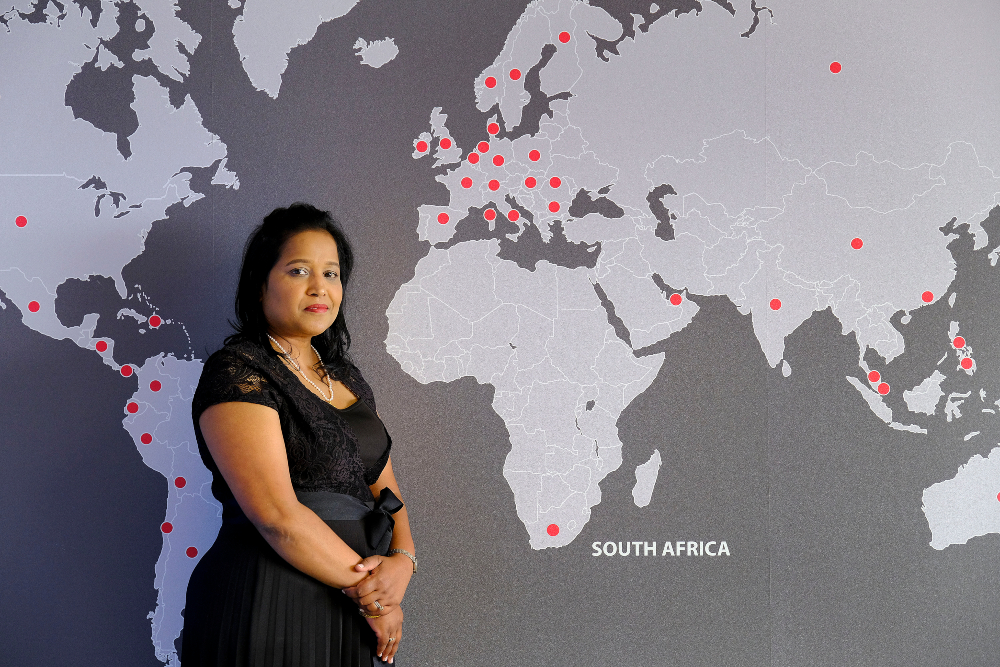
The headwinds and economic strain of the past 18 months have left many businesses with little option but to evaluate costs. However, a recent PwC report states that while 52 percent of companies plan to curb or defer investments, only 9 percent will make those cuts in digital transformation. “Clearly, effective processes, combined with strong risk discipline and using FinOps to optimise cloud costs is more important than ever before. Managing through turbulence and disruption has become an essential skill for CIOs and IT decision makers,” notes Marilyn Moodley, Country Leader for South Africa and WECA (West, East, Central Africa) at SoftwareONE.
According to the State of FinOps 2021 report, cloud financial management, or FinOps, has become a mainstream practice in large organisations across all sizes of cloud spend. “Due to the increasing complexity of their cloud environments, reporting requirements and the sheer number of disparate teams requiring collaboration, large organisations have to adapt quickly as a slow pace of transformation is no longer feasible,” says Moodley.
Thanks to a surge in the use of digital technologies both at work and home, Moodley says more C-suite executives see the need to invest in digitalisation as a way to improve business efficiency and foster innovation. “Added to this, data from PwC and elsewhere shows that more than half of employees want to work remotely at least part of the time after the pandemic, so spending on technologies that enable a hybrid way of working will be crucial.”
She adds that the pandemic accelerated the pace of disruption in the banking, insurance, and wealth management sectors which were already under pressure to manage their cloud and technology rights and obligations from a compliance perspective. “Consolidating cloud spend, managing license consumption and facilitating cloud migration each present a massive challenge for organisations, irrespective of size. Add to this the need to manage compliance and risk factors, and the practice of FinOps becomes a necessity for organisations looking to balance stability and security with the agility that moving to the cloud provides.”
According to Gartner, public cloud spending (IaaS) will grow by over 38% percent in 2021, representing an estimated $82 billion market. “Even before Covid-19, most organisations had already moved at least some of their workloads into the cloud. The overnight shift to remote work then led to a marked increase in unbudgeted cloud spend which organisations are still grappling to get a handle on,” says Moodley.
She says the first step to rightsizing is an understanding of the fully loaded cloud costs and the association of these costs at a business unit level, before implementing the FinOps framework that allows ongoing spend management and optimization. “A sound FinOps strategy can ultimately increase an organization’s ability to understand cloud cost, through a combination of systems, best practices, and in turn allow them to optimize their consumption by promoting a culture of accountability.”
While the technology challenges facing the financial services industry are unique, Moodley says these can be overcome with the right processes and systems that offer guidance and management capability across the entire software portfolio. “Whether local, remote, within a data centre, or in a multi-cloud environment, competition from nimble FinTech innovators means traditional financial services must innovate to remain relevant. FinOps provides the framework to balance between Innovation and control so that you can manage as well as optimize your cloud resources, while driving business and digital transformation.”.
- 04:00 am

NEC Corporation has expanded its collaboration with Amazon Web Services, Inc. (AWS) in areas that include global 5G and the digital government in support of accelerating digital transformation for customers.
In November 2020, NEC and AWS concluded a corporate-level strategic collaboration agreement, and have been developing offerings and strengthening delivery capabilities since then. NEC will now expand this collaboration and strengthen efforts in the following areas:
1. Global 5G
NEC aims to develop an end-to-end 5G offering and to provide it globally by combining NEC's high-performance cloud-native open 5G mobile core, OSS/BSS solutions, local 5G use cases etc., and AWS cloud and edge solutions. NEC will accelerate telecom carriers' cloudification of network workloads and enhance digital transformation for enterprises by deploying 5G-based infrastructure and applications at the network edge. This combined solution stack will be supported by NEC's system integration services to enable customers to efficiently deploy and scale 5G networks, enhance automation and drive significant improvement in operational economics.
2. Digital government
NEC has been certified as an AWS Government Competency Partner based on the strategic collaboration that started last year and its achievements for governments to date. Going forward, NEC will further strengthen its relationship with AWS and focus on developing and providing a menu of offerings to accelerate the digital transformation for government activities in Japan.
3. Hybrid cloud
By collaborating with AWS, NEC aims to develop and provide a menu of offerings that connects on-premises and cloud environments securely, at high speed, and with low latency. This will contribute to the acceleration of digital transformation through modernization that utilizes the customer's existing information technology (IT) assets.
To accelerate these initiatives, the NEC Group has increased the number of AWS-certified engineers to 2,000 at present, aiming for 3,000, double the number from the start of collaboration in 2020, and firmly maintains one of Japan's largest delivery capabilities for cloud projects. Going forward, NEC will continue to strengthen these positions and to ensure that it responds to customers' digital transformation demands.
Comments from both companies on this collaboration are as follows.
"NEC is pleased to announce the expansion of its strategic collaboration with AWS. Last year, NEC announced this global collaboration as the first of its kind between AWS and a Japanese company. It has been a great year, seeing many successes in the areas of government, modernization and in the skill enhancement of NEC engineers. NEC is now expanding the collaboration with AWS in the areas of global 5G, digital government and in enhanced hybrid cloud offerings. With the strong global support from AWS, NEC will help drive digital transformation in the government sector and across industries as part of orchestrating a brighter world," says Toshifumi Yoshizaki, Executive Vice President at NEC Corporation.
"We are delighted to deepen our relationship with NEC. AWS welcomes NEC's commitment and delivery of solutions built on AWS to deliver high-quality solutions that accelerate customers' digital transformations. We look forward to NEC's continued expansion of offerings and further expansion of delivery capabilities to optimize these transformations," says Doug Yeum, Global Head of Alliances & Channels at Amazon Web Services, Inc.
- 03:00 am

GBG, the global expert in digital identity, helping businesses prevent fraud and meet complex compliance requirements, has announced a partnership with SEON. With this partnership, GBG strengthens online fraud prevention for banks, fintechs, and digital banks by using email, IP, phone and social media as alternative data for fraud detection, while meeting compliance and data privacy needs. SEON's technology is fully integrated into the GBG Intelligence Center.
Digitilisation is accelerated by the COVID-19 pandemic, where digital banks in Asia Pacific reported a threefold increase in their customer bases in 2020 as compared to traditional banks. Mature economies like Singapore and Hong Kong have established high fintech adoption rates, and developing countries like Vietnam, Cambodia and the Philippines are gearing to achieve financial inclusion with 70% of Filipino adults by 2023 to provide financial access to low-income households, gig economy, small businesses, and new-to-bank GenZ.
As Financial Crime 4.0 continues to exacerbate, the partnership with SEON enables GBG to increase effectiveness in combatting modern day fraud by validating the most active and present-day e-lifestyle based consumer touchpoints such as email addresses, IP location, social media, phone and SIM data to detect fraudulent anomalies in account application and loan origination, as well as to onboard new-to-bank population. Financial institutions (FIs) can look to reducing fake and malicious email address usage to as low as 0% and increase detection of suspicious IP-related applications and transactions by up to 80%.
Remote Fraud Management with Accuracy and Automation
FIs utilising the GBG Intelligence Center, a key module in GBG's flagship end-to-end financial crime management solution - Digital Risk Management and Intelligence platform, benefit from enriched data intelligence to augment fraud detection and prevention accuracy by reducing manual work for FIs, false positive and false negative rates.
SEON adds to the performance of the Intelligence Center with its track record of zero false positives for email, phone and IP. Especially as fraud costs increasingly outweigh fraud management spend, this partnership helps risk management teams to increase efficiency by reducing time spent on manual tasks (eg checking of email, phone and IP data) by up to 50%. Furthermore, as remote working arrangements continue, the ability to automate fraud detection and prevention with a high degree of accuracy remains crucial. This partnership will further strengthen GBG's capabilities to support enterprises with agility and flexibility.
Dev Dhiman, Managing Director of GBG, APAC, says, "To effectively address the rise in digital financial crime simply means that fraud detection and prevention measures need to be constantly modernised. This partnership with SEON continues to expand GBG's datasets to better combat against identity crime, in particular synthetic ID, impersonation, identity theft, account takeover, money muling, and SIM swap fraud typologies."
"Close to half of GBG's customers are in financial services, it's a top priority for us to build a watertight environment to avert any data point from being used by bad actors to commit fraud. By constantly enhancing how our platform performs, we can better protect our customers and build digital trust between financial institutions and their consumers. As the digital economy continues to evolve, the GBG Intelligence Center will continue to grow its strong network of partners to equip all FIs with the best-of-breed data and technology to fight fraud," continues Dhiman.
Double Down on Fraud with AI & Machine Learning
Complementing GBG's artificial intelligence (AI)-driven approach to detect fraud, SEON uses open data and whitebox machine learning, giving businesses complete visibility and total control of how the AI decisions are made.
With SEON's expertise and access to data, the integration with GBG Intelligence Center will provide enterprises with an even more thorough and unified fraud detection process:
- Achieve up to 60% reduction in fraud volume in enterprises
- Wide data coverage in APAC
- 100% GDPR and ISO 27001 compliant to meet data and privacy standards
- Leverages only on proprietary email, IP and phone data going back a decade
- Connected to over 30 social media platforms to uniquely see a comprehensive view of a person's social network footprint with their digital footprint
SEON's APAC customers include Grab, Danabijak, ATM Online, HomeCredit, 10Bet, and Robocash.
Jimmy Fong, Chief Commercial Officer at SEON, added, "The ability to identify fraudulent behavioral patterns also means businesses can discover hidden revenue opportunities. SEON's AI adapts to any business model, learning how it operates to create fully transparent and visible rules. This creates a scalable fraud prevention solution for all online business types, whether as a payment service provider, payment gateway, neobank, Buy Now Pay Later (BNPL), gaming, anti-money laundering and more. The combination of GBG and SEON is a modernised solution for a fast-moving digital age, set to create greater agility to mitigate growing risks of fraud brought on by the pandemic, while smoothening and automating financial crime management processes without compromising user experience."
This partnership forms part of GBG's commitment to protect and provide FIs with end-to-end digital fraud and compliance solutions. The GBG Intelligence Center, with SEON incorporated, will be available to FIs across APAC, including Vietnam, Cambodia, the Philippines, Malaysia, and Thailand.
- 03:00 am

New Australian SME Lender completes accelerated delivery of nCino’s cloud-based platform
nCino, Inc. (NASDAQ: NCNO), a pioneer in cloud banking and digital transformation solutions for the global financial services industry, today announced that TruePillars, a specialist SME lending company headquartered in Melbourne, Australia, is live on the nCino Bank Operating System®. TruePillars selected KPMG Australia as their delivery partner, who in conjunction with the nCino team in Australia, were able to transform the TruePillars’ lending process rapidly and get their users live on the nCino platform in only 12 weeks.
“As a start-up in the Australian financial services ecosystem, we knew we needed partners who could get us up and running quickly, who were flexible and who understood our business,” said John Baini, Co-Founder and CEO of TruePillars. “nCino and KPMG exceeded our expectations at every turn, from kick-off to go-live. The nCino platform is modern, highly flexible and configurable, and was delivered with speed and accuracy, making the entire implementation process as seamless as possible. We are looking forward to a long and successful partnership.”
Thanks to a rapidly growing client base, TruePillars needed a platform that would allow it to scale and support a higher volume of transactions without additional headcount. They also sought to streamline processes and workflow, approve loans more quickly and serve their diverse customer base more efficiently. TruePillars selected the nCino Bank Operating System – an end-to-end cloud-based platform that manages the entire loan lifecycle – to provide a more seamless lending experience for their clients, from loan origination to renewal, while maintaining strong credit oversight and suitable approval rates.
KPMG Australia has established an alliance with nCino to support Australian banking clients through the deployment of nCino’s Bank Operating System to provide a seamless experience across devices, channels and products while driving increased efficiency, transparency and regulatory compliance. With significant banking and technical expertise, KPMG led the implementation, working closely with TruePillars and nCino, to deliver an accelerated and out-of-the-box solution. The process included an integration with a leading e-signature provider to increase automation and improve the customer experience.
“nCino has always been laser-focused on transforming financial services through innovation, reputation and speed,” said Mark Bernhardi, General Manager of APAC at nCino. “This project, in particular, exemplifies that mission in action. We are thrilled to partner with TruePillars and KPMG, and we’re proud to have played our role in helping this company to achieve their vision of creating a lasting, positive impact on the Australian financial services landscape and providing a faster and easier lending experience for their clients.”
“We are incredibly proud of this project, as it demonstrates that digital transformation can be delivered at pace,” added Alex Moreno from KPMG. “Our banking and nCino expertise, supported by strong engagement from TruePillars’ senior management team, allowed us to work with nCino to execute with speed, control and operational excellence.”
- 02:00 am

Consent Order against Student Loan Originator for Deceptive Practices Sends Clear Message to ISA Industry
The Consumer Financial Protection Bureau (CFPB) took action today against an income share agreement (ISA) provider for mispresenting its product and failing to comply with federal consumer financial law that governs private student loans. Better Future Forward, Inc., through its affiliated companies, provides students with money to finance their higher education, in the form of ISAs, under which students agree to pay a percentage of their income for a set period of time or until they reach a payment cap. Better Future Forward falsely represented that the ISAs are not loans, failed to provide disclosures required by federal law, and violated a prepayment penalty prohibition for private education loans. Under the CFPB’s order, Better Future Forward is required to provide disclosures that comply with federal consumer financial law, eliminate the prepayment penalties, and stop misleading borrowers.
“The ISA industry has tried to evade oversight by claiming that its products are not loans,” said CFPB Acting Director Dave Uejio. “But regardless of the name on the label, these products are credit and have to comply with federal consumer protections. The ISA industry cannot pretend that core consumer protection laws do not apply to their products.”
Better Future Forward is a nonprofit organization based in Virginia. Better Future Forward offered consumers several versions of ISAs, under which providers advanced money to consumers to finance their education expenses. In exchange for the advanced money, the borrowers promised to make payments based on a percentage of their income until they repaid a defined amount, or a specified period had elapsed. Falsely Representing Education-Finance Products
The CFPB found that Better Future Forward falsely represented that its ISAs are not loans and do not create debt, in violation of the CFPA. The organization also failed to give certain required disclosures and imposed prepayment penalties on private education loans, in violation of TILA, Regulation Z, and the CFPA. The violations involved the companies’ student-loan-origination activities, which included:
- Falsely representing that its ISAs are not loan products and do not create debt:Better Future Forward deceived student borrowers, telling them that the agreement by which they had to pay a percentage of their income over a certain threshold in exchange for funds for their post-secondary education was not a loan and did not create debt.
- Denying consumers information necessary to fully evaluate their financial options: By operating as if their agreements were not “credit” or “private education loans,” Better Future Forward failed to provide disclosures for private education loans as required by federal consumer financial law.
- Subjecting consumers to fees or penalties for early repayment or prepayment:Better Future Forward imposed unlawful prepayment penalties on its private education loans.
Enforcement Action
Under the CFPA, the CFPB has the authority to take action against institutions violating federal consumer-financial laws, including those engaging in unfair, deceptive, or abusive acts or practices. The consent order issued today requires Better Future Forward to:
- Stop deceiving consumers about the nature of their products: Better Future Forward must stop stating that its ISAs are not loans or do not create debt for consumers.
- Provide consumers disclosures about their products as required by federal consumer financial law: Better Future Forward must provide disclosures required by the Truth in Lending Act and its implementing Regulation Z for closed-end credit, including disclosures about the finance charge, the amount financed, and the annual percentage rate, as well as disclosures required for private education loans.
- Not object to bankruptcy discharges: Better Future Forward must continue its practice of not objecting to any discharge of a student’s ISA in bankruptcy, including not contesting that repaying a student’s ISA would present an undue hardship.
- Reform its ISA contracts: Better Future Forward must not impose a prepayment penalty on a private education loan and, for certain ISAs, must recalculate the payment caps to eliminate the prepayment penalty.
- The CFPB did not impose financial penalties against Better Future Forward after considering its responsible conduct, namely that it demonstrated good faith and substantial cooperation beyond that required by law.
- 04:00 am

The Tillful iOS app will provide small business owners and entrepreneurs access to exclusive funding opportunities and free financial management services.
This week, Tillful announced the launch of its new free iOS mobile application. Tillful's mobile app is the first in the market to offer a real-time business credit scoring platform that leverages alternative data.
It makes credit information and business credit scores much more accessible and actionable as well as offers exclusive access to funding for the platform's more than 25,000 existing small businesses.
"We are more committed than ever to ensuring that small business owners get the credit they deserve," says Ken So, founder and CEO of Tillful and its parent company, Flowcast, Inc. "The expansion into mobile was a natural extension of our mission to empower underserved business owners and deliver direct value for our users. We are committed to our mission of increased financial literacy and access to financial products for the small business and founder communities."
Since launching a year ago, Tillful has facilitated over $10M in business funding for SMEs across the U.S. With over 40 different online lending and fintech partners, Tillful meets the needs of a diverse spectrum of credit profiles spanning industries such as construction, retail, hospitality, logistics, and e-commerce.
Traditional credit scoring systems rely on static data, which can paint an incomplete, imperfect picture of true creditworthiness, often to the disadvantage of already underserved businesses. Alternatively, the Tillful Business Credit Score uses real-time connected bank and transaction data to find cash flow patterns that indicate a more accurate and up-to-date picture of a company's financial profile and creditworthiness as a business borrower. This, in turn, allows Tillful to connect these businesses with the right lending and funding opportunities they need to succeed.
Tillful's lead Data Scientist Alex Keller explains why their model is different. "At Tillful, we believe that more inclusive predictive models must begin with explainability and transparency in mind so that lending decision-makers understand the implications of how their credit scoring systems define creditworthiness."








