
Published
- 09:00 am
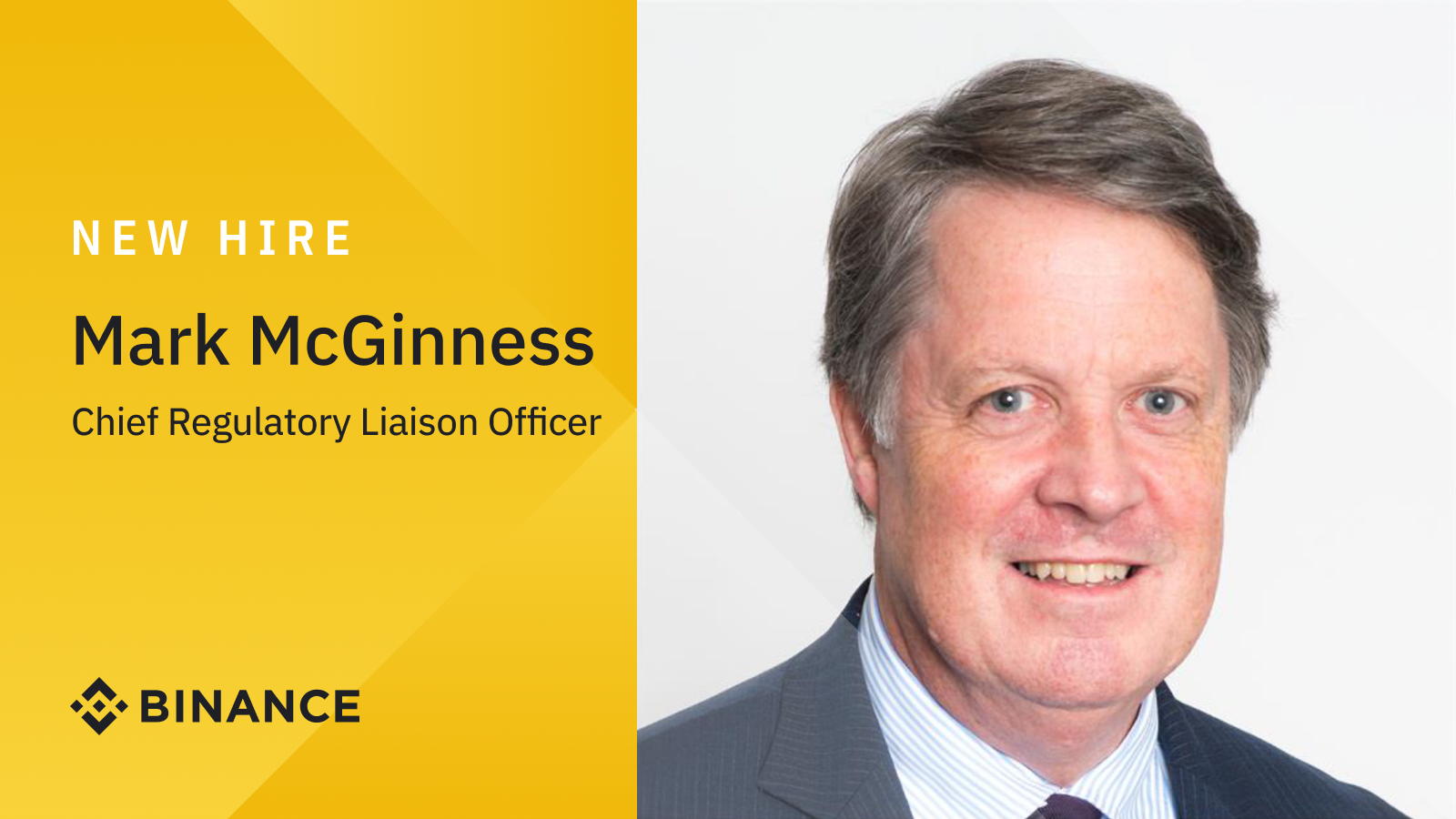
Binance, the world’s leading blockchain ecosystem and cryptocurrency platform, has today announced the appointment of Mark McGinness, former Head of International Relations at the Dubai Financial Services Authority (DFSA), who joins the organization as its Chief Regulatory Liaison Officer.
Following a commitment to lead the industry in working more closely with regulators as it charters a path forward to become a financial institution, Binance has grown its international compliance team and advisory board by 500% since 2020. Recent appointments include Greg Monahan, former US Treasury Criminal Investigator, as Global Money Laundering Reporting Officer (GMLRO); as well as Tigran Gambaryan and Matthew Price, both former Special Agents of the Internal Revenue Service (IRS), as Global Intelligence and Investigations and Senior Director of Investigations, respectively.
Mark has over three decades of experience as a leading financial services regulator, working with industry stakeholders, international regulators and regional securities and insurance commissions. In Mark’s previous role leading international engagement for the DFSA, he was instrumental in establishing a global network of over 85 regulators and settled 100 Memoranda of Understanding for the financial center. Mark also held the position of the DFSA’s Chief Decision Maker, deciding on matters referred by its Enforcement division.
Prior to joining DFSA, Mark was Head of International Relations and Advisor to the Chairman of the Australian Securities and Investments Commission (ASIC), where he was responsible for its international engagement and advising on ASIC’s commitment to global standard-setting. Mark has also held advisory positions as a subject expert for the International Monetary Fund (IMF) and the World Bank.
“Mark is one of the most respected regulators and compliance experts in the industry. He brings with him over 30 years of invaluable experience working alongside key stakeholders in the financial services industry," said Binance CEO ‘CZ’ Changpeng Zhao. “Mark joining our leadership is not only a huge step forward for Binance, but the industry as a whole, as we work to grow the industry responsibly with the support of regulators and policymakers across the globe.”
“The rapid mainstream adoption of blockchain and crypto technology signals a need for a deeper understanding and appreciation among governments, regulatory bodies and users alike,” said Mark. “I aim to bridge this divide through working closely with industry leaders and policymakers to not only set best practices and regulatory frameworks, but also broaden their understanding of this dynamic industry.”
- 08:00 am

Innovations in sustainable finance and digital transformation, alongside important initiatives in transparency and regulation, will help reinvigorate Africa’s financial markets as they recover from the impact of Covid-19, according to research in the latest African Financial Markets Index from Absa and OMFIF.
- Out of 23 countries in the index, 19 score lower than last year. This decline reflects more difficult market conditions, methodological changes and the inclusion of environmental, social and governance indicators in the index. Despite the fall in scores, few examples reveal an underlying deterioration in the policy, regulatory or developmental environment in any of the index countries.
- The inclusion of ESG initiatives in the formal scoring highlights important developments and opportunities in this area, though at the cost of impacting the scores of those countries for which work is at an early stage. Only 13 countries in the index have ESG-focused policies in financial markets and nine countries have introduced sustainable finance products.
- South Africa, Mauritius and Nigeria maintain their lead in the index, though with scores slipping in 2021 for all three.
- Ghana and Uganda enter the top five for the first time, both earning points for progress in Pillar 6: Enforceability of standard master agreements.
- Nigeria gains the lead in Pillar 3: Market transparency, tax and regulatory environment. Namibia maintains its lead in Pillar 4: Capacity of local investors, while Egypt tops Pillar 5: Macroeconomic opportunity. South Africa remains on top for Pillar 1: Market depth and Pillar 2: Access to foreign exchange. It ties for first with Ghana and Nigeria in Pillar 6: Enforceability of standard master agreements.
The index measures financial market development in 23 countries from across the African continent, highlighting economies with the most supportive environment for effective markets. The aim of the index is to show how economies can improve the market framework to bolster investor access and sustainable growth, and act as a benchmark for investors and policy-makers.
As a reflection of the global push towards sustainability, this is the first year that the index has included ESG indicators. The availability of sustainable finance products, such as green bonds and equities, now contributes to countries’ scores for Pillar 1: Market depth. The index also scores countries on policies that promote ESG initiatives in financial markets for the first time.
The introduction of these sustainability-focused indicators weighs down the scores for many countries in the index as developments in this area are often at an early stage. The average score in the index fell to 46.4 out of 100 in 2021 from 50.8 in 2020, reflecting markets’ muted performance in these new indicators. However, the new measures serve as targets for countries to work towards.
Charles Russon, chief executive of corporate and investment banking, Absa, said of the index’s findings: ‘While some might find it disheartening to see the average score across the board drop, Africa is navigating an extremely tricky economic atmosphere. Recovery from the Covid-19 pandemic has not been as straightforward as we would have hoped last year, and this has had a large impact on the twin challenges the continent faces in reinvigorating financial markets post-pandemic, while strengthening market infrastructure.’
‘However,’ he continued, ‘We’ve seen a lot of positive progress in countries’ efforts to upgrade market infrastructure and regulatory support through the development of technology-based tools which will help future-proof Africa’s financial markets. With countries using innovation to boost local markets and build a broader investor base, there are plenty of reasons to be hopeful about the future of Africa’s macroeconomic landscape.’
In Pillar 1: Market depth, scores dip by an average of 1 point to 40.5 from 41.5 in 2020 due to lower equity market turnover, which has persisted since the onset of the Covid-19 pandemic. While market capitalisation rose in almost all of the countries in the index, it was not enough to offset weak trading activity. Only nine countries have introduced financial products that can be classified as ‘green’ or ‘sustainable’, with green bonds available in seven countries, either on exchanges or over the counter. Kenya and Morocco score highest in this indicator for having green or sustainable bonds, equities and mutual funds in their markets.
Foreign exchange reserves grew by 24% in Pillar 2: Access to foreign exchange, with South Africa coming first and Eswatini moving up 11 places. However, a lack of liquidity in the FX markets, as measured through interbank figures, weakened across almost all countries.
Nearly all countries’ scores declined in Pillar 3: Market transparency, tax and regulatory environment due to lower marks in capital market development. Poor performance on the new indicators that look at incentives for issuance of sustainable financial instruments, integration of sustainability factors in financial market standards and adoption of climate stress testing also contributed to the decline.
Namibia tops Pillar 4: Capacity of local investors once again, earning full marks for having a deep pension market relative to the size of its population and securities market. However, weak potential on the part of the domestic pensions market meant that 19 countries failed to score over 50.
Countries generally performed best in Pillar 5: Macroeconomic outlook, achieving an average score of 62. Egypt regains the lead – which it lost to South Africa last year – propelled by strong gross domestic product growth in 2020. The macro impact of the pandemic continues to be felt in this sector with economic growth for many countries subdued and public finance showing strain.
Ghana, Nigeria and South Africa earn full points in Pillar 6: Enforceability of standard master agreements. Mauritius, Uganda, Zambia and Malawi miss out on joining these countries at the top of the pillar by not yet fully adopting standard master agreements.
‘The index is evolving to stay relevant, recognising the greater role that sustainability plays in market development, as well as the importance of mitigating climate-related risks to the financial system, especially for African countries that are more vulnerable to the effects of environmental deterioration,’ said David Marsh, chairman of OMFIF. ‘Innovations in sustainable finance and market infrastructure will be critical to ensuring that African markets remain competitive and future-proof.’

Garry Jones
CEO at NovaFori
Carbon credit trading is playing an increasingly important role in supporting green initiatives and helping companies meet ambitious goals for reducing greenhouse gases see more
- 05:00 am
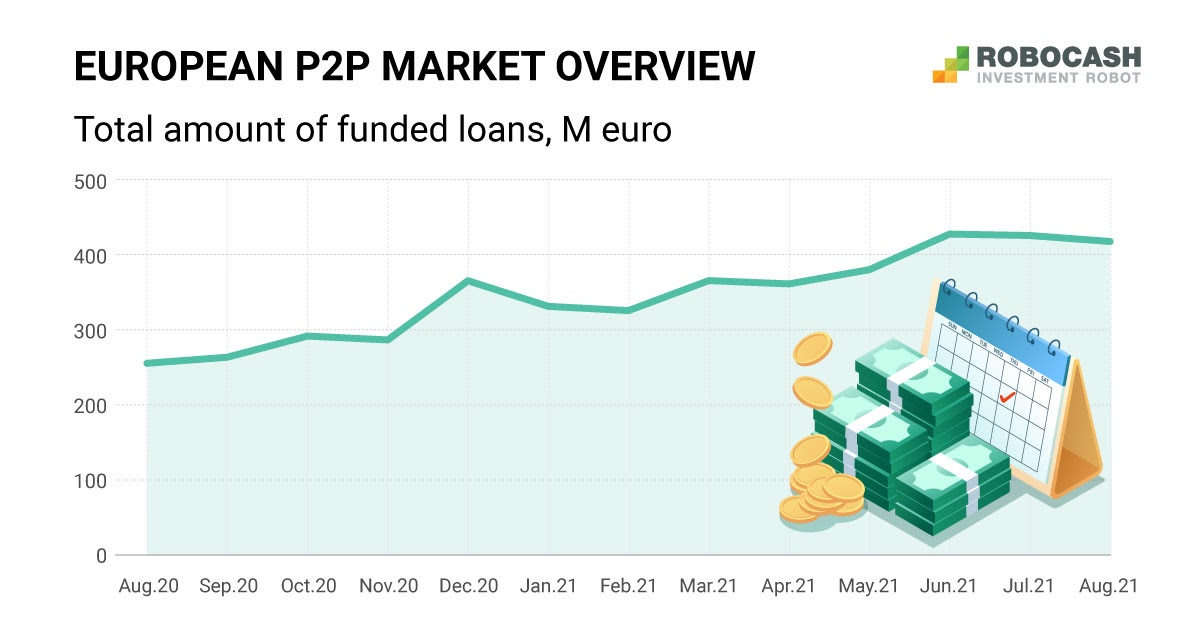
To assess the growth rate of P2P platforms, Robocash analysts studied 43 platforms that are present in 16 European countries and operating mainly in the consumer and business segments.
The funding volume on platforms of Belgium, Bulgaria, the Czech Republic, France, Ireland and Croatia has grown by an average of 16% over the past year*. What these P2P players have in common is that, on average, they fund loans of 3 to 14 M euro per month and have a long track record.
The Polish platforms passed the coronavirus period most easily, with a maximum drop of 11% in the acute period . “This trend could be explained by the low market presence. On the one hand, it reduces the risks of a sharp downturn, but on the other hand, it also limits growth opportunities”. - comment on the situation Robo.cash analysts.
A sharp decline and high growth after the main wave of the coronavirus was observed by the Belgian platforms. “It is possible that such dynamics happened due to the small volumes and high volatility of these platforms. - add specialists. "These platforms easily react to any positive or negative trend in the market, because of which panic could have a strong impact. However, the volumes would return to the previous level as the market recovers."
In general, the influence of the registration locality on the activities of the P2P platform itself is low. In part, this can be expressed in the population characteristics, if the platform operates directly within the country and issues loans to its citizens or businesses.
“Regardless of where the platform belongs geographically, the market is largely driven by general trends. However it is very likely that the P2P platforms of the countries noted above will continue to develop at an outstripping pace. Thus, in August 2021, Robo.cash volumes increased by 139% compared to August 2020, representing the Croatian market trend,, which is higher than 63% of European P2P platforms", - the analysts summarize.
* for the year, the period from August 2020 to August 2021 is taken

Elina Mattila
Executive Director at Mobey Forum
Having already swept through numerous industries around the world, the sustainability revolution is now taking the banking sector by storm. see more
- 02:00 am
Crown Agents Bank accelerates global growth and expands into new markets with MuleSoft
● Increases payment processing capacity by more than 3,000%
● Reduces delivery of new integration projects from months to just days
MuleSoft, provider of the world’s #1 integration and API platform, today announced that Crown Agents Bank is using MuleSoft to digitally transform its core payments services and accelerate business growth. Crown Agents Bank is a UK regulated provider of wholesale foreign exchange (FX) and cross-border payment services, connected across frontier and emerging markets. Crown Agents Bank is committed to delivering connected experiences across its digital payments and mobile money services to meet the increasing needs of its customers. With MuleSoft, Crown Agents Bank is able to seamlessly connect to fintech partners and scale faster, increasing the number of payments it can process by more than 3,000%.
“Our primary objective is to drive financial inclusion in areas of the world that traditionally don’t have access to financial services,” said Osita Ngene, Enterprise Architect Lead, Crown Agents Bank. “Scalability is key to serving a wider market. We also need to be able to work with local fintech partners like digital payment providers, mobile wallets, and aggregators, who have a footprint in the markets we serve. That’s why APIs have become critical, giving us the flexibility to scale up our own systems rapidly and connect with those of others to offer payment services wherever they’re needed.”
Building a composable, digital bank
Crown Agents Bank previously relied on custom code that created tightly coupled, one-off integrations between front-end services and its core banking systems. As the bank built out and scaled its digital initiatives, it needed a new process that would adapt to changing market needs, such as handling higher transaction volumes. With API-led connectivity, Crown Agents Bank has transformed into a composable digital bank that can seamlessly connect with its ecosystem of fintech partners and quickly scale up capacity to support its continued expansion into new markets.
Initially, the architecture team built an API to integrate two core processing services to support its move into payments and FX. This enabled Crown Agents Bank to create an in-house sanction screening capability, so it could handle a higher volume of small transactions without increasing the risk of money laundering. With MuleSoft, Crown Agents Bank can now safely process 1,900 transactions in just five minutes.
Rapidly expanding into new markets
In 2019, Crown Agents Bank acquired Segovia to offer its customers a payment gateway to frontier and emerging markets. Segovia’s mobile money solutions and modern payments infrastructure are central to Crown Agents Bank’s plans to accelerate its expansion into new markets, such as Africa. By building APIs on MuleSoft, Crown Agents Bank seamlessly integrated Segovia’s payment gateway with its core banking systems and other internal and third-party payment services. This has enabled the bank to increase the number of payments it can process from 1,500 per day, to 50,000. In the future, these APIs will enable Crown Agents Bank to become less reliant on its legacy systems, providing a further boost to digital agility.
Accelerating digital innovation
MuleSoft has enabled Crown Agents Bank to speed up innovation across its business by reusing the APIs it creates across multiple services. To support this, the bank has adopted an API-led approach, building around 30 APIs. Approximately 90% of these APIs can be reused to power additional experiences beyond their initial use-case. MuleSoft’s API monitoring capabilities are also helping Crown Agents Bank to manage the performance of these integrations as it continues to expand in new markets, enabling it to predict periods of high demand.
“MuleSoft has been invaluable in helping scale up our business and accelerate growth,” continued Ngene. “The ability to decouple our services from legacy infrastructure and integrate them more seamlessly with new technologies is allowing us to future-proof our digital capabilities. We’ve also seen a significant reduction in costs and accelerated project delivery dramatically. We’re able to complete digital initiatives in weeks, or just days, instead of months. That’s time our developers and architects can now invest in more strategic projects, which helps to accelerate our expansion into new markets and offer even better services to our customers.”
To hear more about how Crown Agents Bank is scaling its payments services with APIs, register for the MuleSoft EMEA Financial Services Summit, taking place virtually on 17th November 2021. For more information, visit: https://www.mulesoft.com/events/mulesoft-emea-financial-services-summit-171121
- 07:00 am

Sai Perry provides extensive technology solutions and asset management expertise
Clearwater Analytics, the leading provider of SaaS-based investment accounting, reporting, and analytics solutions, announced today that it has appointed Mr. Sai Perry as Head of Solutions, Europe and Asia. He will lead the solutions group that help clients streamline and future proof their operating model to meet their growth ambitions.
Clearwater’s Europe and Asia solutions team is based across London, Paris, Frankfurt, and Singapore. Based in London, Mr. Perry reports to Gayatri Raman, President of Europe and Asia.
He was most recently a Director at PwC in London, where he set up and led the Asset Management technology team that serviced clients globally.
“Sai brings a wealth of knowledge and perspective in the Insurance and Investment management industry. Our clients will benefit immeasurably from his intrinsic knowledge and experience honed from both a product and consulting background. I am thrilled to welcome Sai to the leadership team for Europe and Asia,” said Gayatri Raman.
In previous roles, Mr. Perry served as an Advisor in the EY Advisory Wealth and Asset Management practice and was an investment management consultant at KPMG. He has led several successful global technology transformation programmes for asset owners and managers including Target Operating Model design for the implementation of multiple platforms and has also led successful client implementations at a number of fintech software companies.
During his tenure within consultancy and the software industry, Mr. Perry has consulted for multiple clients where he has successfully delivered more than 15 global transformations across Europe and Asia.
“I am excited to be joining an ambitious company, filled with enthusiastic and talented individuals who are committed to providing unparalleled transparency in investment accounting, reporting, and analytics,” said Sai Perry. “Clearwater is disrupting the investment landscape and I look forward to working with my team to enhance our customers’ experiences and help them find effective solutions to complex market challenges.”
- 08:00 am
The strategic partnership will allow both parties to shine, bringing a fintech startup to Ondato’s roster and a better experience to Nexpay’s customers
Nexpay, the banking infrastructure provider for the digital assets industry, has partnered with Ondato, running all KYC, AML, and e-signature processes through Ondato’s compliance management platforms. Nexpay will gain an increase in security and usability for its customers while Ondato continues to show that its compliance platforms are suitable to the most demanding use cases, such as the quickly developing and fraud-prone world of digital assets.
The birth of Bitcoin marked the beginning of an era for digital assets, and with this milestone now only twelve years in the past, the industry remains one of volatile change. However, the heady days of completely unregulated crypto are rapidly coming to an end; the increasing legitimacy of digital currencies and digital assets paves the way for a number of companies to provide services in banking infrastructure, regulation, exchange, storage, and creation of this new form of value. At the same time, the pandemic-induced increase in online living has put added pressure on the ability of any business to conduct transactions online.
Ondato provides Know Your Customer (KYC) and Anti-Money Laundering (AML) software as well as e-signature services for a wide range of industries, including insurance, banking, e-commerce, and any other company that requires robust authentication protocols. Nexpay is a startup providing banking infrastructure such as accounts and payments to a wide variety of businesses working in the digital assets industry.
“I wouldn't say we’d be dead without Ondato, but basically we’d be dead,” said Nexpay CEO Uldis Teraudkalns. “The combination of robust security and white-label readiness that Ondato provides, as well as the fantastic customer service and ease of use of the platform, all stand out to us as industry-leading. Ondato gives me peace of mind, which allows me to focus on making Nexpay better at what it does best: helping build the next generation of financial technology businesses in the digital assets industry.”
“Ondato's principal mission is to create value by turning compliance into a business benefit, providing a service that passes the highest safety requirements,” said Ondato’s CEO and co-founder Liudas Kanapienis. “Our KYC compliance suite can dramatically cut down on any instances of fraud within Nexpay’s customer platforms. We're happy to bring another fintech industry member on board. This reassures Ondato's status as a trustworthy ally for future-focused industry members who want to organize their processes using modern and safe methods.”
Nexpay’s customized compliance services will include an automated ID verification system and an SMS signature. These will require a valid ID document, a selfie, and a phone number, creating a comprehensive solution that is simple enough for users but complex enough to be safe against fraud attempts.
- 09:00 am
- $52M from EQT Ventures takes Juni’s total Series A funding to $73M
- Funding to be used to launch new credit product
- Transaction volumes tripling month-on-month since inception in the run-up to this partnership
- Company to triple the size of team by the end of 2022, recruiting 120 employees across but not limited to; Engineering, Commercial, and Marketing functions
Juni, the financial companion for eCommerce entrepreneurs, has secured $52M in funding led by EQT Ventures, with participation from FJ labs and other existing investors to add to the $21M already raised from their Series-A round in late June this year. This boosts Juni’s Series A round to $73M and takes the total funding to date to $76M. EQT Ventures joins Partners of DST Global, Felix Capital and Cherry Ventures in backing Juni to disrupt online banking for internet-first business customers. The company will use the funds to triple the number of its employees and launch an industry-first, fully integrated credit line product to their users.
Founded in June 2020 in Gothenburg, Sweden, co-founders Samir El-Sabini (CEO), Jonathan Sanders (COO), and Anders Orsedal (CTO) have a winning combination of payment, banking, fintech and technical developer experience between them. As part of Juni’s mission to help eCommerce businesses grow faster, and starting with an initial roll-out in the UK, customers will soon be able to access short-term credit. This new offering will give entrepreneurs better visibility and control over their cash flow, while eliminating the arduous admin usually associated with credit repayments.
“Everything we do is designed to make life for internet entrepreneurs easier,” said Samir El-Sabini, Founder and CEO at Juni. “We’re internet entrepreneurs too, after all, and before launching Juni, we were in the industry that we cater to today! We understand their pain points and business needs in a way that traditional banking can’t, which in turn means we’re able to offer them a credit product that actually makes sense for them.”
The follow-on investment from EQT Ventures will allow Juni to build their product entirely in-house, in stark contrast with traditional banking platforms, which tend to offer credit solutions from outside partners. This means that Juni will be able to provide a fast, customer-centric offering, specifically tailored for eCommerce businesses to access short-term credit. To support this, Juni is accelerating its worldwide hiring of top talent for its credit team, with a plan to recruit 120 more employees in the next 12 months.
Ted Persson, Partner at EQT Ventures, stated: “Juni is the fastest-growing fintech we’ve ever seen, by a long stretch. The company has hit an impressive average weekly growth rate of 80% in just five months, and we're hearing great things from digitally-native entrepreneurs. The fact that we've known Samir for a long time, and rate him highly made the investment decision easy. We’re excited to help Juni bring a new kind of credit product to the market, disrupting banking platforms for businesses even further.”
Fabrice Grinda, Founding Partner at venture fund FJ Labs, added: “We invest actively in macro-trends, and powering the massive shift to eCommerce has been an integral part of our investments strategy for a number of years. Juni is a game-changing enabler for eCommerce and it is only natural for us to support their journey.”
In June this year, Juni raised a $21.5M Series A round led by Partners of DST Global and Felix Capital. The company counts several prominent business angels amongst its early investors, including NA-KD.com founder and CEO, Jarno Vanhatapio, and former iZettle Chief Communications Officer, Johan Bendz. Bendz has also joined Juni’s board alongside Niklas Thornestad, who was recently Klarna’s Global Head of Compliance.
- 01:00 am
Digital vouchers available for purchase at retailers within a one mile radius of 99% of the UK’s urban households
The digital gift card and voucher market is reported to have grown in the UK by almost £1 billion, now estimated to be worth £6.9 billion1. Recognising accelerating demand by consumers to shop digitally as well as physically, digital payments expert PayPoint is bringing its growing portfolio of digital voucher partners - Amazon, Neosurf, Xbox, PlayStation, PaySafecard and Love2shop - to consumers at corner shops and convenience stores across the UK.
These partnerships not only deliver greater accessibility to leading brands for consumers, but also offer its retailer network the opportunity to enhance its customer offering and drive increased footfall. Stores in the PayPoint retailer network include Sainsburys, Asda, The Co-op, Spar, One-Stop and independent local stores. More than 99% of urban households live within 1 mile of one of these locations.
In the coming weeks PayPoint will be rolling out a point-of-sale promotion at selected retailers to promote its digital gift card and voucher partners. The most recent Gift Card and Voucher Association (GCVA) State of the Nation report2 revealed that 44.6% of respondents stated they have made gift card purchases within the past three years influenced by displays in physical stores.
The report also confirms in-store redemption remains the most popular way to spend gift cards and vouchers in 2020 (55%), however this has decreased from 70% in 2019. 22% of respondents redeemed their gift card via mobile in 2020, up from 11% in 2019. These findings confirm an upward trend towards online and mobile redemption.
Danny Vant, Client Services Director for PayPoint said: "The digital gift card and voucher market has grown significantly in the last 18-24 months, largely driven by lockdown restrictions and consumer appetite to purchase online. However, this trend is not anticipated to abate, indeed, it's expected to increase by another 25% in the next decade1. It's vital we support our physical retailer network in capturing their share of this growing market, including increased customer engagement and revenue. Of course, the benefits are there too for consumers who now have greater accessibility to a wide choice of digital gift cards and vouchers for gaming, streaming, shopping and making digital payments."








