
Published
- 09:00 am

- 02:00 am

Northern Trust using enhanced version of Broadridge’s Global Proxy Solution and Shareholder Disclosure Hub
Broadridge Financial Solutions, Inc., a global Fintech leader, has announced it has delivered its full suite of Shareholder Rights Directive (SRD II) compliance investor communication solutions to Northern Trust. These solutions are in use across Northern Trust’s global asset servicing business.
SRD II sets clear objectives for intermediaries requiring transmissions of information between shareholders and companies. It has significantly impacted shareholder communications for all EU issuers, investors and intermediaries holding or servicing European equities around the world.
“A primary focus for us is to advise and support our clients through regulatory change,” said Justin Chapman, Global Head, Market Advocacy and Innovation Research at Northern Trust. “As we maintain this focus, we are pleased to leverage our long-standing relationship with Broadridge – whose team has been instrumental in defining a market-ready SRD II solution for all aspects of voting and disclosure throughout the communications chain.”
Demi Derem, General Manager, Investor Communication Solutions International, Broadridge, added, “Along with other leading global custodians Northern Trust has helped us shape the design and functionality of our new shareholder disclosure platform, which has been created to serve the needs of custodians and all financial intermediaries impacted by SRD II. We are delighted to expand our strong and collaborative relationship with Northern Trust across our full suite of SRD II solutions and look forward to collaborating further in the future.”
Northern Trust and Broadridge have explored a range of applications for digital technologies in recent years. The shareholder disclosure platform is the first in a suite of new investor communication solutions that Broadridge has developed in collaboration with Northern Trust and other leading banking organisations, taking ideas from concept to live production readiness in under 18 months. The platform utilises the latest digital technologies, DLT and APIs to provide real-time connectivity to issuers and financial intermediaries.
Northern Trust is also using Broadridge’s SRD II-enhanced Global Proxy platform, which supports same day meeting distributions, agenda translations, vote processing, vote confirmations and provides reconciliation tools for chain-of-custody clients.
- 02:00 am

Ebury’s Mass Payments division scoops gong at the 2021 Global Payroll Awards
● $23 billion in time-critical payments delivered over the last 12 months with clients able to pay in 140+ currencies to over 200+ countries and territories
Ebury, one of the largest fintechs in Europe, is delighted to announce that its Mass Payments division has been named the International Payments Provider of the Year at the industry trade body’s annual Global Payroll Awards.
The Global Payroll Association received a record number of submissions for this year’s awards, over twice the number as 2020 making the judging process even more difficult than usual.
Ebury’s nomination focused on its relentless focus on delivering maximum value for global businesses and a dedication to delivering outstanding levels of customer service. This high standard of attention is underpinned by substantial investment into operational platforms and ongoing technology development to provide a comprehensive, reliable payments solution.
Ebury offers financial solutions to help SMEs and midcaps trade internationally. It specialises in international payments and collections, offers foreign exchange activity in over 140 currencies for both major and emerging markets, as well as cash management strategies, trade finance, and foreign exchange risk management.
Founded in London in 2009 by Spanish entrepreneurs Juan Lobato and Salvador García, the company has grown its global market presence to a network of 24 offices in 20 countries and more than 1,100 employees. The volume of transactions executed by Ebury amounts to $21 billion annually.
Commenting on the Award, Owain Walters, Managing Director of Ebury Mass Payments, said: “I am delighted that our expert team have been recognised for their dedication to our clients through this Award.
“Processing domestic and global payments is a crucial function that employers cannot afford to get wrong. Employees, for example, rely on these services to ensure they are paid their salary every month on time and in full. Our best-in-class software and customer service enables us to be the trusted partner of choice in delivering these services.”
- 05:00 am

Singapore-based AI startup, Sentient.io, announced today that SEEDS Capital, the investment arm of Enterprise Singapore, has invested in its Series B1 funding round following co-investor, Real Tech Fund. The new funds raised will be used for scaling the platform and business expansion into Asia Pacific markets, especially to fulfil the surging demand for Digital Transformation from local and Japanese corporations.
Sentient.io is also backed by A*ccelerate Technologies, the commercialising and venture arm of Singapore's leading Agency for Science, Technology and Research (A*STAR), global technology venture capital team from BEENEXT and several Japanese companies such as, Digital Garage Group together with ABC Dream Ventures which is a corporate venture capital firm of Asahi Broadcasting Group Holdings Corporation and Real Tech Fund which is managed by Real Tech Holdings Co. Ltd out of Japan. To date, the Company has raised more than USD$7 million in investment since its inception in May 2017.
Mr Christopher Yeo, Founder and CEO of Sentient.io, said: "We are delighted that SEEDS Capital has participated in our Series B1 funding round following co-investor, Real Tech Fund. SEEDS Capital's strategic investment is in support of Sentient.io's market expansion plans for Japan and the rest of South-East Asia. We believe that Sentient.io's unique AI and Data platform will accelerate innovative solutions and bring these to the markets at a quicker pace. This will also help to fulfil our vision of benefiting humanity with augmented intelligence."
Ms Tan Kaixin, General Manager of SEEDS Capital, said: "SEEDS Capital is pleased to participate in the current fundraising round of Sentient.io, an AI-as-a-Service startup. Companies today are increasingly looking to leverage the use of AI technologies and Sentient.io's platform helps to accelerate the adoption of such AI-enabled solutions into existing business processes. We are excited to be part of the company's journey as they scale their platform into more industry verticals and overseas markets."
Sentient.io has built a unique AI and Data platform of over 60 AI functions that seek to short-circuit the development cycle of software developers by providing easy-to-use pre-trained AI microservices that are domain-specific. This will empower software developers to simultaneously develop their smart applications and embed advanced AI capabilities into existing workflows without wasting too much time on training AI models.
Sentient.io's AI & Data platform can help big data owners like governments and multinational companies to streamline collaboration within multiple teams of developers to keep all their AI algorithms and data in a central repository. This reduces IT complexity and keeps all their AI and data microservices in sync, and increases productivity in building prototypes and smart applications that are powered by AI and for data. For example, Sentient.io is helping analytics development teams in a local defence organisation to standardise access to APIs and data to enhance existing applications and generate new values from their data assets. Sentient.io. will continue to advance its AI capabilities and develop businesses in the Manufacturing, Logistics and Digital Economy industries as an AI service provider.
- 08:00 am

New report from Mambu and AWS forecasts embedded finance is worth $3.5 trillion to the retail sector amid Buy Now Pay Later boom
Embedded finance is set to be worth $3.5 trillion to the global retail sector, according to a new report titled ‘Embedded Finance: Who will win the battle for the next digital revolution?’. The research from cloud banking platform Mambu forecasts that the retail sector will account for 49% of the embedded finance market within the next ten years.
Retail lending alone represents almost a third (29%) of the embedded finance opportunity, with the digitalisation of retail services set to drive increased adoption of digital wallets and flexible finance options, such as point of sale lending and ‘Buy Now Pay Later’ services.
The report, which identifies expected sector uptake of embedded finance over the next decade, also illustrates growth opportunities in the healthcare and education sectors. Healthcare is forecast to account for 17% of the market, or $1.2 trillion, following a recent influx of tech companies that offer health-related payments and insurance.
Meanwhile, emerging opportunities in the education sector could see it account for 7% of the market, or $500 billion. This is driven by a booming education-tech industry and growing demand for lending amid record levels of student debt.
Mambu’s own research confirms that consumer demand for embedded finance is high in these key sectors. A survey of 3,000 consumers, carried out as part of the report, shows that 86% would be interested in purchasing groceries from a cashier-less store. Meanwhile 60% would prefer to take out a student loan directly from their academic institution rather than a bank.
In addition, 81% of consumers would be interested in purchasing health insurance via an app and, of these, almost half would be willing to pay a small premium for this mobile accessibility. The findings reflect the rise of ‘anywhere finance’ during the pandemic and the ability of digitally-enabled sectors to respond more quickly to changing consumer needs.
Eugene Danilkis, CEO at Mambu said: “We’re moving towards a ‘fourth industrial revolution’ where financial institutions need to take strategic decisions to fully capture the opportunities offered by embedded finance. One of our customers, ZestMoney, already offers its 6 million customers in India the ability to pay in installments, without the need for a credit or debit card. This allows them to leverage the banking infrastructure to acquire customers from different verticals while, at the same time, offering the hyper-personalised products that customers want.
“The report illustrates the size of the opportunity within grasp, but it means financial institutions like banks must think, act and be tech-empowered like fintechs. For banks to compete effectively, they must also invest in technology to build and enhance their own digital offerings.”
With the embedded finance industry set to be $7 trillion globally by 2030, the report from Mambu with commentary from AWS also highlights three key trends that will drive this growth:
Payments as part of the experience Businesses are increasingly using flexible payment options, such as Buy Now Pay Later (BNPL), to differentiate their offering, increase sales conversions, and empower buyers at checkout.
Growing popularity of Point of Sale (POS) lending financing The volume of instalment-based, flexible payments and instant credit options have increased significantly in the past five years, with an increase of 20% expected in 2021. This reveals a strong consumer demand for instant access to short-term borrowing.
Mainstream adoption of digital wallets As more people use their mobile phones to browse, buy and pay for products and services online, it’s forecast that digital wallets will account for 51% of e-commerce payments by 2024.
To learn more about the report, visit: www.mambu.com/aws-next-digital-revolution.
- 02:00 am

- Zopa Bank highlights three key questions for a fun yet financially responsible holiday season
- Zopa credit card spending increased 45% over Black Friday weekend
- One in two Zopa customers improved their credit score using Zopa tools
Digital bank Zopa has revealed customer spending on its credit cards increased by 45%, month on month, over the Black Friday weekend (25th - 29th November). The figures also indicate that the Black Friday frenzy has shifted earlier this year, with spending on Monday 22nd November more than double that of Cyber Monday (29th November).
In response to this, and figures seen from other providers, the bank is providing guidance on how consumers can take a balanced approach to their spending this festive season - to make sure that a great Christmas doesn't have longer term negative impacts on their finances. This includes measures to help them continue to protect or improve their credit score so that they can access credit at their best rates - 45% of Zopa customers improved their credit score using Zopa’s Borrowing Power tool in 2021.
As the Bank of England’s Money and Credit figures reveal, using tools like this will become increasingly important, as customers are returning to pre pandemic credit habits, taking on more debt than they’re repaying.[1]
Clare Gambardella, Chief Customer Officer at Zopa says:
“After the restrictions of the last two years and the disappointment of a 2020 lockdown Christmas, UK consumers want nothing more than to enjoy a fun and stress-free holiday season. But that doesn’t have to mean spending at a level which could put them in a worse position going into 2022.
It is especially important for card providers to help customers make sense of the more technical parts of lending like interest rates and credit scores, and to explain the importance of taking a medium term, responsible approach to credit in order to improve financial health
Using a tool like Zopa’s Borrowing Power can help customers to access their best possible rate on new credit, and keep on budget once they start using it. This will be particularly useful, given predicted interest rate increases in the New Year”
According to Zopa, consumers should ask themselves three key questions, before taking on credit:
- Do you understand your interest rate?
Ensure you’ve got the best rate before you start borrowing. Most people don’t know that credit cards often come with a range of APRs. The higher your credit score, the more likely you are to get approved for an APR on the lower end of the range, meaning you’ll pay less interest.
- Can you improve your credit score?
Understand what you can do to improve your score before taking on credit. This could include:
· Registering for the electoral roll
· Making sure your loans and other financial products are linked to your current address
· Maintaining a good level of disposable income
· Avoiding hard credit searches until you are sure you want to take a product
· Keeping your credit usage low
· Building resilience for a rainy day, by ring fencing a part of your credit limit for unexpected costs like bills or boiler breakdowns
Credit tools like Zopa’s Borrowing Power help customers to understand what rates they are likely to get based on their current score, and how they can improve that over time.
- Can you shop around to get a better deal?
You may find that shopping around helps you if you have a less established credit file. For example, Zopa’s partnership with ClearScore uses open banking technology to look at your real time financial situation rather than just your credit score. This allows Zopa to offer a pre-approved credit card to some users who may have previously been declined credit products due to their thin credit file.
Since the launch of the bank in June 2020, Zopa has attracted £850m in deposits into its fixed term savings accounts, issued 185,000 of its British Bank Award-winning credit cards becoming a top 10 credit card issuer, and more than doubled revenue per customer.
- 04:00 am
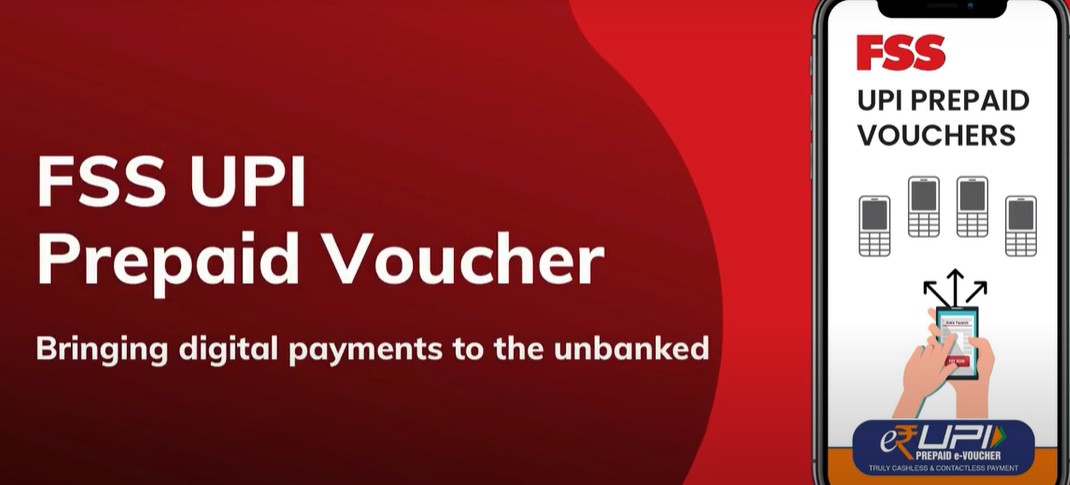
FSS (Financial Software and Systems), a globally leading provider of integrated payment products and a payments processor, has enhanced its Unified Payment Interface (UPI) Suite to support eVouchers to accelerate digital payments adoption among financially underserved segments. The UPI eVoucher enables customers to transfer funds for a specific purpose in real-time to any mobile number, regardless of whether the beneficiary has a bank account.
The pandemic has accelerated the switch to digital payments by an approximate five to ten years in India. Underlining the growing demand for digital payment, India’s UPI processes a record 3.5 billion transactions monthly and represents the fastest growing payment rails in India.
Currently the adoption of UPI services is restricted amongst customers of participant banks. With the e-Voucher bank PSPs would be able to exploit the ubiquity of mobile telephony to reach unbanked users. Currently India has 1.1 billion mobile users, of which 500 million are in rural areas . As the eVouchers can be sent over mobile phone networks, through SMS or quick response (QR) codes, it eliminates need for investments by customers or merchants in additional infrastructure. Payment service providers (PSPs) can launch a range of customer-centric propositions including payroll services, supplier payments, gift vouchers and more.
Speaking on the launch, Jaishankar A L, CEO FSS PayTech, said; “For three decades, FSS has been at the forefront of India’s digital revolution, enabling banks to build inclusive digital payment ecosystems that empower people, communities and economies. India’s UPI is globally recognised as the most advanced real-time payments infrastructure and accounts for an approximate 73% of total digital transaction volume within the country. The UPI platform is one of FSS’ flagship products and we are excited to launch the UPI eVoucher, enabling bank PSPs to bring new innovations that benefit multiple customer segments and strengthens India’s digital economy.”
For low-income, unbanked customers, the eVoucher functions as a source of funds and serves as an entry point into the digital system. The workings of the service are simple. To generate an eVoucher, customers can invoke the PSP’s UPI app or mobile banking app, specify beneficiary mobile details, amount, and merchant, where the voucher can be redeemed. At the backend, the FSS UPI system authorizes the transaction and transmits the voucher to the beneficiary’s mobile device in the form of a QR or a SMS numeric string.
FSS UPI platform is trusted by leading bank PSPs in the country. The FSS UPI platform supports standard interfaces for integration with third-party FinTechs systems. In addition, FSS UPI mobile SDK provides third party providers — banks, FinTechs, retailers, wallet providers – a quick out-of-the-box integration capability, for embedding UPI payments into existing apps. PSPs can launch a range of overlay services -- QR Payments, Split Payments, Request to Pay, Corporate Payments, Transit Payments and AutoPay. FSS supports licensed and As-a-Service deployment models in line with PSP business needs. The industry benchmarked UPI system can process 6,600 transactions per second, delivering an assured quality of service in the wake of constantly surging transaction volumes.
- 05:00 am

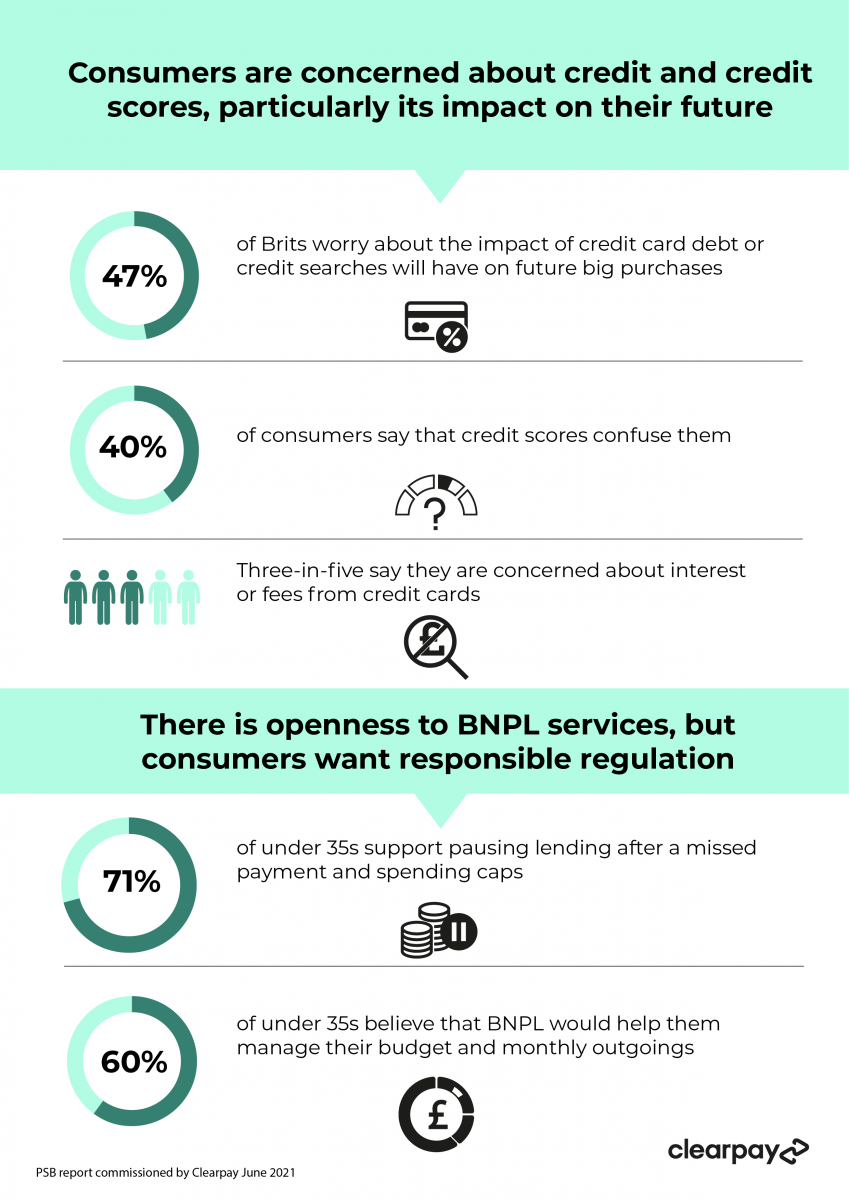
Two in five Brits are confused about credit scores, 62% are anxious about interest or fees and nearly half are concerned about how credit card debt or credit checks will impact their future
Following last month’s publication of the government’s consultation to regulate “Buy Now, Pay Later”, Clearpay, the leader in "BNPL" payments known as Afterpay outside the UK and Europe, has launched a new report to uncover consumer concerns around credit products in the financial sector.
The ‘Consumer Voices’ report, commissioned to get insight into Brits’ understanding of how credit products work, revealed that there is a lack of clarity around credit cards, and associated fees and debt - echoing many of the themes outlined in the consultation.
Clearpay believes that although regulation is required, a line needs to be drawn between BNPL and credit cards to ensure there is a clear distinction for consumers. BNPL does not operate in the same way as traditional credit, so it should not be regulated using rules created specifically for credit cards in the 1970s.
Credit cards are confusing
With two in five (40%) Brits admitting they are confused about credit scores, the research reveals that this stems from how credit cards work:
- Nearly half (47%) worry about how credit card debt or credit checks will impact them in the future;
- 36% worry about forgetting credit card payments;
- Nearly two thirds (62%) are anxious about credit card interest or fees;
- 50% believe that credit card payments come with unexpected charges.
In relation to financial protections, consumers value transparency on the total cost of the purchase including interest rates at different repayment rates (87%), fee-free early repayments (85%) and spending caps (81%) rather than credit scores and upfront payments.
BNPL emerges as a budgeting tool
In contrast to traditional credit cards, the research reveals that BNPL providers like Clearpay are offering a product that suits consumers’ spending needs. Consumers feel that BNPL services help them budget their monthly outgoings (47%), with over three-quarters (77%) of 18-34 year olds saying they would be more willing to sign up for a BNPL service, like Clearpay, that doesn’t charge interest.
Unlike credit cards, Clearpay displays a late fees disclaimer at checkout before a transaction is completed and does not report to credit agencies or impact credit ratings. In addition, spending limits only increase as positive repayment behaviour is demonstrated.
BNPL provides an opportunity for small, local businesses
The research also highlights the potential growth opportunity for small businesses if the appropriate payment methods are in place. More than three in five (61%) consumers say they would shop more frequently at local businesses if those businesses offered flexible payment options, such as BNPL.
Damian Kassabgi, executive vice president for public policy at Clearpay says, “As more and more payment providers offer ‘Buy Now, Pay Later’ services, it’s clear that the industry needs fit-for-purpose regulation that will offer consumers protection without stifling innovation. This is increasingly important given BNPL spend has grown by 300%, compared to stagnation for credit cards.
Clearpay’s view has always been that consumers will be best served by transparent products designed with strong safeguards and oversight from the FCA. Since our entry to the UK two years ago, we have made sure our consumer protections are at the core of our product offering, going above and beyond many of the measures announced by the Government.”
Clearpay user, Ema lives in Kings Cross, London. She is 49 and a single mum. She says, “Earlier this year, I moved from a one bed flat to a two bed and I needed to buy furniture. I had the money, but I wanted to spread out the payments, without earning interest. Using Clearpay helped me manage payments and meant that I could furnish my new flat while also paying the regular outgoing bills too.”
Ivan, mid-20s, lives in Salisbury and works a full-time job, he says, “I have two credit cards. Both of them with a £1,000 limit…sometimes they’re useful but it depends on what APR you’ve got on them. You need to be really careful with them because if you don’t know how to keep in budget and someone gives you literally £2,000 like this, you might spend all of it and end up in really big debt. I’m not worried about me because I know how my finances work really well.”
Andrew is a freelance sports blogger in his mid-40s and lives in Hinckley, he says, “When you’re coming up to the holiday period and you need to buy presents for your kids…it can be a very expensive time of year for parents so when you’ve got an option to pay for things, especially when it’s an interest-free option, so you can break down those payments over a month, two months... whatever it takes, then I think that’s a really good thing…”
Clearpay is transforming the way customers pay for products with purchases spread over four instalments, always interest-free. The service is completely free for customers who pay on time – helping people spend responsibly without incurring interest, fees or extended debt. Late fees apply for late payment instalments.
Click here to find out more about Clearpay.
- 05:00 am

H4 Chairman and Co-founder Joe Seifert to join Arteria AI as senior advisor
Arteria AI, an award-winning global leader in enterprise digital documentation, has agreed to acquire certain financial services assets of H4, an award-winning contract lifecycle management platform.
As part of the agreement, H4’s Chairman and Co-founder Joe Seifert will join Arteria AI’s team as a senior advisor.
Shelby Austin, CEO of Arteria AI, said: “This is a very exciting time for our business as we set out to unleash the power of data to help global financial institutions solve their client documentation challenges at scale. Since spinning out of Deloitte we have continued on an incredible growth journey accelerated by the market’s clear preference for data-first solutions.”
“It is a strategic decision for us to acquire certain financial services assets of H4 to expand our reach and super-charge our efforts. Joe Seifert will bring invaluable experience and expertise to our team. We look forward to working together to provide an unrivalled, data-first client documentation solution for global financial institutions.”
Joe Seifert said: “Arteria AI and H4 cover most of the top-tier of the financial services market and it made perfect sense to join forces. Having spent time with Shelby and the team, I’m very excited that the combination will support Arteria AI’s position as a leader in digital documentation transformation across the global banking sector.”
Arteria AI works with the world’s largest banks to accelerate their client documentation processes at scale. From document generation through signature and beyond, Arteria uses context-specific AI, data, analytics and automation to ensure that stakeholders across the bank are able to serve their clients more quickly. This can be a key factor in driving additional revenue and minimizing risk and cost.
The company’s co-founders Shelby Austin, Abrar Huq and Jonathan Wong have more than 30 years experience within the documentation space and were leaders within the AI community prior to launching Arteria AI in October 2020.
H4 will focus on its offering for the corporate market, outside of global banking. Rob Fagg, CEO, and Andy Byrne, COO, have agreed a management buyout of H4, continuing their roles and becoming co-founders of the new business. Joe Seifert will remain a minority shareholder in H4.

Barry O'Donnell
Chief Operating Officer at TSG
As the importance of cybersecurity has increased, so has our awareness of it. Poor cybersecurity has been identified as the most pressing threat to businesses today. see more








