
Published
- 04:00 am

Ideal’s trading performance analytics now available as a turnkey solution within Broadway’s secure environment
The Ideal Flow solution brings an unprecedented level of insight to fixed income trading. For the first time, FICC traders can easily review client transaction cost analysis (TCA), compare client profitability, and assess risk in both human and electronic trading. Ideal Flow enables traders to instantly visualize historical trends as well as drill down into trade activity millisecond by millisecond. Integrated market data provides valuable context on market share movements.
“In building Ideal Flow, we drew upon our firsthand experience leading trading desks and quant groups for over two decades in-house,” said John Crouch, Ideal CEO. “We translated our specialized knowledge of FICC dynamics and workflows into a user-friendly interface with intelligent curation built in. As a result, Ideal Flow is the only analytics solution that perfectly anticipates trading teams’ needs and illuminates the critical actions to help them trade more effectively. We’re excited to share the power of our decision intelligence with Broadway’s client base.”
Broadway CEO Michael Chin added, “For 20 years, Broadway has been helping our clients optimize their fixed income workflows, with high-performance trading solutions and exceptional customer experiences. The Toc, our core platform, enables seamless interoperability among essential tools — whether proprietary, third-party, or Broadway — giving our clients access to the full range of best-of-breed solutions. By partnering with Ideal, we are pleased that we can now offer our clients the sophisticated performance analytics of Ideal Flow, deployed seamlessly and securely within the Broadway environment.”
Together, Broadway and Ideal empower fixed income traders with the fully hosted SaaS trading and analytics solutions they need to optimize their workflows and performance.
- 05:00 am
As financial institutions struggle with antiquated risk and compliance systems, Hummingbird provides a platform that meets the complex demands of a modern financial system.
Hummingbird RegTech, a provider of risk and compliance technology, today
announced the company has raised $30M in Series B funding. The raise brings
the total venture backed funding total to $41.8M, and comes on the heels of
Hummingbirds $8.2M Series A in 2020. Since 2020, the modern financial system
has exploded with rapid innovation taking place as consumer and enterprise
behaviors shift with the pandemic. This new capital will allow Hummingbird to
uniquely meet the regulatory needs of the modern financial world by providing
a unique CRM designed for risk and compliance professionals.
Battery Ventures led the round with participation from Flourish, Homebrew,
FinVC, and William Hockey, co-founder of Plaid. The additional capital will be
deployed to expand the team, expand product capabilities, and bring the
platform to new markets around the world.
“We know financial institutions often struggle to update or replace older
technology. Hummingbird is designed to augment their existing tech stack and
streamline operations. The platform has resonated extremely well with many
top-tier financial institutions,” said Joe Robinson, CEO of Hummingbird.
“We’ve witnessed tremendous growth this year, and this next round of funding,
with the support of investors like Battery, will help us expand on the use
cases and support company growth.”
Ancient interfaces, overabundance of spreadsheets, scattered data, and
unmanageable inboxes of tedious paperwork are why the success rate of global
anti-money laundering controls is less than 1%, and the estimated amount of
money laundered globally in one year is 2 – 5% of global GDP, or $800 billion
– $2 trillion in current US dollars. It’s amazing any financial crime is
caught, and it’s a problem that needs a solution. One that Hummingbird’s
modern platform provides.
“We have been so impressed with Joe and the rest of the Hummingbird team, and
with the company’s innovative, cloud-based technology that helps financial
institutions and fintechs better protect themselves in a market that is seeing
rapid innovation,” said Michael Brown, a Battery Ventures general partner who
is joining the company’s board. “Battery’s experience backing a number of
prominent fintech players, specifically those in the compliance space,
reinforces our conviction that Hummingbird has a tremendous vision, and we are
excited to be part of their growth.”
Hummingbird gives organizations including Stripe, Coinbase, Evolve Bank &
Trust, and Upgrade a platform that allows them, for the first time, to
organize the data, processes, and insights needed to fight financial crime
much more effectively in a manner designed for the discipline through a
simple, easy-to-use product. Hummingbird helps drive down costs, improves
accuracy, automates financial compliance programs, and facilitates
collaboration and technological advancements. This raise allows them to
continue building out solutions for the industry.
For more information, visit https://hummingbird.co.
- 04:00 am
- One in four (26%) lenders currently use Open Banking, with adoption set to skyrocket in next two years.
- Around eight in ten (78%) lenders had to change lending criteria in response to the pandemic.
- 34% of lenders that changed lending during the pandemic now recognise the need to adopt new technologies across their business, and 30% saw an increased need for new data sources.
- 47% of lenders say Open Banking could help them save time and cut the cost of credit decisioning.
One in four lenders (26%) now use Open Banking technology, with 51% of those who haven’t yet used the technology planning to do so in the future. Nearly nine in ten (87%) of those say they plan to adopt it within the next two years, meaning that by 2023, seven in ten lenders (70%) overall are expected to be using Open Banking.
A new report published today by Open Banking credit reference agency, Credit Kudos, demonstrates the seismic impact of the COVID-19 pandemic on lenders’ appetite to invest in technology that gives them a comprehensive view of a borrower’s financial situation to enable better lending decisions - including affordability and creditworthiness.
The impact of the pandemic on lenders’ ability to operate as usual was profound. Credit Kudos’ report shows that around eight in ten (78%) lenders changed their rules about who they could lend to in the pandemic. Almost half (46%) of these lenders changed their policies because it was too difficult to verify borrowers’ income, for reasons including furlough and redundancies.
With 11.7 million people furloughed at some point during the pandemic, and unemployment at 5.2% in Q4 2020, more than a third (36%) of lenders changed their lending rules in order to avoid those deemed ‘higher risk’ customers during a period of huge uncertainty. This meant that lenders were missing out on new business, with 30% of those who changed lending policies during COVID-19 experiencing a loss of revenue from new customers.
Freddy Kelly, CEO of Credit Kudos, comments: “From national budget deficits to individuals’ current accounts, the colossal impact of COVID-19 on the nation’s finances was felt by all. In times like these, individuals and businesses look to their financial partners for support, but without up-to-date, accurate information on borrowers’ financial situations, many lenders struggled to continue to lend as they could previously.”
The study goes on to examine the role of the pandemic in changing lenders’ attitudes towards the way they equip themselves in the future to make the best lending decisions on behalf of their customers and themselves. 34% of lenders that changed their lending policies during the pandemic saw a knock-on effect in the form of an increased need to adopt new technologies across their business, and 30% saw an increased need for new data sources. Nearly half (47%) of all lenders surveyed believe that Open Banking could help their organisation save time and cut the cost of credit decisioning in the future.
Kelly continues “The seismic shock of the pandemic has forced a period of refocusing among lenders on the need for better sources of data, and greater technology integration to help them leverage newer data to enable better decisioning. Open Banking technology is helping lenders to move beyond the limitations of traditional credit data and open the door to better financial behavioural data, all of which creates more rounded assessments, increased acceptances and reduced defaults.”
Stuart Mogg, Associate Partner, Corporate Finance, EY, comments: “COVID-19 caused a lot of worry across both the consumer and SME lending sectors, and many lenders went into survival mode, increasing credit score cut offs and pulling higher risk product ranges. Thanks to various factors, including government schemes, increased vaccine roll-out, and the return of consumer confidence, both the consumer and SME lending sector have nearly returned to pre-pandemic norms and in some cases have pushed risk beyond these levels. But stability has not lasted long – already we’re seeing further COVID-19 and geopolitical volatility, and it is my view that we should not expect any less of a challenge during 2022 then we did in 2021. Periods of volatility such as this is when Open Banking insights become even more valuable for lenders, going beyond traditional credit bureau data to give a real-time feel of consumer and SME behaviours.”
London, UK, 10th December 2021: One in four lenders (26%) now use Open Banking technology, with 51% of those who haven’t yet used the technology planning to do so in the future. Nearly nine in ten (87%) of those say they plan to adopt it within the next two years, meaning that by 2023, seven in ten lenders (70%) overall are expected to be using Open Banking.
A new report published today by Open Banking credit reference agency, Credit Kudos, demonstrates the seismic impact of the COVID-19 pandemic on lenders’ appetite to invest in technology that gives them a comprehensive view of a borrower’s financial situation to enable better lending decisions - including affordability and creditworthiness.
The impact of the pandemic on lenders’ ability to operate as usual was profound. Credit Kudos’ report shows that around eight in ten (78%) lenders changed their rules about who they could lend to in the pandemic. Almost half (46%) of these lenders changed their policies because it was too difficult to verify borrowers’ income, for reasons including furlough and redundancies.
With 11.7 million people furloughed at some point during the pandemic, and unemployment at 5.2% in Q4 2020, more than a third (36%) of lenders changed their lending rules in order to avoid those deemed ‘higher risk’ customers during a period of huge uncertainty. This meant that lenders were missing out on new business, with 30% of those who changed lending policies during COVID-19 experiencing a loss of revenue from new customers.
Freddy Kelly, CEO of Credit Kudos, comments: “From national budget deficits to individuals’ current accounts, the colossal impact of COVID-19 on the nation’s finances was felt by all. In times like these, individuals and businesses look to their financial partners for support, but without up-to-date, accurate information on borrowers’ financial situations, many lenders struggled to continue to lend as they could previously.”
The study goes on to examine the role of the pandemic in changing lenders’ attitudes towards the way they equip themselves in the future to make the best lending decisions on behalf of their customers and themselves. 34% of lenders that changed their lending policies during the pandemic saw a knock-on effect in the form of an increased need to adopt new technologies across their business, and 30% saw an increased need for new data sources. Nearly half (47%) of all lenders surveyed believe that Open Banking could help their organisation save time and cut the cost of credit decisioning in the future.
Kelly continues “The seismic shock of the pandemic has forced a period of refocusing among lenders on the need for better sources of data, and greater technology integration to help them leverage newer data to enable better decisioning. Open Banking technology is helping lenders to move beyond the limitations of traditional credit data and open the door to better financial behavioural data, all of which creates more rounded assessments, increased acceptances and reduced defaults.”
Stuart Mogg, Associate Partner, Corporate Finance, EY, comments: “COVID-19 caused a lot of worry across both the consumer and SME lending sectors, and many lenders went into survival mode, increasing credit score cut offs and pulling higher risk product ranges. Thanks to various factors, including government schemes, increased vaccine roll-out, and the return of consumer confidence, both the consumer and SME lending sector have nearly returned to pre-pandemic norms and in some cases have pushed risk beyond these levels. But stability has not lasted long – already we’re seeing further COVID-19 and geopolitical volatility, and it is my view that we should not expect any less of a challenge during 2022 then we did in 2021. Periods of volatility such as this is when Open Banking insights become even more valuable for lenders, going beyond traditional credit bureau data to give a real-time feel of consumer and SME behaviours.”
- 06:00 am
JCB Co., Ltd., Japan's only international payment brand, and Datachain has started a demonstration experiment on interoperability between different blockchains(*1) to build a "digital currency exchange platform".
In the near future, various digital currency and circulation platforms are expected to be launched, including those issued by the private sector in addition to the Central Bank Digital Currency (CBDC). As the existing fiat currencies are widely exchanged, it is essential to develop exchange functions that enable interoperability among digital currency platforms to make use of digital currencies. For now, the most common way to exchange digital currencies is to have a third party mediate the transaction. However, given the fact that blockchain was originally designed to be "autonomous and decentralized", it is highly likely that exchanges that do not rely on a third party will be widespread in the future.
As the first stage of the joint research, JCB and Datachain, which has expertise in interoperability technology, have been discussing the technical usefulness of a method for interoperability between different blockchains that does not rely on the trust of a third party (the Relay method *2), aiming to acquire the ability to exchange between digital currencies. Now, in collaboration with Datachain, JCB has started a demonstration experiment of interoperability between different blockchains to build a "digital currency exchange platform."
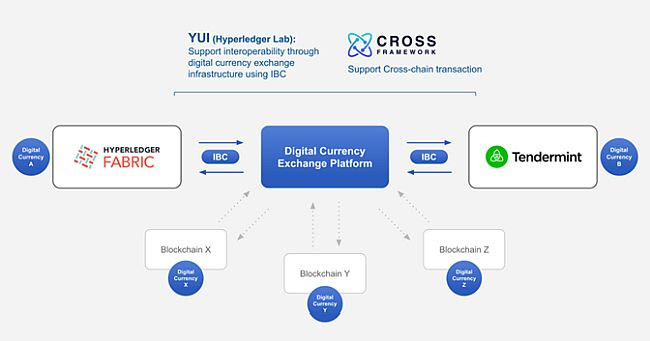
The purpose of this demonstration experiment is to verify the technical usefulness of introducing a hub structure using IBC (*3) for interoperability between heterogeneous blockchains through the Relay method.
By combining the assets and know-how of both companies, JCB and Datachain aim to continue to create innovative services and discuss widely with companies and projects responsible for the digital currency-issuing infrastructure for the practical application of interoperability between different blockchains.
The demonstration experiment will be conducted in the following environment.
https://www.acnnewswire.com/topimg/Digital_currency_exchange_platform.jpg
- Rather than blockchains verifying each other directly, verification will be executed between each blockchain and the exchange platform that serves as a hub, using a method that does not rely on the third-party trust by IBC.
- This Hub mechanism allows various IBC-compliant blockchains to verify each other through this hub. However, in this demonstration experiment, Hyperledger Fabric, one of the world's most used enterprise blockchains, and Tendermint, a blockchain used by CBDC and global stable coins as a blockchain developed to connect heterogeneous distributed ledgers, will be used as the blockchain infrastructures.
- We use YUI, a Hyperledger Lab (*4), as the verification modules and IBC for communication between each blockchain and the hub.
- For cross-chain transactions (simultaneous execution of multiple transactions across blockchains), we use Cross Framework (*5).
*1 Blockchain: Information technology that allows participants to share the same ledgers and record the transfer of assets and rights without a specific administrator.
*2 YUI, a Hyperledger Lab: A project to achieve interoperability across various blockchain platforms through IBC, led by Datachain and available in OSS as Hyperledger Lab. GitHub: https://github.com/hyperledger-labs/yui-docs
*3 Cross Framework: A framework for enabling the execution of smart contracts across multiple blockchains (cross-chain smart contracts). GitHub: https://github.com/datachainlab/cross
*4 IBC: Inter-Blockchain Communication. A specification standard to ensure interoperability between blockchains, being developed by the Interchain Foundation and the Cosmos Project.
*5 Relay method: There are two interoperability methods that do not rely on a third party to mediate transactions: the "HTLC method" and the "Relay method." The "Relay method" allows service users to automatically execute transactions without handing over their private keys to an administrator.
- 09:00 am

Antler has been invested in The UK since 2019, and plans to invest in at least 70 companies from its first fund.
The global venture capital firm’s core focus is backing tech startups at early-stage, but it will now also invest in companies from Pre-Seed to Series C.
Antler invests in both talented individuals and pre-seed stage companies through its cohort model. The next London cohort will launch in February 2022.
Investors & advisors include Eduardo Saverin's Light VC, the founders of Quantum Black, Monzo and Comply Advantage, as well as members of the senior teams at unbound, Babylon Health, Octopus Ventures, Collective Ventures, Blackrock, JP Morgan, PJT, Arctic Securities, and McKinsey.
Global venture capital firm Antler is set to enter 2022 in robust health, having closed its new UK fund beyond its initial target of $30m. This update follows the news that the fund has now raised over $300 across its funds at a global level. The UK fund was closed at £21.4m, following strong interest, which will allow Antler’s UK team to build a portfolio of around 70 companies in The UK.
After launching in London in 2019, Antler now has a total of 35 UK portfolio companies – 16 of which joined the portfolio in 2021.
The UK team is headed by partners Ollie Purdue, Antoine Poirson, and Veronika Patkai and invests across sectors. The UK portfolio includes nail care innovator Glaize; sexual wellness application Blueheart; AI powered healthcare marketplace Vamstar; the virtual team venue Unlock; and mortgage tech platform Mast.
“With the UK fund now closed, we’re really excited to be in a stronger position to support even more young businesses,” said Ollie Purdue, Partner of Antler London. “We are now aiming to double our capacity in the UK, helping more founders start their next business than ever before. We also have more exciting announcements coming soon – so watch this space.”
“We’ve grown our UK team with the head of partnership and a program associate, and looking to grow further in 2022,” Veronika Patkai, Associate Partner at Antler London. “We’re accepting applications for our fifth UK cohort, which starts in February 2022, and are looking forward to supporting the next phase of exceptional individuals, regardless of their background, origin and gender.”
“As we witness a real generational wealth divide, we are convinced that startups will play a key role in closing it. As such, we are investing a lot of effort and resources to close it” said Antoine Poirson, Partner of Antler London “First, by backing exceptional individuals, regardless of their background, origin, and gender. Second, by supporting our portfolio hire faster and more efficiently, giving them access to the wider Antler network. Third, by making investing in our funds more accessible to underrepresented groups, entrepreneurs, and women.”
Antler invests £120,000 as a first cheque in all of its UK portfolio companies that successfully complete the cohort, and holds capital in reserve for investing up to and including Series C.
- 04:00 am
Consumers continue to transact online and the trend is not diminishing
The pandemic-accelerated increase in digital transactions is here to stay and businesses must continue to transform their operations as they head into 2022. According to Experian’s latest Global Insights Report, there has been a 25 percent increase in online activity since Covid-19 and that number continues to hold steady.
“For the past 12 months, we've monitored the significant and sustainable shift toward ecommerce and digital financial services,” said Steve Wagner, global managing director of Decision Analytics for Experian. “The increase in digital activity has remained persistent, and consumers are staying online even with the return of physical shopping and banking.”
The study also found that as people begin to spend again consumer loyalty to online businesses is weakening. 61 percent of consumers say they are staying with the same online service provider they used prior to the pandemic. This a decrease of 8 percent from one year ago.
“Dwindling customer loyalty along with heighted customer expectations and increased competition could mean potential revenue loss or gain. Business must find solutions to improve digital engagement and customer acquisition,” added Wagner.
Companies are leveraging advanced technologies to improve the digital customer experience and grow their business including digital credit risk decisioning, passive authentication, artificial intelligence and more. According to our research, 90 percent of companies are investing in business automation, 76 percent are improving or rebuilding their analytics models and 65 percent intend to increase fraud budgets.
To develop the study, Experian interviewed 3,000 consumers and 900 businesses across 10 countries around the world including Australia, Brazil, Germany, India, Italy, Japan, Singapore, Spain, United Kingdom and United States on insights related to consumer and business economic outlooks, financial well-being, online behavior and more. This report is the fourth wave in a longitudinal study exploring the major shifts in consumer behavior and business strategy throughout Covid-19.
Additional findings from the report include:
§ Nearly 10 percent of consumers are spending more and putting less away in retirement or emergency savings than a year ago
§ Half of consumers (49%) conducted personal banking and payment activities online regularly
§ Adoption of AI has risen from 69% to 74% and machine learning from 68% to 73% in one year
§ 50 percent of companies are exploring the use of expanded data sources

Michael Moran
Senior Market Strategist & Trading Mentor at ACY Securities
Summary: Risk appetite increased after vaccine makers Pfizer and BioNTech said that a third shot may be effective in fighting the omicron variant according to results from a lab st see more

Clifford Bennett
Chief Economist at ACY Securities
US Mortgage Applications had very modest growth against a backdrop of a severe weakening trend. see more
- 08:00 am

– Murex completes transformational project with major city commercial bank institution in China –
Bank of Hangzhou has completed a successful go-live on the MX.3 platform in close collaboration with Murex, the global leader in trading, risk management and processing solutions for capital markets.
Bank of Hangzhou now uses MX.3 across asset classes for capital markets activities, from front-to-back-to risk management, leveraging a localized solution specifically packaged for the China market and eliminating the need for reconciliation across multiple IT systems.
“We are delighted about the partnership with Murex. The project was delivered on time and with the right quality. Our team is enjoying MX.3’s rich functionality around OTC derivatives pricing, risk management and collateral management. It is already allowing us to expand our business to additional foreign currency derivatives and exotic products,” said Mao Xiahong, board secretary and assistant president of Hangzhou Bank. “Our traders now benefit from a flexible solution that gives them confidence to roll out new products in a timely manner as the need comes.”
Moving to MX.3 has unlocked opportunities for Bank of Hangzhou across business segments, increasing straight-through-processing rates and empowering the bank to seamlessly manage market and credit risk, using a unified platform. Furthermore, Bank of Hangzhou has gained access to an extensive product catalogue and advanced market risk functionality.
On the regulatory side, going live on MX.3 enables Bank of Hangzhou to comply with current Basel requirements and has readied the bank for upcoming challenges such as Fundamental Review of the Trading Book (FRTB).
With Bank of Hangzhou, Murex further expands its large footprint in mainland China, proving once again that it has the right product and team to accompany local banks through their transformation ambitions.
Tarek Barada, managing director of Murex China in Beijing, said that players in the financial services sector in China and elsewhere are seizing new opportunities for digital transformation.
“Financial institutions like Bank of Hangzhou have taken proactive steps to modernize their IT platforms and meet various objectives, including greater risk management capacity and adaption to evolving regulations,” Barada said. “As another successful implementation, this project underscores our strong commitment to the China market for clients eager to adopt a unified, future proof platform.”
- 01:00 am
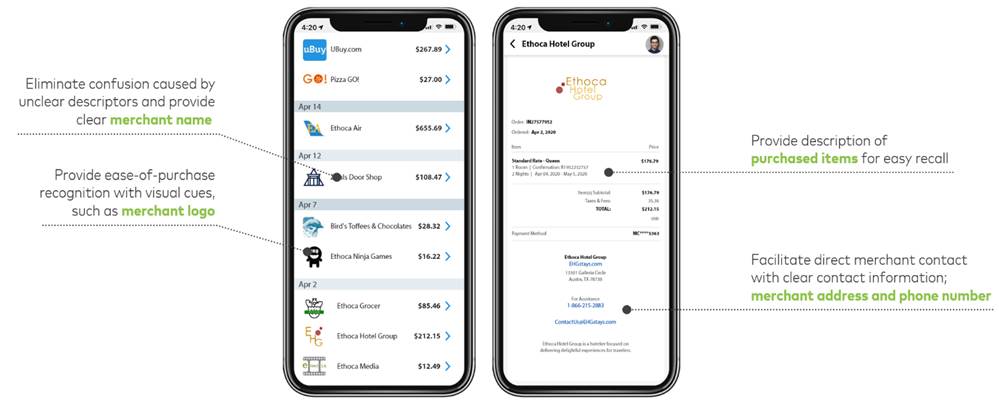
Better sharing of fraud and purchase details between merchants and issuers will enhance the customer experience
Nets, a leading European payment service provider, and Ethoca, a Mastercard company, today announced a new partnership that will help merchants and banks minimize chargebacks and reduce consumer transaction confusion. It will also help reduce cases of friendly fraud, which occur when a customer claims a legitimate charge as fraud – often because they simply do not recognize it on their bank statement.
The partnership will enable better sharing of confirmed fraud and dispute information – as well as rich purchase details – between Nets’ merchant and issuer customers. By sharing this information, the dispute resolution process is moved upstream and will ultimately help reduce chargebacks and create better customer experiences.
More transactions are taking place digitally today, making the ability to handle chargebacks and enhance transaction transparency increasingly important. For businesses, this also means mitigating the negative impact they may have on revenue and the overall customer experience. Chargebacks are estimated to total $35 billion globally in 2021 alone, and over 96% of customers want more information in their digital banking application(s) to help understand what they bought.
Robert Hoffmann, CEO, Nets Merchant Services, said: “We have extensive knowledge and experience in chargeback prevention and this partnership will further help us meet our customers’ needs, enabling us to continue delivering best-in-class solutions for issuers and merchants. It will allow us to provide confirmed fraud and customer dispute information to merchants for pre-chargeback resolution, significantly reducing their fraud and chargeback related costs. By preventing invalid disputes upstream, it will enable our merchants to act on real fraud and legitimate disputes much more effectively.”
Jason Howard, Executive Vice President, Ethoca, added: “This partnership with Nets extends our existing global network of merchant and issuer collaboration, helping us further reduce the costly issues of chargebacks and disputes, while helping deliver trust and transparency for the cardholder.”
Nets’ customers will gain access to Ethoca’s global network of fraud and purchase details in the following ways:
Fraud and Dispute Information:
- Issuers will be able to share their confirmed fraud and customer dispute information directly with merchants through Ethoca Alerts. Merchants will then be able to use those alerts for pre-chargeback resolution.
- Merchants can proactively act by resolving and/or stopping the order service, effectively preventing the need for a chargeback and subsequent loss in revenue.
Rich Purchase Detail:
- Issuers will gain access to merchant purchase details, such as clear merchant names, logos and even full digital receipts, which can be used to enhance their digital banking platforms or equip their back-office teams.
- Nets will be able to make digital receipt information available to issuers. Providing cardholders with this enhanced level of purchase detail directly through their bank will help reduce cases of friendly fraud caused by transaction confusion.








