
Published
- 02:00 am

JCB Co., Ltd. Japan's only international payment brand, and Keychain GK implement offline payments using near-field communication (NFC), self-sovereign identity, and blockchain technology.
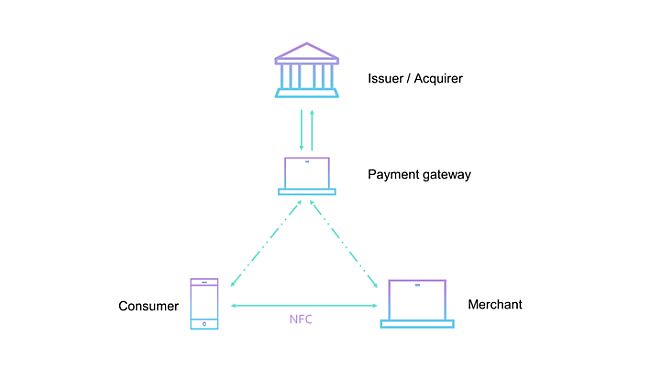
| Figure 1. Offline Payment Concept |
With the spread of 5G and the development of Internet of Things (IoT) devices, machine-to-machine payments will automatically execute contracts and make payments without human intervention, and possibly without network connectivity.
JCB and Keychain have developed the first payment infrastructure for machine-to-machine transactions that supports offline payments using NFC. Leveraging Keychain's blockchain and self-sovereign identity technology, the system addresses challenges related to the risks of operating through network outages and distributed attacks.
Overview
The new infrastructure allows payments to be conditionally accepted by merchants, even in the event that both the payer and the merchant are disconnected from the network, a scenario known as double offline. Notably, the shoppers' experience is as easy as swiping a smart watch at the store payment terminal with this system.
Under the collaboration with JCB, Keychain implemented the payment processing system using IoT devices, mobile phones, and smartwatches, and demonstrated the following:
1. Payments may be conditionally processed even during a double-offline scenario.
2. Payment processing consensus may be done over mixed networks simultaneously.
3. Upon network restoration, the offline transactions may be securely repatriated to online in batches.
The system uses NFC network protocol and leverages Keychain Core to support small IoT devices with, in principle, as little as 32 megabytes of memory.
- 04:00 am

A sizable majority of US consumers want to use a super app to house their digital activities in one place, per a new study from PYMNTS.
The study found that 67% of respondents would like to see at least two of their activities integrated in one place, while around 11% would like one app for managing their entire digital lives.
More on this: PYMNTS categorizes digital activities in 10 types called pillars, which range from financial services to leisure.
- For the super app report, respondents most often cited travel, entertainment, and shopping as pillars that they want to see integrated.
- The survey refers to banking as the Cornerstone Piller: Consumers engage with it the most, and it underpins activities for other pillars. PYMNTS also found that 69% of respondents use their bank or credit union’s mobile app, with 47.4% doing so at least weekly.
The report identifies three categories of engaged consumers who would be particularly receptive to super apps:
- Financial wellness seekers, at 18.08%, place value on having one location for accessing their bank accounts and conducting payments transactions.
- Information seekers, at 20.38%, want one ecosystem to aggregate information pertaining to “transactional activities” like entertainment, shopping, and traveling. This information would include offers and saved preferences.
- Convenience seekers, at 10.59%, would like to have one ecosystem that aggregates information that’s relevant to all 10 pillars.
Among generations in the report:
- Millennials were the most likely to fall into all three interested groups, with 35.5% identifying as Financial wellness seekers, 31.6% as Information seekers, and 45% as Convenience seekers.
- Generation Z was the least likely to identify with either cohort, with 13.6% as Financial wellness seekers, 17.8% as Information seekers, and 15% as Convenience seekers.
The opportunity: The report provides quantifiable proof of demand for super apps in the US. PYMNTS implies that the interested market includes 173 million people, based on the survey.
The demand for integrated digital routines is also consistent with what venture capitalist and internet pioneer Marc Andreessen has posited about business demand cycles: That vacillating user needs lead to repeated bundling and unbundling of products.
The interest in super apps demonstrates that consumers may view their current experience as too fragmented and complicated, and would prefer bundling their digital activities instead of conducting them separately.
- In Western countries, this demand will likely be met by financial services firms that take an additive approach, per our recent analysis of financial super apps. This would benefit companies such as US-based PayPal and UK-based Revolut.
- However, tech giants like Amazon, Google, Apple, and Facebook parent Meta are also in a strong position to venture into the space if they choose to augment their current offerings with financial services.
- 03:00 am
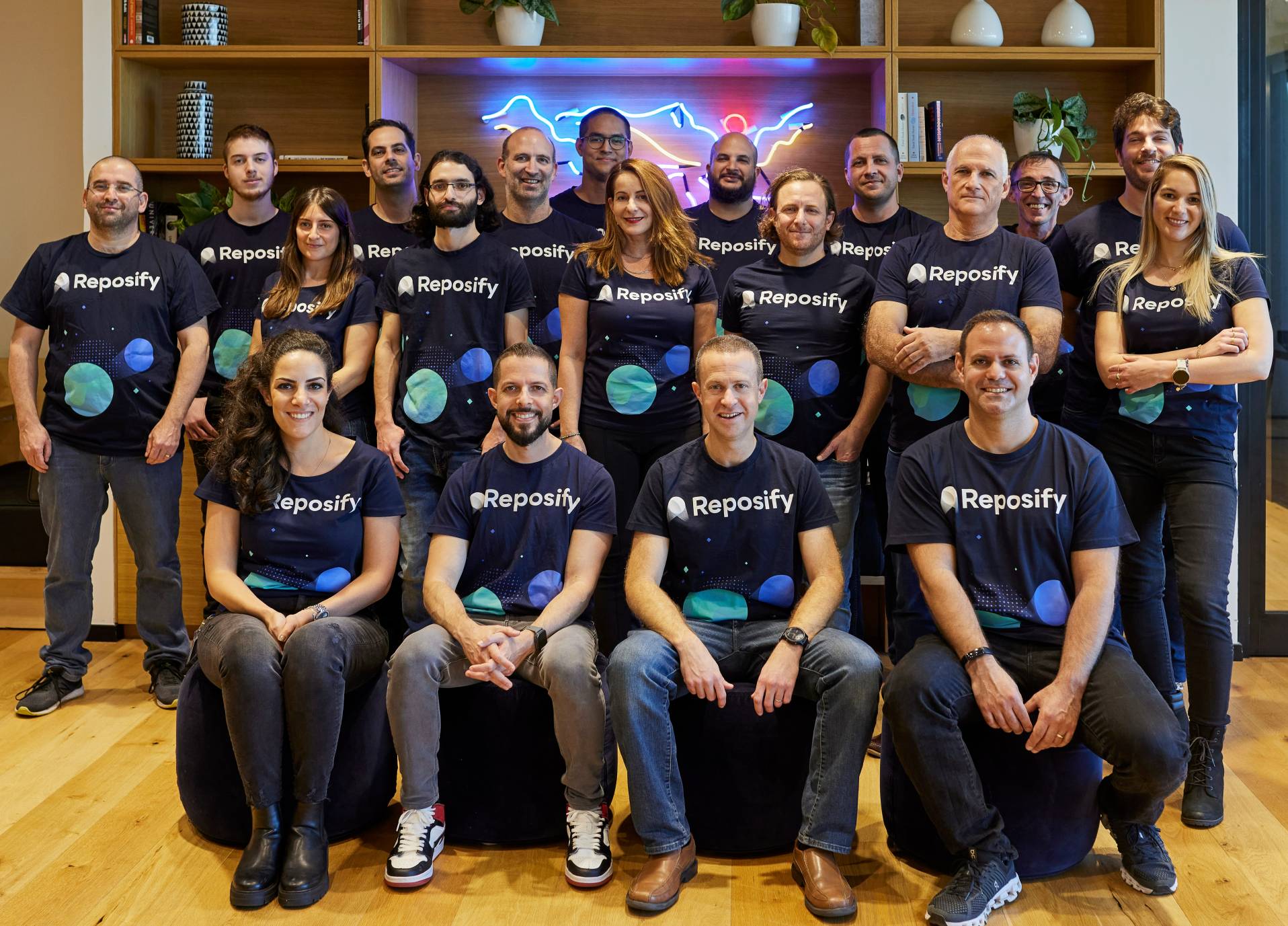
Organizations’ constant digital footprint expansion creates major security blind spots. Reposify delivers the only Google-like search platform that enables enterprises to safely evolve in the cloud by seamlessly detecting and managing all exposed internet-facing assets.
Reposify, a leading External Attack Surface Management (EASM) provider, announced today that it had raised seed round funding of $8.5M from two US-based VCs, Joule Ventures and First Rays Venture Partners, alongside several industry expert angels. Recognized by Gartner on its 2021 Emerging Vendors list for EASM, Reposify provides a platform enabling security teams to detect, prioritize, and manage all exposed internet-facing assets that are centralized or remote across on-premise, subsidiary, cloud, or third-party assets.
The need for visibility into external-facing assets and its related exposures has dramatically increased due to a growing number of digital transformation initiatives, such as shadow IT, weakening of the enterprise perimeter, and increased work from home options. Reposify created an algorithm that automatically identifies and associates every internet-facing asset with the organization that utilizes it.
SoFi CISO Hilik Kotler, an advisor to the company, said, “Reposify’s robust solution allows DevOps teams to work freely without compromising security. At the same time, it enables cybersecurity teams to identify and prioritize the risk of any web-facing asset. “Kotler added, “Now, teams can avoid ‘asset drift’ when deployments mature, providing an additional layer of monitoring and detection to better control infrastructure and security posture.”
Reposify’s Google-like search platform is seamless, requiring no installation or onboarding. “Reposify’s technology revolutionizes cloud security management. It is the fastest solution to prioritize and understand where security teams should be spending time and ensure nothing is left behind”, said Amit Sridharan, co-founder, and managing partner at First Rays Venture Partners. Reposify addresses this specific CISO pain point with a 24/7 engine that scans the entire internet, including internal assets, allowing security leaders to minimize alerts and data overload while remaining agile in protecting the entire IT network.
During the last year, Reposify has tripled in size and continues to expand its market reach. Recently, the company onboarded Uzi Krieger, an experienced business executive, as CEO to spearhead its growth. “These are exciting times, as Reposify is taking a key role in shaping the way companies move faster and easier while securing their internet-facing assets,” said Krieger. “This is the essence of security as a business enabler.”
The funding will enable the company to expand its R&D team to meet its customer’s growing needs and expand its activity in the U.S. market. Speaking of Resposify’s unique positioning, Dafna Winocur Biran, partner at Joule Ventures, said, “Reposify has a unique combination of top-notch technology, inspiring and seasoned leadership, and a real solution for an acute need that is only going to grow over time”.
- 04:00 am

Cabital, a trusted digital financial institution, today announced that it has integrated with Plaid to make it easy for users to securely and seamlessly fund their Cabital accounts.
As a result of the integration, Cabital’s users can now directly connect their bank accounts to Cabital to buy cryptocurrency with euros and pound sterling without leaving the Cabital platform - delivering a seamless user experience.
Plaid is easy and straightforward for people funding their Cabital accounts. Users can now simply input the amount of money they want to add on the funding page, select their bank, and then confirm their transaction. Now users can move on from the time-consuming process of switching between tabs and double checking banking information and enjoy a significantly more user-friendly, faster and easier way to fund their investments in Cabital. If you are residing in the U.K. or certain parts of Europe, then you can get faster funding starting today.
Cabital plans to leverage its integration with Plaid to enable new features and products that are currently under development for launch in 2022. Cabital is a trusted digital financial institution to buy, sell and earn cryptocurrency — generating up to 12% APY on Cabital’s Earn platform. The firm is registered in the Republic of Lithuania as a cryptocurrency exchange operator and a cryptocurrency depository wallet operator.
Raymond Hsu, Cabital’s Co-founder and Chief Executive Officer, said:
“As we continue to create a compliant and trusted digital financial institution where our customers can easily buy, sell and earn cryptocurrency, integrating with Plaid allows us to provide a faster, easier and more initiative user experience. Plaid’s data network enables our customers to connect their financial accounts at over 11,000 financial institutions across the globe and improves user identity verification and reduces fraud.
“Our expanding network of partners are important contributors to Cabital’s rapidly growing portfolio of talent, technology, and processes that will deliver an outstanding customer journey and as a result, increase Cabital’s revenue.”
Zak Lambert, Plaid’s Product Manager, said:
“Across the world people are embracing digital finance, particularly cryptocurrency, at higher levels than ever before. Companies like Cabital make that transition from traditional finance to cryptocurrency simple. With the help of Plaid’s payments products, Cabital and other fintech companies across Europe can enable people to easily and quickly pay and manage their finances online, however they want.”
Cabital recently partnered with BCB Group, one of Europe’s leading providers of business accounts and trading services for the digital asset economy, enabling it to incorporate GBP to its growing list of payment methods.
- 06:00 am
Collaboration shows the potential of VRP as the next phase of Open Banking in the UK, accelerating the adoption of faster, more secure payments.
TrueLayer, Europe’s leading open banking platform, has reinforced its reputation as an industry innovator by making the industry’s first Open Banking variable recurring payment (VRP) transactions with NatWest.
NatWest is leading the UK banking industry, having built and delivered its VRP API ahead of schedule, enabling TrueLayer to collaborate with them. The transactions, in a live environment rather than a sandbox, have shown that VRP works as intended before their introduction in 2022.
VRPs are an additional Open Banking API that the nine largest UK banks have been instructed to build by the Competition and Markets Authority (CMA) for sweeping. They support third party providers (TPPs) like TrueLayer to initiate a series of payments for a customer of variable amounts and at variable intervals , enabling the more efficient transfer of money.
This is a change to the current Open Banking status quo where TPPs can only initiate single immediate payments and customers have to authenticate each payment separately. The new requirement from the CMA means TPPs can provide recurring payments for any customer that banks with one of the nine biggest UK banks.
Daniel Globerson, Head of Bank of APIs at NatWest Group commented: “VRP is ground-breaking innovation that has huge potential to benefit consumers and businesses. It demonstrates the value of industry collaboration, which is crucial if Open Banking is going to evolve into Open Finance.”
Matt Parish, Product Lead for VRP at TrueLayer, added: “VRPs have been discussed for years as a missing part of Open Banking - now we need to test these APIs to be thoroughly prepared and ensure they deliver on their promise for consumers. It’s refreshing to see an innovator like NatWest grasp their importance so early on and embrace VRP. We’re proud to have collaborated with them on this important industry milestone. There is so much potential that can be unlocked with VRP that it would be hugely beneficial for non-CMA9 banks who see the value of building these APIs for their customers, to do so in similar timelines to the CMA9. We view it as just the beginning of an Open Banking revolution.”
- 04:00 am
FSS (Financial Software and Systems)), a globally leading provider of integrated payment products and a payments processor, and CSB Bank, one of the oldest private sector banks in India, have joined forces to deliver hyperlocal banking services to financially underserved segments. Under the aegis of this partnership, CSB Bank and FSS plan to open 1,000 Smart Cash franchisees in semi-urban and rural areas across India to expand financial services adoption among underserved segments.
Financial development has long been identified as a crucial accelerator for economic growth, as it increases the level of aggregate savings, investment, and employment. India is one of the fastest growing financial economies in the world. Several initiatives by the Government of India including the India Stack and the Jan Dhan schemes have facilitated greater financial inclusion in the country. Today the number of Jan Dhan accounts – approximate 440 million in the country. But many of these accounts are dormant. Smart Cash aims to address this challenge.
To bridge infrastructure gaps at the last mile and fast-track growth, Smart Cash will operate on a franchise model. With a vision of “Empowering a Billion Lives” by offering financial services, franchisees would be onboarded with a one-time fee and conform with Smart Cash’s business and operational guidelines for delivering a uniform services experience to customers.
Modelled on a Branch-in-a-Box service concept, Smart Cash franchisees, equipped with a kiosk or a Micro-ATM device, would offer affordable banking, investment, credit, and insurance products to target segments. The Smart Cash franchisees would function as a one-stop shop for products offered by CSB Bank as well as third party partner products – utility payments and domestic money transfers – improving commercial viability of the service for Smart Cash franchisees.
Powered by FSS eFinclusiv (AePS) at the backend, Smart Cash franchisees will extend interoperable banking services to customers of any bank. Customers, irrespective of the bank they hold an account, can walk into any Smart Cash franchisee to access services - using biometric verification and a social ID card (Aadhaar) linked to a bank account or through a debit card and associate PIN.
Commenting on the partnership, Narendra Dixit, Head- Retail Banking, CSB Bank said; “An approximate 800M Indians primarily live in a cash economy, and equitable access to digital financial services can bring prodigious benefits to people, businesses and the economy. Our vision is to build a universally available ecosystem for digital transactions to strengthen the financial capability of target segments. Our partnership with FSS provides us the right technology foundation to rapidly scale quality access, bring relevant products to the market and create more convenience for the customer.”
Speaking on the collaboration, V Balasubramanian, President FSS, stated; “For three decades, FSS has been at the forefront of India’s digital revolution by developing enabling payments infrastructure that connects people to financial services at scale. Even as account ownership is now universal in India, progress on savings, credit, and insurance is slow, limiting the usefulness of these accounts. We are delighted to partner with CSB Bank to further scale access to mainstream financial tools and products, empowering underbanked consumers to enjoy the benefits of India’s modernizing digital economy.”
At the backend, the technology infrastructure needed to process transactions must be scalable and extensible. The service is powered by FSS eFinclusiv (AePS) platform that processes transactions originating at Smart Cash franchisees. The platform is hosted on FSSNeT, FSS secure private cloud, with FSS assuming responsibility for service uptime, terminal management and monitoring, service upgrades, security, and compliance with regulatory mandates. An As-a-Service model provides a cost-efficient pathway to CSB Bank to rapidly scale and bring new innovations to the market by eliminating capital expense associated with in-house technology models.
- 02:00 am
Chris Forlano and Laura Hauser join Griffin as VP of Product and VP of Marketing, a perfect blend of digital banking experience and developer-first go to market strategy
Today, full-stack Banking as a Service (BaaS) provider Griffin announced the addition of two new members to its executive team: Chris Forlano as VP of Product and Laura Hauser as VP of Marketing. These appointments will support Griffin’s ambitious growth plans as it enters a critical phase in both the banking application process and the build of its technology platform.
“As an investor, I always look for companies that think big and have the stamina to disrupt entire industries, but building the right leadership is crucial to achieving this. I’m thrilled to have Chris and Laura join the executive team and bring their collective experience to foster growth at Griffin,” said Paul Forster, co-founder of Indeed and angel investor who led Griffin’s seed round.
Griffin is currently seeking regulatory approval to become the UK's first full-stack BaaS platform with its own bank license. The company’s core offering is a full-stack BaaS platform which will enable high-growth fintechs and global brands to quickly and seamlessly embed financial services into the user experience. Chris and Laura will further strengthen the company’s leadership team and bring Griffin closer to its goal of becoming the de facto operating system for embedded finance.
“Griffin’s full stack approach to BaaS brings best-in-class practices from the financial services world and an innovative approach to complex technology. Chris and Laura bring a wealth of experience from both industries that will help Griffin actualise its vision and support the many milestones ahead for the company,” Tom Mendoza, deal partner and investment advisor at EQT Ventures said.
Chris brings 25+ years of experience leading transformation in the banking, payments, and fintech spaces. He’s worked for some of the world’s largest financial institutions, including HSBC, NatWest, and Visa, and in early-stage startups, and he has shaped, designed, and delivered state-of-the-art digital banking solutions for both. At Griffin, Chris will lead the strategy and development of the company's ambitious full-stack banking platform, in addition to launching standalone products to address specific market pain points.
"I'm obsessed with shifting away from traditional banking models and toward financial transactions being a more implicit and intrinsic part of the consumer experience,” Forlano said, “I’m delighted to join a company who shares my passion for technology and drive to build the underlying banking backbone powering the next wave of fintech innovation."
Laura has worked for some of the most innovative technology-driven companies in the B2B space, including Atlassian, Nextroll (formerly AdRoll), and UK-based IT solutions company, Adaptavist, where she ran global marketing. She helped Atlassian grow its marketplace revenue from $100M to $250M and increased its developer relations footprint globally. She specialises in turning disruptive complex technology into accessible solutions that drive new value and enhance the customer journey.
Laura will lead Griffin's go-to-market strategy, bolstering the company’s brand positioning to attract new clients to scale the business.
“I have always been passionate about using disruptive technology to simplify the overly complex and to solve real business challenges. I'm thrilled to join a company that is reinventing the way we think about banking infrastructure and how it can enable a delightful user experience,” Hauser said.
David Jarvis, CEO of Griffin, added, “I am delighted to welcome Laura and Chris to the team. Laura’s expertise in developer-focused Software as a Service (SaaS) along with Chris' deep technical knowledge in the financial services space are both huge assets and I’m really excited about what they bring to the table.”
- 03:00 am

Appital, the Equity Capital Marketplace, is taking concrete steps in preparation for their platform launch, which will bring technological innovation and automation to equity capital markets and improve liquidity discovery and price formation processes of illiquid equity positions. The Appital platform allows buyside firms to gain greater exposure to deal flow opportunities they have not been able to access before, helping portfolio managers and heads of trading build a comprehensive picture of liquidity, including highly illiquid, small and mid-cap stocks.
After a successful BETA program, a first EMS integration with FlexTrade and the collaboration with Turquoise for execution and settlement, Appital is commencing the formal onboarding process for many of the largest global asset managers in the coming months.
Over 30 asset managers, who collectively manage over 30tn USD, are preparing to join Appital at launch, and are in the process of taking necessary legal and technical steps to take full advantage of the platform on day one. Once onboarded and integrated, the Appital platform will allow them to begin setting their preferences to proactively gain exposure to deal flow which is relevant to them.
“The pandemic saw asset managers focusing on their ability to ensure access to liquidity – the next stage will be focusing on how to best build on latent liquidity,” as Rebecca Healey of Redlap Consulting noted in The Trade, discussing her recent report “Liquidity in the Time of Covid”.
In addition, as Dr Robert Barnes, Group Head of Securities Trading & CEO Turquoise Global Holdings at London Stock Exchange Group recently said: “The price you tend to see for less liquid names on most stock exchanges is not necessarily the right price for large trade sizes. Appital, however, brings the right price for the right size. Through an EMS and STP into Turquoise, customers can take advantage of Appital’s innovation and access different countries as we continue to expand, achieving significant value-added.”
Mark Badyra, CEO of Appital, commented: “This is an exciting time for the business. Moving from BETA into legal onboarding, continuing the technology development and actively working on integration with more EMS Platforms as well as executing brokers is a culmination of a tremendous amount of effort from the Appital team. We look forward to continuing to work with our industry partners to realise our vision to bring innovation to equity capital markets.”
Badyra added: “Appital’s success to date is testament to the momentum we have built to meet the industry's clear need to access liquidity that is hard to find, often in excess of five days of Average Day Volume (ADV). The platform provides unique price formation capabilities of illiquid equity positions, allowing for execution with minimal market impact or risk of price erosion. ”
The client onboarding process follows a successful fundraise, which accelerates the expansion of Appital’s team as they move from BETA into the launch phase. The firm has been building out the technical team, recently adding Head of Product Mark Wharton, developers, senior engineers and security experts.
- 06:00 am

Temenos enables KAF to offer conventional and Islamic financing on a single platform and extend to full digital banking in the future
Temenos (SIX: TEMN), the banking software company, today announced that KAF, a well-diversified financial services conglomerate in Malaysia, has selected the Temenos Banking Cloud to launch a digital lending business. KAF will use Temenos Banking Services for retail loans and Islamic financing delivered on the Temenos Banking Cloud to offer conventional and Islamic products.
KAF’s ongoing expansion into the retail market reflects an urgent need for digital finance in Malaysia, with people and businesses facing economic hardship and lockdown restrictions limiting access to branches. By providing a seamless digital onboarding and origination experience, KAF aims to offer customers digital straight-through loan processing that focuses on better accessibility and affordability.
KAF’s ambitions extend beyond lending to include digitalization of a whole suite of financial products and services, including asset management, investment banking and stockbroking. With regulator approval, the Temenos Banking Cloud will enable the bank to quickly turn on new financial services to expand its offering and scale efficiently. The agility offered by the Temenos Banking Cloud to innovate and bring new products and services to market faster will give KAF a competitive edge.
Demand for digital financial services in Malaysia has surged since the start of the pandemic. In 2020, Malaysians conducted RM 460 million worth of mobile banking transactions – a 125% jump compared to the previous year. The government’s Movement Control Order acted as a catalyst, helping to add 3 million new mobile banking service subscribers last year, pushing e-wallet usage and adoption to new highs.
Jean-Paul Mergeai, President, APAC - EMEA, Temenos, commented: “We are proud to welcome KAF, a trail-blazing bank and the first in Malaysia on the Temenos Banking Cloud. There is a huge opportunity for digitalizing financial services in Malaysia and with our open banking platform, KAF is well-positioned to capitalize on that growth. With new entrants in the digital space, the ability to self-provision financial services at the click of a button will be a real competitive advantage for KAF.”
Thariq Usman Ahman, Deputy CEO, KAF Investment Bank, said: “We chose Temenos as we needed the agility and speed of a SaaS solution, and only the Temenos Banking Cloud offered the breadth of financial services functionality to meet our current and future needs. Critically, it enables us to bring together digital lending for conventional and Islamic products on a single platform and seamlessly extend to full digital banking services. With Temenos, we will lead the way in bringing new and exciting digital financial products and services to all Malaysians.”
- 03:00 am

Aerospike’s real-time data platform helps Criteo scale its global media business and significantly reduce costs
Aerospike Inc., the leader in real-time data platforms, today announced global technology company, Criteo (NASDAQ: CRTO), has selected Aerospike to deliver a digital transformation project that significantly improves the scale and performance of its global commerce media platform. The project will also see Criteo reduce its server count by 80 per cent, achieving millions of dollars of cost savings per year and reducing CO2 emissions.
Criteo is a leading global technology company that combines commerce data and intelligence to deliver digital advertising that enables marketers and media owners to drive commerce outcomes. Prior to Aerospike, Criteo combined an open-source NoSQL database with caching solutions. The Criteo platform needs to match an advertiser's content with an internet user’s interests 950 billion times a day and respond in just 50 milliseconds. These data loads and requests are continually increasing to deliver fast responses to help advertisers reach more consumers and grow their online sales.
To meet both new and future petabyte-scale demands, Criteo turned to the Aerospike Real-time Data Platform, which will cut its server count by more than 80 per cent for millions of dollars in annual IT savings.
“Our data demands are growing exponentially, and we need a real-time data platform that can handle our current requirements but ensure that we can adapt and scale for what lies ahead,” said Diarmuid Gill, CTO of Criteo. “The Aerospike real-time data platform takes us to the next level in terms of scale and performance and provides us with a standardised platform that ensures our customers can meet the rapid response times they demand both now and in the future.”
“In order to meet the latency needs of the Ad Tech industry every other solution needs a cache to sit on top,” explains Geoff Clark, Vice President EMEA, Aerospike. “That’s where Aerospike is different. Aerospike runs on DRAM and Flash, making it faster, more powerful and far less of a drain on server resources. If Criteo was to double its requirement for data tomorrow, it would still need less than a quarter of the servers it had before. This further demonstrates the ability of the Aerospike real-time data platform to powerfully perform at scale and still deliver significant cost-savings to business,” adds Clark.








