
Published
- 07:00 am

Industry veteran will lead regional team to meet growing demand
Provenir, a global leader in AI-powered risk decisioning software, today announced Emre Ünlüsoy has been appointed Regional Manager, following a year of record growth and continued global expansion. Ünlüsoy will oversee sales operations, business development and go-to-market strategies for Turkey, Middle East and the Balkans as Provenir responds to growing demand in the region.
Ünlüsoy brings extensive industry experience to his new role, having spent the last 15 years gaining expertise in analytics, decision management, credit decisioning and thwarting financial crime. Prior to joining Provenir, Emre served as a Country Manager at FICO, responsible for operations in Turkey, Middle East and the Balkans. He also held leadership positions at SAS, Experian, BAE Systems, and Teradata.
“Emre is an outstanding leader with deep knowledge and experience in credit risk decisioning in the region and has a proven track record of successfully building teams,” said Frode Berg, Provenir’s Managing Director of EMEA. “We are seeing unprecedented demand from fintechs and challenger banks for real-time credit decisioning. They recognize that Provenir’s AI-powered decisioning platform brings together the three essential components of data, AI and decisioning and is the industry’s first, true risk-decisioning ecosystem. Emre is uniquely qualified to engage with these innovators to create new market offerings.”
“Provenir has revolutionized how risk decisions are made to meet the ‘real-time’ expectations of today’s consumer,” said Emre. “I am delighted to be joining such a visionary team and helping organizations increase both the speed and accuracy of decision making.”
Provenir’s AI-powered risk decisioning software is the industry’s first, true risk-decisioning ecosystem for financial services organizations. It provides a comprehensive real-time view of unified decisioning-performance, third-party and historical data, as well as automated analytics. Through one unified digital experience, users can create the platform-as-a-service (Paas) cloud solution that best fits their business needs
- 07:00 am
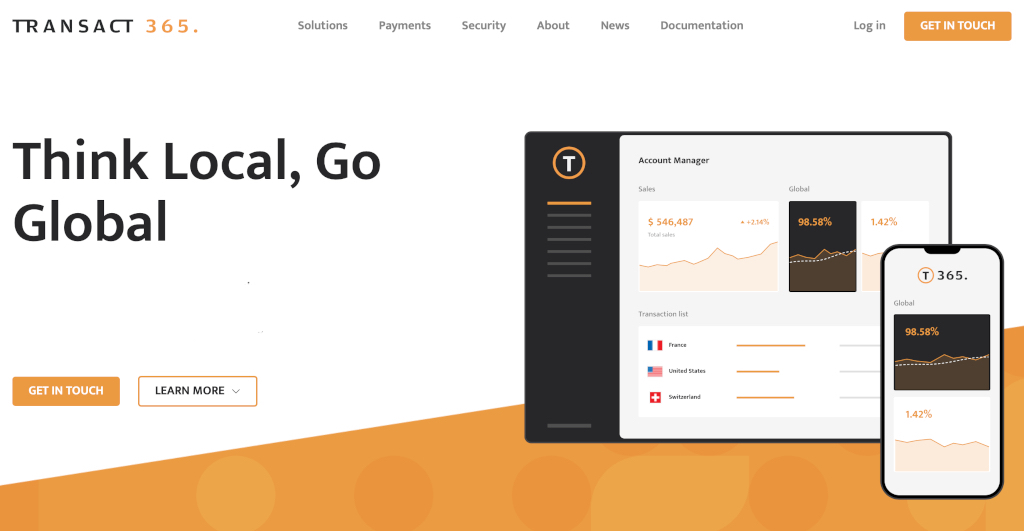
- Transact365 enables merchants to transact locally in India
- Merchants can partner directly with Transact365 without needing to source local partners
- Transact365 offers two local solutions - Unified Payments Interface (UPI), and NetBanking
UK-based fintech Transact365 has added local India payments for merchants. By using Transact365’s gateway solution, merchants can access new opportunities in India without having to form local payment partnerships or establish an Indian company. The move ensures merchants now have access to over one billion Indian-based consumers enabling them to pay faster in a familiar way.
Transact365 offers two local solutions tailored to the needs of the Indian market - Unified Payments Interface (UPI) and NetBanking.
Developed by the National Payments Corporation of India - UPI is an instant, real-time payment system that facilitates inter-bank transactions through smart phone devices, powering multiple bank accounts into a single mobile application of the 274 participating banks. UPI facilitates inter-bank peer-to-peer (P2P) and person-to-merchant (P2M) transactions.
NetBanking is a unique payment method facilitating online payment transactions in India. When a user makes a payment via NetBanking, the payment is initiated via the Transact365 gateway which allows the user to complete the transaction with the merchant in real time in local currency.
Transact365 has also established a local payment distribution allowing merchants to pay clients in India in real time with fully automated api connectivity 247 365 Days a year.
Transact365’s launch in India is the first in a series of big market expansions planned for 2022. Having already expanded into Europe, Asia and Australia, Transact365’s payment gateway system ensures merchants of all sizes and sectors can access fast-growing markets seamlessly and quickly.
Dan Fernandez, CEO of Transact365, said: “We are pleased to announce that merchants can now use Transact365 to process payment transactions in India. By utililising local payment solutions, Transact365 ensures merchants can now facilitate payments in India, with users able to confirm their payment in a matter of seconds.
“Our expansion into India comes at an exciting time for the company. With customer and merchant demand for payment gateways rising, Transact365’s revolutionary system ensures more businesses are able to access consumers in rapidly expanding markets. Importantly, our launch in India will soon be followed by similar market expansion announcements throughout 2022.”
- 02:00 am
Hudson Street Ventures emerges as a key partner for the next phase of Bipsync's growth
As part of the transaction, all external investors including Edison Partners and FINTOP Capital are exiting to Hudson Street Ventures, with the existing Bipsync team retaining their ownership. The Bipsync leadership team remains unchanged, as will all client services, and Jim Kocis joins Bipsync's board as Chairman in a key advisory role.
"We are proud of what we've built so far at Bipsync, with a differentiated value proposition and capital-efficient growth," said Jennifer Lee, Partner at Edison Partners. "We are grateful to Danny and the team for being great partners with us over the last three years and are excited to see what this next chapter brings for Bipsync."
"Jim is a visionary and pioneer in the alternative asset data ecosystem, and I've watched him grow Burgiss into a market-leading provider," said Rick Kushel, General Partner at Fintop Capital. "This will certainly be an exciting path forward for Danny and the Bipsync team. We thank them for their hard work and dedication."
Bipsync, founded in 2012, has established its market position as the premier integrated research environment, delivering an unmatched user-friendly experience with enterprise-grade security and compliance. Bipsync integrates a centralized research database, an intuitive note-taking, organization tools, workflow pipelines, and automation for research that is always available whenever and wherever investors are working.
"I am thrilled to be working with Danny and his team," said Jim Kocis. "They had the vision, smarts, and discipline to build a great, flexible platform for investment research. That fits well with my background and experience. I am equally excited by the unlimited potential of their products and platform."
Jim Kocis brings three decades of expertise to Bipsync's board. He is a technologist, author, entrepreneur, and investor. Jim founded Burgiss, a global, market-leading provider of data and analytical solutions for institutional investors, with a particular focus on private capital and total plan solutions. A graduate of New Jersey Institute of Technology in Chemical Engineering with a Distinction in Humanistic Studies, Jim is an Entrepreneur-in-Residence at Stevens Venture Center at Stevens Institute of Technology.
"The streamlined capital structure, permanent capital, and Jim's involvement ensure Bipsync's independence, continued product innovation, and a perfect strategic partner for our long-term growth strategy," said Danny Donado, founder and CEO of Bipsync. "We thank Edison, FINTOP, and all former investors for their partnership and couldn't be more excited for our clients and employees as we enter the next stage of Bipsync's growth."
- 03:00 am

The number of people saying they have an account with a digital-only bank has stalled for the first time in 4 years, new research from personal finance comparison site finder.com shows.
Around a quarter of the population (27%), equivalent to 13.9 million people, say they currently have an account with a digital-only bank, which is the same figure as last year. This is the first time during 4 years of tracking digital banking adoption in the UK that Finder’s poll has shown the figure flatlining.
But growth appears to have been slowing for a while, with the number of digital-only banking users rising from 9% in 2019 to 23% in 2020 before a more modest rise last year, when it rose to 27%.
The reasons behind traditional banks’ fightback
3 in 10 (31%) respondents said they have absolutely no intention of opening a digital-only bank account in the future and gave reasons why.
The top factor was that over half (55%) of these people feel like they have always been treated well by their current bank. Similarly, around 1 in 6 (16%) also said their traditional bank had been helpful during the COVID pandemic.
As the world begins to return to normal, the second most common reason was that customers prefer having the option of face-to-face communication with their bank (35%).
A worrying finding for the digital-only banks is that a quarter (25%) of those not intending to switch cited a lack of trust in new banks as the reason.
Growth still on the horizon for digital-only banks though
Despite the slowdown in new recruits, digital-only banks can still look forward to welcoming 18% of the population over the next 5 years, according to the research. This includes 1 in 10 (10%) UK citizens who plan to open an account within the next 12 months.
If everyone followed through with their intentions, 44% of the population would have a digital-only bank account by 2027, equalling a whopping 23.2 million people.
For the fourth year running, the top reason for those who have gone, or intend to go digital-only with their banking is convenience (27%). Linked to this, 1 in 4 (24%) wanted a new account and thought doing so with a digital bank was the easiest option.
1 in 5 (21%) said they want to transfer money more easily, and 18% thought the apps of digital-only banks are better.
A lack of trust isn’t just a factor for those who prefer traditional banks - 1 in 10 ( 11%) customers, or potential customers, of digital-only banking say they don’t trust traditional banks.
Young generations continue to be the biggest market for digital-only banks
Digital banks are still most popular with younger generations, with 41% of Gen Z saying they have a digital bank account and a further third (34%) intending to get one within the next 5 years. This would mean that by 2027, three-quarters of gen Z (75%) could have a digital bank account. The silent generation (born between 1928 and 1948) remains the generation that is least keen on digital-only banks. Just 7% said they have an account currently.
Commenting on the findings, Michelle Stevens, banking specialist at the personal finance comparison site finder.com, said:
This is the first year that our research hasn’t seen growth in the number of people using digital-only banks and it's clear that traditional banks are adapting to an increasingly digital landscape. This seems to have played a significant role in the dropoff of new customers for digital-only banks as their first-mover advantage in the app space gets diminished.
Traditional banks such as Halifax have also seen net gains after improving their digital products and offering switching incentives - including to existing customers - something that digital-only banks haven’t done yet. Halifax has just won Finder’s Banking Customer Satisfaction Awards for 2022, with some customers in our survey praising its app.
It isn’t all about digital though as there’s also a significant number of Brits who value having a physical branch to visit and trust traditional banks more. While the digital-only banks may not be able to compete with having a presence on the ground, they will be concerned at the lack of trust some customers appear to have in them.
- 07:00 am
IBN (InvestorBrandNetwork), a multifaceted financial news and publishing company for private and public entities, today announces that Dozy Mmobuosi, Founder and CEO of Tingo Inc. (OTCQB: IWBB), a leading agri-fintech company, recently appeared on The Daily Helping Podcast, a series focused on providing food for the brain, knowledge from the experts and tools to win at life.
The broadcast, hosted by Entrepreneur and Philanthropist Dr. Richard Shuster, is available for on-demand listening on The Daily Helping.
During the interview, Mmobuosi discussed his background in business leading up to the founding of Tingo as a way to provide agribusiness owners access to information, financial services and market.
“I started in business at the age of 16, selling used clothes in Lagos. When I got into university at 16, I became a show promoter. That experience connected me with several brands, some of them multinationals where I gained some experience meeting with corporations for sponsorships,” Mmobuosi said. “When I graduated with my first degree in 2001, I went to my father and told him, ‘Entrepreneurship is what I want to do, I do not expect to start looking for any job anywhere.’ We started by doing e-publishing. We also built a social network platform called Naijafans.”
“When the telcos came to Nigeria, I jumped on an opportunity I saw. One of the things that fascinated me was the cost of mobile phones in Nigeria at that time – they were just ridiculously expensive. That was a gap I could feel, so I started sending out cheap mobile devices to Nigeria,” he continued. “What changed my life was when I went to Shenzhen, China. I got there, and I saw how mobile devices were being produced. I went back home to Nigeria and met with my partners at that time, one of them my father, and told them there was a possibility to bring what I saw in Shenzhen into Nigeria. Not full production, but we could at least assemble smartphones.”
“We needed to create a niche market, because we didn’t have the resources to compete with Samsung and Nokia and the big brands at that time. I looked at various sectors and realized that the sector that needed all the help via technology was agribusiness,” Mmobuosi added. “Millions of undocumented agribusiness owners did not have a single bank branch in their village. It was clear that we must bring financial services to the rural communities of Nigeria. The fastest way to deploy services is through technology. We knew that the first thing to do was to make smartphones available to these farmers. We set up assembly lines in Abuja and Lagos. We made sure that each of these devices was preloaded with our mobile wallet, which these farmers would use to do their transactions.”
Throughout the interview, Mmobuosi continued to detail his efforts to improve access to financial services throughout rural Nigeria, as well as Tingo’s growth into an international, publicly listed company.
Learn more by listening to the full interview on The Daily Helping.
- 06:00 am
Fintech innovator improves the financial lives of consumers via market-leading credit score solutions
SavvyMoney enables banks and credit unions to better serve their customers with comprehensive credit score analysis, full credit reporting, monitoring, financial wellness tools, and personalized pre-qualified loan offers - all in one single dashboard. SavvyMoney's innovative analytics platform provides financial institutions with user credit score trends, market share analysis, and powers targeted lending campaigns.
The company has grown rapidly by focusing on the specific needs of financial institutions and their end consumers. SavvyMoney has strategic partnerships and direct integrations with 34 digital banking platforms, reaching over 20 million consumers through its partner financial institutions.
SavvyMoney has more than tripled revenue over the last 24 months as its platform has seen rapid adoption by financial institutions looking to offer credit score-powered solutions. With this round of funding, the company plans to invest in new product development and talent, including expanding operations, HR, sales, marketing, and engineering teams.
SavvyMoney CEO JB Orecchia, a fintech industry leader for over 30 years, has led the company since 2011. Prior to SavvyMoney, he spent 10 years as the EVP of Partnership Marketing at freecreditreport.com - Experian Interactive.
"We built SavvyMoney with the goal of enabling financial institutions to build better relationships with their customers, by offering market-leading credit score solutions, including pre-qualified interest saving offers that improve their financial wellbeing," said Orecchia. "We are so grateful for the partnerships we've created with our financial institutions and digital banking partners who have entrusted us to help them achieve their goals, and we're thrilled to join forces with Spectrum Equity, whose extensive experience backing other dynamic technology businesses will help us deliver more value to our existing partners while supporting our strategy to further grow our business."
Throughout its rapid growth, the SavvyMoney team has maintained its focus on providing a truly exceptional customer experience to online banking providers and their financial institutions. In a recent survey of 100+ financial institutions conducted by market research firm Sterling Associates, SavvyMoney achieved outstanding results with a +82 NPS and 4.8/5.0 satisfaction rating.
"SavvyMoney has achieved remarkable success by enabling banks and credit unions to offer market-leading credit score solutions through their online and mobile banking integrations. It's a 'win-win' for consumers to gain access to powerful credit and financial wellness tools and for the financial institutions looking to expand their digital banking capabilities and personalized marketing," said Adam Margolin, Managing Director at Spectrum Equity. "We see an enormous opportunity for SavvyMoney to drive innovation and customer engagement, while building on its leading analytics and marketing platform."
"TransUnion's investment and partnership with SavvyMoney aligns well with our brand promise of making trust possible between financial institutions and the consumers they serve," said Dao Boyle, EVP of Consumer Interactive at TransUnion. "We greatly value our partnership with SavvyMoney and are committed to working with them to expand their offerings and reach."
In conjunction with the transaction, Margolin will join SavvyMoney's Board of Directors, which already includes fintech pioneers and leaders from the consumer credit, lending, and digital banking world, such as Ed Ojdana, founder of freecreditreport.com and former CEO of Experian Interactive; Tim Nguyen, co-founder and Chief Strategy Officer at MeridianLink; Rahul Gupta, former Group President at Fiserv; Dao Boyle, EVP of Consumer Interactive at TransUnion; Mike Azevedo, former COO at Capital One Bank; and Dave Whorton, founder and CEO of the Tugboat Group.
- 01:00 am
Cloud banking leader awarded several accolades for its leadership and commitment to company culture and employee satisfaction
nCino, Inc. (NASDAQ: NCNO), a pioneer in cloud banking and digital transformation solutions for the global financial services industry, announced today its strongest year for awards focused on employee satisfaction and the strength and depth of its culture and leadership. nCino has been widely recognized for its customer service, product innovation and strong culture, achieving multiple 2021 awards representing the company’s commitment to building a positive company culture and empowering employees.
“Our culture is one of our most important measures of success, and we are incredibly proud that 2021 has been a record-breaking year for awards that acknowledge our mission-driven culture, talented leadership and commitment to equity and inclusion,” said Pierre Naudé, Chief Executive Officer of nCino. “By creating the right culture and taking care of our people, they will in turn be passionate about their jobs and committed to nCino's continued growth and scale.”
In December, nCino was recognized as one of the 25 Highest-Rated Public Cloud Computing Companies To Work For in a list released by Battery Ventures, a global investment firm and cloud investor, with data specifically provided by Glassdoor, the worldwide leader on insights about jobs and companies. Battery Ventures ranked nCino 2nd on a list of publicly traded, business-to-business, cloud-computing companies where employees reported the highest levels of satisfaction at work in 2021. Additional companies recognized on Battery’s list include Zoom, Monday.com, Adobe and Salesforce.
Recently, nCino was also presented with 15 workplace-focused awards by Comparably, a leading workplace culture and compensation monitoring site. Among these awards, nCino was ranked 12th for Top 100 highest-rated Companies for Women in 2021, with its CEO ranking 39th on their list of Best CEOs of 2021. nCino was also recognized on 2021 Comparably lists for Best Company for Diversity, Best Company Culture, Best Work-Life Balance and Best Company Happiness, among others.
Individual recognition has also been awarded to various nCino team members throughout the year, including Dory Weiss, Executive Vice President of Engineering, who was listed on 2021 Inspiring Fintech Females by NYC Fintech Women, which recognizes women who, in their role, are transforming fintech and who are advocates for women and gender equity.
“It is an absolute honor to be recognized as a 2021 Inspiring Fintech Female,” said Weiss. “Since starting my career at nCino almost nine years ago, I have experienced first-hand the support and growth opportunity nCino provides to all employees. I’m consistently impressed with the commitment of our people and our company’s emphasis on collaboration and employee satisfaction, and I know we’re poised to leverage the tremendous opportunities on the horizon to drive further transformation in the financial services industry.”
Throughout 2021, nCino achieved remarkable growth, expanding from 1,200 employees to more than 1,500 employees. In 2022, nCino will continue to prioritize cultivating a strong culture, accelerating diverse talent and fostering an inclusive and equitable environment for all employees.
- 09:00 am

Leading AI-powered credit decisioning disruptor, Scienaptic announced that Minko has completed a new implementation and is now live on its platform. This unique implementation will facilitate stronger credit decisions and help micro small and medium enterprises (MSMEs) gain easy access to credit for ultra-short durations ranging from seven to 30 days at the click of a button.
Minko’s mission is to build an inclusive ecosystem of financial and banking products for offline retailers and their suppliers by leveraging technology to solve real business problems. Its aim is to make access to digital credit lines as simple as using a credit card, for offline retailers in India. Through its platform, Minko has already disbursed more than Rs 100 Mn credit and has a network of over 16,500 retailers and 100+ distributors in India. This implementation of Scienaptic’s platform will now enable Minko to seamlessly scale its offerings to the 18 million+ retailers in the $900 billion retail market in India.
Using Scienaptic’s decisioning platform and proprietary scorecards, Minko can assign initial credit limits to retailers, adjust these limits on a periodic basis and process invoices in real-time for approval and in-built fraud detection. This will be done real-time with zero friction. Over time, as the dataset size grows, AI algorithms will be used to get more accurate predictions and sharper decisions.
“Today, millions of MSMEs in India are unbanked and lack a credit score. The credit gap for such MSMEs is about $250 billion,” said Sanket Shendure, Co-Founder and CEO of Minko. “Scienaptic’s AI-powered credit decisioning platform will help us bridge this gap by automating and strengthening our credit decisions. We will also lower our risk and make credit more accessible to underserved business owners.”
“We are very pleased to help Minko support the financing needs of small business owners,” said Joydip Gupta, APAC Head of Scienaptic. “Our AI-powered credit decisioning platform will help Minko with assessing newly onboarded MSMEs, re-evaluate MSME limits as situations change, and identify invoice anomalies – ultimately helping Minko make better loan decisions while minimizing risk.”
- 04:00 am

CASHe, India’s preferred AI-driven financial wellness platform with a mission to make financial inclusion possible to all today released the ‘Millennial Mood Index 2021’. According to the survey, more than 84% millennials across the country stated that they have stepped up their wealth-management strategy in a bid to prep up for future contingencies while eyeing opportunities for stronger and sustainable growth in the post-pandemic world. The pan-India survey conducted among more than 30k customers on CASHe’s platform, aimed to capture the impact of the Covid-19 pandemic and how it has altered the everyday behaviour of millennials across a variety of topics like health, travel, shopping, savings & credit appetite etc.
While majority of the millennials have grown to become more cautious towards finances amid the pandemic, the report also highlighted the progression of saving and insurance awareness among the cohort. While 52% of the respondents said they have scaled up their savings, 35% have purchased comprehensive health and life insurance plans whereas the rest 13% have committed to more extensive investment programs.
The pandemic coupled with ‘work from home’ culture has also triggered health consciousness among Indian millennials. The MMI report stated that more than 71% millennials, have grown more health conscious amid the pandemic. In their pursuit for a healthier life, a huge chunk of the cohort have switched to new lifestyle changes. 54% respondents said they now prefer eating home-made healthy food, 28% have adapted to regular walks or some form of daily exercise. 11% of respondents said they have adopted yoga and meditation, rest 7% have registered at a nearby gym.
When prodded about eating out at restaurants, more than 52% of the respondents said that even if they eat outside, they would prefer restaurants that observe health, safety and social distancing norms. 22% said they have got habituated to ordering food online and prefer it that way as they can enjoy it from the comfort of their home, while observing the necessary safety norms. Whereas 26% of the respondents continue to be cautious and have been avoiding eating outside at all.
After almost two years of uncertainties and travel ban, the report showcased huge pent up demand among millennials for availing a getaway vacation. More than 56% of the respondents stated they are planning a vacation early this year as soon as the current surge in the Covid-19 cases eases out. In terms of travel destination preferences, 71% stated they were heading for a domestic destination, 9% preferred an international destination while 20% respondents hadn’t yet made up their mind.
Showcasing a clear shift in millennial shopping behaviour altered by the pandemic, the report stated that 38% of the respondents have permanently shifted to shopping online as they now prefer it that way. While 17% still favoured the idea of physical shopping, 45% preferred a mix of both depending on what they wanted to buy.
When asked about going back to work in the post-pandemic order, 68% of the respondents stated that they are more than eager to get back to the physical world and operate from their offices. While 15% preferred to continue with the work from home (WFH) practice and the rest 17% stated they favoured a hybrid model of functioning whilst visiting office once or twice a week.
V Raman Kumar, Founder Chairman, CASHe said, “The Covid-19 pandemic has radically altered our everyday behaviour, perhaps forever. However despite the challenges and economic upheavals witnessed in the last two years, millennials have proven themselves as the most resilient generation. Millennials who also represent the country’s largest workforce have showcased the grit and resolve to bounce back and kick-start the economy. Their unwavering “can do” spirit is what has put them at the global centre stage while showcasing India as the largest millennial market to lure in brands across the globe. They are not just aspirational, but are a very responsible cohort seeking to reimagine old orders. Millennials have the potential to redefine India’s investment & consumption story, which will play a critical role in shaping our country’s economy in the post-pandemic era.”
The pan-India survey was conducted by CASHe among more than 30k customers. More than 65% of the responses were received from the metro markets of Mumbai, Delhi, Kolkata, Hyderabad, Bangalore, Ahmedabad, Pune and Chennai while the rest 35% were received from other tier-II and III towns
CASHe is an AI-based, credit-led, non-bank, mobile-first financial wellness platform focussed on making financial inclusion possible by serving the underserved digital cohort in India. The company is driven by its laser focus to unlock opportunities for everyday people by making financial inclusion and accessibility possible using its cutting-edge algorithms and cloud-based credit decision systems. CASHe is a first of its kind origination, lending, distribution and investing platform democratising access to credit for millennials & Gen Z in India.
- 01:00 am

The M&A market is at an all-time high, with a number of factors such as low-interest rate, vaccines fueling pandemic recovery, cheap financing, a booming stock market, etc., contributing to its growth.
Every year industries undergo some major changes from M&A activities and mega-billion dollar deals that can alter the economic landscape of the corporations to smaller acquisitions that bigger players employ to gain a competitive edge.
Significant moves by the industry: Mergers 2021
Some of the biggest health and tech companies pursued strategic overhauls, M&A activities, with many thriving to become more powerful globally. Let’s look at some of the significant mergers and acquisitions activities that shaped 2021.
Oracle acquires Cerner: Evolution of healthcare tech and Artificial Intelligence
Just before the calendar wrapped up, Oracle closed one of the biggest deals of all time — acquiring Cerner for $23.8 billion. It is Oracle’s largest acquisition, almost three times the size of its PeopleSoft acquisition in 2005.
Leaders of both corporations touted on their combined ability that the companies thrive to offer medical practitioners contemporary and easier to use digital tools that enable access to information through a hands-free voice interface to secure cloud-based platforms.
Indeed, a smart move by Oracle as It’s on the way to acquiring a larger presence in the healthcare market.
Microsoft acquires Nuance: Access to advanced speech recognition
It is one of the second-biggest M&A activities for the year 2021. Microsoft acquired Nuance for $19.7 billion.
Based on artificial intelligence, natural language processing, and speech recognition, Nuance communication has always been a powerhouse in the health care sector.
Without a doubt, this acquisition will help Microsoft become a giant player in healthcare technology by bridging the gap between Microsoft’s cloud for health care and health care institutes.
Did you know that almost 77% of U.S health care professionals use Nuance? Yes, that’s right! This would make Microsoft the leading provider of conversational technologies.
Salesforce acquires Slack: Future of enterprise software
Cloud computing giant Salesforce has acquired Slack for a whopping $27.7 billion, one of the popular workplace communication platforms with over 10 million active users.
The world of work has changed, and the credit goes to remote working, and that’s where Salesforce came to the rescue.
Slack as the collaborative app seamlessly integrates with the Salesforce platform, enabling users to communicate and keep track of past and ongoing projects.
Joining forces will give both the companies the capacity to compete against other giants such as Facebook and Microsoft.
Cerner acquires Kantar Health: A boost towards life sciences research capabilities
Cerner closes the deal by acquiring Kantar Health for $ 375 million in cash. Kantar Health’s experienced team has a deep understanding of the pharmaceutical and life sciences industry hence, a rationale behind Cerner's acquisition of Kantar Health.
Also, combining Kantar's research capabilities and consultancy credentials with Cerner's real-world data repository and portfolio can help medical centers and research groups improve health and develop new pharmaceuticals.
EverCommerce acquires DrChrono: Expanding suites of solutions
EverCommerce, a SaaS (software-as-a-service) platform, acquired DrChrono — an all-in-one solution comprising electronic billing, health record, and cloud-based practice management. Both companies aim to help small and mid-sized businesses to thrive.
This acquisition will help DrChrono join EverCommerece’s tools that help over 70,000 customers streamline day-to-day healthcare operations, improve administrative workflows, and enhance engagement with patients.
Baxter acquires Hillrom: Expanding Medical Innovation Globally
Baxter acquires Hillrom, a global leader in medical technology, for $ 10.5 billion. The latter will bring an innovative pipeline and complementary portfolio, allowing Baxter to offer a broader array of services and products to health care units all around the globe.
Virtual data room: A reliable tool for M&A activities
Merging companies is one of the many ways to strengthen its market dominance. Business transactions involve a bulk of documents that contain confidential and sensitive information. Resorting to virtual data rooms helps in conducting successful M&A deals.
The virtual data room is an online repository that enables companies to share, distribute, and store essential documents. Most M&A activities are carried out using virtual data rooms as they come in very handy when performing due diligence.
Final verdict
The M&A market in 2021 has seen the highest deal value in history. What’s more impressive, as we jump in 2022, giant corporations are steady to expand, digitize, and scale their businesses.
Some of the biggest names in the industry are open to partnership and investment so that they can share capabilities and resources to strengthen their hold in the market.








