
Published
- 02:00 am

AlHuda CIBE and Tawhid Bank signed an agreement to set up first Shariah Based Insurance (Takaful) company in Tajikistan
AlHuda CIBE UAE and Tawhid Bank Tajikistan signed an agreement to set-up the first Takaful Company in Tajikistan. It is the first Shariah legitimate solution to Tajikistan's insurance industry. The MoU signing ceremony was held Dubai - UAE.
On this occasion Mr. Muhammad Zubair Mughal CEO of AlHuda CIBE said the entrance of Takaful concept to Tajikistan insurance industry will play a vital role for financial inclusion and also it will fulfill the gap of the missing components of Islamic finance industry. He also highlighted the fact that Tajikistan Islamic finance industry has only one fully fledged Islamic Bank. A couple of banks and Microfinance institutions have Islamic finance window operations but none of the Takaful Company exists. He also added that setting up a Takaful company will not only give a boost to Islamic finance industry but it will also provide a solution for those individuals who do not use insurance because of religious perspectives.
The CEO of Tawhid Bank Mr. Zardov Sher Ali said that Takaful Company is a new addition to Tajikistan Islamic finance industry and it will play a very important role for enhancing the growth and development of Islamic Insurance industry. Tajikistan is a small landlocked country in the heart of Central Asia. It has around 96.7% Muslim population. To meet the financial needs in line of religious boundaries after Tawhid bank, setting-up Takaful Company is another solution to support Islamic finance industry growth in Tajikistan.
- 03:00 am

- SuperSeed is a London based seed-stage venture capital firm investing in startups focusing on business and industrial automation. The firm has now completed the first closing at £31m of its Fund II, which will target a final close of £50m.
- Started in 2018 by Partners Dan Bowyer and Mads Jensen, both ex-founders with multiple exits, who passionately believe that venture capital investors need to better support early stage entrepreneurs.
- The partners launched their first fund in 2019 and have since invested in 15 B2B startups..
- The SuperSeed model methodology has been designed to support technical founders in commercialising B2B offerings to help them develop better sales playbooks. A startup's ability to sell is existential.
- SuperSeed invests in startups that transform how business works.Growth in business automation is huge, recently accelerated by Covid. This will be further driven by new technologies such as 5G, quantum computing, AI and blockchain. All while businesses secure vital supply chains and find new ways to manage, manufacture and market.
- SuperSeed will invest in 30-35 B2B software companies over the next 3-4 years, helping them kick-start sales and building the foundation for global market reach.
- SuperSeed Fund II is an Enterprise Capital Fund with a cornerstone investment from the British Business Bank’s Enterprise Capital Fund programme
SuperSeed, a venture capital firm investing in the future of business automation, today announces it has completed the first closing of its new fund at £31m, targeting a final close of £50m. The fund will invest between £500k and £1.5m into 30-35 UK based startups, and those looking to use the UK as a springboard to the rest of the world.
Europe continues to develop world class technology and the European startup ecosystem has exploded over the last decade. However, far too often, European startups are outfought by their American counterparts and the venture ecosystem needs to do more to support them.
This was why SuperSeed was conceived. The founders believe that startups are the primary engine of positive change, and with venture capital supplying the fuel, European venture capital firms can and should play a much more supportive role at the delicate early stages.
The opportunity for smart business transformation is bigger than ever. Recent research from McKinsey shows that 66% of large companies are piloting new automation processes, and WEF found that 80% of business leaders are considering ‘speeding up’ their automation processes following the pandemic.
Mads Jensen, Founder and Managing Partner at SuperSeed, says
“Technological innovation is the foundation to unlocking human progress. In simple terms - tech will save us! But real tangible effect can only be achieved when it’s commercially viable and successfully deployed, in the hands of real users. When it comes to marketing and sales the Americans have historically had an edge on us here in Europe, and we have to do better if we want to compete on the world stage.
“At SuperSeed we play a highly active role helping early-stage founders create powerful go-to-market strategies. We provide best practice on how to build a successful B2B startup and work with founders to build out their team, craft processes, and truly accelerate the journey from Seed to Series A.”
Dan Bowyer, Founder and Partner at SuperSeed says,
“I have quite a lofty take on what automation really is. To me it’s the technological bedrock that will enable us to keep the promises we’ve made to the climate, our planet and children. On the surface it helps businesses lower costs and create efficiencies, great, that’s a massive tick. But underneath it’s a lot more than that.
“So our thinking when we started the fund was - how do we enable as many smart startups as possible to make it AND have a meaningful impact?
“It’s well known that most startups fail, which is mostly due to a lack of product-market fit. In other words, to succeed, it’s imperative to find and focus on the right customers, while filtering out faster horses. All the while avoiding the natural tendency to get sucked into polishing the product, thinking if it’s better, they will come. As entrepreneurs we’ve experienced the allure!
“How best can you achieve that? Our experience as founders is that the process of selling is crucial to finding and expediting product-market fit. This is what Mads and I learned the hard way and want to pay forwards. In simple terms: “sales solve all problems”
SuperSeed’s Partners both share the view that there is a multi-decade long opportunity to help companies automate business and manufacturing processes, which are often unnecessarily inefficient.
Mads Jensen says, “In business and especially manufacturing, there's so much that automation can improve. Which is why we expect it to be one of the biggest long term economic trends, even without the natural accelerant of a pandemic. Software lies at the heart of this opportunity. Across manufacturers, aside from the most sophisticated like Boeing and Rolls Royce, around 80 percent of manufacturing equipment is still not ‘smart’, or connected to the internet.”
In the future, every sector in the global economy will be touched by automation but it’s in this particular area, Jensen says, that one of the biggest opportunities to combat climate change can be amplified:
“It’s easy to miss how crucial business automation is to solving some of the biggest challenges humanity faces. We are not going to stop consuming but must be much more mindful about how we do so. Automation opens up huge sustainability opportunities: from the application of smarter materials to the way we reuse and recycle post consumption. From picking and packing to putting on the table. From hiring to managing to paying, or finding to buying to delivering. I could go on and on but the fundamental challenge is how we bring global communities up to the Western standard of living without destroying the planet. We must therefore be much more efficient in the way we make, distribute and recycle things - automation is the only answer.”
Ken Cooper, Managing Director, Venture Solutions, British Business Bank says, “The British Business Bank’s Enterprise Capital Funds programme is key in helping to develop and maintain effective venture capital provision in the UK, lowering the barriers to entry for emerging fund managers and for those targeting under-served areas of the market. Our cornerstone commitment to SuperSeed’s fund will help them to provide successful finance and support to early stage, high-potential entrepreneurs and businesses. With this commitment, our total commitments to date through the ECF programme now exceed £1 billion.”
Andrew Thomas, Founder and CEO of SuperSeed portfolio company Kleene says, “SuperSeed stood out to us for their drive and passion for our space. We've found their support to be invaluable, providing a robust and intelligent input to strategy based on their deep experience of how to build SaaS companies.”
Daghan Cam, Founder and CEO of SuperSeed portfolio company Ai Build says: “Having SuperSeed as our lead investor was a game changer for Ai Build. Their team truly understands the challenges faced by first time technical founders, and they are always there to help us overcome setbacks and figure out how to progress faster. We consider them an invaluable part of our team.”
Amy Read, CEO and Co-Founder at SuperSeed portfolio company Techsembly says: “From the first call I had with SuperSeed, I knew they were the VC I wanted to work with. Straightforward, down to earth honest advice and support. With SuperSeed there is no gender bias, they value you for who you are and what they believe you can deliver.. I know they're always at the end of the phone if there's anything I need, and most importantly that they have my back.”
Since its first fund launched in 2019, Superseed has invested in a total of 15 companies including AI Build, Integrated Finance, Kleene and Duel.
- 07:00 am
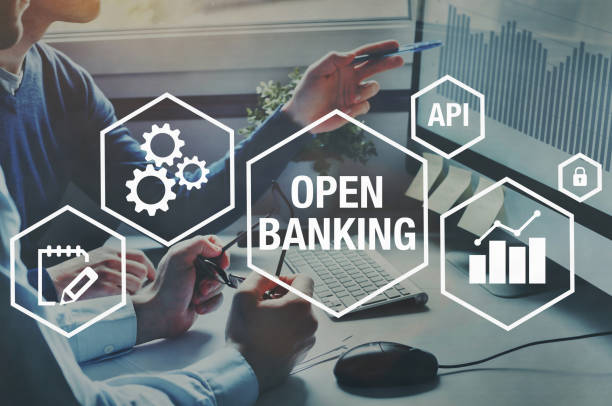
SME retailers currently spend £22k on average a month on transaction fees
Open Banking technology could reduce these fees by 90%, according to new research from Yolt
Other innovations for UK retailers include instant refunds and fraud reduction
London, 07 February 2022 – The average SME online retailer could save an estimated £19,000 by reducing transaction fees associated with popular payment providers such as AMEX, Mastercard and Visa could through the adoption of Open Banking technology, according to research from Yolt, one of Europe’s leading Open Banking providers1.
At present, small online retailers in the UK process approximately 217 sales a day – increasing by 24% if that retailer also happens to have both an online and in-person presence. On average retailers pay a transaction fee of approximately 1.8% across all different payment types, with the highest charges found in Buy Now, Pay Later payment methods (3.2%) and debit cards (3%).
Even taking into account just the most popular payment providers (AMEX, Mastercard and Visa) the average small business will spend over £22,000 a month on transaction fees, costing the entire industry an estimated £66 billion every year.
However, the adoption of Open Banking technology could significantly reduce these costs, as it does not utilise commission-based transaction fees, providing lower and more predictable costs to the retailer. This could save the average SME online retailer approximately £19,000 a month.
“The retail industry has been incredibly hard-hit by the economic challenges of the past few years. Small businesses in this sector in particular are likely still finding their feet and recouping losses. Open Banking technology can provide solutions which alleviate common financial stressors on these businesses and allow them instead to focus their spending on strategies to improve growth”, says Nicolas Weng Kan, CEO of Yolt.
Open Banking could also assist SME retailers be alleviating other pressures on their business. On average SME retailers spend 18 hours a week processing refunds, for instance. At present, it takes nearly three days to settle these with a payment provider. However, Open Banking technology can make these refunds instant.
A third of SME online retail businesses (34%) also experienced fraud in the last year including supply chain fraud (64%), authorised push payment fraud (42%), account takeovers (40%) and cyber-attacks (30%)– losing an average of £4,257 a year. With the introduction of Open Banking technology, many of these incidents of fraud could be avoided providing further savings to recovering SMEs.
- 07:00 am
Jai Bifulco, Kinesis Money, Chief Commercial Officer
With the crypto market doubling in value over the last year alone, it’s no surprise that fund managers around the world are taking notice of this growing financial revolution, despite the recent fluctuations. The appeal is clear: an alternative to the traditional banking system, providing new opportunities to market analysts, willing to back new coins or startups with seemingly endless potential.
However, as with any evolving market, there is a level of risk involved. Crypto is still a volatile product, as we’ve seen with the rapid price fluctuations in the first few weeks of 2022 alone. This means that even experienced asset management firms are likely to be investing only a small portion of their fund money into this space.
Still, with over $3.6tn assets under management globally, even a small percentage amounts to a healthy crypto investment market. And it’s only continuing to grow, with hedge funds looking to start investing more heavily in Ethereum, Dogecoin, Litecoin and other Bitcoin alternatives in 2022.
So, who’s investing, and what’s the appeal for fund managers?
Hedge funds investing in cryptocurrency
Some of the world’s biggest and most well-known hedge funds are investing in the cryptocurrency market. In April 2021, Brevan Howard — one of the largest funds in Europe — announced its intention to invest, putting 1.5% of its fund in digital assets as an initial step.
The company has been involved in this space for a while, having recently acquired a 25% stake in One River Asset Management, an absolute-return strategy focused asset manager, strongly backed by the traditional financial system.
One River Asset Management recently made one of the largest trades in the history of digital assets, in partnership with Coinbase, proving its long-term confidence in this asset class going forward.
However, they’re not the only ones. This is part of a larger move by institutions, wealth managers and firms like Brevan Howard towards crypto assets, particularly currencies like bitcoin.
Goldman Sachs has indicated that it’s looking to move into blockchain-related assets, and last April Morgan Stanley approved indirect bitcoin investments for a handful of its funds. With two of the world’s biggest investment banks declaring their intentions, it seems that cryptocurrency has definitely hit the mainstream.
Early adopters are continuing to grow as well. Pantera Capital, which launched the first cryptocurrency hedge fund way back in 2013, noted that its bitcoin fund is up over 82,000% in the eight years since its launch. Performance has been improving steadily for this firm, and with its history of investing in early disruptors, it’s likely to keep going strong with its $4.3bn assets under management.
Institutional investors may now be taking notice, but these specialised firms still have an important place in this rapidly expanding space.
Increasing hedge funds for cryptocurrency
In 2019 there were over 150 crypto hedge funds actively managing over one billion dollars in assets. By the third quarter of 2020, there were more than 800 active funds, and this number is steadily increasing, with constantly improving infrastructure encouraging more funds to invest.
Around two-thirds of hedge funds managing crypto launched in 2018 and 2019, with their assets under management more than doubling during these years. In 2022, the appeal is as strong as ever, and early reports by Hedge Fund Research for this year’s overall hedge fund performance indicate one of the strongest year-to-date performances since the 1990s. Advancing in April for the seventh consecutive month, optimism remains high in this asset sphere, which will naturally trickle down into the blockchain fund market.
There’s room for growth
Of course, one of the most revolutionary aspects of crypto trading is its accessibility to individuals as well as to hedge funds and institutional investors. Trading cryptocurrencies like Bitcoin, Ethereum and digitalised physical gold and silver is possible through apps and exchanges tailored to multipurpose use.
- 03:00 am

Like many other sectors of the economy, the insurance industry is facing disruptive innovation, with the impacts of the pandemic, economic uncertainty, rising unemployment and rapidly changing customer demographics and expectations forcing insurers to adapt or die. According to KPMG’s recent South African Insurance Industry Survey: “The insurance industry is highly competitive – to stay relevant, insurers must embrace digitalisation to ensure they can continue to serve their customers’ needs in an efficient and simplified manner and grow the customer base to achieve economies of scale in an environment of increasing costs.”
Customer onboarding is the start of a customer’s journey with an insurer and often one of the very few interactions they will have with the company (all going well with the customer, of course). The process, therefore, needs to be seamless to ensure a good foundation for a lasting relationship, and in an era of sky-high consumer expectations in terms of convenience, flexibility and speed of transactions, the traditionally manual and time-consuming onboarding process is fast becoming unsustainable.
When digitalised, basic and repetitive tasks can be left to technology, freeing up staff to focus on more complex activities and improve customer experience. “Smooth onboarding and Know Your Customer (KYC) procedures are key when onboarding to ensure user-friendly customer journeys. This is where SearchWorks can assist via multiple services to streamline the process while mitigating risk when new applicants are considered,” says Sameer Kumandan, Managing Director of SearchWorks, an innovative data aggregation platform that allows users to conduct live, accurate searches on individuals and companies and in-depth KYC checks online.
The web-based search application is a bespoke solution giving companies access to up-to-date information and a multitude of safeguards tailored to their specific needs. While onboarding new clients, a SearchWorks report will provide the insurer with the applicant’s ID verification, bank account verification to assist with monthly debit order instructions and loyalty payments, detailed property and vehicle valuations to assist with monthly premiums, trace and contact data, CIPC searches to verify companies, and social media checks. This fully inclusive and customised report ensures that the insurance agent knows everything about who is being onboarded, helping with decisions on premiums based on potential risk factors.
“By using SearchWorks, organisations have a wealth of information at their fingertips with very little effort required to access it. Various onboarding and KYC checks can be added using multiple data sources with only a few client inputs,” explains Kumandan. This mitigates risk by ensuring member validity via multiple validation services. “By using SearchWorks’ ‘one click’ validation service, insurance agents will quickly know whether a new applicant is being truthful in their application feedback, decreasing the amount of time spent on either clearing or rejecting applications. Having regular validations in place will also ensure that the correct monthly premium is in play based on a high or low risk factor.”
User experience has become of optimal importance - the insurer that limits the number of clicks it takes to sign up, the number of documents needed to verify one’s identity, and the time it takes to join and fulfil KYC obligations is well ahead of the game.
- 04:00 am

According to a new Bank of America analysis, US consumers will soon face a new financial reality: a central bank digital currency. US-backed CBDCs “are an inevitable evolution of today’s electronic currencies,” Bank of America crypto strategists Alkesh Shah and Andrew Moss wrote in a client note on Monday, according to Bloomberg. They projected that the first appearance of an American digital dollar could be only a few years away, the goal being to “improve the safe and effective domestic payments system.”
“On the one hand, they’re going to be looking at efficiencies, but, on the other hand, there’s a very real concern about maintaining the dollar’s place serving as the world’s reserve currency. At the moment, that isn’t at risk, but it would be foolish to think that, at some point, if the central bank didn’t adapt in ways that made international remittances more efficient and less costly, the topic could see renewed interest. In order to maintain the dollar’s global dominance as a currency, it is necessary for the financial system to adapt,” said Richard Gardner, CEO of Modulus, a US-based developer of ultra-high-performance trading and surveillance technology that powers global equities, derivatives, and digital asset exchanges.
“We look forward to engaging with the public, elected representatives, and a broad range of stakeholders as we examine the positives and negatives of a central bank digital currency in the United States,” Fed Chair Jerome Powell said in a statement. At the same time, the Biden Administration is busy at work developing a federal strategy on cryptocurrencies.
“The United States is finally beginning to come to grips with the staying power of blockchain technologies. Now, they’re faced with a number of policy questions, and time is of the essence on all of them. They must decide how to treat digital assets, legally speaking. They must better regulate exchanges so that there is standardization throughout the industry. That same standardization is also due is the realm of digital asset custody, which, right now, is a mess. Additionally, investors are clamoring for new guidance on the treatment of stablecoins,” said Gardner.
“We expect stablecoin adoption and use for payments to increase significantly over the next several years as financial institutions explore digital asset custody and trading solutions and as payments companies incorporate blockchain technology into their platforms,” the analysts noted in the report.
“All that on top of figuring out how they’re going to develop and establish their own CBDC,” Gardner noted. “China has been actively testing their technology since early last year. There are lots of concerns with what’s happening with China’s model, but the fact is that they are far out in front of other global powers in terms of their timetable,” acknowledged Gardner.
Modulus is known throughout the financial technology segment as a leader in the development of ultra-high frequency trading systems and blockchain technologies. Modulus has provided its exchange solution to some of the industry’s most profitable digital asset exchanges, including a well-known multi-billion-dollar cryptocurrency exchange. Over the past twenty years, the company has built technology for the world’s most notable institutions, with a client list which includes NASA, NASDAQ, Goldman Sachs, Merrill Lynch, JP Morgan Chase, Bank of America, Barclays, Siemens, Shell, Yahoo!, Microsoft, Cornell University, and the University of Chicago.
“If 2021 was the year of the crypto boom, 2022 is the year of its reckoning. It has taken governments a while to get on board. First, they didn’t understand the technology. Then they didn’t understand the staying power. Now, they seem to be seeing the forest through the trees,” said Gardner.
- 05:00 am
Virtual IBAN and corporate account provider Monneo, has formally announced its partnership with Kantox, a global leader in currency management automation software. The partnership will give Monneo’s customers additional flexibility when managing outgoing payments.
With its innovative currency management automation technology, Kantox can help businesses to fully automate and streamline their end-to-end FX workflow, allowing firms to be better protected from risk and helping to increase their competitiveness. The new partnership means Monneo can now offer this additional automated solution to those using its service. In doing so, the burgeoning fintech is helping to provide its customers with more flexibility when managing outgoing payments.
With Kantox’s assistance, Monneo’s customers can perform immediate foreign exchange transfers across different forms of currency, while removing FX risk. What’s more, businesses can use Monneo’s service to make payments in more than 130 different currencies and have the ability to choose and connect to eleven banks in its banking network. With this impressive scope, Monneo’s customers can truly engage in global financial transactions without having to worry about incurring prohibitive exchange fees, charges, or administrative costs or risk.
Monneo and Kantox share a collective goal of accelerating digital growth and transformation within the financial sector. By working together, the two businesses are beginning to make strides towards achieving this lofty ambition and offering customers a modern, intuitive solution for financial transactions. Additionally, the partnership is helping to give businesses the power to bank beyond borders in a frictionless manner.
Lili Metodieva, Managing Director of Monneo commented: “We’re really excited to formally announce our partnership agreement with Kantox. As a business, we pride ourselves on constantly investing in the support we offer our customers. We’re committed to continually offering new and improved services, which ease the process of financial transactions. With Kantox’s assistance, we are able to deliver again on this promise and can facilitate outgoing payments in a wide range of different currencies.
Speaking on the partnership, Michael Schimmel, Chief Commercial Officer at Kantox commented: “It’s great to see Kantox’s solution incorporated into Monneo’s exciting service. Despite specializing in different areas, our two companies share a number of important goals, which helps to make us naturally aligned. Now, we’re excited to see how this partnership agreement benefits customers, particularly when it comes to conducting financial transfers across borders.”
For more information about Monneo’s partnership agreement with Kantox, please visit: https://www.monneo.com
- 06:00 am
- Lightyear is a new European investment app backed by Mosaic Ventures, Taavet+Sten, Metaplanet & Eileen Burbidge, which launched in Q3 2021.
- The company has today announced the launch of Lightyear Profiles, where customers can share details of their portfolio with friends and online.
- As more people are talking, sharing and getting inspiration from each other, Lightyear built Profiles to make it easy to share and stay connected with investing.
New fintech startup Lightyear today announces the launch of Lightyear Profiles, a way for investors to share high-level details about their portfolio with friends. It creates individual and personalised web pages for each user showcasing their portfolio holdings, recent activities and which stocks are on their watchlist.
Talking about money has often been a taboo topic. A survey[1] last year found 75% of Brits are uncomfortable talking about money with friends and family. But things are changing, especially when it comes to investing. Retail investing boomed in both 2020 and 2021, and so did investment communities with the number of younger investors taking part growing rapidly. With Profiles, Lightyear is arming customers with the tools they need to be part of, and create, investment communities.
People are now talking, sharing and getting inspiration from each other when it comes to investing, happening predominantly online in forums or on social media. Lightyear has built Profiles, which is the company’s first expansion into social investing tools, believing its potential to make learning about investing far more accessible and an easy way to stay connected with friends on investment journeys.
Martin Sokk, CEO and Co-Founder at Lightyear: “Our goal has always been to build a platform that’s cognitively easy to use, has the best customer experience and helps people become the best investors they can be. People are having conversations about investing far more frequently now, and we wanted to give them the tools to be able to structure those discussions, create their own communities and make it easier for them to share.”
Nishil Parekh, Product at Lightyear, adds: “As a product builder, I spend a huge amount of time with customers to understand how they are approaching investing and what drives them. Something has become very apparent recently: more and more people are talking about investing with their friends. It can be really intimidating to make that first investment, or to even know where to start, and the dialogue between friends is proving to be a catalyst that we wanted to build into the product.”
Every customer has the option to set their Lightyear Profile to either public or private, and by default it’s always set to private, which won’t change unless a customer chooses to share. Customers have the ability to change the setting between the two at any time. Portfolio balance, transaction amounts and personal details are never shared on the profile web link.
From today, users can switch on Lightyear Profiles in their account, and start sharing with their friends through messages, or post them on social media. For more information, please see our product blog [LINK] and to look at an example, see Nishil Parekh’s portfolio here: https://golightyear.com/go/nishil
[1] Survey of 2,000 UK adults (done by Suits Me) in Yahoo! Style: https://uk.style.yahoo.com/the-one-thing-british-people-cant-talk-about-and-how-to-get-over-it-152821815.html
- 08:00 am
Baghdad, Iraq: UR Islamic bank for Investment, a privately-owned bank in Iraq, has successfully gone live on ICS BANKS Islamic Banking software solution from ICS Financial Systems (ICSFS), the global software and services provider for banks and financial institutions.
UR Islamic Bank for Investment provides a portfolio of Islamic banking products to both; corporate and retail clients in the Iraqi market. The bank’s mission is to become a leading Islamic banking institution inside Iraq and globally. Through ICS BANKS Islamic’s innovative shari’a-compliant products and services, UR Islamic Bank will be providing the best-in-class services to its customers, ensuring gains on their investments, bringing value-added customer service in the highest and best ethical standards of Islamic Banking principles. ICS BANKS Islamic Shari’a-compliant and digital financing solutions have a strong focus on customer needs driven by specialised industry insights, digital innovation, and the highest commitment to service quality.
UR Islamic Bank for Investment, Chairman; commented: “ICSFS has successfully delivered the project on time and on budget. The solutions’ high level of performance is astounding. With its modernised Core and open banking products, accompanied by a strong and reliable profit distribution engine, we are keen to provide our customers with the finest Islamic banking services. We look forward to grasping all that ICS BANKS Islamic can offer with its dynamic product building, to attain a competitive edge in the financial services industry.”
Executive Director of ICSFS, Wael Malkawi stated: “Our ICS BANKS Islamic will support UR Islamic bank in accelerating growth through its comprehensive Islamic business-coverage, and powerful Islamic financing tools. ICSFS has built a solid reference base of Islamic banks in Iraq, where we operated the first fully digital bank, recorded the highest implementation, rollout management, and after go-live support customer satisfaction. We are very pleased to see another satisfied customer, and look ahead to leading them through a successful lifetime business.”
ICSFS invests in its software suites by utilising modern technology in launching new digital products, constructing a secured and agile integration, and keeping pace with new standards and regulations worldwide. ICS BANKS software suite future-proof banking activities by providing a broad range of features and capabilities with more agility and flexibility, to enrich customers' journey experience, hence improving the trust and confidentiality between the customer and the bank. ICS BANKS has always been a pioneer in utilising the latest technology to serve financial institutions. In addition to its embedded Service-Oriented-Architecture (SOA), the system can be deployed on-premises, hybrid, or on the cloud.
- 03:00 am
Chainlink is among the most sophisticated oracle networks in the world that enables smart contracts to create efficient blockchains for real-time data and computation. Its use cases include decentralized financial infrastructure, insurance products, NFTs, and gaming applications.
- Euronext Amsterdam, Ticker: ALINK NA, ISIN: CH100083471, Currency: USD
- Euronext Paris, Ticker: ALINK FP, ISIN: CH100083471, Currency: EURO
21Shares Terra ETP: Terra is the world's second-largest ecosystem after Ethereum, with $18.8B in total value locked (TVL). Its ecosystem includes decentralized financial infrastructure, financial tools, and NFT solutions. The most important innovation in the ecosystem is the Anchor protocol, which generates very attractive yields for investors with borrowing and lending solutions.
- Euronext Amsterdam, Ticker: LUNA FP, ISIN: CH1145931015, Currency: USD
- Euronext Paris, Ticker: LUNA FP, ISIN: CH1145931015, Currency: EUR
21Shares Uniswap’s ETP: Uniswap advanced protocol delivers liquidity and trading for tokens on the Ethereum blockchain. Its ecosystem has integrated 300+ tools and applications, with a trading volume of $785B+, which is among the largest in the industry.
- Euronext Amsterdam, Ticker: AUNI NA, ISIN: CH1135202096, Currency; USD
- Euronext Paris, Ticker: AUNI FP, ISIN: CH1135202096, Currency: EURO
Hany Rashwan, CEO and co-founder of 21Shares said, “Today’s launch increases accessibility for investors and allows them to easily be part of the unique, innovative, and fast-growing crypto ecosystem. This is another exciting addition for us as we continue to expand our massive product suite.”
As of February 2022, 21Shares manages more than $2+ billion in 26 cryptocurrency ETPs including the world’s only ETPs tracking Binance, 4 Crypto Index Baskets, and two ETPs with investor staking rewards (Tezos and Solana). Its products are listed on 10 regulated European and Swiss trading exchanges.








