Published
- 01:00 am

“I’m delighted to be joining the additiv team at this exciting time as we reaffirm our position as leader in the embedded wealth space. From conversations with many established financial and non-financial brands, 2022 will be the year when we see a significant number of brands embed wealth management into their client offering. Whether it is tightly integrated into an existing journey, or taken as standalone. These brands are realizing the income, retention and customer service benefits of offering and fulfilling investment services end-to-end within the customer journey.”
“This is a critical new hire for additiv. additiv is growing rapidly across the world, particularly within the embedded finance market for wealth and investment services. Martin’s reputation for taking financial technology businesses to the next level and his knowledge of business needs will no doubt allow us to further strengthen our position within the embedded finance industry. We are delighted to have him onboard.”
- 02:00 am
- A quarter of BNPL users are concerned about their ability to repay their BNPL bills
- Over a third chose to pay with BNPL due to insufficient funds in their current or savings account
- Nearly a fifth of 18–34-year-old BNPL users have had their credit score impacted due to missed BNPL payments
- The average BNPL user is paying off £293 in BNPL loans, and almost half have had loans from different BNPL providers at the same time
- As HM Treasury considers industry responses to its consultation on BNPL regulation, Barclays research shows why consistent and tougher regulation of the sector is needed to protect consumers from spiralling debt
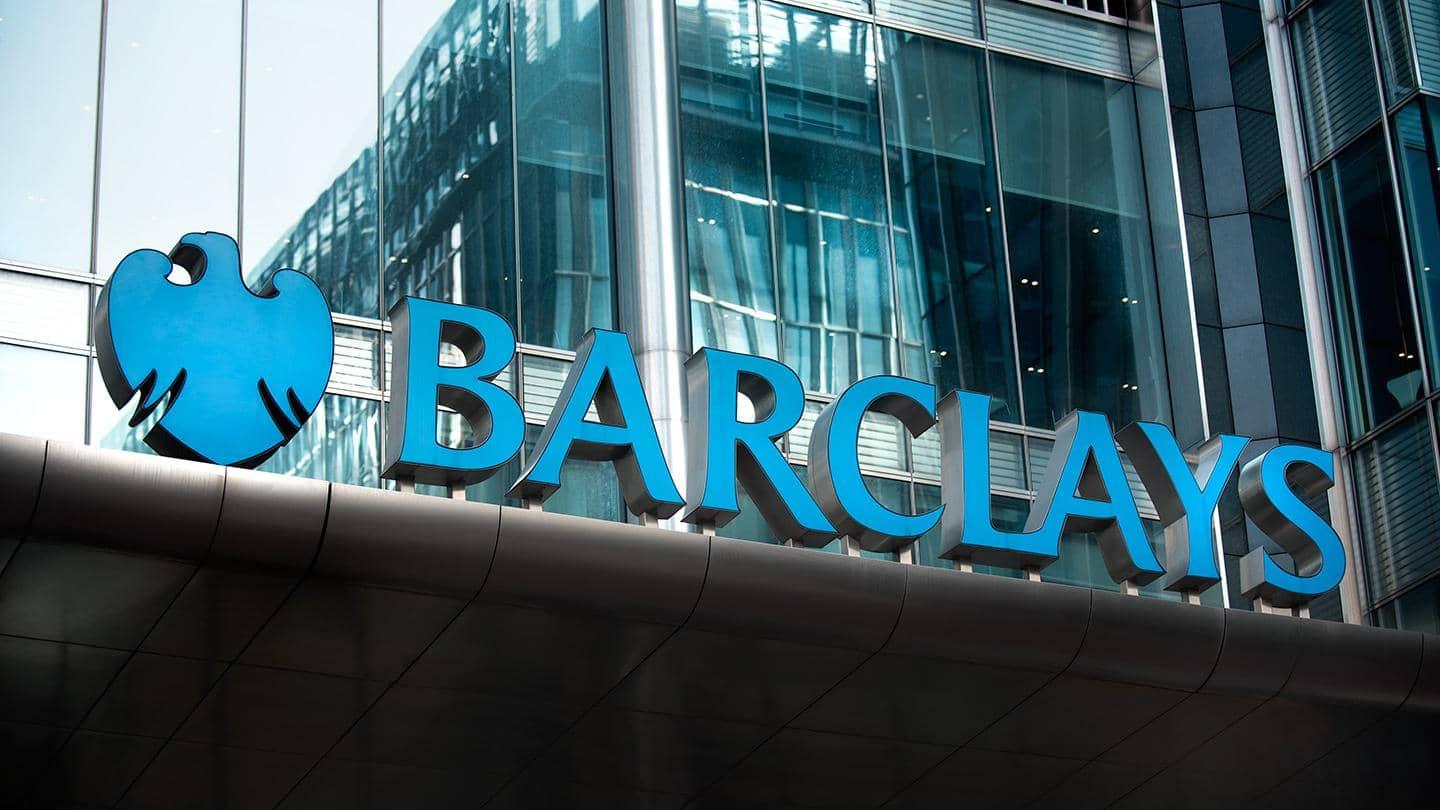
Barclays is calling for more robust regulation of all buy-now-pay-later products as new research suggests the lack of consistent affordability assessments among short term interest-free credit providers has led shoppers to take on more debt than they can afford to repay*.
Consumers are taking out unregulated BNPL contracts when they’re not in a financially stable position to do so, with new research revealing that a quarter (24 per cent) of BNPL users are concerned about their ability to repay their BNPL bills. This figure rises to over a third (34 per cent) among 18–34-year-olds. A further three in 10 (31 per cent) are overwhelmed by the amount coming out of their account in BNPL bills.
When lending is regulated, robust affordability assessments are required on a customer’s personal financial circumstances before the loan is approved. This helps ensure that the customer is only borrowing what they are comfortably able to pay back.
One of the pitfalls of unregulated lending is that these thorough affordability checks are not required, and are therefore not always carried out. As a result, customers may be less likely to have sufficient funds available to pay back borrowing on time.
Barclays’ research highlights that this lack of regulation can lead to irresponsible lending, with people taking out BNPL contracts when they have been rejected by the regulated alternatives. More than a third (35 per cent) of BNPL users admit that they chose to pay with BNPL because they had insufficient funds in their current or savings account to pay for their purchase, and 10 per cent say it was because their applications for a credit card had been rejected. Of particular concern, almost a quarter (23 per cent) of 18–34-year-old BNPL users have had to reduce their spending on essential purchases like groceries, in order to keep up with their BNPL repayments.
The research suggests that one of the reasons for mounting BNPL payments taking shoppers by surprise is the relative ease with which they can accrue debt across multiple providers, with almost half (47 per cent) of BNPL users admitting that they have had BNPL loans from different providers at the same time. Of those, three in five (60 per cent) say they have had three or more concurrent BNPL providers. The average BNPL user is currently paying off £293 in BNPL loans.
This highlights another drawback of the current regulatory framework, which is that unregulated short-term, interest-free credit providers are not currently required to report loans to the Credit Reference Agencies, which means that a customer’s monthly BNPL repayments are not always visible to other credit providers to factor into their own affordability assessments. This can result in further credit being extended to a consumer already struggling with debt, compounding the problem.
More broadly, the research demonstrates that there’s still a knowledge gap that needs to be addressed, with one in 10 (11 per cent) BNPL users believing that if they missed a payment, it wouldn’t affect their credit score. This is despite nearly a fifth (18 per cent) of 18–34-year-old BNPL users admitting they have had their credit score impacted due to missed BNPL payments.
The research also suggests that the frictionless nature of BNPL as a way to pay encourages shoppers to overspend with three in 10 (30 per cent) BNPL users between 18 and 34 saying the availability of BNPL has made them shop without thinking, because it’s so easy to buy something in the moment and worry about repayments later. Overall, 30 per cent of shoppers have said they regret using it because they have bought more than they can afford to repay. This number rises to 44 per cent among 18-34 year olds.
Antony Stephen, CEO of Barclays Partner Finance, said: “It’s essential that the new rules around BNPL regulation are fit for purpose and protect consumers from spiralling debt. Our research identifies the shortcomings of unregulated short-term interest-free credit options and highlights that people are still not clear on the repercussions of not making repayments. Barclays believes all consumer credit products should be subject to the same level of regulation, to avoid an unnecessary two-tier regulatory framework that goes against the best interests of consumers.”
“Many of the UK’s largest retailers choose Barclays as their finance partner because they share our views on the importance of putting customer outcomes ahead of short-term profits. That’s why we’re calling for more consistency in the regulation, with a common framework applying to all consumer credit products, and we are hopeful that HM Treasury’s review will deliver this.”
Barclays Partner Finance has been providing regulated point-of-sale lending products and services for many years, offering interest-free and interest-bearing loans at the point of need over a range of lending periods. For example, in December the company extended its partnership with Amazon to enable customers to pay in instalments on purchases of £100 or more on amazon.co.uk.
This new, flexible payment method, Instalments by Barclays, is a fully-regulated lending option where Barclays carries out full credit and affordability checks, to ensure consumers are only borrowing what they can afford.
As a responsible lender, Barclays treats all BNPL-type lending as regulated, even where the product may fall within the definition of unregulated BNPL, because we believe it’s in the best interests of consumers.
- 06:00 am

Geopolitical issues, including the heightening Ukraine-Russia tensions, will drive Bitcoin’s increasing mass adoption and higher values this year – despite a 5% drop in the last 24 hours.
The prediction from Nigel Green of deVere Group, the CEO of one of the world’s largest independent financial advisory, asset management and fintech organisations, comes as more than 100,000 Russian troops mass on the border with Ukraine and global leaders try diplomatic efforts to avoid war between the two countries.
He comments: “Serious geopolitical risks in recent weeks are demonstrating real life use cases for Bitcoin and cryptocurrencies in extremely volatile times.
“Research shows that Bitcoin donations are flooding into Ukrainian non-governmental organisations and volunteer groups. The crowdfunding activities are, say experts, being used to equip the Ukrainian army with military and medical supplies.
“Meanwhile, Ukraine’s adversary, Russia, is planning to regulate cryptocurrencies, with crypto legislation, including tax standards, expected as soon as next week.
“Both these rivals know that Bitcoin and cryptocurrencies can circumnavigate traditional financial institutions that might block transactions as in crypto there’s no central authority that can block payments.”
He continues: “Elsewhere, we’ve recently seen the advantage of raising funds in cryptocurrencies is that it’s a lot harder to confiscate them.
“In what many have argued is down to political over-reach, a decision was made by GoFundMe this week to remove the donation campaign for the Canada ‘Freedom Convoy’ trucker protest from its site and return the millions of dollars back to the donors.
“But, in response, crypto enthusiasts set up a crowdfunding campaign on the platform Tallycoin as an alternative way to raise money for the protestors.”
Yet despite these high-profile examples of use cases, Bitcoin has dropped in value by 5% in the last 24 hours. Why?
“This was triggered by a wider risk-off sentiment that also impacted many areas of global stock markets.
“Stock markets, like the crypto market, never move in a straight line, there are always peaks and troughs. Yet history teaches us that the long-term trajectories are predictable for both: they go up.”
On Wall Street on Friday, The Dow Jones Industrial Average dropped 1.4%, the broad-based S&P 500 fell 1.9%, while the tech-rich Nasdaq Composite Index tumbled 2.8%.
Nigel Green concludes: “Bitcoin is widely regarded as a valuable store of value and medium of exchange.
“But geopolitical issues this week have tested its other core values of being a viable decentralised, tamper-proof, unconfiscatable monetary system.
“These real life use cases will further increase Bitcoin’s mass adoption and lead to higher prices this year.”
- Product Reviews
- 14.02.2022 08:29 am
- SEON
Please tell us about SEON. What does the company do?
SEON is using Artificial Intelligence (AI) to redefine what it means to fight online fraud. Since starting in 2017, we have developed our solution into a revolutionary AI fraud prevention platform.
With specialties in the neo-banking, crypto, eCommerce and Buy Now, Pay Later (BNPL) sectors, SEON is well-equipped to deal with the demands of modern online fraud prevention. We boast several of the most ambitious fintech companies in the world as clients, including Revolut, Nubank and Patreon.
As of 2022, SEON now provides its services to over 5,000 merchants, has reviewed over 1 billion transactions and has saved its clients more than €50 million. As a globally focussed business, we operate offices in Austin (TX), Budapest, London and Jakarta.
What recent developments would you highlight?
As a hypergrowth startup, SEON is constantly striking up new and exciting partnerships with some of the world’s fastest growing companies. A great example is the recent launch of our fraud prevention solution on Shopify. Our solution is helping to reduce chargebacks, lost payments, and goods across Shopify’s 1.75 million merchants globally.
Powered by AI and machine learning, the app amplifies protection for ecommerce merchants by using automated, real-time data checks and assigning risk scores across each purchase. This is all made possible through SEON’s industry-leading intelligent scoring engine, which represents an amazing new tool in the battle against online fraud.
Looking back over the last two years, what have been the key drivers of your growth?
SEON is now the world’s fastest growing fraud prevention company, having experienced incredible rates of growth during the past two years. Underpinning this expansion are several key drivers, which include increased staffing levels, the leveraging of Series A investment and a commitment to reinvesting in its own technology.
For example, we have more than quadrupled in size since the start of 2021. In the past year alone, SEON took on around 150 employees, with further plans to double that number again in 2022. To accommodate these new teams, we recently opened new offices in Austin and Jakarta.
As a product tech company, SEON is also constantly reinvesting in its technologies. Most recently we launched our CatBoost Blackbox machine learning update, as well as an improved dashboard design. The upgrades are helping our solution to run more effectively than ever before.
Finally, SEON has worked to leverage the Series A investment it received from venture capital partner, Creandum into new avenues for growth. Alongside the $12 million investment it received, we have worked to build new partnerships within Creandum’s broader investment network, which has helped it to continue growing.
Can you please give us some specific examples of how your solutions have really had a positive impact on your clients?
SEON’s success is based on being at the forefront of technology, using industry-leading supervised Machine Learning (ML) systems and open APIs. We value transparency and explainability within our systems, which is why for many years we opted for whitebox machine learning systems over blackbox alternatives. These systems allow risk managers to gain more control over the engine in order to tweak, test, and measure the results of each risk rule.
For over five years, major clients have relied on our platform to deliver results. A great example of this is our partnership with Patreon. With SEON’s reverse email and social media lookup tools, Patreon was able to reduce friction in acquiring extra data. In turn, Patreon reduced its manual payment verification process from 24 hours to 30 minutes, with better data accuracy helping to lower customer insult rates from 6% to 2%.
What are the main trends that will determine how your company develops over the coming two years or so?
Fraud is on the rise across all aspects of society but growing particularly quickly online. SEON’s core aim is to democratise the battle against online fraud and to ensure that businesses of all sizes have access to robust, affordable, and user-friendly solutions, which help to mitigate this risk.
Since the pandemic, we have seen a great amount of fraud migrate online. This has not gone unnoticed by businesses, who are beginning to wake up to the need to treat cybersecurity as seriously as they do physical security. As a result, companies like SEON should expect to see further growth in the near future.
What does the competitive landscape look like from your point of view?
Against the backdrop of the pandemic, many traditional security companies have tried to refocus their outlooks to become more online-centric. However, many of these companies lack the specialized knowledge needed to offer truly effective solutions online. Conversely, at SEON, we’ve already been providing these services for over half a decade.
Across the market, there is now a noticeable trend of companies who are not investing enough time, or resources into testing, or developing their product and growing frustrations about businesses who remain vague on their pricing structure. At SEON, we pride ourselves on being the antithesis to this phenomena.
Ultimately, the need for effective online security has never been greater, but arguably, the number of providers able to offer it has never been smaller. Of course, there are worthy competitors within our field, but none can offer a solution as effective and accessible as SEON’s, which is why we’re leading the pack.
How would you summarise all this in one or two sentences?
SEON is redefining what it means to fight online fraud and helping to democratize the fight against online fraud for all sizes of online business; small, medium and large.
SEON
Other Product Reviews
- 08:00 am

~70% of all eligible former and current employees liquidated their ESOPs~
~The soonicorn offered employees ESOP at different stages of their tenure with the company~
B2B e-commerce and supply chain enablement platform Bizongo has announced the completion of its first Employee Stock Ownership Plan (ESOP) monetization program worth $3.7 million. While 102 of Bizongo’s former and current employees were eligible for the buyback, only 70% of employees opted to liquidate ESOPs from the pool worth $4.8 million.
Through this move, the startup aims to create wealth for employees and give them a chance to benefit from the growth achieved since last year. Considering that Bizongo’s valuation has taken flight over the years, employees were able to generate significant wealth. The buyback further helped employees to build a second source of income and enhance their financial planning. The company will also use the buyback to build world-class teams and acquire more talent.
ESOPs have been a part of the company's talent welfare program strategy right from the beginning and given across all levels of employees at different stages of their tenure with the company in the form of joining bonuses or annual bonuses and rewards.
Ankit Tomar, Co-founder and CTO at Bizongo said, “Bizongo has witnessed hyper-growth in revenue over the past few years and this is a direct outcome of the hard work and dedication of CULTivators (Bizongo employees, who together form the organizational culture - CULT). Our employees are an invaluable asset and partners, who have helped us achieve newer heights and remain profitable even during the pandemic. Today, we are a market leader in the customized goods category and this ESOP repurchase is our little way of sharing our success and growth with all who have been a part of Bizongo’s journey so far”
The ESOP buyback comes on the heels of the platform’s recent entry into the soonicorn club and a fundraise of $110 million in Series D round led by Tiger Global Management, among others.
Launched in 2015, Bizongo is on an aggressive growth path. The company’s core platforms - Procure Live and Partner Hub – have over 300 enterprise customers and a base of over 3,000 partner factories. Through strong partnerships with more than 15 financial institutions, the Supply Chain Financing (SCF) vertical has processed over INR 1200 crore in working capital lines to MSME vendors, registering an 8X growth since last year.
- 08:00 am

In 2022 PayRetailers will continue as an Official Sponsor of CONMEBOL Sudamericana for the second consecutive year. The partnership reaffirms the innovative PSP platform’s presence in Latin America, consolidating its leadership in cross-border payment processing in the region.
Solid infrastructure in Latin America
PayRetailers begins its second year as the Official Sponsor of The South American Football Confederation (CONMEBOL). The confederation unites all Latin Americans under a single, fervent passion for football, one which is shared by PayRetailers as it continues to strengthen its reach and infrastructure in the region. The company’s team of specialists are focused on delivering the most effective local payment solutions to their global client base.
Latin America is a region with disparate cultures and economic infrastructures and requires specialized knowledge for businesses to operate successfully in the region. LATAM is an exciting growth region and each country has different consumer habits, levels of technological progress, infrastructure and payment methods.
PayRetailers' strategy is to provide powerful payment solutions with locally trained staff in the most developed countries for cross-border payments. At the same time, the innovative fintech firm helps nurture emerging markets on their road to financial inclusion so that everyone has access to local and international products and services.
A strategy focused on emerging markets
Thanks to the brand exposure offered by CONMEBOL Sudamericana, PayRetailers has a shared platform with world-renowned companies such as QATAR Airways, EA SPORTS, MG Motor, Amstel, Betfair and others that already have a solid positioning in the region.
According to CEO and Founder Juan Pablo Jutgla, "Becoming an Official Sponsor of this competition is a dream come true that reflects our outstanding commitment to Latin America. Now, our brand will be able to connect with more people and businesses".
Throughout 2022, PayRetailers will continue leveraging its brand presence in football stadiums and the CONMEBOL Sudamericana live broadcasts and digital marketing initiatives.
About PayRetailers
With over 250 payment methods and their intimate knowledge of the region, PayRetailers support merchants wanting to expand their business into LATAM. At the same time, enabling consumers to access their preferred payment systems to purchase the products or services they want through online commerce.
To explore new opportunities in Latin America, speak to one of our multi-lingual staff.
- 04:00 am

Google LLC today announced that it has signed a definitive agreement to acquire Mandiant, Inc., a leader in dynamic cyber defense and response, for $23.00 per share, in an all-cash transaction valued at approximately $5.4 billion, inclusive of Mandiant’s net cash. Upon the close of the acquisition, Mandiant will join Google Cloud.
Today, organizations are facing cybersecurity challenges that have accelerated in frequency, severity and diversity, creating a global security imperative. To address these risks, enterprises need to be able to detect and respond to adversaries quickly; analyze and automate threat intelligence to scale threat detection across organizations; orchestrate and automate remediation; validate their protection against known threats; and visualize their IT environment in order to identify and simulate new threats. The cloud represents a new way to change the security paradigm by helping organizations address and protect themselves against entire classes of cyber threats, while also rapidly accelerating digital transformation.
The acquisition of Mandiant will complement Google Cloud’s existing strengths in security. Google Cloud offers customers a robust set of services including pioneering capabilities such as BeyondCorp Enterprise for Zero Trust and VirusTotal for malicious content and software vulnerabilities; Chronicle’s planet-scale security analytics and automation coupled with services such as Security Command Center to help organizations detect and protect themselves from cyber threats; as well as expertise from Google Cloud’s Cybersecurity Action Team. With the addition of Mandiant, Google Cloud will enhance these offerings to deliver an end-to-end security operations suite with even greater capabilities to support customers across their cloud and on-premise environments.
As a recognized leader in strategic security advisory and incident response services, Mandiant brings real-time and in-depth threat intelligence gained on the frontlines of cybersecurity with the largest organizations in the world. Combined with Google Cloud’s cloud-native security offerings, the acquisition will help enterprises globally stay protected at every stage of the security lifecycle:
- Advisory Services: Mandiant’s proven global expertise in providing comprehensive incident response, strategic readiness and technical assurance helps customers mitigate threats and reduce business risk before, during and after an incident.
- Threat Detection and Intelligence: Mandiant’s experience detecting and responding to advanced adversaries offers customers actionable insights into the threats that matter right now.
- Automation and Response Tools: Security operations tools within Google Cloud’s Chronicle, Siemplify solutions and Mandiant’s Automated Defense help customers analyze, prioritize and streamline threat response and leverage Mandiant’s expertise as a virtual extension of their teams.
- Testing and Validation: Mandiant Security Validation helps customers continuously validate and measure the effectiveness of cybersecurity controls across cloud and on-premise environments, and complements Google Cloud’s Security Command Center to help ensure strong risk management.
- Managed Defense: Mandiant's managed detection and response service acts as a seamless extension of customers' security teams, delivering continuous monitoring, event triage and threat hunting that's agnostic to customers' endpoint and network tooling.
“Organizations around the world are facing unprecedented cybersecurity challenges as the sophistication and severity of attacks that were previously used to target major governments are now being used to target companies in every industry,” said Thomas Kurian, CEO, Google Cloud. “We look forward to welcoming Mandiant to Google Cloud to further enhance our security operations suite and advisory services, and help customers address their most important security challenges.”
“There has never been a more critical time in cybersecurity. Since our founding in 2004, Mandiant’s mission has been to combat cyber attacks and protect our customers from the latest threats,” said Kevin Mandia, CEO, Mandiant. “To that end, we are thrilled to be joining forces with Google Cloud. Together, we will deliver expertise and intelligence at scale, changing the security industry.”
As a pioneer in offering multicloud technology, Google Cloud’s security operations suite will continue to provide a central point of intelligence, analysis and operations across on-premise environments, Google Cloud and other cloud providers. In addition, Google Cloud is deeply committed to supporting the technology partners of both companies, including the endpoint ecosystem. This acquisition will enable system integrators, resellers and managed security service providers to offer broader solutions to customers.
The acquisition of Mandiant is subject to customary closing conditions, including the receipt of Mandiant stockholder and regulatory approvals, and is expected to close later this year. For more information, see Mandiant’s press release.
- 06:00 am
By the numbers: UK-based fintechs scored a sevenfold funding jump last year.
- London attracted more fintech funding than the rest of Europe, the Middle East, and Africa (EMEA) put together.
- The investment total was driven by 601 deals completed last year, up 27% from 2020.
- London’s fintech boom was boosted by massive deals like the London Stock Exchange’s buyout of Refinitiv for $27 billion and Wipro’s $1.5 billion Capco takeover.
- Five of the 10 largest fintech deals in the EMEA region were completed in the UK.
Why is funding up? The UK has created an environment that attracts fintech funding and encourages startups:
- Government support: The UK government sponsored the Kalifa Review of UK Fintech, which recommended strategies to stimulate fintech development, including a dedicated $1.28 billion Fintech Growth Fund. The government also funds Tech Nation, a network for accelerating fintech growth.
- Favorable regulatory environment: The Financial Conduct Authority (FCA) has taken an active role in developing the industry. It established a sandbox where approved fintech firms can test products with real consumers and updated its rules to let companies with dual-class shares join the premium segment of the London Stock Exchange (LSE). The new rules broaden fintechs’ investor bases and could benefit firms like Wise that are listed on the LSE’s standard segment.
- Tech-savvy customers: The UK’s consumer base has one of the highest fintech adoption rates in the world, at 71%, per The Global City—giving fintech firms a huge market in which to win customers.
- Thriving tech scene: Zooming out from financial services, UK tech firms captured more than one-third of investments into Europe in 2021, bringing in roughly £30 billion. Raises from tech firms going public also grew, doubling from 2020 to hit £6.6 billion ($9.08 billion). A culture of tech entrepreneurship and a wide talent pool have turned the technology sector into a bright spot in the UK economy
What next for UK fintech funding? We predict that global fintech funding will reach a new record this year, surpassing $150 billion. Despite rising interest rates and funding growth in rival markets like Latin America and the EU, Britain’s fintech scene will continue to attract considerable investment.

Michael Moran
Senior Currency Strategist at ACY
Summary: It was all happening overnight in the FX markets after the US Headline CPI in January rose at an annual rate of 7.5%, beating economist’s forecasts at 7.3%. see more
- 02:00 am

GHD, the leading professional services company, has partnered with Silta Finance to help develop Silta’s collateral bridge between infrastructure developers and decentralised finance (DeFi) by experimenting with the technology solution and providing feedback and improvement suggestions.
Silta’s vision is to be a collateral bridge between project companies and DeFi, enabling the provision of on-chain collateral for infrastructure projects. This way, borrowers can access the billions of dollars’ worth of liquidity locked in the DeFi market to fund sustainable infrastructure projects.
With its 10k-strong workforce and 200 offices spread across five continents, GHD is working closely with its clients to drive forward the clean energy transition. As Silta’s partner, GHD will be focusing on reviewing the Silta borrower portal, the scoring algorithm, and the monitoring system for contractor performance and loan repayments.
Like the team of Silta, GHD recognises the need for innovation within lenders’ transaction advisory services. GHD’s Executive Director for UK, Europe and Middle East, Timothy Mawhood says: “The world of finance is changing rapidly and critical infrastructure programmes can’t afford to miss the boat. As we continue to recover from the pandemic, there’s no doubt that infrastructure will play a bigger role in our lives economically, as well as from a social and environmental perspective. That’s precisely why accessing decentralised finance could prove critical. The Silta platform has the potential to really pave the way on this and we’re extremely proud to be playing our role in making that happen.”
“GHD is one of the most prestigious infrastructure consulting firms in the world, so it’s quite an honour to have them support the Silta project. Having spoken with members of the board at GHD, it was clear that there is fantastic alignment with the vision of Silta. We are grateful to have access to such a wide pool of experience”, says Silta co-founder and CEO Ben Sheppard.
The Silta technology solution is currently under development. The project aims to begin accepting collateral loan applications in 2022.