
Published
- 01:00 am
Bank of Kigali goes live on Temenos platform to power faster, smarter digital banking while scaling to one million retail and SME customers in Rwanda
Temenos (SIX: TEMN), the banking software company, today announces that Bank of Kigali Plc, Rwanda’s largest bank by assets and market share, has gone live on Temenos. Replacing its core banking system with Temenos open platform for composable banking allows the bank to break free from legacy constraints and accelerate its digital transformation.
Bank of Kigali can now quickly expand its digital channels and engagement to deliver faster, smarter customer experiences. Powered by Temenos, Bank of Kigali aims to double its retail and SME customer base to over one million in the next year through increased automation and new digital services such as payroll loans and enhanced mobile offerings.
The Temenos platform, including Financial Crime Mitigation (FCM) solution, was implemented by Temenos partners Inlaks and MCB Consulting. With integrated core banking and data management capabilities, the bank can deliver a smooth customer experience with controlled risk.
Dr. Diane Karusisi, Chief Executive Officer, Bank of Kigali, commented: “We are delighted to be live on Temenos, the modern technology platform of choice for banks worldwide. Temenos is crucial to our vision of giving anyone, anywhere, the best customer experience through digital and retaining our position as the leader in the country. We also benefit from a wealth of insight and information on banks worldwide as part of the Temenos Value Benchmark that helps us understand, accelerate, and optimize the business value created by our technology investment. I commend our staff and the support of Temenos, Inlaks and MCBC for their hard work in ensuring this go-live went as planned despite all the constraints brought by COVID-19 in the past two years. We can now propel our product innovation and lead the way in digital financial services while benefiting from increased automation to achieve operational efficiency.”
Jean-Paul Mergeai, President EMEA - APAC, Temenos, said: “Congratulations to the team at Bank of Kigali. The go-live on Temenos is a major milestone for the bank and its customers. Rwanda has “bet big” on digitization to accelerate growth and reduce poverty with some of the highest rates of coverage for mobile broadband on the continent. Bank of Kigali has similarly bold ambitions for digital transformation to improve the financial lives of all Rwandans. A modern banking platform is vital to thrive in the world of instant, always-on digital banking and Temenos is proud to support the bank to realize its vision.”
Kyari Bukar, CEO, African Operations, Inlaks, added: “As a Temenos partner, we have built our expertise and reputation supporting the growth and digital advancement of core banking operations in the East African region and beyond. Bank of Kigali will benefit immensely from the implementation as the automation of its banking processes will strengthen the effectiveness and performance of its core banking system. Kigali is a key growth market and Inlaks is fully committed to working as a trusted partner with the bank now and into the future”.
Jean-Michel Félix, CEO of MCB Consulting, added: “Congratulations to the whole team of Bank of Kigali, who worked tirelessly and brilliantly to go live on Temenos core banking system. This upgrade is a major shift for Bank of Kigali and quite a milestone, which will undeniably be instrumental in the bank’s growth as it expands its business over time and develops new activities for its customers. Bank of Kigali is grooming itself to be a state-of-the-art bank as part of its digital transformation program. As a trusted and long-standing partner of Temenos, we are honored to have accompanied the bank over the past two years, and particularly on a remote basis during the pandemic, leading to this successful go-live.”
- 09:00 am

Highlighting market benefits derived from the evolution of international standards
The Association of National Numbering Agencies (ANNA), a global association dedicated to the support of efficient capital markets through the use of widely embraced International Organisation for Standardisation (ISO) standards, today announced the timeline for National Numbering Agencies’ (NNAs) implementation of the revised ISO 6166 International Securities Identification Number (ISIN) standard, bringing further clarity and transparency in the identification and reporting of trades through the use of international standards.
The revised ISO 6166 standard was published in February 2021, following the systematic review by ISO. Highlights of the ISIN standard revision include:
an increased data set with the formal inclusion of Legal Entity Identifier (LEI), Classification of Financial Instruments (CFI) and Financial Instrument Short Name (FISN) as part of the minimum data record
explicit language to confirm the standard covers both financial and referential instruments
assignment rules for OTC derivatives as already implemented by the Derivatives Service Bureau
clarification that ISIN is assigned on a technology agnostic basis, including assignment for tokenised financial and referential instruments
emission allowances, carbon credits and baskets confirmed as instruments within the scope of ISIN assignment
recognition that ANNA is responsible for determination of additional ISIN prefixes to ensure full coverage, e.g. for substitute numbering agencies.
Following the revised and published ISIN standard and together with the ASB Operators, a timeline has been agreed for introducing the necessary changes to the ANNA Service Bureau (ASB) as well as an appropriate timeline for NNAs to enhance their internal systems to contribute the additional data to the ASB. The implementation date has been confirmed as 2 February 2023. Upon implementation, the changes will be available to users of the freely available ISIN Lookup Service and subscribers of ASB services.
Emma Kalliomaki, MD of ANNA, said, “ANNA has been working continuously with stakeholders to help address regulatory obligations as well as to address standardisation challenges. As the market evolves, so too has the ISIN standard under ISO’s governance. Since the publication of the latest version of ISO 6166, there has been much discussion and collaboration on how best to set the implementation timelines, which are now agreed as February 2023. The ISIN revisions have improved clarity of terms, scope and coverage of the standard, which further enhances usability, increasing transparency and aiding risk and exposure management thereby ultimately benefiting the market.”
- 03:00 am
Avelacom is bringing lowest latencies to global crypto trading firms to and from BitMEX’s data infrastructure in Ireland
Avelacom, the low latency connectivity, IT infrastructure and data solutions provider for global financial markets, has joined the BitMEX Partner Programme that provides traders with the most advanced crypto derivatives trading experience in the market.
Avelacom has pioneered low latency access solutions to crypto exchanges via its proprietary fiber network. Avelacom has built low latency connections between BitMEX and other global markets. These facilitate arbitrage trades and help attract more trading firms to join cryptocurrency markets.
BitMEX utilize’s AWS’ best in class data infrastructure in Ireland, accessed by users of the BitMEX platform across the globe. Avelacom owns ultra-low latency routes across multiple global locations as well as direct connections with the AWS and Alibaba clouds. These provide a ready-made environment for real-time market data and order execution.
Aleksey Larichev, CEO of Avelacom, said: “We are pleased to be joining the BitMEX Partner Programme. Since 2018, when the cryptocurrency environment started to attract institutional traders, our customer base has increased significantly. Low latency access to BitMEX is one of the most successful solutions in our portfolio, which we would like to develop and upgrade both from technical and business perspectives.”

Genia Mikhalchenko, Vice President, Spot Exchange at BitMEX said: “Avelacom laid the blueprint for how institutions should connect to crypto exchanges. Its network makes it easier for BitMEX trading members to interact with our platforms as well as to access other global crypto markets, no matter where they are located – in public clouds or data centers.”
- 01:00 am
Spandana Sphoorty Financial Limited (NSE: SPANDANA; BOM: 542759, “Company”), at its Board Meeting on February 14, 2021, announced its results for the quarter that ended December 21, 2021. Spandana’s business demonstrated a robust performance in the quarter, which was the first one to be completed post the management transition at the Company. It reported a consolidated net profit of INR 45.1 crore, as compared to a loss in the previous quarter.
Cash collection in December and January continued to be robust at ~INR 4,450 mm per month, ~5% more than the October and November transition period, despite an ~11% Q-o-Q reduction in AuM (assets under management) due to the natural run-down of the book. February collections continue to stay similarly strong.
The Company continues to fulfil all lender repayments/commitments as per the scheduled dates, and is also pleased to announce the receipt and drawdown of a new debt sanction from an incumbent lender – the first since the management transition, as the Company returns to its growth path.
The incremental operational cash generation of INR 750-1,000 mm per month, along with the new debt drawdown, several other sanctions in pipeline, and the planned equity capital raise will provide the company with enough dry powder to ramp-up disbursements very rapidly. The company has already resumed its regular disbursal activity in January 2022, and has disbursed ~INR 3,000 mm of new loans in the month of February so far, and is expected to disburse more than 10,000 mm in Q4 FY21-22.
Spandana has made significant progress in its new, upgraded IT systems implementation over the last three months. It includes a Microsoft Azure-based cloud environment with live backups, access to web-based technology at any time and from anywhere, encrypted architecture with latest security protocols, a comprehensive audit trail with robust maker-checker systems and a tightly integrated system from Loan Origination to General Ledger.
The organisation has stabilised post the management transition, with the addition of a very strong CTO from a very reputed private sector bank. Employee attrition is at 3% in the current quarter – one of the lowest levels in the company’s history – and continued hiring is in progress to further augment the team. This will provide a robust foundation from which to drive sustainable growth and profitability.
The Board also announced its unanimous decision to raise INR 3,000 mm this quarter through a preferential allotment to support the Company’s future growth plans, subject to receiving all relevant shareholder and regulatory approvals. The Company’s existing promoter shareholder, Kedaara Capital, and a significant long-term shareholder, Valiant, are committed to support Spandana though its journey, and will subscribe to shares in the preferential allotment at a price of Rs. 459 per share, which is a ~23% premium to yesterday’s closing price.
Spandana’s board and the leadership remain committed to grow the company and take it to greater heights, assuring trust and confidence to its customers, and promising stability and growth to its employees.
- 08:00 am
Everscale is pleased to announce that Moonstake, a leading staking pool, will begin supporting the Everscale blockchain cryptocurrency EVER on February 23, 2022.
Everscale Japan, Everscale's community organization in Japan, has been seeking partnerships to expand the Everscale ecosystem since its inception in 2021. In the first phase of the collaboration with Moonstake, Everscale Japan held a large-scale event in August last year to present EVER to the community. In the second phase of the collaboration, Moonstake's wallet will be compatible with EVER, and EVER will be available for staking.
What is staking?
Staking is a mechanism that allows users to earn newly issued cryptocurrency by depositing cryptocurrency. While there are differences depending on the type of cryptocurrency, the typical yield on staking is around 5-10% per year. As of February 2022, the total amount of crypto assets currently in circulation that have been staked amounts to $236.8 billion.
Everscale's staking allows users to obtain newly issued EVER by participating in the blockchain approval process with the cryptocurrency EVER. Currently, Everscale's staking yields an annual interest rate of about 5.43%.
Advantages of EVER becoming Moonstake compatible
Since Moonstake offers a multi-currency wallet with staking support, EVER users will be able to manage a variety of cryptocurrencies, including EVER, with a single wallet, and will also be able to stake other cryptocurrencies from their Moonstake wallet, greatly reducing the time and effort required to manage their own assets.
EVER giveaway Campaign
To celebrate Moonstake's support for Everscale staking, Everscale Japan is running a giveaway campaign for EVER.
The first 2,000 people to open a Moonstake account through the Moonstake registration link below will receive $10 worth of EVER tokens. Details of the event will be announced on Everscale Japan's Twitter.
- 09:00 am
The Mental Wellness Plan by Nova Benefits provides unlimited leaves, counselling through partnership with Manah Wellness
● Additionally, employees are provided with child and pet care leaves
● Team Nova’s employee NPS score is at a whopping 70 due to constant updation of their wellness plan
Nova Benefits, an employee wellness platform centred on corporate health insurance, announced the roll-out of The Mental Wellness Plan for all employees of the company. Going beyond physical health and wellness, the company has taken this initiative to ensure the mental well-being of its employees, with utmost importance.
As part of the wellness plan, Nova Benefits has partnered with Manah Health and Wellness to provide mental health counselling to employees in need, irrespective of their location. Additionally, all expenses incurred by employees for mental health purposes, including weekly counselling sessions, are reimbursed by the company. This is a significant benefit to employees as it gives them the independence to go to counsellors of their choice, without the worry of cost, given that consultations can be expensive.
Speaking about the mental wellness plan, Saransh Garg, CEO & co-founder of Nova Benefits said, “Our mission at Nova is to build happier and healthier workplaces. We’re doing so by making health benefits easy to use and personalised. Our employee wellness platform is centred around corporate health insurance. We ensure we take care of people when they're hospitalized but also prevent them from falling sick in the first place. At Nova, our goal is to cover 10 million people in India by 2025.”
He further added, “This plan will let employees take control of their health, holistically, with our support at every step. The wellness of our employees results in a happy, healthy work environment at Nova, and we wouldn’t have it any other way!”
Nova Benefits also offers its employees unlimited and no-questions-asked leave, under the Unlimited Leave Policy. Additionally, employees are required to take a break after every 45 days of continuous work. In addition to the wellness benefits, the company also provides pet care, child care, and period leaves, along with menstrual time off. Further, employees are given free access to Practo, for any of their physical healthcare needs.
Nova’s HR team conducts eNPS surveys once a quarter to understand the needs and expectations of employees. Speaking about Nova’s approach to employee well-being, Shiffana MK, Human Resources Manager at Nova Benefits, said, “Last quarter, we conducted peer circles for every single team in collaboration with Manah. Everyone now had a space where they could be vulnerable with their teammates and share their feelings about work-related struggles and challenges. Colleagues also built a sense of “not being alone” in this journey. The result – A team that’s more committed to working compassionately to accomplish common goals at work!”
She further added: “Manah’s peer circles pushed the HR team to do more, and Nova decided to revise its leave policy into a well-being policy.”
Mental health and wellness is an integral part of everybody’s existence. The Central Government, recognizing its importance, recently announced the ‘National Tele Mental Health’ programme, as a part of the Union Budget 2022 - promoting tele-mental health facilities boosts reach of mental wellness services even to the most remote areas. Companies too are now taking increased efforts in promoting and encouraging the wellbeing of their employees.
- 03:00 am
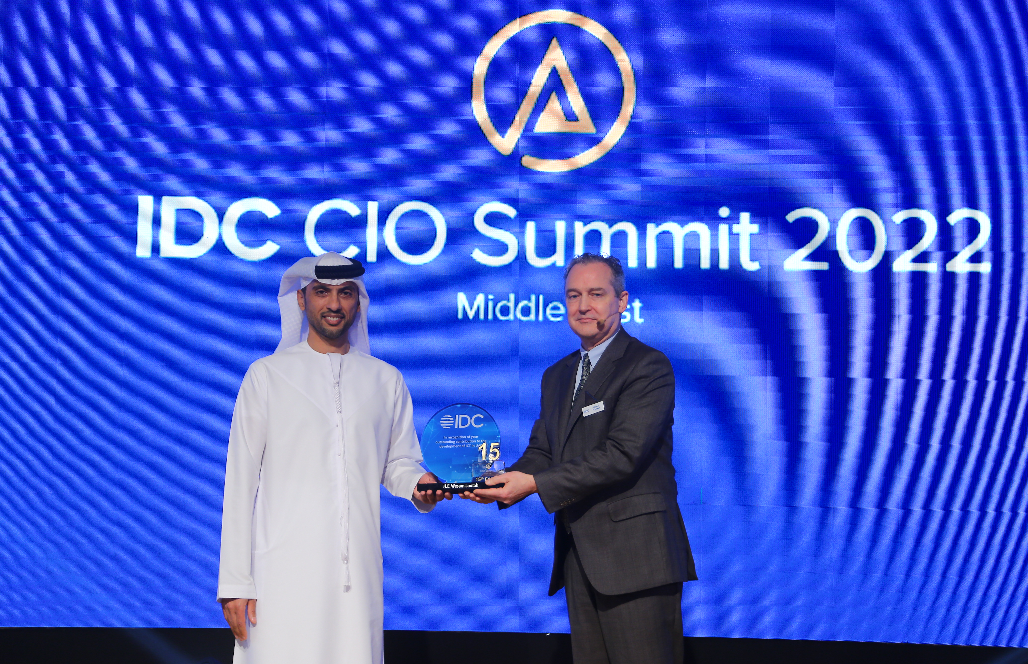
International Data Corporation (IDC) today launched the 15th edition of its annual IDC Middle East CIO Summit at The Ritz-Carlton, Dubai International Financial Centre. With more than 200 of the region's most influential ICT decision makers in attendance, the event — which this year runs under the theme 'Accelerating Your Journey to a Digital-First World' — was opened by His Excellency Wesam Lootah, CEO of Smart Dubai Government, Digital Dubai.
"As we gradually move out of the pandemic, we all have many questions in mind, and as leaders, we must think of all these questions, consider all the possibilities at hand, and plan the best course of action for the future," said His Excellency in his opening address to the gathered delegates. "We are aware that digital platforms, e-services, augmented reality, machine learning, and cloud computing are important digital tools that act as enablers in the new digital economy. However, our role is not restricted to only providing and applying these tools in our organizations. We need to embrace a digital-first leadership, one that truly understands how people choose to communicate, learn, bank, shop, and live their lives in a digital world."
Steven Frantzen, IDC's senior vice president for the EMEA region, presented the IDC keynote, revealing that many organizations are making slow progress in achieving their digital ambitions even after recognizing the pressing need to pursue a digital-first strategy.
"One in two companies worldwide will generate more than 40% of their revenues from digital products and services by 2023, and a recent global IDC study showed that 79% of organizations worldwide have already shifted to a digital-first strategy as a result of the pandemic," said Frantzen. "However, many organizations are struggling, with 50% still trying to figure out exactly what it means for them or only now just starting to execute their plans."
Day 1 of the IDC Middle East CIO Summit 2022 served up strategic guidance on overcoming these digital roadblocks, with a series of Best-Practice Sessions that saw senior IDC analysts, respected tech pioneers, and industry heavyweights from the vendor community address the following themes:
- From Secure to Trusted: A Journey to Digital Leadership
- Cloud Computing: The Springboard for Digital Transformation
- The Future of Work & the Long-Term Implications of a Distributed Work Environment
These sessions were supplemented by a number of dedicated Technology Focus Groups that provided expert advice on key CIO priorities for the digital-first era, such as building digital trust, driving cloud-native app transformation, leveraging the capabilities of hybrid cloud, and moving beyond digital transformation to facilitate enterprise-wide digital innovation.
Speaking at the event, IDC's group vice president and regional managing director for the META region, Jyoti Lalchandani, reinforced the importance of pursuing a digital-first strategy, while highlighting other key areas that are set to influence the CIO agenda over the coming years.
"The pandemic has led many organizations in the Middle East to bring their digital road maps forward by up to two years and increasingly shift towards a digital-first strategy," says Lalchandani. "While this is a critical first step, it is not enough on its own. Indeed, at IDC, we believe there are three broad themes that will shape the tech investment decisions of the region's CIOs and the organizations they represent through 2022 and beyond – the implementation of a digital-first strategy, the quest for digital resiliency, and the pursuit of hybridity."
Day 2 of the IDC Middle East CIO Summit 2022 commences at 9.00 am tomorrow and will feature exclusive insights from His Excellency Dr. Mohamed Al Kuwaiti, head of cybersecurity for the UAE government, and Dr. Peter Diamandis, a New York Times Bestselling author of three books and founder of the XPRIZE Foundation. Renowned Emirati blogger, columnist, motivational speaker, and social media influencer Khalid Al Ameri will also be participating as the event's master of ceremonies.
The in-person portion of the event will conclude with the IDC Excellence Awards 2022, which will recognize the efforts of the Middle East's leading technology executives across three categories: CIO of the Year, CISO of the Year, and Women in Technology and Business. There will then be a special one-day virtual edition of the IDC Middle East CIO Summit 2022 on February 24, with more than 500 influential tech and business leaders set to gather online from across the region.
The annual IDC Middle East CIO Summit is the place to come for thought-provoking, in-depth discussions about cutting-edge tech solutions, emerging use cases, and proven strategies for driving success. For 15 straight years, it has served as the ICT world's premier source of learning about the industry's latest developments. To learn more, please visit www.idc.com/mea/events/69074-idc-middle-east-cio-summit-2022 or contact Sheila Manek at smanek@idc.com / +971 4 446 3154.
The IDC Middle East CIO Summit 2022 is supported by the Cyber Security Council UAE, Dubai Police, the Saudi Data and AI Authority, and by a number of leading companies from across the region, including: Strategic Partner: GBM; Digital Transformation Partners: Tech Mahindra and Oracle; Innovation Partner: Injazat; Smart ICT Partner: Dynatrace; Summit Partners: Riverbed, TATA Consultancy Services, Unifonic, SoftServe, Lenovo, Red Hat, Turbonomic, VMware, Mideast Data Systems, and AWS; Platinum Partners: CyberKnight, RiskRecon by Mastercard, BlackBerry, Tenable, BluePrism, Qualys, ServiceNow, Nutanix / Salesforce Tableau, Wizards, Armis, Denodo, Apptio, HCL, and Cloud4C; Technology Focus Group Partners: Outsystems, Equinix, Aruba, Netapp / Logicom, Informatica, Mandiant, Zoom, Nintex, ManageEngine, Confluent, Entrust, Mendix, Microfocus, SUSE, Glass House, Trellix, Freshworks, and Udacity; Fireside Chat Partner: Workato, and KYNDRYL; Dinner Partner: Symphony SummitAI; Associate Partners: the UAE Banks Federation, the Dubai Business Women Council, the Emirates Digital Association for Women, Women in AI, and Women in Cyber Security Middle East.
- 05:00 am
Global SME lending fintech Tradeplus24 is launching into the UK with the close of a £30 million debt facility provided by San Francisco-headquartered global credit fund, Partners for Growth (PFG), with advice offered by debt advisory, Neu Capital.
The funds will be used to rapidly scale Tradeplus24’s highly competitive revolving lines of credit for SMEs across the UK, after already experiencing great success with SMEs across Switzerland, The Netherlands, and Australia.
The lines of credit range between £250,000 and £5 million, and are secured by trade receivables in a unique insurance-wrapped securitisation structure that is recognised as investment grade by institutional investors, large debt funds, and investment banks alike.
The Tradeplus24 platform allows companies to unlock working capital for both domestic and international trade receivables, which is in contrast to a majority of invoice finance companies that only offer domestic solutions.
The deal also marks a major milestone for PFG as it represents the launch of PFG’s fintech and asset backed lending operations in the UK and Europe. This transaction is also one of PFG’s largest deals in Europe to date.
Karthi Sepulohniam, PFG Managing Director, said: “PFG has had its eye on expanding its asset backed lending presence for fintechs in the UK market for some time, with the Tradeplus24 financing being our first UK deal in this space. It also represents the launch of our asset backed lending operations into the UK and Europe, to be overseen by our Head of Europe & Co-head of Fintech, Armineh Baghoomian.
“Tradeplus24 has proven itself to be an innovative leader in SME financing, with its differentiated and superior receivables financing product which reduces operational burden for its customers in a way that other providers cannot match. The transaction made sense for us on many levels, and we look forward to growing with Tradeplus24 as it continues to scale in the UK and other markets globally."
Niels Turfboer, Tradeplus24 UK & Netherlands Managing Director, said: "PFG is a first-class partner to have by our side as we seek to modernise the UK SME lending space. PFG understands and sees that, unlike most UK lenders, our product was built with a customer-first approach. Our entirely unique solution allows our customers to focus on their businesses and not on managing an overly complex finance product. This debt facility will allow us to accelerate our growth in the UK market, and provide local SMEs with a competitively priced and seamless product.”
- 05:00 am

The second Payment Services Directive (PSD2) came into force on 13th January 2018, regulating payments across the EU and the UK. It aimed to create cohesive regulation for consumer protection and the rights and obligations of merchants and payment providers. However, as with any new regulation, compliance and understanding what it means takes time. For online businesses, compliance with new fraud prevention processes has created difficulty. While compliance with PSD2 Strong Customer Authentication helps to avoid some fraud, it also has the potential to create poor customer experiences at the checkout, leading to fewer purchases.
However, as with any disruption, there are opportunities to be found where your competitors struggle. Compliance with PSD2 is not enough to secure your business’ future. Instead, you must understand the directive, its exemptions, difficulties, and benefits. Here, we explore how PSD2 has changed the ecommerce market and what can be done to boost your business and get ahead of your competitors.
What has PSD2 changed?
For ecommerce merchants, the most noticeable change of PSD2 is the introduction of Strong Customer Authentication (SCA). SCA is a process that requires customers to be assessed on their fraud risk level for purchases online. Those that are considered to have a risk of fraud are blocked from payments. However, legitimate customers still face difficulty in passing its tests.
SCA uses a two-factor identification. The process requires a consumer to prove two of three identity factors. These include knowledge, possession, and inherence. Or, to you and me, something we know, something we own, and something we are. So entering a password, using a mobile phone, or scanning a fingerprint can prove our identity.
However, by asking the customer to do this, SCA is creating touchpoints – processes that require action from the customer. This extends the checkout experience, taking away from the joy of a purchase. It doesn’t sound like a lot, but it has a deep impact. Merchants that use 3D-Secure 2.0 to verify customer identities for SCA (which is most merchants) should expect to lose 25 per cent of their good orders, according to payments consultancy CMSPI. It’s clear that the efforts to protect consumers and merchants from fraud are actually causing more harm than it intends.
The market disruptor
But how can something that is supposed to benefit and protect businesses make them lose out on a quarter of their usual sales? Well, even the slight increase in touchpoints leads to increased negative customer experiences – shoppers, these days, favour efficiency and simplicity – and they can be unforgiving when things don’t go their way. Even then, SCA isn’t the most accurate; fraudsters can still sneak past defences, and legitimate customers can be incorrectly blocked.
Don’t just take our word for it; listen to the customers. According to a consumer survey by Signifyd, negative checkout experiences are driving consumers into your competitors’ hands.
30.6 per cent of consumers said that multiple steps to verify their identity would be a reason why they wouldn’t shop with a specific online retailer again. Meanwhile, 57.6 per cent said that they would not shop with an online retailer again if they had been declined for a purchase when there wasn’t a problem. While the decision of SCA may be out of your hands, consumers will direct the blame to the merchant.
The customer is always right, and it’s clear that SCA’s biggest disruption is with their experience. Building a positive brand image of reliability that encourages returning customers begins with your reliability at checkout. Only then can you get ahead of your competitors that are falling at the hurdles set out by PSD2 compliance.
New opportunities
We now know where ecommerce merchants are going wrong. Plus, PSD2 compliance alone isn’t sustainable for any proactive business. So, how do we get around the issues of SCA and negative customer experiences? Despite SCA’s disruption, some simple yet innovative fixes can help you find new opportunities within the world of ecommerce.
According to the Baymard Institute, 26 per cent of consumers cited checkout processes being too long as a key reason for cart abandonment. We need to simplify the process and make it easier, especially with SCA. Diversifying payment options is one way to achieve this, and optimising your site for mobile use can also be beneficial.
Have you considered the rise of digital wallets on mobile devices? Their innovation secures data and makes it easier for consumers to shop online. Their verification process mainly uses inherence, meaning that a fingerprint scan or facial recognition can complete a purchase. By allowing consumers to use a mobile site, they’re also proving their possession of a phone. Already, the verification process has been made easier than it would’ve been on a desktop computer or laptop. Simplicity is the best solution, and it can make SCA easier.
Another way to reduce the friction caused by SCA identity verification is by using an intelligent commerce protection platform. By leveraging artificial intelligence and machine learning, these platforms can analyse the risk level of consumers based on a variety of factors, including their historic checkout behaviour and purchasing choices. Consumers whose identities can be verified across multiple touchpoints and shopping history can be verified more quickly as part of SCA. This removes touchpoints from the checkout process and is also a more accurate measure to combat fraud and abuse. In fact, it works to prevent fraud by 100 per cent.
Not only does this improve the customer experience, but by alleviating the cost of fraud and abuse, merchants can boost their revenue – an area where their competitors will be missing out.
While compliance with PSD2 proves the competence of a business to act on regulation, understanding the directive and how to navigate around it for the benefit of merchants and consumers alike is the sign of a true market leader. By identifying the problems of SCA, you can find solutions that your competitors have not even considered.

Clifford Bennett
Chief Economist | World’s most accurate currency forecaster at ACY
We remain in Free Fall risk territory. see more








