
Published
- 04:00 am

For e-commerce sites, hackers and cyberattacks will always be a risk to the job. For thieves and their technical know-how, e-commerce sites are gold mines of personal and financial data. In addition to this, for businesses of all sizes, the cost of a breach both in loss of data and customer trust can be hugely damaging. Yoav Kutner, Co-Founder and CEO of Oro Inc, explains why e-commerce business owners need to remain vigilant.
Ecommerce business owners are all too aware of these issues and are increasing their security measures. The VMWare Carbon Black 2020 Cybersecurity Outlook Report found that 77% of businesses surveyed had purchased new security products in the last year and 69% had increased security staff.
Cybersecurity is essential for e-commerce, as it is the combination of people, policies, processes, and technologies employed to protect its cyber assets. Cyber attacks result in loss of revenue, data and overall viability for businesses. For online sellers especially, it is not just their physical computer systems which are at risk of e-commerce security breaches, but also their software, networks, and infrastructure.
Are there different types of cyberattacks?
The answer is yes - which is why it’s more important than ever to have security measures in place. Here are three of the most common attacks to be aware of.
- DoS attack
A denial-of-service (DoS) attack is designed to overwhelm the resources of a system to the point where it is unable to reply to legitimate service requests. A distributed denial-of-service (DDoS) attack is similar in that it also seeks to drain the resources of a system. A DDoS attack is initiated by a vast array of malware-infected host machines controlled by the attacker. These are referred to as “denial of service” attacks because the victim site is unable to provide service to those who want to access it.
With a DoS attack, the target site gets flooded with illegitimate requests. Because the site has to respond to each request, its resources get consumed by all the responses. This makes it impossible for the site to serve users as it normally does and often results in a complete shutdown of the site.
- MITM Attacks
Man-in-the-middle (MITM) types of cyber attacks refer to breaches in cybersecurity that make it possible for an attacker to eavesdrop on the data sent back and forth between two people, networks, or computers. It is called a “man in the middle” attack because the attacker positions themselves in the “middle” or between the two parties trying to communicate. In effect, the attacker is spying on the interaction between the two parties.
In a MITM attack, the two parties involved feel like they are communicating as they normally do. What they do not know is that the person actually sending the message illicitly modifies or accesses the message before it reaches its destination. Some ways to protect yourself and your organization from MITM attacks are by using strong encryption on access points or using a virtual private network (VPN).
Whale-phishing Attacks
A whale-phishing attack is so-named because it goes after the “big fish” or whales of an organization, which typically include those in the C-suite or others in charge of the organization. These individuals are likely to possess information that can be valuable to attackers, such as proprietary information about the business or its operations.
If a targeted “whale” downloads ransomware, they are more likely to pay the ransom to prevent news of the successful attack from getting out and damaging their reputation or that of the organization. Whale-phishing attacks can be prevented by taking the same kinds of precautions to avoid phishing attacks, such as carefully examining emails and the attachments and links that come with them and keeping an eye out for suspicious destinations or parameters.
When it comes to security, Oro is the optimal choice – it allows you to focus on growing your B2B e-commerce business safely and worry-free. Oro applications are built from the ground up to support sizable B2B enterprises and complex, multi-level organizational hierarchies with thousands of employees and millions of website customers.
- 07:00 am

As inflation and living costs hit record levels across the globe, people are calling on their banks to better support them through the cost-of-living crisis. That’s according to a new study of 5,000 banking customers worldwide by Personetics, conducted by Censuswide, which warns customers are disappointed by their banks’ reaction to date and are prepared to switch to competitors who can offer a higher level of personalized service.
Earlier this month, the World Bank warned of “stagflation” with the global economy facing weak growth and high inflation reminiscent of the 1970s, as the impact of a two-year pandemic is compounded by Russia’s invasion of Ukraine. This ominous economic outlook is putting additional financial stress on banking customers, who are starting to demand a higher level of support during tough economic times.
Bank customers crying out for help
The cost-of-living crisis is already affecting the everyday life of 93% of banking customers, Personetics research reveals, with over half (61%) reducing their spending on non-essential items. A huge number are also cutting essential spending, with 43% reducing their home-energy use to cut costs.
Customers say their bank is not doing enough to help them in this unprecedented crisis. Nearly two-thirds (63%) of banking customers say they have heard nothing from their bank in the past three months to help them manage their money. Those that have had some communication are unhappy about the generic advice they’ve received (66%) – such as general economic news and information about inflation.
Less than 10% of banking customers had heard from their bank and received messages personalized to their individual situation, such as advice based on their current expenses or alerting them to potential future difficulties.
This perceived lack of support is damaging banks’ reputations among customers by neglecting their brand promise to them. Just over a fifth (21%) say their bank doesn’t understand their financial needs at this time, and a further fifth feel their bank doesn’t care about them.
More proactive, personalized solutions demanded
The study also reveals what money management support customers want from their bank. The most common requests are suggestions of ways they could save more money each month (30%) and for banks to eliminate overdraft fees (29%). They are also demanding more advice personalized to their individual situation, such as recommendations for cheaper financial products like credit cards or loans (26%) and reminders of subscriptions they might have forgotten to cancel (26%).
What’s more, banking customers want their bank to be proactive in supporting them, such as offering personalized recommendations and relevant product-based advice. Around two-thirds want their bank to automate their financial decisions and money management to save them time – such as automatically transferring spare cash into a savings account - (61%), and to identify advance signs of financial stress and respond with solutions and advice (66%).
The risk – and opportunity – for banks
If banks get this proactive money management support right, they stand to retain existing customers and win new ones. Well, over half (58%) of banking customers would consider switching to a bank that offers better money management features. In particular, they are looking for: help with growing their money (automated savings, debt payoffs and investments - 27%); and helping them spend and budget smarter and save money automatically (25%).
Personetics, which commissioned the study with Censuswide, reaches over 120 million customers of 85 financial institutions in 30 markets worldwide, including Santander UK, Santander Spain, US Bank, Ally and Intesa Sanpaolo. Personetics’ financial data-driven engagement platform helps banks better understand their customers’ financial behaviour so they can turn this into powerful personalized recommendations that enhance financial wellbeing, and proactively act and advise customers in real-time and at scale.
David Sosna, CEO of Personetics said, “In customers’ hour of need, banks urgently need to step up. People are crying out for their banks to help them through the greatest financial shock of a generation as inflation and household bills hit record levels. Banks are ideally placed to become part of the solution, not just watch from the sidelines. Harnessing customers' financial transaction data would allow banks to offer personalized guidance and advice at scale to help people make better money management decisions. Banks have the opportunity now to use technology to urgently help their customers build financial well-being and resilience. Not only is this the right thing to do, but it will also help increase customer loyalty and customer lifetime value."
- 09:00 am

SambaNova Systems, the company delivering the industry’s only comprehensive software, hardware, and solutions platform to run AI and Deep Learning applications, today announces the results of new research into AI adoption within financial services organisations in the UK. The study of enterprise leaders sought to understand the challenges when delivering AI-based solutions during a period of accelerated change and transformation.
“AI is becoming a huge driver of value to businesses and is set to contribute trillions to the global economy over the next decade,” said Marshall Choy, SVP Product at SambaNova. “Progressive business leaders are realising the value of AI. However, benefiting from it requires technology teams to deliver; this is where difficulty surfaces for most organisations in the financial sector.”
The data from the study shows that over three-quarters of finance technology leaders in the UK are already adopting AI models and algorithms. However, the study uncovered a number of clear challenges, from skills to technical, that are facing banking leaders today.
Top three UK enterprise challenges highlighted in the research include:
- Keeping pace with the speed of model and data growth ¾ 78%
- Hiring staff with appropriate skills in AI/ML ¾ 70%
- Finding or customising models and algorithms ¾ 67%
Choy commented on the findings: “The research shows that financial services decision-makers understand the value they can derive from AI today. The rapid pace of innovation has presented challenges to technology teams in keeping up.”
Skills have become the limiting factor for AI implementation in banking
For banking leaders, AI is a driver of business value, and more than half (56%) said that AI’s business impact will be “transformational” or “significantly improve the business” over the next 12-24 months.
For technology leaders in financial services, finding skilled staff across all technology disciplines is difficult. However, the challenge is particularly acute in the specialist field of AI.
52% of IT managers reported that they have the budget to hire additional resources for their AI teams while 70% said that hiring skilled staff is challenging. Over half (52%) said that retention is a challenge too.
“You’d be hard-pressed to find an area of technology that is being developed more intensely than AI, especially around large language models such as GPT,” said Chris Kenny, General Manager, EMEA at SambaNova. “The opportunity these models deliver is there for the taking, although technology teams often don’t have the resources or expertise to take advantage of the opportunity.”
“For enterprises struggling to deliver on business leaders’ demands, deploying AI as a service is a fast track, a scalable way to avoid falling behind their competitors,” continued Kenny. “AI is already here at most financial organisations.”
- 05:00 am

The Dubai Financial Services Authority (DFSA) withdrew the Authorised Individual status and imposed a restriction on Trevor Conway, a Senior Executive Officer at a DFSA-authorised firm (Firm), following an investigation into his conduct in relation to the Firm’s Commodity Murabaha Broking Desk (the Desk).
The Desk facilitated the purchase and supply of title to metal commodities (Warrants), sourced from suppliers for use by the Desk’s clients, who are mainly banks, to substantiate their Murabaha-based transactions with their respective customers.
The DFSA’s investigation found that for two years and nine months, the Desk made available Warrant numbers taken from Warrants they had previously used, thereby not providing its clients with current title to metal commodities. Mr Conway was aware that holding Warrants representing title to metal commodities was a precondition for entering into Murabaha transactions by its clients and that the Desk had not held any valid Warrants over the relevant period after losing its Warrant supplier. Mr Conway did not take steps to stop the Desk’s misleading practice. Further, Mr Conway had failed to stop the Desk from misrepresenting to a client that the Desk had a supplier providing Warrants when, in fact, the supplier had ceased to provide them.
As a result, the DFSA considers that Mr Conway engaged in conduct that demonstrates a lack of competence and therefore he is not fit and proper to perform any Licensed Function in connection with the provision of Financial Services in or from the DIFC.
The DFSA will continue to safeguard the integrity of Islamic finance and the DIFC. The due skill, care and competence of individuals working within the centre are paramount to achieving that objective.
The withdrawal of Authorised Individual status and restriction come into effect immediately. Mr Conway agreed to settle this matter and the action taken against him is final. A copy of the DFSA’s Decision Notice for Mr Conway can be found in the Enforcement Decision Notices section of the DFSA website.
- 01:00 am
Kenswitch, the leading Payments Service Provider (PSP) in Kenya, has appointed Karimi Ithau as its new managing director, replacing George Wainaina who left a few months ago. Ithau previously served as the head of the sales network at Interswitch for the last five years prior to the new role.
Ithau previously worked as the general manager and head of business development at Paynet, and also as head of e-banking overseeing the corporate and institutional banking division at the Standard Chartered Bank.
The new appointment comes as Kenswitch signs a new deal with Absa Bank to give its customers access to over 2,200 ATMs on the Kenswitch network. The new deal will also allow over 10 million Kenswitch member bank customers to transact on Absa’s ATM network countrywide.
Kenswitch, a subsidiary of EFT Corporation, one of Africa’s most successful fintech firms, promotes enhanced interoperability between banks to deepen financial inclusion. The company achieves this by allowing its customers to conveniently access banking services across Kenswitch branded ATM outlets in areas where their banks have no physical presence.
Kenswitch’s interoperable network provides over 2,200 ATMs, 20,000 plus Agency Banking outlets and over 15,000 merchant POS outlets. Kenswitch has 26 member banks connected to its local network.
Karimi Ithau, Managing Director, Kenswitch said:
“This partnership is in line with the Central Bank of Kenya’s National Payments Strategy that seeks to provide customers with a seamless, secure, convenient and wider access to banking services as we build a collaborative payments ecosystem. This initiative is designed to create a shared platform for a financial services provider that is convenient, reliable, secure and that seeks to provide wider access to financial services to Absa customers and also to other member bank customers within our network.”
Grant Flanagan, Chief Operating Officer of EFT Corporation added,
“We are very excited to announce this major new agreement, which will completely transform financial access and inclusion across Kenya. The deal underlines EFT’s commitment to developing payments infrastructure and services across all African markets as we continue to expand our business.”
- 05:00 am

Transact365, a UK-based global payments platform powering merchants across the globe, has recorded 300% year-on-year growth in its third year of European operation.
Founded in 2017, Transact365 offers a global payments solution platform for merchants across the world in leading industries. Headquartered in London, Transact365 now works with over 800 merchants to access e-commerce opportunities in five continents through local payment processing solutions.
Since its launch, Transact365 has fast become one of the UK’s leading global payment solutions for merchants looking to access emerging markets. In its second year of European operation, it recorded a 700% increase in revenue between June 2020 and June 2021.
With transaction volumes increasing, Transact365 chargeback ratio has hit an all-time low at 0.004%. To achieve this industry benchmark, the payment solution platform works especially close with all its merchants on a consultancy basis, providing 24/7 customer care all the while fulfilling PCI Level 1 compliance and ensuring encryption through Secure Socket Layer (SSL) and Transport Layer Security (TLS), back at the application level by the RSA algorithm with a key length of 2048 bits.
The growth announcement is the latest in a series of recent company milestones. In 2022 alone, Transact365 has successfully launched its payment services in India and Latin America while consolidating its existing market presence in Asia, Europe and Australia.
David Lambert, CEO of Transact365, commented on the latest growth figures as a reflection of the growing demand from merchants for payment service providers offering payment gateways.
“The scale and pace of Transact365’s yearly growth reflects the increasing demand among merchants to access both established and emerging markets through sophisticated payment systems. Up until recently, accessing all these markets was restricted by the lack of payment gateways - a challenge that has been effectively resolved by Transact365 which connects merchants with consumers around the globe.
“The fact we’ve been able to maintain a growth rate of well over 200% since our launch reflects the scale-up potential of the payments sector.
“Our mission remains the same - increasing the volume of transactions taking place on our platform, building our network of merchants and local partners in both established and emerging markets, all the while focusing on the details and driving down things such as our chargeback ratio to record lows”.
- 02:00 am

NatWest has today announced the launch of its Carbon Planner, a free-to-use digital platform designed to help UK businesses manage their future fuel and operational costs, and reduce their carbon footprint to help them go and grow greener.
The launch follows the bank’s broader commitment to lend £100bn to businesses in Climate and Sustainable Funding and Financing by 2025.
NatWest research* revealed that more than 72% of businesses expect their business will face increased difficulty in light of inflationary challenges citing increased costs of energy (56%), increased costs of materials (56%), and increased interest rates (37%) as the most challenging effects of inflation.
Alison Rose, Chief Executive of NatWest Group, said:
“Climate change is one of the biggest global challenges we face today, and small businesses have a critical role to play in helping the UK realise its green ambition.
“NatWest Group is committed to supporting its customers to understand and reduce their emissions. The launch of Carbon Planner is an important example of how we are putting tools in the hands of our customers to use their own data to cut costs and carbon emissions.”
The NatWest Carbon Planner is a tailored solution that provides personalised actions based on customer- data, enabling customers to make decisions as part of their plan when looking to reduce their carbon emissions while outlining the financial impact of adopting such actions. NatWest’s A Springboard to Sustainability report estimated that 55-70% of business cases to reduce emissions will make financial sense for SMEs by 2030.
The platform also provides content, resources and solutions to help businesses make informed decisions so they can put actions into practice.
NatWest suggests that by businesses better understanding the commercial and carbon impact of their business operations, they will be in a stronger position to navigate the current inflationary challenges and make decisions about reducing their carbon emissions. With an ever-increasing focus on climate, the Carbon Planner can also help businesses with the ongoing management of their carbon reduction strategies.
Solange Chamberlain, Chief Operating Officer, Commercial & Institutional Banking, NatWest Group said:
“Businesses are coming under increasing pressure due to rising costs. Many are fundamentally strong businesses which are experiencing a massive shock to input prices.
“As a bank, we can help businesses invest to save by switching from volatile commodities to renewable sources with predictable prices, and support businesses in taking actions to measure, evaluate and act to reduce their climate impact.
“Every business should consider if cutting carbon could cut costs and it’s important that we support the business community explore their options through access to finance to invest in cost-reducing measures like energy efficiency.”
How does it help businesses on their journey to net-zero?
The Carbon Planner takes a business through four practical steps to help them take action:
- Inform – lets businesses know their current emission hotspots and suggests alternatives
- Diagnose – helps businesses understand what is best for their business
- Plan – supports businesses in developing a plan of actions
- Deliver – signposting potential options available to help them to take actions that can help their business and have the potential to reduce the impact on the environment
The platform was customer-led in design and developed with the support of more than 1,000 businesses.
Feedback from testing among both NatWest and non-NatWest business customers* revealed that more than 72% of businesses expect their business will face increased difficulty in light of inflationary challenges citing increased costs of energy (56%), increased costs of materials (56%), and increased interest rates (37%) as the most challenging effects of inflation.
More than half (58%) of businesses surveyed think they will need financial help in order to reduce their carbon footprint. 77% believed the Carbon Planner will be ‘extremely’ or ‘very’ valuable to their organisation.
The bank’s research** also revealed that 87% of UK SMEs are unaware of their business’s total carbon emissions, despite good intentions - with almost half (45%) of UK SMEs recognising it is important to lower their emissions in the next five years.
NatWest engaged with environmental management consultancy, Green Element to develop the questions, actions and model. The bank also worked with other 3rd parties to develop the tool, including consultancies and academic experts.
Will Richardson, CEO, Green Element said:
“Working with NatWest on this project has been a phenomenal experience. Being a part of the solution and solving problems is at the core of what Green Element do. Having worked in this space for 20+ years, seeing a large banking group push boundaries and help with the 1.5-degree goal we are all trying to reach is just brilliant to be a part of.”
John Bamford, Head of Advisory, Northern Europe, EcoAct, an Atos company comments:
“Achieving a company-wide transformation plan to reach net-zero requires clear direction from leadership. We are therefore excited to see how NatWest brings customers along in their net-zero journey by facilitating a tailored data-driven tool to support their transition to a low carbon economy.
“From identifying priority areas and actions for reducing emissions and tracking progress, to connecting businesses to the funding needed to deliver their net-zero transition plans, NatWest’s Carbon Planner will help unlock some of the barriers businesses face when determining which low-carbon choices are worth making while building up collective climate action.”
- 09:00 am

Zilch, the London-based double unicorn, today announced it has secured an additional $50m in funding, taking the total raise for its Series C to $160m. The extension brings Zilch’s total funding to more than $460m in debt and equity and sees the fintech company maintain its valuation.
The additional capital will be used to further fund business growth, with a focus on the US market where Zilch recently opened its Miami office and launched with more than 150,000 pre-registered customers. Early numbers are showing significant momentum with growth rates of over 4x what was achieved in the UK where Zilch reached 2 million new customers in just 18 months - over 2x faster than other leading fintechs managed to reach the same milestone.
In the last six months, Zilch has leveraged its innovative, direct-to-consumer approach to double underlying sales and revenue. Customers can pay on debit (with up to 2% instant cashback and rewards) or credit (pay-in-4) for no interest or late fees, anywhere. Customers have already benefited from over $55m in savings and rewards by using Zilch instead of high-cost credit or debit cards that offer zero rewards. This differentiated model has seen Zilch achieve higher utilisation than any other peer in the space, with mature customer cohorts now using Zilch daily, resulting in net transaction margin profitability.
Philip Belamant, CEO & Co-Founder, said, “In a world of rising interest rates and inflation, it has never been more important for customers to have access to a payment product that they can depend on for savings, deals and cash flow management with no interest or late fees of any kind. Open Banking data shows how customers of all ages are migrating away from traditional high-cost credit cards or overdrafts in favour of services like Zilch - saving them millions. This extension is a great endorsement of our unique model as well as our investors' belief in our ability to deliver on our mission to create the world’s most empowering way for people to pay for anything, anywhere.”
Sean O’Connor, Co-Founder, said, “Since we founded Zilch and began raising capital, the markets have been difficult to predict given COVID and now the downturn the markets are currently seeing. We believe our focus on alignment with the consumer, delivered by our innovative business model, has the potential to create significant long-term value for shareholders. Our extensive investment in communicating this message and developing our international network of renowned private, family office and institutional investors has enabled us to secure this extension at the same terms as our Series C, which is a testament to their belief in our significant market opportunity, and our ability to execute against it.”
The funding announcement follows the recent government news that BNPL firms are set to face regulation in the UK as HM Treasury sets out a framework for the Financial Conduct Authority (FCA) to review the sector. Zilch worked with the FCA as part of the Sandbox Programme from inception and was one of the UK’s first BNPL providers to be granted an FCA licence to perform regulated Consumer Credit activities. It is already fully compliant with the framework set out by HMT. Earlier this year in the UK, Zilch partnered with world-leading credit reporting agency, Experian, to pioneer reciprocal reporting of payment plans to the credit reporting agency’s (CRA’s) data set. This ensures consumers’ financial health by providing greater transparency and accuracy while rewarding customers for their responsible behaviour. Alongside this, Zilch already utilises a blend of Open Banking technology combined with soft credit checks and its own proprietary behavioural data each time a customer spends.
This allows Zilch to develop a real-time view of a customer’s financial health, creating a 360-degree picture of a customer’s affordability profile and providing accurate, individualised spending recommendations.
Zilch today has an impressive list of global investors, which includes Ventura Capital, Goldman Sachs Asset Management, Gauss Ventures, DMG Ventures, M&F Fund and Limited Ventures. Zilch works with some of the most advanced fintech enablers including Amazon Web Services, Cross River, Checkout.com, Cashflows, Experian, GPS, Monavate, Marqeta, Mastercard, Onfido, Provenir and Socure.
For more information, visit: https://www.payzilch.com/
- 08:00 am
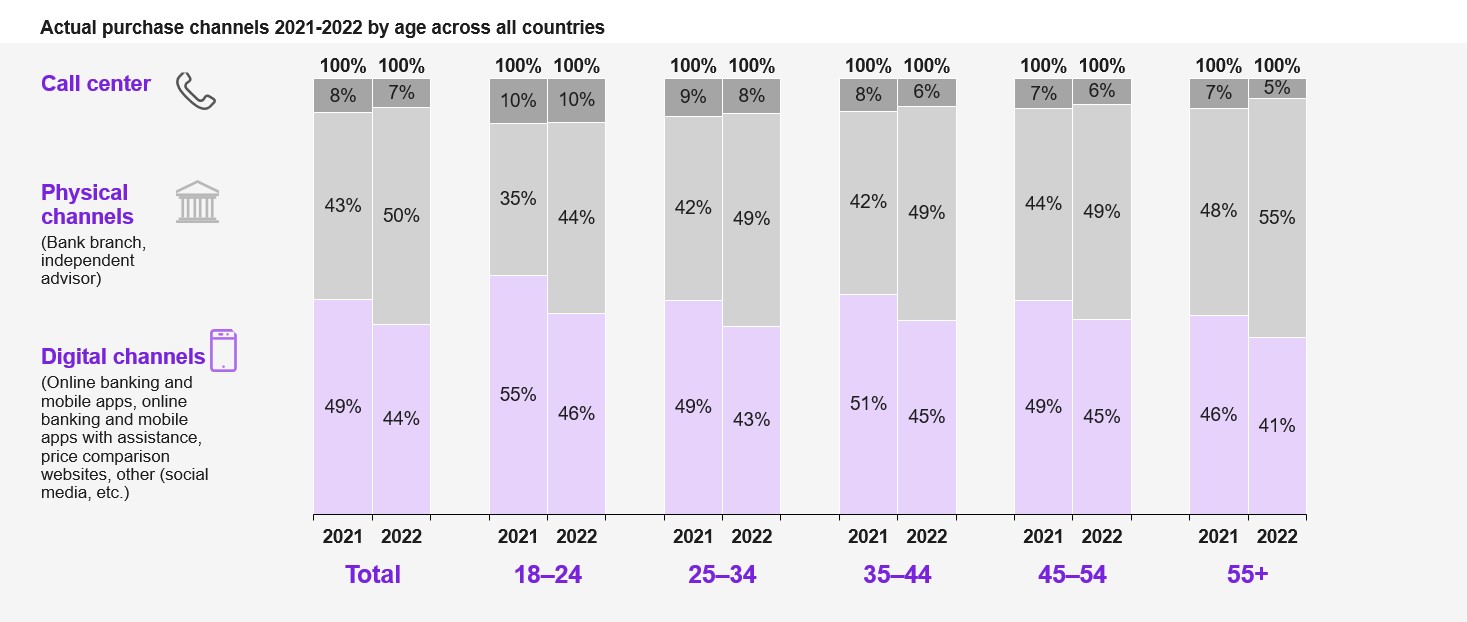
Analysis from leading global management consulting firm Kearney has found that 21% of Europeans in 2022 never visit a bank branch and carry out their banking remotely – a figure that almost doubled in the pandemic, rising from 12% in 2019.
Now in its 13th year, Kearney’s European Retail Banking Radar is an annual analysis of the pan-European banking market, leveraging survey and proprietary data from 89 banks in 21 countries across Europe.
The growth of digital channels is clear: 55% of Europeans prefer to research their next bank account or card online; 49% when it comes to savings and consumer finance; and 46% when looking for a mortgage.
This has a notable effect on physical interactions, as 21% of Europeans in 2022 declare that they never go to a bank branch and 26% claim to visit a branch only once a year. However, the research also found that a small core of consumers (21%) still visit a physical branch at least once a month, showing that European banks must maintain a delicate balance between investment in digital and physical channels, especially leveraging the role of their advisors.
The financial products that consumers most frequently prefer to purchase through digital channels are transactional products (48%), savings products (45%) and consumer loans (43%). However, 61% of consumers would choose to sign-for mortgage products in person, showing that face-to-face advice is still important for many consumers, particularly for larger or more complex products. Indeed, mortgages experienced the most significant drop in digital preferences between 2021 and 2022, falling from 47% to 39%.
Despite the importance of personal interaction, the continued growth of price comparison websites and embedded finance poses a challenge to banks’ traditional role in the ecosystem, threatening both the ownership of their customer relationships and their revenue streams.
The data shows that this disintermediation may be first seen amongst middle-aged consumers. The number of 35-54 year-olds who never go to the bank has almost doubled over the course of the pandemic, with 25% now completing their entire banking business through digital channels.
Further findings include:
- Products that consumers most prefer to purchase in digital channels are transactional (48%) followed by savings (45%) and consumer loans (43%).
- Across all European markets, 37% of all respondents who have used Buy Now, Pay Later (BNPL) have used it from a non-bank provider, while 47% have leveraged this option from a traditional bank
- UK and Germany lead the way for BNPL outside the banking sector with 80% being delivered by alternative providers, which are now a growing threat to retail banks
Simon Kent, Global and Europe, Financial Services at Kearney, comments:
“Banks have already made a strong commitment to becoming digital-first – both in terms of customer interactions and daily operations. However, considering the continuous pressure on costs, they need to carefully prioritise their digital investments, understanding which part of the customer journey should be fully digital across all channels.
“The role of banking professional as an advisor is important to many consumers, so offers a chief advantage over the digitally native neobanks. Here retail banks have the benefit of experience, so can offer the best of hybrid digital-physical channels”
Daniela Chikova, Partner at Kearney, comments:
“The data we’ve compiled in this year’s Radar makes it clear that a growing priority for banks must be to develop end-to-end digital capability across all products, making them intuitive and easy to use while offering new services to compete with digital native neobanks."
“Progress needs to be quicker and not just for simple journeys like opening a current account, but considerations around physical presence and consumer preferences cannot be discarded in the name of onward progress. A careful balance is needed for the years ahead.”
- 01:00 am

Clearwater Analytics, a leading provider of SaaS-based investment accounting, reporting, and analytics solutions, and LiquidityBook, a leading provider of cloud-native trading solutions for the buy and sell sides, announced today that they will leverage their proven connectivity to offer clients an end-to-end portfolio investment and operations experience.
The connectivity permits LiquidityBook and Clearwater clients to take advantage of LiquidityBook’s leading cloud-native solution for trade execution management, portfolio management, regulatory compliance, and FIX connectivity, paired with Clearwater’s daily reconciliation, accounting book of record, client reporting, and compliance and risk platform. The result is a unified, end-to-end user experience for buy-side and outsourced traders, offering unmatched efficiency.
“Three years ago, we set out to migrate all our on-premise technology to truly scalable cloud services. We chose LiquidityBook as our trading platform and Clearwater Analytics for portfolio accounting,” said Scott Latimer, Principal and Director of Information Technology at Montag & Caldwell. “Both solutions were built from the ground up as cloud-native solutions, and not just hosted servers. Our experience with both firms has dramatically improved our processes, and the integration between them has given us a complete cloud solution.”
“LiquidityBook brings an impressive track record of success in delivering quality order management and portfolio management solutions for funds, SMA managers, and a host of other investment managers,” said Scott Erickson, President, Americas and New Markets at Clearwater Analytics. “Together these solutions offer great efficiency due to our strong technical alignment, scalability, and SaaS-based architecture. Both companies have demonstrated a commitment to tight integration, supporting several clients with increasingly complex investments.”
With a transparent business model, instantaneous client-driven product enhancements and expert support professionals, LiquidityBook provides highly scalable SaaS-based trade management products that enable buy-side, sell-side, and outsourced trading firms to connect, track, and execute trades with unmatched efficiency. The company offers a full suite of multi-asset trading tools.
“Clearwater Analytics has earned a strong reputation among our client base thanks to its highly accurate investment accounting and reporting software,” said Kevin Samuel, CEO at LiquidityBook. “We have several mutual clients that have enjoyed success while leveraging our platforms together. Clearwater and LiquidityBook have similar philosophies, from our approach to technology to our commitment to client service to our belief in the transformative power of a more efficient buy-side workflow. Given all that, this offering delivers a logical end-to-end solution for clients.”








