Published
- 08:00 am

Mobile payments are now the predominant form of payment for Brits, with nearly half (43%) making purchases via their mobile on a weekly basis.
That’s according to a new report released by Rapyd, the leading fintech-as-a-service partner, showing that of those who made an e-commerce purchase in the last 90 days, on average, 49% paid with their mobile phones, compared to 47% who used their laptop. Specifically, Rapyd’s analysis finds that clothing, restaurants, groceries and utility bills are the most popular transactions made in the last 90 days, showing that Brits are now preferring to use their mobiles for everything from day-to-day purchases to more sensitive transactions.
Interestingly, Rapyd’s European E-commerce & Payment Methods Report also finds that eWallet usage is steadily growing in popularity for Brits, with ApplePay usage being the highest observed in Europe (29%). Furthermore, one in six (16%) say that ApplePay is their preferred in-person payment method, a figure that is higher than cash (12%) and on par with credit cards (16%).
As a result, Rapyd is urging businesses of all sizes to ensure they have the right tools in place to support a multitude of payment options for their customers.
Commenting on the findings, Sarel Tal, VP EMEA at Rapyd, said:
“With consumers having to go cashless in the height of the pandemic, many realised how convenient mobile phone payments are and have since kept this habit up. Our findings show that mobile payments are not only here to stay but are now the preferred payment method for a variety of e-commerce purchases, from getting takeaway delivered to paying bills. Furthermore, we expect this trend to accelerate, with UK mobile commerce predicted to grow at more than twice the rate of the overall eCommerce sector - reaching GBP £100 million by 2024.
“It’s therefore critical that businesses take time to understand the shift that is happening and ensure they have the right infrastructure in place to support their British customers’ habits and preferences. For example, our findings show that more than a quarter of UK consumers want to see PayPal as an option at the checkout, while 13% are looking for ApplePay. Offering multiple relevant payment options in a way that’s quick and secure not only prevents cart abandonment, but also helps to facilitate a seamless experience that encourages repeat customers in the long-term.”
- 03:00 am

ClearBank, the enabler of accounts, real-time clearing, and embedded banking for financial institutions, today announced its integration with Fondy, a one-stop payment platform, to provide e-commerce companies with an efficient, easy-to-implement shop payment solution. This solution will allow companies to manage and control their money flow – from acceptance of payments, IBAN accounts, and payouts to third parties.
Through ClearBank’s integration, new and existing merchant customers of Fondy will now have access to virtual IBAN accounts and the GBP payments network: Faster Payments, CHAPS and Bacs. This will enable faster and more efficient transactions at a greater scale, and support new product offerings such as multi-currency business accounts. This unprecedented access to global payment networks in a number of currencies will empower businesses to provide better cash flow from online sales.
Simplifying cash management and money movement for multiple currencies will allow Fondy to help clients reach their objectives faster than ever. Clients will be able to receive funds from their customers within the same day using Fondy Flow IBAN accounts, improving their cash flow from online sales. The access to several payment networks in the world in several currencies will empower Fondy’s customers by providing an unparalleled cash flow benefit, among other things.
“Together with ClearBank, we are stronger and in a better position to instil real, positive change in the way businesses process payments,” says Valeria Vahorovska, Founder & CEO at Fondy. “This partnership will allow us to take further steps toward integrating a multi-currency solution to our merchants. This is a very important milestone for us as we believe it will open several doors for us.” Vahorovska elaborated.
“In a constantly evolving regulatory environment, smaller financial services companies can benefit from partner support by larger players in the space that have been around the block once or twice already” shared Charles McManus, CEO at ClearBank. “We’re pleased that, through ClearBank’s innovative technology and expertise in purpose-built banking, Fondy is able to reach its goal of providing clients with unparalleled access and control of their money flow.”
- 05:00 am
75% of business executives are using artificial intelligence for customer experience (AI for CX), but only 20% of business executives rate their own contact centre as delivering industry-leading CX, according to the latest research by Davies Hickman for Odigo, a leading global provider of Contact Centre as a Service (CCaaS) solutions. The findings also reveal that European executives see investing in cloud and AI as becoming central to CX strategy.
Providing personalised support as part of an excellent CX is more than ever the goal for all companies. With digital channels now critically important, technology is key to the remaining forefront of delivering the best CX.
The results come from the third edition of the research, which surveyed 1,035 business executives across five major European markets. The survey highlights the trends and evolution in the market, which will be published across three eBooks, analysing: How AI is changing European contact centres, the Natural Language Processing (NLP) challenges in the contact centre industry, and ways contact centres can improve CX using AI.
Whereas only 20% think they deliver a great customer experience, the study reveals that 79% of businesses would like to offer more support to customers (up from 70% in 2021). Three quarters (75%) said efficiency is optimised when AI supports human agents (up from 69% in 2021). Further, 68% see investing in cloud and AI as becoming central to CX strategy, compared to 62% last year.
In the last 12 months, European organisations have acted on the need to increase AI deployment in CX. In 2021, 41% of executives said AI was vital and 48% said it was important to the success of their business. Fast forward to 2022, 75% of businesses have now invested in AI for CX and 9 out of 10 say this investment was a success in improving their customer experience. The biggest adopters are Spain (81%) and the UK (76%).
The survey further reveals leaders see a range of benefits from investing in AI, depending on their organisation’s use of the technology. Although improvements in customer experience rank number one, decreasing operational costs is an added expected benefit. Of those that have invested in AI for CX, 96% plan on investing more in the next two years, of which 42% label it as ‘business critical and vital to the success of our business’.
Even for those who haven’t yet invested in AI, the road ahead is clear. Six out of ten are convinced AI for customer experience will have an important impact on the success of their business and plan to invest in the next two years.
Jean-Denis Garo, Head of Product Marketing, Odigo comments “AI is now recognised as a key component of any digital transformation strategy, especially in the customer experience sector. It helps to open up the organisation and to reinvent business processes. The Davies Hickman 2022 survey reveals how innovation in AI has become mature, and actionable with a proven ROI, assisting and empowering agents to better serve their customers.
“The aim of AI is to improve both customers' and agents’ experiences. It puts people back at the centre of all businesses, and we firmly believe that the AI revolution should be embraced, not feared.”
- 06:00 am

Onfido, the leading global digital identity verification and authentication provider, today unveiled Motion, a next-generation biometric liveness solution to enhance its Real Identity Platform, launched in May. Motion delivers seamless, secure, and inclusive customer verification and is iBeta Level 2 certified. With a simple head-turn capture, businesses can automate customer onboarding, and assess more customers, more quickly and efficiently while significantly reducing their fraud exposure.
Identity fraud has risen 43% year-over-year with sophisticated fraud increasing 57% as criminals employed smarter tactics, utilizing realistic 2D/3D masks and deploying display attacks (for example, showing a picture of a person on a screen) to try to spoof verification systems. And with 9 out of 10 consumers comfortable accessing digital services, the opportunities for fraudsters are increasing. Not only must companies now provide more accurate fraud measures when verifying new and existing customers, but they must also ensure they can establish trust with potential customers in under 10 minutes or risk losing them. Luckily, consumers are increasingly embracing biometrics, with 77% reporting that biometrics are more convenient than legacy verification methods.
Motion is built on Onfido’s award-winning AI technology, Atlas, ensuring users benefit from AI that is fast, accurate, and fair, with next-generation fraud detection performance on a global level. Using Motion, user bias is reduced across all ethnicities, thanks to Onfido's advanced machine learning models. These models have been trained to identify hundreds of thousands of fraud samples and analyze different elements of an identity document and facial biometric to stop fraud and reduce bias.
The Onfido Real Identity Platform is designed to secure trust between organizations and their customers throughout the customer lifecycle. It automatically verifies a customer’s identity using a smart combination of award-winning document and biometric verification, trusted data sources, and passive fraud signals. With the addition of Motion, 95% of users can now be onboarded in 10 seconds or less, with false rejection rates and false acceptance rates of less than 0.1%.
Onfido customer usage of biometrics has increased 160% year-over-year as more companies want to safeguard their businesses while providing the best user experience possible. The market-leading compliance platform Amiqus used to digitally onboard staff welcomed Motion:
“The Amiqus platform is certified to the highest standard by the UK Government and DBS digital identity schemes. Hundreds of regulated businesses and public sector organizations operating at scale rely on us to deliver accessible, robust, and seamless staff onboarding and pre-employment screening,” said Callum Murray, CEO and Founder of Amiqus. “Motion by Onfido is a fantastic addition to this capability and arrives at a time when employers are acutely aware of the need to meet digital right-to-work requirements.”
The micro-mobility and scooter platform, Check, is one of the first Onfido customers to use Motion:
“Using Onfido Motion, it’s very clear to our customers what is being asked of them when being verified,” said Rick Van’t Hof, Product Owner, Check. “It enables them to set up an account in seconds and be on their way on one of our mopeds while enabling us to keep operating costs low and run efficiently as an agile and high-growth business.”
“In today’s fast-paced digital world, providing the best user experience is everything. Consumers demand to be able to access products and services in seconds whilst also knowing they are secure,” said Alex Valle, Chief Product Officer, Onfido. “Motion helps achieve this, with a biometric liveness solution that provides simple, fair and secure access to online services from banking and gaming to crypto, rental cars and scooters.”
Configuring Motion is easy with Onfido Smart Capture SDK, enabling it to fit seamlessly into an organization's customer workflow. Thanks to intelligence drawn from leveraging deep, diverse datasets built from over a decade of verifying global identities, Motion is one of the most accurate and fair liveness solutions available.
- 04:00 am
One of Germany's leading direct banks, SWK Bank based in Bingen am Rhein, has partnered with the leading cloud banking platform, Mambu to offer new services to the DACH market. The companies are bundling their complementary service offerings in Banking as a Service (BaaS) and Software as a Service (SaaS), to create a new joint offering for B2B customers.
As part of the partnership, SWK Bank will contribute its modular banking services in the personal loan and deposit business, while Mambu will contribute its cloud-native banking platform. The aim of the joint initiative is to enable financial service providers to offer better banking services faster and more flexibly. Together, SWK Bank and Mambu have developed the first marketable module in the investment area in only three months.
The offer will be successively rolled out to customers in Germany and abroad. This partnership means more flexibility and fast product extensions for customers, with a shortened time-to-market process on the basis of state-of-the-art, media-interruption-free and secure technology.
Ulf Meyer, Spokesman of the Management Board of SWK Bank, on the launch of the cooperation: “Among consumers and businesses, the expectation for smooth, simple and secure digital banking experiences is very pronounced. By combining our BaaS processes with Mambu's SaaS offering, we are creating modular new products and services that give banks and fintechs a technological edge and, for their end customers, fast, straightforward and secure services.“
Anton Langbroek, General Manager DACH & CEE at Mambu said: “As one of the most established banks in Germany, SWK Bank has an incredible impact on the state of financial services in the DACH region. This partnership ensures the company innovates at the pace of change, while in turn enabling its customers to do the same. This strategic partnership also expands Mambu’s footprint in Germany. Together, we can deliver more value to our customers with SWK Bank’s localised expertise and full banking licence. We look forward to exploring the value add of our services together as we kick off the collaboration.”
- 04:00 am

Marqeta, the global modern card issuing platform, has today released its State of Credit research revealing that almost half (48%) of UK consumers are struggling to make minimum monthly payments on their credit cards as the cost-of-living crisis bites.
The survey of over 1,000 UK consumers shows that as the UK shifts out of the pandemic into the cost-of-living crisis, consumers have simply moved from one financial worry to another. Credit is helping consumers to cope with the crisis, with 57% of those surveyed reporting using credit cards to make ends meet over the last year. Gen Z consumers are even more reliant on credit and 68% of those surveyed aged 18-25 report using credit cards to get by. The rising cost of living has also led to consumers becoming increasingly financially savvy, with 64% of respondents surveyed agreeing that they’ve become more aware of budgeting and saving over the last 12 months.
“UK households are fighting against the rising tide of the cost-of-living crisis, but credit and smart budgeting can help them stay afloat,” commented Anna Porra, European Strategy Director at Marqeta.
“With the energy price cap set to rise again in October, consumers’ financial concerns are only set to get worse. It’s critical that banks offer flexible credit options, smart budgeting options, and better insight into spending to throw struggling households a lifeline. Developing personalised, user-friendly lending options that help consumers to navigate rising prices is crucial for banks that want to stay ‘top of wallet’.”
The research also finds that UK consumers’ concerns around inflation and cost of living are affecting their spending decisions. Almost three-quarters (73%) of those surveyed said they plan on reducing their spending, while 54% surveyed have been forced to delay making a major purchase on credit due to their current concerns. Consumers are still reliant on credit and know what they want from their credit cards, with refund protection on purchases (42%), fraud protection (39%), and the ability to purchase without needing funds immediately (37%) being the most-cited benefits of credit cards among those surveyed.
However, as consumers become more budgeting-aware, they’re also looking for more from their credit card provider. Many of those surveyed are seeking more personalised offerings and non-traditional credit card rewards, such as extra points or cashback for categories where they spend the most money (68%); offers from merchants they have shopped with in the past (43%); lottery rewards (36%); portion of stock (28%); or cryptocurrency (24%). Gen Z consumers surveyed were particularly interested in innovative credit options to help navigate the cost-of-living crisis, with 63% of 18-25-year-olds wanting more insight into their spending to help manage budgets more effectively.
“As purse strings tighten, the onus should be on banks and credit card providers to ensure they’re doing everything they can to support consumers,” continued Anna Porra.
“Consumers want true control over their finances, and this means having full visibility into their spending to help count the pennies during tough times. Now is the time for banks to respond to consumer demand by offering innovative credit options – such as personalised services linked to spending habits, helping consumers to budget, or developing new ways to build credit scores. This will not only help consumers keep their heads above water during the cost-of-living crisis but emerge stronger than ever on the other side.”
The research also finds that as consumers continue to seek more flexible options than traditional credit, many are branching out into Buy Now, Pay Later (BNPL). More than half (56%) of consumers surveyed have increased their use of BNPL solutions over the last 12 months, with this figure rising to almost two-thirds (63%) among Gen Z. Consumers are leaning on BNPL to manage rising costs, with many of those surveyed citing that it helps them to budget (42%), charges zero interest (42%), is convenient (37%), and offers more flexibility on payments (35%). Some consumers are also calling for more innovation in BNPL and would like it to extend to larger purchases such as cars (28%), home renovations (27%), dental work (26%), and travel bookings (22%). The survey was done in July by Propeller Research, of 4,000 consumers between the ages of 18-65, 2,000 in the US, 1,000 in the UK and 1,000 in the US.
More than half (56%) of consumers surveyed have increased their use of BNPL solutions over the last 12 months, with this figure rising to almost two-thirds (63%) among Gen Z. Consumers are leaning on BNPL to manage rising costs, with many of those surveyed citing that it helps them to budget (42%), charges zero interest (42%), is convenient (37%), and offers more flexibility on payments (35%). Some consumers are also calling for more innovation in BNPL and would like it to extend to larger purchases such as cars (28%), home renovations (27%), dental work (26%), and travel bookings (22%).
The survey was done in July by Propeller Research, of 4,000 consumers between the ages of 18-65, 2,000 in the US, 1,000 in the UK and 1,000 in the US.

Vladimir Kuiantsev
CEO at Akurateco
905M USD annually contributed by 11.3M individuals with more than 60% of all pledges received via digital channels. see more
- 09:00 am
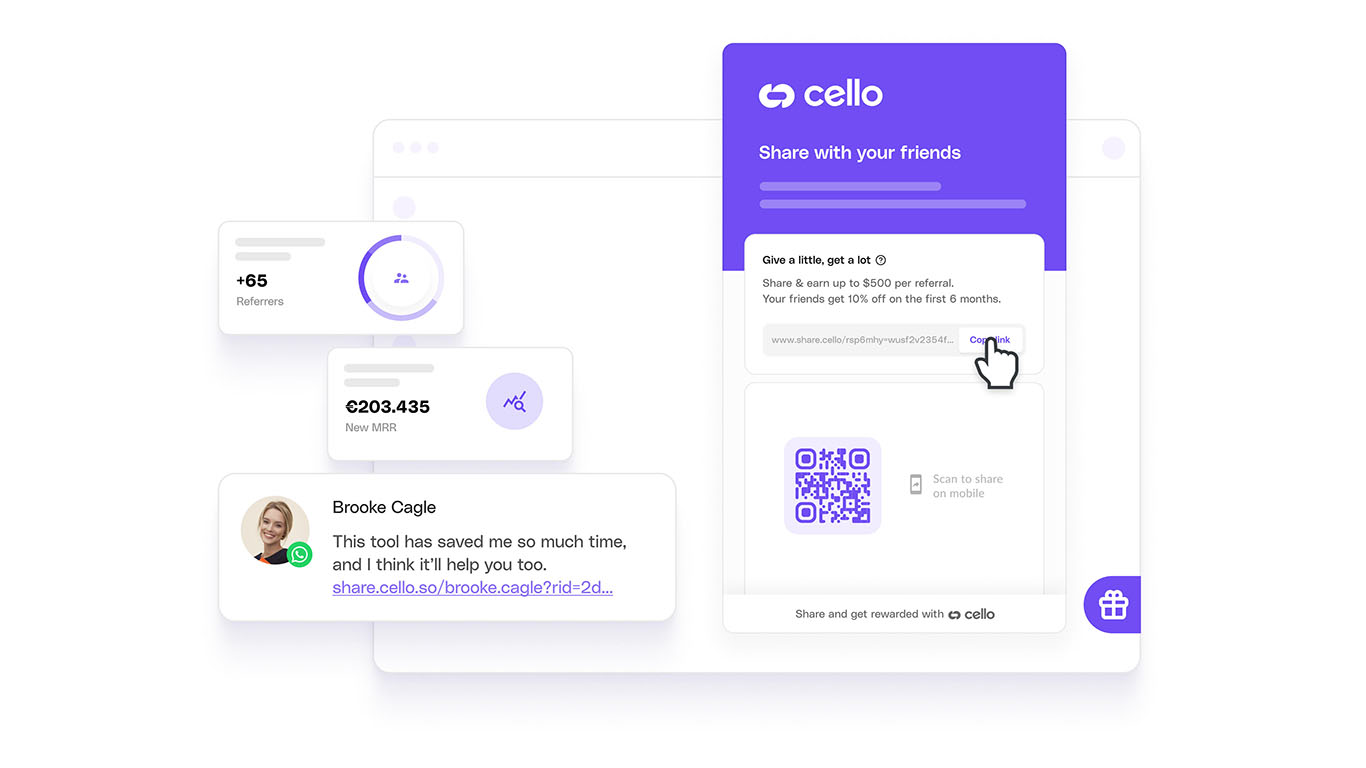
Cello has raised €2.3m in pre-seed funding, in a round led by byFounders, with participation from Tiny VC, Possible Ventures and Notion Capital; together with operator angels from Youtube, Personio, McMakler, and others.
It has long been the case that cost of customer acquisition is the main factor that limits the top-line growth of SaaS companies. In the current market, growth is being squeezed by external factors too. On a macroeconomic level, founders are struggling with the new reality of the tech downturn. Additionally, the cost of advertising is skyrocketing. Meta's cost per thousand of impressions (CPM) is up 61% compared to last year; TikTok is up 185%, and Google programmatic display is up 75%.
Due to these market conditions, SaaS companies need alternative paths to growth. Evolutionary extensions of existing growth strategies have historically driven down SaaS customer acquisition costs (CAC). Cello is leading the creation of a new category of ‘User-Led Growth’ — the next evolution in customer acquisition strategies that harnesses the existing user base to drive word-of-mouth growth, at a dramatically low CAC.
“Scaling product distribution is top of mind for every new software venture, with founders looking to gain an edge over the competition. Top companies are already tapping into their user base to attract and convert new customers, and see further opportunities to optimise this part of the sales journey. This is where Cello comes in. We help SaaS companies turn word-of-mouth into a customer acquisition superpower.", says Stefan Bader, co-founder and CEO at Cello.
Cello's platform enables SaaS businesses to amplify word-of-mouth
Word-of-mouth is a key factor in evaluating traction in early- and growth-stage startups. Despite its importance, the channel is not well understood by the founders. Cello gives SaaS businesses the ability to rapidly grow word-of-mouth into a valuable acquisition channel. Whether a company is a product or sales-led, SaaS companies are able to add a new ROI-positive, scalable channel in hours instead of months, without the need to manage any operational overhead.
Cello’s platform redefines how incentivized referrals work in SaaS, by privately incentivizing users with a percentage of all the net revenue (MRR) they refer. This unique recurring commission approach results in bullet-proof fraud prevention, zero payback period, and a positive return on investment.
“The fastest growing companies already rely on self-engineered growth loops to amplify word-of-mouth. Cello’s approach revolutionises the opportunities available to SaaS companies, by enabling them to unleash the real potential of the channel. It’s a product that couldn’t be better timed with the current market trends.”, says Eric Lagier, Partner at byFounders.
“Word of mouth is the most coveted source of growth for early-stage startups. We see that self-engineered tools for amplifying word-of-mouth are often out of reach for companies who are laser-focused on building a great product. Cello enables this by making SaaS referral programs simple to set up and track”, says Philipp Möhring, Partner at Tiny.vc.
Cello counts high-growth SaaS companies including Demodesk, Sastrify, Unlock, Butter, and others amongst its customers. The company will use the funding to build out market share in Europe and North America. With a founding team consisting of serial entrepreneurs and veterans from Pitch, Twilio, and Typeform the company is well equipped for rapid growth.
Simon Leicht, Partner at Possible Ventures, “The progress that Cello has made is terrific, especially as building a business in the rapidly growing SaaS market is hard, especially given the current global market conditions. The Cello team has a clear understanding of their market and a well-defined vision of what they want to achieve. We look forward to working with the team.”
- 03:00 am

Goldman Sachs today announced it is expanding Transaction Banking (TxB) to the European Union. Originally launched in the US in 2020 and expanded to the UK in 2021, this growth will deepen Goldman Sachs’ relationships with existing clients who have banking needs in the EU and allow us to serve new clients across the Continent.
Starting with a new location in Frankfurt, and with plans to expand to Amsterdam, TxB will serve clients’ treasury needs, including deposits and payments into over 160 countries in more than 120 currencies.
TxB’s cloud-based global platform provides clients with visibility into their accounts, payments, and liquidity positions across currencies and countries.
To date, TxB has attracted more than 400 clients, accepted over $65 billion in deposits, and processed trillions of dollars through its systems.
Hari Moorthy, global head of TxB, added: “We are excited to bring the Goldman Sachs Transaction Banking experience to clients with treasury needs in the European Union. We understand the challenges of running a complex global treasury operation, and built our platform to be nimble, secure and easy-to-use to support clients as they run and grow their businesses.”
For more than three decades, Goldman Sachs has offered capital markets, transaction advisory, financing and trading services in Europe, and this expansion increases the breadth of the firm’s offering.
- 06:00 am

Revolut has introduced a dedicated income, payment and expense management account for freelancers, sole traders, contractors, and the self-employed.
Housed within the Revolut retail app, Revolut Pro is initially launching in the UK and seven other European countries, providing a free account with no monthly fees, and no deposit or balance requirements.
The account can be created in under two minutes within Revolut’s app and offers a one per cent cashback debit card. It also enables users to send transfers or instant payments to external banks as well as other Revolut accounts.
In addition, the account offers multi-currency payments with a physical or virtual card, Google Pay, and Apple Pay, as well as money transfers. And users can instantly accept payments either in-person with Revolut Reader or online with QR codes, payment links, and by generating invoices and tracking their payments.
Maria Marti Garcia, product owner, Revolut Pro, says: “The explosive increase in gig workers, artists, bloggers, and the like alongside more traditional individual professions including private teachers, home service providers and fair vendors has driven demand for better ways for those working on their own projects, be it full time or part-time, to manage income and expenses."