
Published
- 09:00 am
Challenger consultancy 11:FS has launched a new podcast, Fintech Insider: Focus, in partnership with Visa.
Co-hosted by 11:FS Group CEO and Co-Founder David M. Brear alongside regional experts from Visa, the show dives into challenges, opportunities, and trends across key regions with deep insights coming from Visa’s regional co-hosts and local guests.
With the Fintech Insider podcast already reaching 180+ countries and generating 100,000+ downloads each week, the new Focus edition joins the News and Insights shows under the Fintech Insider umbrella, bringing new conversations and voices to its global audience.
Fintech is simultaneously global and local, which means founders and builders in one region can learn from developments in another, and vice versa. But these regions also face unique challenges, which impacts innovation in different ways, and Fintech Insider Focus will spotlight the people and solutions shaping the future of financial services in each location.
David M. Brear, 11:FS Group CEO and Co-Founder, said: “I’m super excited about expanding the famous Fintech Insider brand to welcome Fintech Insider: Focus. The amazing folks at Visa have enabled us to broaden our horizons and tell the stories of founders and disruptors in some really diverse markets. I can’t wait for the world to hear it!”
Dan Roesbery, Vice President, Global Fintech Partnerships at Visa, said: “We’re proud to partner with 11:FS to bring insightful and engaging fintech conversations to a global audience. Visa, 11:FS and experts across the global fintech ecosystem will explore the technologies and trends transforming payments, money movement and financial services. We’re excited to kick-off the dialogue with our friends and partners.
Episode one, released on Wednesday 18 January featuring guests from Wise and MX, posed the question: Can Open Finance ever be truly global? Episode two, releasing today at 4pm GMT, digs deeper to explore what Open Finance open data unlocks for companies and the impact it can have on people’s lives. Upcoming bi-weekly episodes look into Super Apps, financial inclusion and closing the wealth gap, and much more.
- 06:00 am

ACI Worldwide, a global leader in mission-critical, real-time payments software, today announced the expansion of the global reach of its industry-leading, real-time payments software solutions. ACI now powers 25 domestic and pan-regional real-time schemes across six continents — including nine central infrastructures — providing solutions to central banks, participant banks, fintechs and other payment service providers.
Europe, the Middle East and the UK are ACI’s leading regional markets, with 12 countries having integrated real-time payment software capabilities, followed by nine countries in the Asia-Pacific and four in the Americas region. The latest additions to ACI’s growing client roster are the central banks of three nations in the Middle East.
“In 2022, we signed three new countries who trust ACI to support their central infrastructure mandates,” said Alessandro Silva, ACI Worldwide’s chief revenue officer. “This adds to our long history of success in Asia, where ACI powers the central infrastructure for Indonesia, Malaysia and Thailand and supports many real-time payments schemes across the APAC region, including Singapore, Philippines and Australia.”
Globally, ACI covers approximately one-third of the countries that offer real-time payments services, reaching about 1.8 billion people served by various organizations, including central governments, payment networks, banks, financial institutions and fintech companies.
ACI Worldwide’s platform expansion responds to rapidly increasing real-time payment adoption rates worldwide. According to intelligence by GlobalData, real-time payments will account for nearly a quarter of global electronic payments by 2026.
Government and central intervention in national payment schemes is the primary driver of real-time adoption, with many nations mandating compliance or taking a consensus-driven and collaborative approach. The European Commission unveiled draft law recently that would require banks to offer instant payments in euros at no extra cost, and immediate payments in the U.S. is expected to see a strong uptick with the launch of FedNow in 2023.
From Latin America to Asia, to Africa, to Europe, governments taking the lead have also improved economic prosperity and promoted financial inclusion, with tangible success in strengthening GDP. By 2026, real-time payments are expected to facilitate an additional $131 billion in GDP in the world’s top five global real-time markets (India, China, Thailand, Brazil and South Korea), according to ACI’s 2022 Prime Time for Real-Time report.
Debbie Guerra, chief product officer of ACI Worldwide, said, “ACI’s decades of experience as a pioneer and trusted partner in real-time payments has allowed us to evolve our expertise to be a natural fit to empower payment networks, banks, merchants and billers across the world to stay ahead of customer demand and increasing regulatory changes and competitors for modern payments infrastructure with real-time. Within this landscape, our customers are accelerating the launch of new real-time payment services in months rather than years. ACI is leading the real-time revolution, meeting our customers at the forefront of technology with a ready solution scalable worldwide and easily adaptable with local requirements.”
Thomas Warsop, president and interim CEO of ACI Worldwide, added, “Our real-time implementations represent a significant long-term growth opportunity for ACI. The movement of funds within seconds rather than days unlocks money — billions of dollars every day — usually tied up in inefficient payment systems and with intermediaries. Money that people, businesses and government can instantly put to work to generate value, drive growth and enhance prosperity. Removing friction from payments also removes systemic limits on economic consumption and investment, lowers business costs, accelerates innovation and improves financial inclusion. In the background, ACI is powering central banks and banks, merchants and billers, processors and acquirers to facilitate payments end-to-end securely, reliably and in real-time across the globe.”
- 08:00 am
Having integrated cTrader in 2022, B2Broker has continued to expand its product portfolio, with Match-Trader being the most recent addition that has been made. B2Broker, a global provider of liquidity and technology for the FX and cryptocurrencies markets, is extending its white label liquidity service with the integration of Match-Trader. Through this new integration, clients will be able to take advantage of a full white label solution, fiercely competitive commercials, and a ready-made integration with B2Core. This integration provides an example of B2Broker's commitment to providing comprehensive and flexible services to its clients.
Match-Trader White Label Offering

B2Broker has launched a white-label Match-Trader solution that provides brokers and their customers with an integrated trading experience. Brokers will benefit from the new offering as it integrates all essential technology into one package to reduce costs. A number of services are offered, including B2BinPay (crypto payment processing solution) and B2Core (customer relationship management software), as well as access to the Prime of Prime liquidity pool provided by B2Broker. This new white-label package from Match-Trader is certain to be a smash hit with brokerage companies as a result of its numerous features.
With its impressive variety of features and services, Match-Trader white label allows online traders to trade with ease and without any stress associated with it. Besides round-the-clock server support, 24/7 technical support, personal account managers, and training, the company also provides thorough help and support in order to navigate the brokerage industry.

Match-Trader white label is the right choice for businesses that wish to benefit from competitive trading commissions and advantageous volume charges associated with the business of trading. Additionally, there are no setup fees or costs associated with the configuration of the platform. Customers are only required to make an initial investment of three months as a minimum liquidity fee. As a result, these customers are entitled to a grace period of one full calendar month plus the days since it was established in terms of monthly minimum liquidity and connectivity, which provides them with even more benefits.
Integration of Match-Trader and B2Core

B2Core by B2Broker is already integrated with Match-Trader in addition to its white label solution. Traders will be able to operate Match-Trader in the B2Core ecosystem in the same way as other platforms. In order to provide their clients with the same high-quality experience, brokers make it possible for them to open/manage trading accounts directly in the trader's room and imminently connect to the platform.
B2Core makes opening a Match-Trader margin trading account very straightforward. Creating a user account is the first step in connecting your trading accounts. Upon creating a Match-Trader account, you will be able to connect your margin trading account.
The Match-Trader section that B2Core recently added to the Platforms tab promises to provide a number of new features and capabilities. Users have the option of setting up both demo and live accounts in order to test various trading methods in real time. As part of the enhancements, the site now provides support for deposits, withdrawals, transfers, and internal transactions. Additionally, the new download button for a dedicated Match-Trader terminal makes it easier to access the platform and begin trading.
Concluding Thoughts
The combination of B2Broker and Match-Trader offers brokers a compelling and effective solution for providing their clients with a complete online trading experience. Due to its wide range of powerful tools, the package is ideal for any firm that wishes to take advantage of cutting-edge technology. The impending integration of Match-Trader into IB's programming will open up a number of new opportunities. In conjunction with Match-Trader's partnership with IB, traders now have access to a variety of professional-grade trading options that can satisfy all their trading requirements regardless of their business size or complexity. It is also expected that Match-Trader will provide user-friendly functionality in a timely manner.

As part of the mobile integration initiative with B2Core, Match-Trader will be able to provide brokers with the best of both worlds on a single platform. Keep an eye out for these solutions when they become available! Because of its wide range of features and capabilities, B2Broker's Match-Trader white label is an excellent option for your company.
- 05:00 am

Paymentology, the world’s first truly global issuer-processor, has joined forces with cloud-native core banking platform 10x to provide pre-integrated credit and debit card issuing and processing.
The partnership sees Paymentology’s ultra-advanced, global issuing platform combined with 10x’s next-generation cloud-native SaaS bank operating system.
With its world-class, enterprise-grade core banking platform, SuperCore®, 10x enables banks to deliver products, services and customer experiences at speed and reduced cost. Combined with Paymentology’s next-generation technology, including the issuing and processing of physical and virtual cards on the Visa and Mastercard networks as well as several domestic switches, enables banks to deploy credit and debit cards 10x faster than ever before.
The partnership enables banks to move from restrictive card batch processing to real-time, removing pain from processes in issuer tech stacks and providing a simple view of card clearing, settlement and chargebacks from the 10x platform. The pre-integrated capability means that through a single API interface, banks have access to a wide range of next-generation card solutions, tokenization and 3DS out-of-the box, and access to real-time transaction and clearing data from Paymentology’s FAST feed into 10x’s data architecture in a consistent ISO20022 format.
As a result, large complex banking institutions can redesign historic operating models, deploy resources and management mindshare around their core customer proposition.
David Oppenheim, Global Head of Ecosystem Partnerships, Paymentology commented on the announcement: “We’re incredibly proud of this partnership. A tremendous amount of effort has gone into creating a unique offering, appropriate for ambitious clients who are systemically important banks in their respective markets. The 10x cards module powered by Paymentology takes advantage of cloud-native technology which meets their diverse needs on one simplified, scalable and highly secure platform.”
Leigh Pepper, Chief Product Officer, 10x Banking added: “We are delighted to be working with Paymentology to deliver the future of cards on our platform. SuperCore enables 10x clients to take full advantage of the speed, cost and agility of modern technology to deliver fully integrated, customisable product offerings across savings, lending and now credit and debit card and local rail payment processing in superfast time.”
- 04:00 am
Today, ConsenSys, a market-leading blockchain technology company, announced its newest initiative, MetaMask Learn. MetaMask Learn is a free-to-use resource available in 10 languages for anyone interested in learning about web3. It provides an interactive MetaMask UI environment to help onboard those new to self-custody, and guides users through the most common topics to help them get started in web3.
Recent systemic shocks in the crypto ecosystem have undermined investor trust in custodial platforms, however, there is still a lack of understanding of the alternatives to custodial solutions. A recent survey of 1505 crypto holders in the US, conducted by Morning Consult and commissioned by ConsenSys, found that three-quarters of respondents did not know or were unsure of what self-custody was. MetaMask believes supporting web3 enthusiasts to learn about self-custody in a simulated environment will increase trust and give consumers the confidence they need to participate in the web3 ecosystem in a safe, self-managed way.
As the world’s leading self-custodial crypto wallet, MetaMask recognizes the steep learning curve when it comes to web3 technologies and wants to ensure that those barriers are deconstructed in a simple manner. MetaMask Learn will be available for free starting today at learn.metamask.io.
Providing foundational learning materials for the adoption of web3 is imperative to MetaMask’s mission of democratizing access to decentralized technology. MetaMask Learn is a practical tool that allows the company to play a leading role in ensuring the next generation of participants in web3 are well-informed and comfortable with navigating the space.
Dan Finlay, co-founder of MetaMask, said, “Events in 2022 rightfully undermined confidence in custodial finance, and more crypto investors are looking to use self-custodial products. While we strive to make the product speak for itself, users were often disoriented when searching the web to understand topics more deeply. MetaMask Learn gives users a beautiful and information-rich foundation for taking their next steps into the web3 ecosystem by combining visual learning with action-oriented testing.”
MetaMask believes access to information about web3 should be as inclusive as possible. The platform will be available in 10 languages at launch, providing education to users all over the world, many of which currently have high levels of inflation or large unbanked populations. The platform will initially be available in English, Bahasa (Indonesia), Chinese, Portuguese, Tagalog (the Philippines), Spanish, Russian, Ukrainian, Turkish and Vietnamese, with more to come. The MetaMask Learn syllabus will guide users through topics such as: What is Web3, What is a Crypto Wallet, The Era of Digital Identity, What is a Self-Custody Wallet, NFTs and Creators, and Decentralized Finance.
- 02:00 am
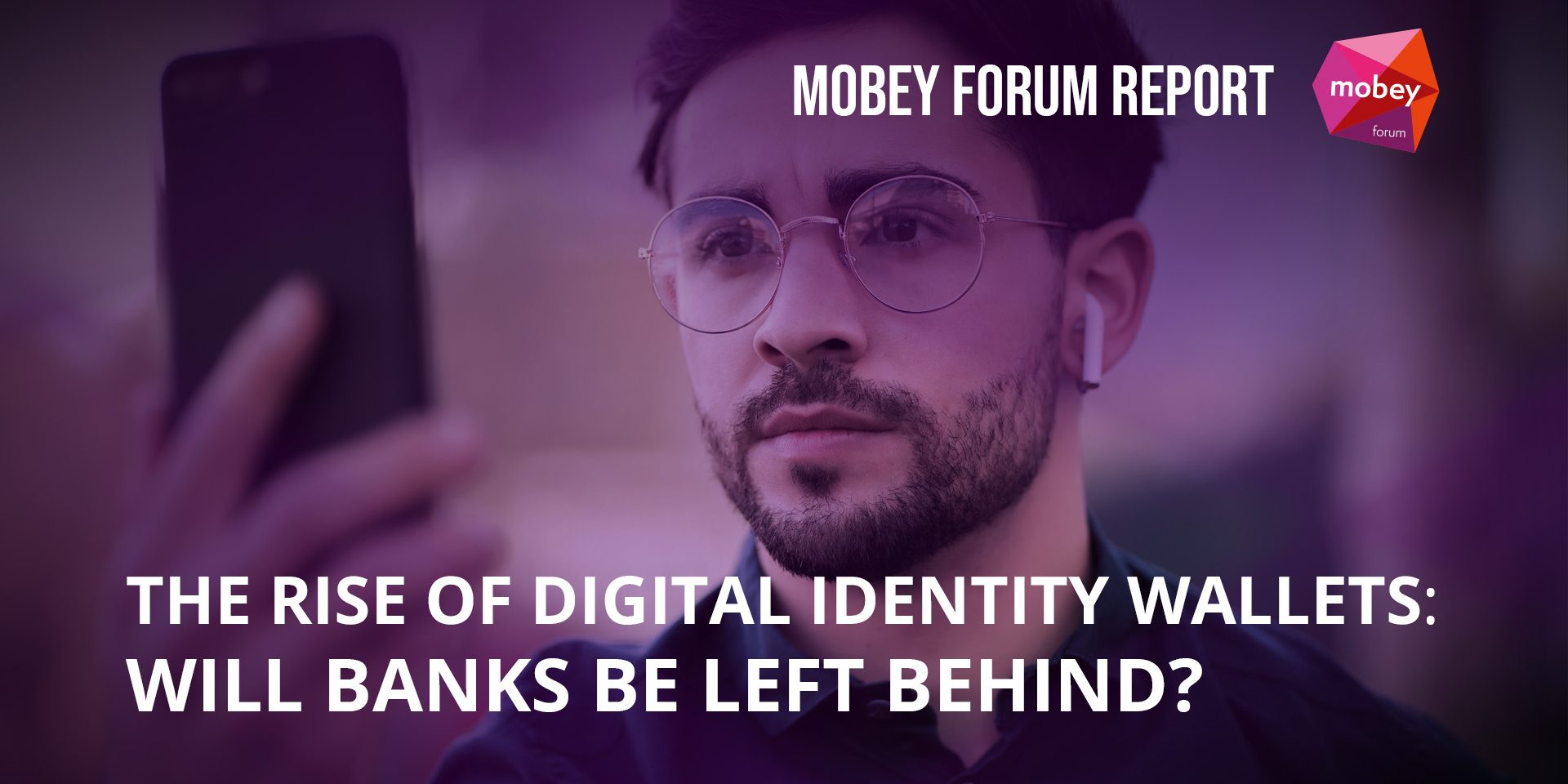
A new report published today by Mobey Forum’s Digital Identity Expert Group has identified unique opportunities for banks to leverage their position as custodians of personal data to offer value-added digital identity services and become brokers of trust in the digital economy. The report suggests that for digital identity systems to succeed, banks must bridge the divide between private and public sector and drive adoption of so-called digital identity wallets.
The report, entitled “The Rise of Digital Identity Wallets: Will Banks Be Left Behind?”, contends that growing consumer demand, regulatory mandates such as eIDAS in Europe, and the trend toward digital identity wallet issuance by global governments are requiring financial institutions to consider now the role they wish to stake out in the emerging digital identity ecosystem.
Already, banks in the Nordics and Canada have embraced strong Know Your Customer (KYC) procedures defined by strict regulatory compliance, and harnessed best in class security and authentication technology to achieve high levels of customer engagement in their respective BankID and Verified.Me systems.
The Expert Group’s research indicates, however, that banks don't need to fully provision a wallet for meaningful participation. Rather, financial institutions can start by creating the infrastructure that enables issuance and acceptance of Verifiable Credentials. In addition to issuing wallets and credentials, banks also have opportunities to act as credential consumers, relying parties, authentication providers, and to combine these services in accordance with their own strategic approach.
“The growing need for trusted online identity is giving banks a chance to embed themselves more meaningfully in their customers' lives by providing related services,” comments Elina Mattila, Executive Director, Mobey Forum. “Building on their strong positions of trust, banks should act now to establish prominent roles in this space. This will mitigate their risk of disintermediation in a world where their core businesses are being perpetually challenged by market disruptors.”
Banks’ participation in the digital identity space should not only be viewed as defensive, however. The Expert Group also contends that banks can move beyond traditional trust services and develop new identity-based use cases that address customer's broader needs, creating value streams in the process.
Kevin Faragher, Interac, and Co-Chair of the Expert Group, adds: “Our research really underscores the important role that financial institutions can play. With people relying on digital identification and verification on an almost daily basis, issuing digital identity wallets will enable banks to better meet customers’ needs, stay relevant in their lives, and remove identity-related pain points – providing issuing banks an opportunity to create competitive advantage and improve brand loyalty.”
Jukka Yliuntinen, Gieseke+Devrient, and Co-Chair of the Expert Group, adds: “Banks are uniquely positioned in this space. They have a clear opportunity to bridge governmental digital identity services with private sector use-cases to create exceptional value for all stakeholders. Their close relationships to business clients also positions them favourably to address the many identity-related challenges found in the B2B environment.”
The report combines the results of a survey of prominent global financial institutions, conducted in 2022, with the Expert Group’s analysis of the current landscape, trends, regulation, opportunities, and risks. To access the report in full, please visit: https://mobeyforum.org/the-rise-of-digital-identity-wallets-will-banks-be-left-behind/
- 07:00 am
AppTech Payments Corp. (the “Company” or “AppTech”), an innovative Fintech company powering seamless, omni-channel commerce between businesses and consumers, announced today that it has entered into a securities purchase agreement with a single institutional investor to purchase approximately $5 million of its common stock in a registered direct offering and warrants to purchase common stock in a concurrent private placement. The combined effective purchase price for each share of common stock and associated warrant to purchase one share of common stock will be $3.00.
Under the terms of the securities purchase agreement, AppTech has agreed to issue 1,666,667 shares of common stock. In the concurrent private placement, which will be consummated concurrently with the offering, AppTech also has agreed to issue warrants (the “Warrants”) to purchase up to an aggregate of 1,666,667 shares of common stock. Each of the Warrants will have an exercise price of $4.64 per share of common stock and are exercisable on and after July 1, 2023. The Warrants will expire five and one-half years from the date on which they become exercisable.
EF Hutton, division of Benchmark Investments, LLC, is acting as exclusive placement agent for the offering. The offering is expected to close on or about February 1, 2023, subject to the satisfaction of customary closing conditions.
The shares of common stock are being offered pursuant to a shelf registration statement on Form S-3 (File No. 333-265526) previously filed and declared effective by the Securities and Exchange Commission (SEC) on July 15, 2022. The offering of the shares of common stock will be made only by means of a prospectus supplement that forms a part of the registration statement. The warrants issued in the concurrent private placement and the shares issuable upon exercise of such warrants were offered in a private placement under Section 4(a)(2) of the Securities Act of 1933, as amended (the “Act”), and Regulation D promulgated thereunder, have not been registered under the Act or applicable state securities laws and may not be offered or sold in the United States absent registration or an applicable exemption from registration requirements.
Copies of the prospectus supplement and the accompanying prospectus relating to this offering may be obtained, when available, on the SEC’s website at http://www.sec.gov or by contacting EF Hutton, division of Benchmark Investments, LLC Attention: Syndicate Department, 590 Madison Avenue, 39th Floor, New York, NY 10022, by email at syndicate@efhuttongroup.com, or by telephone at (212) 404-7002.
This press release shall not constitute an offer to sell or the solicitation of an offer to buy any of the securities described herein, nor shall there be any sale of these securities in any state or jurisdiction in which such offer, solicitation or sale would be unlawful prior to registration or qualification under the securities laws of any such state or jurisdiction.
- 08:00 am

Businesses must tackle late payments to unlock growth for the UK’s small businesses, according to the campaigning organisation Good Business Pays.
Research commissioned in 2022 by Good Business Pays from the Centre for Economics and Business Research (CEBR) showed that up to £60bn of additional revenue could be unlocked for small businesses if large customers paid on receipt of invoices. Yet data collected by the government’s Business Energy and Industrial Strategy (BEIS) department reveals that 70-80% of businesses pay later than settlement terms.
Government figures estimate there is more than £23.4bn currently owed in outstanding invoices to UK businesses, with small businesses spending an average of 3.6 hours a week chasing payment.
Founded in 2021, Good Business Pays campaigns to encourage large businesses to adopt fast payment processes and is supported by leading financial institutions. Mastercard was awarded a Good Business Pays ‘Fast Payer Award’ in 2022, an initiative which recognises businesses which not only pay on time but fast.
Announcing Mastercard’s continuing support for the Good Business Pays Campaign, Founder and CEO Terry Corby said: “In challenging economic circumstances late payment is a problem that has been overlooked by big business for too long, so we are delighted to secure the backing of Mastercard for another year. Small and mid-sized companies need financial certainty of cash flow - especially as they face economic ongoing turmoil that will only be exacerbated by the end of the energy grant in April.”
Mastercard and Good Business Pays will work together through Mastercard’s Strive UK programme to help small and micro businesses with support, advice, and practical guidance on how to navigate payments, including new digital payments solutions.
Mastercard is also developing solutions that make it easier for businesses to manage cash flow, expand payment options and help suppliers get paid on time. Last year it launched Mastercard Track Card to Account Transfer, a new business-to-business payment solution which allows businesses to use their commercial card programme to make payments to any supplier, regardless of whether the supplier accepts card payments.
Kelly Devine, President, UK&I, Mastercard commented: “Late payments hold small businesses back, so it’s vital that big companies tackle the issue. Our own research shows us that small businesses want more support to navigate digital tools that could help them get paid faster, so as well as backing Good Business Pays, we’ll provide practical support through our Strive UK programme.”
The Good Business Pays Campaign is backed by the Federation of Small Businesses, CBI, manufacturers’ group Make UK, British Chamber of Commerce, and Institute of Directors.
Terry Corby added: “We continue to call on large businesses to sign up to Good Business Pays principles to ensure small businesses continue to thrive in 2023.”
- 07:00 am

Continuing its impressive growth into the new year, award-winning payments fintech Highline Technologies today announced that Rebecca Mowat has joined the company as its new Director of Partnerships.
Mowat brings over 20 years of experience in the international trade and business community to Highline’s diverse team. Prior to joining Highline, Mowat worked extensively as a U.S. liaison for the United Kingdom in international trade development and foreign direct investment arenas, including the Department for International Trade and UK Trade & Investment. In her new role, she will leverage her U.S. and international connections to help lead and accelerate Highline’s partnership growth strategy, with a focus on relationships between payroll providers and lenders.
“Highline has an amazing culture, a passion for supporting both its clients and employees, and a focus on expanding financial wellness and inclusivity,” said Mowat. “I'm excited to join this team and look forward to leveraging my industry experience and connections to help expand Highline's line-up of innovative partners and continue its amazing growth trajectory.”
“We are thrilled to welcome Rebecca to the Highline team,” said Geoff Brown, Co-founder and CEO of Highline. “Her in-depth knowledge, experience and relationships are invaluable assets in helping to grow Highline's strategic partnerships so that we can further our mission of expanding credit accessibility and supporting financial wellness for everyone.”
- 06:00 am
Finastra today unveiled Finastra ALM IQ, a risk management solution available for banks from March 2023. The unique cloud-based balance sheet management tool enables small and medium-sized banks to make confident decisions in shorter timeframes, making them more competitive against larger financial institutions.
ALM IQ offers a faster, deeper understanding of the balance sheet and exposure, offering banks a path to address multiple regulatory constraints. By shielding risk, the solution helps banks make sound operational decisions, enabling these institutions to provide the needs of the communities they serve, including private individuals and small-medium enterprises. Deployed on the cloud with minimal customization and maintenance, ALM IQ is scalable, enabling quick implementation and growth opportunities.
“Our new cloud-based ALM solution offers community banks a reduced total cost of ownership, quick deployment, and increased flexibility and scalability, allowing them to simplify the ALM process and better compete with the big banks,” said Mehdi Bouasria, Product General Manager, Treasury & Capital Markets Business Unit at Finastra. “By removing barriers and simplifying risk management and compliance in the balance sheet, community banks can focus more of their valuable time on serving the needs of the communities they serve.”
“Small and medium-sized financial institutions across the United States are consistently looking for the right tools to help them be competitive with the big banks. As regulatory constraints continue to tighten and banks seek ways to better manage operational risk, this is a good example of a tool that will help industry leaders to better manage their balance sheets and serve their communities,” said Sid Dash, Chief Research Director at Chartis.








