Published
- 05:00 am
Multicloud is the new reality in enterprise technology according to a study from 451 Research, part of S&P Global Market Intelligence, commissioned by Oracle Cloud Infrastructure. The study collected information from 1,500 respondents at enterprises—organizations with more than 1,000 full-time employees in North America or more than 500 in other regions—about how they use the cloud within their organization and found that almost every cloud journey is now becoming a multicloud journey. Read the full report here.
In recent years, cloud has become nearly synonymous with IT as enterprises seek increased business agility and improved operational efficiency from the technology they use. While these trends have existed for some time, more than 90 per cent of respondents agreed that the COVID-19 pandemic has been a strong driver of greater interest and investment in cloud technology. As organizations faced new challenges such as increased levels of remote work and collaboration with new business partners and suppliers, they adopted a multicloud strategy to gain the flexibility and scalability they needed for this new reality.
“The ‘one-stop-shop’ mentality has died when it comes to the cloud. Instead, multicloud is the reality of enterprise technology environments as these organizations seek to get the right mix of solutions and capabilities they need to operate effectively,” said Melanie Posey, research director, Cloud & Managed Services Transformation at 451 Research. “Multicloud is here to stay, and enterprises are choosing this model for the benefits it provides for a range of different business and operational requirements, like business agility or access to best-of-breed technology.”
Key findings from the study include:
Almost every cloud journey is multicloud
- 98 per cent of enterprises surveyed are using or plan to use at least two cloud infrastructure providers and 31 per cent are using four or more.
- 96 per cent reported they are using or plan to use at least two cloud application providers (Software-as-a-Service), with 45 per cent using cloud applications from five or more providers.
- This multicloud strategy allows IT departments to meet the specific technology needs of different teams across the organization.
Data sovereignty and cost optimization are driving demand for multicloud strategies
- The top two drivers of multicloud strategies in enterprises are data sovereignty (41 per cent) and cost optimization (40 per cent).
- Other drivers of multicloud strategies include business agility and innovation (30 per cent), best of breed cloud services and applications (25 per cent) and cloud vendor lock-in concerns (25 per cent).
- Multicloud strategies give enterprises more control over where and how their data is stored and used, while also ensuring businesses can control the costs of their cloud operations by adjusting which services they use from different providers.
Enterprise organizations are proactively planning multicloud strategies for the future
- Data redundancy (54 per cent) is the most anticipated future use case, followed by data mobility (49 per cent) and cost optimization across public clouds (42 per cent).
- IT departments also plan to use multicloud strategies for risk mitigation for the entire IT environment (40 per cent) and geographic expansion or global service delivery (38 per cent).
- The fact that IT departments are planning multicloud strategies shows that they see multicloud as a way to get ahead of their technology needs, instead of simply a tactic to react to crises.
“Multicloud is here, whether enterprises are ready for it or not. Business mergers can turn even the most stable of IT strategies into a multicloud environment overnight,” said Leo Leung, vice president, OCI and Oracle Technology. “Whether IT teams are starting their multicloud plans from scratch or already have an implementation in place but want to add best-of-breed cloud services, OCI’s distributed cloud can help. With the recent introduction of MySQL HeatWave on AWS and Oracle Database Service for Microsoft Azure, customers have even more capabilities to help their multicloud strategies succeed.”
This research validates the approach OCI has taken with its distributed cloud and management offerings, which earned Oracle recognition as a leader in the recent Omdia Universe: Hybrid and Multicloud Management Solution, 2022–23 report (December 2022). Read a complimentary version of the report here.
- 01:00 am

Today, Coincover – the leading digital asset protection technology company – announced $30M in funding, led by Silicon Valley’s Foundation Capital. The fresh capital will accelerate recruitment, product updates, and partnerships to safeguard the crypto ecosystem – preventing, compensating, and protecting against crypto threats.
Founded in 2018 and launched in 2019, Cardiff-based Coincover provides digital asset protection that addresses the biggest barrier to mainstream adoption: trust. For years, security issues and the ever-changing threat landscape have dominated the global perception of digital assets. Coincover challenges this perception by providing businesses, infrastructure providers, and consumers with access to products that proactively protect them from both hackers and human error.
Coincover already works with more than 300 businesses, from exchanges and wallets to hedge funds, family offices, and banks. The firm also works directly with a number of digital asset custodians to keep their clients safe. Current customers include Fireblocks, Bitso, and many more. By dramatically reducing the risk of moving and storing cryptocurrency – stopping scammers and fraudsters in their tracks – Coincover provides the foundations upon which the sector can mature by changing perceptions and winning widespread trust.
Before Coincover’s inception, co-founder and CEO David Janczewski spent five years working in blockchain at The Royal Mint for the UK government. During his time there, he defined and created a digital gold currency in conjunction with CME Group, the world’s largest commodity derivative exchange. Co-founder and CTO Adam Smith previously ran a successful cybersecurity consultancy with cryptocurrency, government, law enforcement, and defense clients. At Coincover, he focuses on engineering for safety at scale.
The new funding will accelerate customer adoption, ensuring Coincover can aid any digital asset business or individual that needs protection. The alternative is struggling with disaster recovery solo, which typically necessitates a vault, multiple trained operators, separate insurance, technical expertise, training, testing, and high-security hardware – a nearly impossible arsenal for any business to assemble without support. Coincover’s offering includes all of the above at a fraction of the cost.
Commenting on the news, David Janczewski, CEO and co-founder of Coincover, said: “We’re delighted to partner with Foundation Capital, a firm with an unparalleled reputation for helping businesses scale to support customer growth. At Coincover, we’re proud to prevent users from losing access to their cryptocurrency, whether that be through a mistake or the misfortune of being targeted by malicious online hackers. In the wake of a challenging year for the crypto market, Coincover is in high demand, as businesses and consumers scramble to safeguard their digital assets. Through this new funding, we can supercharge our service for all existing and future customers – building a better and more mature digital asset ecosystem in the process.”
Charles Moldow, General Partner at Foundation Capital added: “After a tumultuous year for digital assets, investing in Coincover was a no-brainer. The brand offers assurance in a fast-paced market. This new funding will accelerate recruitment, product updates, and partnerships to safeguard the crypto ecosystem. With $3 billion stolen in hacks last year and 2023 set to see the arrival of crypto regulation, the opportunity is vast.”
- 05:00 am
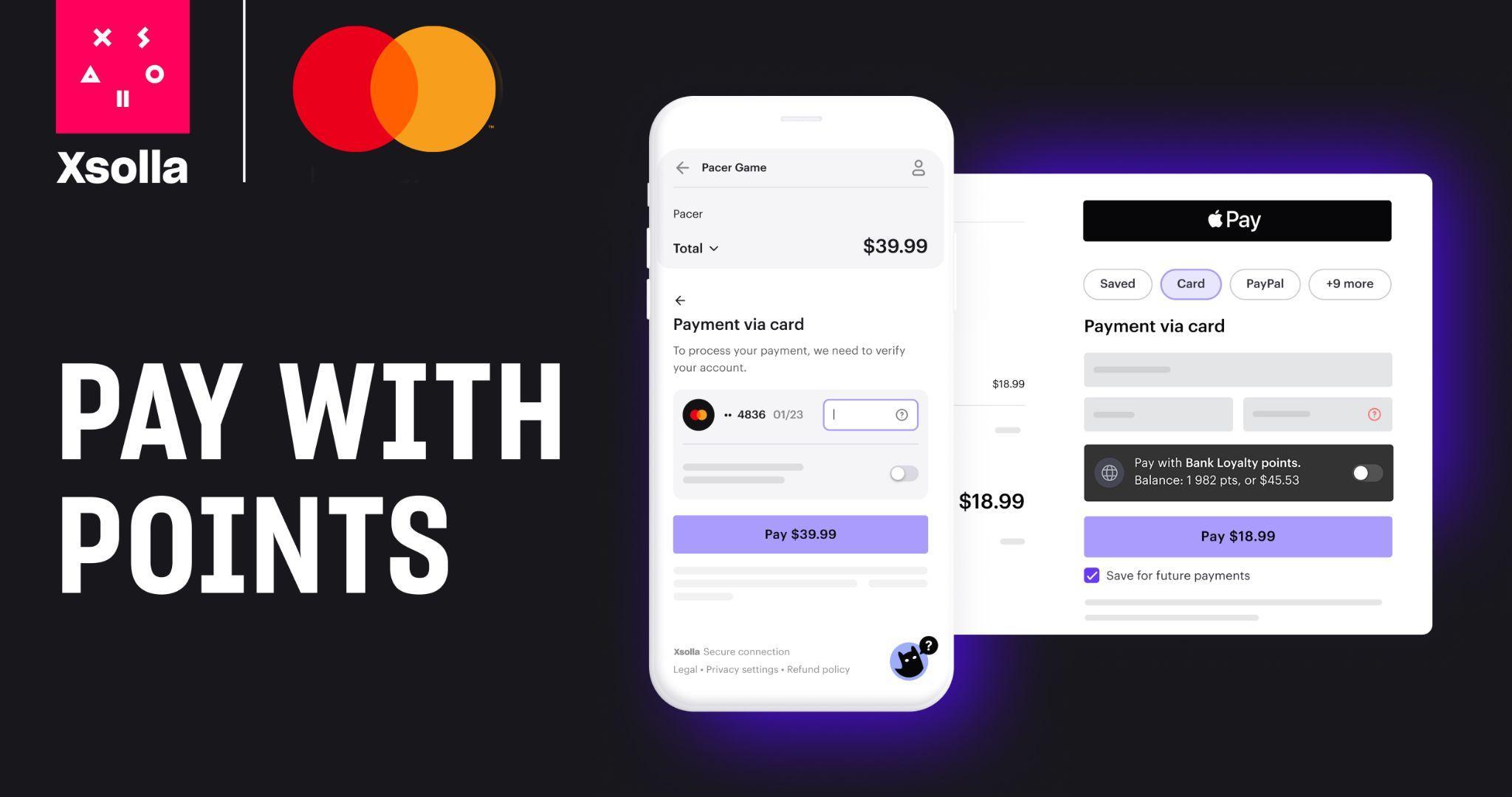
Today Mastercard and global video game commerce company Xsolla announced plans to collaborate on frictionless, secure, and rewarding payments for gamers – from enhanced checkout experiences using credit card loyalty points to simple in-game currency gifting to improved creator payout processes and more. The partnership will combine Mastercard's technology, network-level expertise, global scale, and trusted connections with Xsolla's platform to create customizable and more accessible payment experiences for players, developers, and creators.
Mobile devices have been fueling gaming growth among all demographics and regions, with nearly 3.2 billion people – nearly half the world's population – estimated to have played games in 2022. But the digital commerce experiences that fuel developers' innovation in gaming have not kept pace with the growth. More than 40% of consumers say they need help to buy in-game currency, and more than 30% say it takes too many steps to make online gaming purchases. Nearly 30% say the gifting process could be more efficient, according to Mastercard research.
Mastercard and Xsolla will work together to enable innovative card and account-based solutions and services to improve digital experiences in payments and beyond for gamers. To kickstart this game-changing partnership, for the first time, Mastercard cardholders will be able to use Pay with Points to seamlessly redeem their loyalty points for in-game purchases – this solution will be integrated into Xsolla's Pay Station product. Players will also have the opportunity to gift in-game currency to friends and family. The companies are partnering to solve challenges in the gaming industry and prioritize consumer protections, including using Mastercard’s authentication and fraud detection capabilities to give parents control before their child makes in-game purchases.
"Mastercard has been a strong supporter of the gaming community for many years – we look forward to further enabling cardholders to tap into their passions through this new partnership with Xsolla and shape the future of commerce in gaming," said Blake Rosenthal, Executive Vice President, Fintech Solutions at Mastercard. "As mobile devices increase the accessibility of video games, a rewarding, best-in-class digital experience is essential to fostering a loyal gaming community and building a payments ecosystem that provides choice across platforms and dimensions."
"The partnership with Mastercard is a testament to our commitment to continuously innovate for the benefit of developers and all players around the world," said Berkley Egenes, Chief Marketing Officer at Xsolla. “By combining Xsolla’s Payments Solution with Mastercard's loyalty capabilities, cyber solutions and card and account-based payments technology, we can create new avenues for revenue creation and increased lifetime value for developers.” We are excited to take this giant step forward in creating a better and more inclusive gaming experience for everyone."
Players will have the option to redeem loyalty points from Mastercard’s participating partners for in-game purchases later this year. Xsolla and Mastercard will demonstrate the Pay with Points solution at the 2023 Game Developers Conference in San Francisco from March 21-24, 2023.
- 06:00 am

John Woods has been appointed Chief Revenue Officer (CRO) at Zenus Bank, the U.S. Bank that allows people and businesses around the world to open a true U.S. bank account without the need to be a U.S. citizen or resident.
In the newly created position, John will take responsibility for driving client acquisition and revenue growth for the Retail, Corporate and Banking-as-a-Service business units within the bank.
José A Díaz-Ortiz, CEO of Zenus Bank, said: ‘John has been working with Zenus since 2019, so knows our business, plans and aspirations well. He’s successfully set-up and operated our Marketing & Client Service functions and this is the natural progression. This year we have exciting plans to accelerate our growth, expand our product and services and cement our position as a global bank. I have faith that John is the right person to lead this for us.’
To date, John has established Zenus’ marketing operations. Activating paid acquisition channels and overseeing the bank’s recent re-brand, website re-platforming and the launch of the Zenus Visa debit card. He will remain in London with his team for this role.
John Woods, CRO of Zenus Bank, said, ‘Joining the team to launch a U.S. bank during lockdown always promised it was going to be an interesting ride, and it’s been proven so. We’ve come a long way in just a few years, and I’m excited to take on this new challenge for the business.’
Prior to joining Zenus Bank, Mr. Woods has led transformational change and driven accelerated growth in multiple companies. Having held numerous senior roles at Barclays Bank and successfully re-launching the online business bank he moved into FX trading, leading CMC Markets through a digital transformation for their successful FTSE 250 IPO. More recently he’s led Samsung’s European digital operations and assisted Bain Capital in the separation and launch of a new business, Zellis (The UK’s largest payroll provider).
- 03:00 am
It has been estimated that by 2022, the total amount of fintech businesses involved in Payments & Transfers, Alternative lending, E-Wallets and Digital-banking increased from 34 to 1254. This is a massive 3588% rise over the two decades, accounting for 15.4% of all operational fintech companies.
India has the highest number of companies operating within its borders, amounting to 541 (43.1%). This is followed by Indonesia with 165 (13.2%), then Singapore with 162 (12.9%), and Philippines with 125 (10%). Malaysia, Vietnam, Pakistan, and Sri Lanka are home to 84(6.7%), 78(6.2%), 51(4.1%) and 27 (2.2%) organisations respectively while Bangladesh has the smallest number at 21 (1.7%).

Amongst the companies surveyed, 43.4% are concentrated in the Alternative Lending area, followed by Payments & Transfers (39.6%), E-Wallets (9.4%) and Digital-banking (7.7%).
From the year 2000 to 2022, the Alternative Lending sector experienced the most significant increase at 6700%, followed by Payments & Transfers - growing 3207%, E-Wallets - 2850% and Digital Banking - 1271%.
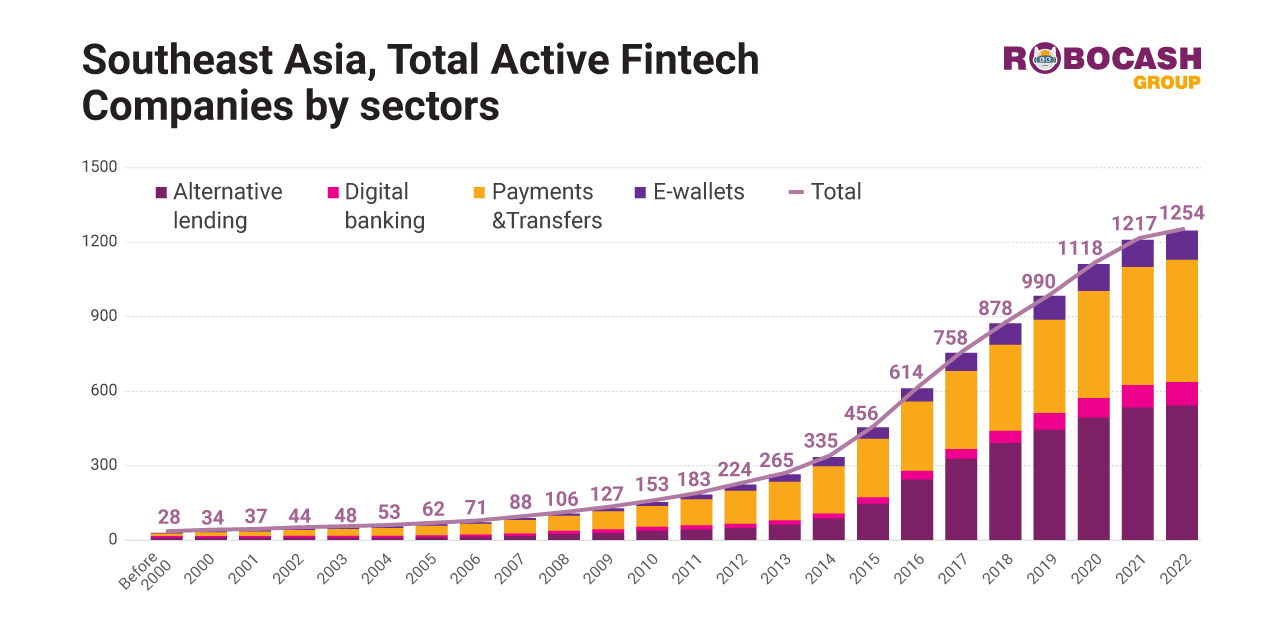
Commenting on the results, the analysts said: “The results show that the Philippines puts the most emphasis on these four fintech areas, which constitute 54.3% of all fintechs in this country. The rest of the distributing goes as follows: Sri Lanka - 41.5% (65), Vietnam - 37, 7% (207), Pakistan 24.2% (211), Indonesia 19.4% (850), Malaysia 18.3% (458), Bangladesh 15% (140), India 10.5% (5176). The lower the share, the higher the diversification by types of fintech businesses in the country and the competition between them.”
For deeper insights, all the record figures, and broad range of market data, download the full data-driven State of SEA Fintech 2022 Report.
- 09:00 am

British Business Investments today announces that it is providing a £25m facility to Tower Leasing Limited. The transaction will be structured as a block discounting agreement that will allow Tower Leasing to provide funding support to smaller businesses looking to acquire business-critical assets to accelerate their growth.
British Business Investments, a wholly-owned commercial subsidiary of the British Business Bank, aims to increase the supply and diversity of finance for smaller businesses across the UK by boosting the lending capacity of a range of finance providers. Since it was established in 2014, British Business Investments has committed more than £3.3 billion to providers of finance to UK smaller businesses.
Bracknell-based Tower Leasing was founded in 1989. It has extensive experience in providing finance to smaller businesses all over the UK, with a particular focus on finance leases for business and office equipment. The facility will allow Tower Leasing to support increased lending volumes using its diversified funding base.
Judith Hartley, CEO, British Business Investments, said: “This £25m facility to Tower Leasing Limited supports British Business Investments’ mission to increase the diversity and supply of finance for smaller businesses in the UK. Independent operators like Tower Leasing Limited help diversify the UK’s smaller business finance market and provide more choices for businesses. We look forward to working with Tower Leasing Limited to help smaller businesses across the UK get funding for the assets they need to continue their growth.”
Kerry Howells, Managing Director, Tower Leasing Limited, said: “We are delighted to receive the support of British Business Investments via this significant new facility. Supporting the development of smaller businesses is in Tower’s DNA and this new commitment will provide us with increased funding to enhance our product offering and issue valuable funding to assist our clients with future growth opportunities. This marks an exciting new chapter for Tower, our customers, and the vital UK SME market.”
- 09:00 am

Mollie, one of the fastest-growing financial services providers in Europe, has today shared that many of its partners are reporting a significant increase in appetite for headless solutions. Mollie has already developed a strong network of partners in the headless and composable commerce ecosystem, offering integrations with leading partners in the space such as Shopware and commerce tools.
Headless technology, which raised more than €1.5 billion in funding between 2020 and 2021, enables businesses to achieve highly tailored customer solutions, faster and more economic development, easier scaling, and better website and mobile performance.
Shopware, as the leading open commerce platform, offers comprehensive e-commerce solutions for all B2C, D2C, and B2B needs. Merchants can elevate their businesses with maximum flexibility, full scalability, and expert support every step of the way. This is also due to Shopware’s API-first approach, which answers the demands of headless commerce. With this architecture, merchants can use Shopware as a backend and basically connect any front end they desire.
“Businesses need a highly flexible e-commerce platform. Headless commerce offers this flexibility. You get full scalability and unlimited growth potential with a headless and API-first architecture. As testimony to the many years of partnership, we are excited to integrate our headless solution with Mollie and offer merchants an end-to-end solution” says Sebastian Hamann, founder and co-CEO of Shopware.
Today’s online shoppers have made it clear that quick and efficient payment methods, fast shipping, and free returns are among the top drivers for their attraction and loyalty to a retailer. Those invested in headless can more flexibly support these demands, as well as see reduced time to market, cost savings, and overall improved performance across multiple touchpoints.
Parallel to the trend toward headless and signalling the company’s dedication to innovation, Mollie has begun a global integration with commercetools, a pioneer in headless solutions. The integration provides commerce tools customers with all leading, localised payment methods as well as seamless payment processing and a comprehensive transaction dashboard.
"Payment processing is core to eCommerce solutions which is why it’s important for us to have the most adept partners in this space. We’re excited for Mollie to join our global partner ecosystem, and look forward to working together in ensuring our customers have the right tools to further grow their business," says Karlis Zemitis, Global ISV Partnerships Manager at commerce tools.
As more than half (52%) of European ecommece shoppers say that they think their country’s economic situation will worsen over the next 12 months, businesses will have to do more with less to capture dwindling consumer spend.
“For companies who operate in multiple markets, operate across multiple channels, use multiple currencies or revenue models, and who are looking to invest in the next innovation - headless and composable are crucial,” says Michaela Weber at Mollie. ”Many of our partners, such as Shopware and commerce tools, are seeing strong growth through this technology and expect demand to continue to increase.”
- 03:00 am
Edwina Johnson, Head of Global at Alloy said: “For financial institutions to remain competitive in today’s market, cross-border functionality is no longer a major advantage - it’s a must. Fintech startups are now building with a global mindset from day one, and looking for technology partners who can scale with them, adapting to their changing business needs, appetite for risk, and compliance requirements.“The UK is one of the world’s most powerful fintech hubs, and we can’t wait to help innovative local firms unlock their potential abroad. For too long, international expansion has involved trade-offs with risk management, but that doesn’t have to be the case. Alloy provides dynamic support for companies operating across multiple regulatory environments, so they can focus on growing their business without worrying about the threat of fraud.”
- 02:00 am

Smart money app Plum has expanded its investment offering to 3,000 US stocks. This means it now provides one of the broadest ranges of equities among commission-free investment platforms.
New stocks for 2023
The addition of 2,000 new stocks give customers the opportunity to buy fractional shares in companies such as Sony Group, Airbnb, Duolingo and Credit Suisse from just £1. Customers across the UK and EU will have access to the new stocks.*
Elise Nunn, Plum’s Product Manager for Trading and Automation, comments: “The addition of new stocks comes at an important time, as people are looking to improve their money management in the coming year. Having a broad range of investment options available has always been crucial to the Plum offering, so we’re delighted to be now offering this enhanced and very competitive array of companies to invest in.”
Plum launched stock investing on its app last year, following the success of its automated passive investing function for funds. 2023 looks set to be a big year for the development of Plum’s investment offering, with the company intending to add watchlists and price alerts for stocks in the coming months. Later in the year, Plum is also looking at adding news functionality to its investment products and offering ETFs for customers in the EU.
Elise Nunn adds: “The goal is to make building a balanced and diversified portfolio accessible for everyone, backed by helpful educational tools. By offering such a broad range of stocks alongside funds, we’re making it easier for people to invest in the companies that matter to them, and make their money go further by taking a balanced approach over the long term.”
Tech stocks were most popular in 2022
Since the launch of stock investing, Plum customers have remained supportive of big tech, with 6 of the top 10 most popular stocks being tech giants, while the Tech Giants fund was also the most popular among passive investors**.
Household names also proved popular choices, with Etsy, Disney and McDonalds proving strong choices. Female investors especially liked Etsy, an online marketplace for handmade items, for whom it was the 4th most popular stock. Meanwhile, Meta and Nvidia proved the most popular choice for male investors.
Etsy, Disney and BP are more prominent for older investors (35 years upwards), while younger investors aged under 25 like McDonalds and Ford. Large tech companies such as Meta and Google were less popular outside London, while Ford and Disney were more popular in the capital.
Elise Nunn comments: “Our customer base tends to be younger and more diverse than the typical investor, so it’s no surprise that they’ve opted for tech stocks in their first foray into stock investing at Plum. They want to invest in what they know and what matters to them, and as digital natives, tech is an obvious choice. With our expanded range, it will be interesting to see if there are any major changes to our most popular stocks.”
- 03:00 am

NEAR today announced it has joined Ledger Live, enabling users to send, receive and stake (powered by Figment) their NEAR tokens through the Ledger Live app. Ledger Live is an all-in-one digital asset management app enabling users to buy, sell, swap, stake & grow their digital assets, manage their NFTs and seamlessly access an ever-growing range of Web3 apps. This secure and convenient app allows users to explore the Web3 galaxy while preserving full ownership over their digital assets.
Staking offers holders of NEAR the ability to earn rewards for delegating their assets to help secure the protocol. The Ledger by Figment validator, accessible from Ledger Live, allows users to easily stake their digital assets without sacrificing self-custody or security. Users can delegate their NEAR to the Ledger by Figment validator and contribute to the protocol's security and receive rewards in the form of NEAR.
“We are thrilled to help more people enjoy the benefits of self-custody, no matter what their level of crypto experience,” said Marieke Flament, CEO of the NEAR Foundation. “This new partnership will bring even easier and more secure access to cryptocurrency worldwide, as we remain committed to serving as the de facto entry point to Web3 – simplifying the onboarding experience for users even if they have never used crypto, tokens, keys, or wallets.”
Carl Anderson, VP B2C Engineering at Ledger, adds: “I’m pleased to see a crypto player like NEAR join the Ledger ecosystem. This integration highlights what Ledger Live really is: an all-in-one asset management platform where users can manage their digital assets, visualize their NFTs, and explore an ever-growing range of Web3 apps from the security of their hardware wallets.”
Ben Spiegelman, Head of Corporate Development at Figment goes on to say: “It’s our pleasure to keep working with Ledger to offer protocol staking. The NEAR community is now able to earn staking rewards, secure the network, and participate in NEAR network governance while keeping their tokens secure in Ledger’s self-custody solution.”
The architecture of the NEAR Protocol uses sharding to enable high transaction throughput, with the blockchain broken down into smaller chunks, reducing the burden and computational load on the network. Developers can quickly build and launch dApps through familiar programming languages and detailed documentation, while users can explore Web3 without cryptic addresses or constant confirmation requests.
The excitement continues to build around the potential of the NEAR blockchain. Unlike other networks, NEAR gives software developers easy access to create new crypto applications. The NEAR blockchain is also much faster than Ethereum, the world’s most-used blockchain. It acts as a bridge to other blockchains, allowing for the free flow of assets and communication between networks for the betterment of all.